
Autumn · Seoul · Field listing
Gangdong Prehistoric Culture Festival 2026
The essentials first: whether it is open, what it costs, how hard it is to reach and what to expect if you do not speak Korean.
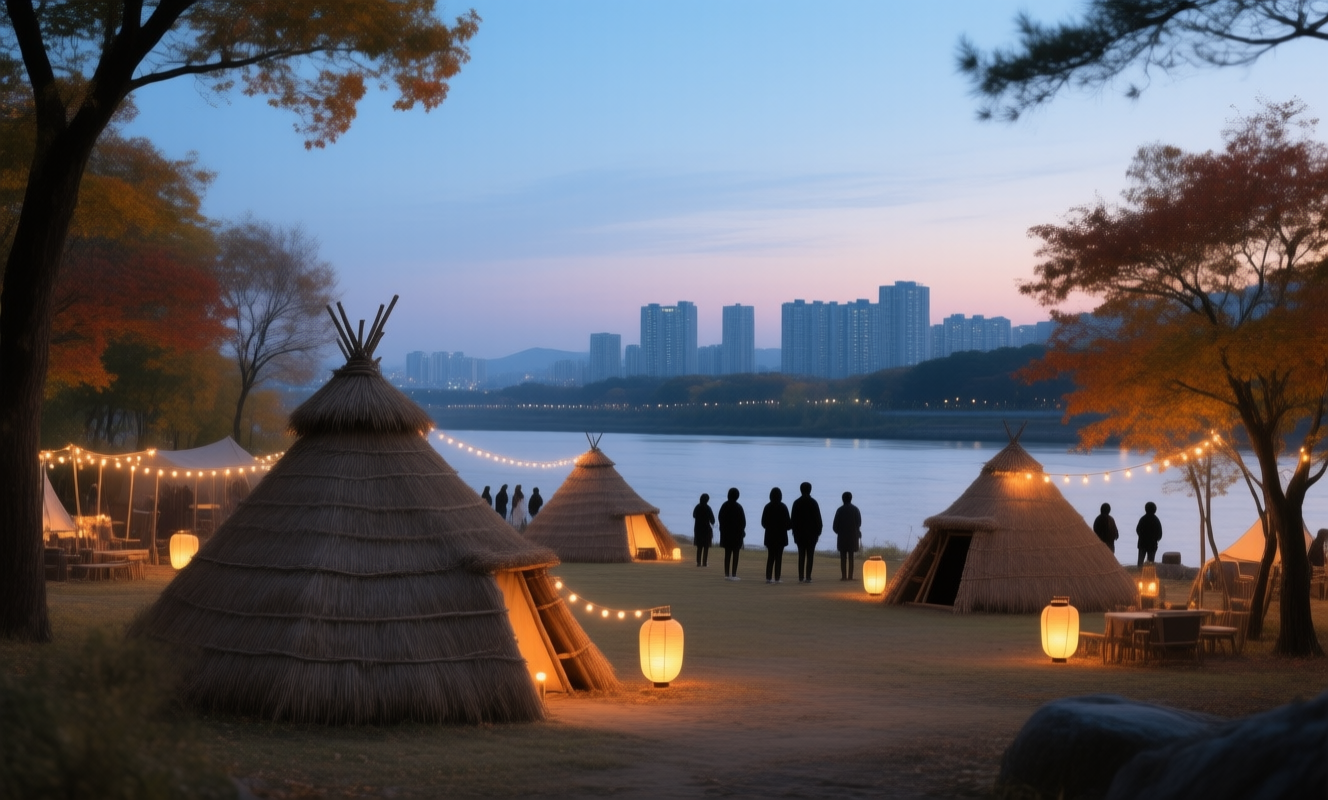
When
Oct 16 — 18ConfirmedConfirmed dates
Where
Amsa-dong Prehistoric Site and Amsa History Park, Gangdong-gu, SeoulSeoul
Admission
FREEGeneral entry is free according to KTO's 2026 listing, which adds that some hands-on programmes carry a separate fee. Which activities are charged, and how much, had not been published when this guide was written.
From Seoul
Inside Seoul: Line 8 subway to Amsa Station, then about a 15-minute walkTake Seoul Subway Line 8 to Amsa Station and walk about 15 minutes from Exit 4, or leave by Exit 1 and ride village bus Gangdong 02 to the site gate. Total journey time depends on where in Seoul you start, so check a live route planner for your own departure point.
Hours
Fri 16 Oct: from 18:00 per the Seoul city portal (KTO's Korean record says 15:00); Sat 17 and Sun 18 Oct: 10:00-21:00
Organiser
Gangdong-gu Office, 02-3425-5247 or 02-3425-5240
Is this one for you?
Who it suits. This suits people who want a free, urban, family-friendly weekend event with some real substance behind it: the festival is built around Seoul's best-known Neolithic settlement site, and the hands-on archaeology and barbecue programmes are aimed at children and curious adults. It is a weaker fit if you want a quiet look at the archaeology itself, because the site becomes a big public event with stages and crowds, or if the headline acts matter to you, since the named singers are established Korean trot, ballad and 1990s-era pop acts whose appeal is largely domestic.
When to go. Saturday 17 or Sunday 18 from 10:00 is the practical choice for the hands-on programmes, which are listed as running through the festival. Friday evening and Sunday evening are the two set pieces: the opening ceremony with the drone show and the closing ceremony with fireworks are each listed for 19:00, so arrive earlier if you want a viewing spot. The listed start time for Friday is inconsistent between sources, so do not plan a Friday afternoon visit around it.
LOCAL WEATHER
Weather near the festival
Korea Meteorological Administration forecast
Need something we do not list — a stall menu, a parking gate, a last bus? The Korea Travel Helpline answers in English around the clock: dial 1330 inside Korea, or +82-2-1330 from abroad.
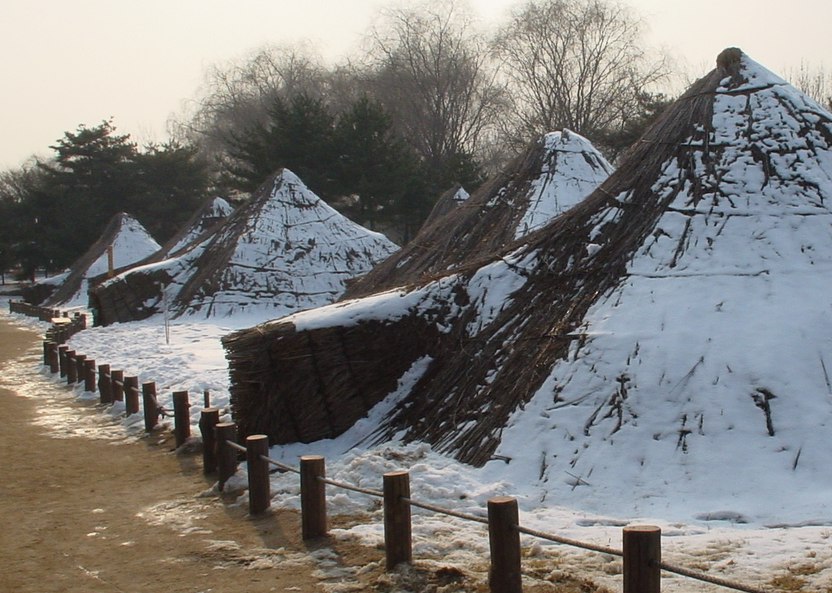
The Gangdong Prehistoric Culture Festival is held at the Amsa-dong Prehistoric Site, the largest Neolithic village-scale settlement found in Korea, on the north bank of the Han River in eastern Seoul. The site was identified in 1925 after a flood exposed buried pottery, and it was designated a national Historic Site in 1979. Korean press coverage of the 2026 edition describes the settlement as roughly 6,000 years old. KTO calls the festival the only one in Seoul devoted to prehistoric culture, and the district says it has run every October since 1996 and draws around 400,000 visitors a year, a figure that comes from the organiser rather than an independent count.
This is the 31st edition, running 16 to 18 October 2026 (Friday to Sunday) on the theme “The Start of Seoul, Amsa”. The venue is the site at 875 Olympic-ro and the neighbouring Amsa History Park. Entry is free. One caution before you plan: KTO’s English record still describes the 2025 festival and says 2026 details will follow, so this guide uses the Korean record, the Seoul city portal and the 2026 press reports instead.
What you actually do here
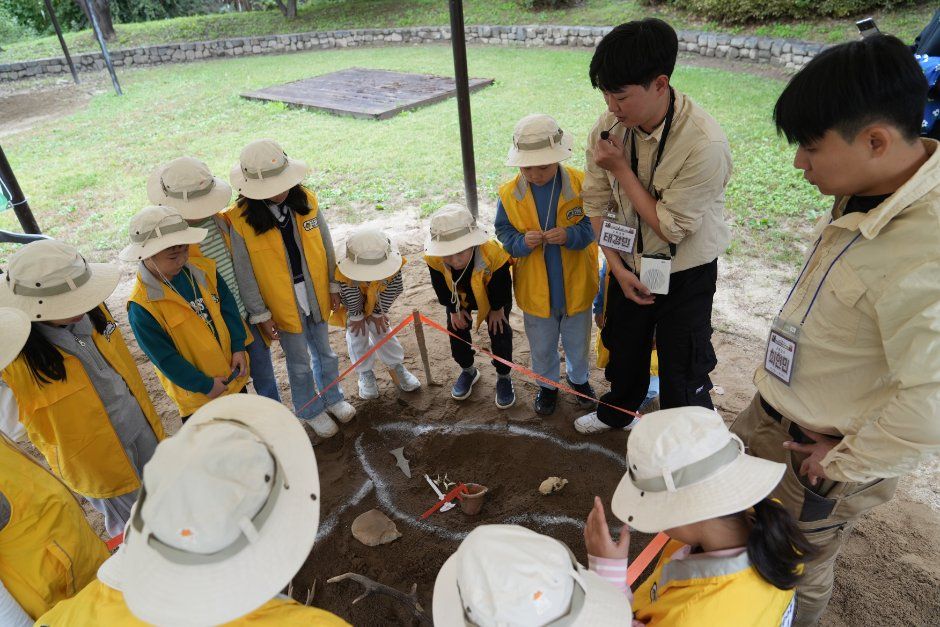
The festival is organised around the idea that you do things rather than only watch them. The headline hands-on programme is the Neolithic archaeology experience school, which KTO and the press list as a standing programme. Press reports give its 2026 name as the “Land of Soil” programme, and a photograph from an earlier edition shows children examining a marked-out dig square with staff. Next to it is prehistoric barbecue (선사바비큐), another experience programme whose format for 2026 was not described in detail. Both are listed as running through the festival, and KTO notes that some experiences carry a separate fee.
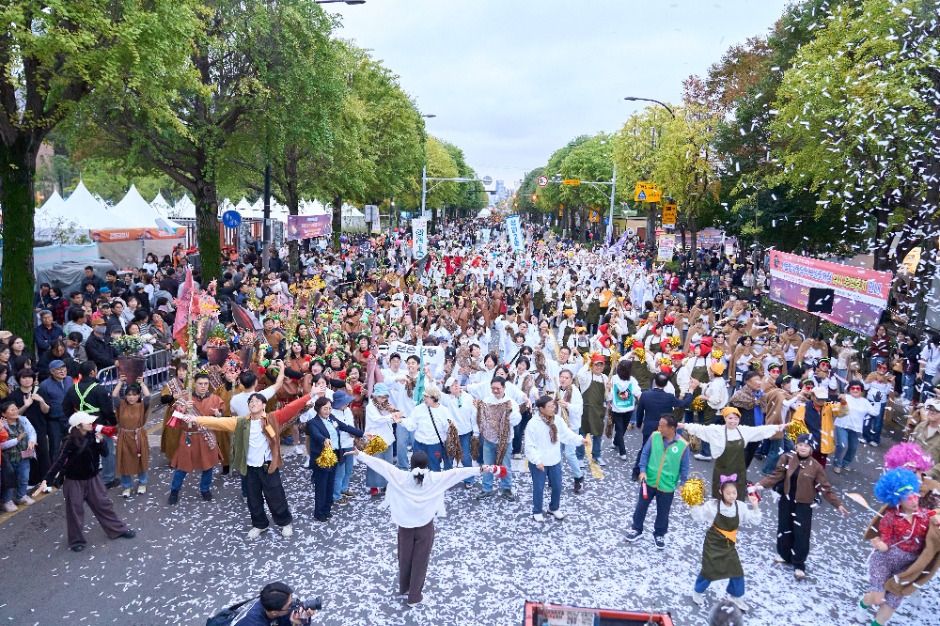
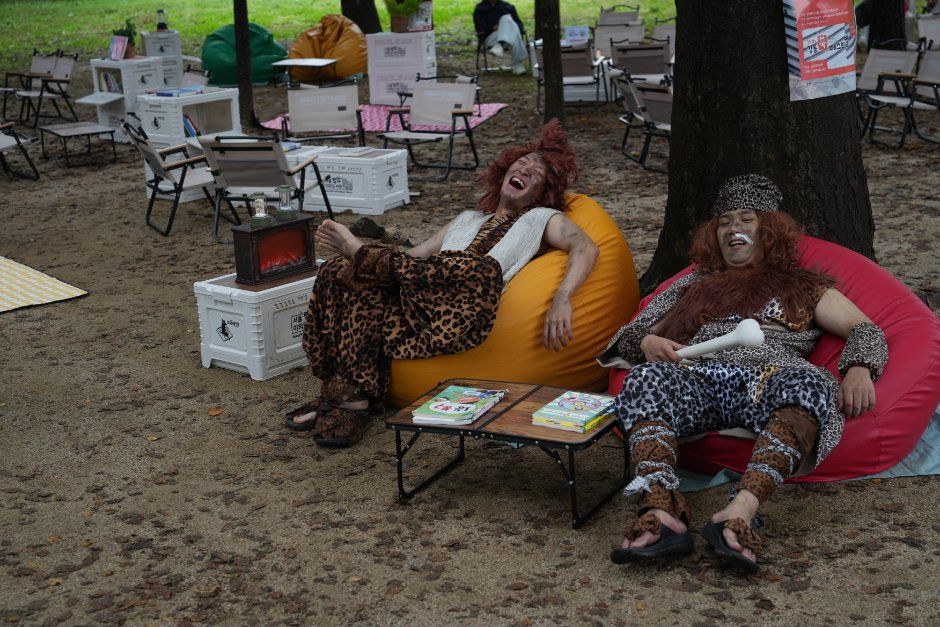
At the entrance there is a Time-Slip Handcrafted Market, a craft market whose stalls are themed by era, from the Palaeolithic to the modern and the imagined future. There is also a wish-themed photo and rest zone called Soman-iruemteo, and a media facade and night light festival that combines artworks, light, music and video after dark on all three evenings. The photographs on this page come from earlier editions and show the kind of programming, not the 2026 set-up.
Programme and timetable
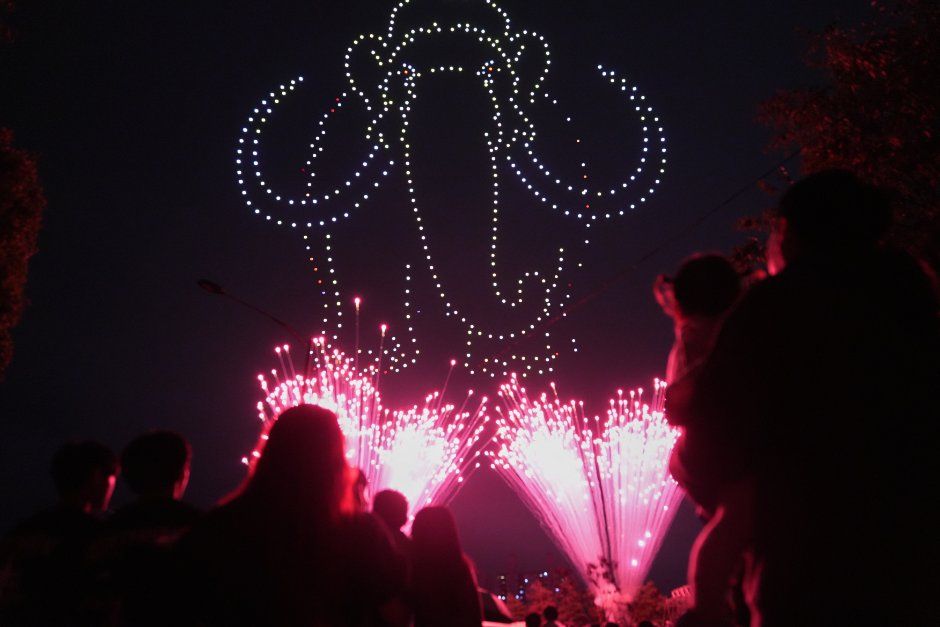
Friday 16 October is opening night. The Seoul city portal lists the opening ceremony at 19:00, with a drone show and a celebration concert by Seol Un-do, Wax and Space A. The portal gives Friday hours as 18:00-21:00, while KTO’s Korean record says 15:00-21:00. Treat 18:00 as the safe start. A visit timed for the ceremony avoids the discrepancy.
Saturday 17 October is the day with the most variety. The sources list a talk concert called “Prehistory: Curious Stories” in the forest stage area of the site, an invited performance by the Gangdong district art troupe, a re-enactment of Bawijeol Maeul Hosang Nori, designated Seoul Intangible Heritage No. 10, a family festival for people with disabilities, and the Gangdong Prehistoric Singing Contest, an amateur competition. Hours are 10:00-21:00.
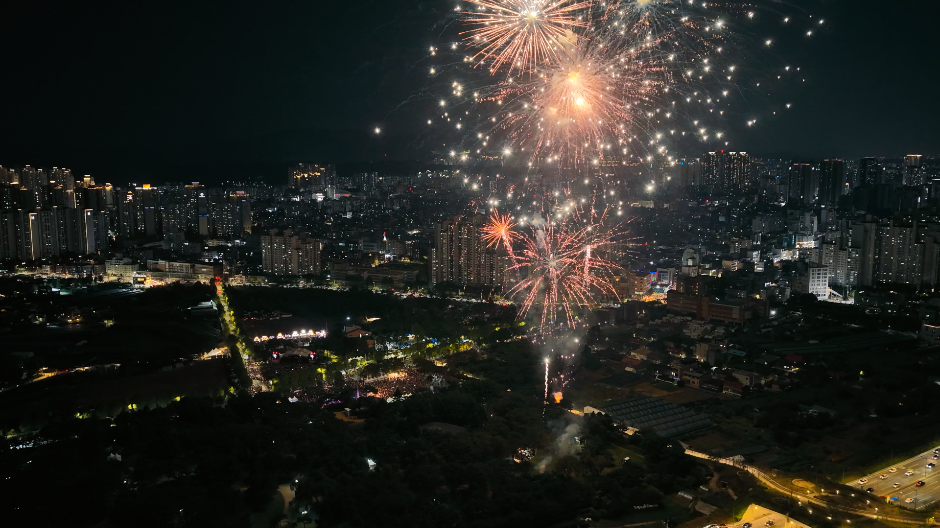
Sunday 18 October opens with the Prehistoric Rock Festival, a showcase planned by youth arts clubs, and a talk concert with the Go player Lee Sedol titled “The Divine Move”. The closing ceremony is listed at 19:00 with fireworks and a concert by Nam Jin, So Chan-hwi and Shin Hyo-beom. Hours are 10:00-21:00. The day-by-day lists above come from press reports of the district’s announcement, and the Seoul portal confirms the ceremony pairing. Exact start times for the daytime stage items had not been published.
Tickets, fees and booking
There is no admission ticket: KTO lists the festival as free. KTO’s Korean record adds the note “some experience fees separate”, but no price list had been published at the time of writing. If you want the archaeology school or the barbecue for a child, assume you may need to register on site, and ask the organiser’s phone line (02-3425-5247 or 02-3425-5240) before travelling. This guide did not find a reservation system, so do not assume one exists.
Getting there without a car
The site is in Amsa-dong, on the eastern side of Seoul, served by Subway Line 8. The Gangdong-gu site-access page gives these routes.
- Amsa Station, Line 8: Exit 4 is about a 15-minute walk to the site. Alternatively, leave by Exit 1 and take village bus Gangdong 02 to the site gate.
- Buses: routes 340, 3411 and 3318 stop at Samsung Gwangnaru Apartments, about 10 minutes’ walk away. Route 3324 stops at the Amsa History Park Station Exit 3 stop, also about 10 minutes’ walk. Amsa History Park Station is a newer Line 8 stop on the Byeollae extension, opened in August 2024.
Last year’s festival diverted several of these bus routes while roads were closed, so confirm on the day that your stop is running.
Parking, shuttles and traffic control
The 2026 notice had not been published on 2 October. Last year’s pattern is a fair warning, not a promise: during the 30th festival, Olympic-ro was closed to traffic in the stretch from the Cheonho Park intersection to the site, from 13:00 to 22:30 on the first Friday and from 08:00 to 23:00 over the following weekend days, and temporary lots were set up at nearby schools (about 70, 210 and 150 spaces) plus roughly 160 spaces on side streets. Those numbers are small for a festival of this size. No 2026 shuttle was announced in any source. Plan to arrive by subway and treat any car arrival as something to confirm with the district’s traffic notice.
The site outside festival hours
The Amsa-dong site is a permanent open-air museum with reconstructed pit-houses and two exhibition halls. On normal days it is open 09:30-18:00, closed on Mondays and on 1 January, with a small entrance fee (500 won for adults according to the Gangdong-gu guide). It is not certain how those rules apply during festival weekend, since the festival is listed as free. If the permanent exhibits are your main interest, a quiet weekday visit is a better way to see them than a festival crowd.
Food on site and nearby
KTO’s Korean record lists a food-stall area among the side events and states that food details are still those of the 2025 festival, with the 2026 list in preparation. Prehistoric barbecue is listed as an experience programme, not a stall. This guide did not verify any restaurant near the site, so it recommends none. Eat before arriving if a particular kind of meal matters to you.
Choosing a day
If you can only come once, Saturday 17 October suits a daytime visit best. It is a full 10:00-21:00 day, it carries the broadest mix of stage items listed in the press reports, and the hands-on programmes are open alongside them. Sunday 18 October is the better pick if the fireworks matter more than the experiences, because the closing ceremony is the last event and the crowd will be heading for the same subway station afterwards. Friday 16 October is the shortest day on the published hours and the one where the sources disagree, so it is best treated as an evening-only option built around the 19:00 opening ceremony and drone show.
Families with young children should read the 21:00 finish carefully: the main shows start at 19:00, which leaves a short evening, and the walk back to the station comes after it.
Honest assessment
The festival has an unusual and genuine anchor. You are standing on the actual Neolithic settlement, and children’s programmes such as the archaeology school connect to it directly rather than being generic craft stalls. For visitors to Seoul it is free, easy to reach by subway, and has a sensible sequence: daytime experiences on the weekend, a drone show on the first night and fireworks on the last.
Its limits are also clear. Much of the evening programme is a conventional Korean concert bill, aimed at a Korean audience, and the English-language support was not checked. The nearest Line 8 station is about 15 minutes’ walk away, and nearby roads were partly closed last year, so budget extra time for the approach. Several details that decide a good visit, including experience prices, the Friday start time and the exact show times, were still unpublished on 2 October. Check the official site, gdsunsa.com, the week of the festival before fixing a schedule.
Questions worth asking
Who is performing at the 2026 Gangdong Prehistoric Culture Festival?
Korean press reports based on the district's announcement name Seol Un-do, Wax and Space A for the opening night on 16 October, and Nam Jin, So Chan-hwi and Shin Hyo-beom for the closing night on 18 October. The Go player Lee Sedol is listed for a talk concert on 18 October. Set times for individual acts had not been published, so treat the names as confirmed and the running order as unknown.
What time does the festival start each day?
The Seoul city festival portal lists Friday 16 October as 18:00-21:00 and Saturday 17 and Sunday 18 October as 10:00-21:00. KTO's Korean record gives 10:00-21:00 overall but says Friday starts at 15:00. Both agree on a 21:00 finish. The opening and closing ceremonies are each listed for 19:00.
When are the drone show and fireworks?
The Seoul city portal pairs a drone show with the opening ceremony on Friday 16 October and fireworks with the closing ceremony on Sunday 18 October, each ceremony listed for 19:00. Exact start minutes and the best viewing areas had not been published.
Is the festival free?
Entry is free, per KTO's 2026 record. The same record says some experience programmes cost extra. Prices had not been published, so ask at the programme desk or call the organiser before queuing with children.
Can I drive and park near the site?
Do not count on it. Last year's festival used small temporary lots at nearby schools with 70 to 210 spaces each and closed stretches of Olympic-ro to traffic for part of the weekend. The 2026 lots and road closures had not been announced on 2 October. Use the subway and check the Gangdong-gu notice before travelling if you must drive.
What is there to eat at the festival?
KTO lists a food-stall area among the side events, and prehistoric barbecue appears as an experience programme. The menu, prices and payment methods for 2026 had not been published, and KTO notes its own food details were still carried over from 2025.
Before you goFestival Etiquette in Korea: What Visitors Get WrongBooking KTX Trains and Intercity Buses as a Foreign VisitorGetting Out of Incheon Airport and On to a FestivalKorean Festivals With Children: Toilets, Strollers and TimingStaying Online in Korea: SIM, eSIM and the Apps That MatterEating at a Korean Festival Without Speaking KoreanRain, Typhoons and Cancelled Festivals: How to Plan Around ThemHow to Pay for Things in KoreaT-money and Transit Cards in KoreaWhat to Wear to a Korean Festival, Season by Season
LAST UPDATED · Oct 2, 2026