
Autumn · Seoul · Field listing
Safe Seoul Festival 2026
The essentials first: whether it is open, what it costs, how hard it is to reach and what to expect if you do not speak Korean.
When
Sep 17 — 19ConfirmedConfirmed dates
Where
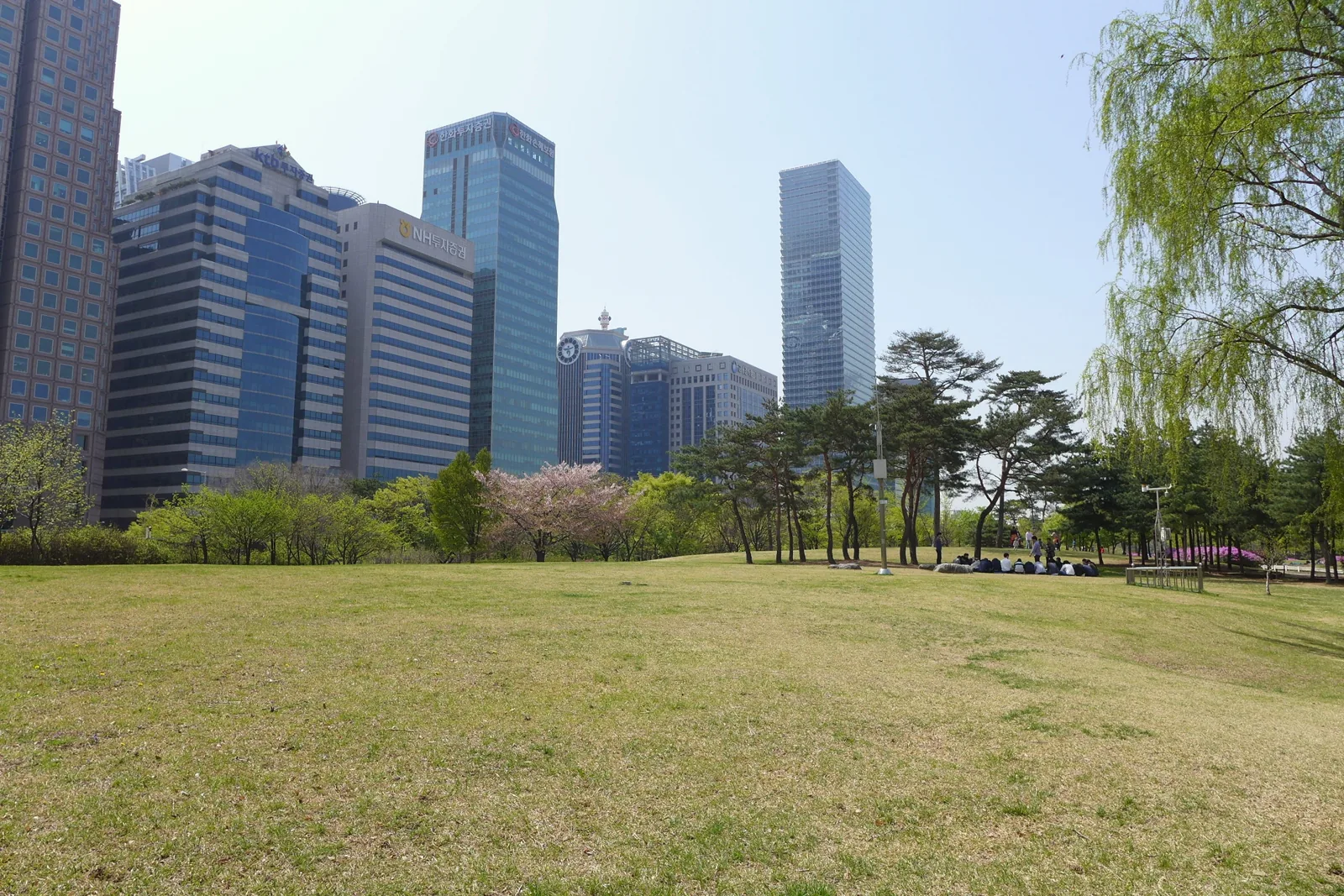
Yeouido Park Culture Plaza, Yeongdeungpo-gu, SeoulSeoul
Type
Community
Admission
FREEFree, drop-in public event run by the Seoul Metropolitan Fire and Disaster Headquarters. There is no admission fee and no ticket. Individual hands-on stations are run by the participating agencies and some have limited capacity, so popular experiences can involve a short queue on the day; that is a wait, not a charge. Food trucks and any paid extras are separate vendors, but entry to the festival grounds is free.
From Seoul
About 15–20 minutes by subway from central SeoulThe festival is in Seoul itself. Take Line 5 or Line 9 to Yeouido Station and leave from Exit 3; the Culture Plaza inside Yeouido Park is roughly a 10-minute walk. Line 9 Gukhoe-uisadang (National Assembly) Station, Exit 3, is a similar walk to the north end of the park.
Hours
10:00–17:00 daily (September 17–19)
Organiser
Seoul Metropolitan Fire and Disaster Headquarters, Prevention Division, 02-3706-1560
Is this one for you?
Who it suits. This suits families with children and anyone who learns by doing: the point is to actually handle a fire extinguisher, try an escape descender, and sit through earthquake, storm-flood and crowd-crush simulations rather than read a poster about them. It is a weak choice if you want a scenic, culinary or evening festival — it is a daytime civic-education event that closes at 17:00, the instruction and signage are primarily in Korean, and its value is participation, so a visitor who only wants to walk through and look will get little from it.
When to go. Come in the morning or early afternoon; the grounds run 10:00–17:00 with no evening programme, so a late-afternoon arrival leaves almost no time. Thursday, September 17 carries the opening 'safety pledge' ceremony with city officials and a commendation for citizens who saved lives, which draws a formal crowd around midday. Saturday, September 19 is the family-heavy day built around the 'K-Fire Disaster Hunters' mission game, so expect the longest queues at hands-on stations then.
LOCAL WEATHER
Weather near the festival
The festival date is outside the current forecast window. Check again closer to your trip.
Korea Meteorological Administration forecast
Need something we do not list — a stall menu, a parking gate, a last bus? The Korea Travel Helpline answers in English around the clock: dial 1330 inside Korea, or +82-2-1330 from abroad.
This event is running now. The 20th Safe Seoul Festival (서울안전한마당) opened at Yeouido Park Culture Plaza on Thursday, September 17, 2026 and continues through Saturday, September 19, from 10:00 to 17:00 each day. Seoul Mayor Oh Se-hoon attended the opening on the 17th, where the city ran a “safety pledge” ceremony and commended three citizens recognised as “brave good Samaritans” for early action at disaster scenes. If you are in Seoul this week and travelling with children, it is one of the few free, genuinely hands-on things to do that also happens to be practical.
One clarification first, because the timing invites it: this is not the fireworks festival. The Seoul International Fireworks Festival is a separate, Hanwha-run evening spectacle on the Han River parks that drew roughly a million spectators on September 5. The Safe Seoul Festival is a daytime civic-education event held inside Yeouido Park’s Culture Plaza. Both use the Yeouido area, but they are different events with different audiences.
What you actually do here
The festival is organised by the Seoul Metropolitan Fire and Disaster Headquarters and, for 2026, brings together 75 agencies and organisations running 69 experience programmes across six fields: fire safety (10), disaster safety (10), everyday-life safety (16), traffic safety (5), body-and-mind health (13) and community “getting-along” activities (15). The design is participatory rather than exhibition-style — you are meant to handle equipment, not watch a demonstration from a rope line.
On the fire side, the confirmed hands-on stations let you practise using a water fire extinguisher, operate a wanganggi (the descending escape device fitted in Korean apartment blocks) and rehearse evacuation drill for a fire. The disaster field adds simulator experiences for earthquakes and storm-and-flood conditions, and — notably for anyone who followed the Itaewon tragedy — a crowd-crush (multi-crowd) situation experience that teaches what to do when caught in a dense crowd. Around these, the grounds carry a large-scale fire-extinguisher display, a “119 Safety Gallery,” fire-engine exhibits and a safety-themed building-block zone for younger children.
The other three fields broaden it past emergencies. Everyday-life and traffic safety cover the ordinary risks — home, road, pedestrian — while the body-and-mind health and community strands add lighter, wellbeing-oriented activities. Reports from the opening day also noted a partner exhibit in which SK Broadband reinterpreted winning safety-culture posters with AI and set up puzzle and kiosk games, an example of how the sponsors’ booths fold into the same hands-on format.
Between the stations, the plaza is set up to be dwelt in rather than rushed: there is an outdoor library, photo zones, food trucks and rest areas, with live performances scheduled through the day. That mix is deliberate — the event wants families to stay long enough for the safety drills to stick, so it surrounds them with ordinary festival comforts.
Programme and daily highlights
The three days are not identical, and the differences are worth planning around.
Thursday, September 17 opened with the formal core: a safety pledge ceremony in the early afternoon led by Mayor Oh Se-hoon, at which the city awarded commendations to three citizens honoured as “brave good Samaritans” for acting quickly at disaster scenes. Expect a more official, ceremony-heavy atmosphere around midday on the first day, with the hands-on stations open alongside.
Friday, September 18 is themed around a “safe holiday” celebration with traditional games — timed to the approach of Korea’s autumn holiday period, it pairs folk-play activities with the safety messaging, which makes it the gentlest day for very young children.
Saturday, September 19 runs “K-Fire Disaster Hunters,” a participation programme framed as a mission in which visitors become “disaster hunters” and complete safety tasks around the grounds. As the weekend day built specifically for family participation, it is likely to be the busiest and the best for older children who will engage with a game structure — and correspondingly the day with the longest queues at the popular stations.
Beyond these anchors, the individual station timetable and the live-performance schedule are set by each participating agency and were not published as a single fixed grid, so this guide does not invent per-hour start times. Treat 10:00–17:00 as the operating window and arrive early on the day you choose.
Tickets, hours and practical notes
There is nothing to buy in advance. Entry is free, the grounds run 10:00–17:00 on all three days (September 17–19), and stations are staffed on a drop-in basis by the participating agencies. The organiser is the Seoul Metropolitan Fire and Disaster Headquarters; its Prevention Division answers event questions on 02-3706-1560. This is the 20th edition — the festival has run annually since 2007 — which is part of why it is a smoothly operated municipal event rather than a first-year experiment, and why the six-field structure is settled enough to plan around. With 75 organisations on site, the everyday-life field (16 programmes) and the community and health strands together outnumber the fire and disaster stations, so the day is broader than “fire drills” alone.
Getting there without a car
The festival sits in the middle of Seoul, so the simplest approach is the subway rather than a drive into Yeouido. Take Line 5 or Line 9 to Yeouido Station and leave from Exit 3; the Culture Plaza inside Yeouido Park is about a 10-minute walk. From the north side, Line 9 Gukhoe-uisadang (National Assembly) Station, Exit 3, is a comparable walk. Both lines put you within a quarter-hour of most central-Seoul hotels, which is why a visit fits easily into a half-day.
Driving is the weaker option. Yeouido has limited street parking and the park’s own lots fill on event days, and the venue itself is a pedestrian plaza — you would still walk in from the perimeter. Public transport removes the parking problem entirely and drops you at a park entrance.
Note that “Yeouido” appears on both Line 5 and Line 9; do not confuse Yeouido Station with Yeouinaru Station (Line 5), which serves the Han River riverside parks used for the fireworks festival. For the Safe Seoul Festival you want Yeouido Station and the inland park, not the riverside.
Honest assessment
The Safe Seoul Festival is a good, specific use of a few hours if you match its purpose. Its strength is that it is genuinely hands-on and free: a child can put out a tray fire with a water extinguisher, climb into an escape descender and feel an earthquake simulator in one visit, and the crowd-crush station teaches something a poster cannot. For a family staying in central Seoul, the combination of practical value, zero cost and a 15-minute subway ride is hard to beat on a September weekday.
Its limits are equally clear, and worth stating plainly. This is a civic-education event, not a sightseeing festival. It closes at 17:00 with no evening element, so it does not pair with a night out the way the riverside events do. The programming and signage are built for a Korean-speaking public; there is no confirmed English-language guiding, so an international visitor should come prepared to learn by watching and doing rather than by reading — which works well at the physical stations and less well at the talk-based booths. And because the whole value is participation, a traveller who only wants to stroll and take photographs will find a pleasant park with tents rather than a spectacle.
Two practical notes close it out. First, pick your day: the 17th is the most formal, the 18th the gentlest for small children, the 19th the busiest and most game-like. Second, go early — the operating window is short, the best stations queue, and there is no late session to fall back on. Taken on its own terms, it is one of the more useful free family outings in Seoul this month; it simply is not trying to be the fireworks show a few hundred metres away.
Questions worth asking
Is the Safe Seoul Festival free?
Yes. Entry to the festival grounds at Yeouido Park Culture Plaza is free and there is no ticket. It is a public safety-awareness event run by the Seoul Metropolitan Fire and Disaster Headquarters. Some individual hands-on stations have limited capacity, so you may wait in a short line, but you are not charged to take part.
What are the opening hours?
The festival runs 10:00 to 17:00 each day from September 17 to 19, 2026. There is no evening programme, so plan a daytime visit; arriving in the last hour leaves little time for the queued experiences.
How do I get there by subway?
Take Line 5 or Line 9 to Yeouido Station and use Exit 3, then walk about 10 minutes to the Culture Plaza inside Yeouido Park. Line 9 Gukhoe-uisadang (National Assembly) Station, Exit 3, is a similar walk to the north side of the park.
Is this the same thing as the Seoul fireworks festival?
No. The Seoul International Fireworks Festival is a separate Hanwha-run evening event on the Han River riverside parks and drew about a million people on September 5. The Safe Seoul Festival is a daytime, family-oriented safety-education event inside Yeouido Park itself on September 17–19. They share the Yeouido area but are different events.
Is it suitable for young children?
Yes — children are a core audience. Digital Times' photo desk showed children using water extinguishers and trying an apartment-style escape descender on the opening day, and Saturday's 'K-Fire Disaster Hunters' is built as a mission game for kids. The trade-off is that the instruction is mostly in Korean, so a non-Korean-speaking family should expect to learn by watching and doing rather than by reading.
Do I need to book in advance?
No booking is required to enter. It is a drop-in event with stations staffed by the participating agencies. Some experiences fill up during busy periods and run on a first-come basis on the day, but there is no advance ticket.
Before you goFestival Etiquette in Korea: What Visitors Get WrongBooking KTX Trains and Intercity Buses as a Foreign VisitorGetting Out of Incheon Airport and On to a FestivalKorean Festivals With Children: Toilets, Strollers and TimingStaying Online in Korea: SIM, eSIM and the Apps That MatterEating at a Korean Festival Without Speaking KoreanRain, Typhoons and Cancelled Festivals: How to Plan Around ThemHow to Pay for Things in KoreaT-money and Transit Cards in KoreaWhat to Wear to a Korean Festival, Season by Season
LAST UPDATED · Sep 17, 2026