
Autumn · Seoul · Field listing
Seoul Intangible Culture Heritage Festival 2026
The essentials first: whether it is open, what it costs, how hard it is to reach and what to expect if you do not speak Korean.
When
Sep 12 — 13ConfirmedConfirmed dates
Where
Namsangol Hanok Village and Seoul Namsan Gugakdang, Jung-gu, SeoulSeoul
Type
Culture & arts
Admission
FREEGeneral admission is free. Some hands-on experiences and a few tastings are charged separately, and some experience programmes require advance booking; the Korea Tourism Organization notes this but a reliable 2026 per-programme price list had not been published when this guide was written.
From Seoul
Already in central Seoul — about a 3-minute walk from Chungmuro StationTake Seoul Subway Line 3 or Line 4 to Chungmuro Station and leave by Exit 3 or 4; the village is a short signposted walk from there. City buses stop nearby on Toegye-ro. There is no visitor parking on site, so the organiser asks people to come by public transport.
Hours
Saturday 11:00-21:00; Sunday 11:00-17:00
Organiser
Seoul Metropolitan Government, Cultural Heritage Division, 1800-4746
Is this one for you?
Who it suits. This suits travellers already in Seoul who want traditional performance and hands-on craft in one compact, walkable heritage site without giving up a day to an intercity trip, and it works well for families because several of the activities are made to be tried rather than only watched. It is a weaker choice if you want one big headline show — the programme is spread across small stages and craft tables — or if you dislike crowds, since it is a free, well-publicised event on a compact site over a single weekend. It is also a poor fit if you can only come late on Sunday, when the grounds close at 17:00.
When to go. Saturday is the fuller day: the grounds run to 21:00, so that is when any evening atmosphere happens, while Sunday winds down at 17:00. Come earlier rather than later if the craft demonstrations, tastings or a specific stage piece matter to you, and check the official notices first because some experience programmes take advance booking and can fill. Whichever day you pick, treat it as a half-day at a relaxed pace rather than a race between stages.
LOCAL WEATHER
Weather near the festival
The festival date is outside the current forecast window. Check again closer to your trip.
Korea Meteorological Administration forecast
Need something we do not list — a stall menu, a parking gate, a last bus? The Korea Travel Helpline answers in English around the clock: dial 1330 inside Korea, or +82-2-1330 from abroad.
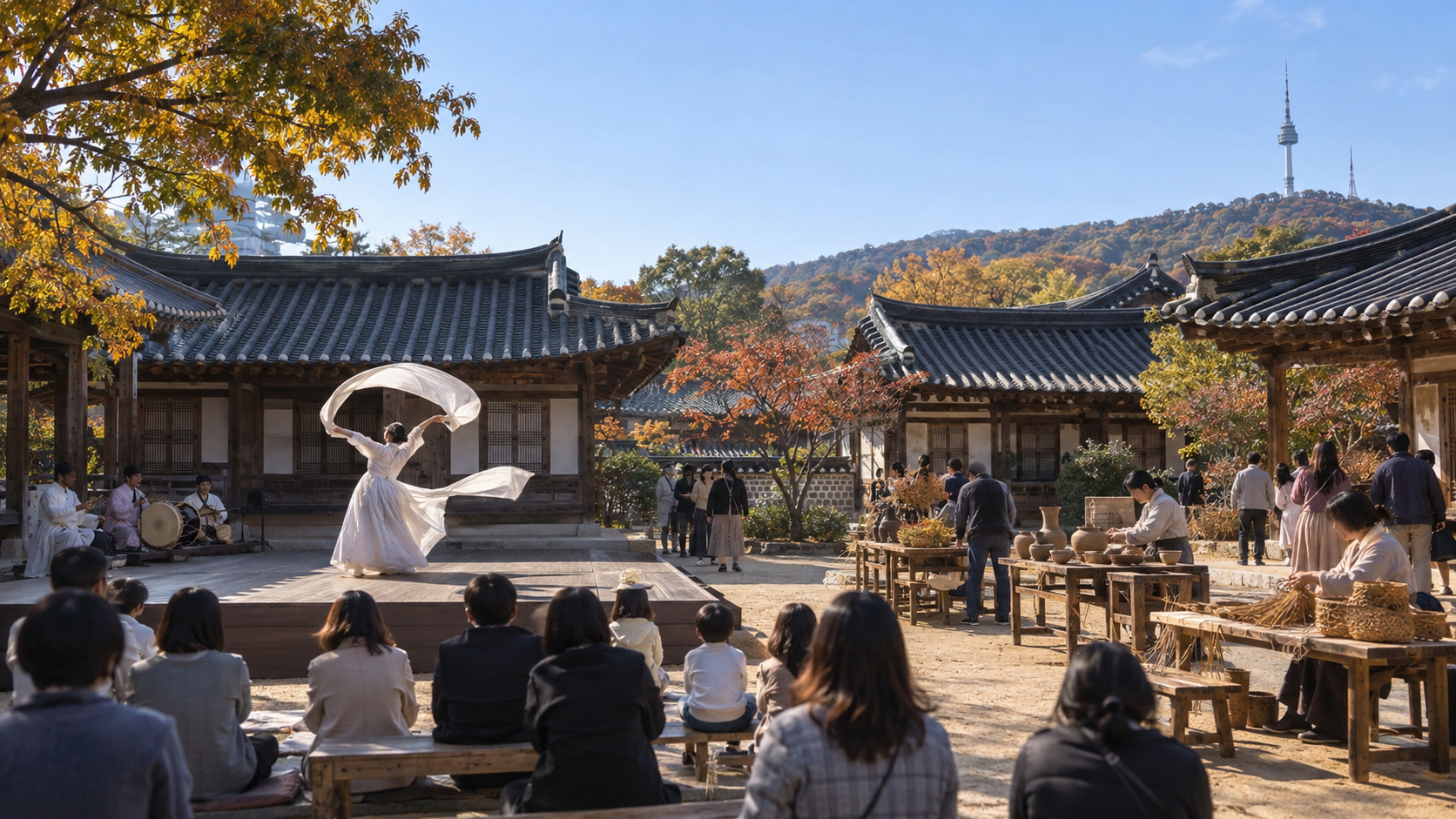
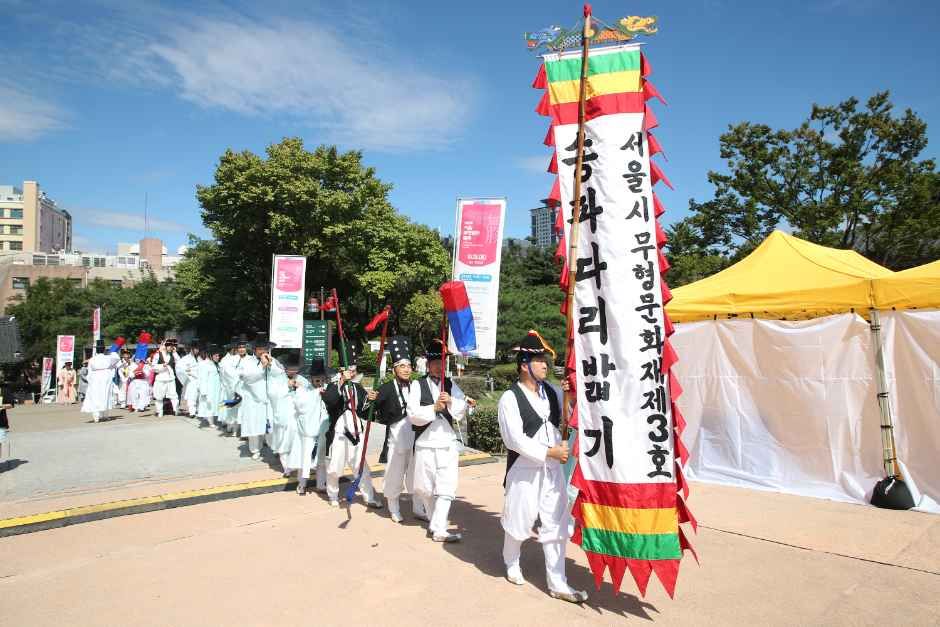
The Seoul Intangible Culture Heritage Festival is a two-day traditional-culture event held inside Namsangol Hanok Village, a cluster of restored tiled-roof houses at the foot of Namsan in central Seoul. Its point is straightforward: it takes the intangible heritage that the city of Seoul has formally designated — the dances, the crafts, the brewing — and puts it in front of visitors as performance, demonstration, tasting and hands-on activity, rather than behind glass. For 2026 the confirmed dates are September 12-13, a Saturday and Sunday.
This is an in-city festival, not a trip out of Seoul, and that changes how you should plan it. The main site is Namsangol Hanok Village, with some performances at the adjoining Seoul Namsan Gugakdang traditional theatre. General admission is free, the hours differ between the two days, and the whole thing is compact enough to see in a half-day. Seoul press reported the 2026 edition as the 16th, gathering 31 of the city’s designated intangible-heritage items; treat the round programme numbers below as the organiser’s framing rather than a promise about any single hour on any single stage.
What you actually do here
The festival is organised into five themed areas, and the honest way to visit is to accept that you are moving between them rather than sitting through one show. The Korea Tourism Organization and the organiser both describe the same five: a performance stage, a craft area combining exhibition, demonstration and hands-on work, a tasting zone, a general participation zone, and a stamp-tour route around the village.
Because so much of the programme is demonstration and participation, you can get a lot out of a visit without understanding spoken Korean — a craft being made or a dance being performed reads on its own. That is an observation about the visual nature of the event, not a claim that English interpretation or signage will be provided; neither was field-checked for this guide, so do not assume it.
The stamp tour deserves a specific mention because it is the one element that pulls you through the whole site. It is a mission-style route: you move around Namsangol Hanok Village collecting stamps tied to different intangible-heritage items. For anyone visiting with children, or anyone who prefers a structure to wandering, it is a useful spine for the afternoon.
The five madang, programme by programme
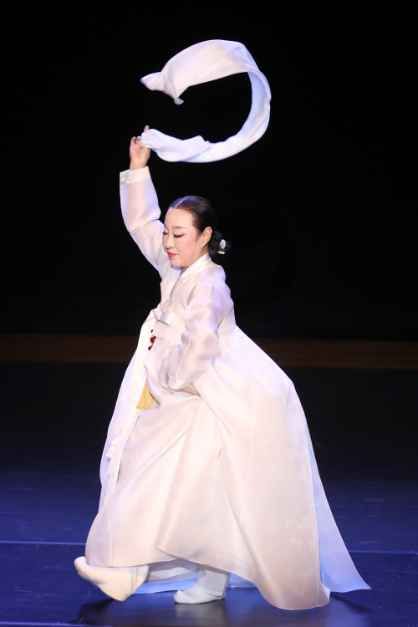
The performance area is where the designated arts appear on stage. The line-up named in the tourism listing includes forms such as the scholar’s solo dance hallyangmu, the gyeollyeon taekkyeon form of the Korean martial art, the madeul nongyo work-song tradition, ajaeng sanjo, the salpuri shaman-inspired dance, comic jaedam storytelling, and pansori drumming, alongside performances by the holders’ certified successors. These are distinct traditions rather than a single revue, so a complete piece rewards staying for the whole set.
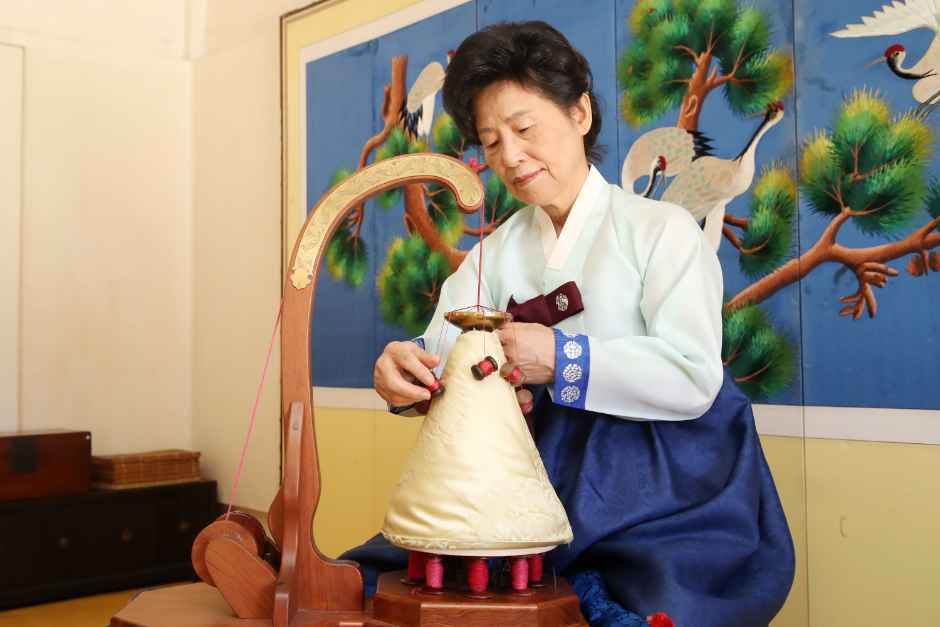
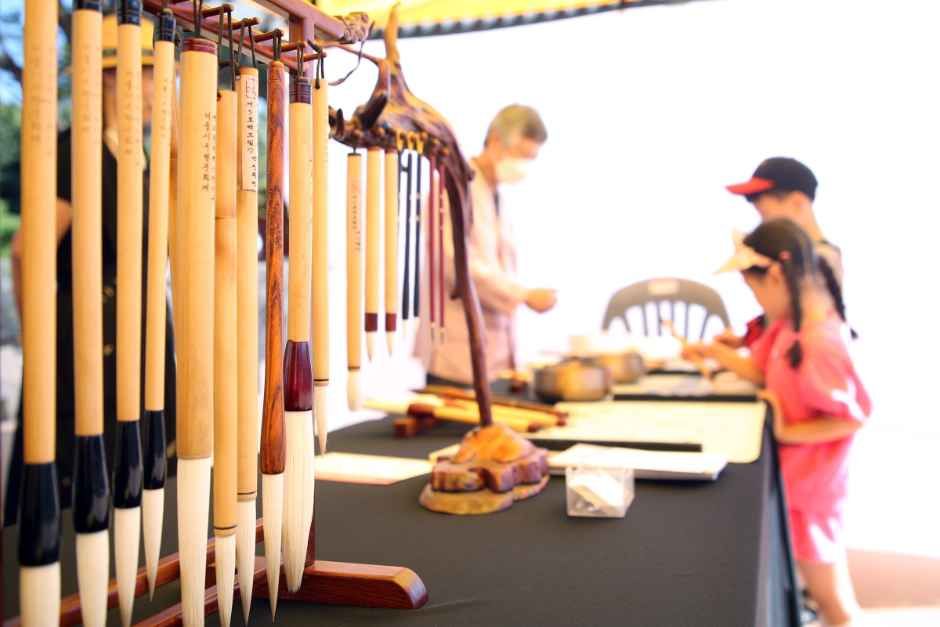
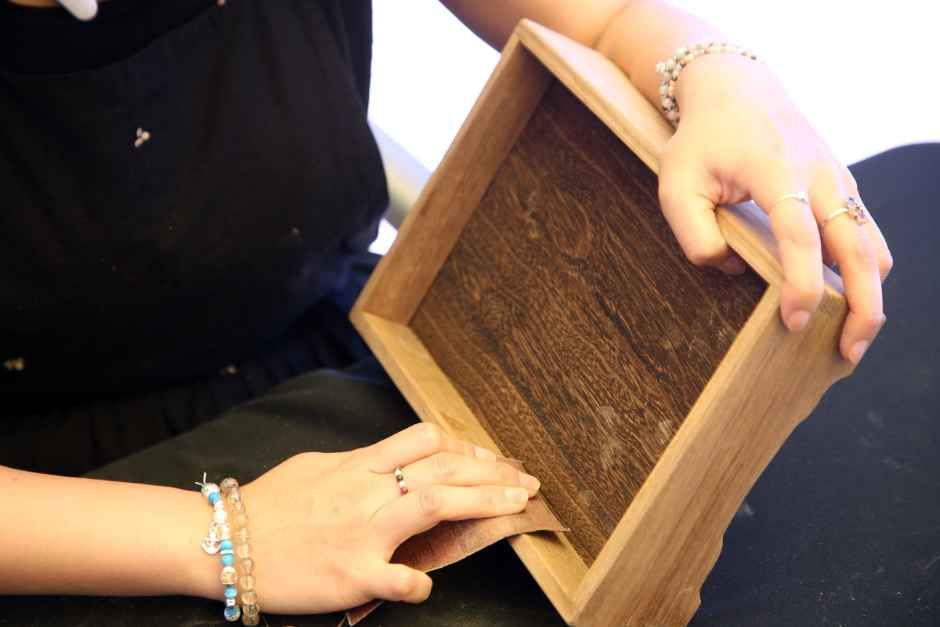
The craft area combines exhibition, live demonstration and hands-on work. Masters of skill-based heritage — embroidery, needlework and traditional sewing, silver-and-gold inlay, and jade work among them — show finished pieces and work in front of you, and some sessions let you try the technique. This is the part of the festival where the “intangible” idea becomes most concrete: you are watching a skill, not looking at an object. Some of these experience programmes are the ones that carry a fee or need advance booking.
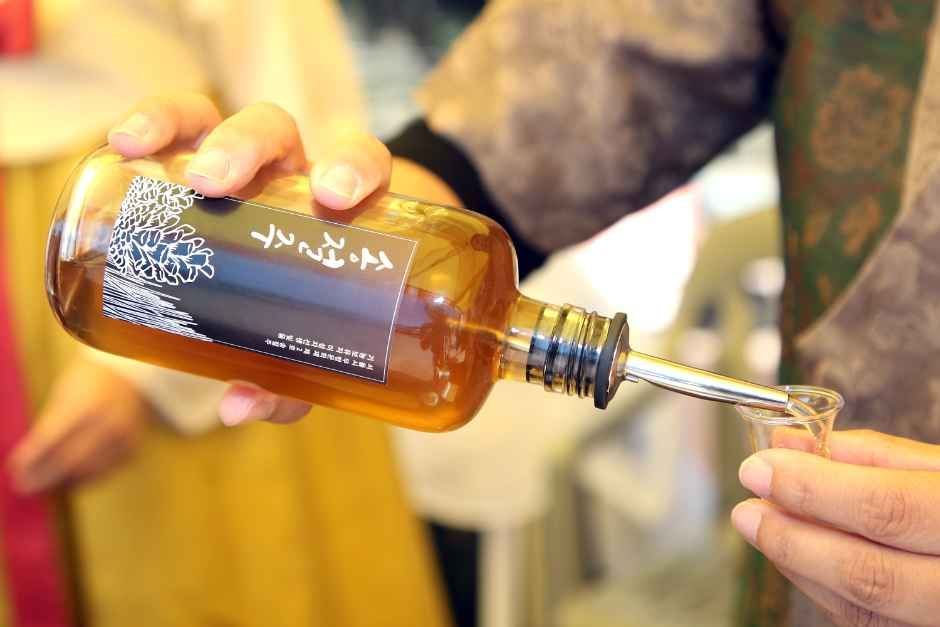
The tasting area is built around three Seoul intangible-heritage liquors: Hyangonju, Seoul Songjeolju and Samhaeju. Tasting a heritage brew where its brewing tradition is itself the protected item is a genuinely different experience from ordering it in a bar, and it is one of the clearest reasons an adult visitor might prioritise this festival over a generic hanok visit.
The participation area is aimed at general visitors and families, with traditional-craft making and a traditional-games zone. The stamp-tour area is the route already described. None of these five run to a fixed clock that had been published in full for 2026 when this guide was written, which is exactly why the detailed timetable matters more than the section names.
Tickets, hours and what costs extra
There is no gate ticket: admission is free, confirmed by the Korea Tourism Organization, the festival’s own site and the Seoul city government’s English event pages. Namsangol Hanok Village is itself a free public attraction, so entering the grounds costs nothing.
Free entry is not the same as everything being free. The tourism listing is explicit that some experience programmes are paid and some require advance booking. A dependable 2026 amount for each was not published at this writing, so this guide does not quote one. If a specific hands-on craft or tasting is the reason you are coming, check the official site or its Instagram notices, and bring a payment method rather than assuming cash-only or card-only.
The hours are the other thing to get right, because the two days are not the same. Saturday, September 12 runs 11:00-21:00; Sunday, September 13 runs 11:00-17:00. Saturday is therefore the only day with an evening, and Sunday effectively ends in mid-afternoon. Build your plan around the day you can actually attend, not around a single “festival hours” figure.
Getting there and around
This is the easy part, and it is the festival’s biggest practical advantage over most Korean regional events: it is already in central Seoul. Take Subway Line 3 or Line 4 to Chungmuro Station and leave by Exit 3 or 4; Namsangol Hanok Village is a signposted walk of only a few minutes. That access is confirmed both by the festival’s own directions and by independent guides to the village, which give the same station and exits.
City buses also stop nearby on Toegye-ro, and Namsan’s circular routes serve the wider area, but the subway is the simplest option for a first-time visitor. The address for a map app or a taxi is 28 Toegye-ro 34-gil, Jung-gu.
If you are tempted to drive, don’t. The official site states plainly that there is no parking on the festival grounds and asks visitors to use public transport, falling back on paid car parks in the surrounding streets only if necessary. In this part of Jung-gu that is sound advice regardless of the festival. On foot, the site itself is compact and walkable, though the hanok village sits on gently sloping ground at the base of Namsan, so wear comfortable shoes.
Food, tastings and nearby
Set your food expectations correctly. The heritage tastings — the three designated liquors in the tasting area — are part of the programme, but they are a cultural experience rather than a meal, and some tastings may be paid. Beyond that, no reliable 2026 detail on festival food stalls, menus, prices, vegetarian options or payment methods was available when this guide was written, so it names none. Treat whatever is operating on the day as a convenience, not a planned food programme.
The location, however, solves the meal problem better than almost any regional festival can. Chungmuro and Myeong-dong are within walking distance, and the wider Jung-gu area around the station has a dense range of ordinary Seoul restaurants and cafés. Because this is central Seoul rather than a remote festival field, you are never far from a proper sit-down meal — plan to eat before or after rather than relying on the grounds.
This guide deliberately lists no “local specialty” for the festival. The honest reason is that central Seoul does not have a single confirmed regional food specialty in the way that, say, Andong has salted mackerel, and the only specialty clue available for this location pointed to a chili-pepper event promoting produce from a different province entirely. Inventing one would be exactly the kind of guess this site refuses to make.
Honest assessment
The strength of this festival is the match between subject and setting. Seoul’s designated intangible heritage — dance, music, craft skill and brewing — is shown as living practice inside a genuine hanok village, and the five-area structure lets you see performance, craft and tasting in a single compact visit. Add free admission and a three-minute walk from a subway station, and it is one of the lowest-friction traditional-culture experiences a visitor to Seoul can plan. For a traveller who has half a day and wants something more substantial than a photo stop, it is an easy recommendation.
The weaknesses are the flip side of the same facts. Because it is compact, free and well-publicised, expect it to be busy, particularly on Saturday afternoon and evening. Because the programme is spread across small stages and craft tables, there is no single grand set-piece; if you arrive expecting one headline show you will feel it is scattered. And because the detailed 2026 timetable and the individual experience prices were not published when this guide was written, anyone travelling specifically for one performance, one artisan or one paid workshop should confirm it on the official site or Instagram first.
The fair plan is a relaxed half-day: pick Saturday if you want the fuller, later programme, arrive earlier rather than later so the demonstrations and tastings are still running, follow the stamp-tour route to see the whole site, and keep your food plans for the surrounding neighbourhood. Go for the craft demonstrations and the heritage tastings, which are hard to find elsewhere in this concentration; do not go expecting a spectacle, and you will not be disappointed.
Questions worth asking
Is the Seoul Intangible Culture Heritage Festival free?
General admission is free. Some hands-on experiences and a few tastings cost extra, and some experience programmes need to be booked in advance, but a dependable 2026 price for each one had not been published when this guide was written. Bring a payment method rather than budgeting around an unconfirmed figure.
What is the difference between the two days?
Saturday, September 12 runs 11:00-21:00, so it is the only day with a real evening. Sunday, September 13 runs 11:00-17:00 and closes in the afternoon. If you want to be there after dark, or you want the fullest programme, choose Saturday.
How do I get there by subway?
Take Seoul Subway Line 3 or Line 4 to Chungmuro Station and use Exit 3 or 4; Namsangol Hanok Village is a short signposted walk of a few minutes. City buses also stop nearby on Toegye-ro.
Is there parking at the festival?
There is no visitor parking on the festival grounds. The organiser asks people to travel by public transport and to use paid car parks in the surrounding area if driving is unavoidable.
Can I taste the traditional liquors?
Yes. One of the five programme areas is a tasting zone for three Seoul intangible-heritage liquors — Hyangonju, Seoul Songjeolju and Samhaeju. Some tastings and experiences are paid or need advance booking, so check the official notices before relying on a particular session.
Before you goFestival Etiquette in Korea: What Visitors Get WrongBooking KTX Trains and Intercity Buses as a Foreign VisitorGetting Out of Incheon Airport and On to a FestivalKorean Festivals With Children: Toilets, Strollers and TimingStaying Online in Korea: SIM, eSIM and the Apps That MatterEating at a Korean Festival Without Speaking KoreanRain, Typhoons and Cancelled Festivals: How to Plan Around ThemHow to Pay for Things in KoreaT-money and Transit Cards in KoreaWhat to Wear to a Korean Festival, Season by Season
LAST UPDATED · Sep 9, 2026