
Autumn · Seoul · Field listing
Seoul International Writers' Festival 2026
The essentials first: whether it is open, what it costs, how hard it is to reach and what to expect if you do not speak Korean.
When
Sep 11 — 16ConfirmedConfirmed dates
Where
Ara Art Center, Insadong, Jongno-gu, SeoulSeoul
Admission
FREEAdmission is free. Talks and workshops use advance reservations through the festival program pages and Naver Booking; the special exhibition can be visited without a reservation during its published opening hours.
From Seoul
About a 10-minute walk from Anguk StationTake Seoul Subway Line 3 to Anguk Station and use Exit 6. Ara Art Center gives a walking time of about 10 minutes; Jonggak Station Exit 3-1 is another roughly 10-minute walk, and Jongno 3-ga Station Exit 5 takes about 15 minutes.
Organiser
Literature Translation Institute of Korea (LTI Korea), 02-6339-1232
Is this one for you?
Who it suits. For readers happy to sit for a two-hour conversation between two writers and follow ideas rather than watch a show; the international line-up and the small autobiography, poetry, illustration and fiction workshops reward people who plan around named sessions. It is a poor fit if you wanted a browsable book fair with stands, a lively spectacle, or a drop-in day out, since the substance is in what gets said and the talks and workshops need advance reservations.
When to go. This is a scheduled festival, not a place to wander into, and it runs only six days from September 11 to 16, 2026. No single session gathers all 24 writers, so the useful move is to pick one or two named talks or workshops first and reserve them rather than aim for a best day; the Kim Ae-ran and Benjamin Labatut opening conversation anchors the start. Keep the exhibition as the flexible, no-booking part around whichever sessions you secure.
LOCAL WEATHER
Weather near the festival
The festival date is outside the current forecast window. Check again closer to your trip.
Korea Meteorological Administration forecast
Need something we do not list — a stall menu, a parking gate, a last bus? The Korea Travel Helpline answers in English around the clock: dial 1330 inside Korea, or +82-2-1330 from abroad.
This is a scheduled literary festival, not a book fair with stands to browse all day. Korean and international writers meet for paired conversations, workshops and an exhibition inside Ara Art Center in Insadong. The useful way to plan it is to pick one or two named sessions first, reserve them, and treat the exhibition as the flexible part of the visit.
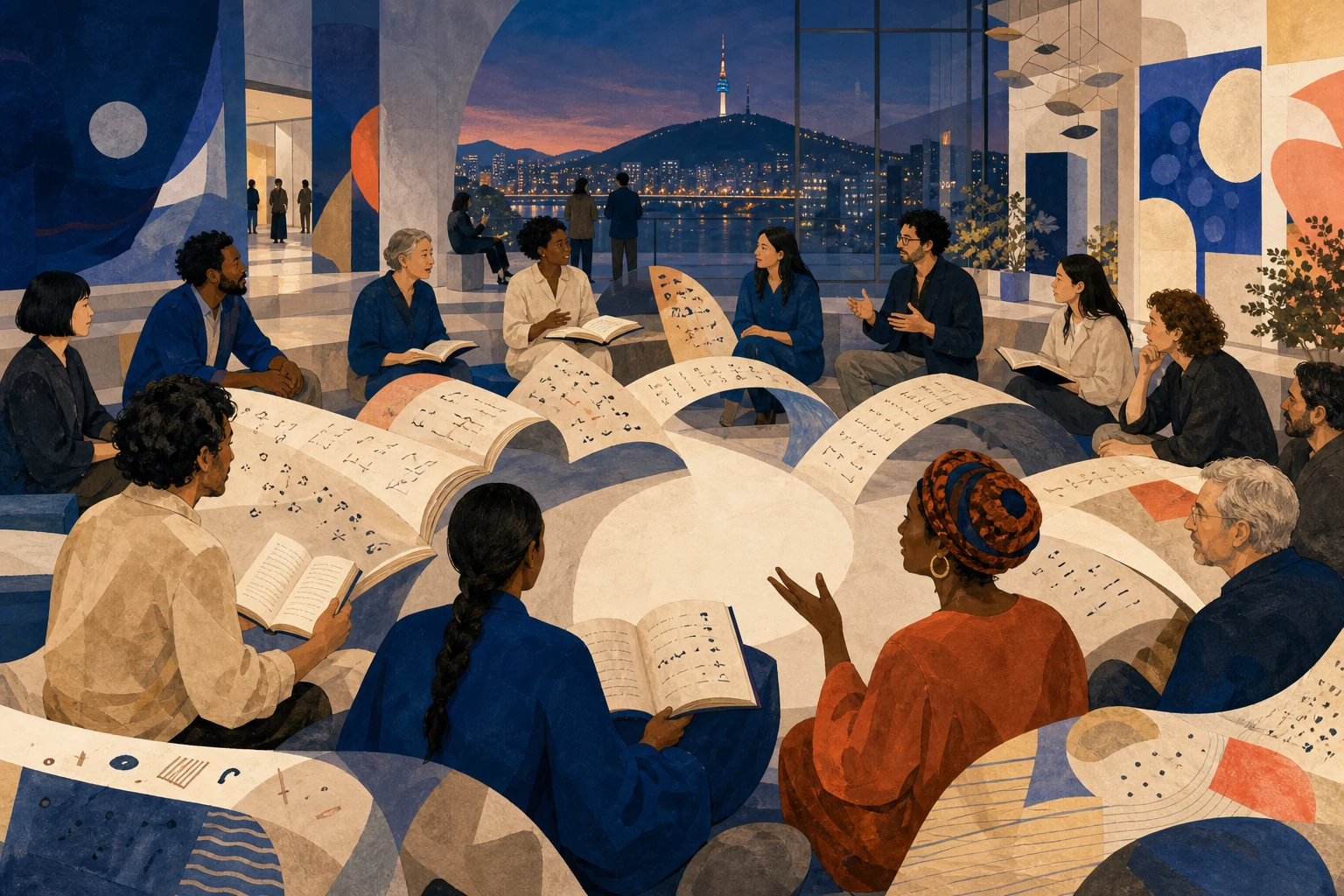
The 2026 program runs from September 11 to 16. It is the 15th edition; the Literature Translation Institute of Korea (LTI Korea) has run the festival since 2006, which is why the international line-up is stronger than the “local literary event” label would suggest. The 2026 theme is a plain question — “Who are we?” (누구세요?) — the kind you ask a stranger, stretched into a question about human and community identity in an age of AI and non-human intelligence. That framing matters for planning only in the sense that most sessions are discussion, not spectacle: the substance is in what gets said.
The opening conversation brings together Kim Ae-ran and Benjamín Labatut. The wider program lists 24 writers in total — 14 Korean and 10 international — so no single session gathers everyone, and the range is the point rather than a promise that a given writer appears every day.
What you actually do here
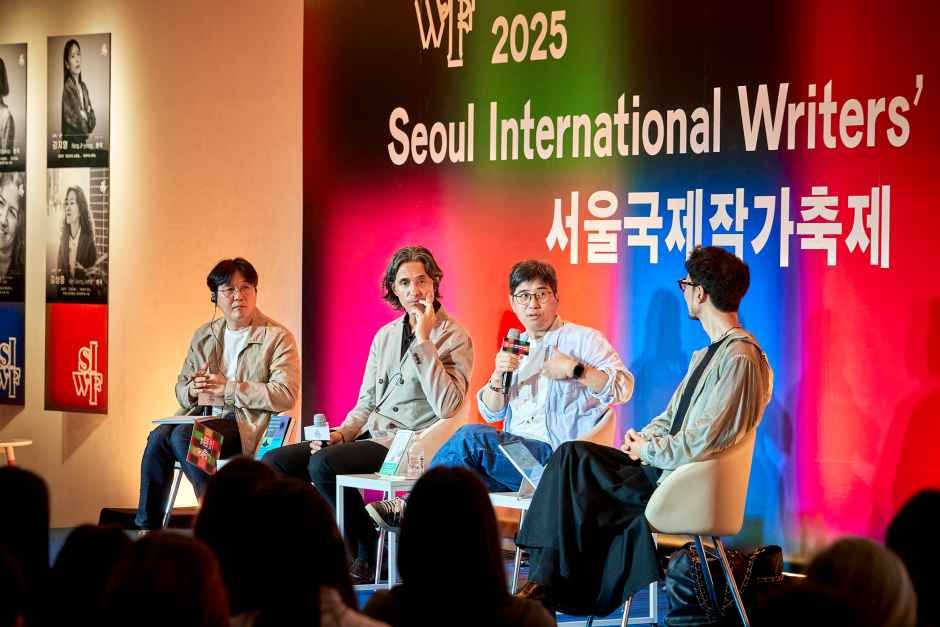
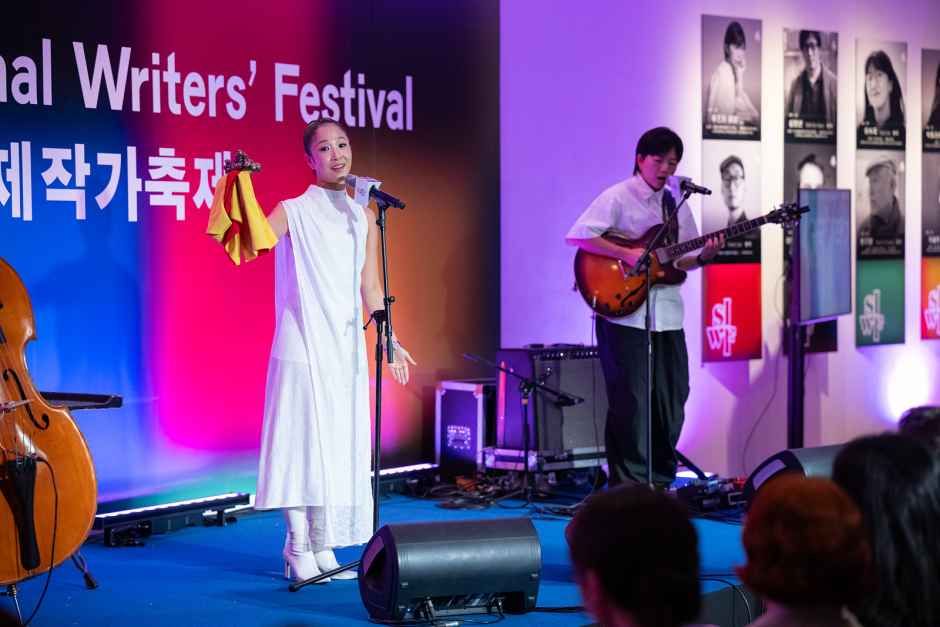
Most of the program consists of seated conversations between two writers, usually scheduled for about two hours. Workshops are smaller, practical sessions built around autobiography, poetry, illustration, graphic novels or fiction. The published schedule places the talks mainly on the third floor and workshops on the second floor, so moving between consecutive sessions is straightforward.
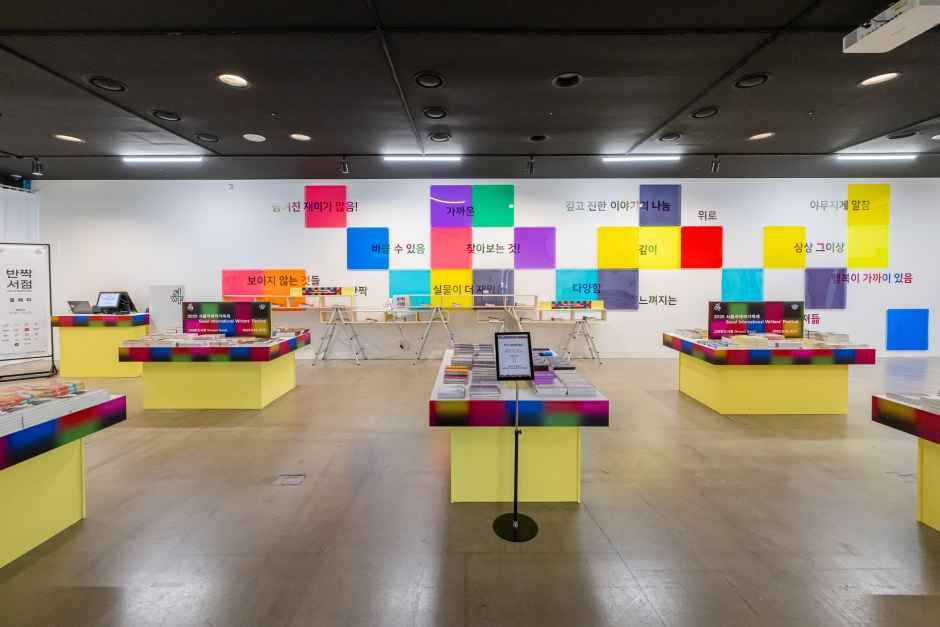
There is also a six-day special exhibition across the first three floors. It can be visited without advance booking, unlike the talks and workshops. Its hours change by date, so use the current program or reservation notice rather than assuming the art center’s normal opening hours apply.
Admission is free, but free does not mean walk-in space is guaranteed. The organizer has a dedicated advance-reservation process: open the program you want on the official site, follow its reservation button, and complete the booking through Naver. Build the day around confirmed sessions. If a session is unavailable, the exhibition remains the part you can reliably enter without a reservation during its listed hours.
Programme and timetable
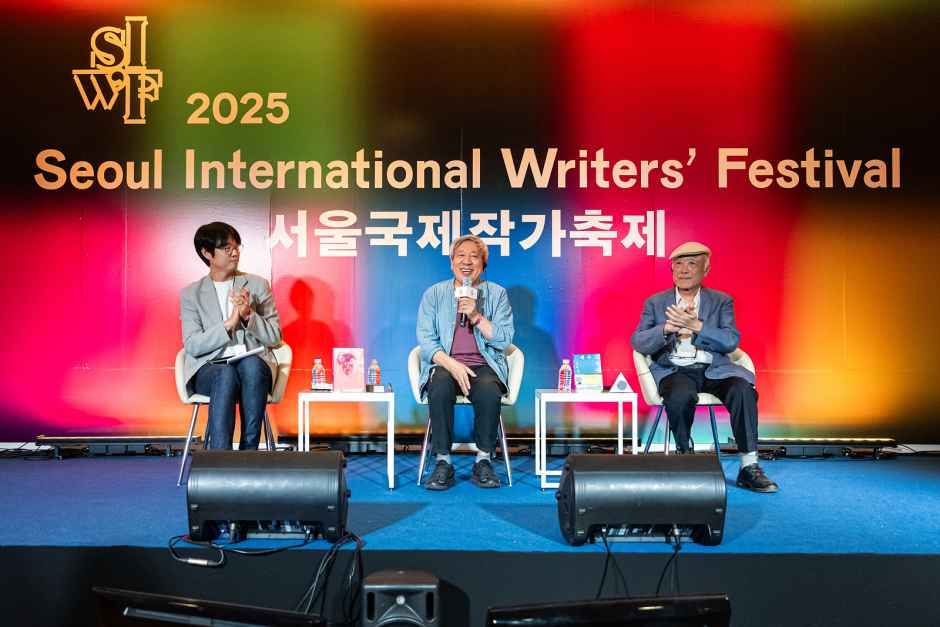
The 2026 edition runs about 20 programs over the six days, and they fall into a few recognisable formats. The core is the one-on-one dialogue, in which a Korean and an international writer talk through each other’s work; the opening pairing of Kim Ae-ran and Benjamín Labatut (Chile) is built around the sub-question “We are human.” Alongside those are author-and-translator conversations — useful if you read these writers in translation and want to hear how the text crossed languages — and smaller audience-participation workshops.
The international guests announced for 2026 include Damon Galgut (South Africa), Hirano Keiichiro (Japan), Silvia Moreno-Garcia (Canada), the poet Uliana Wolf (Germany), the picture-book author Beatrice Alemagna (Italy), Zhou Jianxin (Taiwan) and John Langan (United States), meeting Korean counterparts across fiction, poetry, picture books and graphic novels. Some pairings are already named: the Korean picture-book author Kim Hyo-eun is matched with Beatrice Alemagna, and the cartoonist Park Gun-woong meets Zhou Jianxin over graphic novels. The workshop strand is not limited to reading and talking — announced sessions include making a poetry audiobook and a live-drawing program, which is why the “workshop” label covers quite different things depending on the slot.
Two planning points follow from this. First, each program has its own time and its own room, and the official site publishes them program by program rather than as one fixed daily grid; the venue’s own listing simply says hours vary by program. Check the exact session time on its own page before you build a day around it. Second, because the writers are split across many small sessions, arriving without a chosen program is the main way to spend an afternoon in the building and still miss the specific conversation you wanted.
Tickets, reservations and online access
There is no gate ticket — every program is free — but the popular sessions run on advance reservation. LTI Korea opened 2026 reservations on August 10 and routes each program’s booking to Naver Booking; the practical route is to open the session page on the official site and follow its reservation button. The exhibition is the deliberate exception the organizer allows you to enter without booking during its published hours.
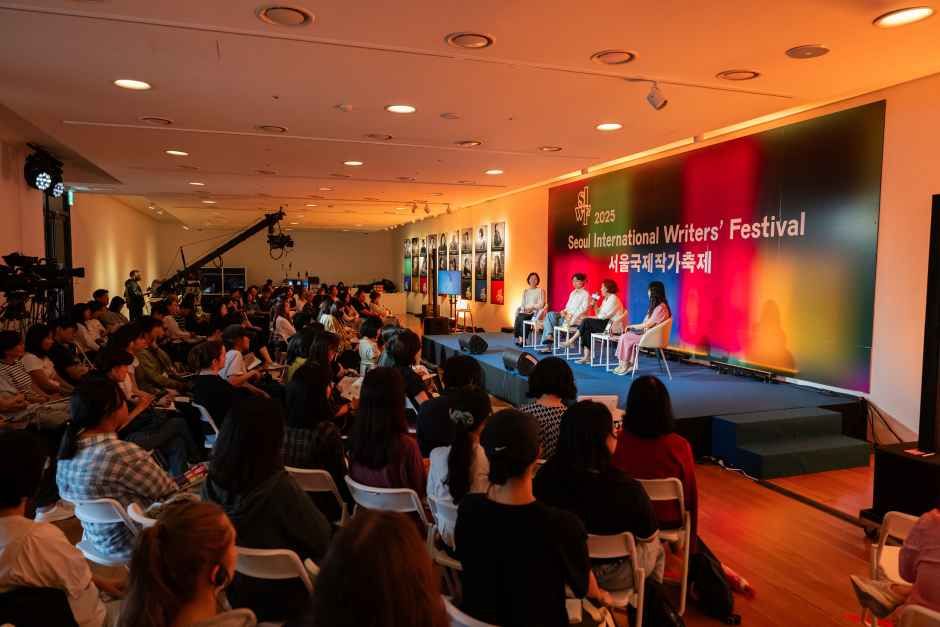
The festival is also run as a hybrid: main programs are streamed online, and you apply for live streaming through the official site. That is genuinely useful if a single conversation is your reason for coming but you cannot get to Insadong that day — you can follow the talk without a physical seat. It is not a full substitute, though: the exhibition and the incidental value of being in the room among readers and writers do not translate to a stream. Treat online access as a way to catch one named session, not as the whole visit.
Getting there without a car
The venue is in central Seoul, so there is no intercity leg unless you are coming from outside the city. The most direct local route is Seoul Subway Line 3 to Anguk Station. From Exit 6, Ara Art Center’s own directions give a walking time of about 10 minutes: continue into Insadong, walk toward Ssamziegil, then turn into the lane opposite it.
Two useful alternatives serve different subway lines. From Jonggak Station on Line 1, Exit 3-1 is about a 10-minute walk. From Jongno 3-ga Station on Line 5, Exit 5 is about 15 minutes away. Those venue-published times cover the walk only; total travel time depends on where in Seoul you start and any transfer you need.
Several city and regional buses stop around Insadong and Jogyesa, but the subway is easier to describe and less exposed to central-Seoul traffic. If you do arrive by bus, navigate to the exact street address — 26 Insadong 9-gil — because the building sits off the main Insadong pedestrian street rather than directly on it.
Driving is the weakest option here. Ara Art Center does not offer a dedicated festival car park; its own directions send drivers to the Insadong Seo-Insa-madang public garage at roughly 800 won per 10 minutes. Central Insadong is largely pedestrianised, and a talk-based festival gives you no reason to keep returning to a car, so for most visitors the subject is moot — arrive by subway, walk the last stretch through Insadong, and skip the parking question entirely.
Honest assessment
This festival works best for readers who already know which writers or subjects they want to hear. A talk is not a quick attraction: most published sessions run for 90 minutes to two hours, and several overlap. Reading the timetable before booking matters more here than setting aside a generic half-day.
The main practical constraint is capacity, not an outdoor crowd. The organizer opened advance reservations for the programmed events, while explicitly allowing the exhibition to be visited without one. That is a clear reason to reserve a priority talk rather than count on a seat at the door. It is not evidence that every session will fill, so plan for the session you care about without assuming the whole building will be packed.
The location makes a failed or short visit easy to salvage: Insadong, Jogyesa and the galleries around Anguk are all nearby. On the other hand, this is not the right event if you want a lively street festival, food stalls or performances that can be enjoyed without following a conversation. The substance is in the discussions and workshops, and the site does not claim what interpretation or multilingual support will be available. Check the individual program page for any session-specific information before reserving.
Questions worth asking
Do I need to reserve a place?
Reserve any talk or workshop you particularly want to attend. The organizer routes reservations from each program page to Naver Booking. The special exhibition is the exception: the official notice says it is open without advance booking during exhibition hours.
Is the festival one continuous event?
No. It is a timetable of separate talks and workshops, mostly lasting 90 minutes to two hours, plus an exhibition spread across the building. Choose sessions from the program before you travel rather than arriving for an unspecified festival day.
Which station is easiest?
Anguk Station on Line 3 is the simplest approach. Leave by Exit 6 and allow about 10 minutes to walk through Insadong. Jonggak on Line 1 is a similar walk, while Jongno 3-ga on Line 5 takes about 15 minutes.
Can I follow it online instead of travelling?
The organizer runs the festival in both offline and online formats and offers live streaming of main programs; you apply for streaming through the official site. Treat it as a way to hear a specific conversation you cannot reach in person rather than a full substitute for the exhibition, which is a physical space in the building.
Is there parking at the venue?
Ara Art Center points visitors to the Insadong Seo-Insa-madang public garage at about 800 won per 10 minutes. Central Insadong is a pedestrian-heavy area with paid public parking rather than a large festival lot, so the subway is the easier arrival for most visitors.
How many writers take part, and can I see all of them?
The 2026 edition lists 24 writers — 14 Korean and 10 international — across about 20 programs. No single session gathers all of them; each program pairs a small number of writers, so choose the conversations you care about from the schedule rather than expecting to see everyone.
Before you goFestival Etiquette in Korea: What Visitors Get WrongBooking KTX Trains and Intercity Buses as a Foreign VisitorGetting Out of Incheon Airport and On to a FestivalKorean Festivals With Children: Toilets, Strollers and TimingStaying Online in Korea: SIM, eSIM and the Apps That MatterEating at a Korean Festival Without Speaking KoreanRain, Typhoons and Cancelled Festivals: How to Plan Around ThemHow to Pay for Things in KoreaT-money and Transit Cards in KoreaWhat to Wear to a Korean Festival, Season by Season
LAST UPDATED · Sep 7, 2026