
Autumn · Seoul · Field listing
Youth Boulevard 2026
The essentials first: whether it is open, what it costs, how hard it is to reach and what to expect if you do not speak Korean.
When
Sep 19 — 19ConfirmedConfirmed dates
Where
Open Stage, Seoul Children's Grand Park, Gwangjin-guSeoul
Type
Culture & arts
Admission
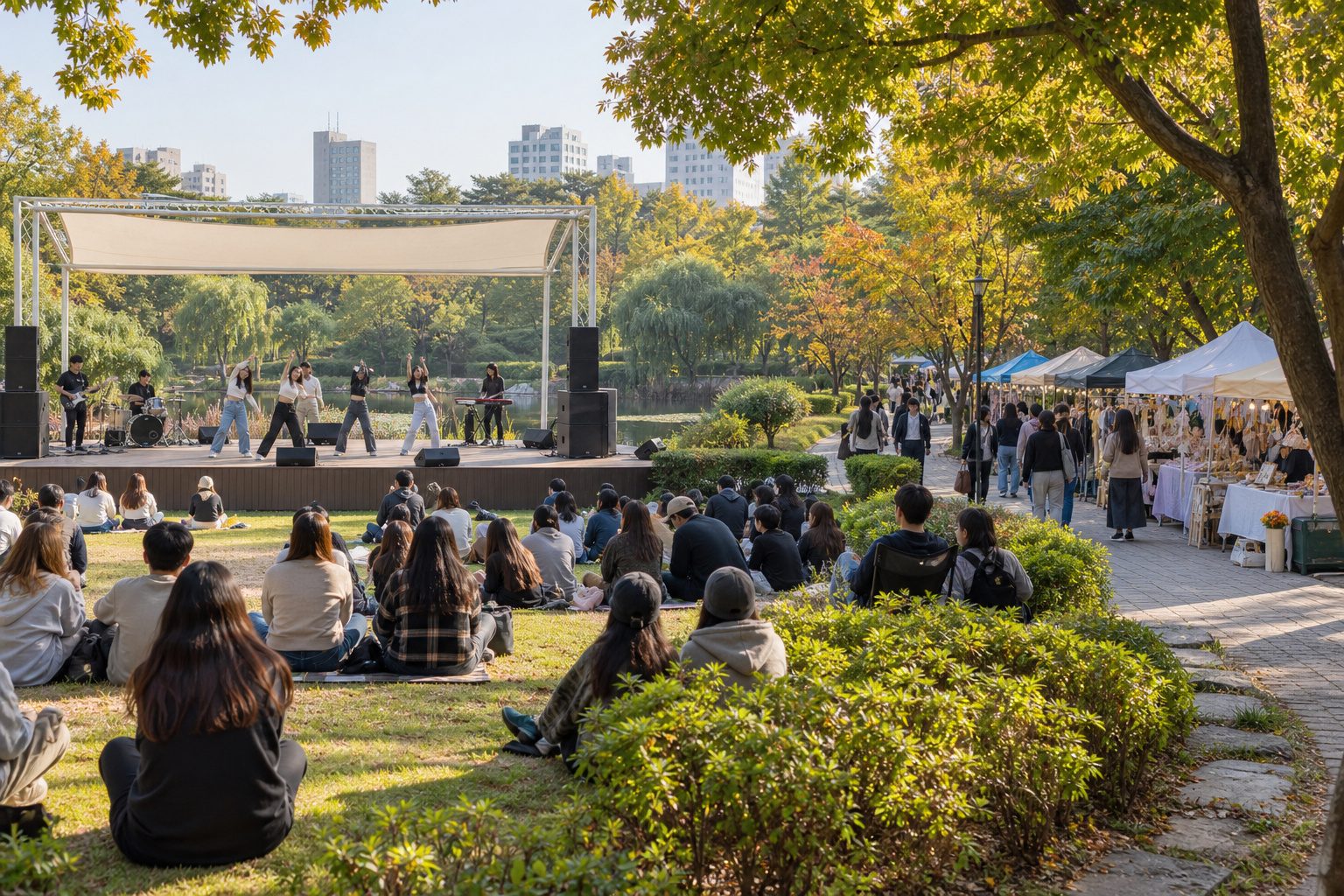
FREEAdmission is free. The event is held on a single day, 11:00-19:00, at the Open Stage inside Seoul Children's Grand Park and in the area around Children's Grand Park Station exits 1 and 2. The park itself is a free public park with no entry gate. No ticket, reservation or reserved seating for the Park Jae-jung mini concert was announced; it is part of the free programme, which in practice means first-come standing and lawn viewing.
From Seoul
About 25-35 minutes by subway from central SeoulThis is a Seoul city event, not an out-of-town trip. Take Subway Line 7 to Children's Grand Park Station (station 726); Exit 1 is the main gate of Seoul Children's Grand Park, a few minutes' walk from the Open Stage. Konkuk University Station (Lines 2 and 7) is one stop away if you are transferring from Line 2.
Hours
11:00-19:00 on September 19, 2026 (one day only)
Organiser
Gwangjin-gu (Gwangjin District Office), 02-450-7596
Is this one for you?
Who it suits. This suits visitors who are already in Seoul and want an unpolished afternoon of Korean student and youth culture — university club K-pop dance, bands, busking and a flea market — in a large city park, capped by a free mini concert from singer Park Jae-jung. It is a weak choice for anyone expecting a big-name multi-day festival or traditional heritage: it is a one-day district event run largely by and for students, small in scale, and not worth a special journey from outside Seoul. If crowds around a free headline concert bother you, note the afternoon will be busiest right before Park Jae-jung's set.
When to go. It runs only on September 19 from 11:00 to 19:00, so there is no second day to fall back on. The programme builds through the afternoon: student club stages from around midday, a comedy talk concert in the early afternoon, and Park Jae-jung's mini concert as the finale at about 16:30. Come by early afternoon to browse the flea market and experience booths in daylight and hold your spot near the Open Stage; if the concert is your reason for coming, arrive well before 16:30 because seating is not reserved.
LOCAL WEATHER
Weather near the festival
The festival date is outside the current forecast window. Check again closer to your trip.
Korea Meteorological Administration forecast
Need something we do not list — a stall menu, a parking gate, a last bus? The Korea Travel Helpline answers in English around the clock: dial 1330 inside Korea, or +82-2-1330 from abroad.
Youth Boulevard (Cheongchun-daero) is a one-day youth culture festival run by Gwangjin-gu, the district in eastern Seoul that includes Konkuk University, Sejong University and Seoul Children’s Grand Park. For 2026 it takes place on Saturday, September 19, from 11:00 to 19:00, centred on the park’s Open Stage (Yeollin Mudae) at 216 Neungdong-ro, with spillover activity in the street area around Children’s Grand Park Station exits 1 and 2. Admission is free.
It helps to set expectations honestly at the top. This is not a large branded festival with a multi-day line-up; it is a district-run event built around local university students and young creators, watched mostly by people who live or study nearby. What gives it a wider pull for 2026 is a free finale mini concert by singer Park Jae-jung. If you are already in Seoul and want to see student club culture, buskers and a small flea market in a green park — and catch a free concert at the end — it is a pleasant, low-commitment afternoon. If you want a headline festival, this is not it.
What you actually do here
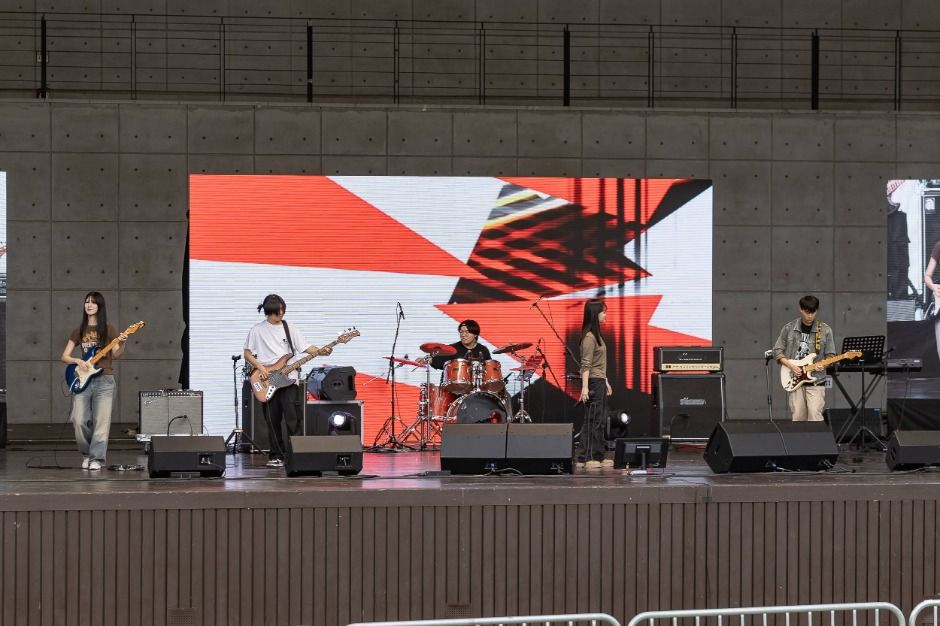
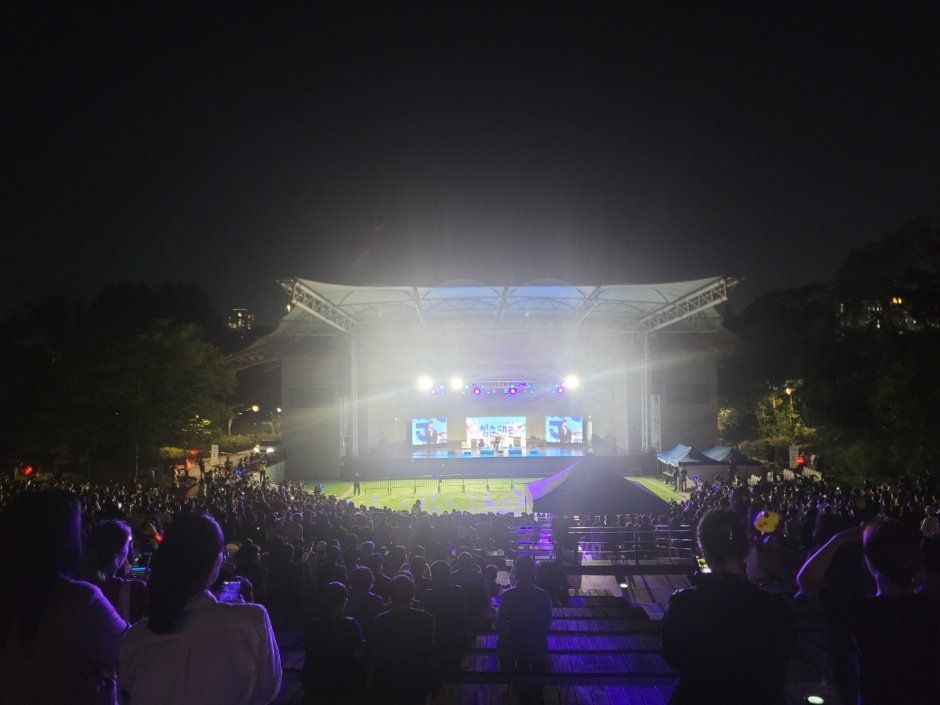
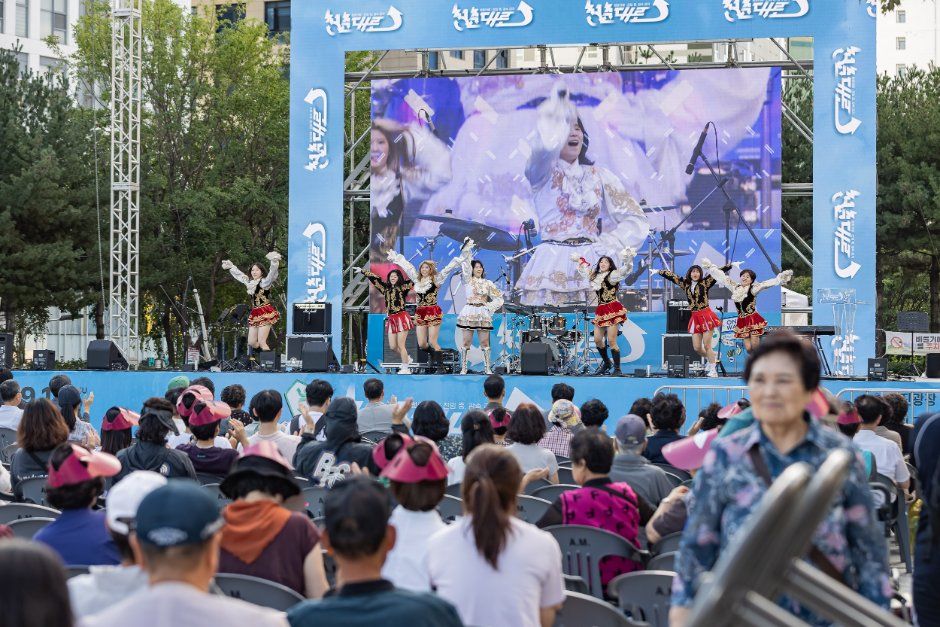
The core of the day is the Open Stage. Gwangjin-gu describes the main programme as a run of live sets: a street parade and gilnori procession by the Sejong University club Turbeollim that moves from the park’s main gate to the stage, followed by club performances from Sejong and Konkuk university students. The Korea Tourism Organization’s Korean listing describes these as K-pop, dance, band, hip-hop and cheerleading acts — the kind of student-team performances you would otherwise only see on a campus. Between the scheduled sets, a youth busking strand puts indie and amateur performers on smaller spots, including bands, vocalists, dance and even magic.
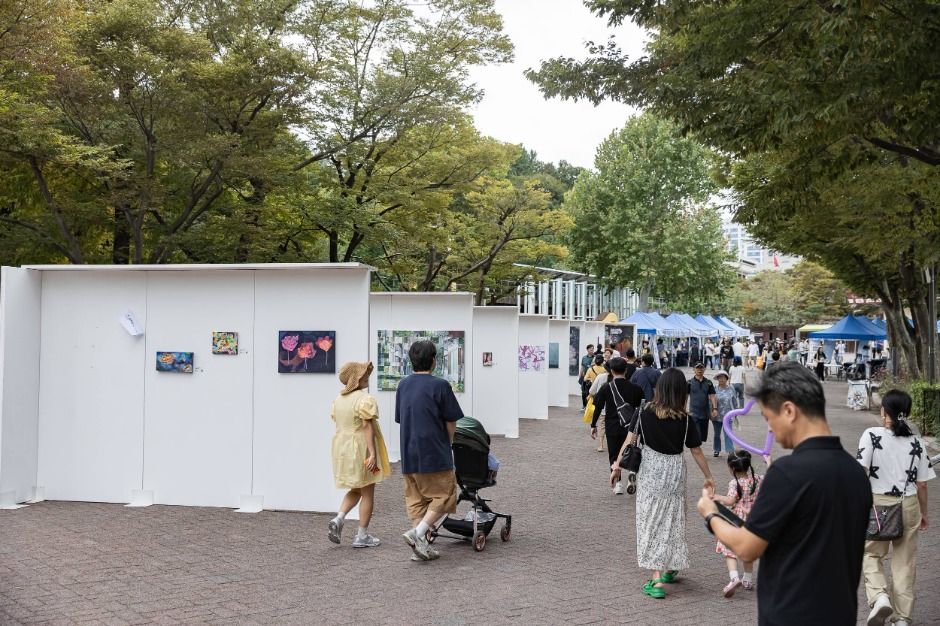
Away from the stage, the festival spreads across the park path and the entrance area as a street fair. There is a youth flea market run by university students and young entrepreneurs, and a row of experience booths where the announced activities include making snow globes, leather-craft items and shrink-plastic keychains, plus a personal-colour analysis station. Gwangjin-gu also runs a district information booth with participation events. None of this needs a ticket; you pay only if you buy something at the market or a craft booth.
The single biggest draw is the closing Park Jae-jung mini concert. Park is an established Korean singer, and his set is billed as the festival’s finale rather than a support act, so expect the crowd at the Open Stage to be at its largest in the hour before and during that performance.
Programme and timetable
Gwangjin-gu’s press release, relayed by Korean news outlets on September 8–9, gives an hour-by-hour outline. Treat these as the announced plan and reconfirm them on the district’s official blog on the day, because a one-day event can shift its running order late:
- From around 12:00 — Sejong University club performances open the main stage, after the Turbeollim parade from the park gate.
- From around 13:00 — Konkuk University club performances continue on the Open Stage.
- From around 14:00 — a talk concert with the comedy creator group Snack Town, built around audience participation.
- 14:00–16:00 — a “Cops and Robbers” participation game staged on the park’s UN Peace Hill area, involving students and visitors.
- About 16:30 — the Park Jae-jung mini concert closes the programme.
Running alongside all of this, from opening at 11:00 to close at 19:00, are the busking spots, the flea market and the experience and information booths. Because the whole thing happens in one afternoon, there is no way to “come back tomorrow” for anything you miss — the value of the timetable is deciding what you specifically want to catch. If you care mainly about the student club stages, the midday-to-early-afternoon block is the heart of it; if you are coming for Park Jae-jung, the late afternoon is what matters.
Tickets, the concert and what is free
There is no admission ticket. Both the festival and Seoul Children’s Grand Park are free to enter, and the park has no ticket gate. The stage programme, including the headline concert, is free to watch.
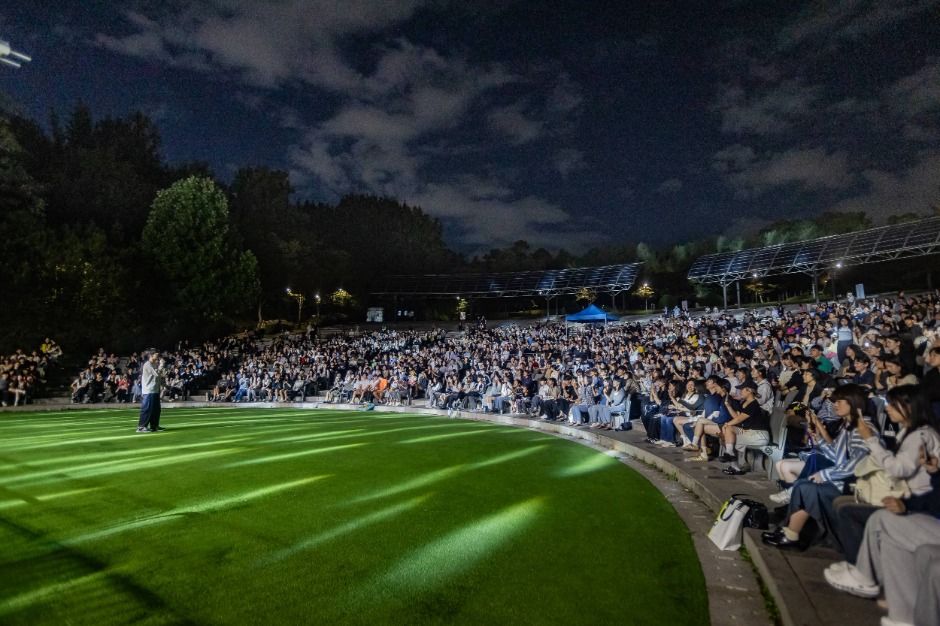
The important practical point is that no reserved seating or separate ticket was announced for the Park Jae-jung concert. It is part of the free festival, which in practice means lawn and standing viewing on a first-come basis. If being close to the stage matters to you, the realistic plan is to arrive well before 16:30 and hold a spot rather than expecting a seat. The only things you pay for on the day are optional: goods at the flea market and materials at the hands-on craft booths, where you are buying a product rather than entry.
Because this is a compact one-day event, there was no published detail on food vendors, and this guide does not invent a stall list. The festival sits inside a major city park in the Konkuk University neighbourhood, so ordinary Seoul eating options are a short walk away outside the gates; treat anything operating inside the park on the day as a convenience rather than a planned food programme.
Getting there without a car
This is a Seoul city event, so the “how do I get from Seoul” question is really just a subway ride. Take Subway Line 7 to Children’s Grand Park Station (station 726) and leave from Exit 1, which is the park’s main gate; the Open Stage is a short walk inside. From central Seoul this is roughly a 25–35 minute ride depending on where you start and whether you transfer. If you are coming along Line 2, Konkuk University Station (Lines 2 and 7) is one stop away and a straightforward transfer point.
Driving is the weaker option. The venue is inner-city Seoul on a Saturday, parking at and around a popular park is limited, and the festival deliberately uses the pedestrian area around the station exits — so the subway drops you closer to the action than a car would. If you must drive, use the district’s own notice for any parking guidance rather than assuming curbside space near the gate.
One useful feature of the location is that it is easy to combine with the rest of the day. Children’s Grand Park is itself a free attraction, and the Konkuk University area a stop away has a dense cluster of cafés, restaurants and shops, so the festival slots naturally into a wider Seoul outing rather than demanding a dedicated journey.
Honest assessment
The strength of Youth Boulevard is exactly what its name suggests: it is a genuine slice of Korean youth and student culture, staged for free in an easy-to-reach city park. University club dance and band sets, buskers, a student flea market and craft booths give it an unforced, campus-festival feel that a big commercial event usually smooths away, and the free Park Jae-jung concert adds a real headline without a ticket price. For a visitor already in Seoul, that is a good-value afternoon.
Its limitations are equally clear and worth stating. It is one day only, small in scale, and mostly in Korean, with no field-checked English support — so it rewards curiosity and a relaxed attitude more than careful itinerary-building. The published programme times come from a district press release and can move, and the concert has no reserved seating, so the experience near the stage in the late afternoon will be a crowd, not a comfortable seat. It is not a reason on its own to travel to Seoul, and anyone expecting a major festival with a broad line-up will find it modest.
The fair way to approach it is as a free, spontaneous add-on: come in the early afternoon, browse the market and booths in daylight, watch a couple of student sets, and stay for the Park Jae-jung finale if that appeals — then move on to the Konkuk University neighbourhood for dinner. Reconfirm the date, hours and running order on Gwangjin-gu’s official blog shortly before you go, since a single-day event leaves no margin if anything shifts.
Questions worth asking
When and where is Youth Boulevard 2026?
It is held on Saturday, September 19, 2026, from 11:00 to 19:00, on a single day. The main site is the Open Stage inside Seoul Children's Grand Park at 216 Neungdong-ro, Gwangjin-gu, with additional activity in the area just outside the park around Children's Grand Park Station exits 1 and 2.
Is Youth Boulevard free?
Yes. Admission to the festival and to Seoul Children's Grand Park is free, and no entry ticket is required. Some flea-market goods and hands-on booth activities are paid because you are buying a product or a craft, but there is no gate charge and no admission fee for the stage programme.
Is Park Jae-jung really performing, and do I need a ticket?
Yes. Gwangjin-gu's own announcement, carried by several Korean outlets, lists a mini concert by singer Park Jae-jung as the festival finale at about 16:30. No separate ticket or reserved seating was announced; it is part of the free programme. Because seating is not reserved, arrive early if you want to be near the stage.
How do I get there by subway?
Take Subway Line 7 to Children's Grand Park Station (station 726) and use Exit 1, the park's main gate, then walk to the Open Stage. Konkuk University Station on Lines 2 and 7 is one stop away, which is convenient if you are transferring from Line 2.
Is it worth travelling to from outside Seoul?
Probably not on its own. This is a one-day, small-scale district festival built mostly around university clubs, busking and a flea market, plus one free headline concert. It is an easy, low-cost add-on if you are already in Seoul, but it does not have the scale to justify a dedicated trip from another region.
Before you goFestival Etiquette in Korea: What Visitors Get WrongBooking KTX Trains and Intercity Buses as a Foreign VisitorGetting Out of Incheon Airport and On to a FestivalKorean Festivals With Children: Toilets, Strollers and TimingStaying Online in Korea: SIM, eSIM and the Apps That MatterEating at a Korean Festival Without Speaking KoreanRain, Typhoons and Cancelled Festivals: How to Plan Around ThemHow to Pay for Things in KoreaT-money and Transit Cards in KoreaWhat to Wear to a Korean Festival, Season by Season
LAST UPDATED · Sep 15, 2026