
Autumn · Gyeongsangbuk-do · Field listing
Andong Maskdance Festival 2026
The essentials first: whether it is open, what it costs, how hard it is to reach and what to expect if you do not speak Korean.
When
Sep 24 — Oct 4ConfirmedConfirmed dates
Where
Mask Dance Park and Andong Old Downtown, AndongGyeongsangbuk-do
Admission
PAIDGeneral admission is a paid ticket for 2026, a change from the previous free-entry years. Andong City ran a pre-sale until September 17 at 6,000 won general and 4,000 won student; the city stated the on-site price is 2,000 won higher, putting the gate price around 8,000 won general. Pre-sale buyers also received a 2,000 won 'Mask Dance Love' coupon usable at festival venues and designated downtown shops. Some hands-on activities and performances inside the mask-dance theatre are charged separately on top of admission, and those per-programme prices have not been published.
From Seoul
About 2 hours by KTX-EumTake a KTX-Eum from Cheongnyangni Station to the present Andong Station, then continue by local bus or taxi to the old-station site and Mask Dance Park in central Andong. The rail station and festival site are not the same place.
Hours
10:00-22:00
Organiser
Korea Spiritual Culture Foundation, 054-840-3400
Is this one for you?
Who it suits. This suits visitors drawn to traditional performance that reads visually — masks, costume, movement and street procession communicate before any spoken explanation, and you can compare Korean forms with invited overseas troupes and short competition pieces in one visit. It is a poor fit for anyone wanting a single continuous show or a quiet outing — the programme is spread across several venues over eleven days, so arriving without the daily schedule means seeing plenty of activity but missing the one complete performance you came for, and the crowd is forecast to exceed 30,000 at peak.
When to go. The programme peaks after dark — the festival-eve programme, the opening parade and ceremony, and the closing event all run in the evening, and the grounds operate until 22:00. A Seoul day trip works for several daytime performances and dinner but is a weak plan for the closing programme, which only begins at 20:30 on the final day. Weekend anchor events draw the largest crowds, so build in an exit route and avoid a tight late train connection.
LOCAL WEATHER
Weather near the festival
The festival date is outside the current forecast window. Check again closer to your trip.
Korea Meteorological Administration forecast
Need something we do not list — a stall menu, a parking gate, a last bus? The Korea Travel Helpline answers in English around the clock: dial 1330 inside Korea, or +82-2-1330 from abroad.
Update — rechecked on September 14, 2026, ten days before opening. The dates are unchanged (September 24–October 4) and nothing has been postponed or cancelled. Two things did change from earlier reporting. First, general admission is now a paid ticket for 2026, not free: Andong City ran a pre-sale until September 17 at 6,000 won general and 4,000 won student, with the on-site price 2,000 won higher (about 8,000 won at the gate). Second, the city is running its first roving foreign-visitor service — 45 municipal staff offering English, Japanese, Chinese and Spanish interpretation who move around the grounds rather than sitting at a fixed desk. The full daily performance grid was still not published at this recheck.
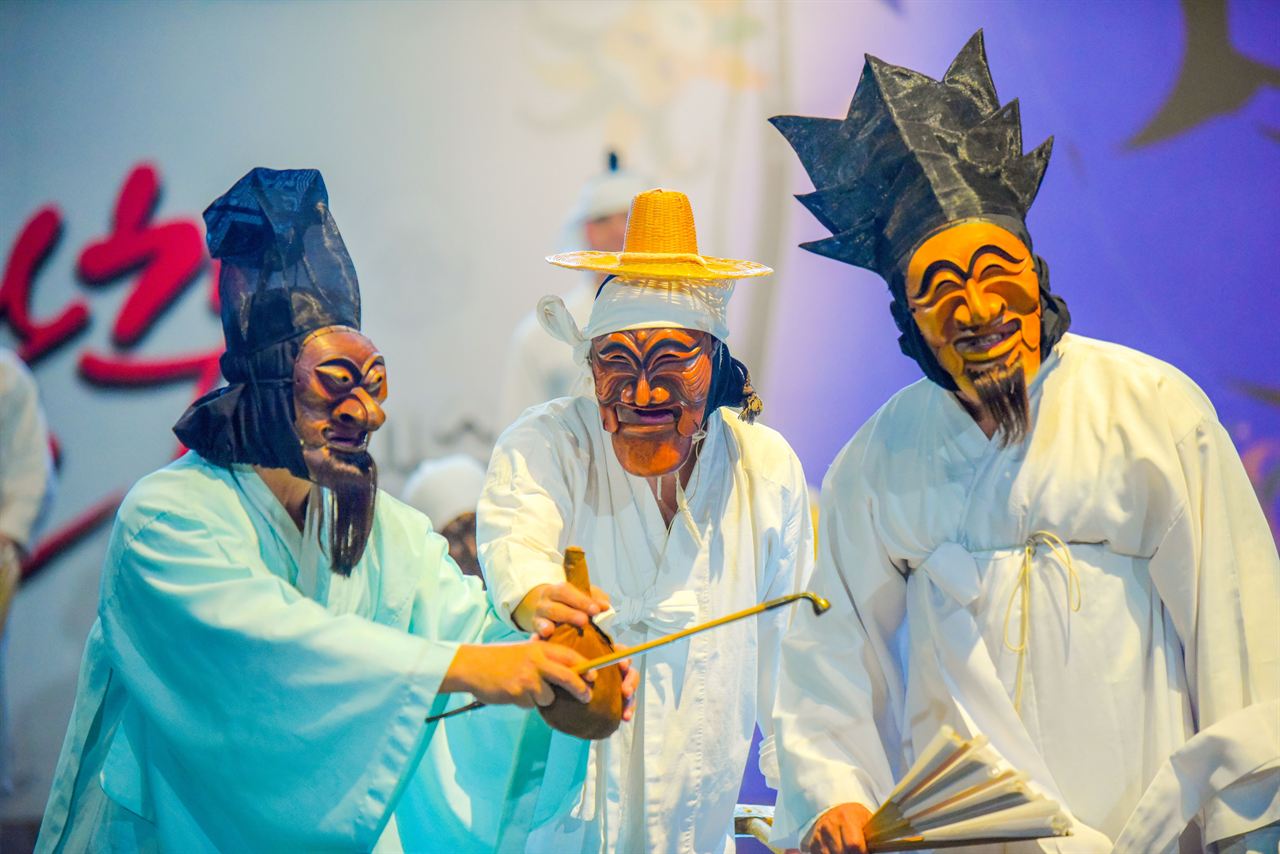
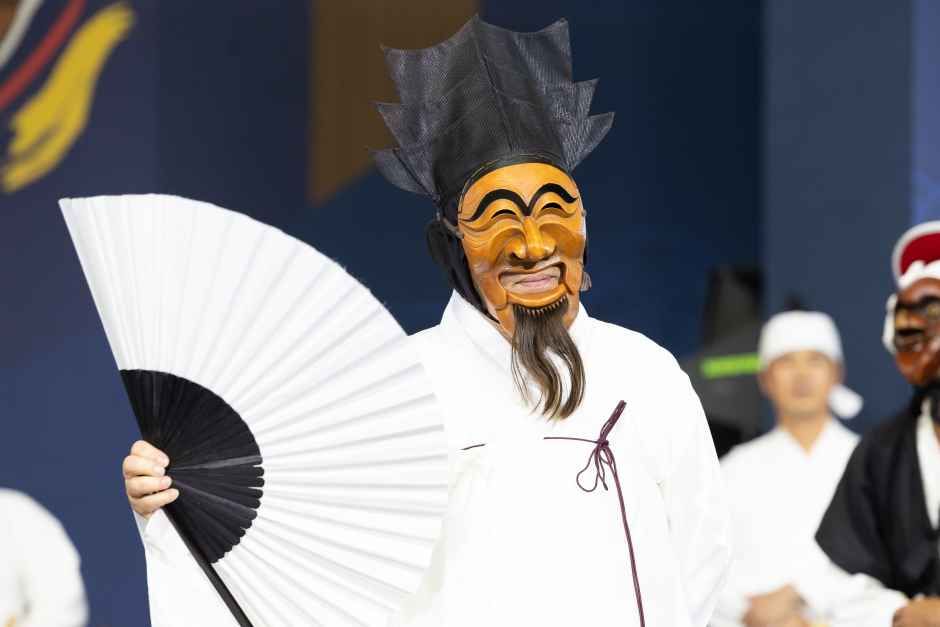
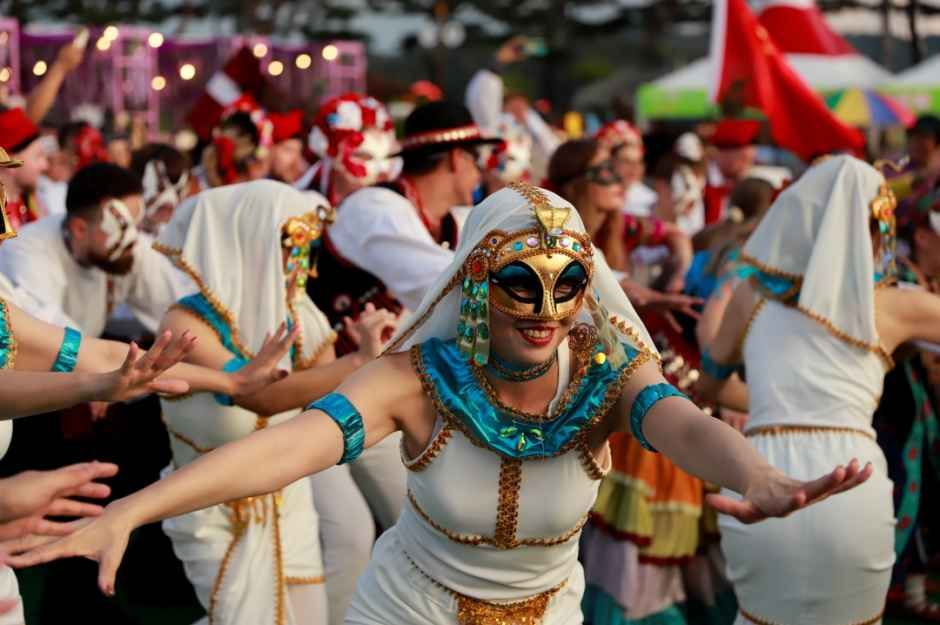
Andong’s festival is not one continuous show. It is an 11-day programme spread across the former downtown railway-station site, Mask Dance Park, surrounding old-town streets and, for selected events, Hahoe Village. Korean mask dance was inscribed on UNESCO’s Representative List of the Intangible Cultural Heritage of Humanity in 2022; the festival puts those Korean traditions beside invited mask performance from abroad, contemporary creations and events in which the audience joins the dance. Andong City says the 2026 edition draws performers from 24 countries.
The practical distinction is between the present Andong Station, where intercity trains arrive, and Central Line 1942 Andong Station, the reused old station site named as a principal festival venue. They are not adjacent. Build a local bus or taxi transfer into the plan instead of reading “Andong Station” on the festival poster and expecting to step from the KTX onto the grounds.
What you actually do here
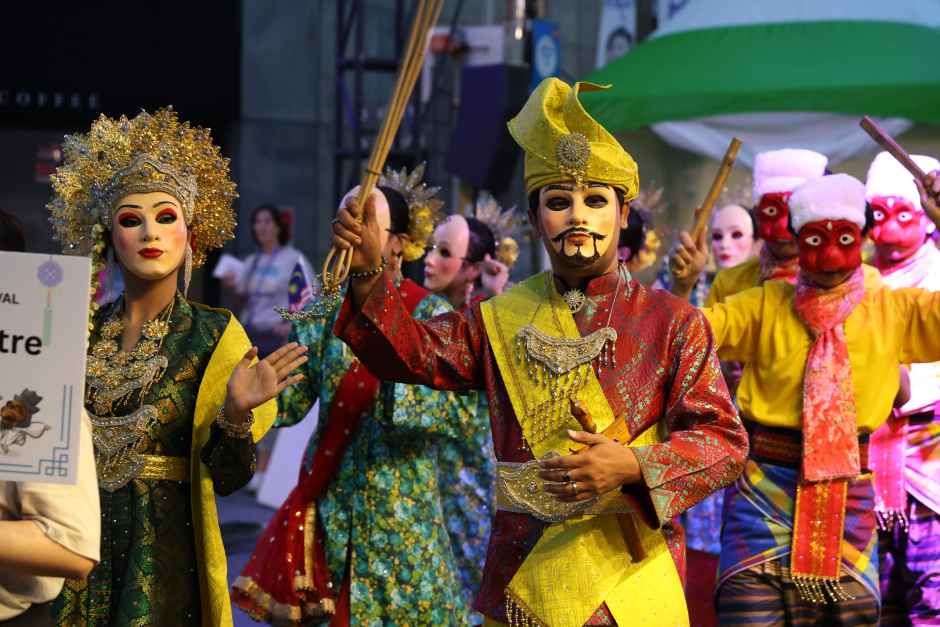
Start with the performance board rather than wandering stall by stall. The announced 2026 programme categories include Korean mask-dance troupes associated with the UNESCO inscription, visiting companies from other countries, madanggeuk outdoor theatre, newly created theatre and performances by the festival’s own roving mask-play group. These are distinct formats: traditional dances reward watching a complete set, while the roving acts and street events are easier to encounter between scheduled stages.
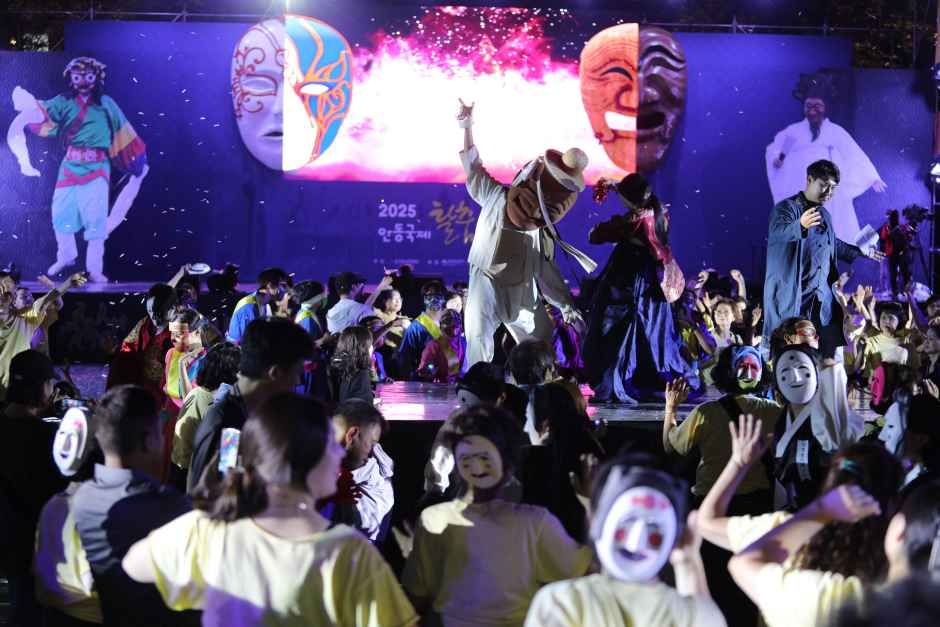
The participatory side is substantial. The organiser lists mask making, learning basic mask-dance movements, the street parade and Daedong Nanjang, a large communal dance session involving performers, residents and visitors. There is also a Global Mask Dance Challenge built around masked random-play dance. You can therefore make a worthwhile visit without understanding spoken Korean, and for 2026 there is more direct help than before: Andong City is deploying 45 municipal staff as roving “Global Hosts” who offer English, Japanese, Chinese and Spanish interpretation and programme information, moving between venues rather than staffing a single desk. Treat this as on-request human interpretation, not a promise of full English signage throughout the grounds.
Families can use the hands-on sessions as a break between formal performances. Note the money side has changed: for 2026 the festival has a paid admission ticket (see below), and KTO separately notes that some hands-on experiences and mask-dance-theatre performances cost extra on top of it. No reliable 2026 price list for those add-on experiences was available, so bring a payment option without budgeting around an unconfirmed figure.
Programme and timetable
The site is open from 10:00 to 22:00 during the published September 24–October 4 run. That is the operating window, not proof that every stage runs continuously. The detailed daily grid is the document that matters for planning, and it was not yet populated with a complete 2026 line-up when this guide was checked. Use the official “festival schedule” page shortly before travel, especially if one named country, troupe or singer is the reason for the trip.
Several anchor events are already fixed. The festival-eve programme runs 18:00–20:00 on Thursday, September 24 at the Central Line 1942 main stage. On Friday, September 25, the opening parade begins at 17:30 through the old downtown; the ceremony follows from 18:00–20:00 at the main stage. The official plan gives that stage 3,000 chairs and an anticipated audience of about 7,000, useful evidence that standing room and crowded approaches are part of the opening-night calculation.
The closing event begins at 20:30 on Sunday, October 4 at the main stage. Its published elements are the World Maskplay Competition team final, awards, Daedong Nanjang and fireworks. The official page confusingly calls this the close of ten days even though the published date range is eleven calendar days; use the dates and stated closing time, not that stray count.
The World Maskplay Competition is not limited to heritage specialists. Its 2026 rules cover domestic general, student and senior divisions plus overseas entries, in team and individual categories. Each competition piece is limited to four minutes, and judging considers use of masks, relation to the festival theme, originality and audience appeal. Registration remains open until 18:00 on September 18, which also explains why a complete running order can remain fluid close to opening day.
Other confirmed competitions include a world creative-mask contest, mask-drawing contest and TaLooK, which reinterprets masks with clothing. Treat these as separate programme strands, not as guaranteed all-day displays at every venue.
Tickets, fees and booking
For 2026 there is a paid admission ticket — a change from the free-entry years. Andong City opened a pre-sale that ran until September 17 at 6,000 won general and 4,000 won student; the city stated the on-site price is 2,000 won higher, which puts the gate price around 8,000 won general. Pre-sale buyers also received a 2,000 won “Mask Dance Love” coupon usable at festival venues and designated downtown businesses. Tickets were sold online through Naver, KakaoTalk and Coupang and in person at City Hall, the city’s administrative service centres and designated retailers, with vouchers exchanged for entry at the festival box office. Some Korean coverage cited higher figures; those were not corroborated by the city’s own pre-sale announcement, so this guide uses only the confirmed pre-sale prices and the stated 2,000-won on-site difference.
A paid gate ticket is not the same as an all-inclusive pass. KTO says some experiences and performances in the dedicated mask-dance theatre are charged separately on top of admission. Because the 2026 ticket page did not yet provide a dependable session-by-session amount for those add-ons, this guide leaves those prices blank.
For the opening ceremony, the organiser publishes capacity rather than a public seat-booking procedure. Do not assume the 3,000 chairs are reserved or guaranteed; check the festival notice board when the final audience instructions appear. The same rule applies to popular theatre sessions: use the daily programme to identify the venue and look for a ticket marker before committing to a tight sequence.
The festival contact supplied in the current KTO listing is the Korea Spiritual Culture Foundation at 054-840-3400. The festival website footer also lists team-specific numbers, but the KTO number is the clearest general contact for admission and programme questions.
Getting there without a car
From Seoul, the simplest route is KTX-Eum from Cheongnyangni Station to the present Andong Station. Current timetable data puts typical direct journeys at roughly two hours, with individual trains varying by their stops; Korail’s route announcement gives 2 hours 3 minutes, while current timetable records include journeys just under or just over two hours. Search the exact festival date in Korail rather than treating one duration as a promise.
After arrival, transfer to central Andong by city bus or taxi. The station shares the transport area with Andong Bus Terminal, while the festival’s “Central Line 1942” venue is the former station in the old downtown. Andong City’s bus information system is the right live source for the last leg because routes and temporary festival diversions can change. The official tourism page confirms that the station and terminal are served by the city network, but a 2026 festival shuttle from the new station had not been announced when checked; this guide does not assume one.
The express bus is a workable alternative from Seoul Gyeongbu to Andong Terminal, with current timetable aggregations showing about 2 hours 40 minutes before traffic. Train and bus arrivals both leave you at the same western transport hub, so neither removes the final downtown transfer.
Hahoe Village needs its own plan. Andong Tourism lists Express 2 and route 210 from the station/terminal area, and route 210 from downtown. The tourism map puts the village about 33 kilometres from the station via the route it illustrates. Add it as a half-day rather than trying to slip it into a short gap between performances, and confirm the return departure before entering the village.
Food on site and nearby
KTO says festival food representing both the event and Andong will be sold, and the organiser has recruited general food stalls and late-night tent-bar operators for 2026. However, the detailed food description attached to the tourism listing is explicitly marked as 2025 information while the 2026 offering is being updated. That means there will be food, but it does not justify promising a particular dish, vendor, price or vegetarian choice.
For a verifiable local meal, look beyond the temporary stalls. Andong City lists Andong salted mackerel (andong gan-godeungeo) as an official specialty, and the city tourism office includes salted-mackerel set meals among its representative foods. The fish is salted—a method associated with the inland journey to Andong—and is commonly served grilled or braised. This is a regional specialty recommendation, not a claim that every festival food zone will sell it.
Day trip or overnight
A Seoul day trip is possible if the aim is several daytime performances and dinner: the rail leg is about two hours each way, plus the transfer between the new station and downtown. It is a poor structure for the full closing programme. Current timetable data shows a late Andong-to-Cheongnyangni KTX departure around 21:25, while the festival operates to 22:00 and the October 4 closing event only begins at 20:30. Timetables can change, so recheck the actual date, but do not book a same-night return and assume you can watch the finish.
One night also makes Hahoe Village much more realistic. Put the village and its bus travel in one half-day, then reserve the other half for the central festival. Staying near the old downtown reduces the number of station transfers and lets you walk among Central Line 1942, Mask Dance Park and old-town programme areas. This guide does not claim a particular hotel or quote availability because neither was verified.
Honest assessment
This is one of the easier Korean traditional-performance festivals to appreciate visually. Masks, costume, movement, percussion and a street procession communicate before any explanation does. Its strongest feature is range: a careful viewer can compare Korean forms, overseas mask traditions, short competition pieces and participatory dance in the same visit. Its weakness is the same scale. Multiple venues and overlapping formats make arriving without the daily schedule a good way to see much activity but miss the one complete performance you wanted.
Take the crowd planning seriously. On September 3, the Ministry of the Interior and Safety placed the festival among 50 autumn events subject to intensive management, specifically grouping it with events forecast to draw more than 30,000 people at peak. That does not establish which hour or street will be busiest, but it is firmer evidence than anecdotal claims about “quiet weekday mornings.” For the opening parade and closing final, arrive early, note an exit route and avoid making a tight station connection after fireworks.
The fairest plan is four to six hours with one or two chosen stage events, time for the old-town route, and the evening Daedong Nanjang. Stay longer only when the published grid gives you a reason. Two 2026 details help foreign visitors specifically: a modest paid gate ticket (around 8,000 won) replaces the older free entry, and the city’s new roving English/Japanese/Chinese/Spanish “Global Hosts” put real interpretation on the ground for the first time. The festival has enough confirmed substance to justify the trip; it does not need an invented singer line-up or a guessed parking shuttle to make that case.
Local specialties to try
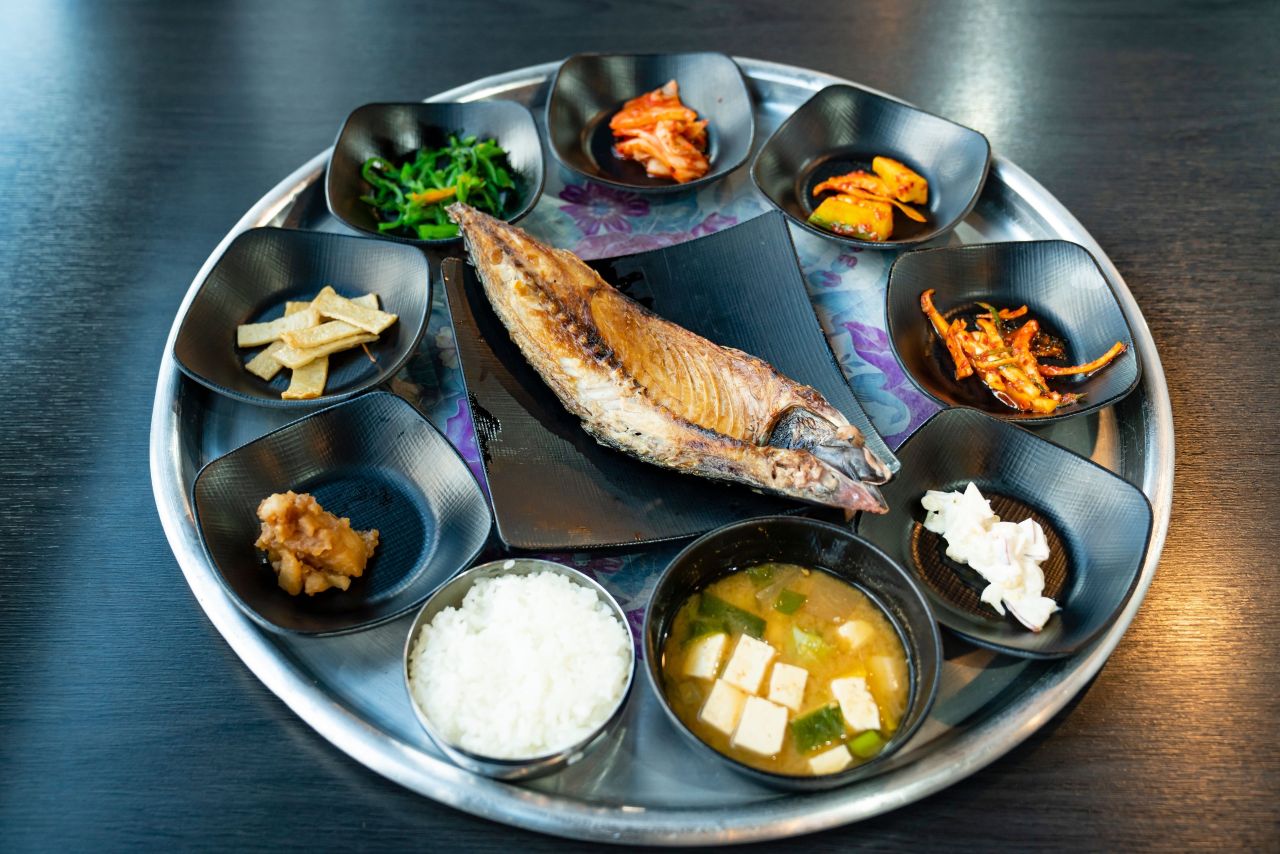
Andong salted mackerel (안동간고등어)
Mackerel salted for the inland journey to Andong, now commonly served grilled or braised. Andong City lists it as an official local specialty and its tourism site lists salted-mackerel set meals among the city's representative foods.
Questions worth asking
Is this the same trip as Hahoe Village?
No. The main festival area is in central Andong, while Hahoe Village is a separate site west of the city. The 2026 festival names Hahoe as an additional venue, but you still need a separate bus trip: Andong Tourism lists Express 2 and route 210 from Andong Station or the terminal, and route 210 from downtown.
Is admission to the Andong Maskdance Festival free?
No — not for 2026. General admission is a paid ticket this year, a change from the previous free-entry years. Andong City's pre-sale, which ran until September 17, was 6,000 won general and 4,000 won student; the city said the on-site price is 2,000 won higher. Some experiences and mask-dance-theatre performances cost extra on top of the gate ticket.
Is there English-language help at the festival?
For the first time in 2026, yes. Andong City is deploying 45 municipal staff as roving 'Global Hosts' who provide interpretation in English, Japanese, Chinese and Spanish and answer programme questions. They move around the festival grounds rather than staffing one fixed booth, so look for them at the main venues. This is on-request human interpretation, not a guarantee of full English signage everywhere.
When are the 2026 opening and closing events?
The eve programme is September 24 from 18:00 to 20:00. The opening parade begins in the old downtown at 17:30 on September 25, followed by the opening ceremony from 18:00 to 20:00 at the Central Line 1942 main stage. The closing programme starts at 20:30 on October 4.
How much time should I budget?
Allow at least four hours for performances, the central grounds and a meal. Stay into the evening for the participatory Daedong Nanjang; add another day if Hahoe Village matters, since it is not part of a simple walk around the downtown venues.
How crowded will it be?
Plan for a large crowd around major events. The national government placed this festival in its 2026 intensive crowd-management group for events expected to exceed 30,000 people at peak. Exact gate-by-gate attendance and the 2026 traffic-control plan had not been published at this update.
Before you goFestival Etiquette in Korea: What Visitors Get WrongBooking KTX Trains and Intercity Buses as a Foreign VisitorGetting Out of Incheon Airport and On to a FestivalKorean Festivals With Children: Toilets, Strollers and TimingStaying Online in Korea: SIM, eSIM and the Apps That MatterEating at a Korean Festival Without Speaking KoreanRain, Typhoons and Cancelled Festivals: How to Plan Around ThemHow to Pay for Things in KoreaT-money and Transit Cards in KoreaWhat to Wear to a Korean Festival, Season by Season
LAST UPDATED · Sep 14, 2026