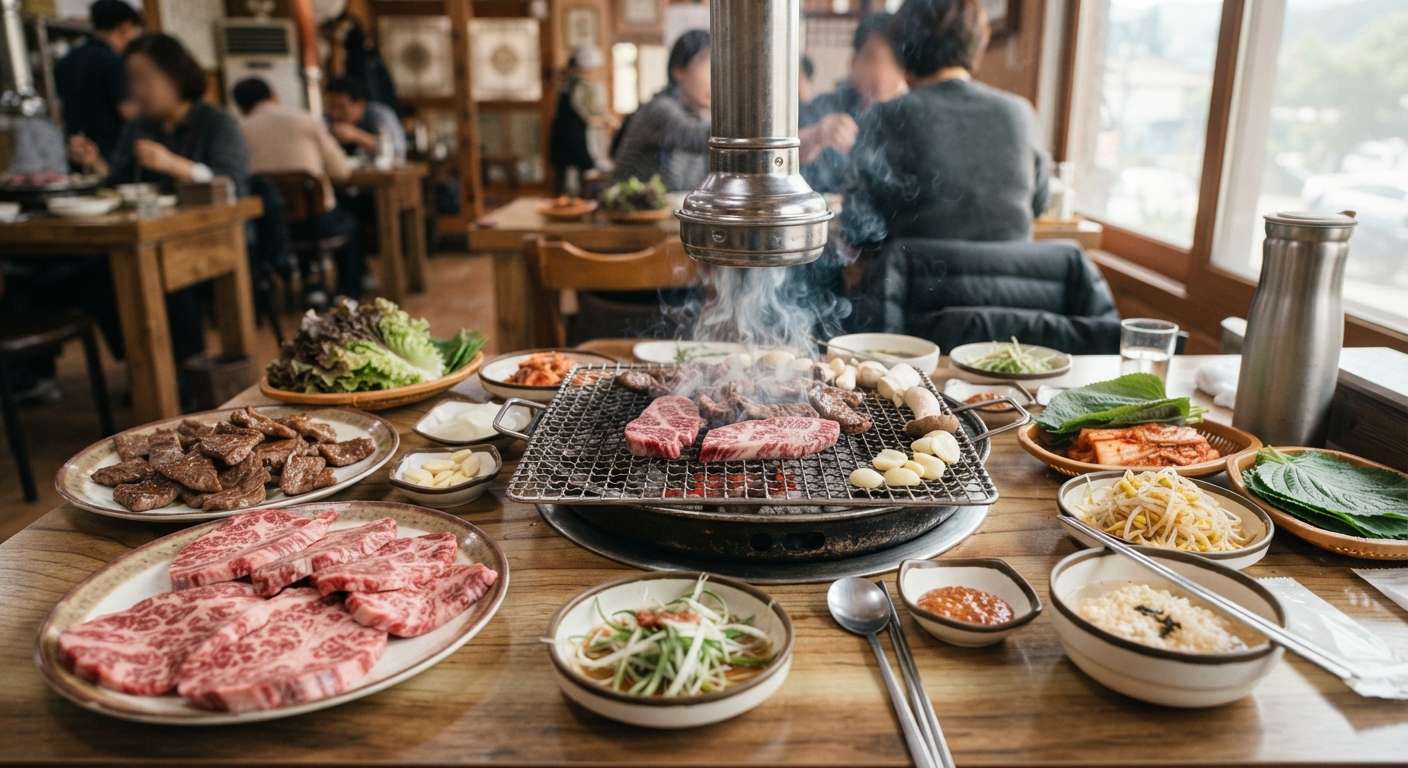
Every dish here is tied to a specific festival, not a general "Korean food" list. Confirmed foods only — nothing guessed.
Field-checked so far: 180 local specialties across 17 regions of Korea. The list grows as new festivals are published.
Photo: Korea Tourism Organization / Alex Bundo (KOGL Type 1)
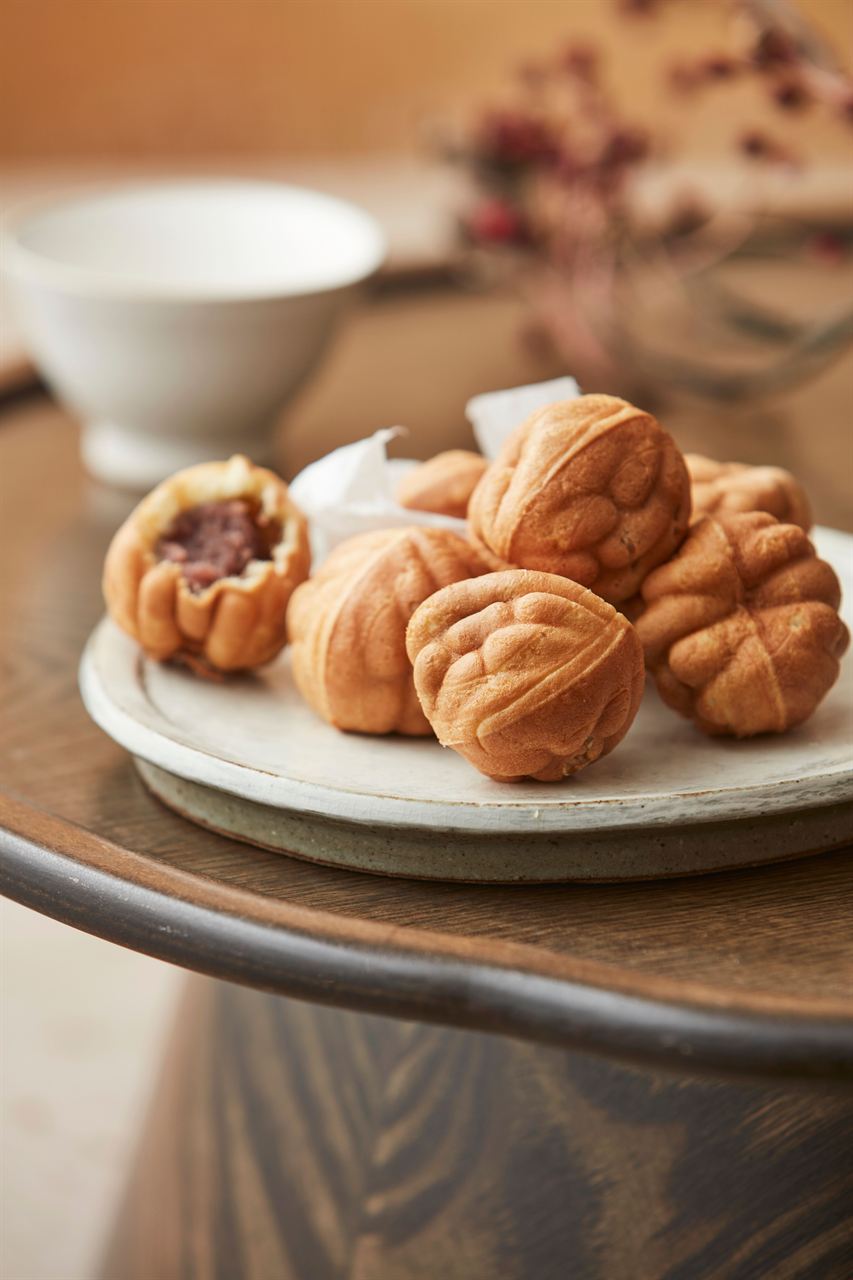
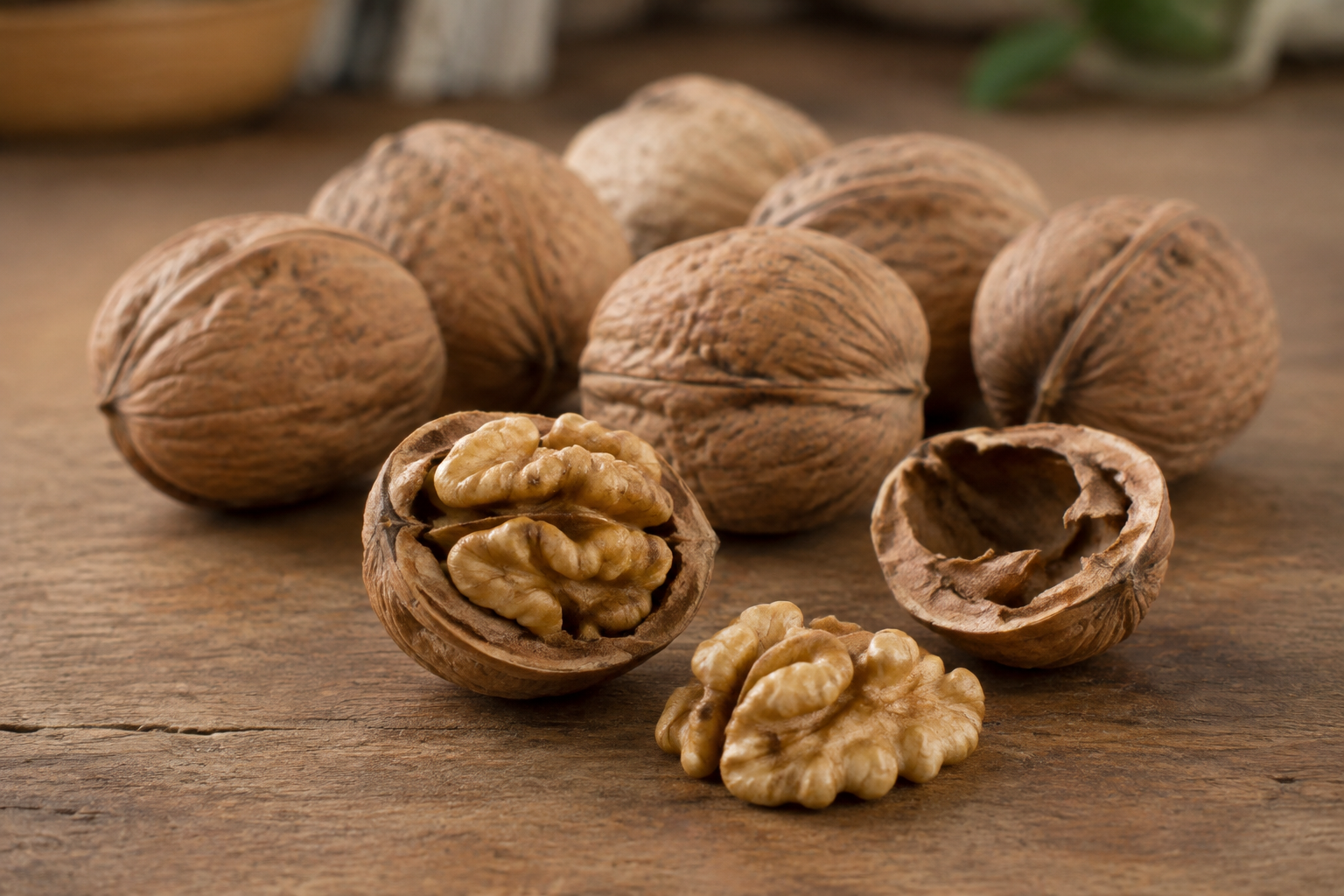
Cheonan walnut cakes (천안 호두과자)
Small walnut-shaped cakes baked around sweet red-bean filling and pieces of walnut. Korea Tourism Organization identifies Cheonan as their place of origin and the city's walnut as the local ingredient behind the original form. This is a Cheonan specialty, not a promise that the expo's temporary food zone will sell a particular version.
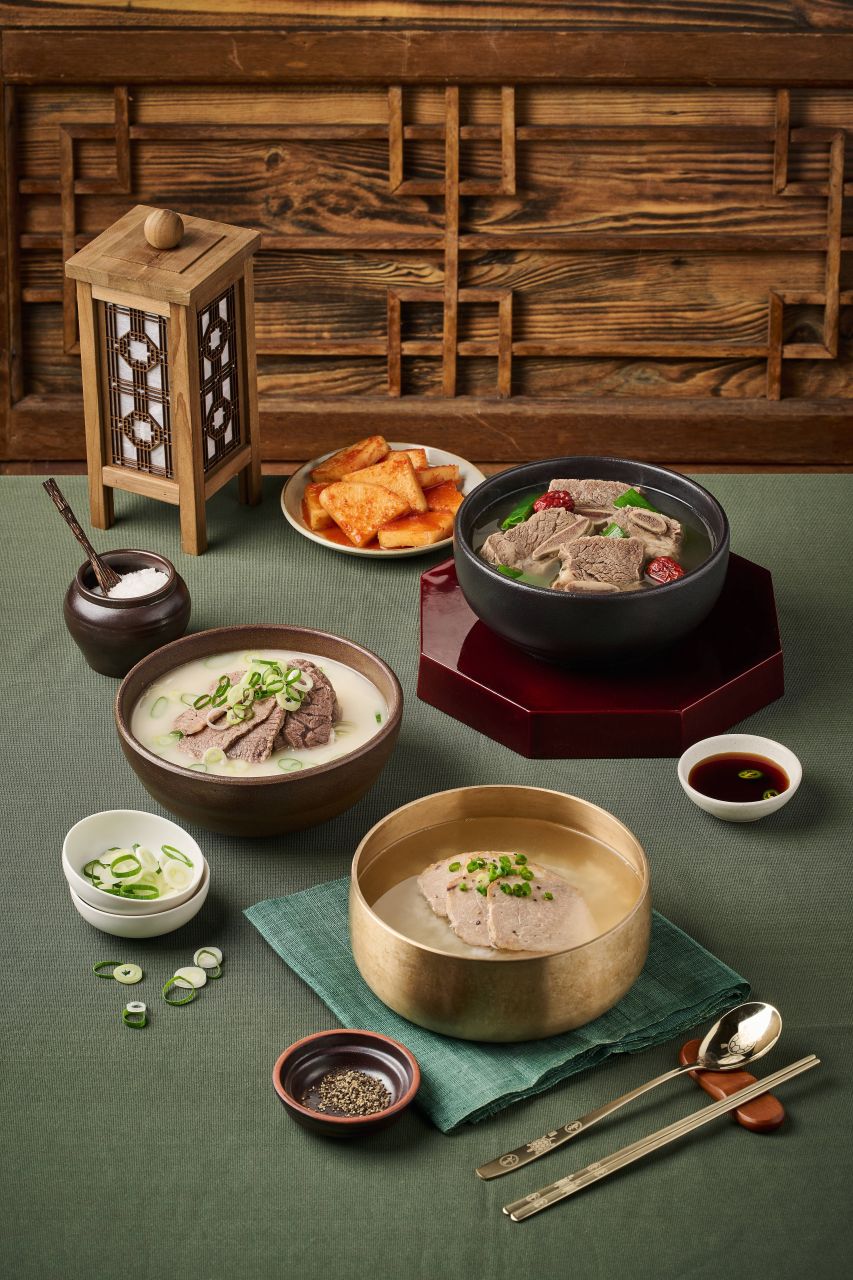
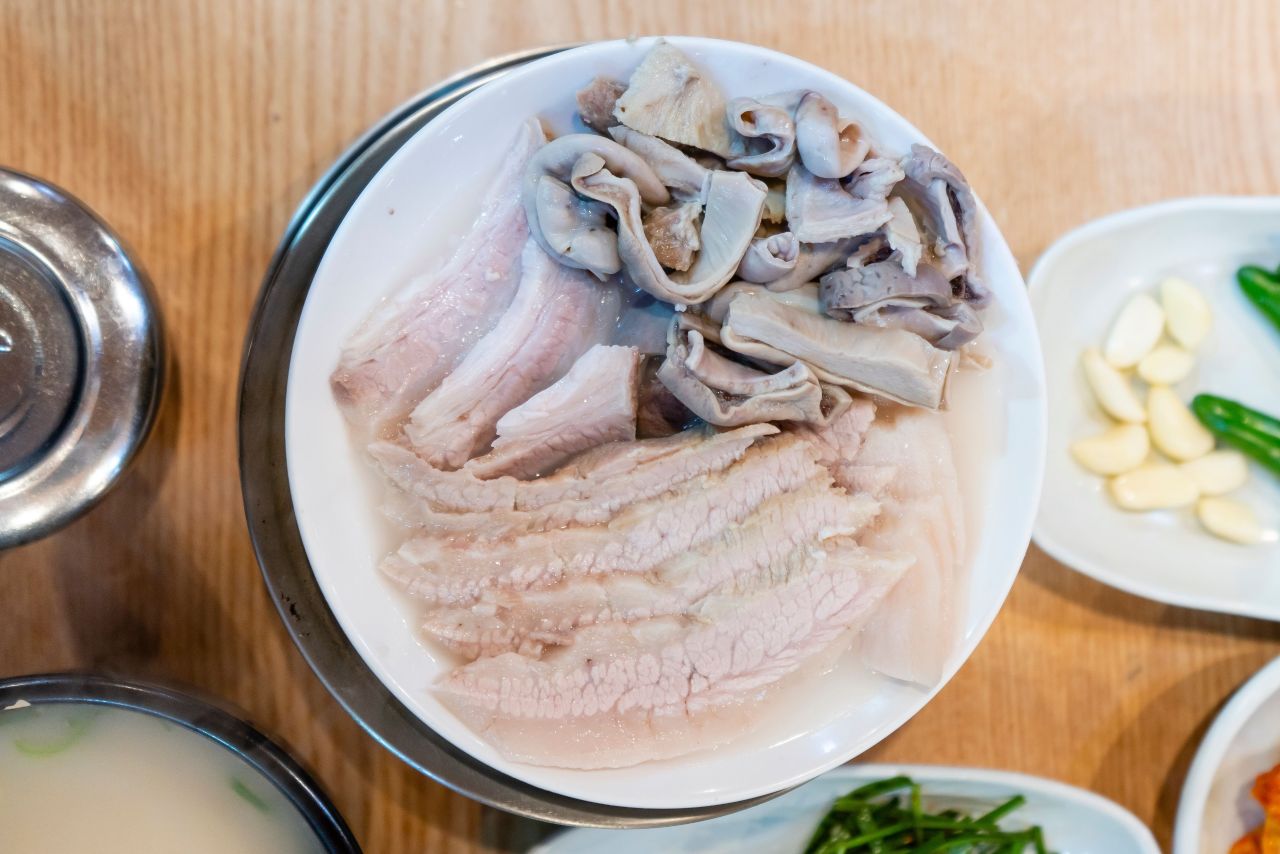
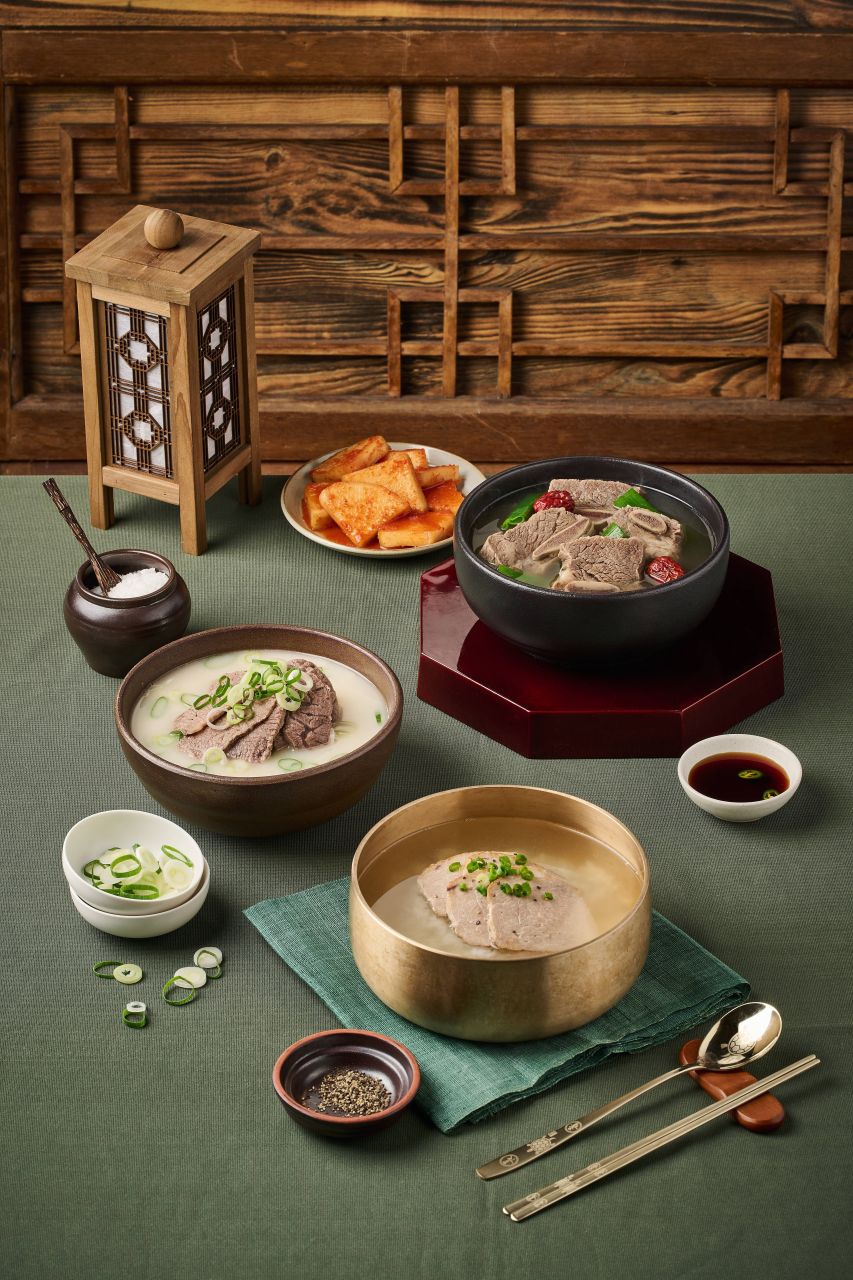
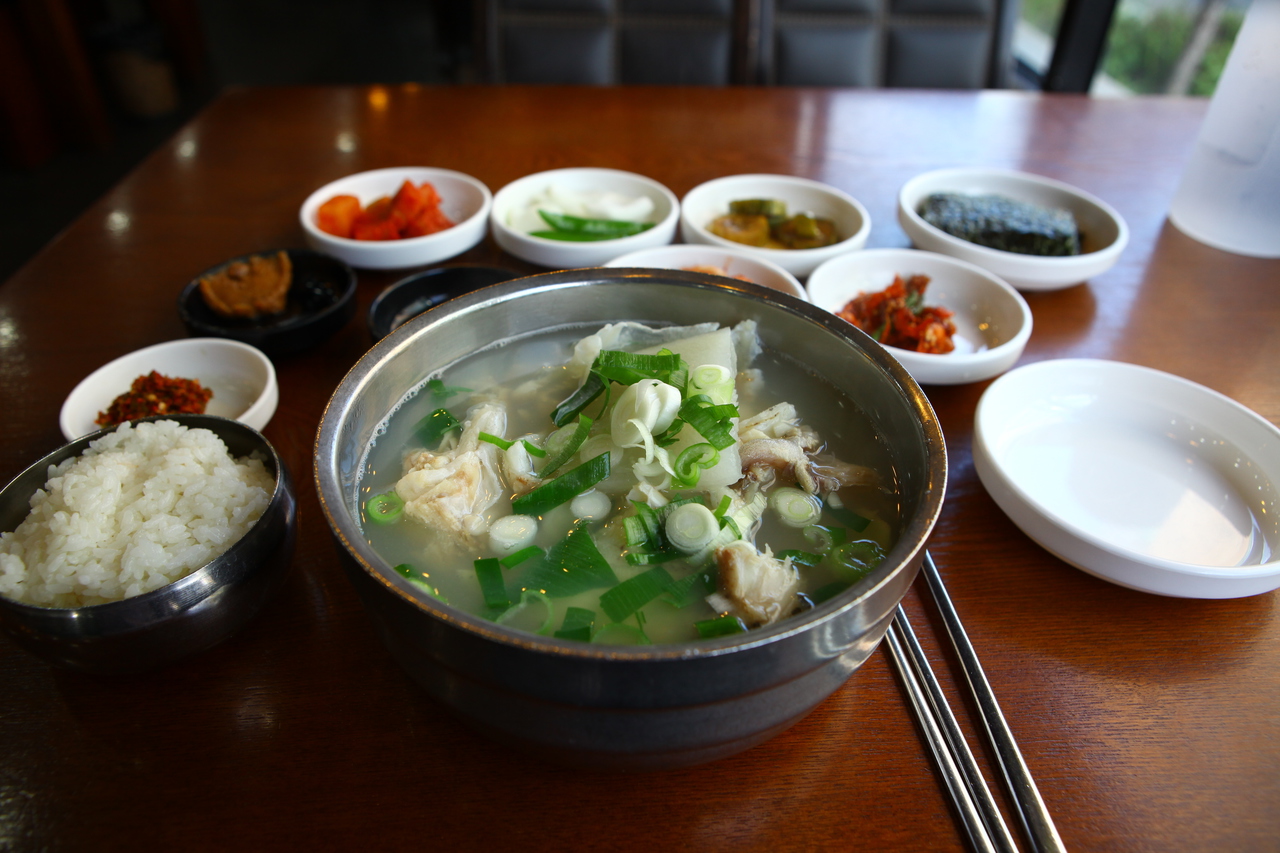
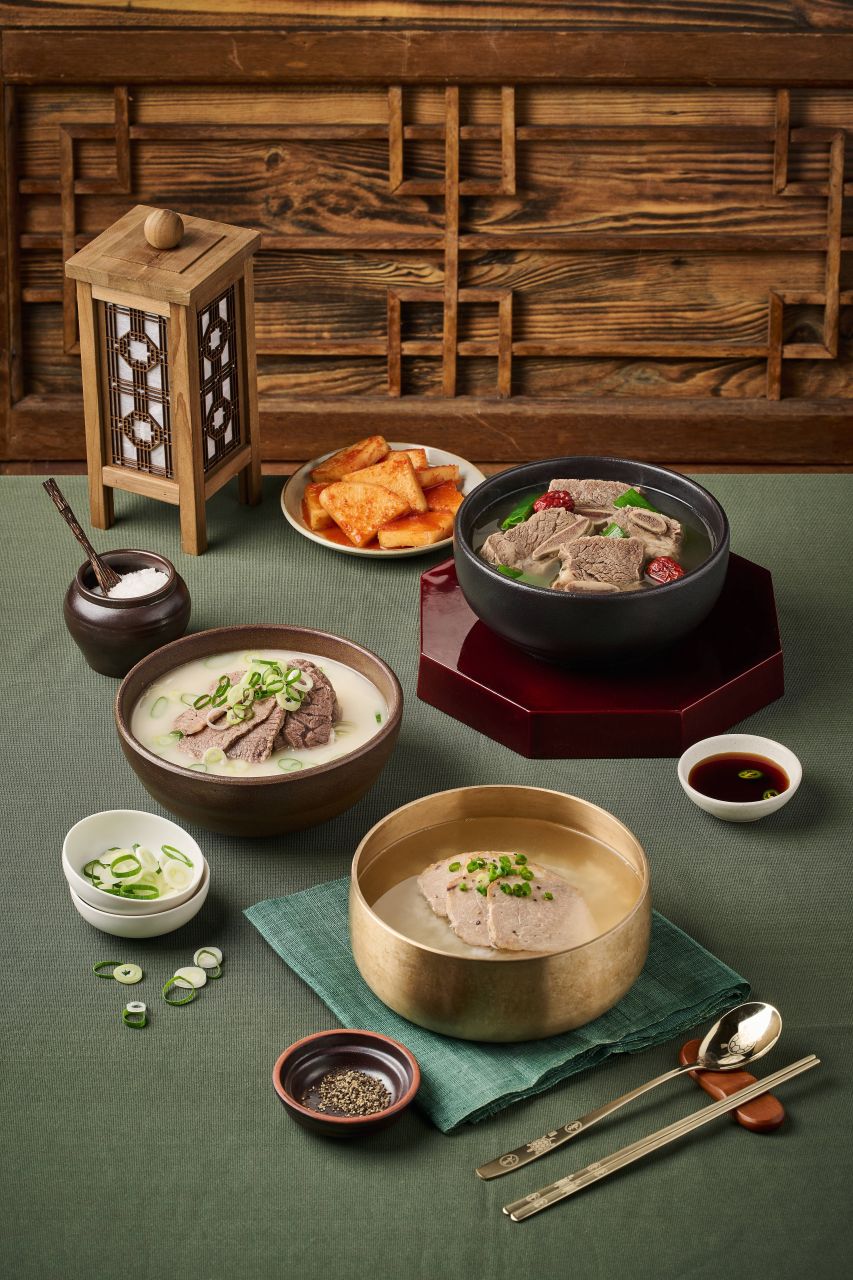
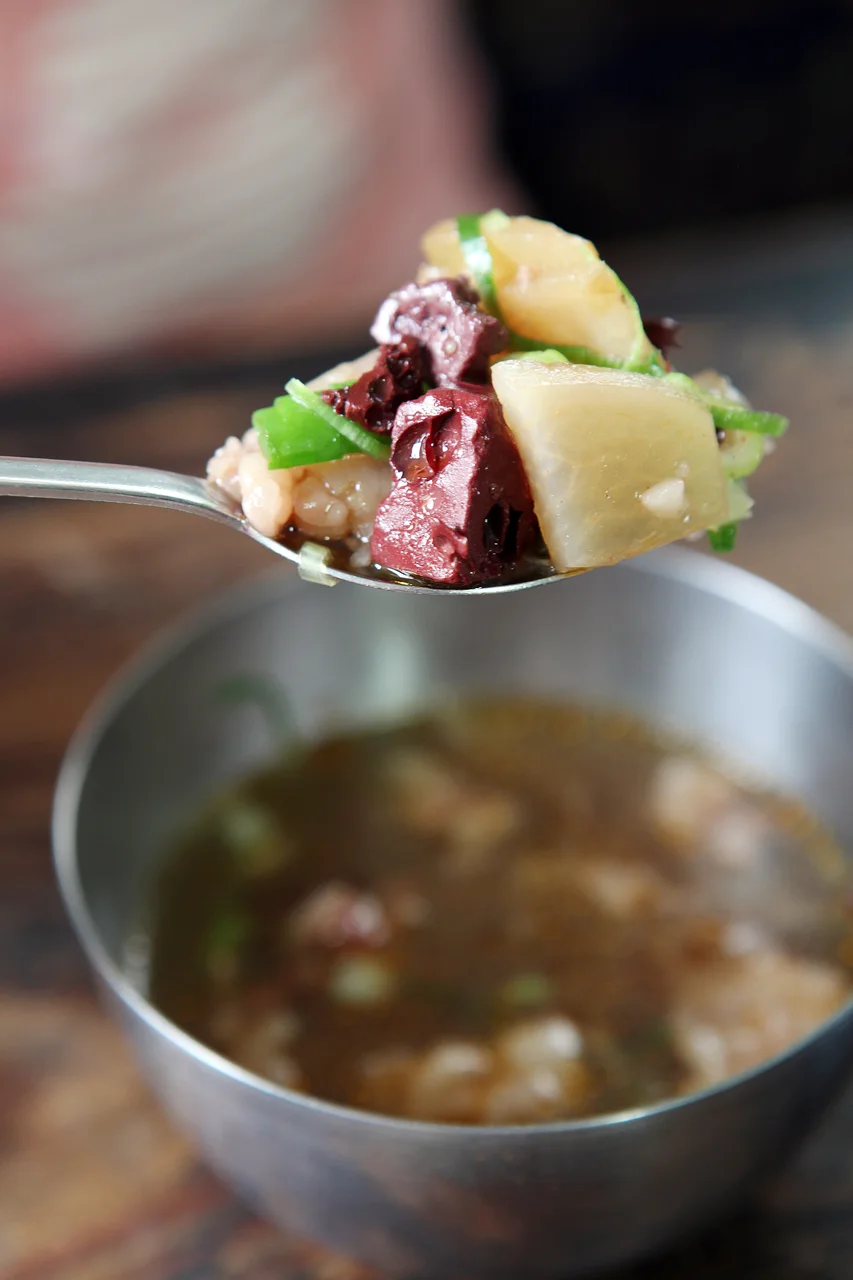
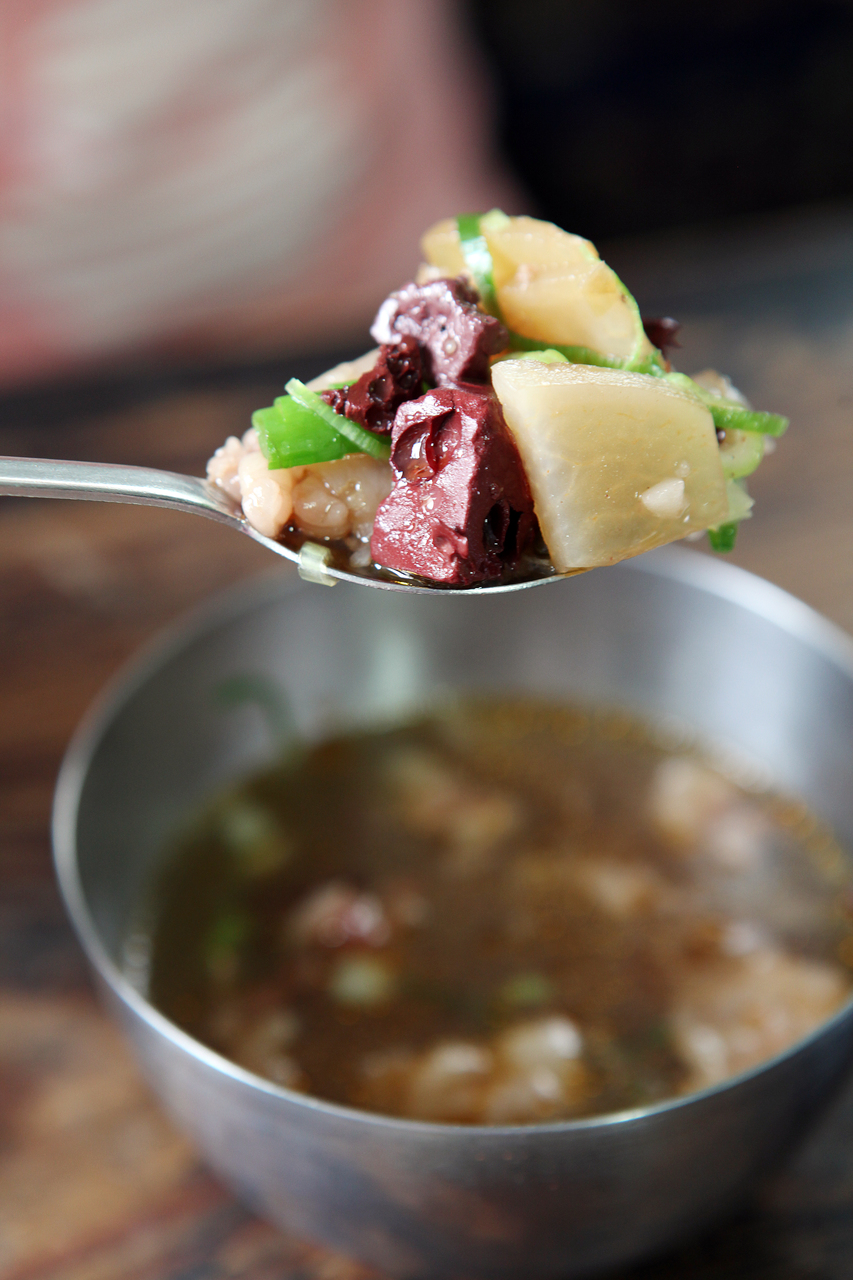
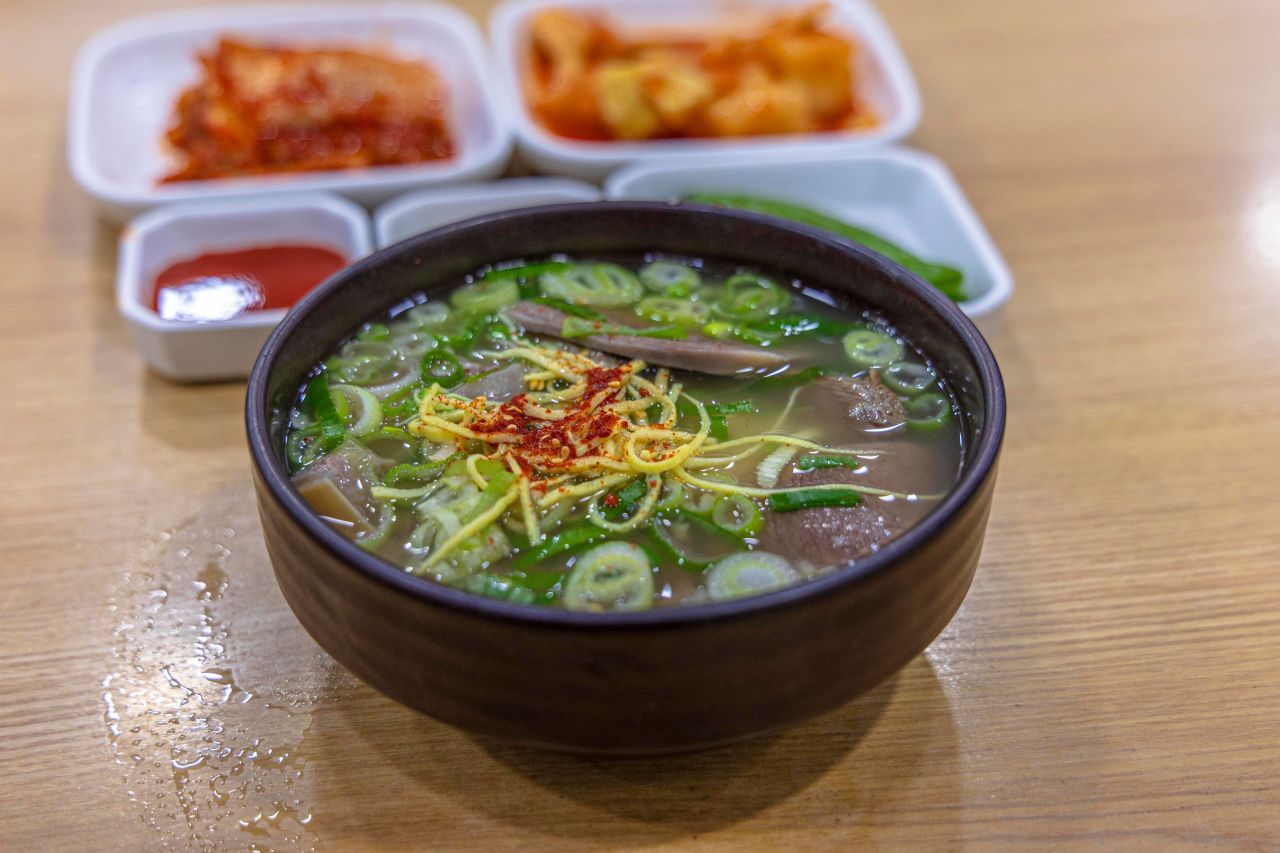
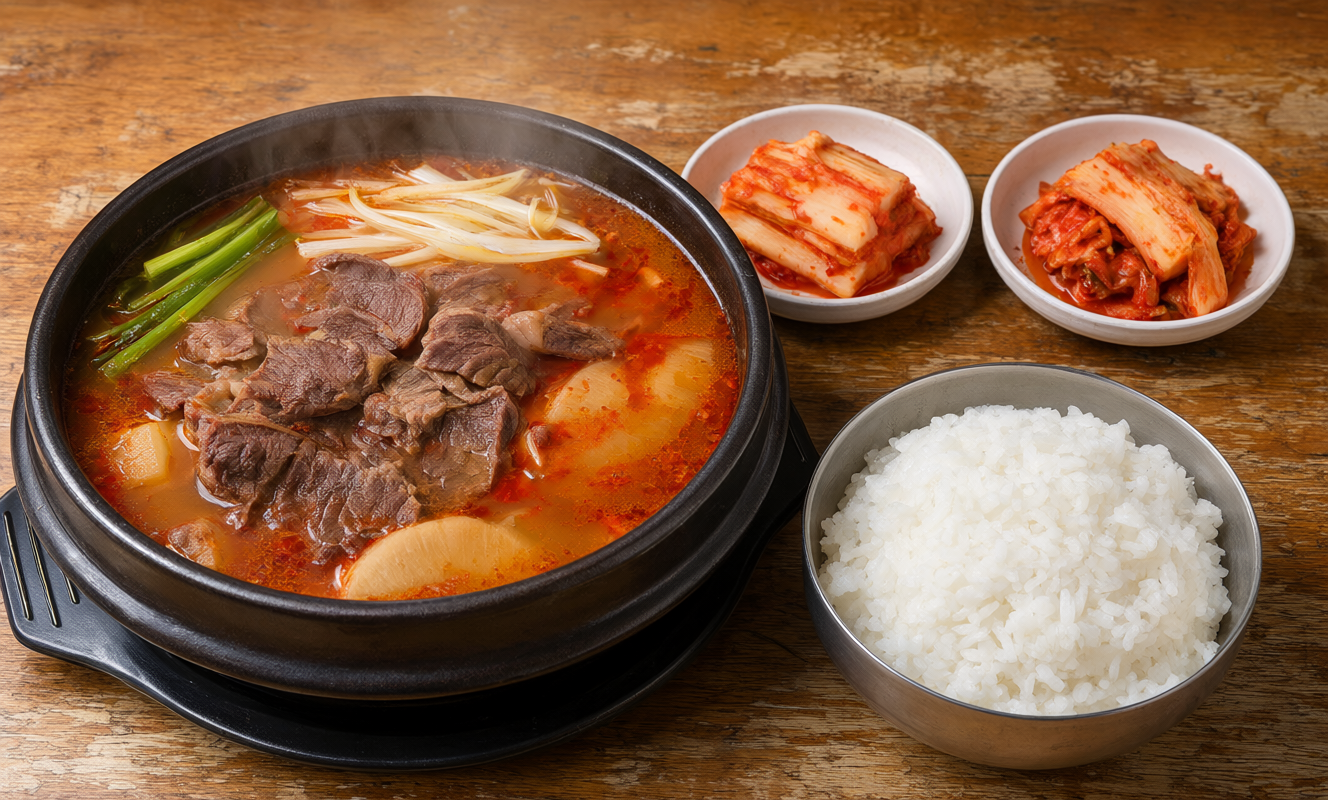
A long-simmered beef-and-bone soup with a pale, milky broth, usually served with rice, sliced beef and chopped spring onion. The Seoul Metropolitan Government identifies it as a native Seoul dish and documents a specialist restaurant operating in the city since 1904.
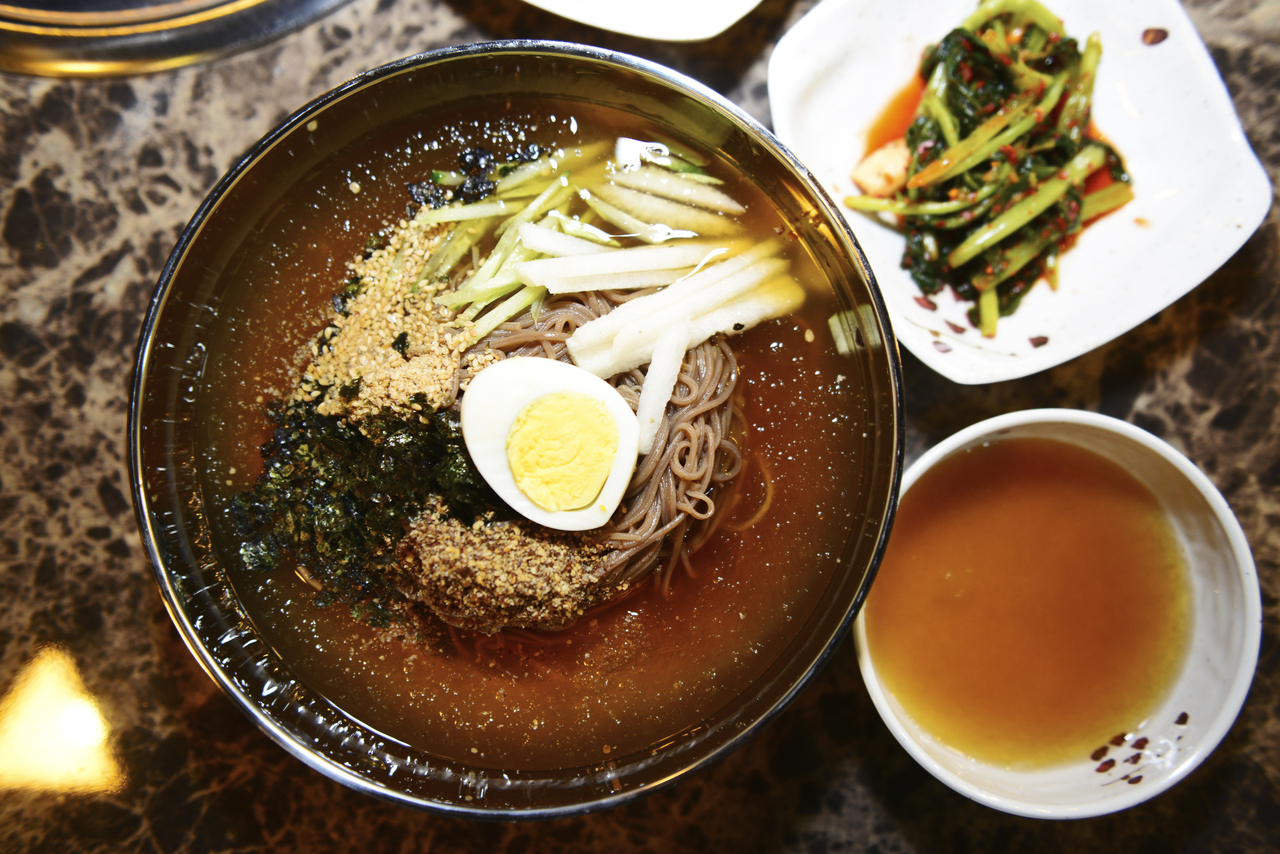
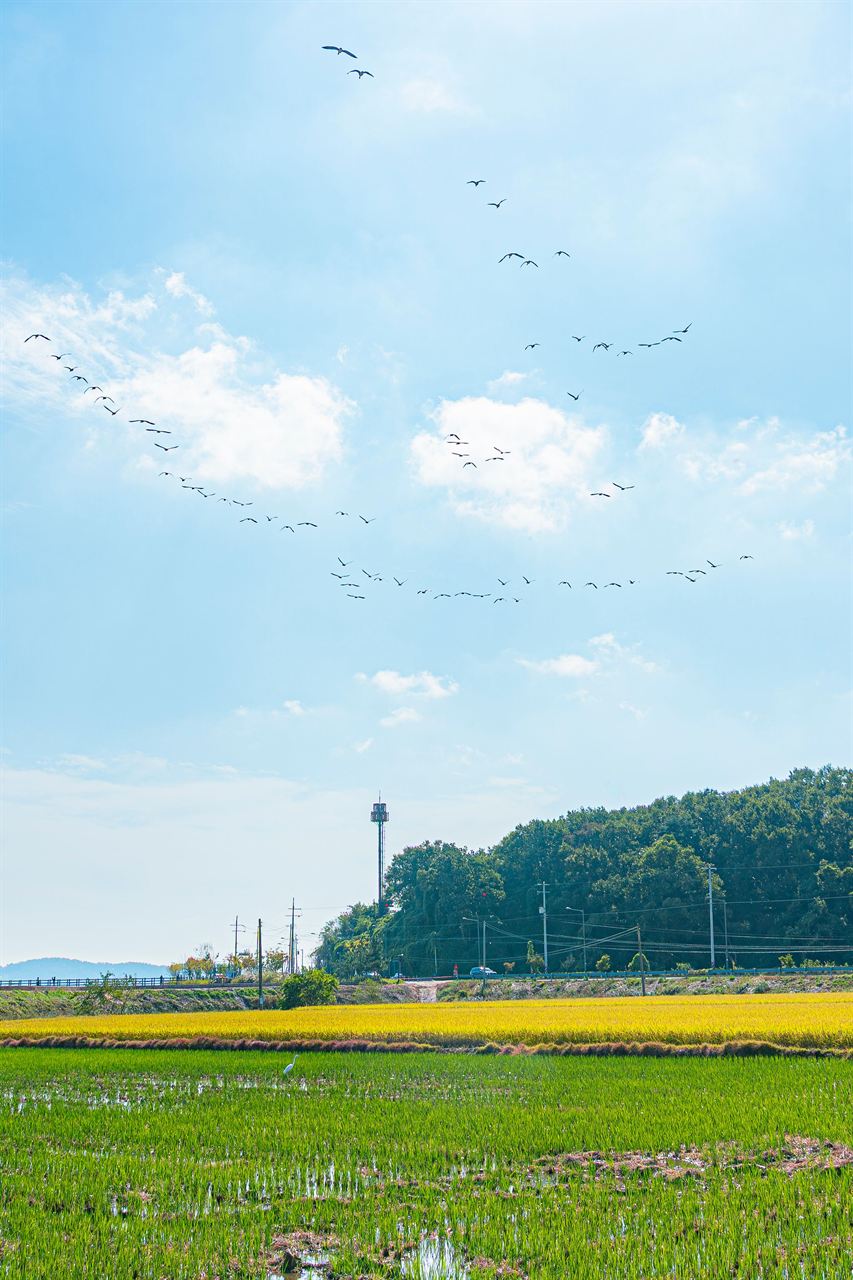
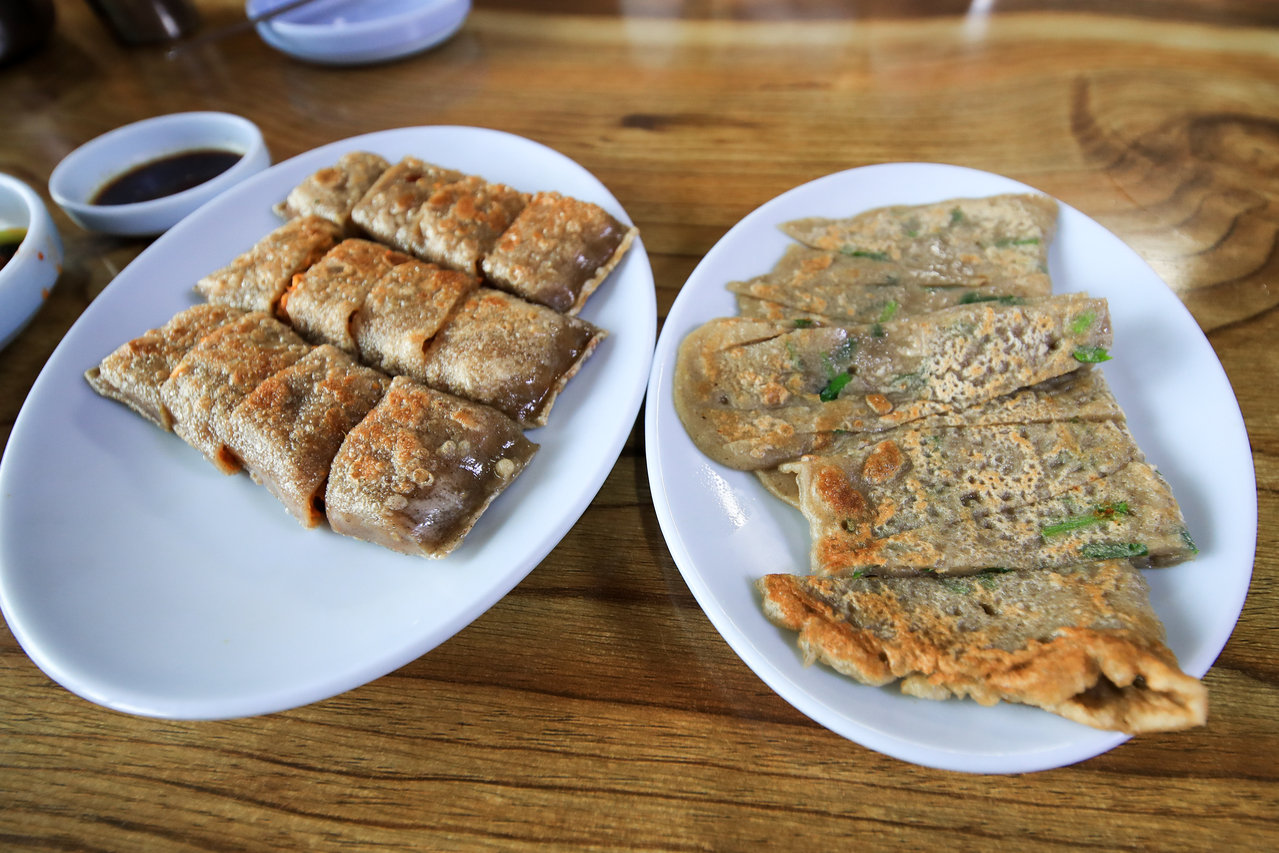
Bongpyeong is buckwheat country — the same crop that fills the festival's white fields is the area's food specialty. The public Jiyeok-N-Munhwa culture portal, run by the Korean Federation of Culture Centers, documents Bongpyeong's buckwheat and its buckwheat noodles as a regional tradition, served as makguksu (chilled buckwheat noodles), buckwheat memil-jeonbyeong crepes and memil-muk jelly. This is a regional specialty of the area, not a claim about any particular festival stall.
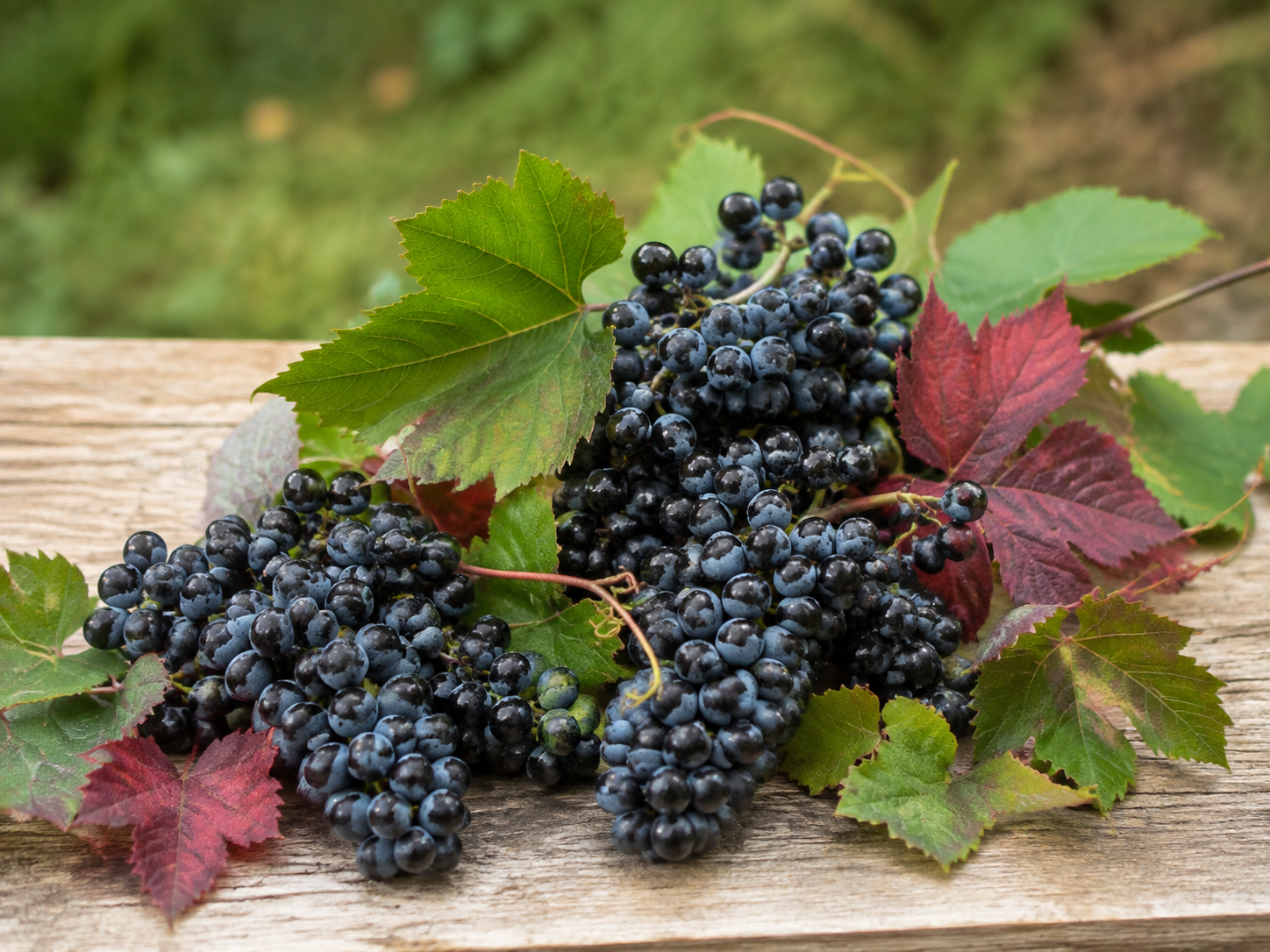
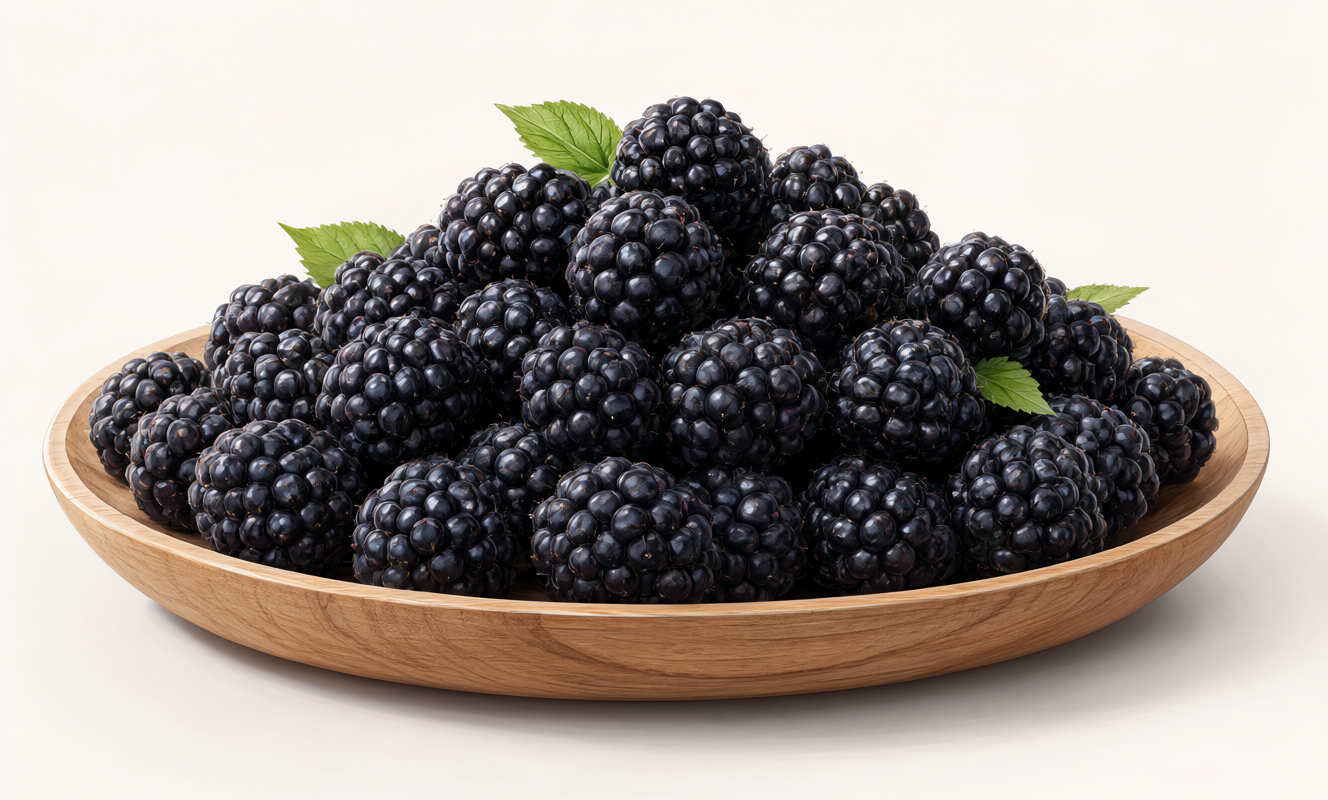
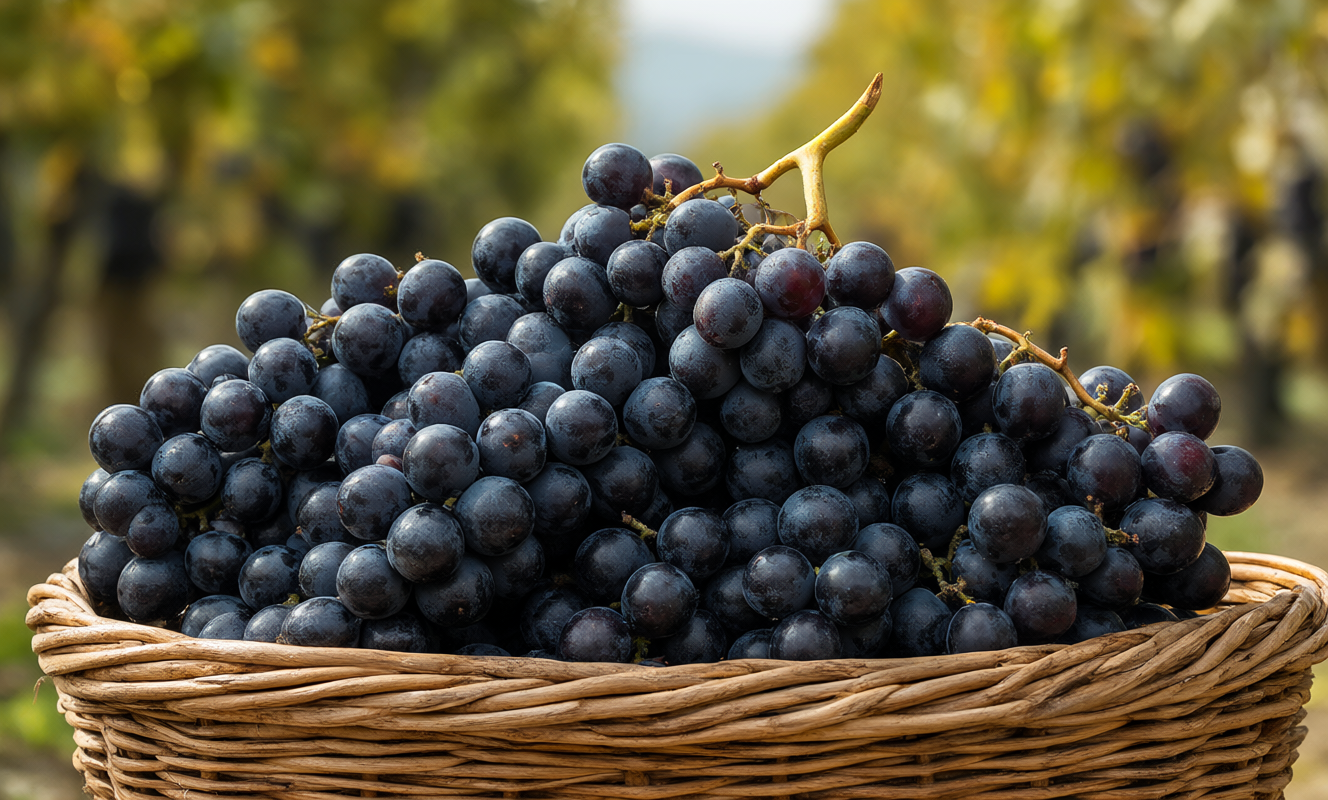
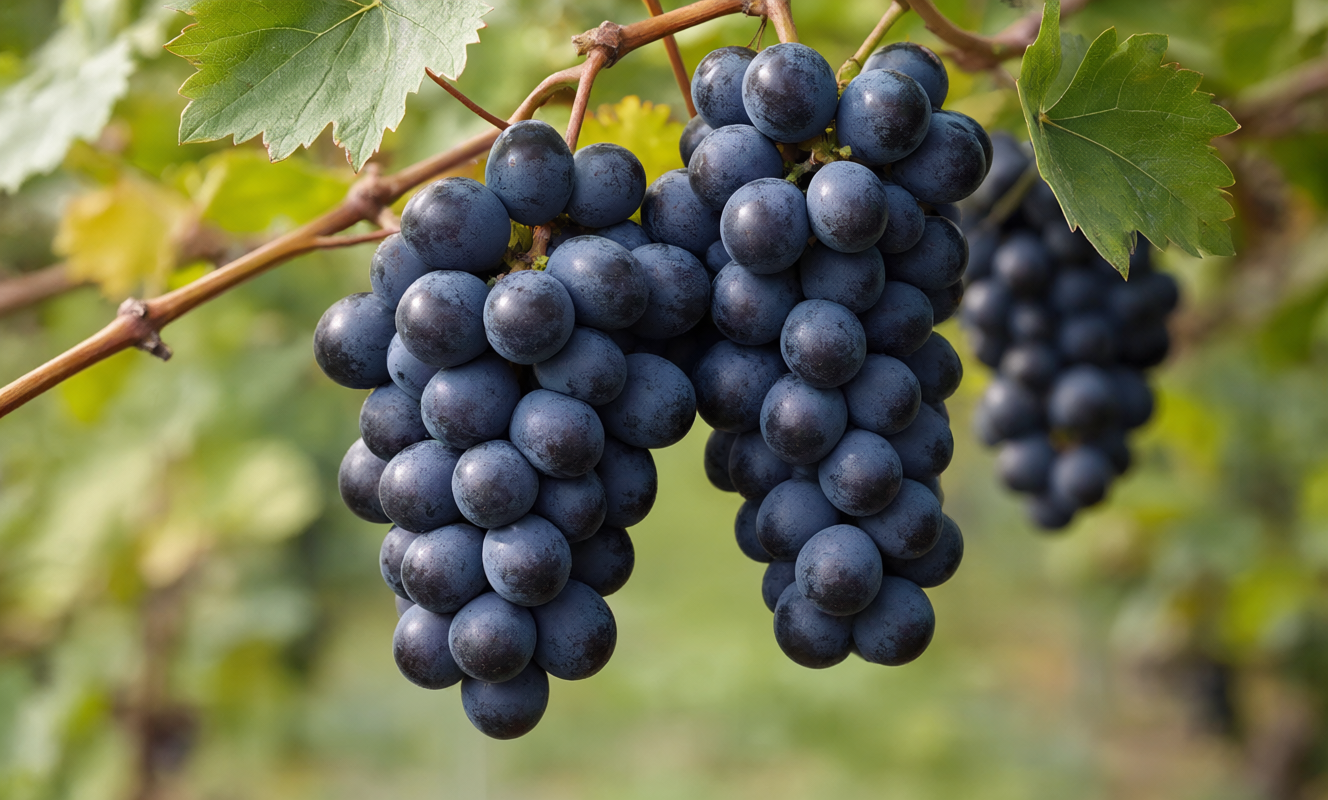
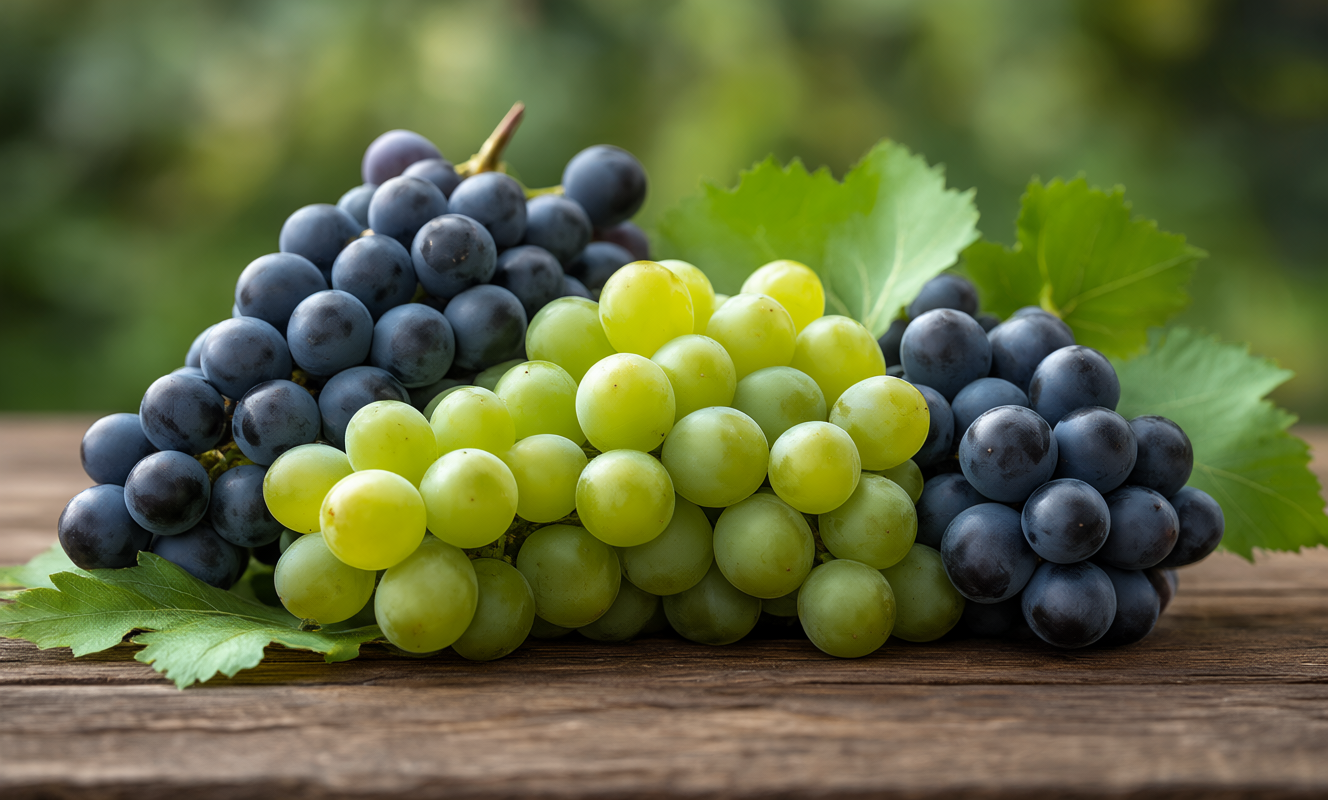
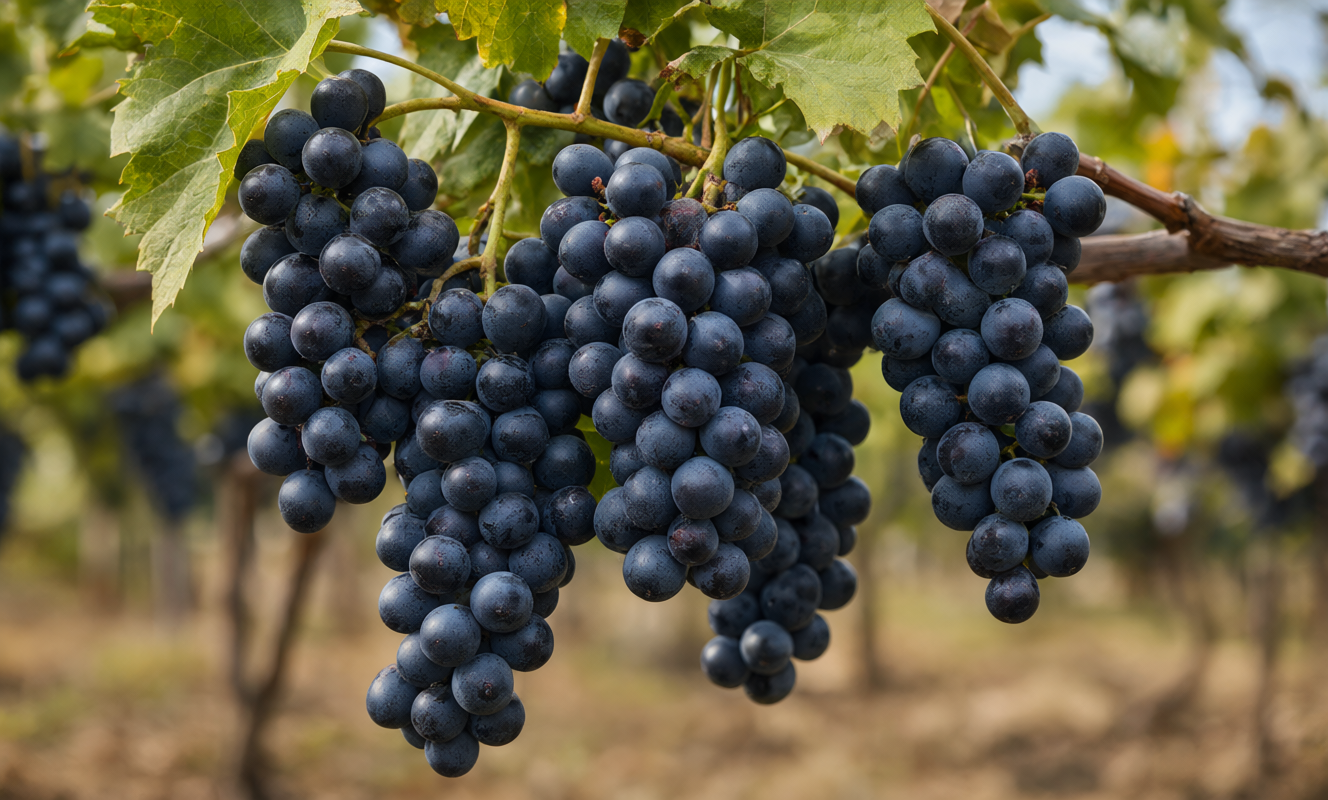
Muju County identifies mountain grapes, or meoru, as a local specialty and describes local wineries making wine from fruit grown around Deogyusan. This is a regional product, not a claim that fresh grapes or wine will be available at every festival stall.
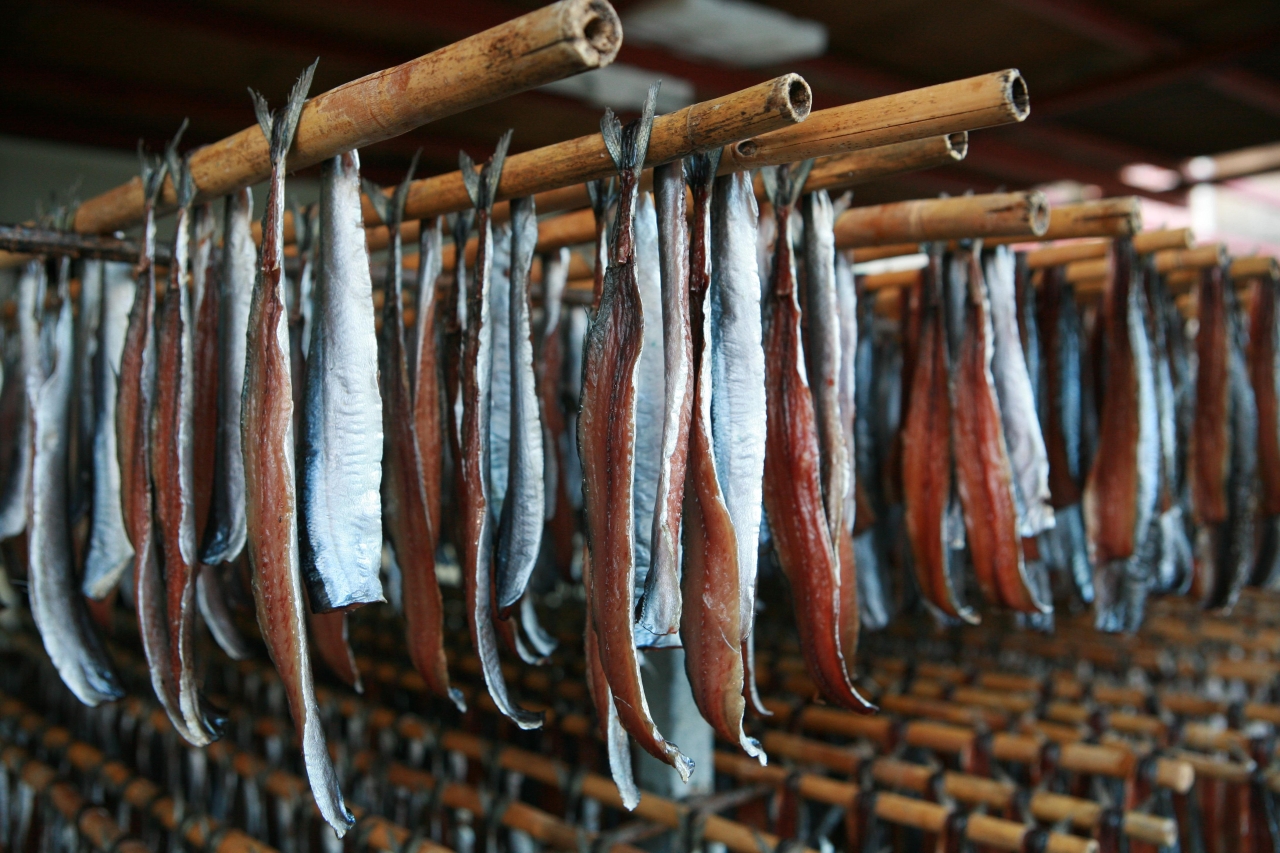
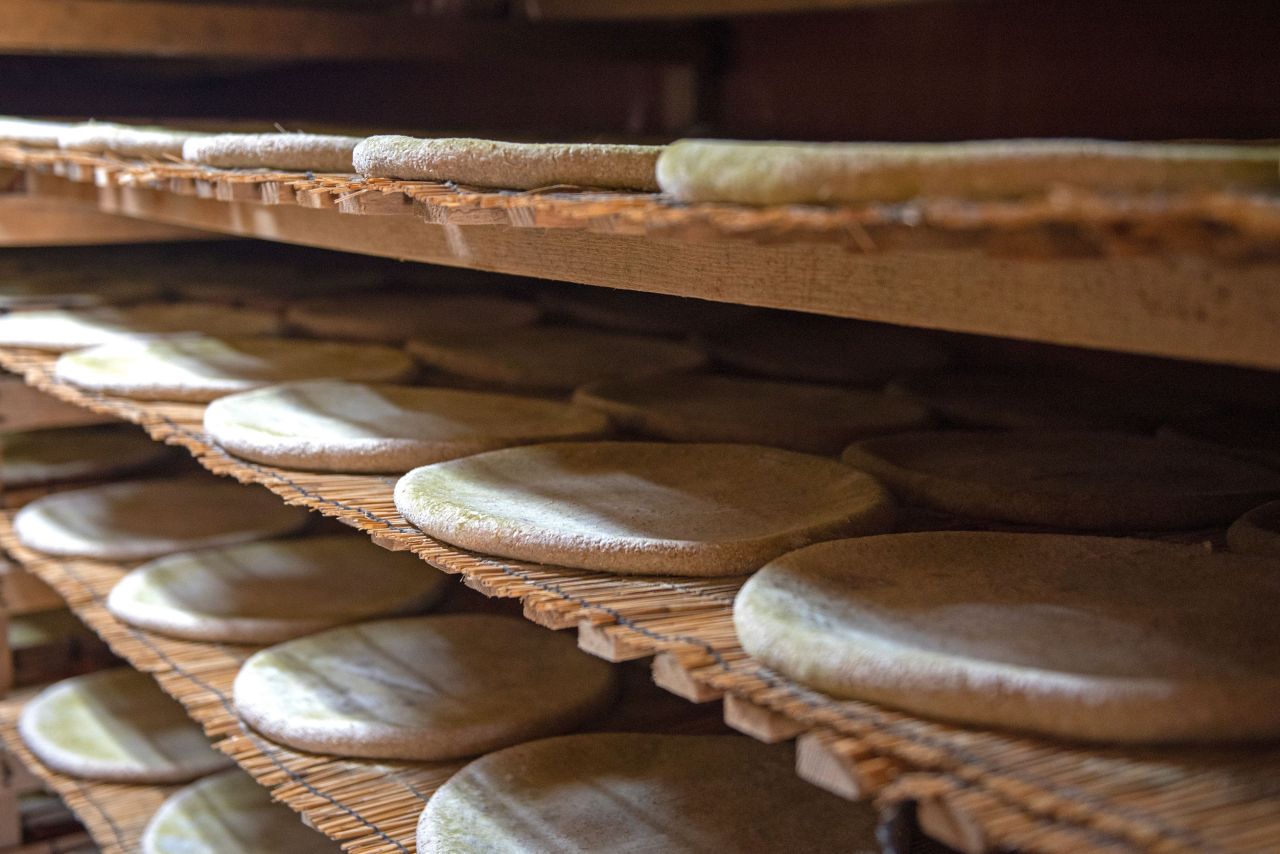
See Muju Firefly Festival →Photo: Korea Tourism Organization / Lee Beom-su, gwamegi drying racks in Pohang (KOGL Type 1)
Guryongpo gwamegi (구룡포 과메기)
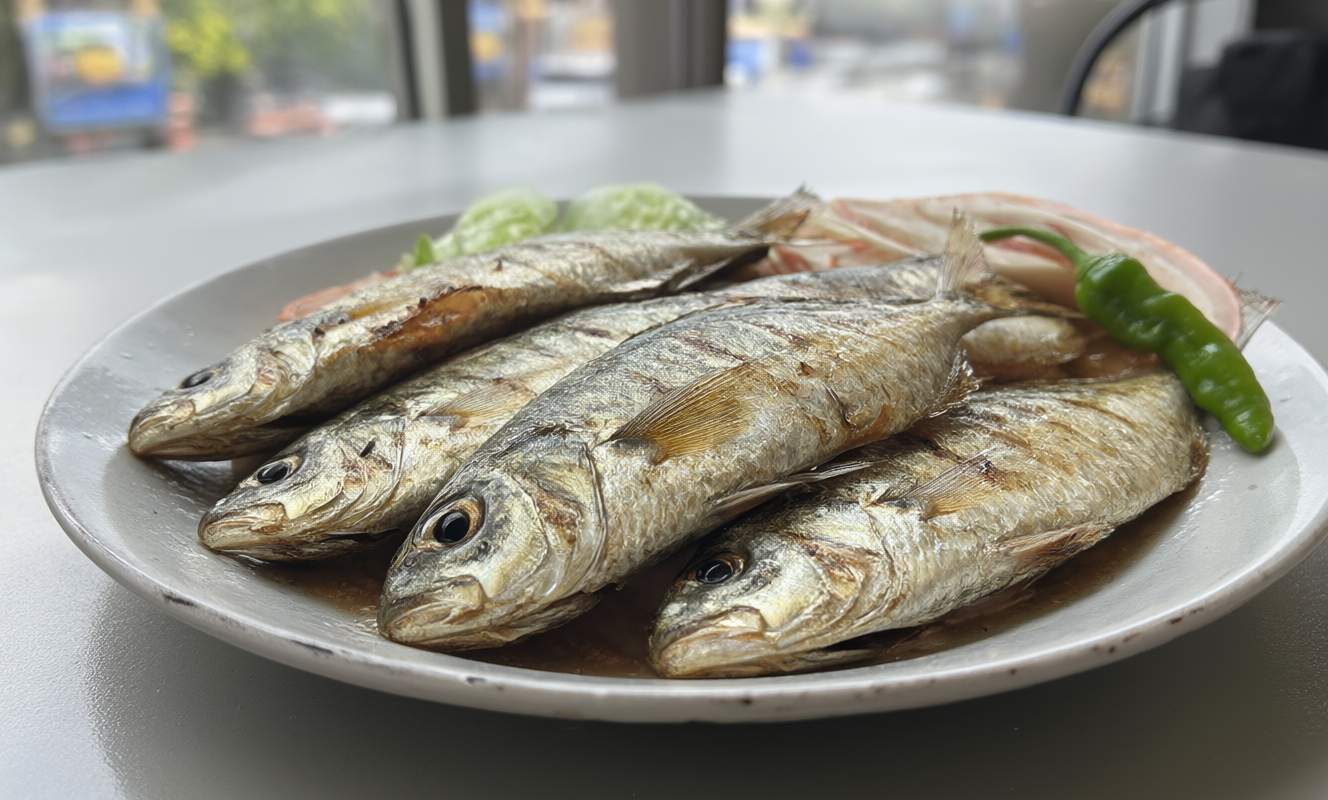
Gwamegi is split Pacific saury or herring dried in cold coastal air. Pohang City identifies Guryongpo, on the coast east of the city, as its main production base; the fish is cleaned, opened and dried outdoors over several days, then usually eaten in strips with seaweed and vegetables. It is a winter specialty of the wider Pohang area rather than a dish invented for this festival, though gwamegi is also one of the city's designated ten flavors.
Pohangcho is winter spinach grown in coastal Pohang, including Ocheon where this festival is held. It became the first spinach in Korea to receive geographical-indication status (No. 96); the salt-laden sea wind keeps it low and spreading rather than tall, which local growers credit for its sweeter, deeper flavor. It is a farm product of the region, not a festival stall item, and no photograph is shown here rather than substitute a generic spinach picture.
Pork and broth served with rice, usually with chives and seasonings adjusted at the table. Busan City records dwaeji-gukbap as a local food closely associated with the city; this is a regional meal to seek out, not a promise that the festival food zone sells it.
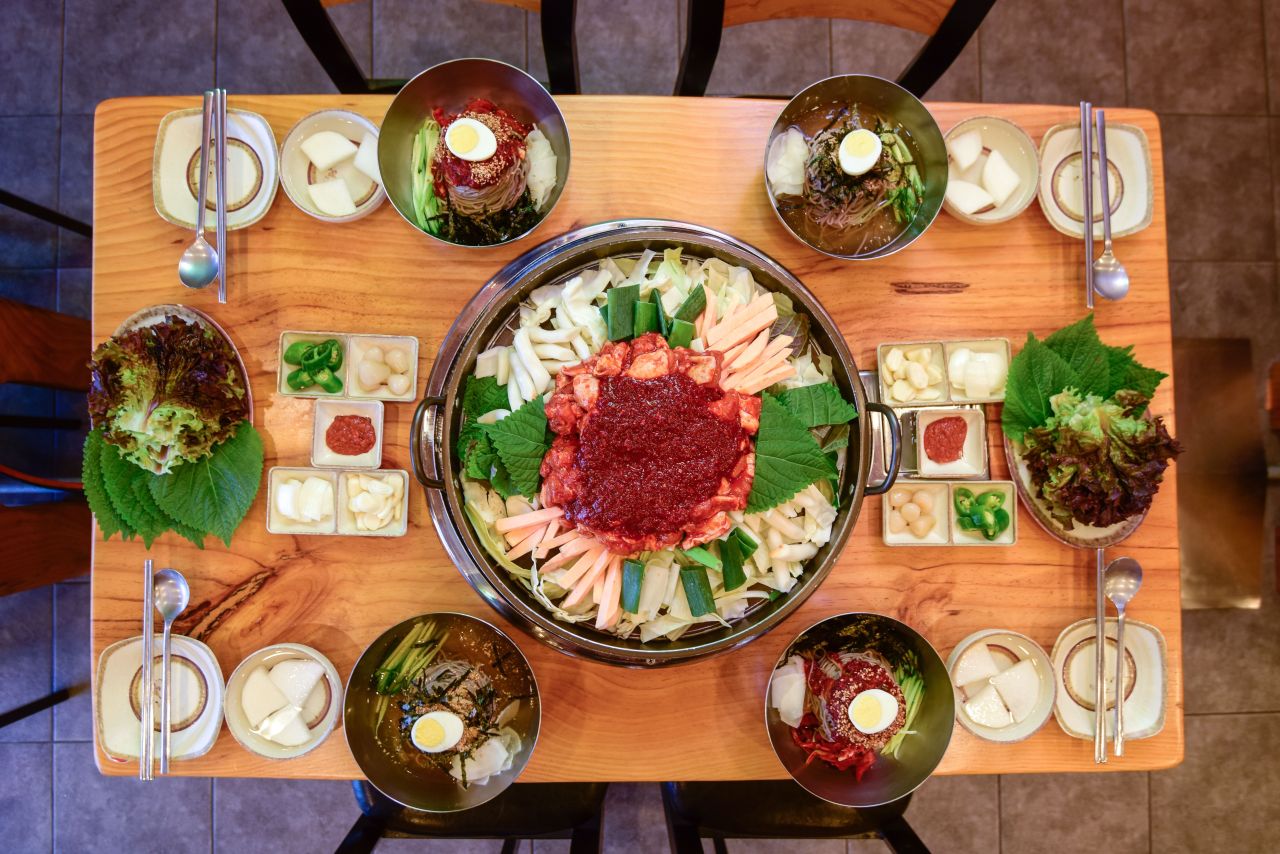
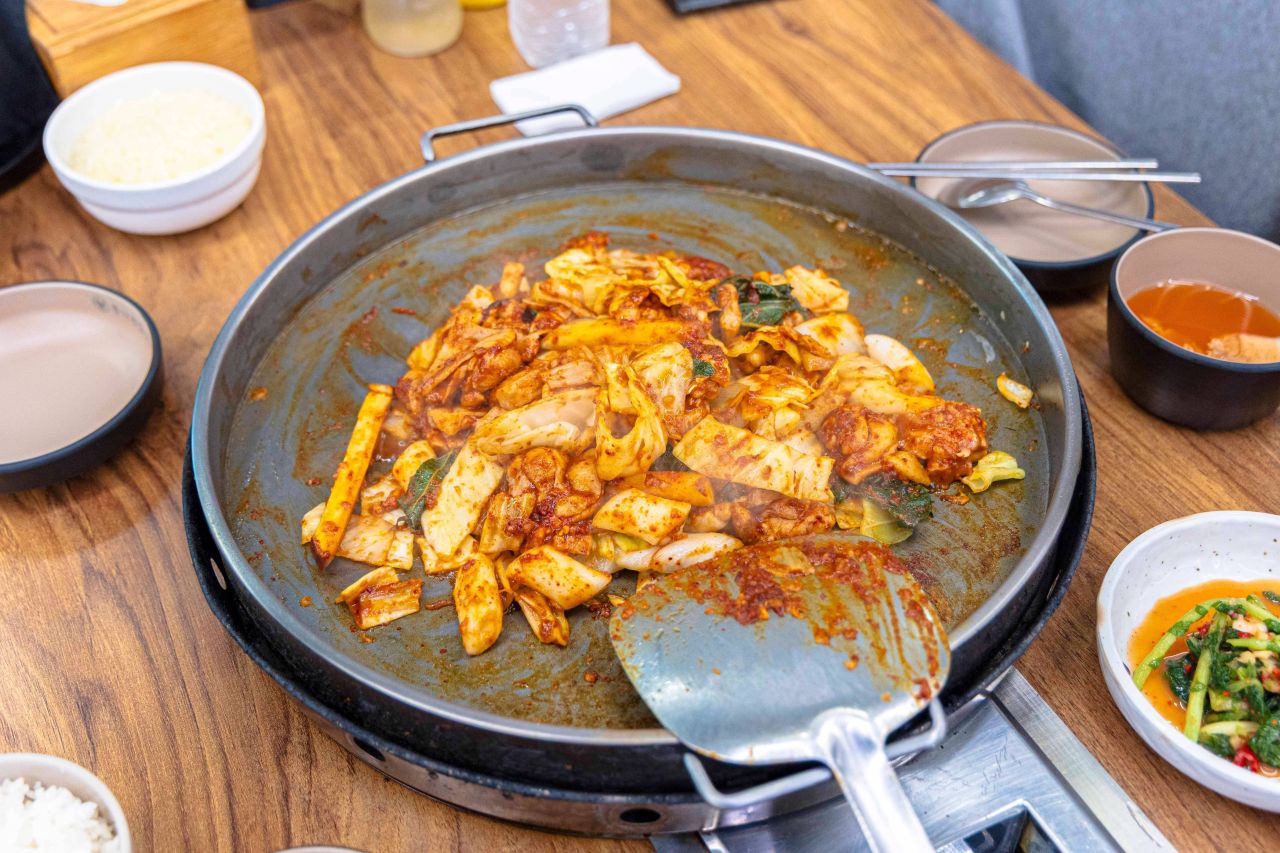
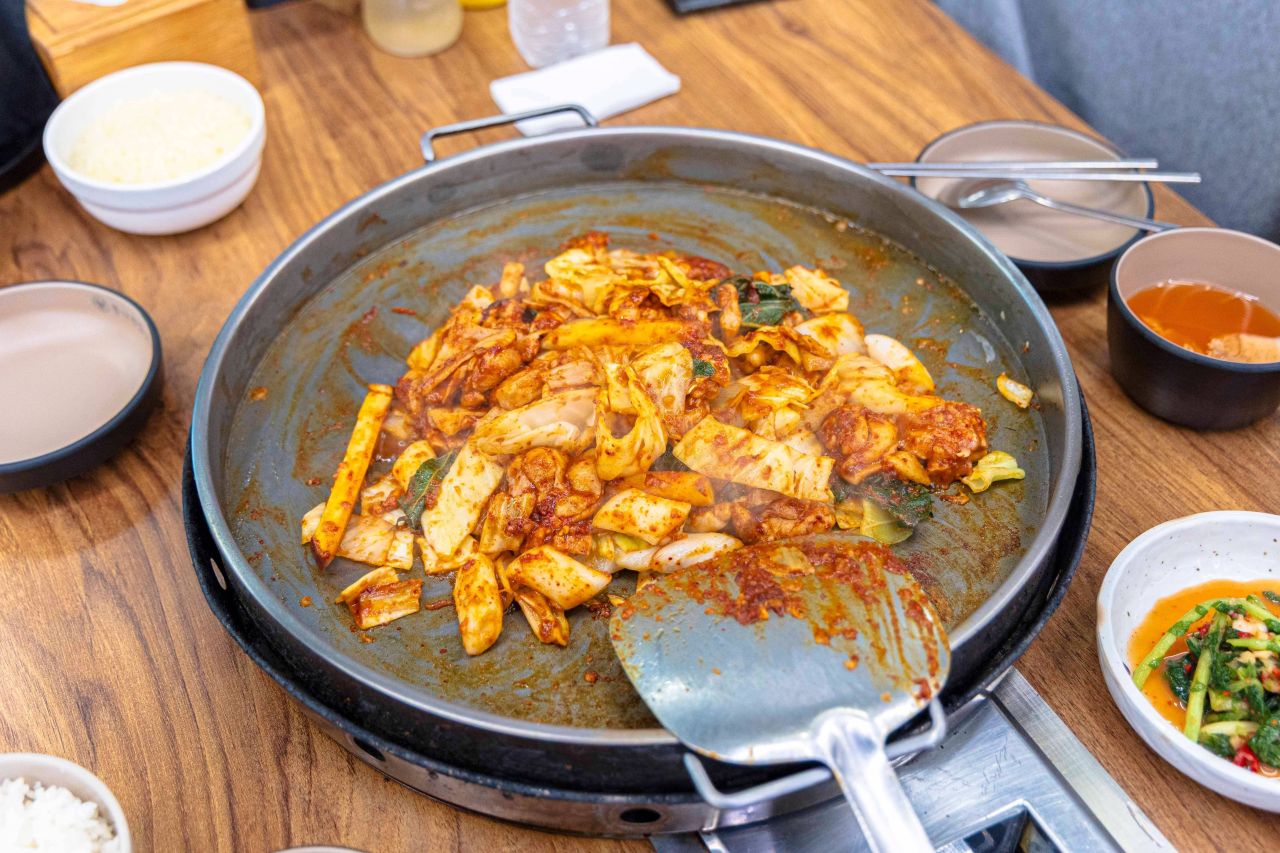
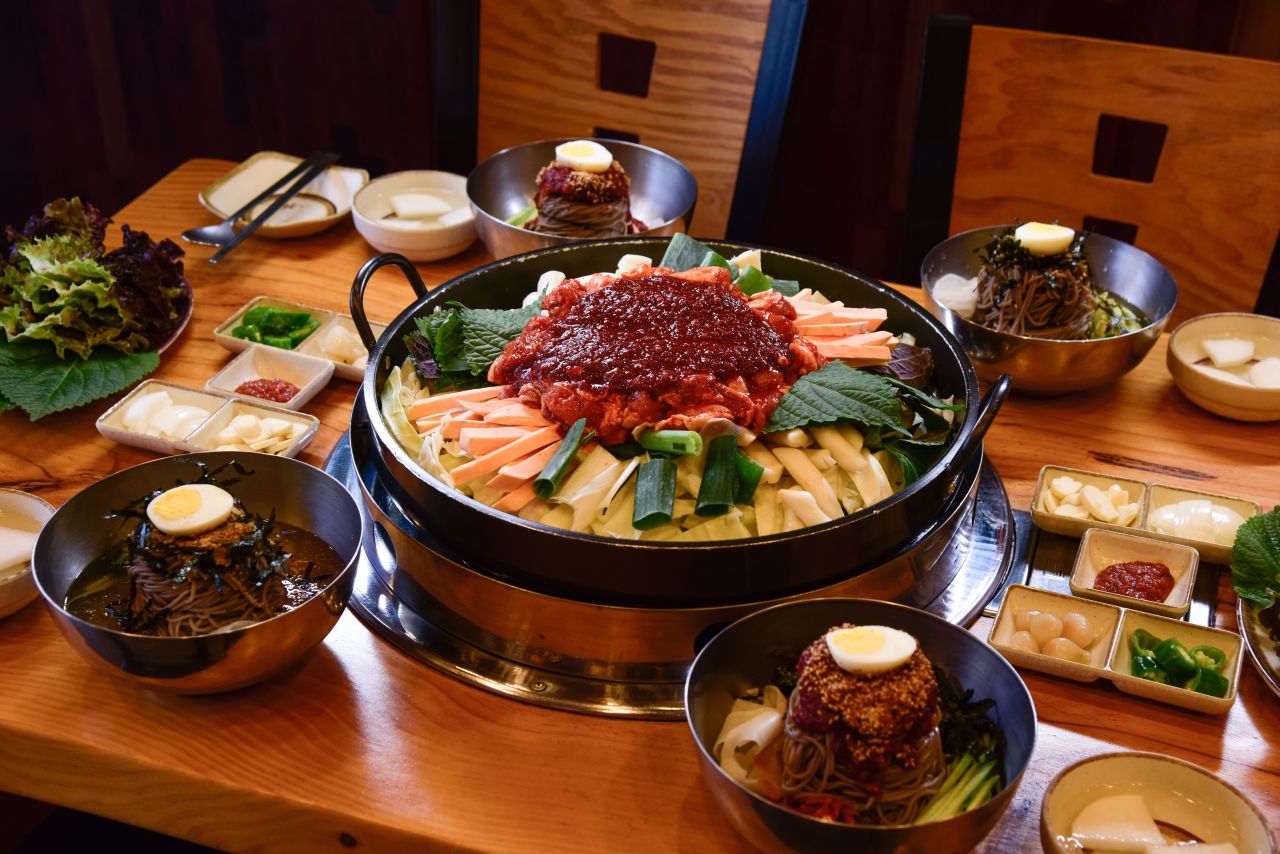
Chicken, cabbage, sweet potato and other vegetables cooked together with a spicy sauce, commonly on a round iron pan. Chuncheon City calls dakgalbi a representative local food, and KTO identifies Chuncheon as its birthplace and centre.
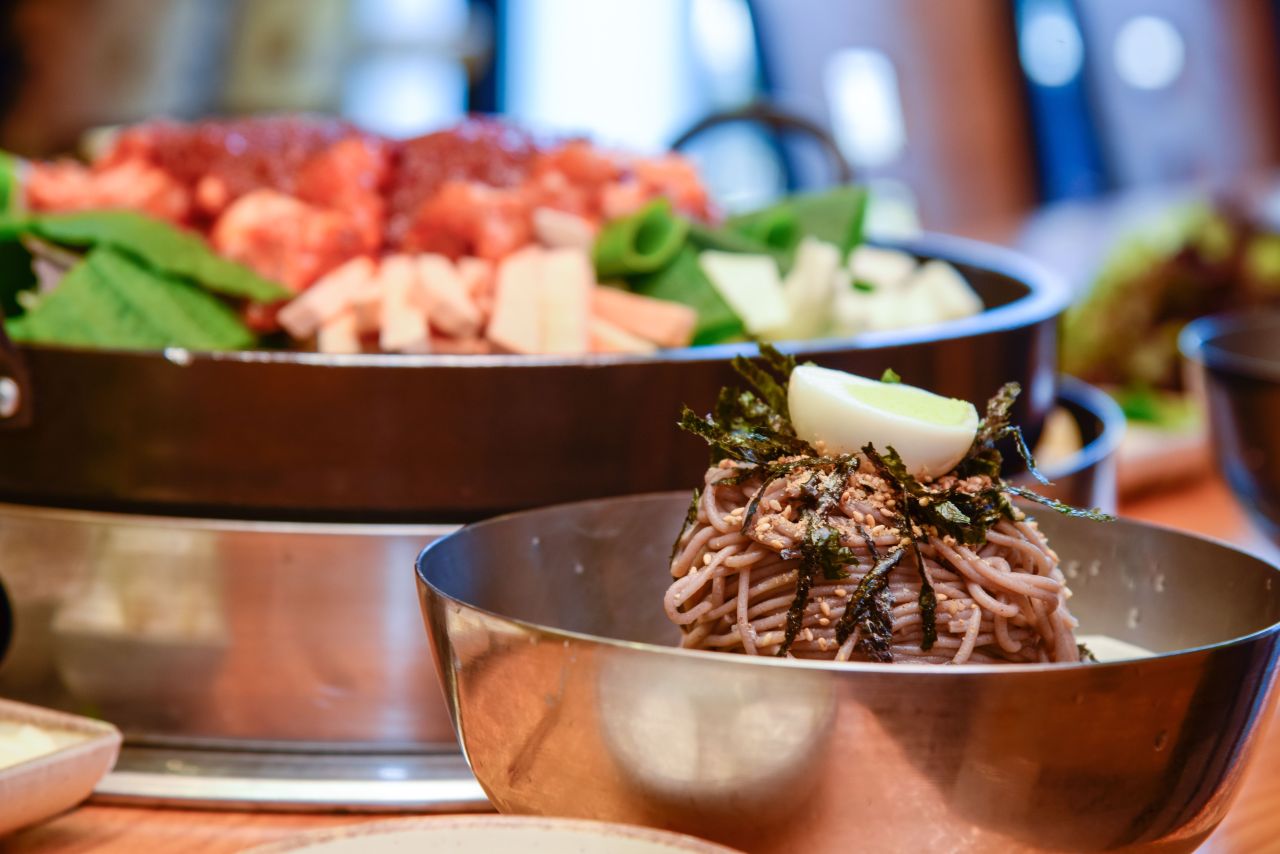
Buckwheat noodles served cold, either mixed with seasoning or in broth. KTO's current Chuncheon food-festival listing identifies makguksu and dakgalbi as two of the city's best-known specialties.
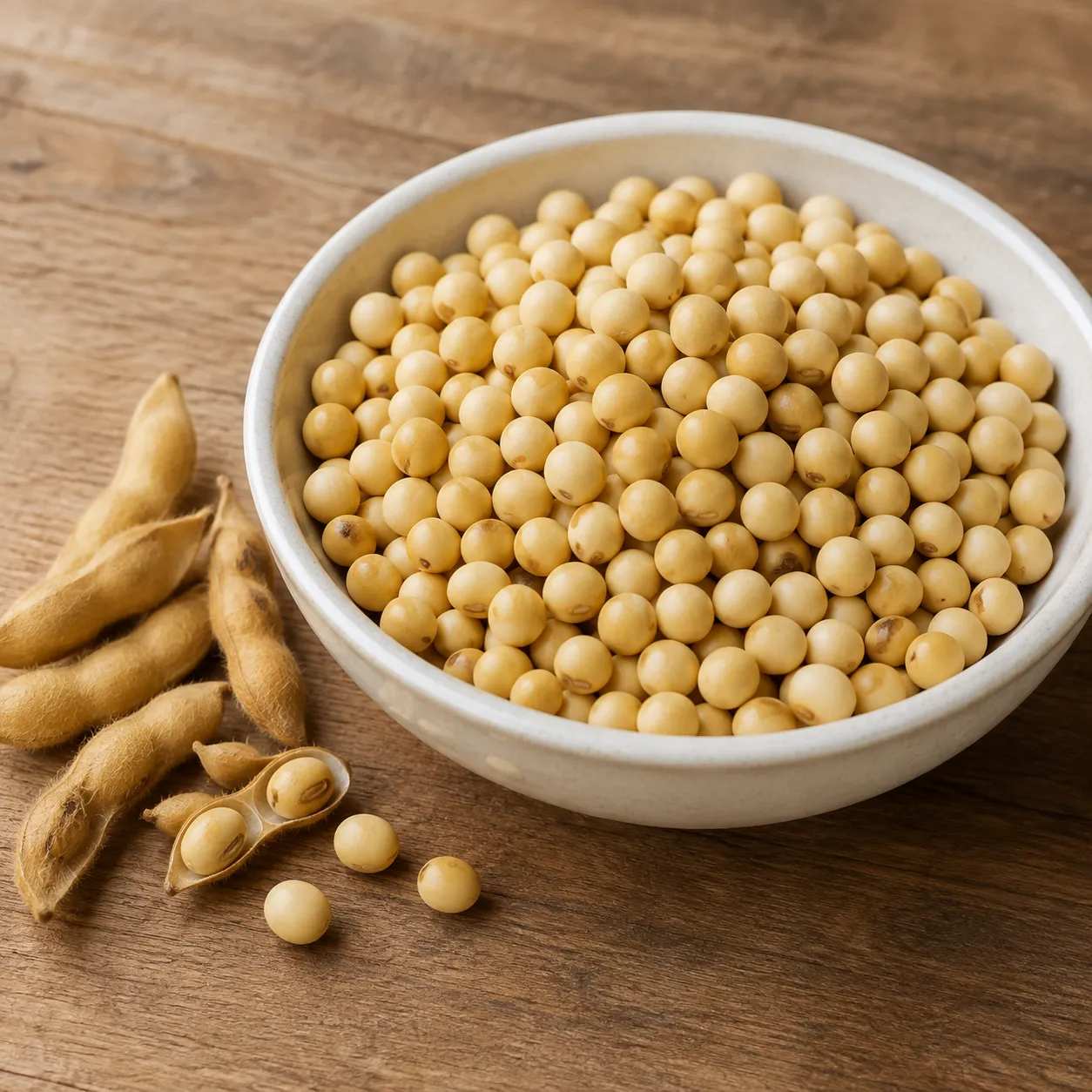
Soybeans associated with the former Jangdan area, parts of which now lie in Paju. Paju City's tourism office identifies Jangdan beans as one of the city's representative agricultural products and traces the local Jangdanbaekmok variety to Korea's first officially encouraged soybean cultivar in 1913.
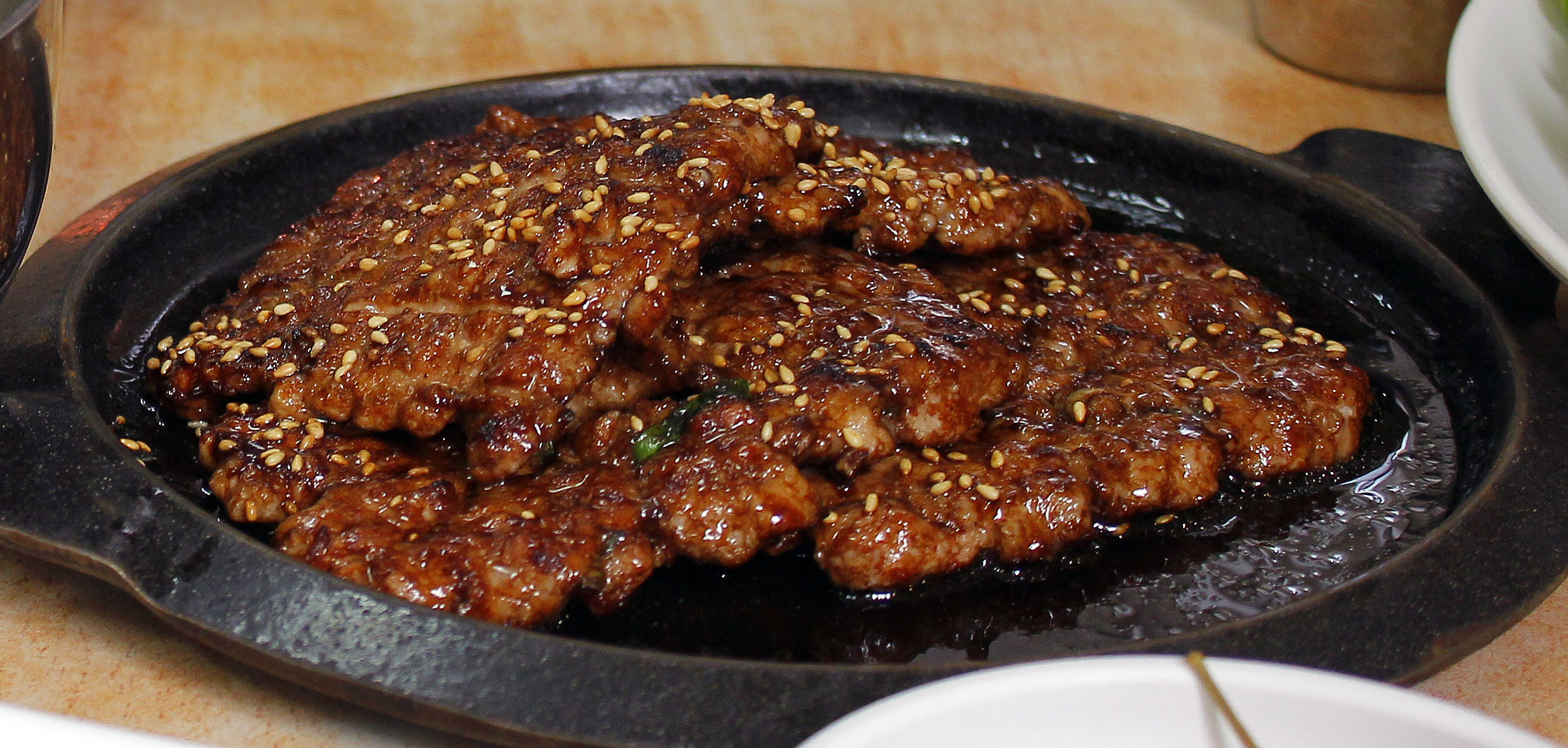
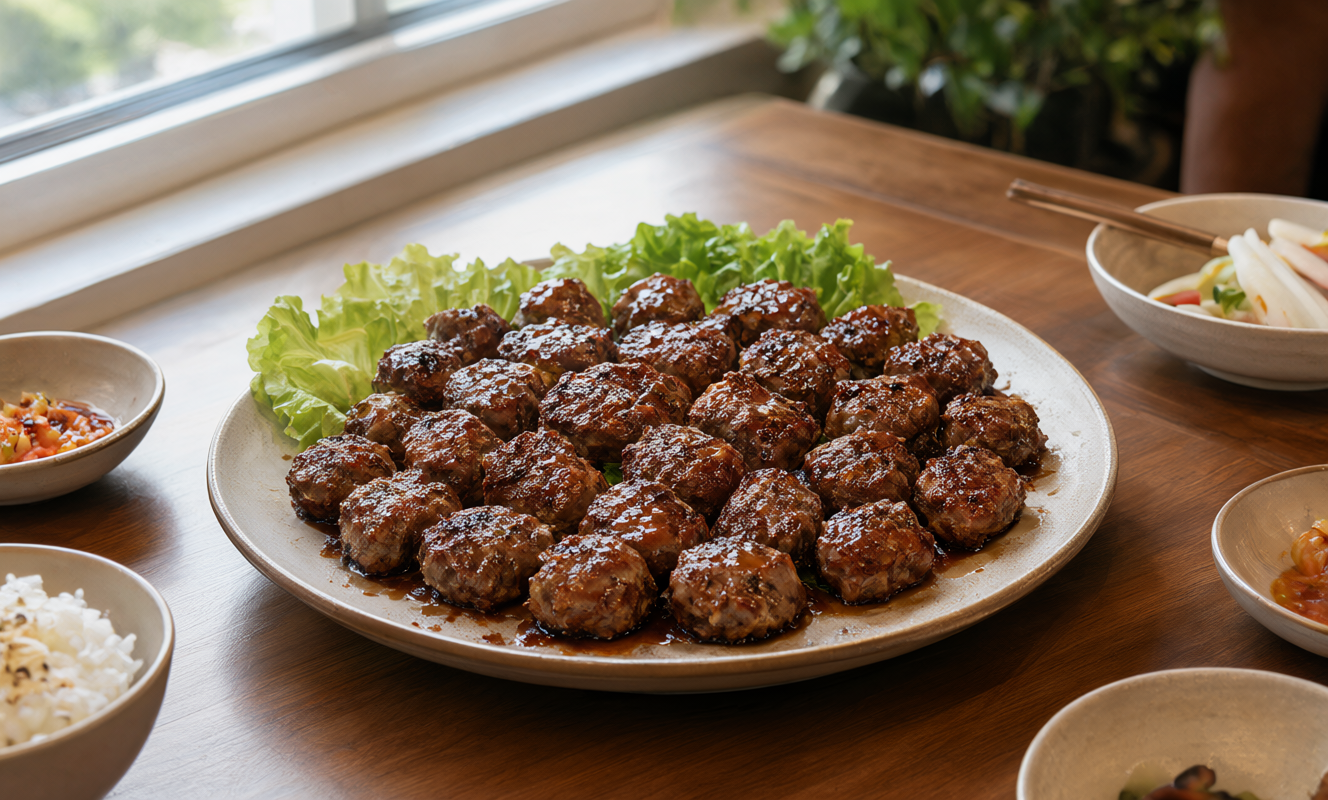
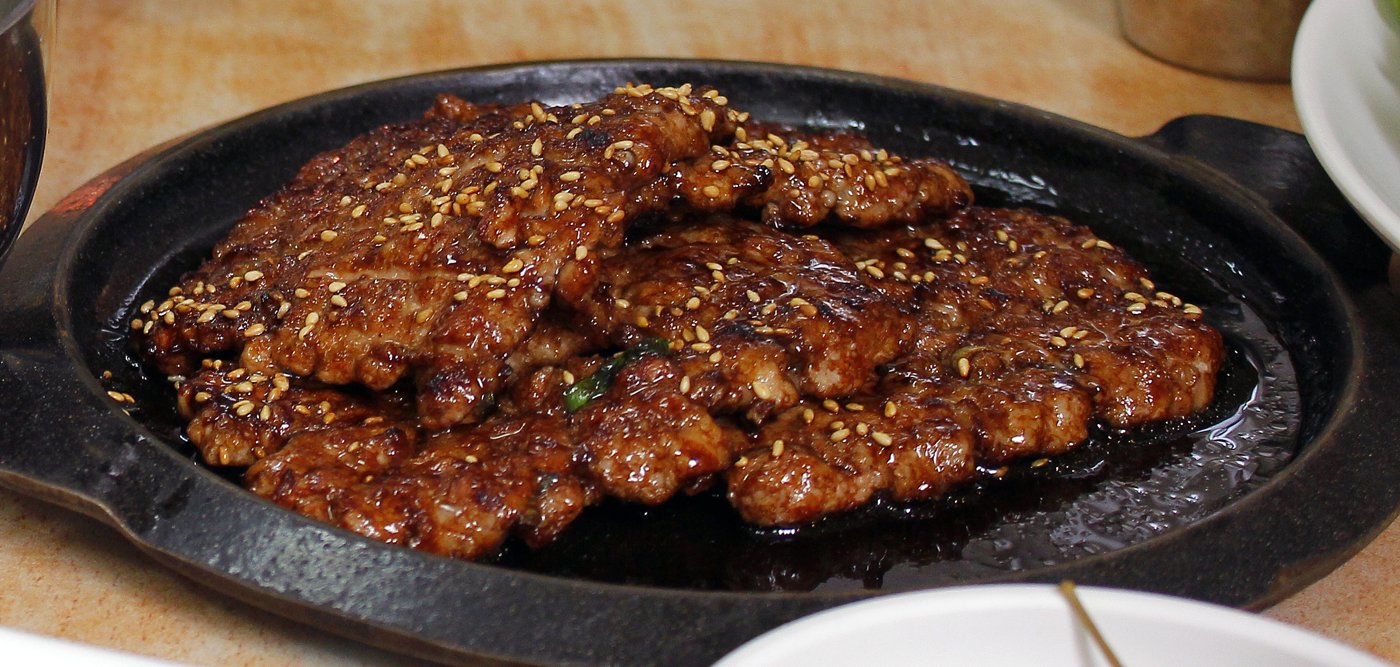
Grilled patties of minced beef and pork, a Gwangju specialty that is convenient for fair visitors because the tteokgalbi restaurant street sits beside Gwangju Songjeong Station, where the KTX arrives. Gwangju Metropolitan City named it one of the city's five representative foods (Gwangju 5-mi) in 2003, and it stayed on the city's revised representative-foods list in 2019. This is a regional dish near the arrival point, not something the fair itself serves.
See Gwangju ACE Fair →Photo: 동네부기 / Wikimedia Commons — oritang, Korean duck soup (CC BY-SA 2.0 KR). Illustrative of the dish, not a specific restaurant.
Gwangju duck soup (광주 오리탕)
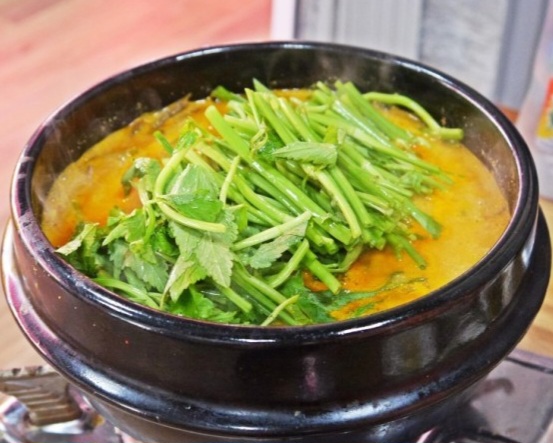
A simmered duck soup with vegetables and perilla, also on Gwangju's 2003 five-representative-foods list and the 2019 revision. A cluster of duck-soup restaurants has long operated in central Gwangju. It is documented as a city specialty rather than a festival food, so treat it as an option for a meal in town rather than something sold at the venue.
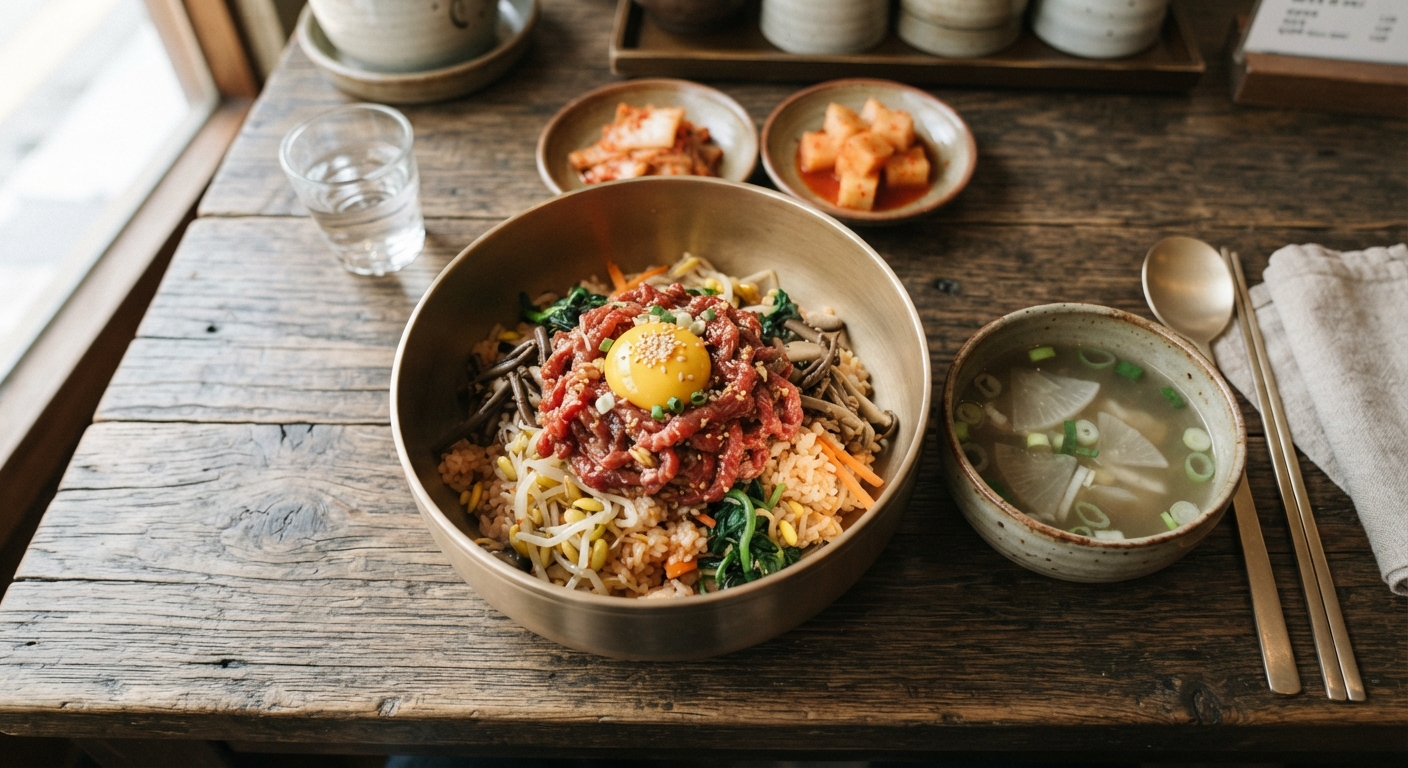
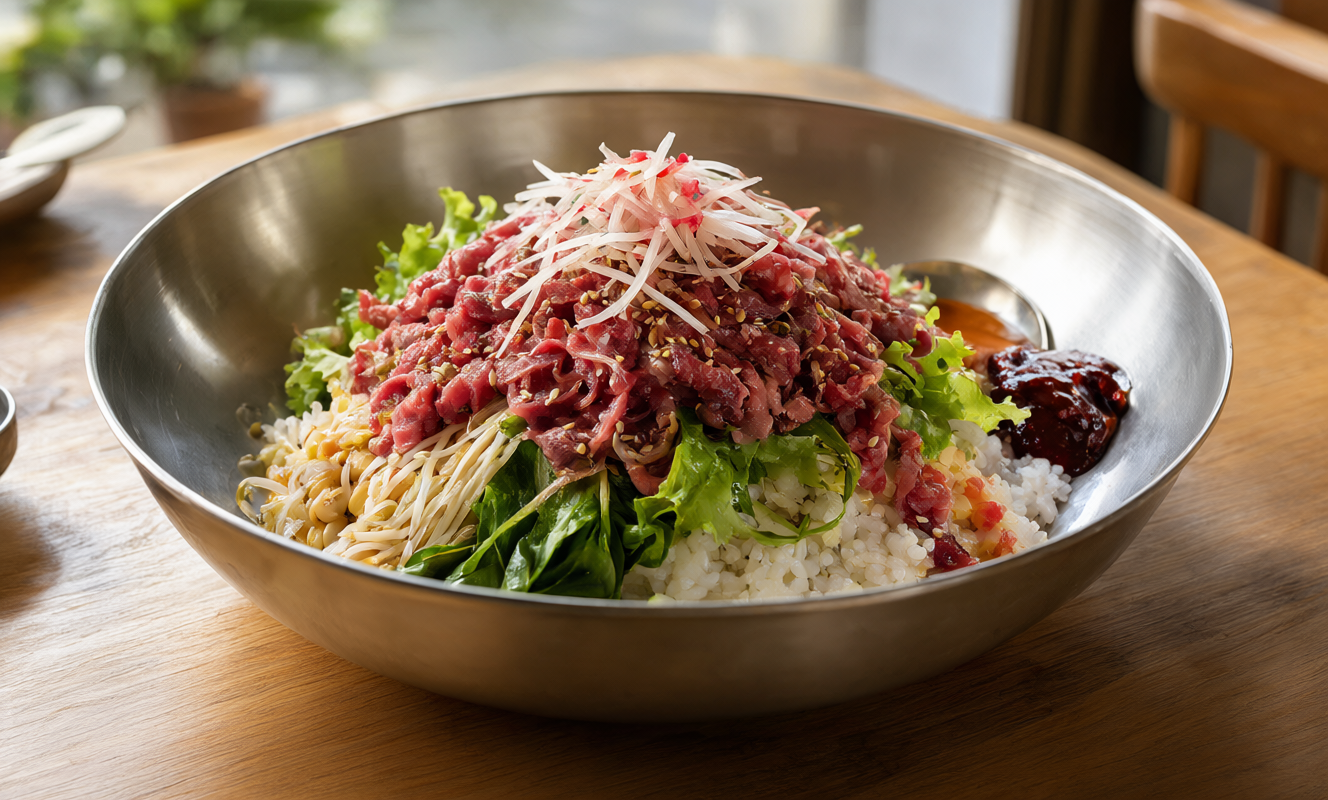
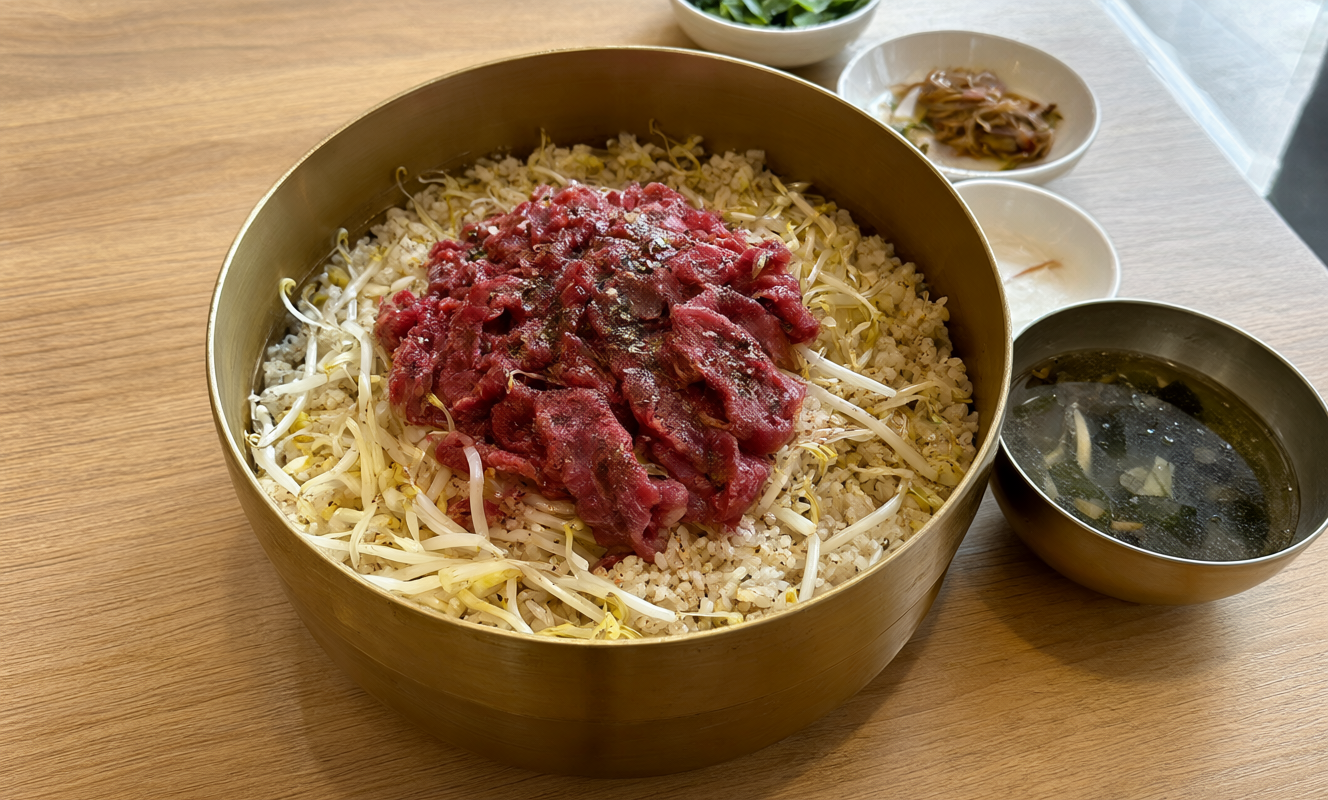
A raw-beef rice bowl from the Hwangdeung area of Iksan. Jeonbuk provincial tourism lists it as an Iksan specialty: warm rice pre-mixed with seasoned vegetables and beansprouts, topped with fresh seasoned raw beef (yukhoe) and usually served with a clear beef broth on the side. It is a city dish found at long-running Hwangdeung restaurants, not something the festival itself serves.
See Iksan Horror Hologram Festival →Photo: Korea Tourism Organization / Park Eun-kyung (KOGL Type 1); representative Korean-beef image, not a Jangsu-specific photo
Jangsu Korean beef (Jangsu hanu) (장수한우)
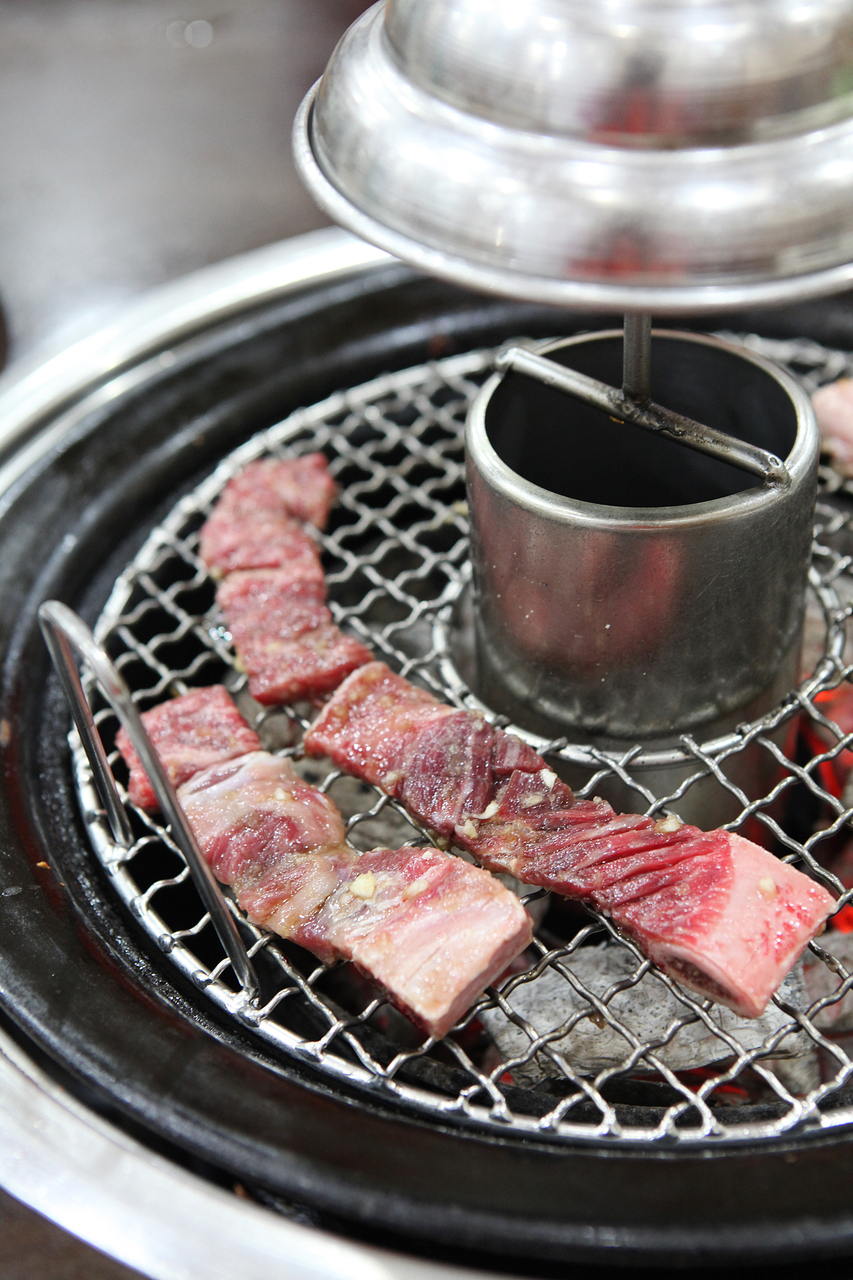
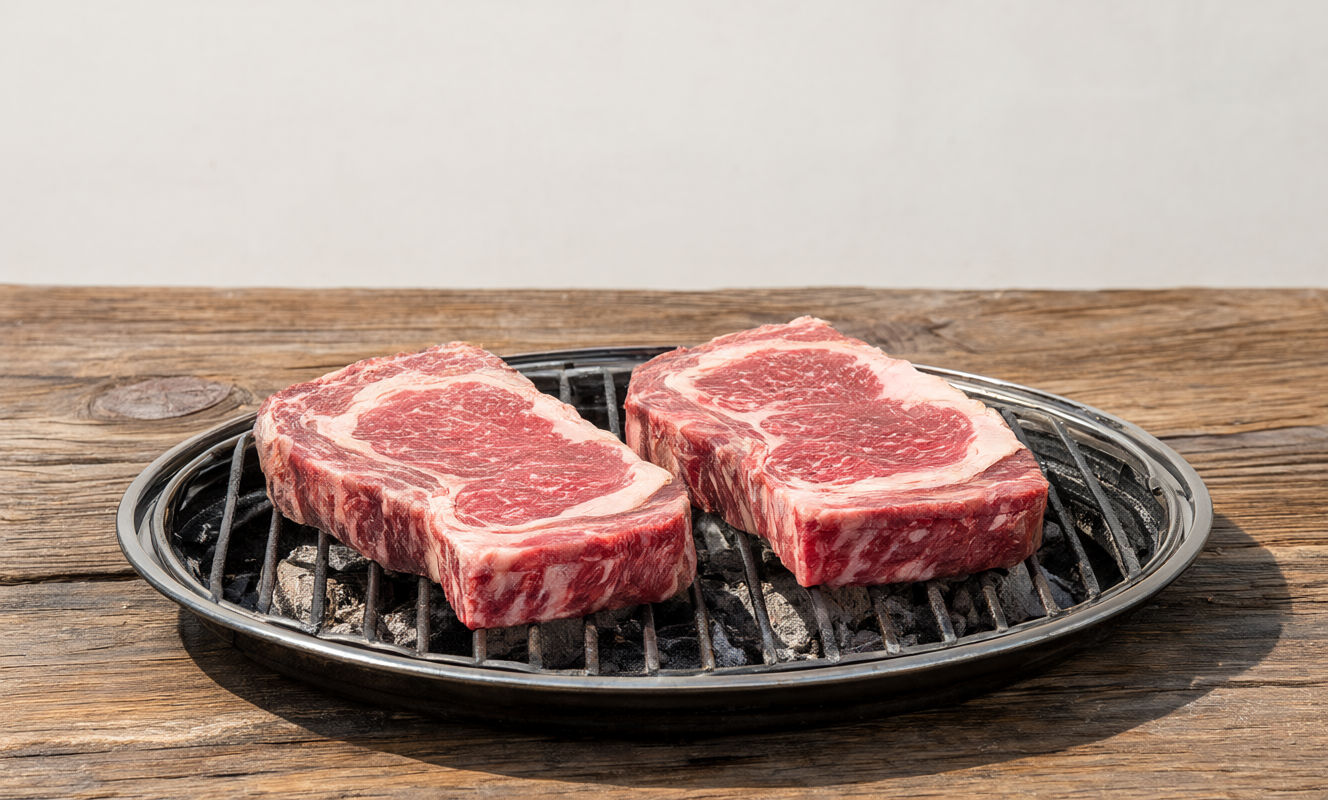
Korean beef raised in Jangsu's highland pastures. Jangsu County's tourism office lists hanu as one of the county's headline products, and the festival's Jangsu Hanu hall is built around buying and grilling it on site. This is a year-round county specialty, not only a festival stall.
See Jangsu Red Food Festival →Photo: Korea Tourism Organization / Live Studio (KOGL Type 1); representative apple image, not a Jangsu-specific photo
Jangsu apple (장수사과)
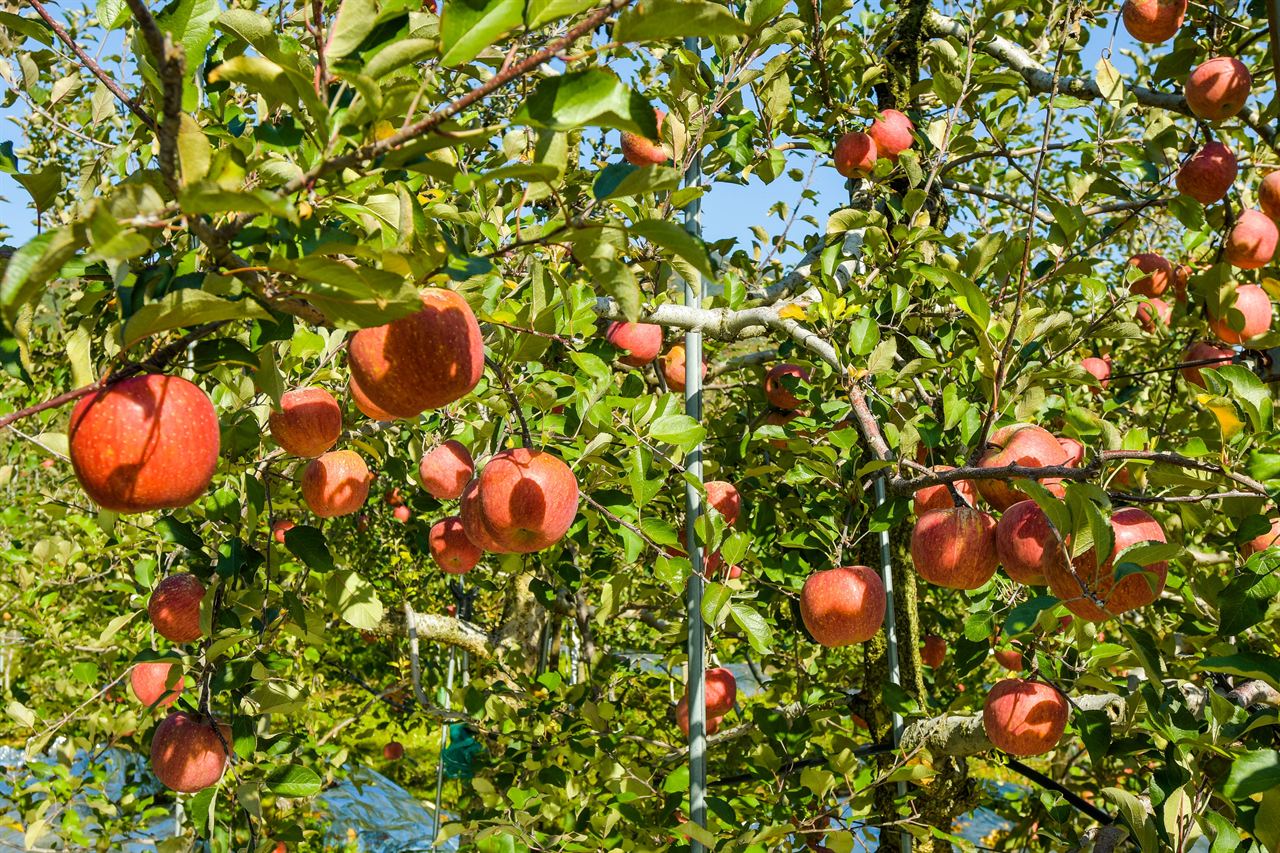
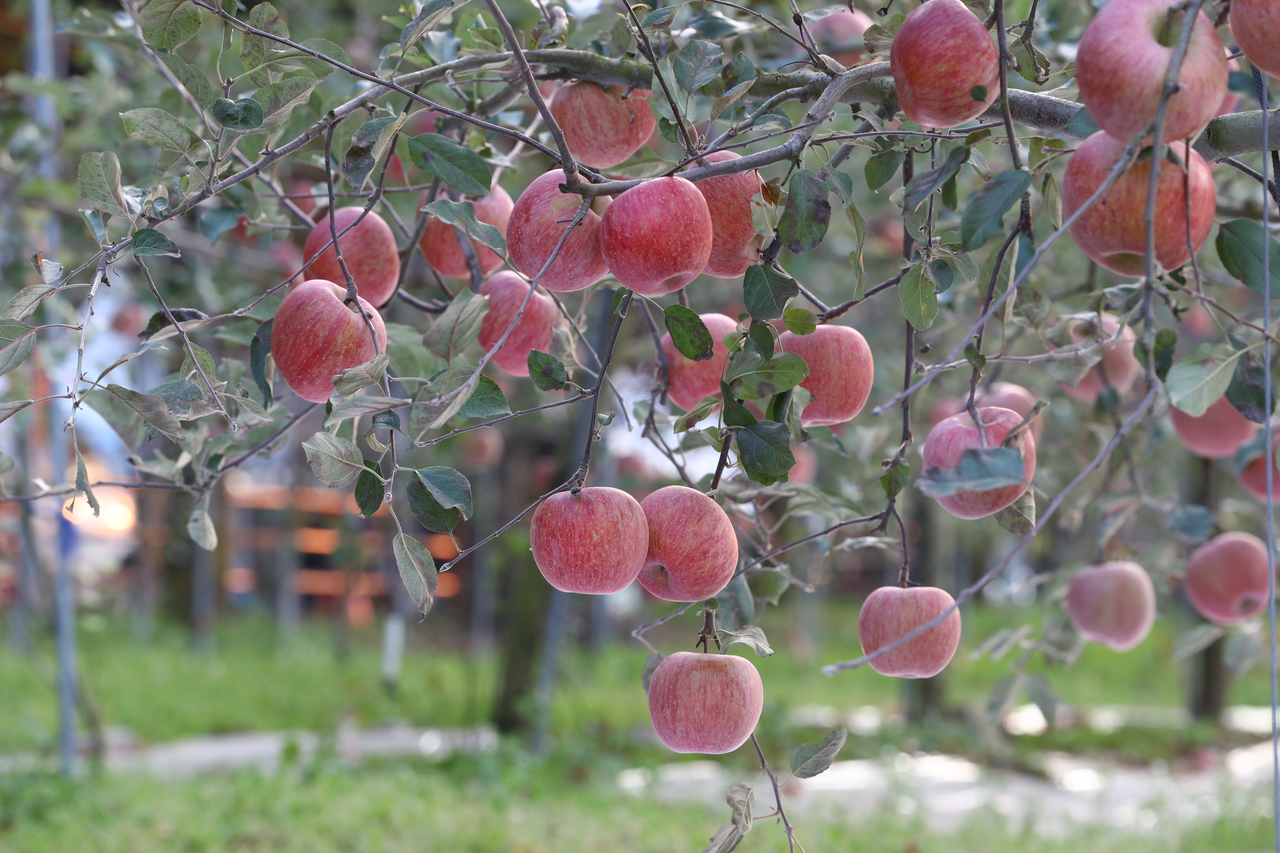
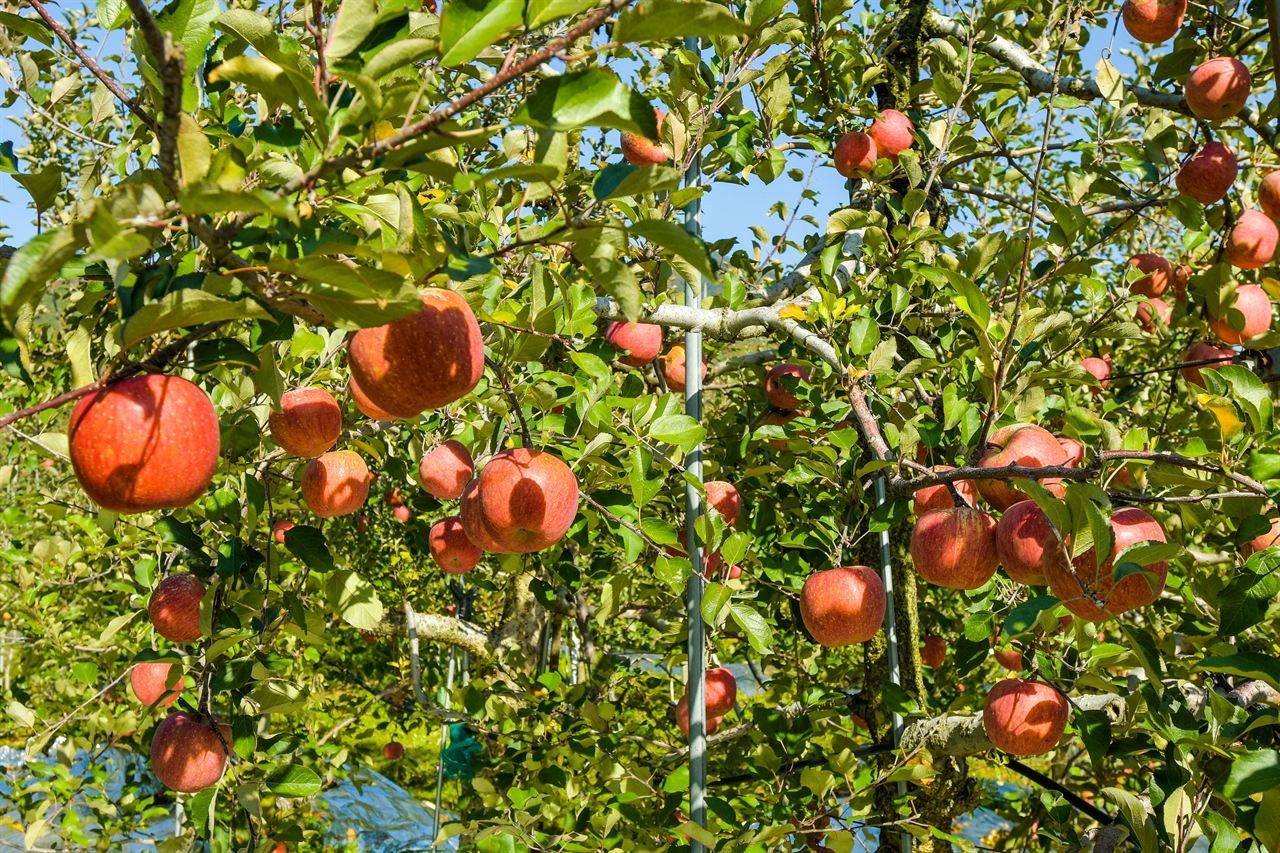
Jangsu County's tourism office identifies apples as a signature product and attributes their high sugar and firm flesh to the wide day-to-night temperature range at the county's altitude. Apples are one of the four 'red foods' the festival is built around, but the fruit is a county specialty in its own right.
See Jangsu Red Food Festival →Photo: Korea Tourism Organization / Kim Ji-ho (KOGL Type 1); representative omija product image, not a Jangsu-specific photo
Omija (five-flavour berry) (오미자)
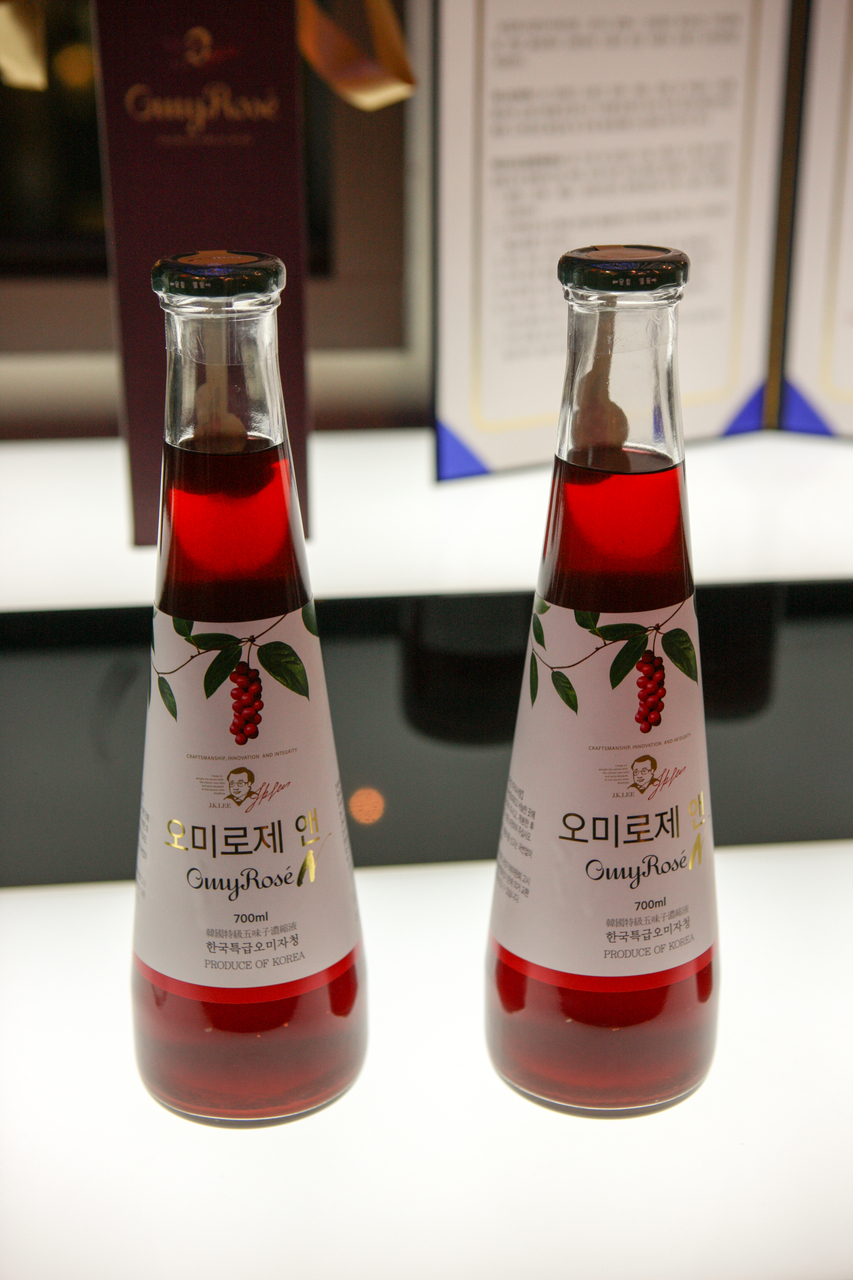
A tart red berry grown among Jangsu's medicinal crops. Jangsu County's tourism pages list omija alongside apples and beef as a local product, and the festival groups it into the 'red food' theme, including processed goods such as omija liquor.
Cheongsong is one of Korea's best-known apple counties, and Cheongsong apple is a registered geographical-indication product. Local sources credit the highland setting — orchards above 250 m, a wide daily temperature swing of about 13°C, relatively low rainfall and long sunshine — for firm, sweet fruit. It is the county's flagship crop, not a promise about what any festival stall will sell.
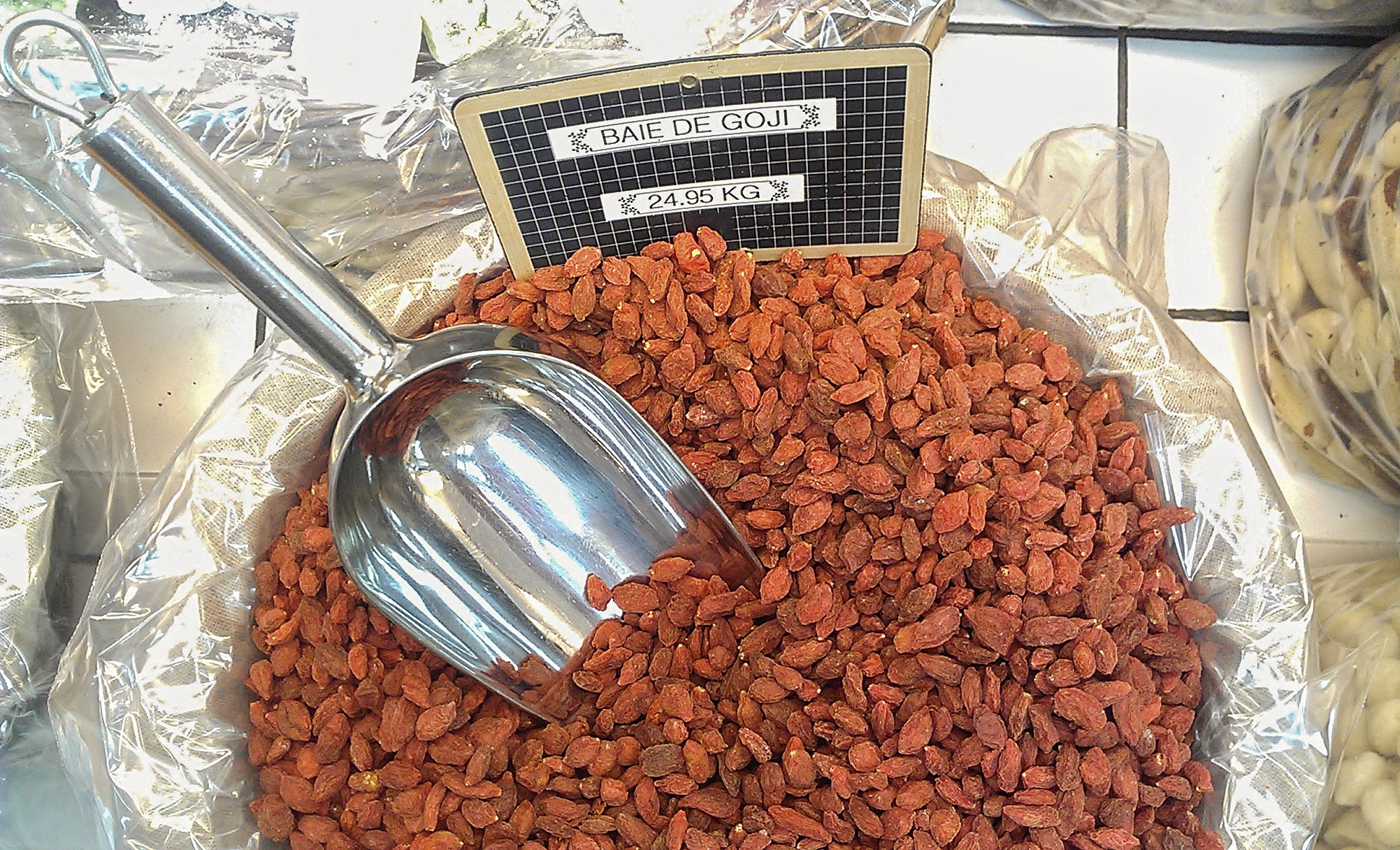
This is the specialty with the strongest paperwork behind it. Cheongyang County goji berry is a registered geographical-indication product (Korea Forest Service registration No. 11) and was designated National Important Agricultural Heritage No. 19 in late 2024. Cheongyang County's own figures put the county at about 66% of national goji production in 2022, from roughly 94 hectares farmed by around 900 households, with a cultivation history of about a century. The dried berries are used in tea, in soups and in health tonics rather than eaten fresh; this is a regional product to buy at the market, not a promise about what a festival stall will cook.
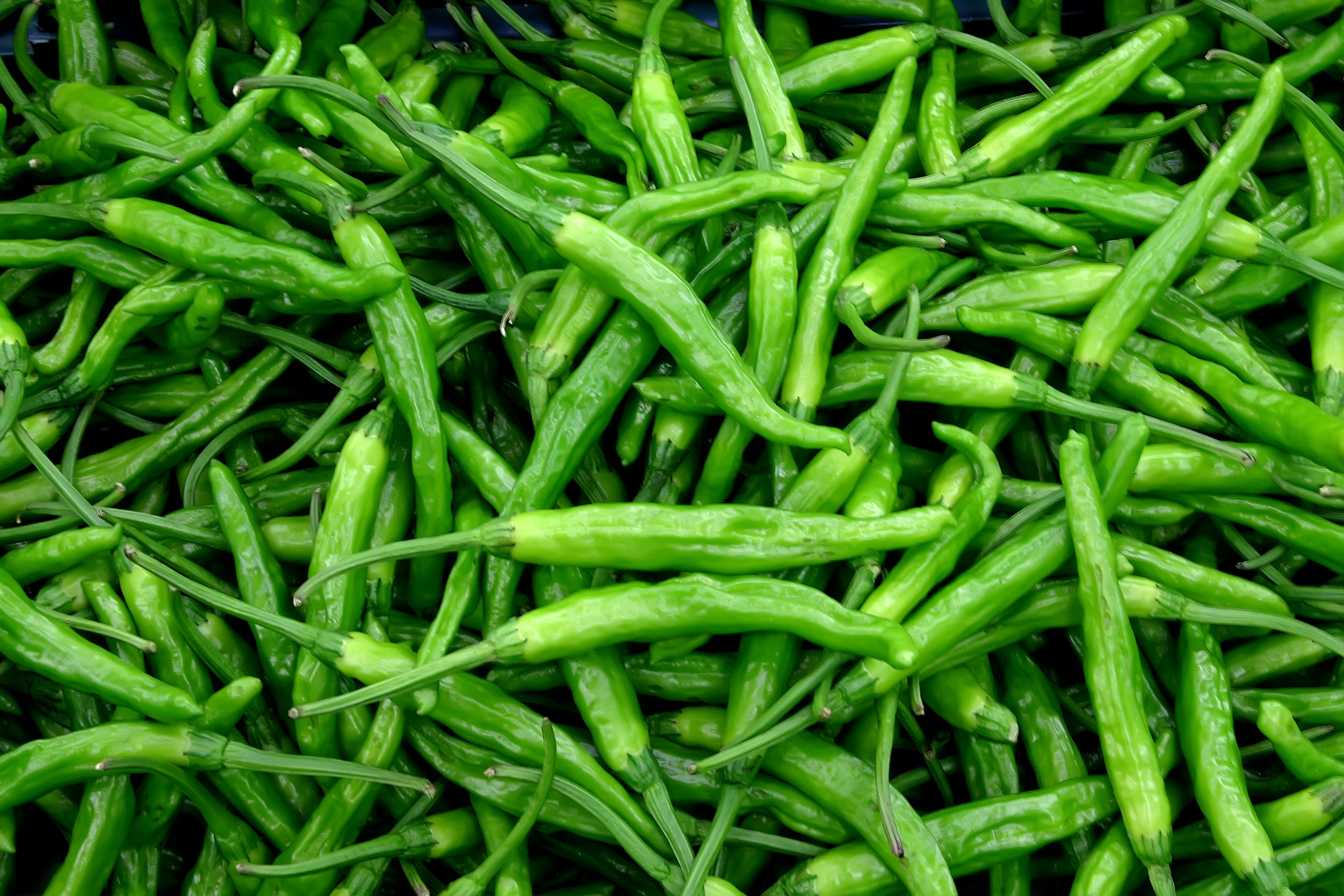
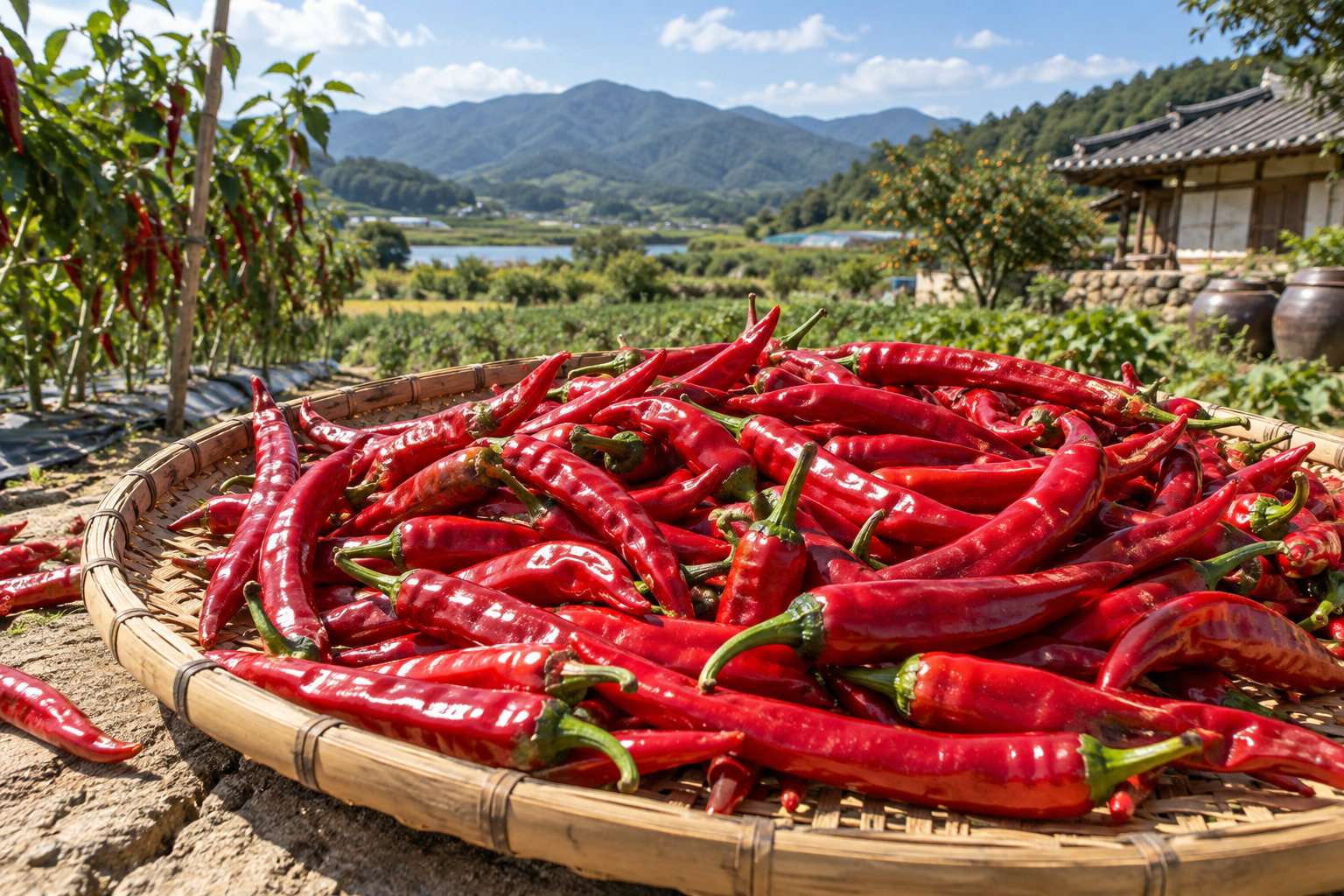
The county grows and sells the small, very hot red chili that shares this name, and Cheongyang lists it as a registered geographical-indication product. Worth knowing honestly: the pepper *variety* called cheongyang-gochu was, according to the national seed authority as reported by Maeil Sinmun, developed in 1983 and named by joining one character each from Cheongsong and Yeongyang counties in Gyeongsangbuk-do — not from Cheongyang County in Chungnam. Cheongyang County disputes this. Either way, the county is a genuine chili-growing area and the festival is its main showcase for the crop as dried powder, paste and fresh peppers.
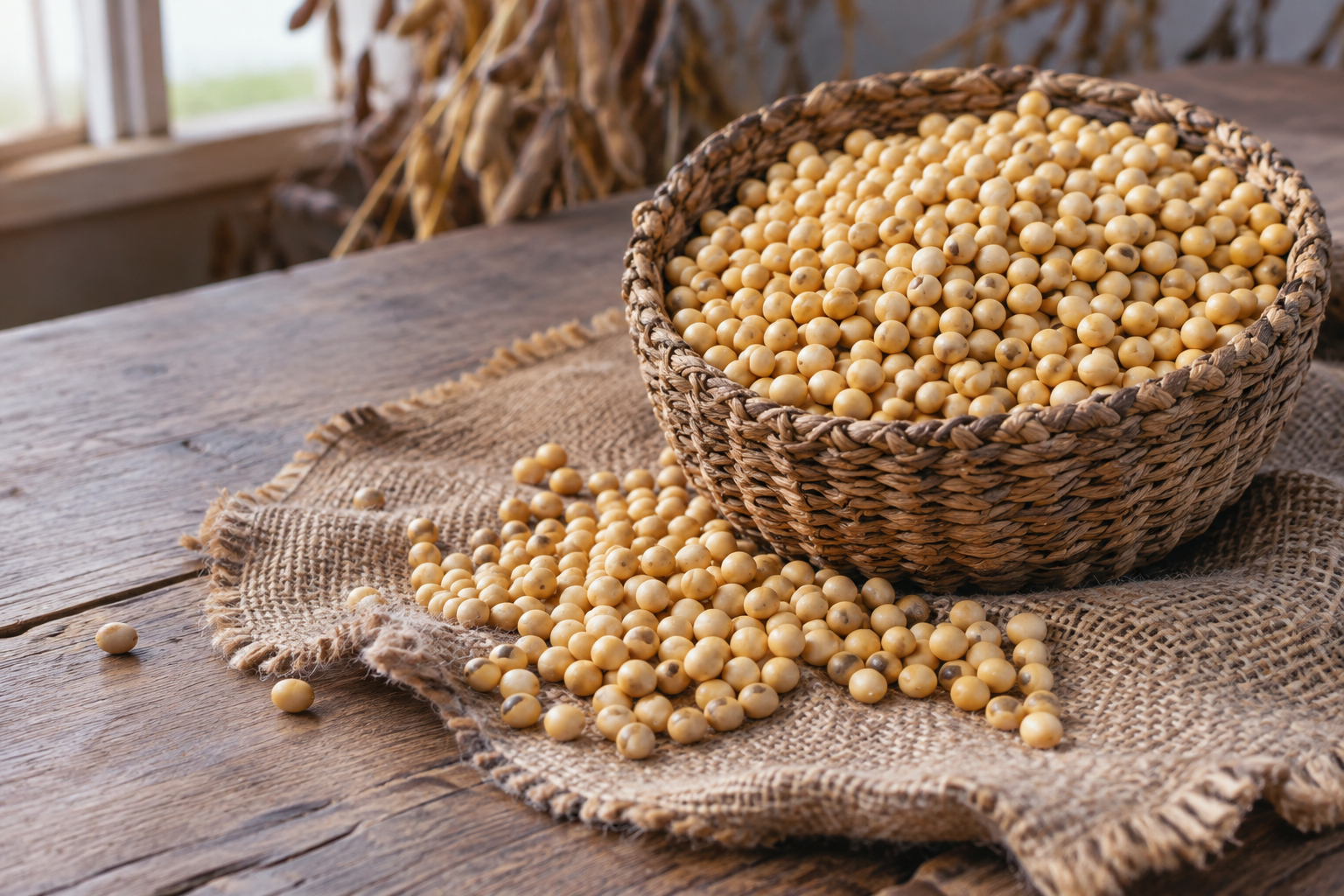
Paju's registered specialty crop is the Jangdan soybean (baektae), a small, glossy pale-yellow bean grown in the Jangdan area near the DMZ. It carries a geographical-indication registration and is one of the historic 'Jangdan three whites' — soybean, Imjin-river rice and ginseng — once sent to the royal table. It is the base for local doenjang, cheonggukjang and tofu, and Paju runs a dedicated Jangdan Bean Festival at Imjingak in November. This is a regional specialty of Paju, not a claim about what the Heyri festival stalls sold.
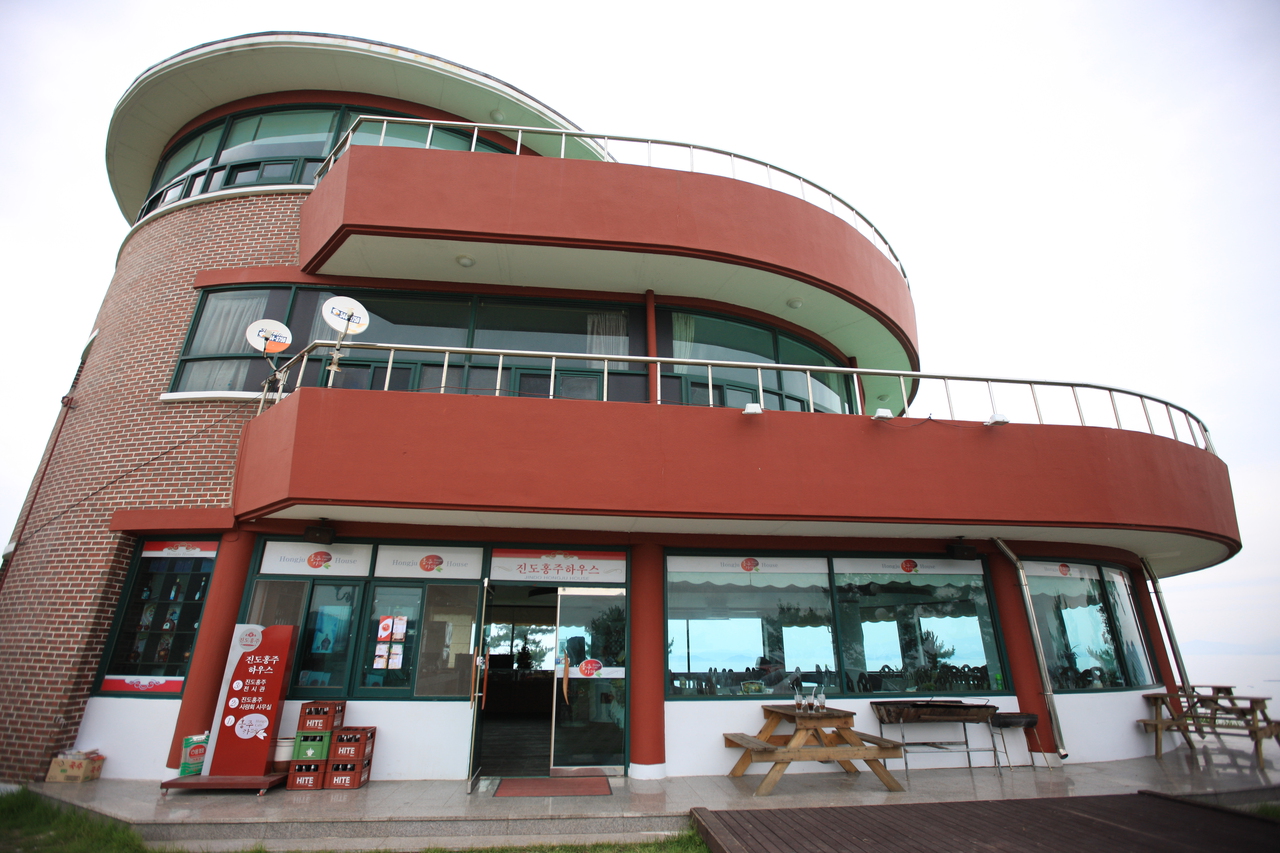
A traditional Jindo distilled liquor coloured deep red by passing the spirit through jicho (gromwell root). It was registered as Geographical Indication No. 26 in 2007, the first traditional liquor to receive the designation. The photograph shows the Jindo Hongju House, the exhibition hall on the island where it is shown and sold; it is a regional product, not a claim about festival stalls.
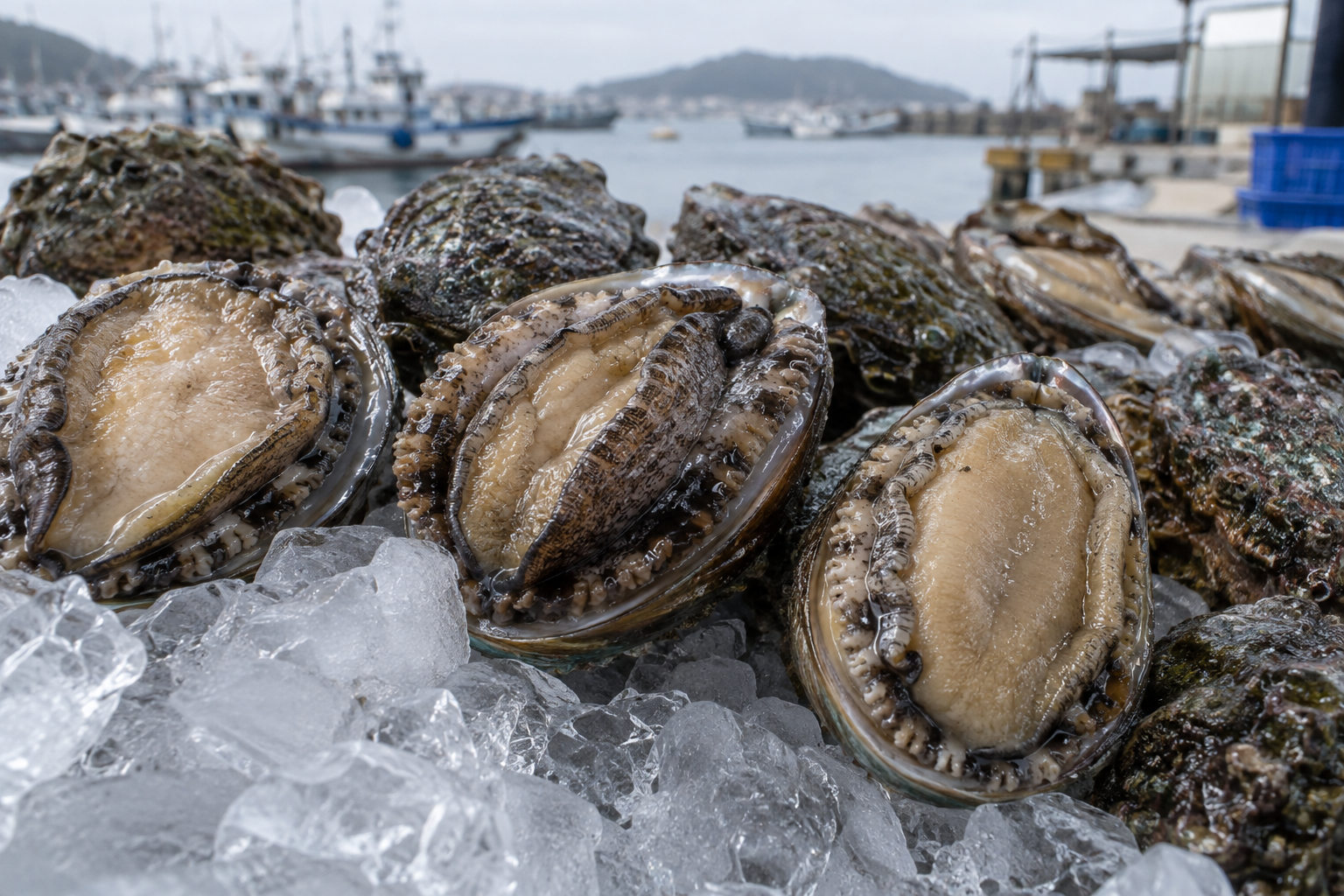
Jindo County lists abalone (jeonbok) among its official specialties, farmed in the cold, fast-moving waters around the island. Jindo County announced discounted live-abalone sales for visitors during the 2026 festival period. The image is an illustration of what fresh abalone looks like, not a photograph taken at the festival.
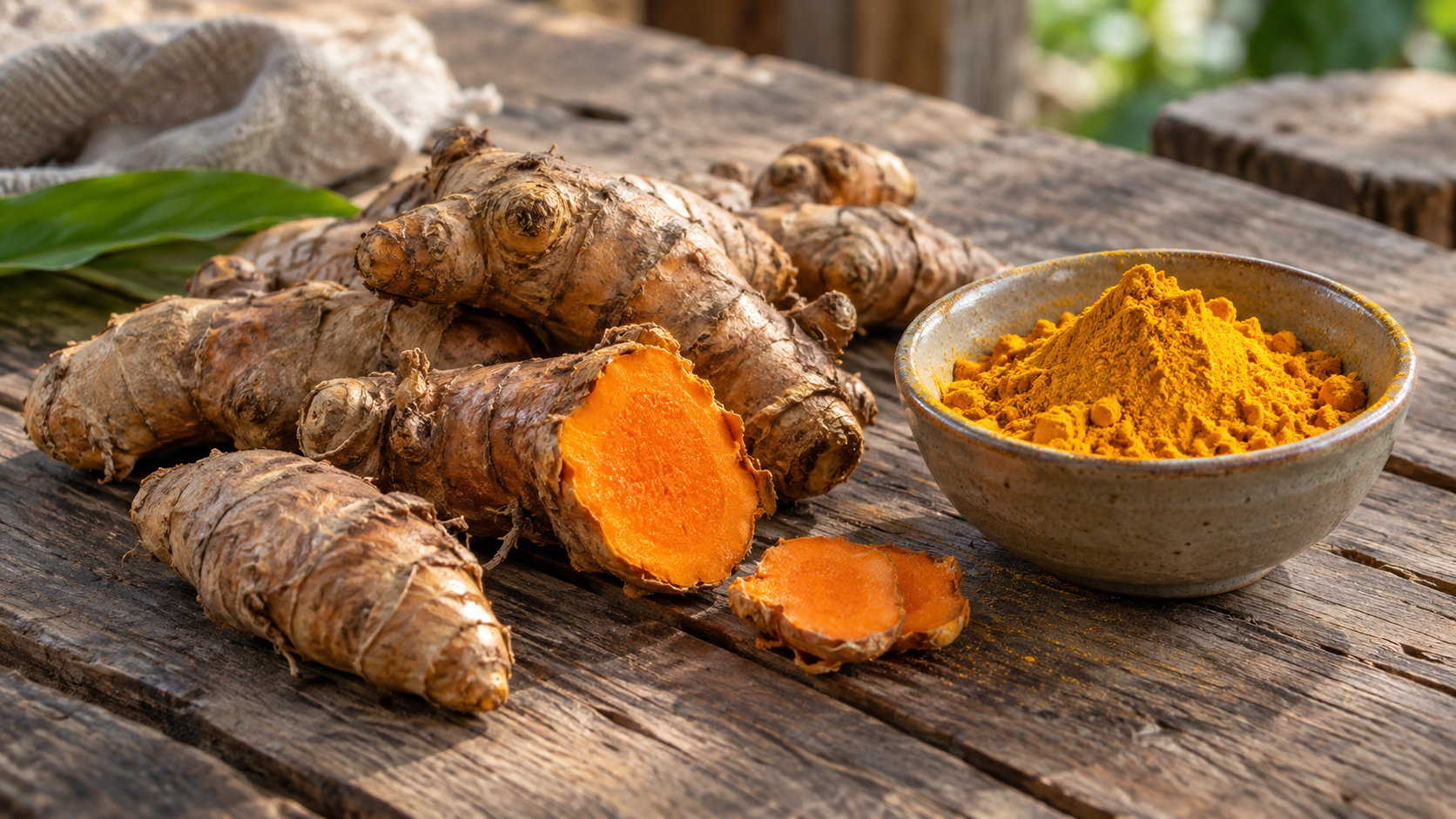
Turmeric (ulgeum) is one of the specialties named on Jindo County's official tourism page, sold as fresh rhizomes and as bright-orange powder. The image is an illustration showing what turmeric looks like, not a documentary photograph of a specific farm or product.
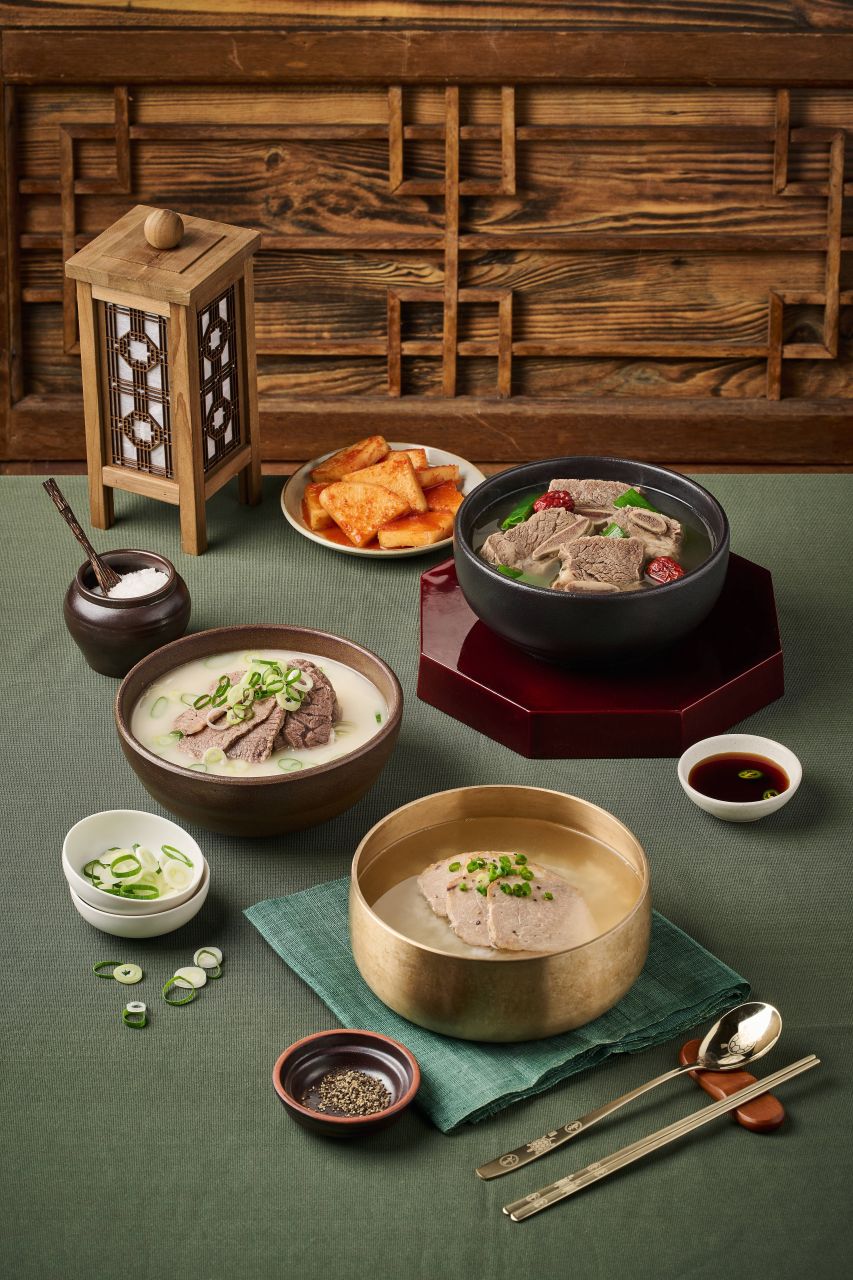
A pale beef-and-bone soup served with rice, sliced meat and chopped spring onion. Seoul Metropolitan Government records identify seolleongtang as a native Seoul food that spread across the city between the late Joseon period and the early twentieth century.
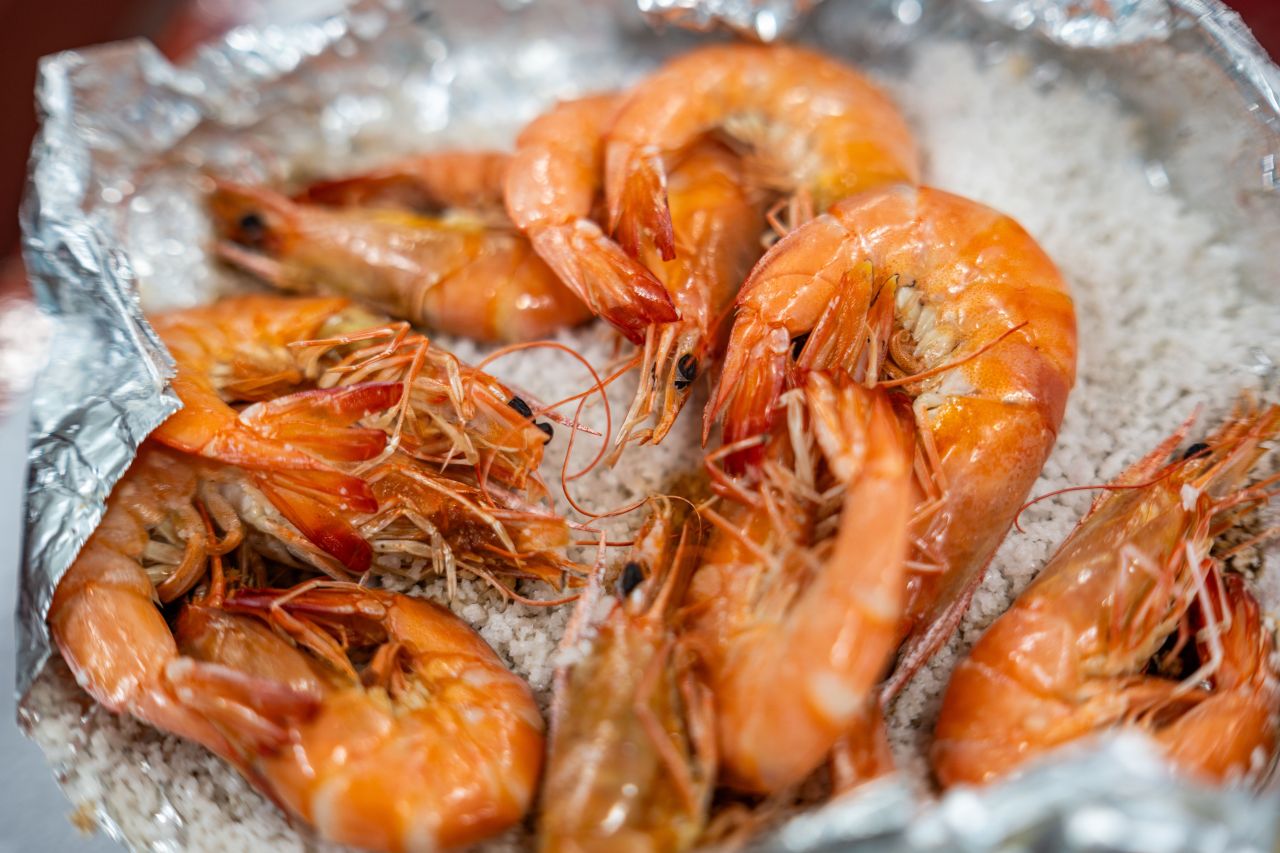
Baeksajang Port is described by Taean County and the Korea Tourism Organization as the country's largest landing point for wild autumn daeha, the large shrimp that come into season on the west coast from late summer. The usual way to eat it here is salt-grilled (daeha soguui): shrimp laid on a hot pan over a bed of coarse salt. It is also served raw or steamed. This is a regional product of the Taean coast, which is what makes the harbour the natural place to eat it — the festival is built around it rather than merely selling it.
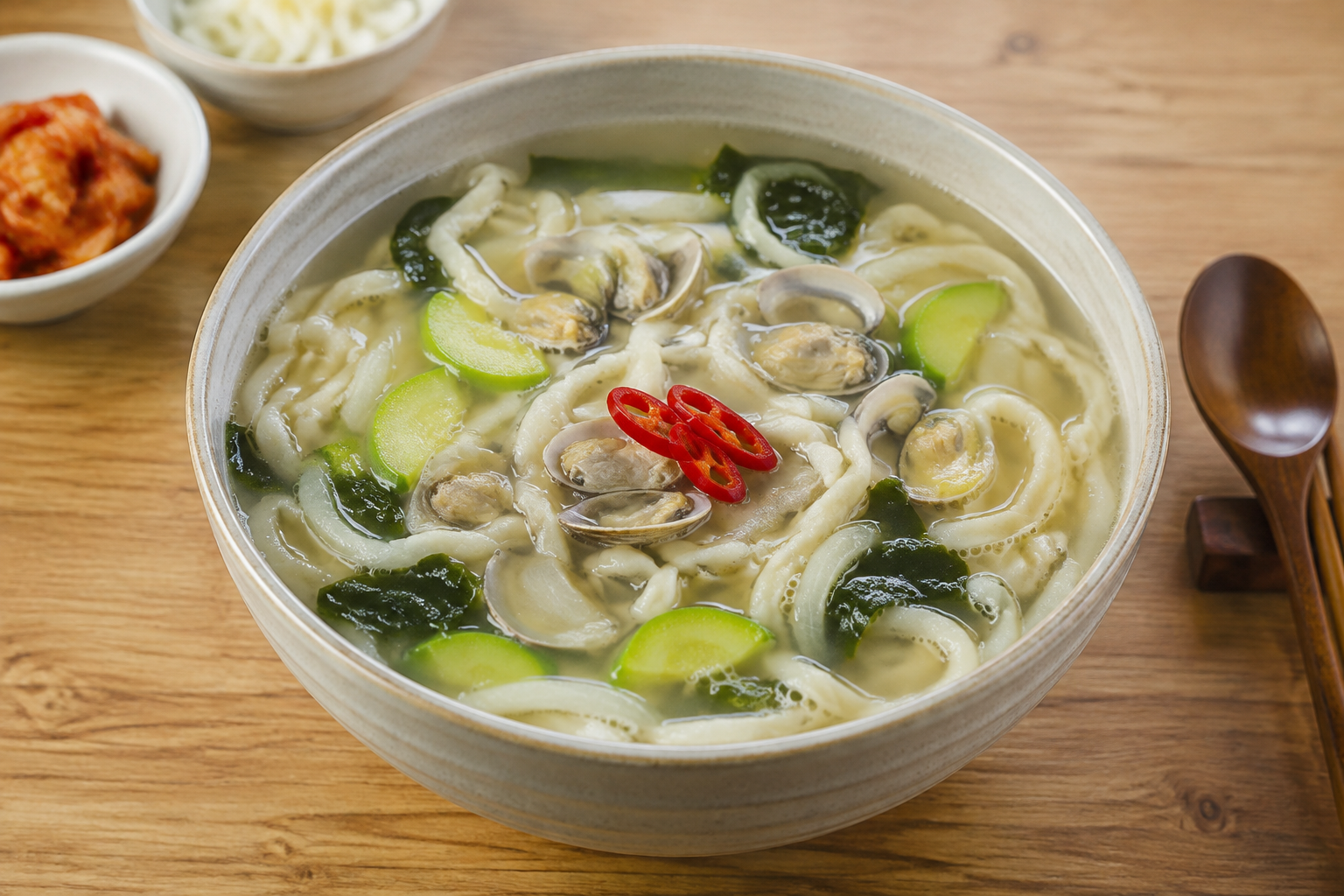
Knife-cut wheat noodles are one of Daejeon's documented local foods. Shops around the city serve several versions, including spicy broth, clam broth, and plainer hand-cut noodles.
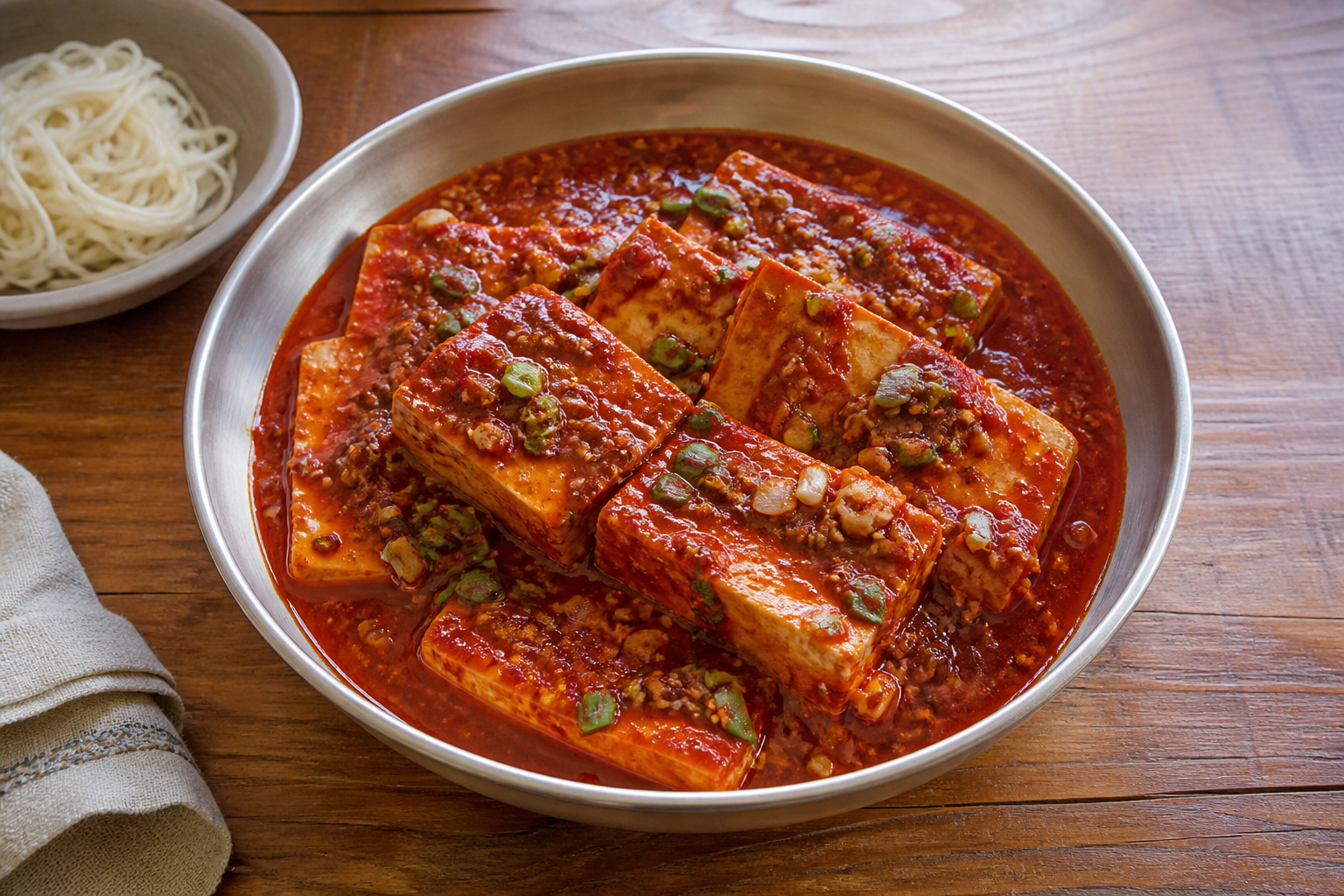
Daejeon's version cooks thick pieces of tofu in a hot seasoning built from red pepper powder, garlic, soy sauce, and sesame oil. Noodle add-ons are common, but preparation varies by restaurant.
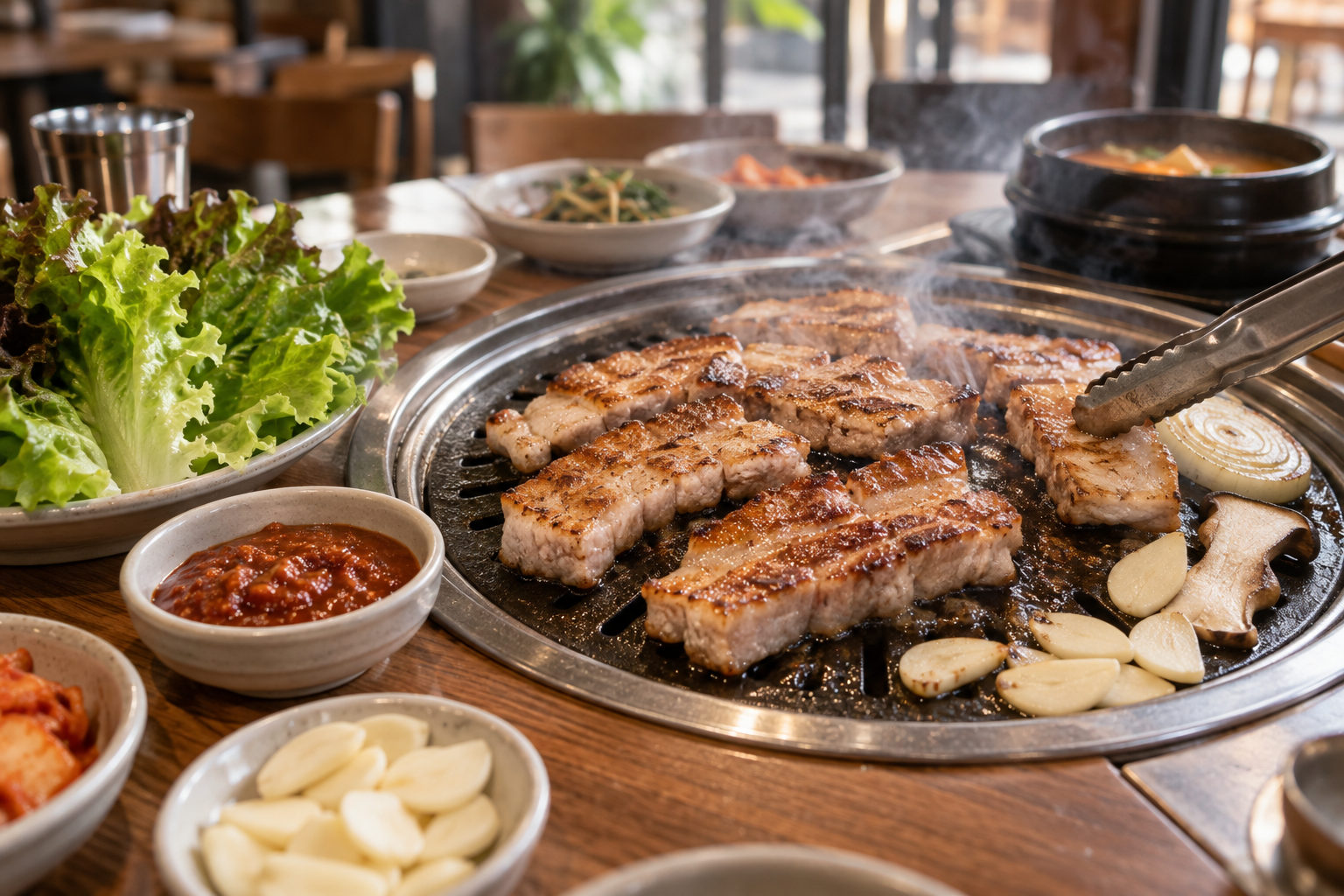
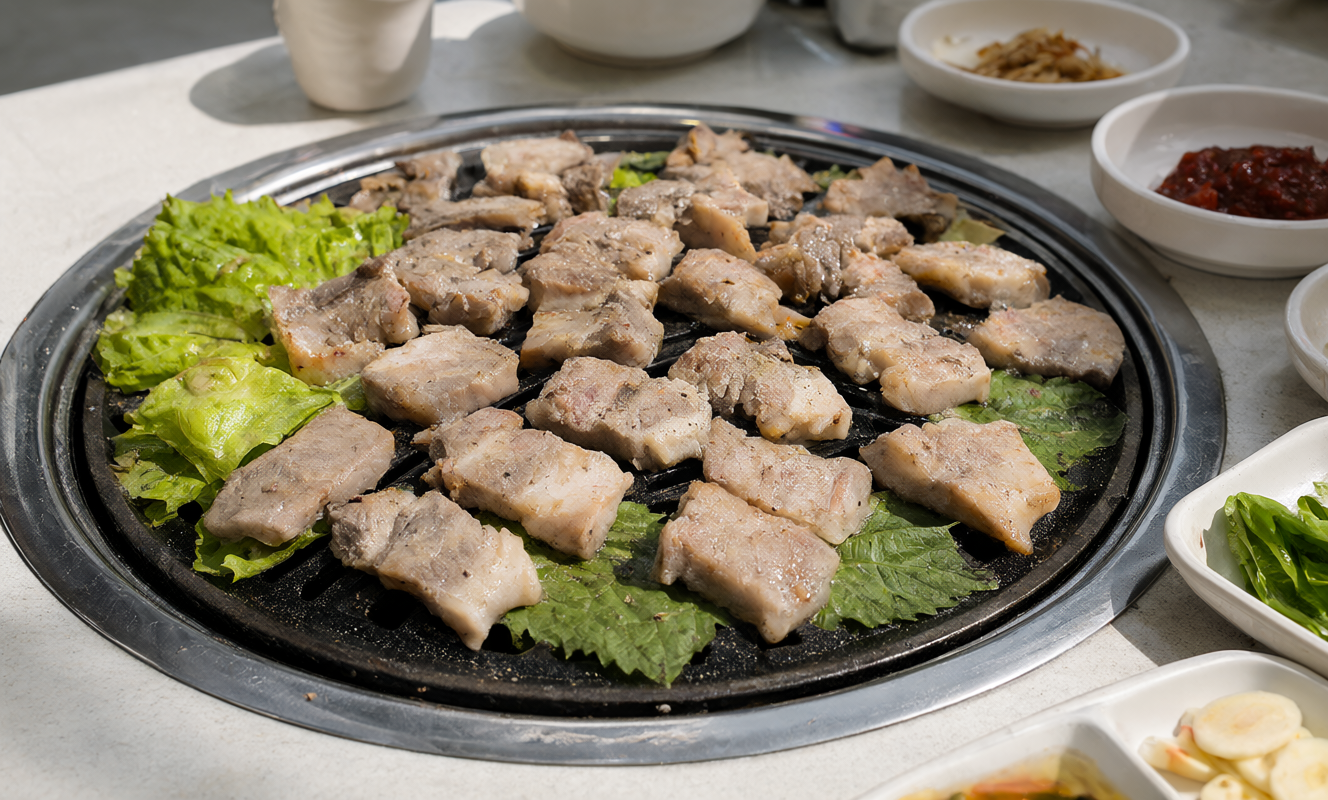
Cheongju treats grilled pork belly as a local food tradition and Cheongju City's tourism office promotes the Seomun Market Samgyeopsal Street, a stretch of roughly a dozen pork-belly restaurants. A local style salts and grills thick-cut belly. This is a city specialty to seek out separately, not a claim that the festival's food trucks will serve it.
Yeoja Bay is one of the south coast's cockle grounds. The Digital Yeosu Cultural Encyclopedia records cockle farming in the Hwayang-myeon villages of Icheon-ri, Okjeok-ri and Gamdo-ri on the same bay, and ties the autumn tidal-flat festivals here to cockle gathering. Boiled and served with a soy-and-chilli dressing, cockles are a regional shellfish, not a promise about what a particular festival stall will sell.
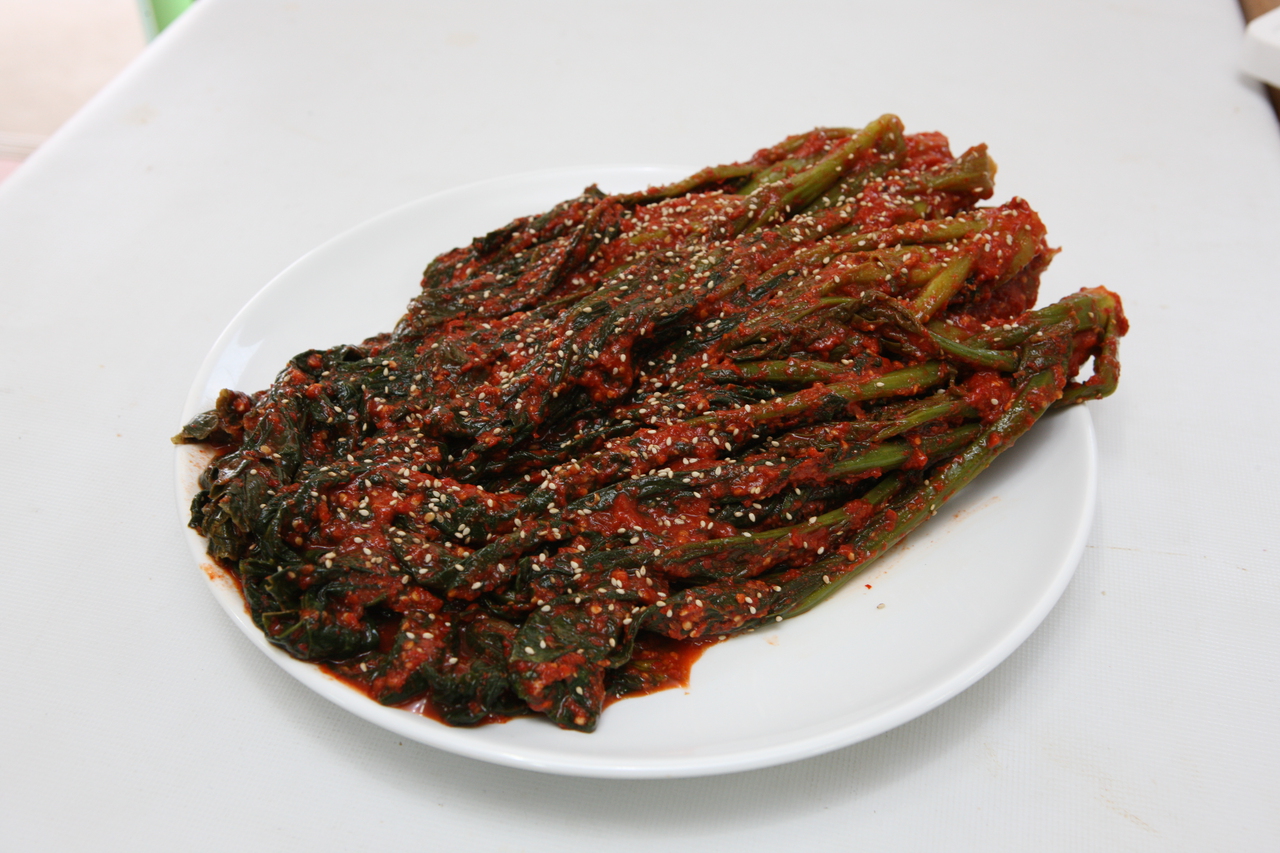
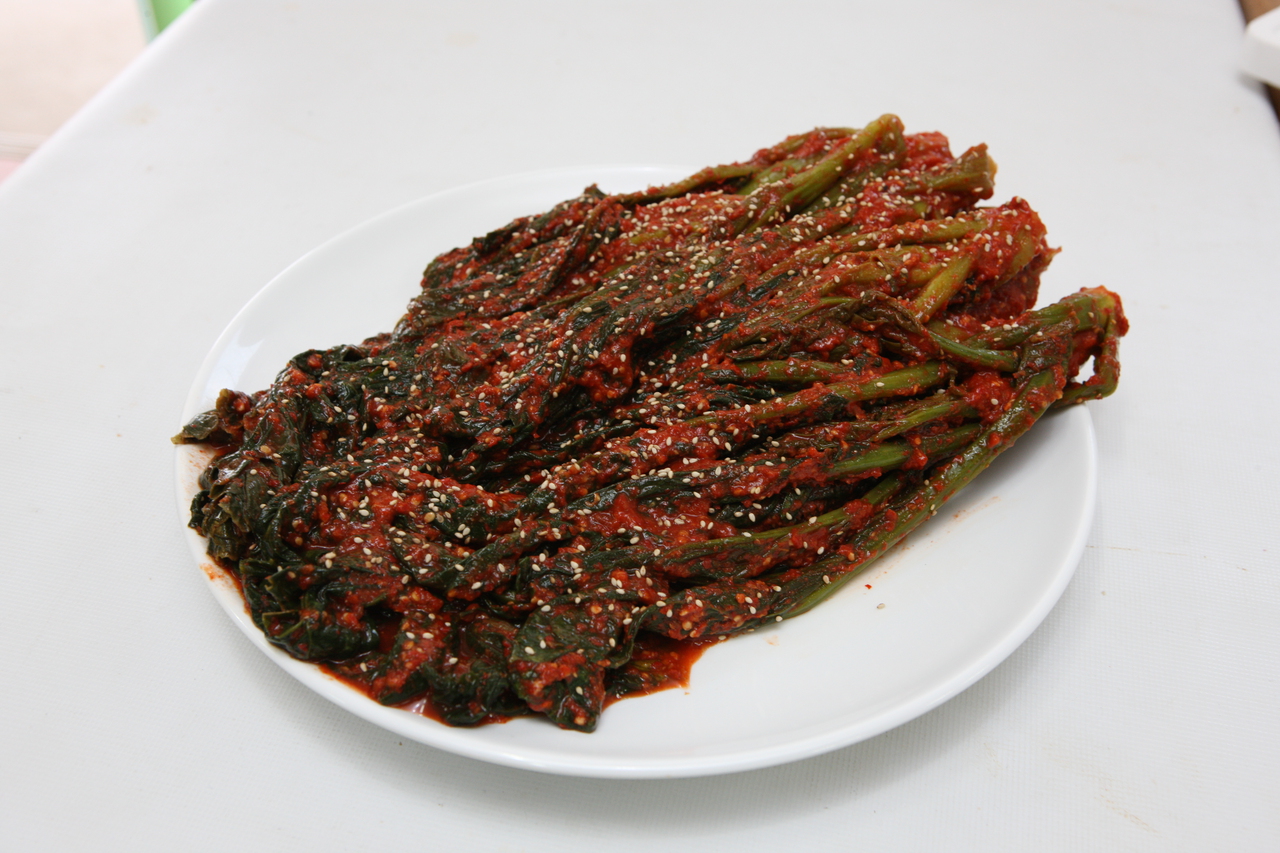
Kimchi made from the mustard leaf (gat) grown on Dolsan, the island off Yeosu, is the city's best-known preserved food; the Korea Tourism Organization documents a dedicated Dolsan gat-kimchi hands-on centre. It is spicier and more pungent than cabbage kimchi. This is a Yeosu specialty to seek out in the city, not a claim that it is part of the festival programme.
A long-simmered beef-and-bone soup with a pale, milky broth, usually served with rice and sliced beef. Seoul Future Heritage identifies it as a native Seoul food that spread across the city from the early twentieth century.
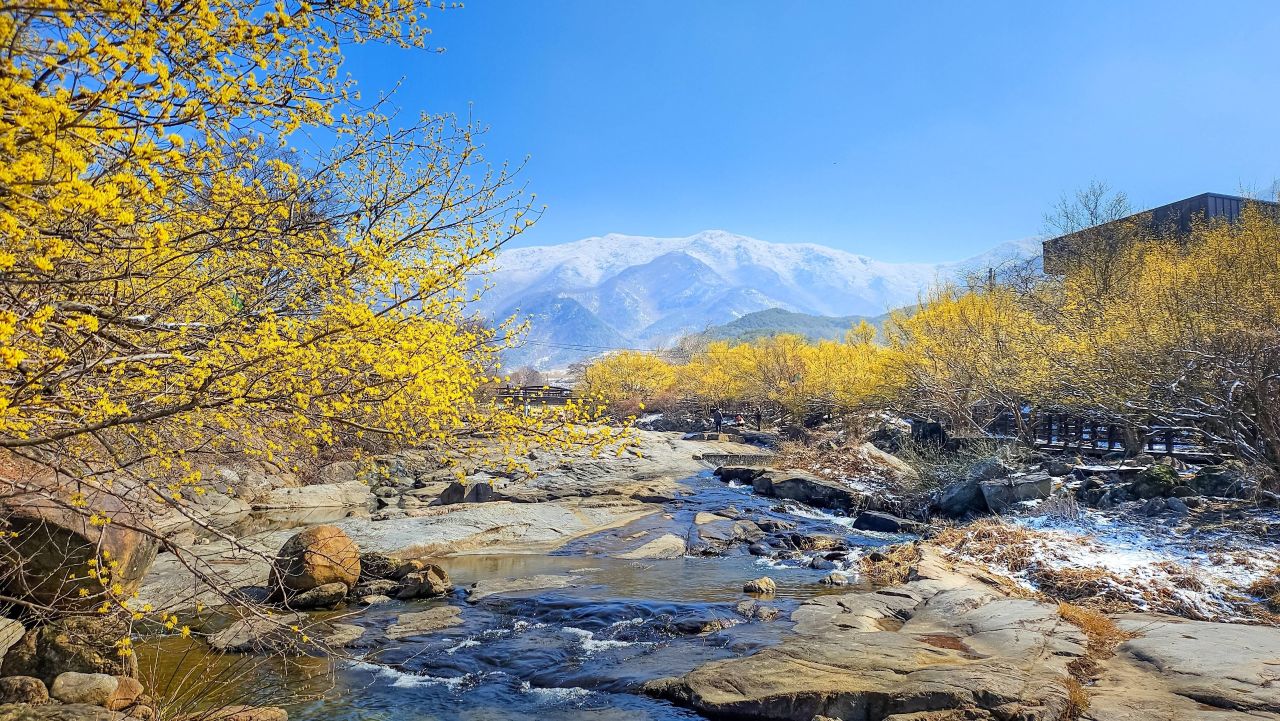
Gurye's Sandong area is a nationally important growing district for sansuyu, the fruit of the cornelian cherry tree. KTO's 2026 English guide says the area has about 117,000 trees and produces nearly 70 percent of Korea's crop. The photograph shows the plant in its better-known yellow blossom season; this is a Gurye product, not a claim that it is sold at the September festival.
Eumseong's best-known farm product. The county agricultural centre and regional reporting list its 'clean pepper' as a leading national chilli brand, noted for a strong, pungent flavour, thick flesh that yields a lot of powder, and deep, even colour. This is a county specialty, not a promise about a specific stall.
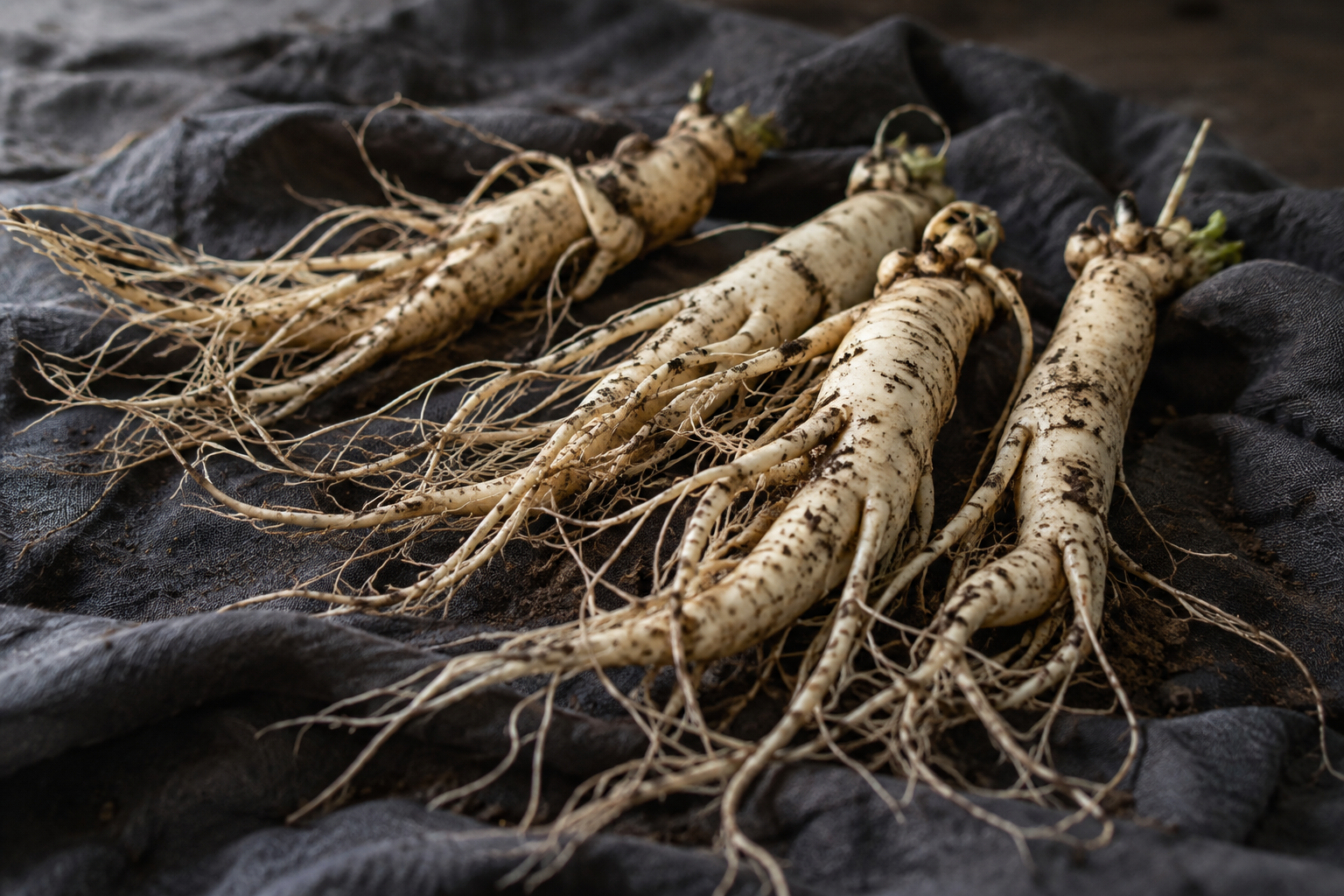
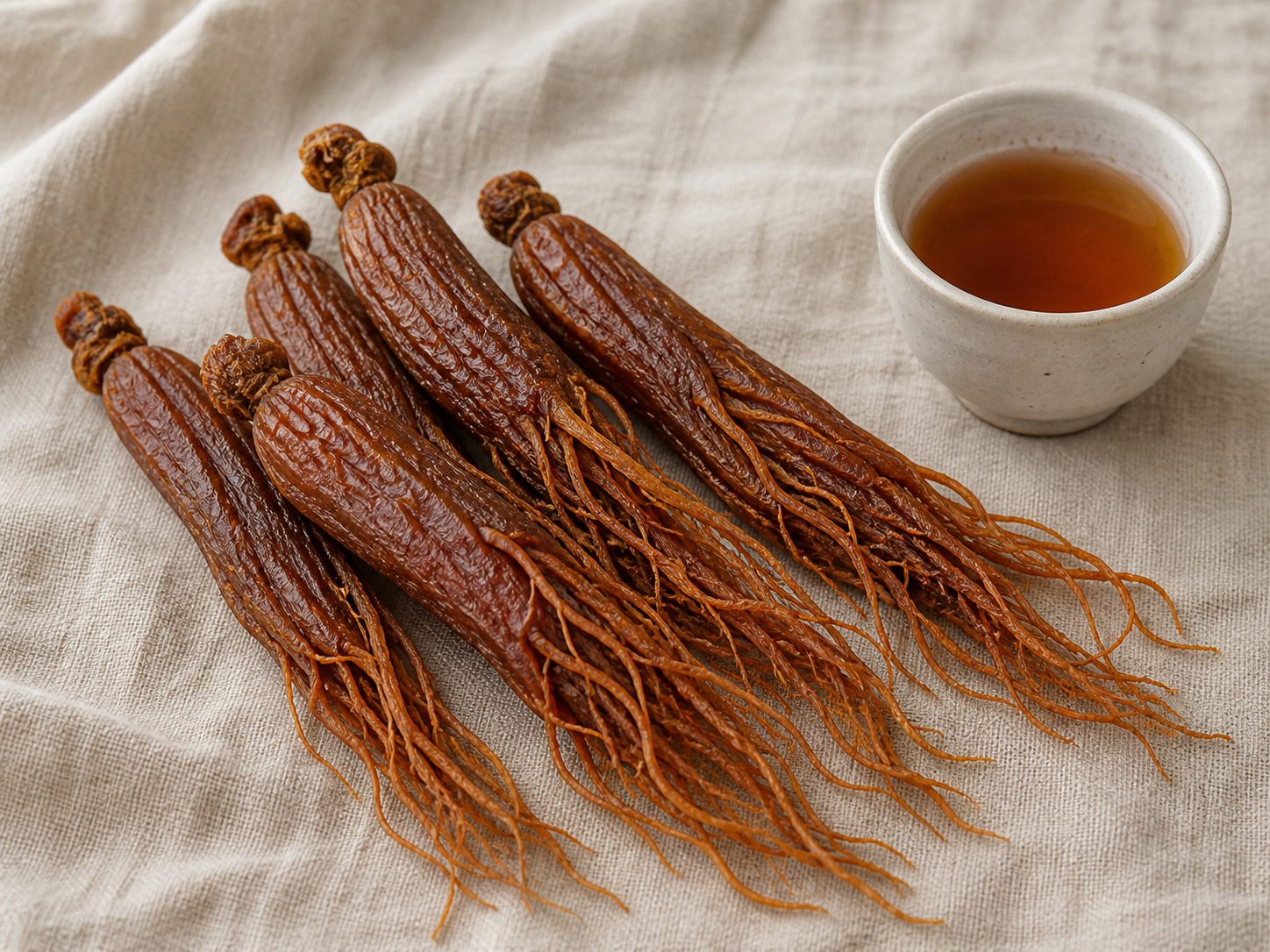
Eumseong is a significant ginseng-growing area — local records put its output at around 5 percent of national production. Ginseng is one of the festival's six headline crops, and the event even advertises free ginseng-washing for buyers, so this is where the regional specialty and the festival programme overlap most directly.
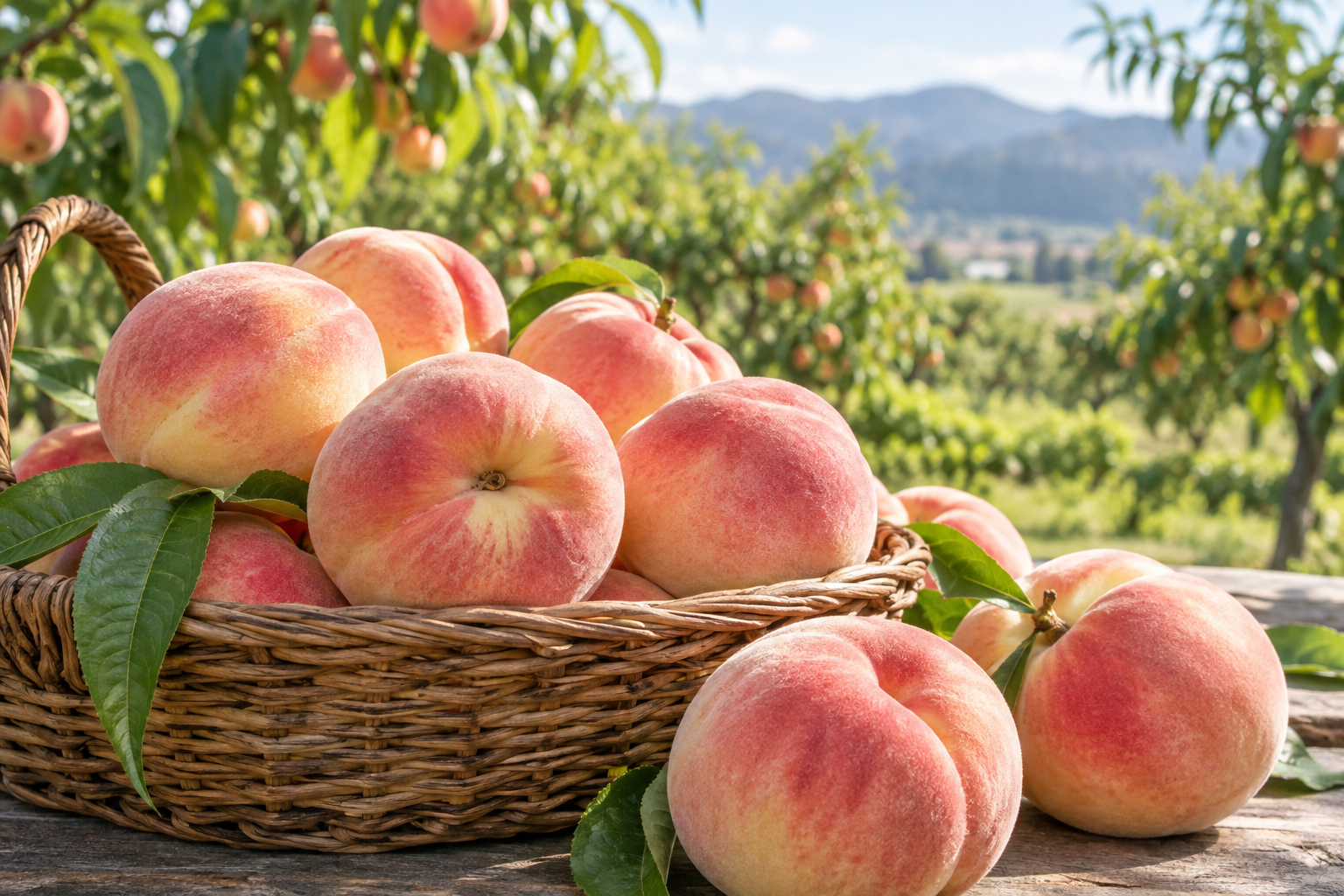
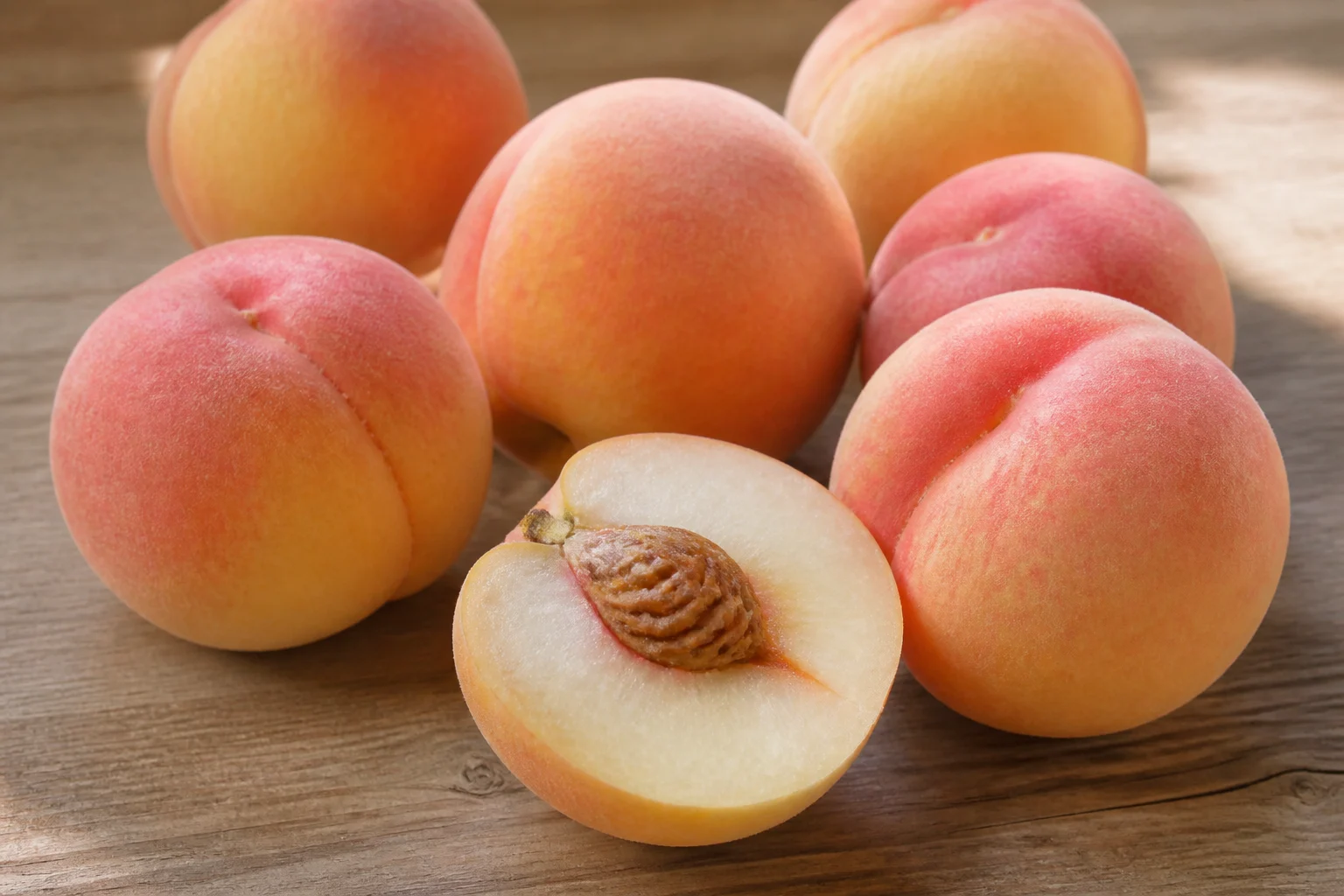
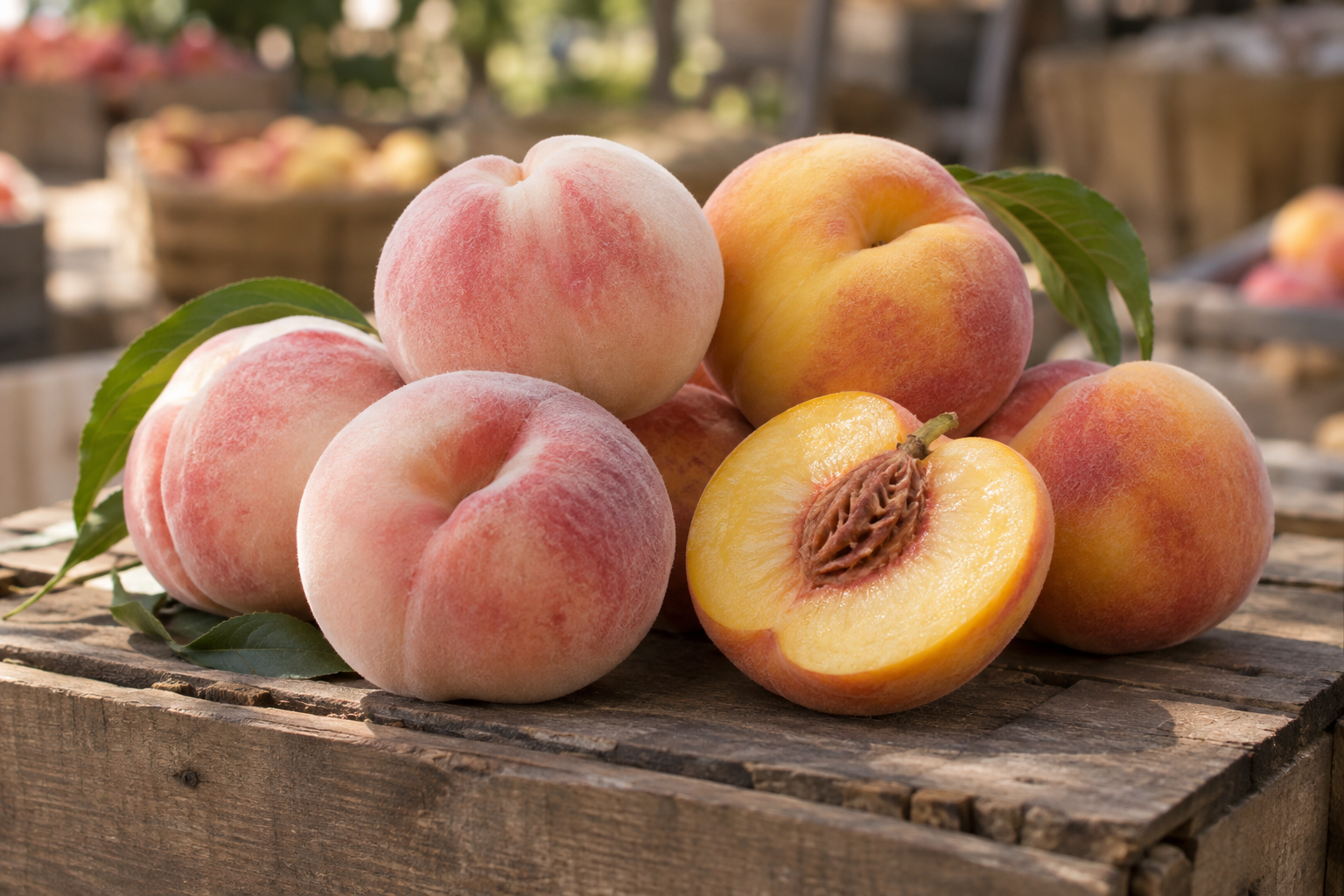
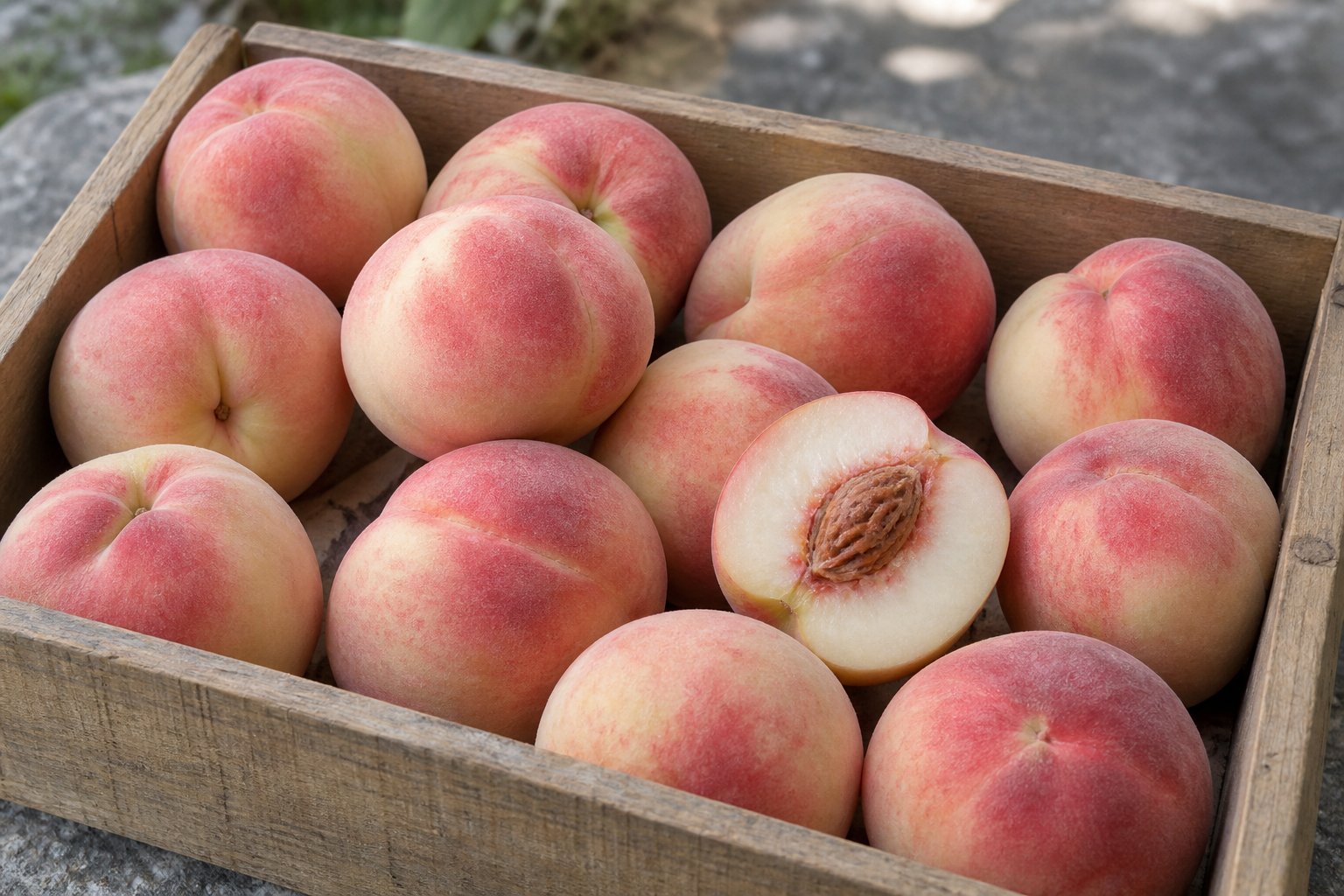
Peaches grown in Eumseong — the districts of Gamgok, Eumseong, Saenggeuk and Wonnam — are marketed under the 'Haetsare' brand. Peaches are among the six crops sold at the festival market, and peach jam sandwiches and peach ice cream appear among the listed food items.
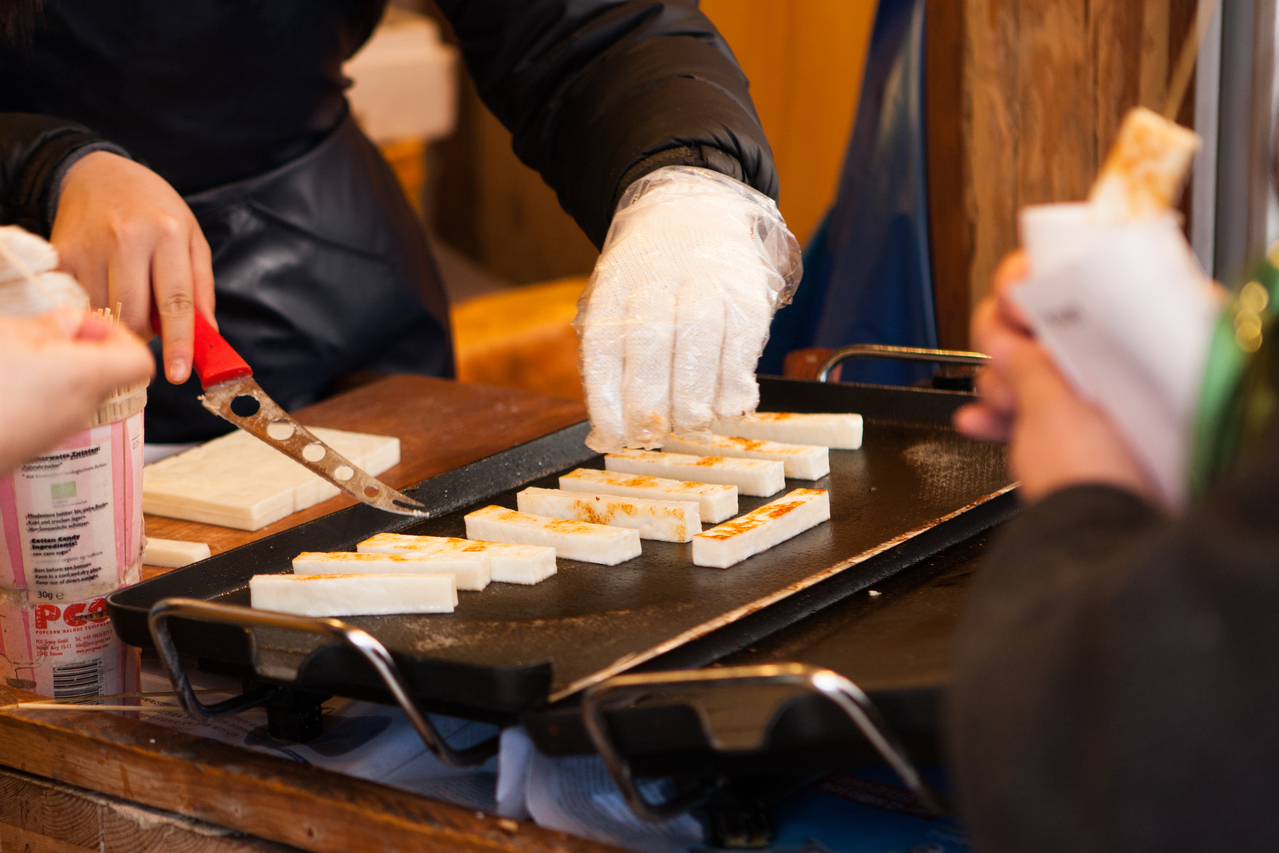
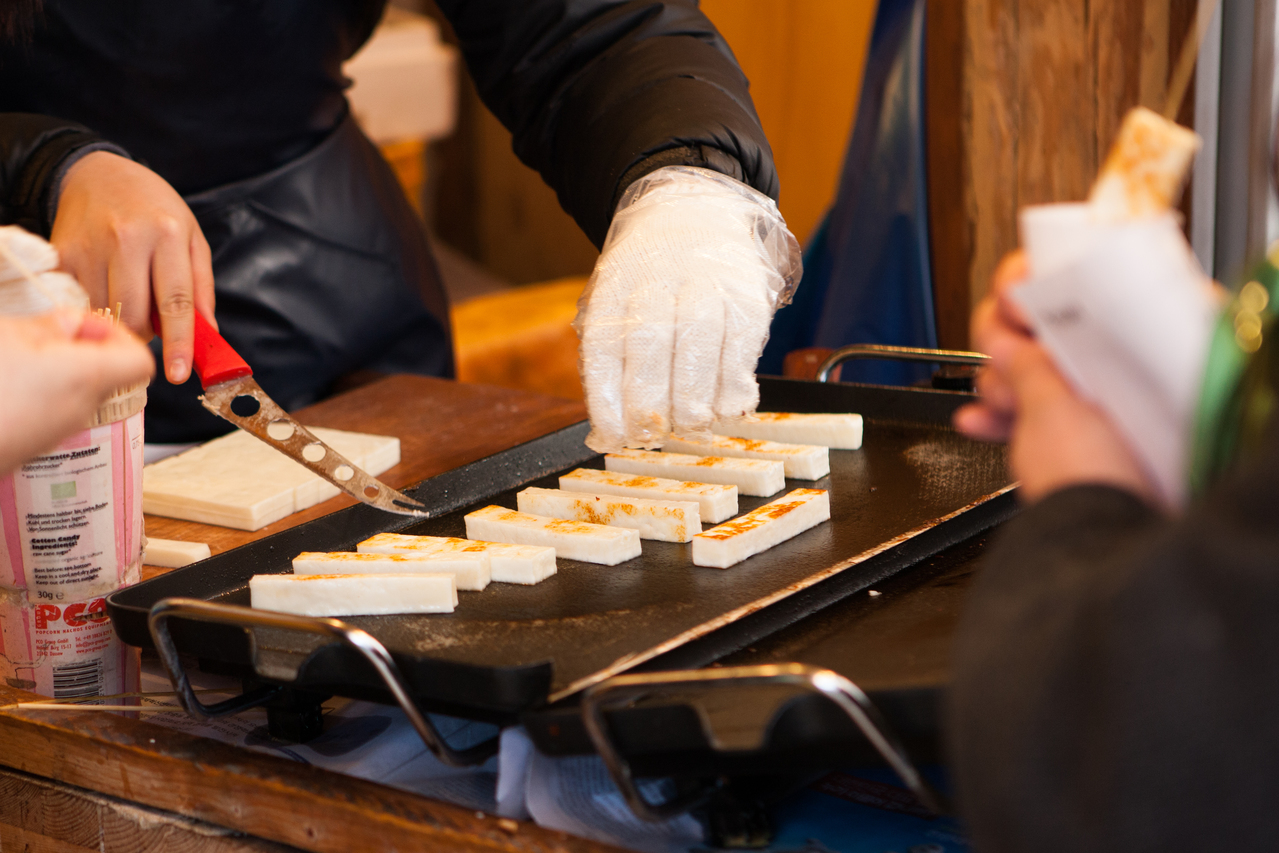
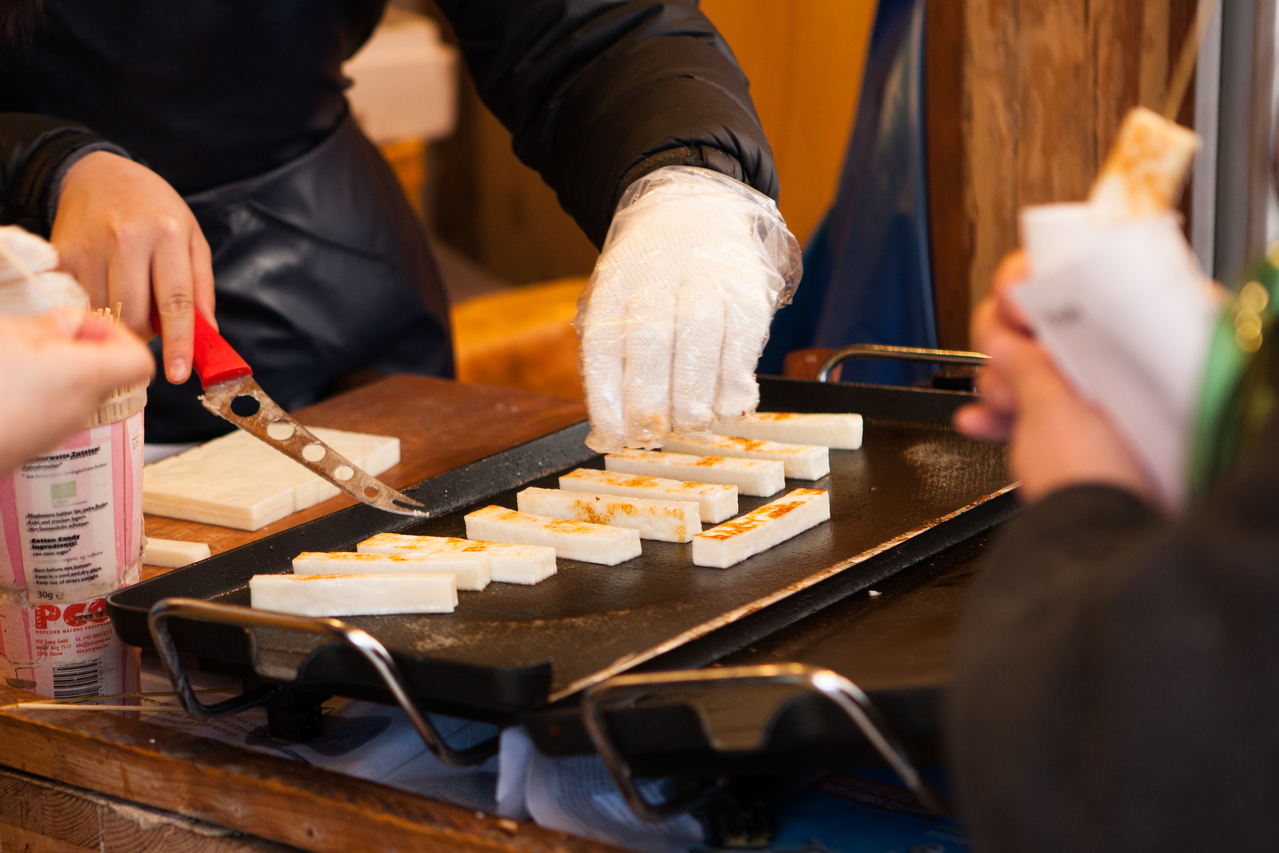
Imsil is where cheese was first made in Korea. A Belgian priest, Ji Jeong-hwan (Didier t'Serstevens), started dairy and cheese production here in the late 1960s, and the business later passed to a residents' cooperative; Imsil County lists cheese as its representative local product and calls itself the home of Korean cheese. The photo shows grilled Imsil cheese sold as street food, a common way it is eaten. This is a county specialty, not a promise about festival stalls.
Imsil is where cheese was first made in Korea: a Belgian missionary, Father Didier t'Serstevens (지정환), started dairy farming here in the 1960s and produced the country's first cheese around 1970. Imsil cheese is now the county's best-known product, sold as blocks, string cheese and grilled-cheese snacks, and it has its own cheese village and annual cheese festival. This is a regional specialty recommendation, not a claim that a particular stall will sell it at Saseondae.
Bucheon City identifies the peach as its city fruit and a representative local agricultural product. The city was a noted peach-growing area from the 1930s until urbanization in the 1970s; that history survives in the old name Boksagol, or peach-blossom village.
See Bucheon International Comics Festival →Photo: Korea Tourism Organization / Busan Tourism Organization (KOGL Type 1) — traditional nuruk starter discs for Geumjeongsanseong makgeolli
Geumjeongsanseong makgeolli (금정산성막걸리)
A traditional rice-and-wheat makgeolli brewed in Sansong Village at the foot of Geumjeongsan, within the same Geumjeong-gu district as the festival. Busan's cultural-heritage records and the City of Busan describe it as Korea's first officially designated folk liquor (from 1979), made with hand-formed, foot-trodden nuruk fermentation starter — the discs shown in the photo. It is a district specialty produced up at the fortress village, not something guaranteed to be sold at the festival stream-side.
Jinan County identifies itself as Korea's only designated red-ginseng special zone. Its certified products are made from four- to six-year-old fresh ginseng grown on the Jinan plateau, then steamed, dried and aged; look for the county quality-certification mark when buying packaged products.
Chuncheon's signature dish, listed by the Chuncheon city tourism office as a representative local food. Chunks of chicken are stir-fried with cabbage, sweet potato, rice cake and a red-pepper sauce on a hot iron plate; there is also an older charcoal-grilled version. The city traces it to workers grilling cheap chicken over charcoal from the early 1960s. It is a regional specialty of the host city, not a claim about what a particular festival stall will sell.
Chuncheon's other representative local food per the city tourism office: cold buckwheat noodles with a high buckwheat content, giving a rougher, nuttier noodle, commonly served in a chilled dongchimi (radish-water) broth. It is often eaten alongside dakgalbi in Chuncheon. A city specialty recommendation, not a festival menu.
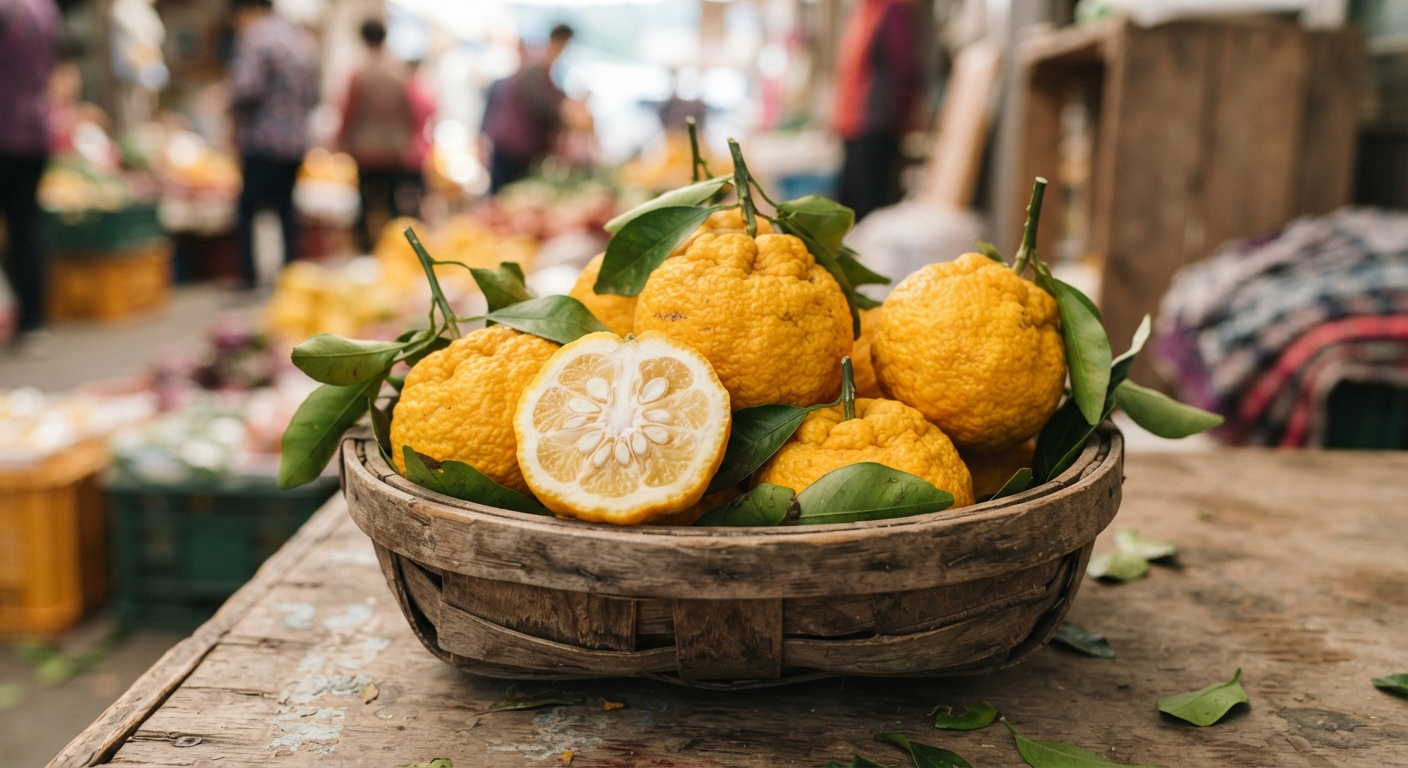
Geoje has long been known as a home of yuja, the fragrant Korean citron, and the city promotes it as a signature specialty; local growers describe the island fruit as deep in colour with a thick, strongly scented rind. It ripens through autumn, so mid-September falls at the start of its season. This is a regional specialty of Geoje, not a promise that a particular festival stall will sell it.
See Ocean Village →Photo: Korea Tourism Organization / Lee Beom-su (KOGL Type 1)
Geoje cod and daegu-tang (cod soup) (거제 대구·대구탕)
Cod is one of Geoje's main catches, landed at harbours such as Oepo, and daegu-tang, a clear cod soup, is listed among the city's representative dishes. Cod is strongest in the colder months rather than mid-September, but it remains a defining Geoje food. This is a regional specialty recommendation, not a claim about the festival's own food stalls.
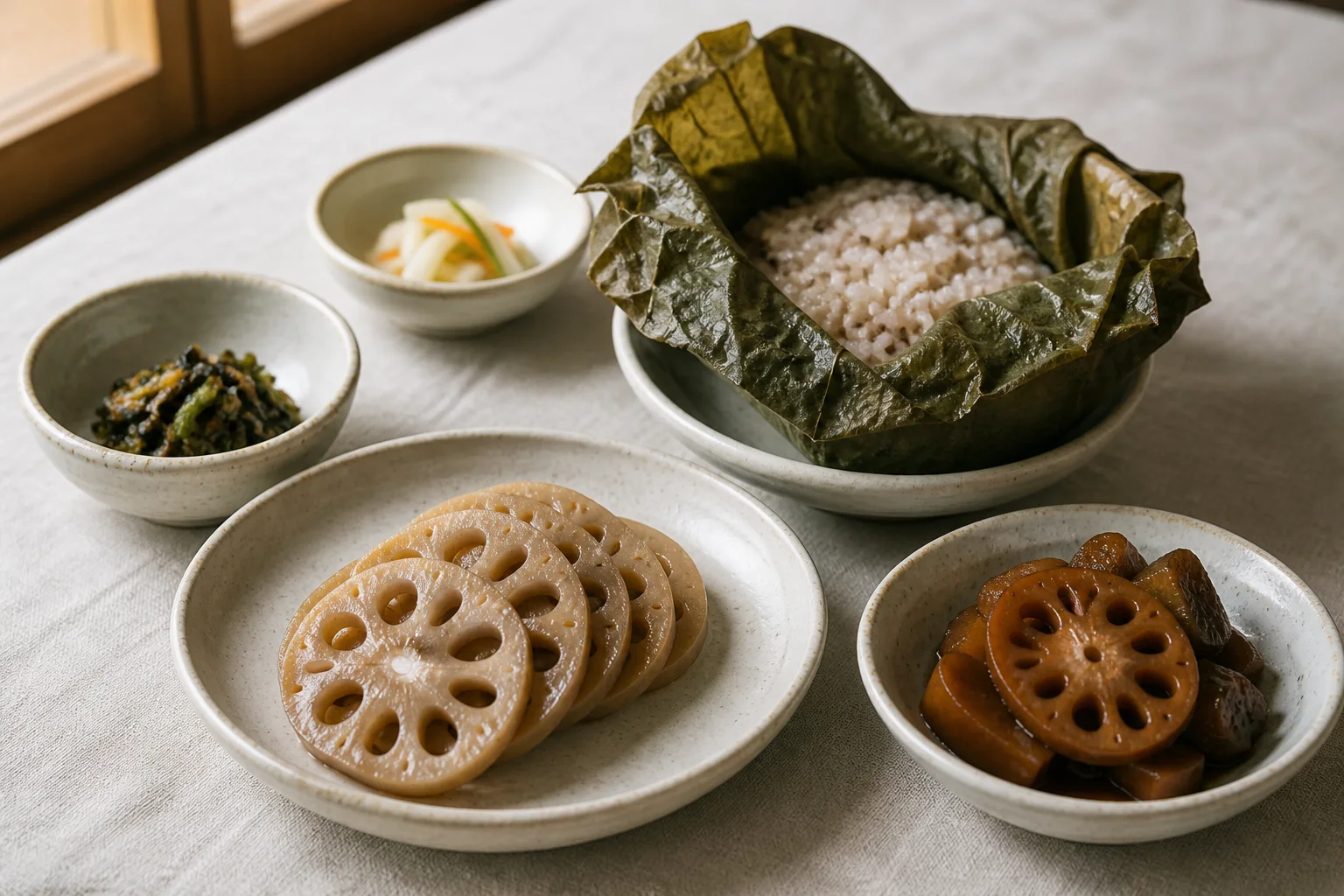
See Ocean Village →Original Korea Seasons illustration showing the general appearance of lotus-root and lotus-leaf dishes; not a documentary photograph
Siheung lotus foods (시흥 연 음식)
Lotus grown around Siheung's historic Gwankokji is used locally in dishes made with lotus root, leaf and seed. Gyeonggi Province documents the area's lotus cultivation and identifies food made from Siheung lotus as a local dining tradition; expect the exact preparation to vary by restaurant.
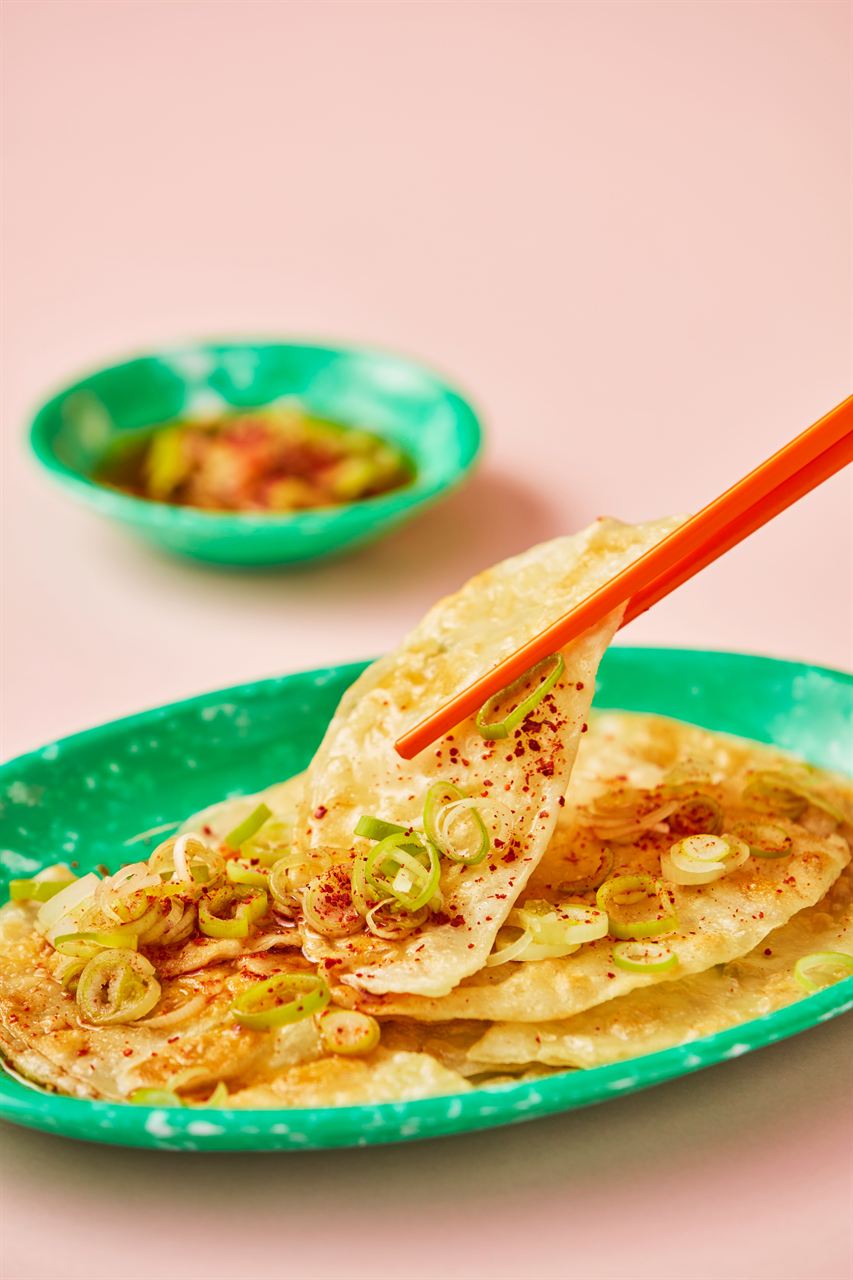
A Daegu street-food dumpling with a thin wrapper and only a little glass-noodle filling, boiled and then pan-fried and eaten with soy sauce, chopped spring onion and chili flakes. Daegu City's official food office lists it as one of the 'Daegu Ten Tastes' and describes this flattened style as unique to Daegu. It is a city specialty, not a promise about what festival stalls will sell.
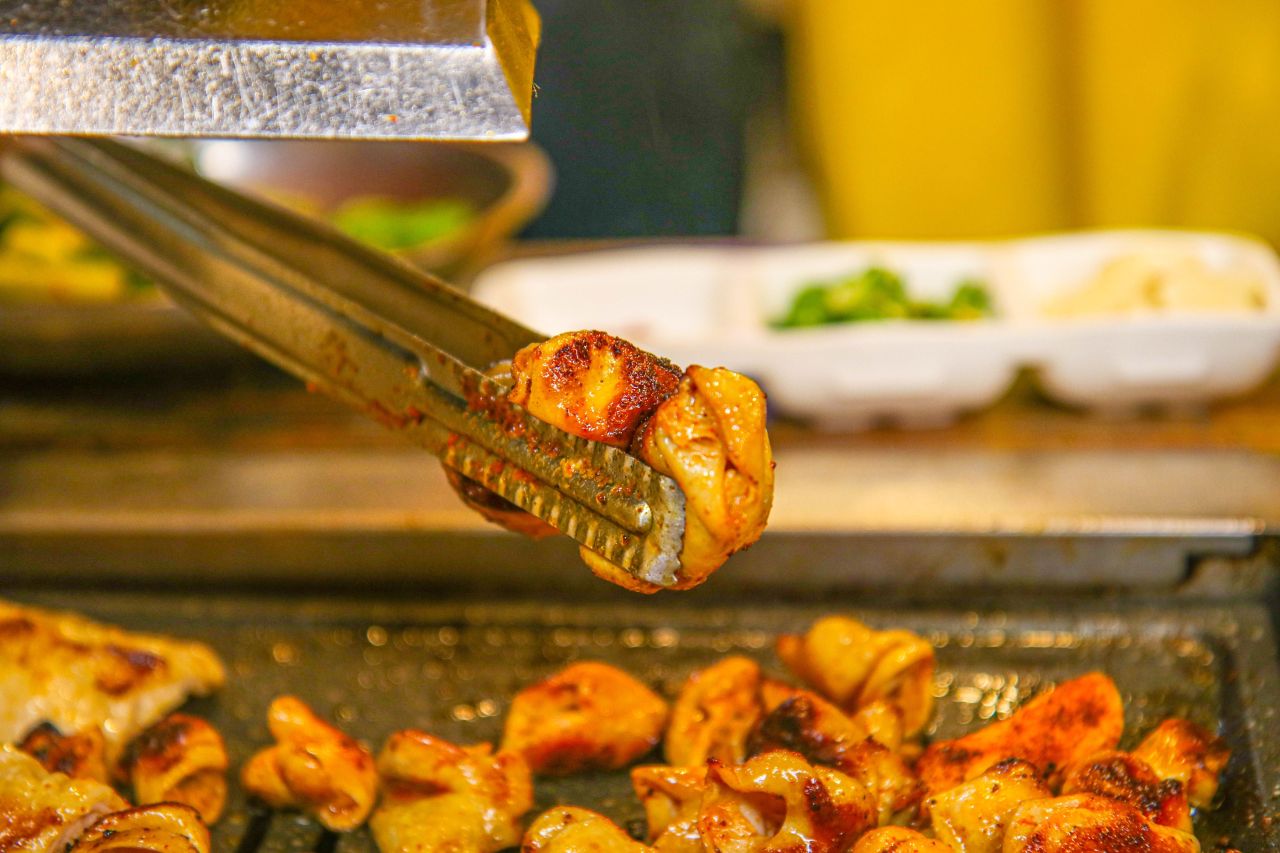
Seasoned beef or pork offal grilled over a hot plate, also listed among Daegu City's official 'Daegu Ten Tastes'. Daegu's Anjirang grilled-offal alley in Nam-gu is the best-known place to eat it. This is a regional specialty recommendation rather than a claim that a festival food zone will serve it.
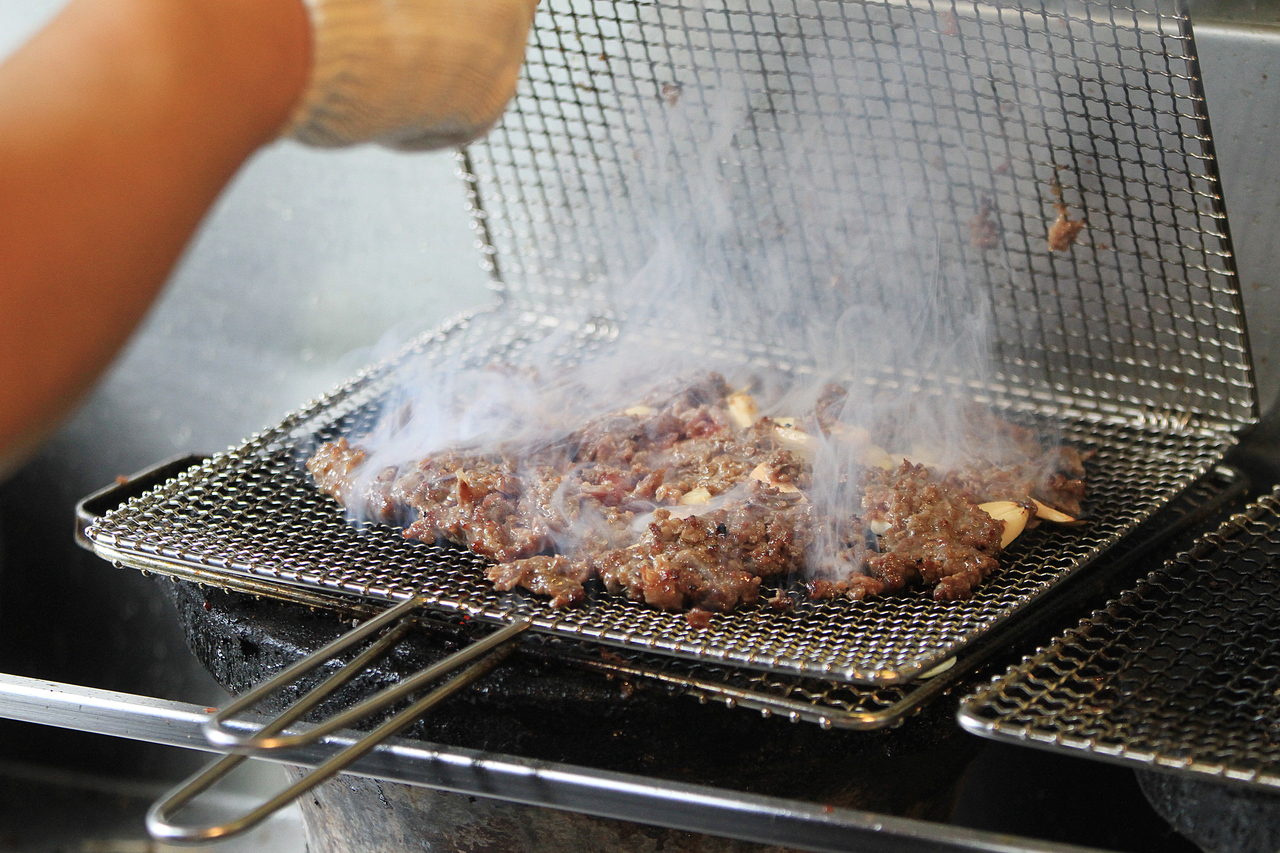
Eonyang, a town in the same Ulju-gun district as the festival, is known nationwide for its charcoal-grilled beef. The Korea Tourism Organization and Ulsan's tourism material describe Eonyang bulgogi as finely minced or thinly worked beef, mildly seasoned and grilled flat over charcoal, with restaurants clustered in an Eonyang beef zone near Ulsan Station. It is a regional specialty of the area, not a claim about what festival food stalls will sell.
Wonju City's agricultural office lists Chiaksan hanwoo as an official local specialty — Korean beef raised under managed breeding and HACCP-certified processing. It is commonly eaten grilled at restaurants near Jungang Market and around the city. This is a Wonju specialty recommendation, not a claim about what festival food stalls will serve.
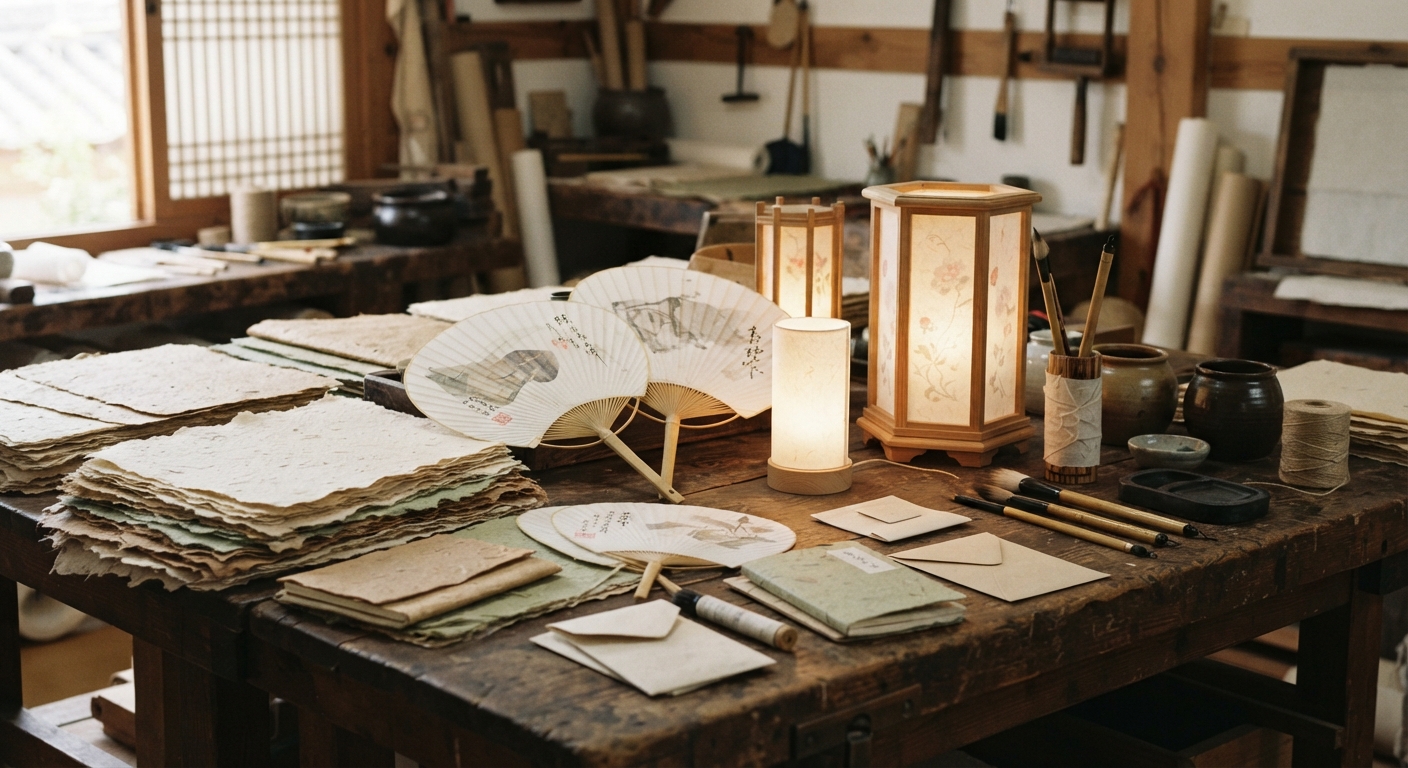
Wonju is often called the home of hanji, traditional Korean mulberry paper, thanks to local mulberry cultivation and a long papermaking history; the city runs a Hanji Theme Park and an annual hanji festival. Fans, lamps, dolls and stationery made from hanji are a durable, packable souvenir — a craft specialty rather than a food.
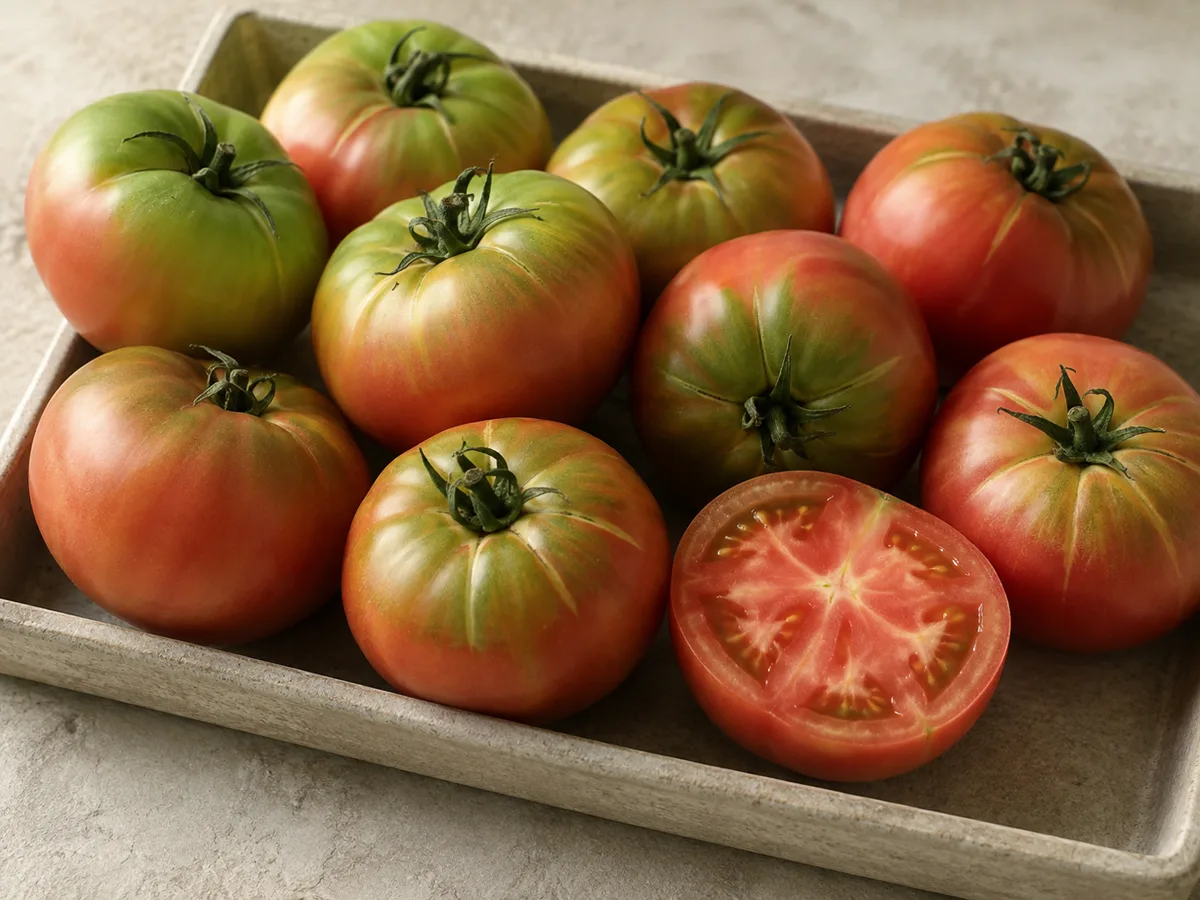
See Wonju Dancing Carnival →Original Korea Seasons illustration showing the documented general appearance of Daejeo tomatoes; not a documentary photograph
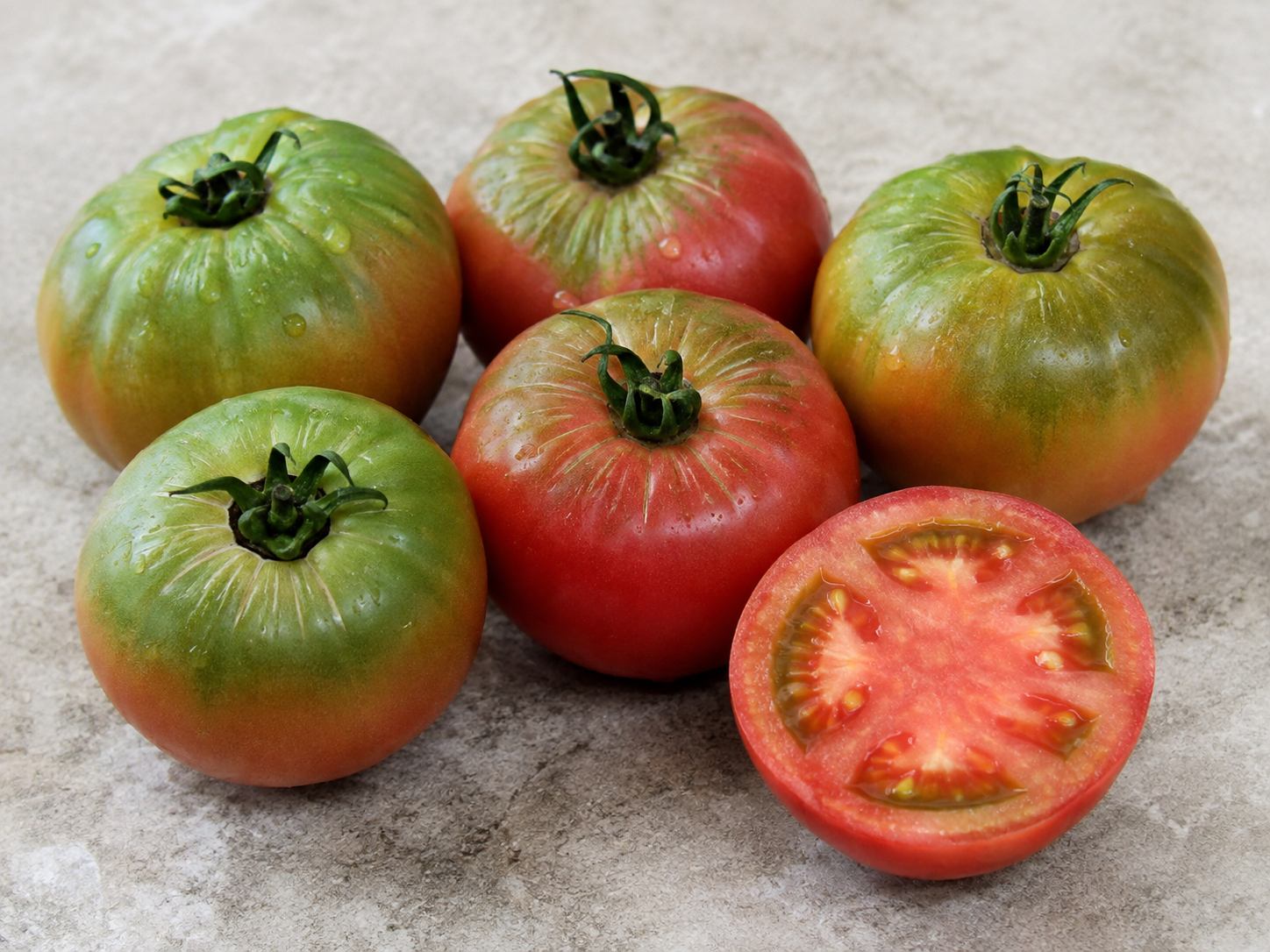
Daejeo tomato (대저토마토)
A firm tomato grown in Daejeo-dong, where the Nakdong River delta meets the sea. Busan's Agricultural Technology Center records it as a local specialty and notes its Geographical Indication registration; the fruit is known for green shoulders, dense flesh and a sweet-salty balance. Its main harvest ends by May, so do not assume it will be in season during this September–October festival.
Daebu Island (Daebu-do), part of Ansan's Danwon-gu, is the city's best-known agricultural product: table grapes, mostly Campbell Early, along with local grape wine. Ansan has pursued a designated grape-and-wine special industrial district for the island, and Daebu-do holds its own grape festival in September. This is a regional specialty of Ansan, not something guaranteed to be sold at the arts festival itself.
A long-simmered beef-and-bone soup with a pale broth, usually served with rice, sliced beef and chopped spring onion. Seoul Metropolitan Government sources identify it as a representative native Seoul food that spread across the city from the late Joseon period.
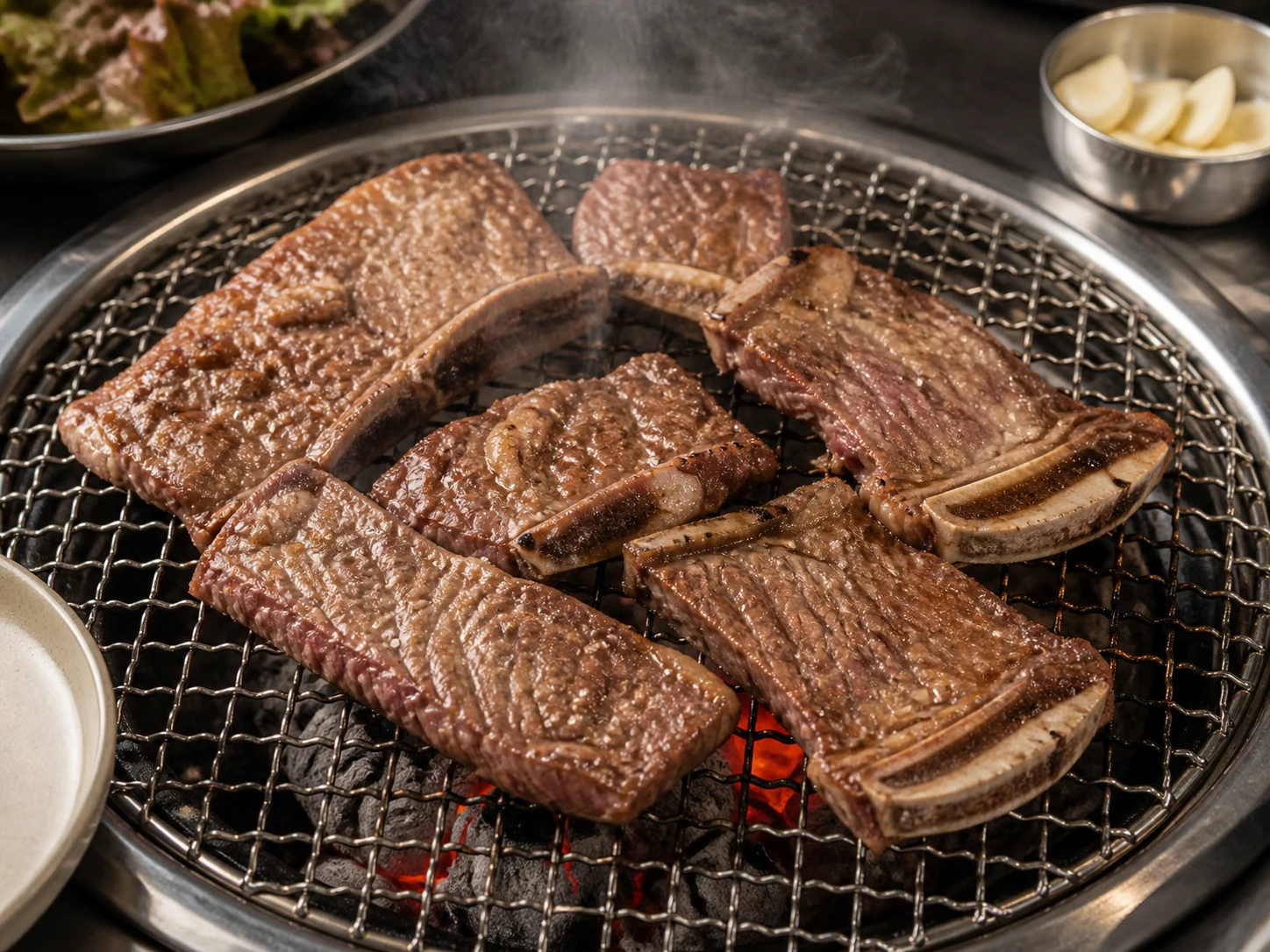
Large-cut beef ribs seasoned in the Suwon style, traditionally with salt rather than a soy-heavy marinade. Suwon designated galbi as a city heritage food in 1985; it developed around the old cattle market outside Paldalmun.
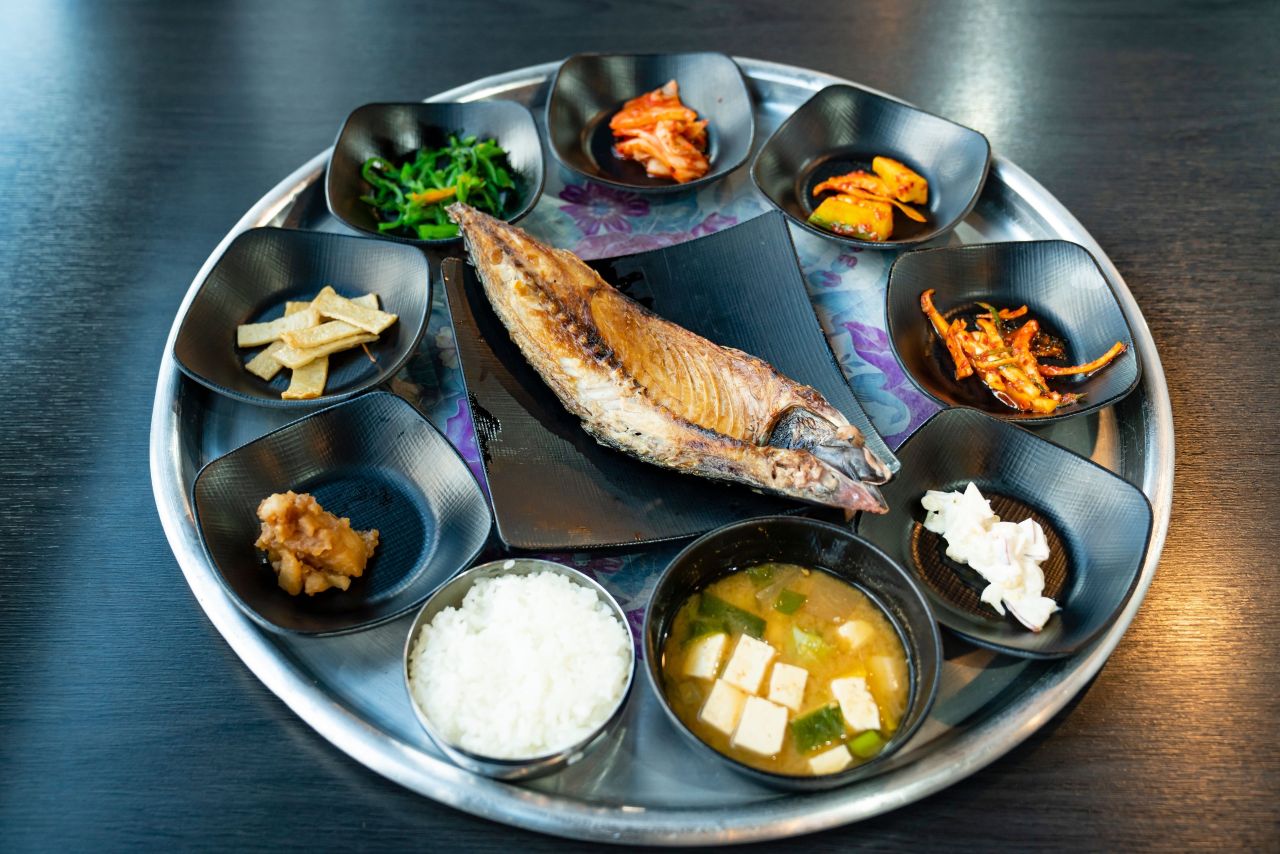
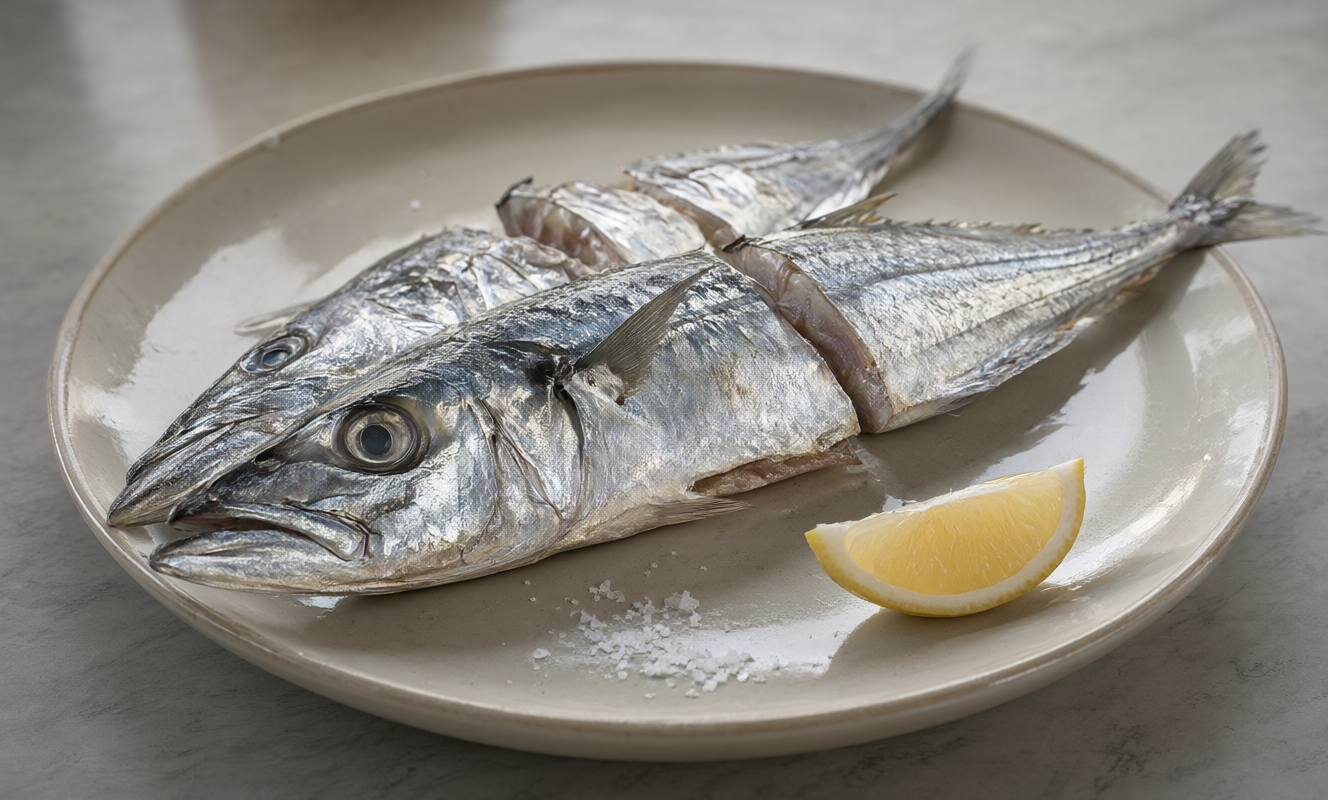
Mackerel salted for the inland journey to Andong, now commonly served grilled or braised. Andong City lists it as an official local specialty and its tourism site lists salted-mackerel set meals among the city's representative foods.
Yecheon County identifies Yonggung sundae as a representative local food and builds an annual county festival around it in Yonggung-myeon. Treat it as a meal to seek out in the Yonggung area, not as a promise about the temporary food trucks at Samgang Festival.
See Samgang Festival →Photo: Korea Tourism Organization / Lee Beom-su (KOGL Type 1) — Sunmaewon plum village, Wondong, Yangsan.
Wondong maesil (Korean green plum) (원동 매실)
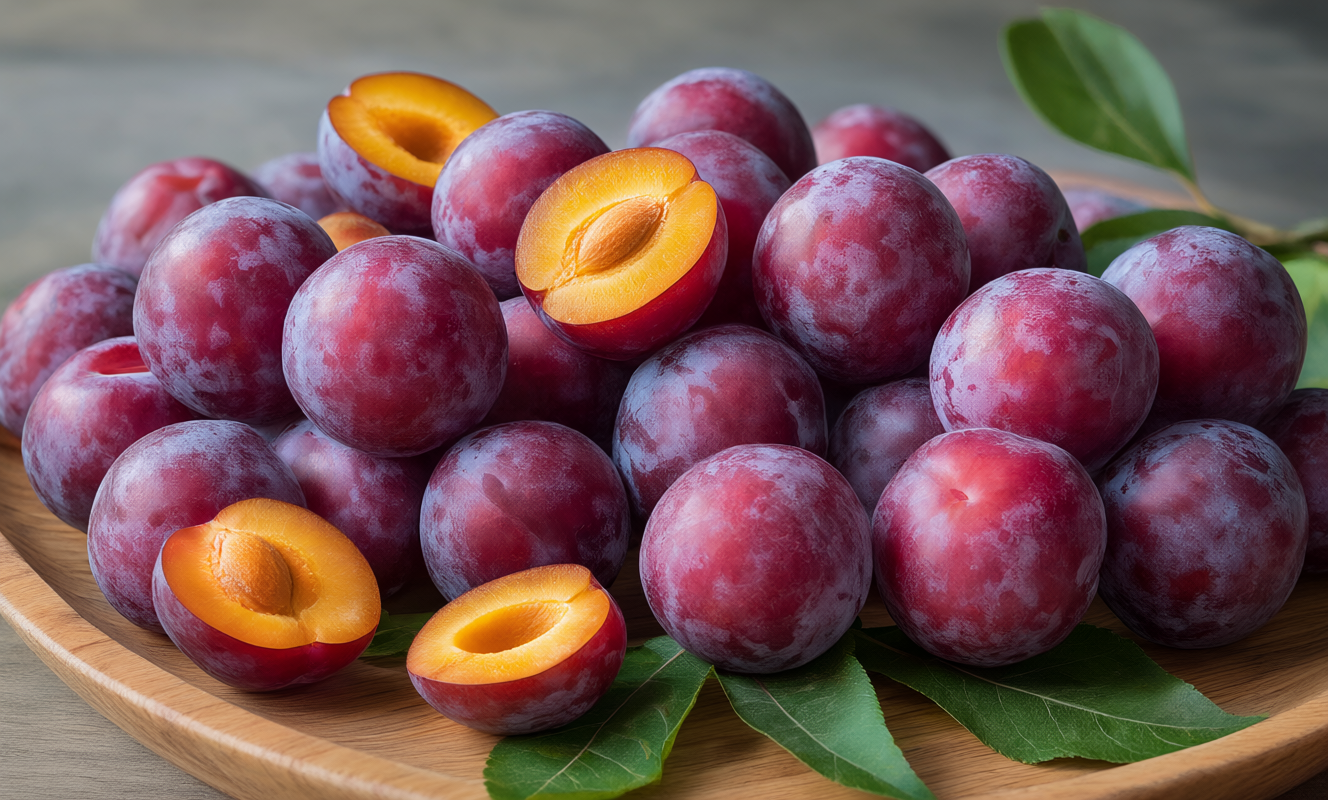
Yangsan's Wondong-myeon district has grown maesil, the Korean green plum, for over a century, and Yangsan City lists plum as a representative local crop grown mainly in Wondong. The plums are processed into juice, syrup and vinegar rather than eaten raw. The Sunmaewon orchard beside the Nakdong River, shown here, is the best-known plum spot in Yangsan — famous for its spring blossom and early-summer harvest. This is a regional specialty, not a claim about what is sold at the temple.
Cheonan City identifies Gwangdeok-myeon as Cheonan's main walnut-growing area. The district is also home to the old Gwangdeoksa walnut tree, protected as Natural Monument No. 398.
See Cheonan World Dance Festival →Original Korea Seasons illustration showing the general appearance of fresh Gwanghwal potatoes; not a documentary photograph
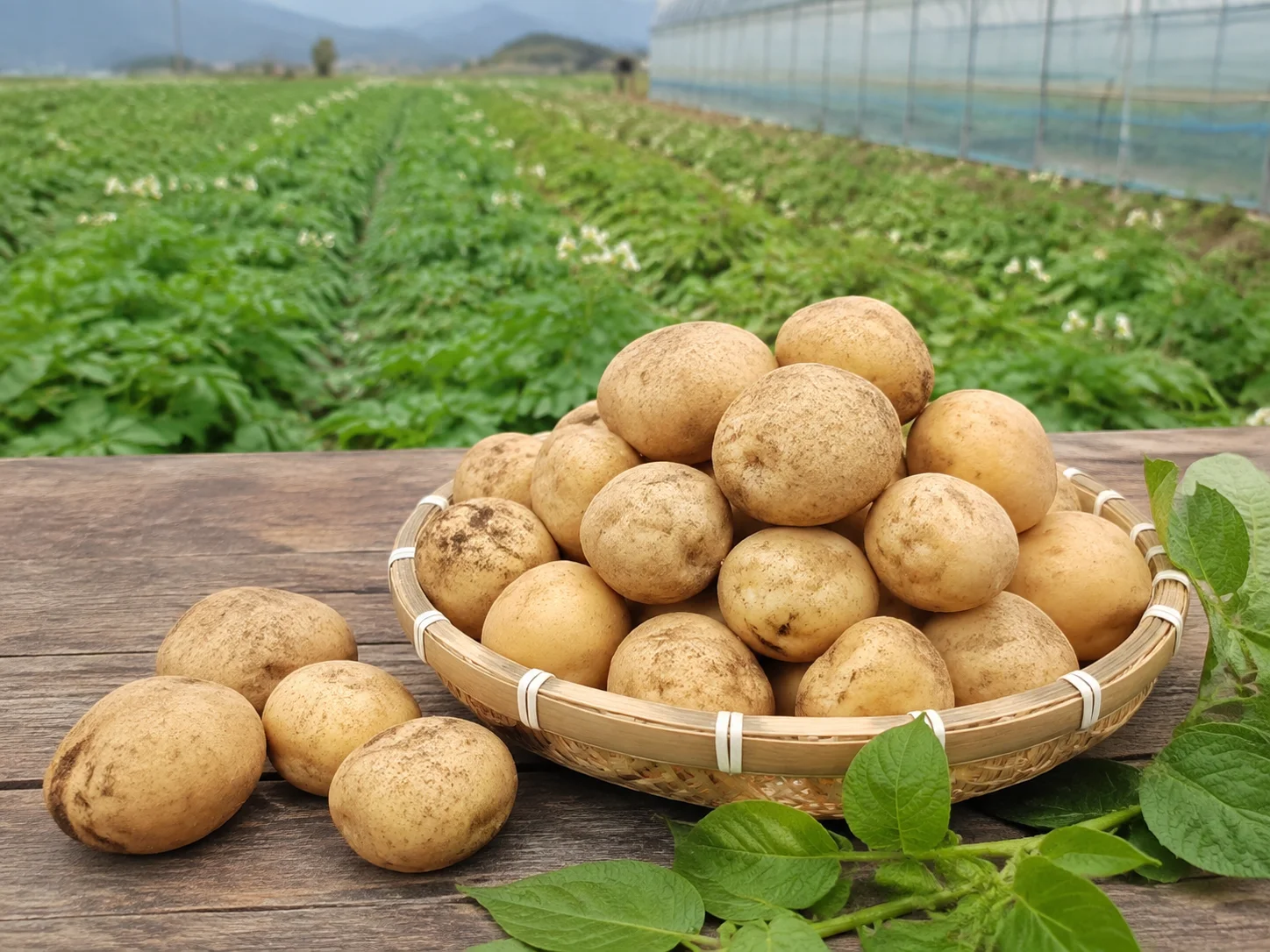
Gwanghwal potatoes (광활 감자)
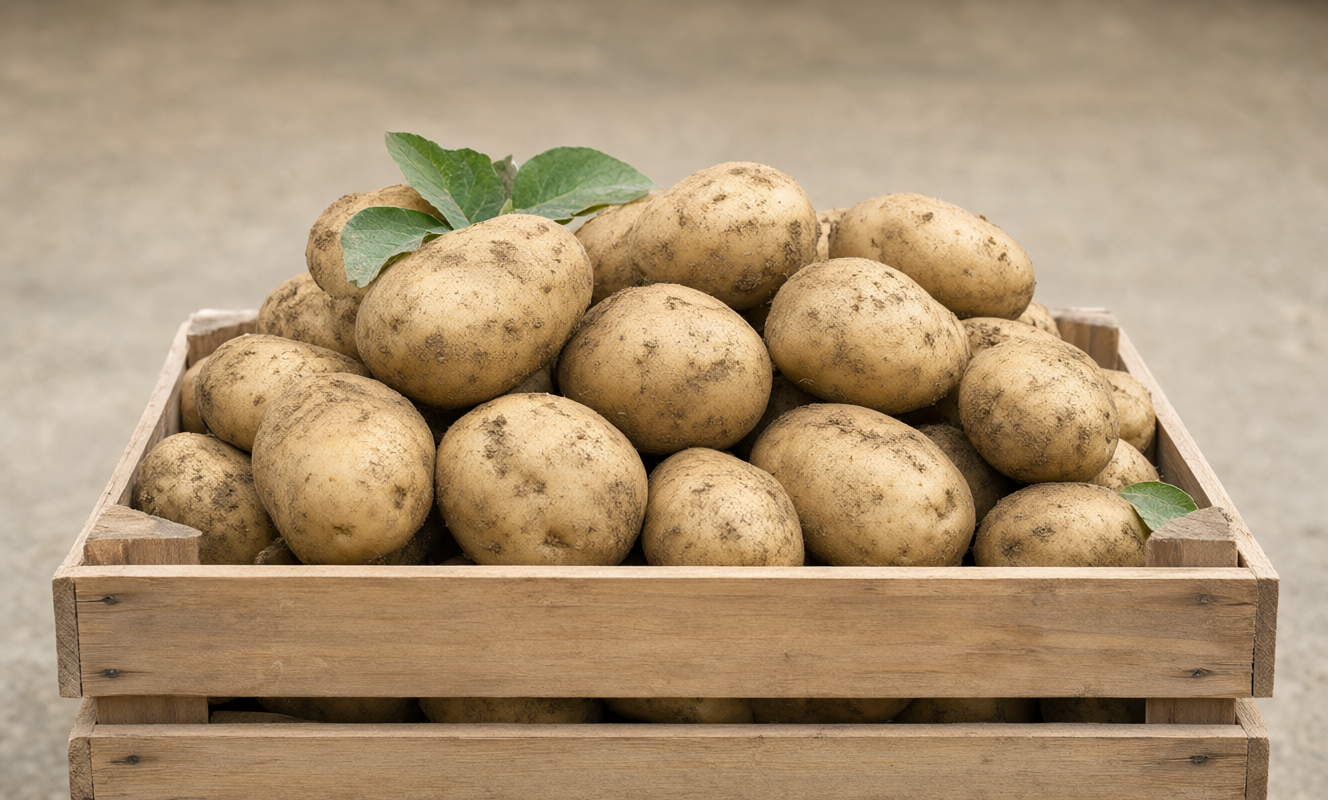
Spring potatoes grown under cover in the reclaimed-soil fields of Gimje's Gwanghwal-myeon. Gimje City says the local crop is harvested from late April into mid-May and includes Sumi potatoes commonly used for steaming and Daeji potatoes used in soups and side dishes.
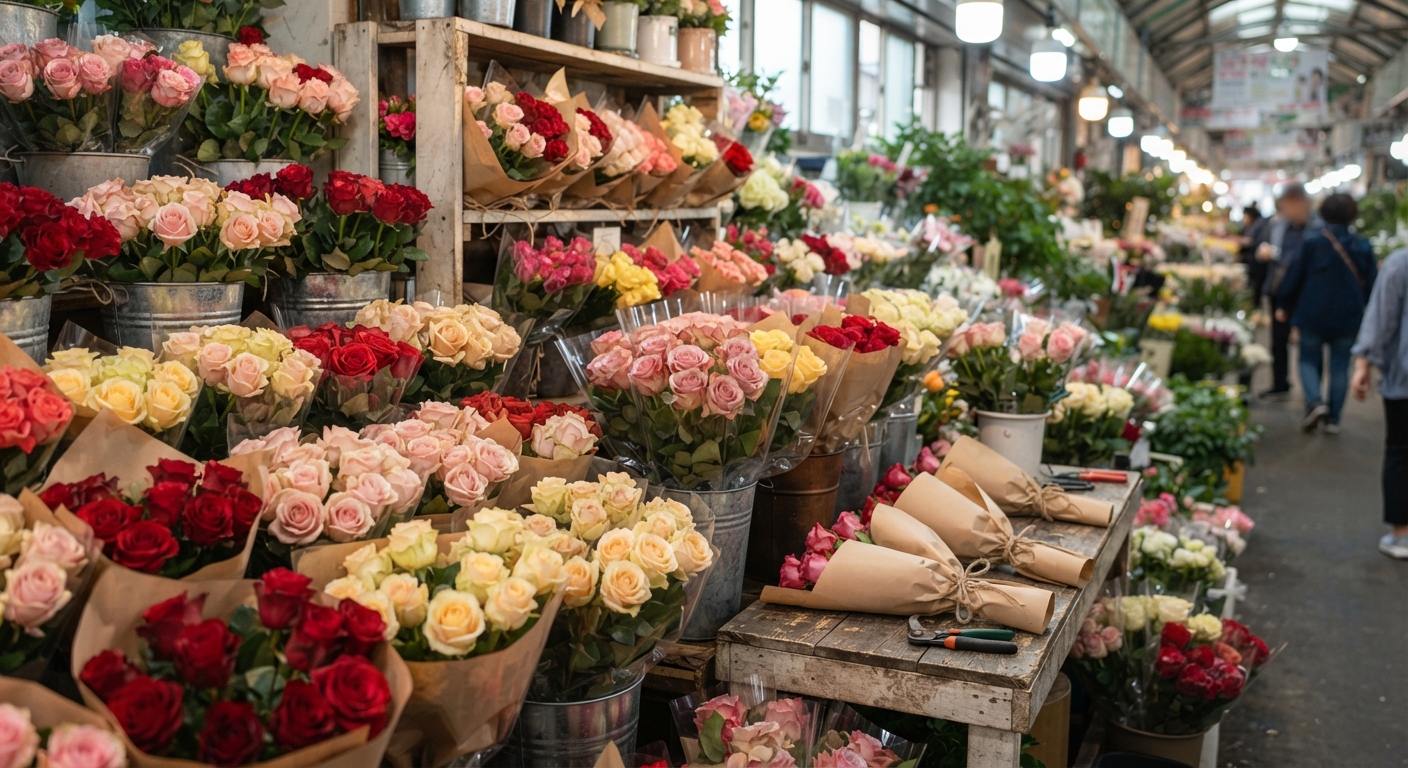
Goyang is Korea's largest flower-growing city and was designated the country's first flower-industry special zone in 2006. Its rose beds are the largest in the nation, and city growers export a large share of their roses to Japan. The festival's flower market is stocked by these Goyang farms, so cut flowers and potted plants are the genuine local product to look at or buy here — a regional specialty, not a claim about festival food.
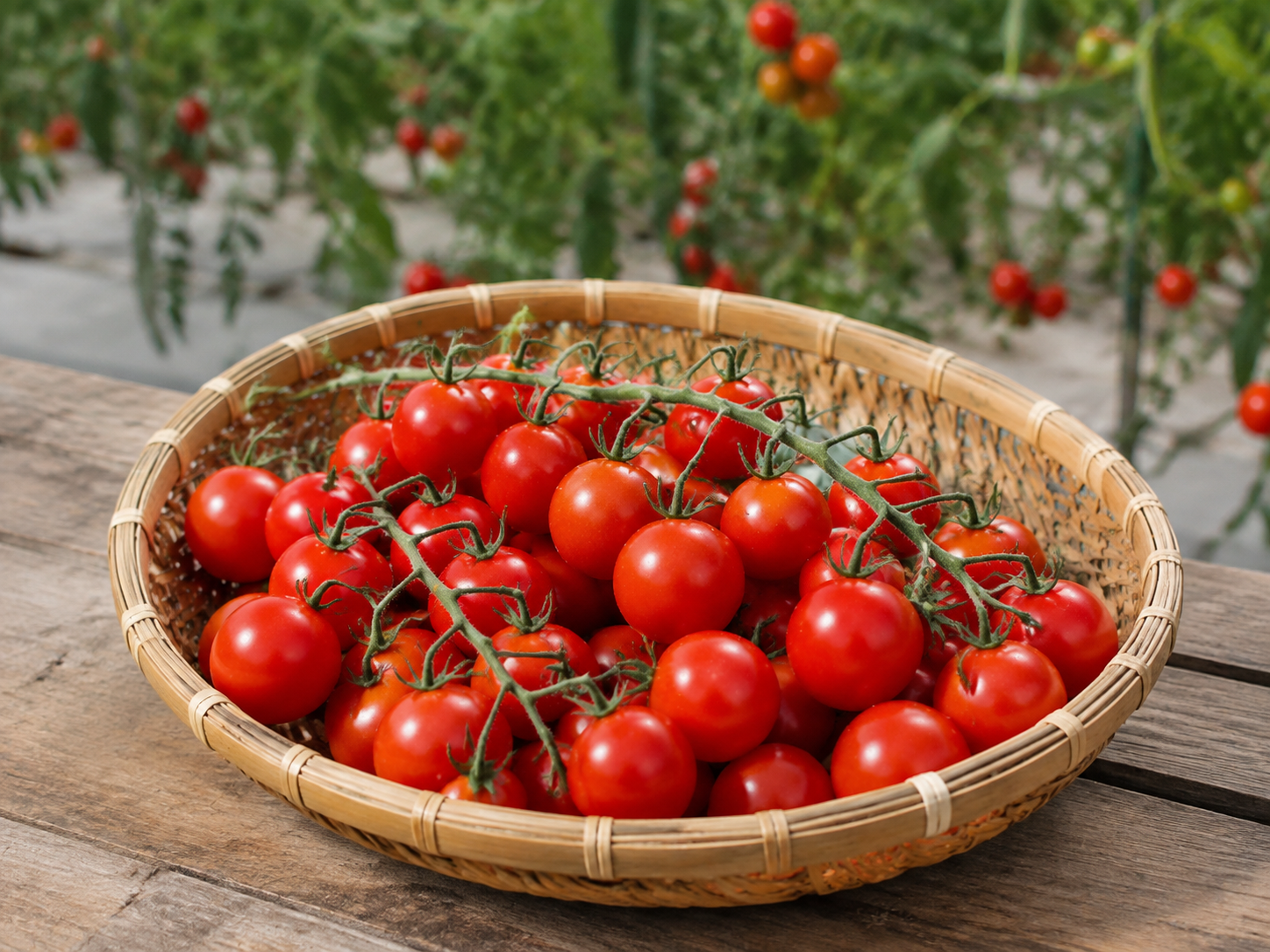
Gyeryong City lists cherry tomatoes grown around Nongso-ri in glasshouses using hydroponic cultivation and producer-run quality control among its local specialty products.
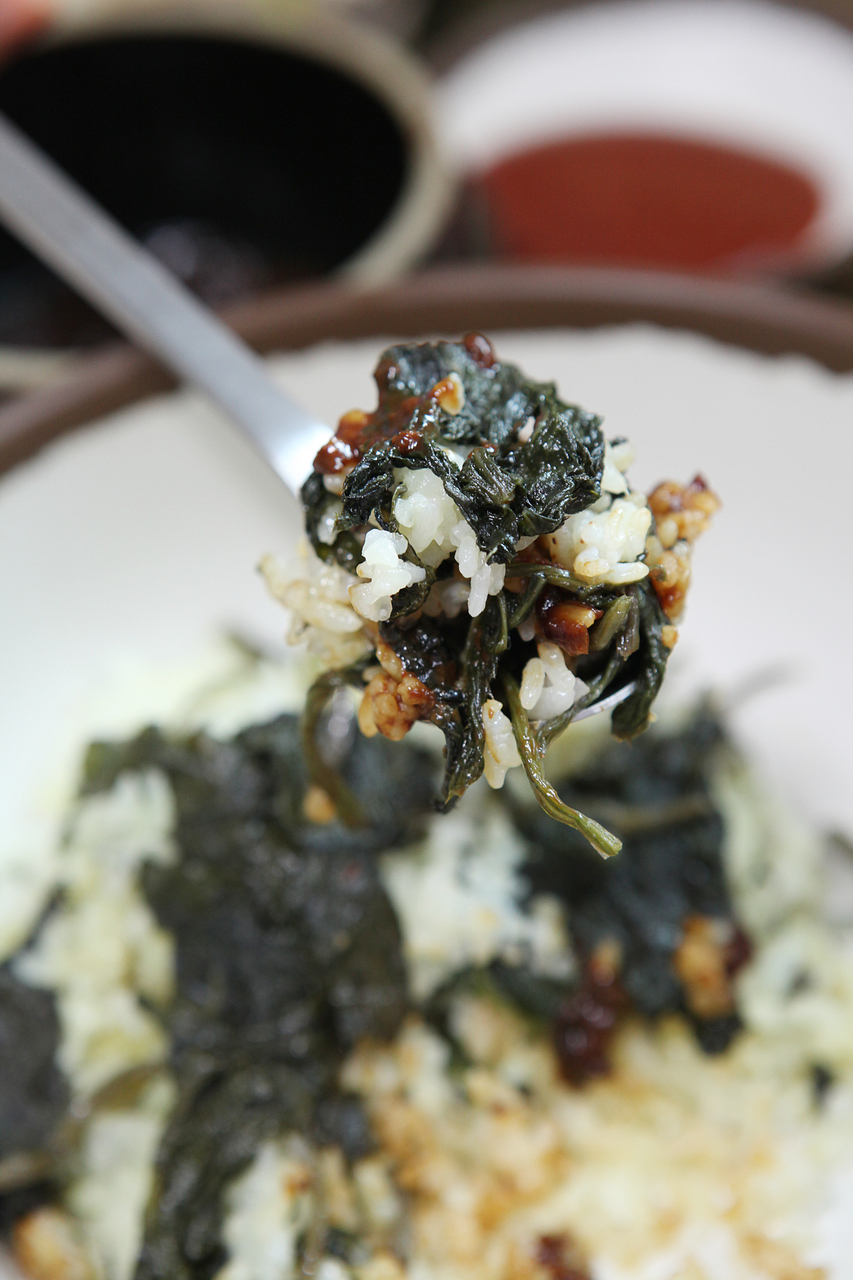
Rice served with gondre, a mountain green closely associated with Jeongseon's upland food culture, usually mixed at the table with a seasoned soy sauce. Jeongseon County's tourism pages identify both local gondre and gondre rice among the area's specialties.
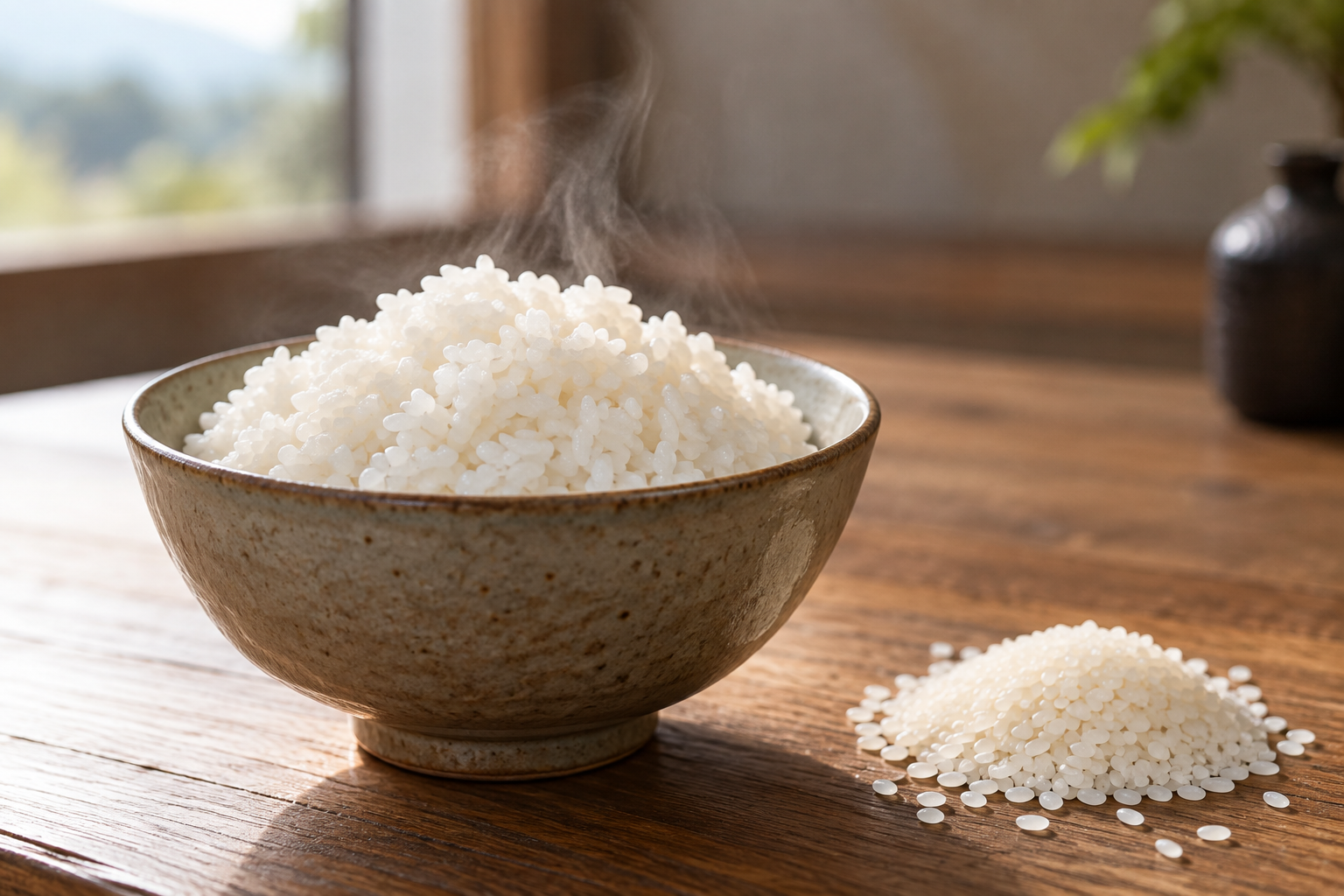
Cheorwon's flagship agricultural product, grown on the volcanic Cheorwon Plain near the DMZ. Cheorwon County registered 'Cheorwon Odae rice' as a geographical-indication collective trademark in 2016; the Odae rice variety is favoured in the cold-climate, high-day-night-temperature-gap conditions of inland Gangwon. It is a regional specialty to look for in shops and restaurants, not a claim about what festival food stalls will serve.
See Taebongje Festival →Original Korea Seasons editorial illustration; not a documentary photograph
Anseong pear (안성마춤 배)
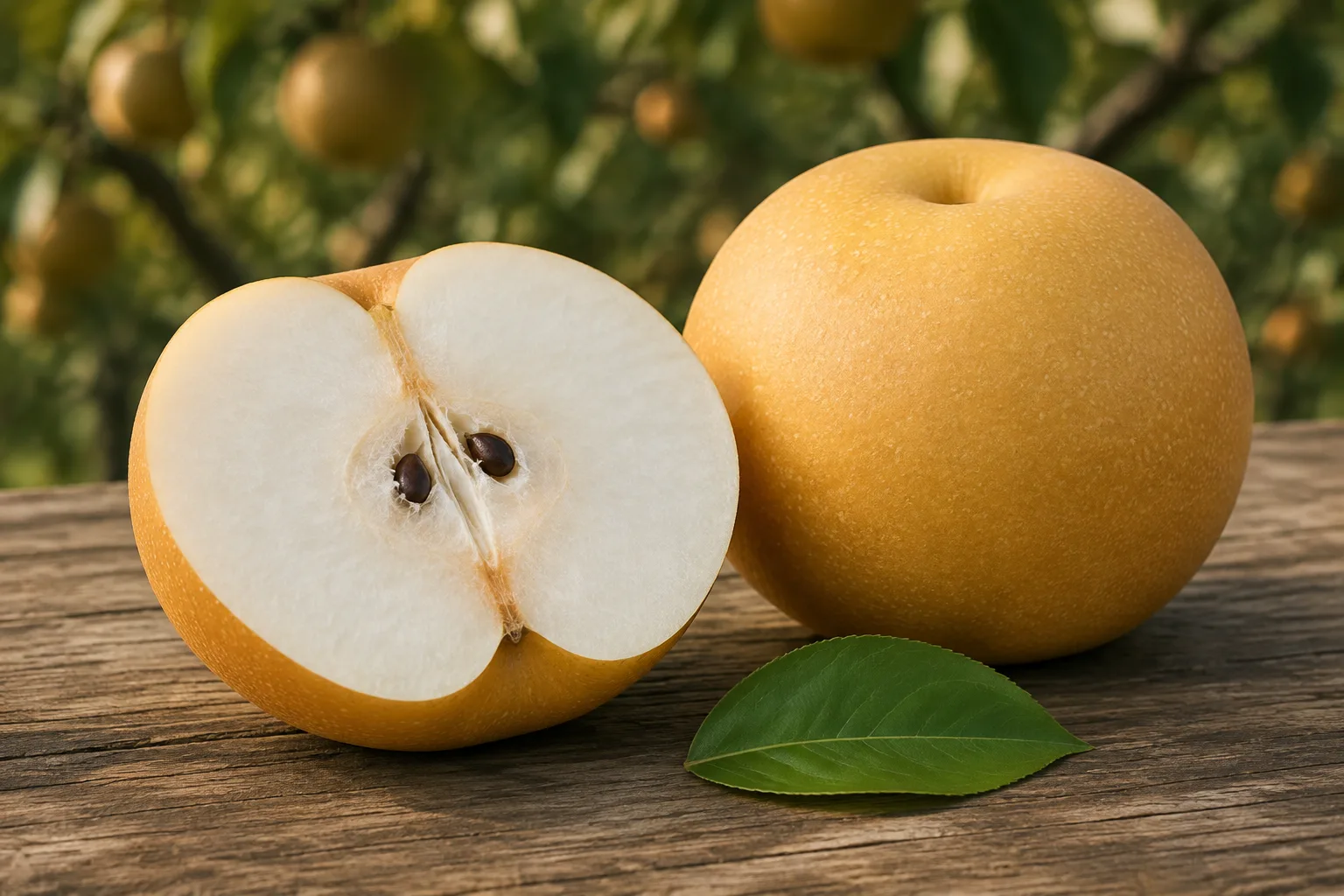
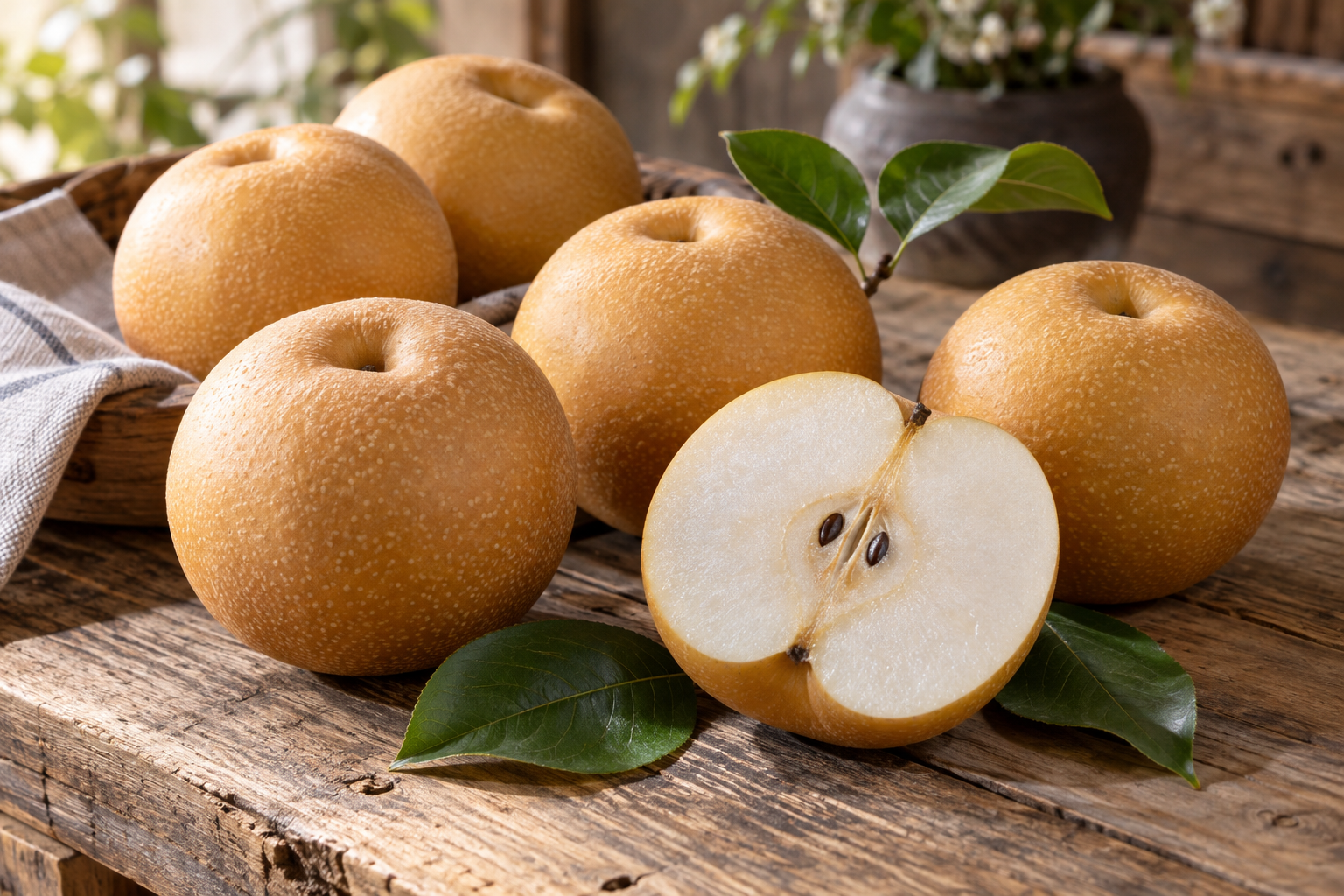
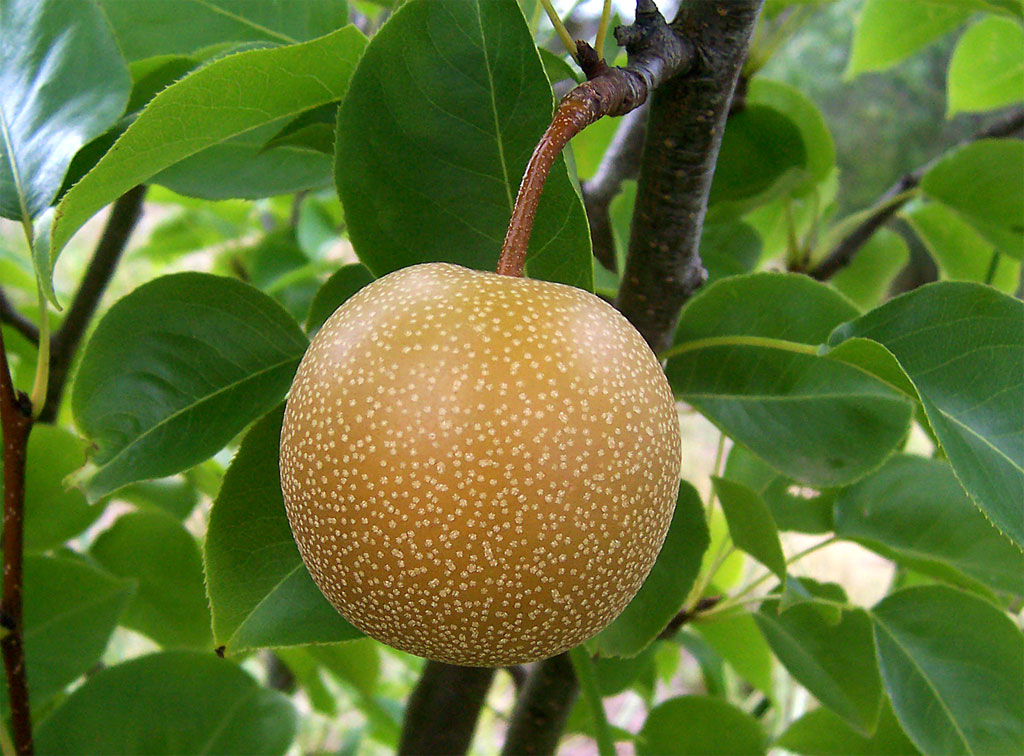
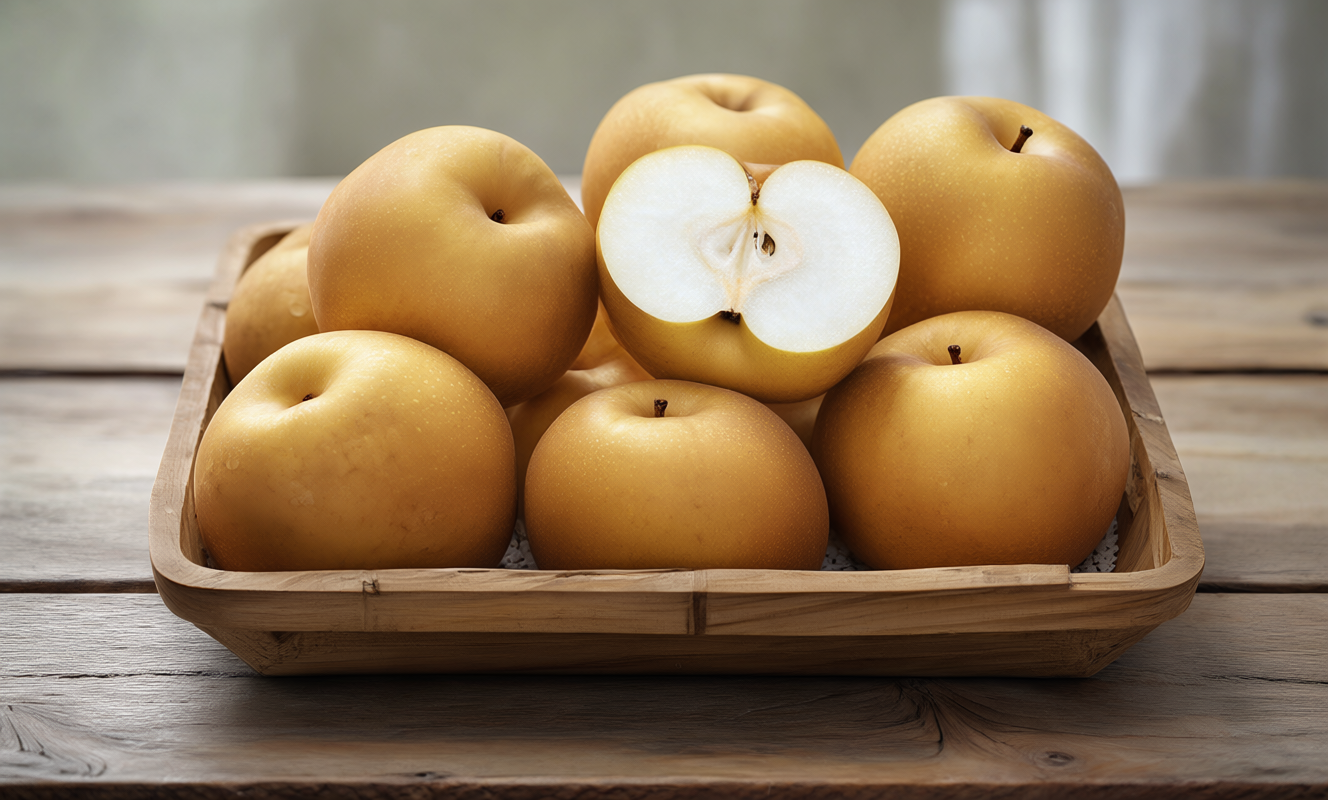
Anseong City names pear as one of its five official Anseongmachum agricultural specialties. The main cultivar is Singo: a large, round Asian pear with pale golden-brown skin, crisp pale flesh and plenty of juice. The city lists late September onward as its shipping season, so the festival falls at the start of the crop's main market period.
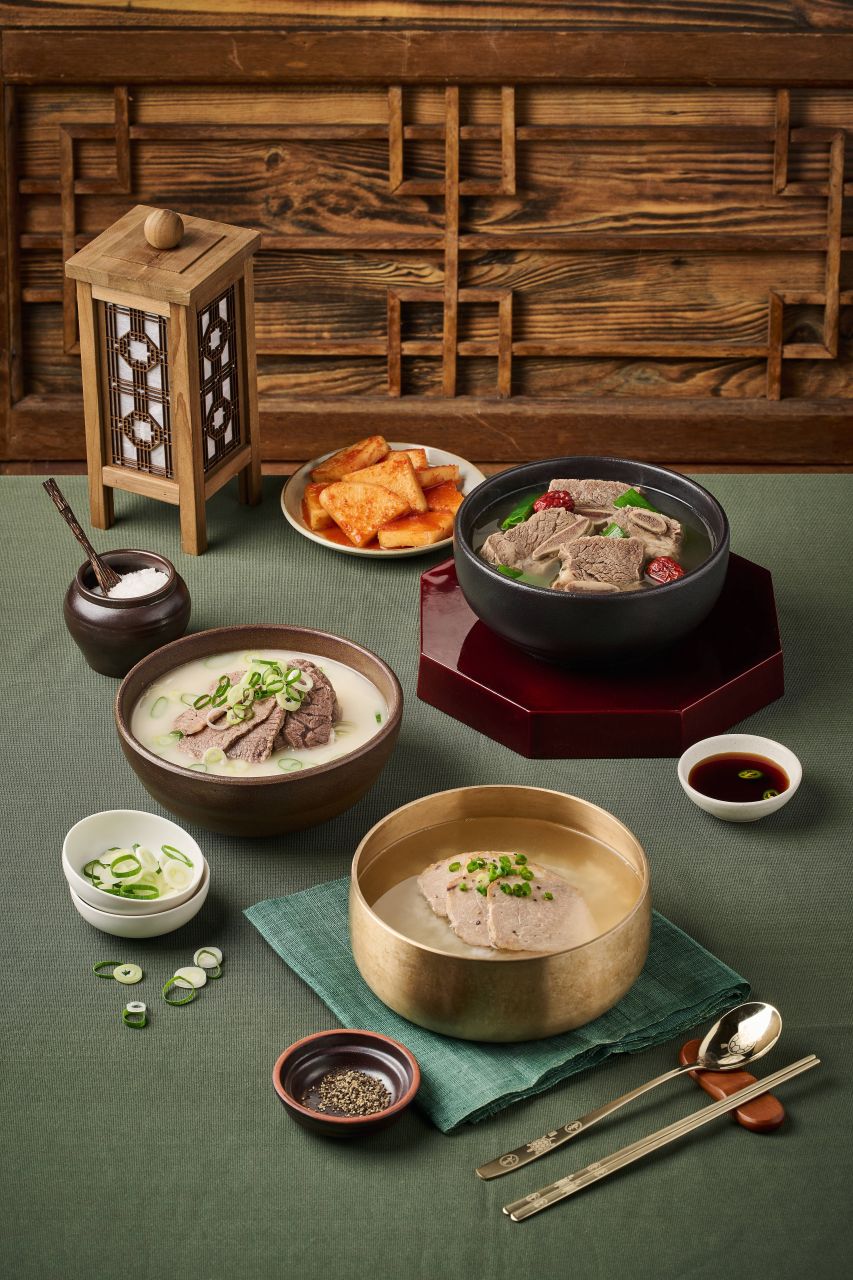
A long-simmered beef-and-bone soup with a pale, milky broth, served with rice, sliced beef and chopped spring onion. Seoul Metropolitan Government's Future Heritage programme registered it as the first food entry on its list and describes it as the dish that best represents native Seoul cooking, spread across the city from the late Joseon period. One of the registered seolleongtang houses has been trading in Jongno-gu, the same district as this festival, since 1904.
See Bongsan Mask Dance →Original Korea Seasons illustration showing the dish's general appearance; not a documentary photograph or a specific restaurant serving
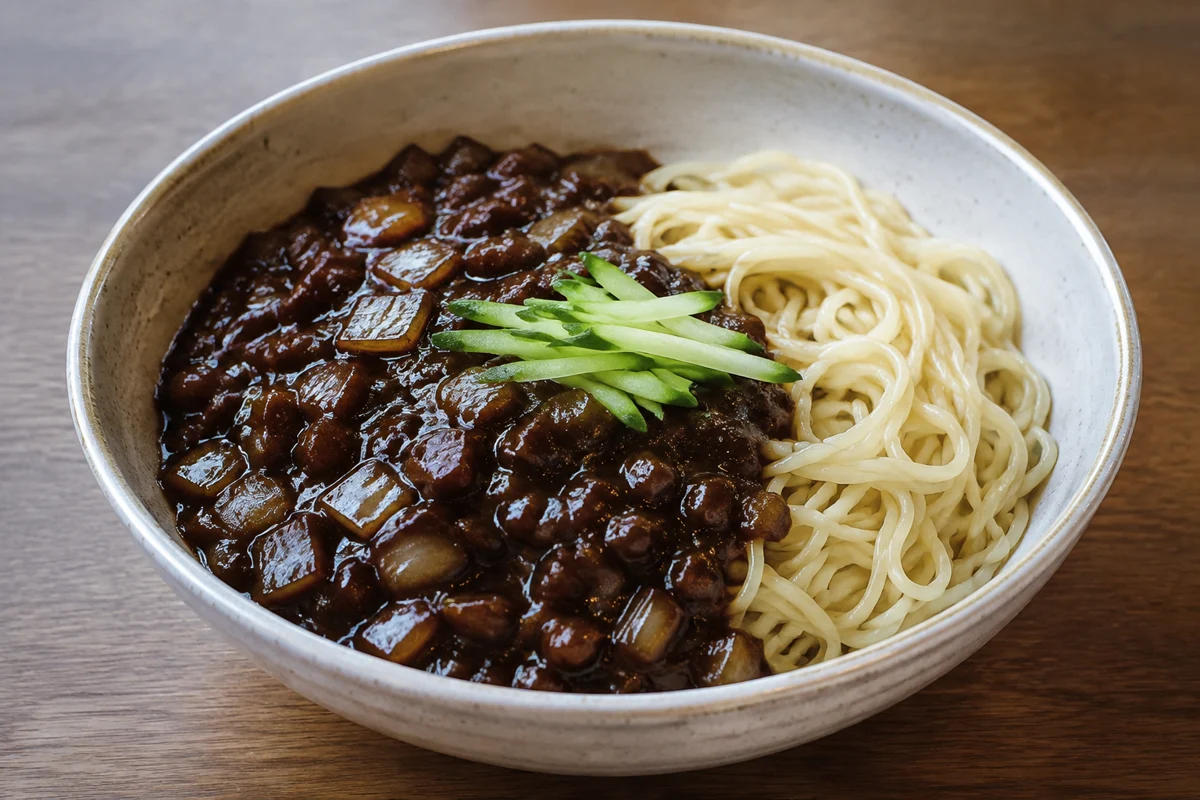
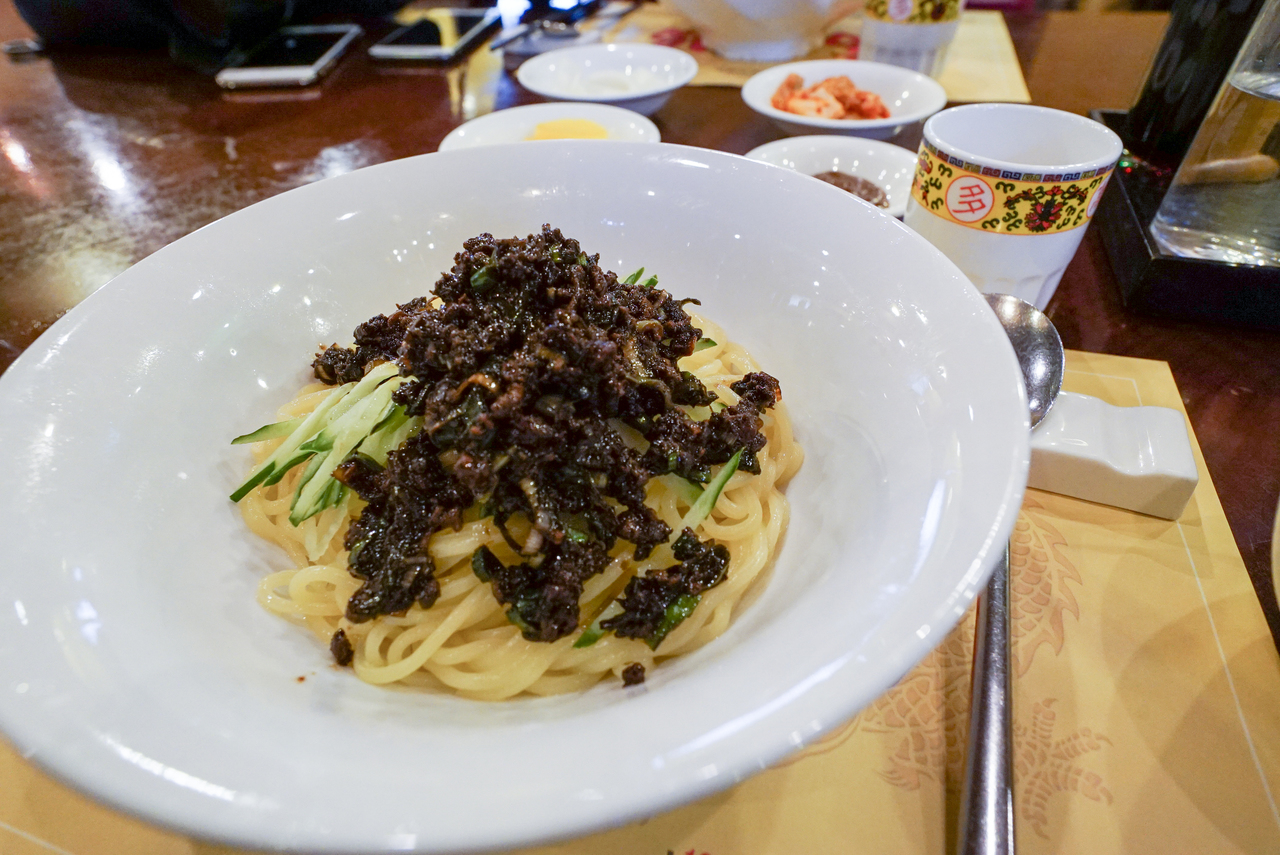
Jjajangmyeon (짜장면)
Incheon's Chinatown is identified by the city's tourism authority as the birthplace of Korean-style jjajangmyeon. The dish is wheat noodles mixed with a dark chunjang black-bean sauce; it is an Incheon food connection, not a promised festival stall.
A firm tomato grown in Busan's Daejeo-dong, where the Nakdong River meets the sea. Partly ripened fruit retains green coloring around the stem; the name is protected under Korea's geographical-indication system. Its main harvest runs from February into May, so October festivalgoers should not assume it will be in season.
The festival grew out of a rice festival, and Cheongwon Life rice is the brand it exists to promote. Cheongju City's tourism office describes it as a premium rice grown by an eco-friendly loach-farming method that earned low-carbon certification, holding national LOHAS certification for 17 consecutive years, and grown on the alluvial soil of the Miho River — the same area where the Sorori grains, among the world's oldest cultivated rice, were excavated. It is a regional product you can buy at the festival's direct-sales market, not a dish cooked at a stall.
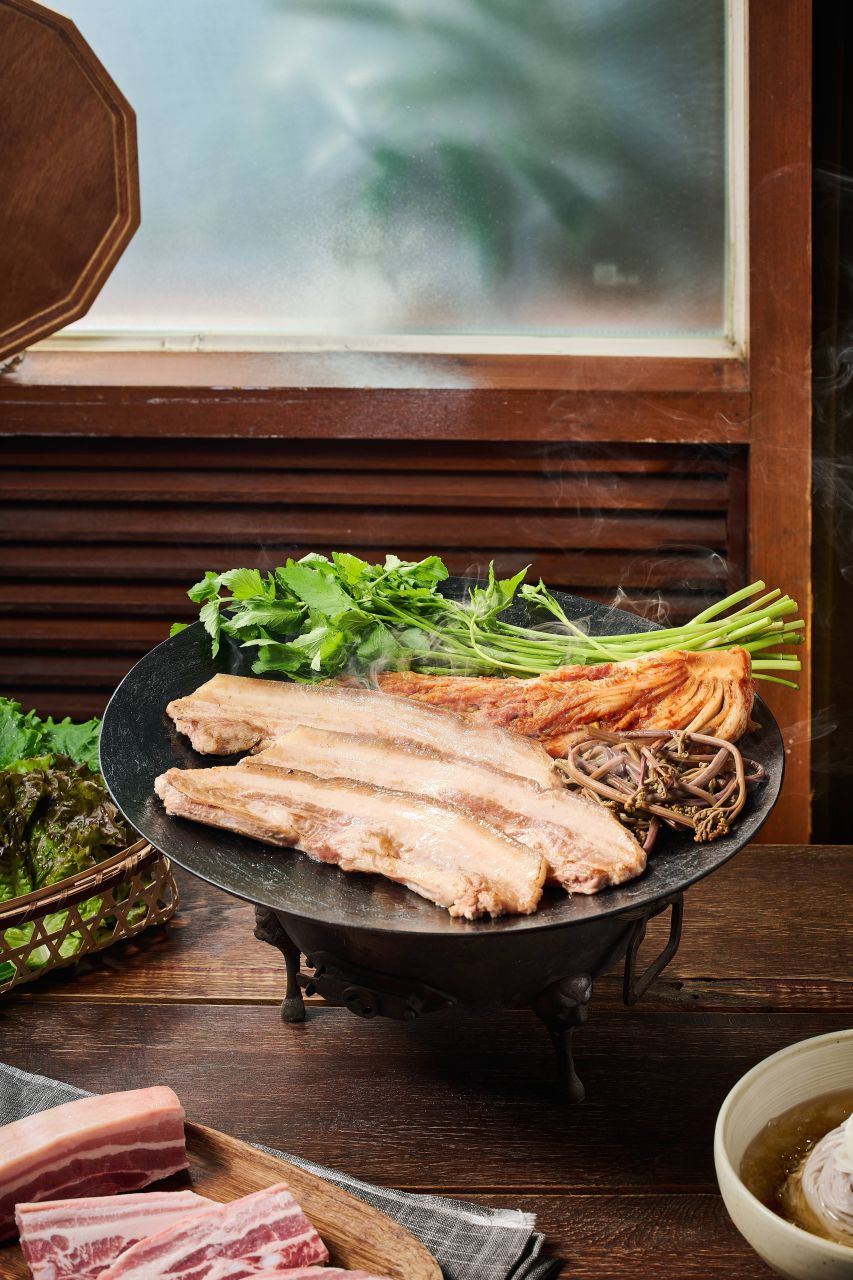
Cheongju promotes grilled pork belly as a signature local food and calls itself an origin city of samgyeopsal, pointing to old records of pork being sent as tribute from the inland region. Since 2012 the city has run a dedicated samgyeopsal street at Seomun Market and a Samsam-day festival on March 3. This is a Cheongju city specialty to seek out at a restaurant, not a promise about what festival stalls will serve.
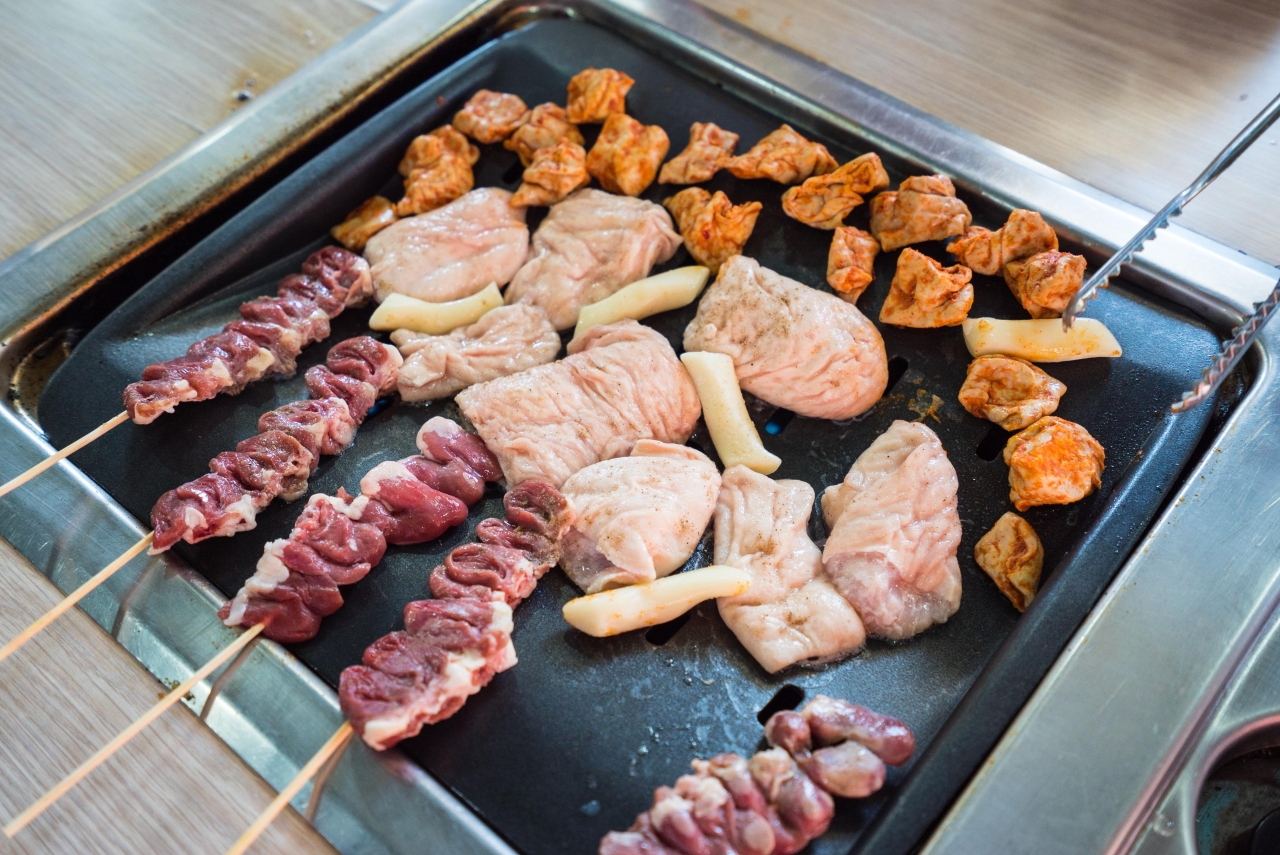
Charcoal-grilled pork or beef large intestine, the dish most associated with Daegu — the Korea Tourism Organization's food pages list Daegu grilled intestines (daegu makchanggui) as a city specialty, and grilling intestines this way is documented as having started in Daegu. The best-known cluster is Anjirang Gopchang Alley in Nam-gu. It is a regional specialty recommendation, not a claim that it is sold at the opera venues.
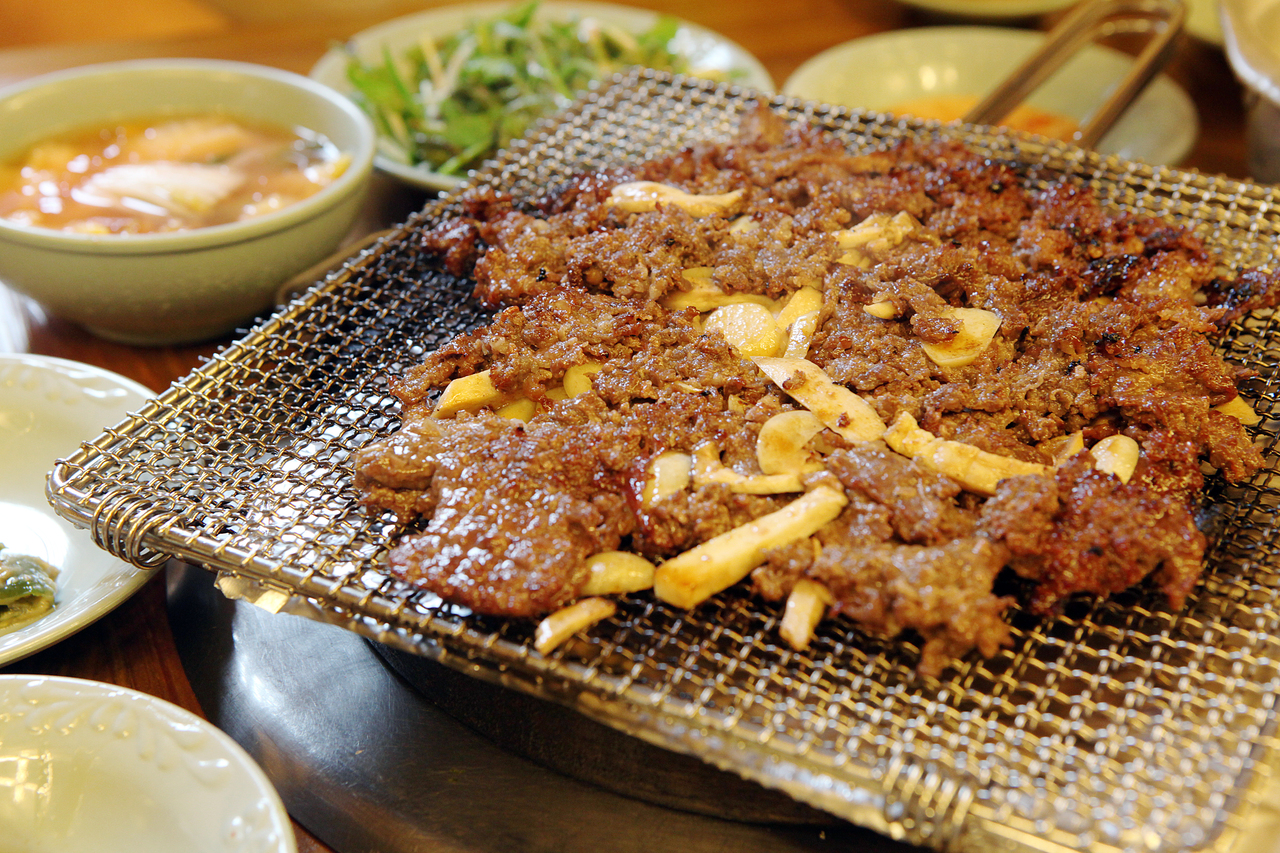
Ulsan's best-known dish and the reason the festival exists. Unlike the soupy, marinated bulgogi common elsewhere, the Eonyang style uses finely chopped or minced Korean beef, lightly seasoned and pressed onto a wire grill (seokssoe) over charcoal until the edges crisp. Ulju is one of Korea's designated hanwoo-bulgogi special zones, and both the Korea Tourism Organization and Ulsan's tourism materials list Eonyang bulgogi as a signature local food — a regional specialty, not a claim about a specific vendor.
See Eonyang Hanu Bulgogi Festival →Photo: Korea Tourism Organization / Kim Ji-ho (KOGL Type 1); photographed at Geumsan Ginseng Market in 2010 and cropped to omit the dated price label
Geumsan ginseng (금산인삼)
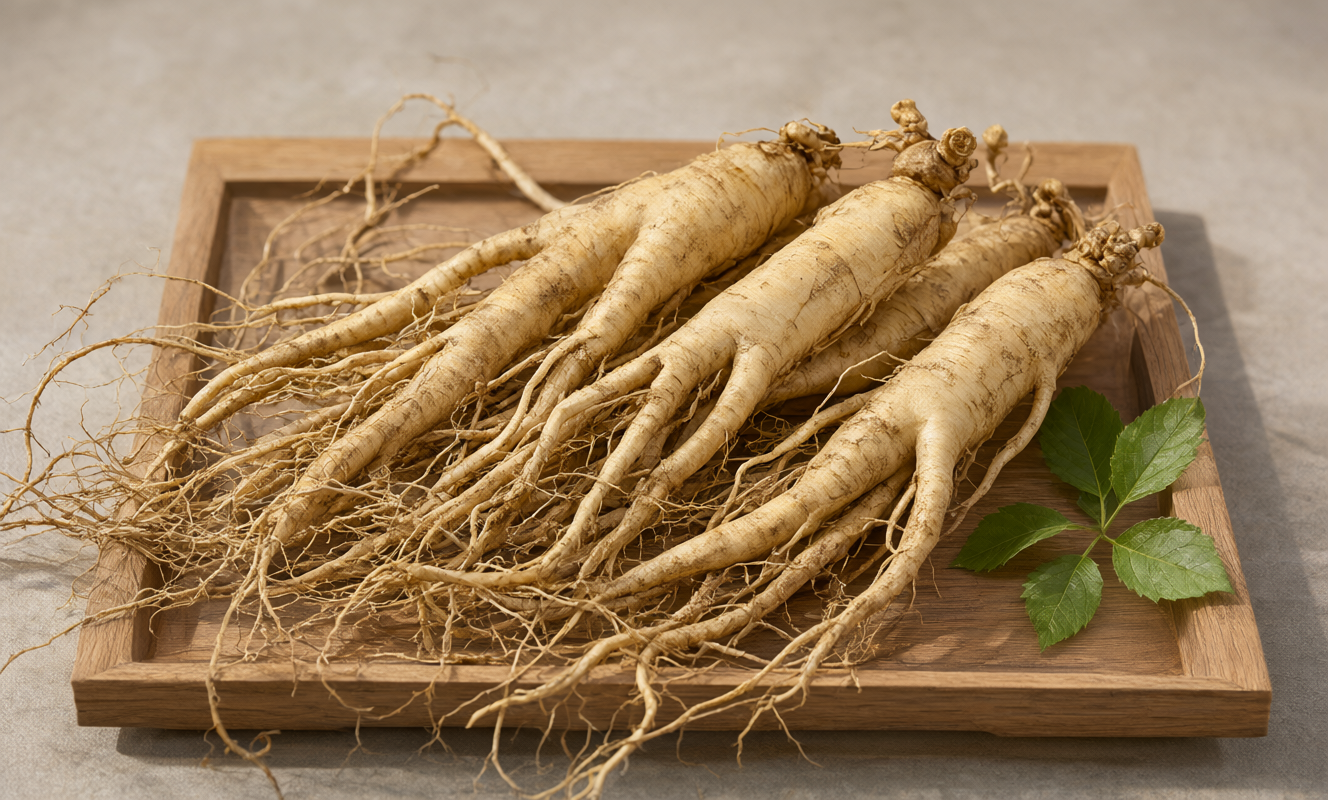
Fresh ginseng is Geumsan's defining local crop and market product. The county documents a cultivation history of roughly 1,500 years, and its traditional ginseng farming system was designated a Nationally Important Agricultural Heritage System in 2015 and a FAO Globally Important Agricultural Heritage System in 2018.
Daejeon is known nationally as Korea's 'city of bread'. The tradition traces to the Korean War, when relief flour was widely distributed, and the city's best-known bakery, Sungsimdang, opened in 1956 in Jung-gu, the same district that hosts this festival. In Consumer Insight's 2025 national travel survey, Daejeon ranked first for bread-and-dessert recommendation. It connects directly to the festival's on-site bakery stalls, but this is a city specialty rather than a promise about any single stall.
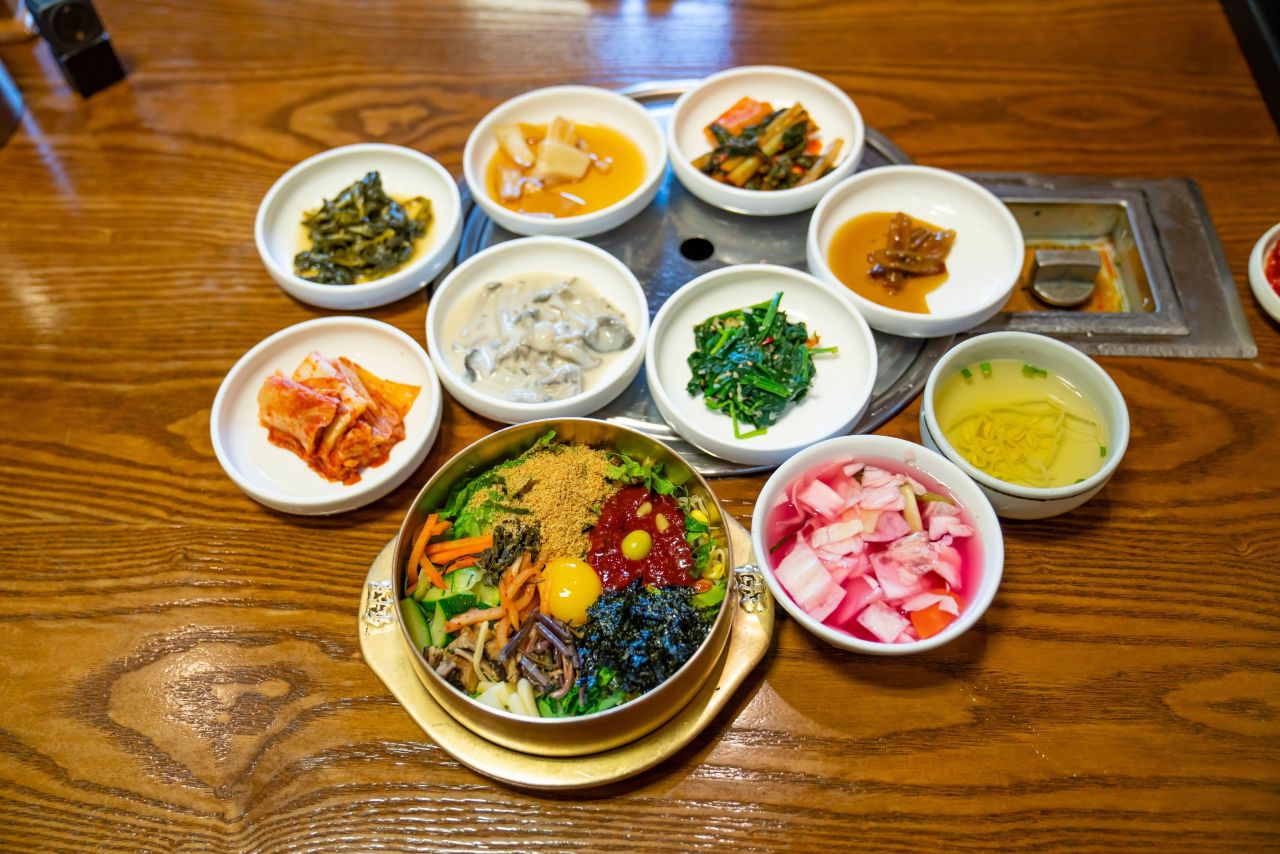
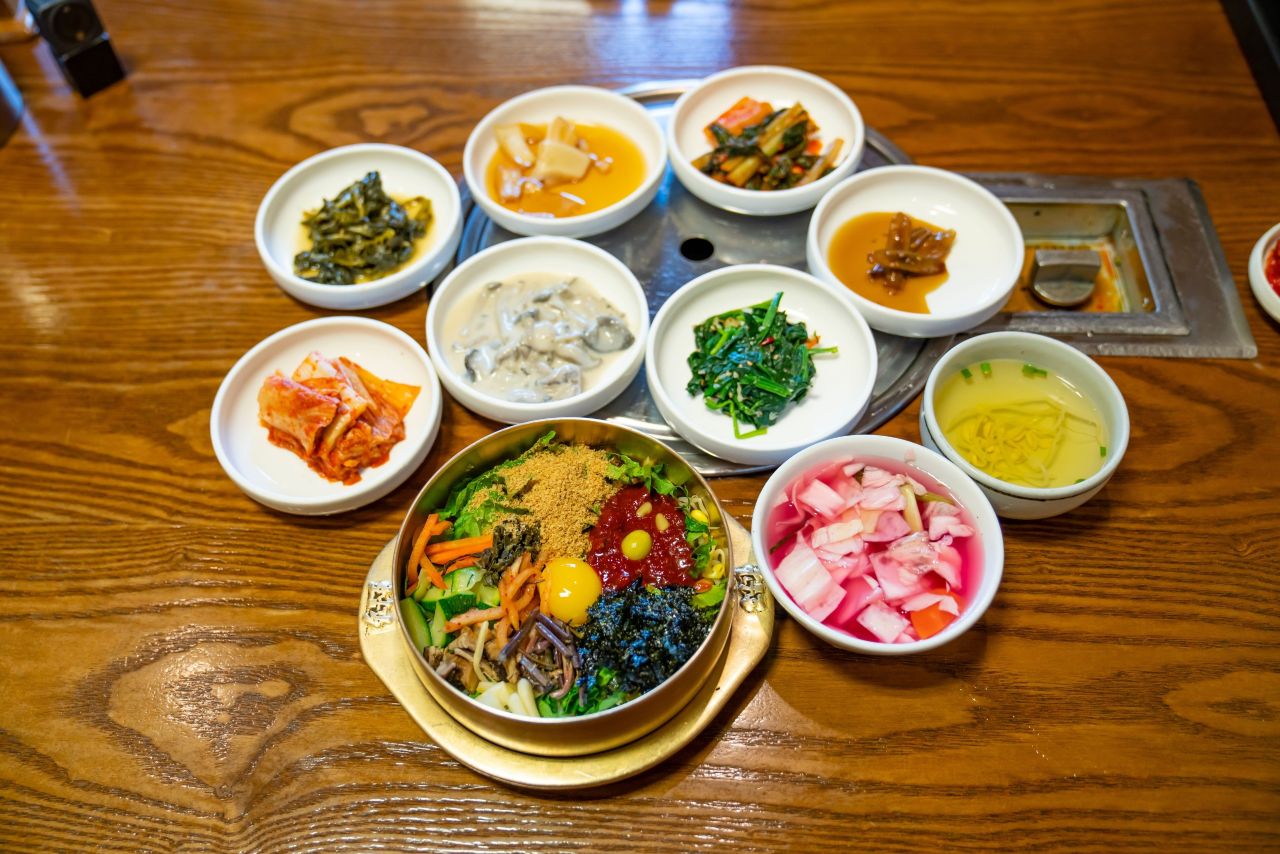
Jeonju is a UNESCO City of Gastronomy, and the city's tourism office identifies bibimbap as its signature dish. The Jeonju version is built on rice cooked in a broth and typically includes local bean sprouts and hwangpomuk, a yellow mung-bean jelly, often with raw beef on top. This is a city specialty to seek out in a restaurant, not a claim about what any temporary festival stall will serve.
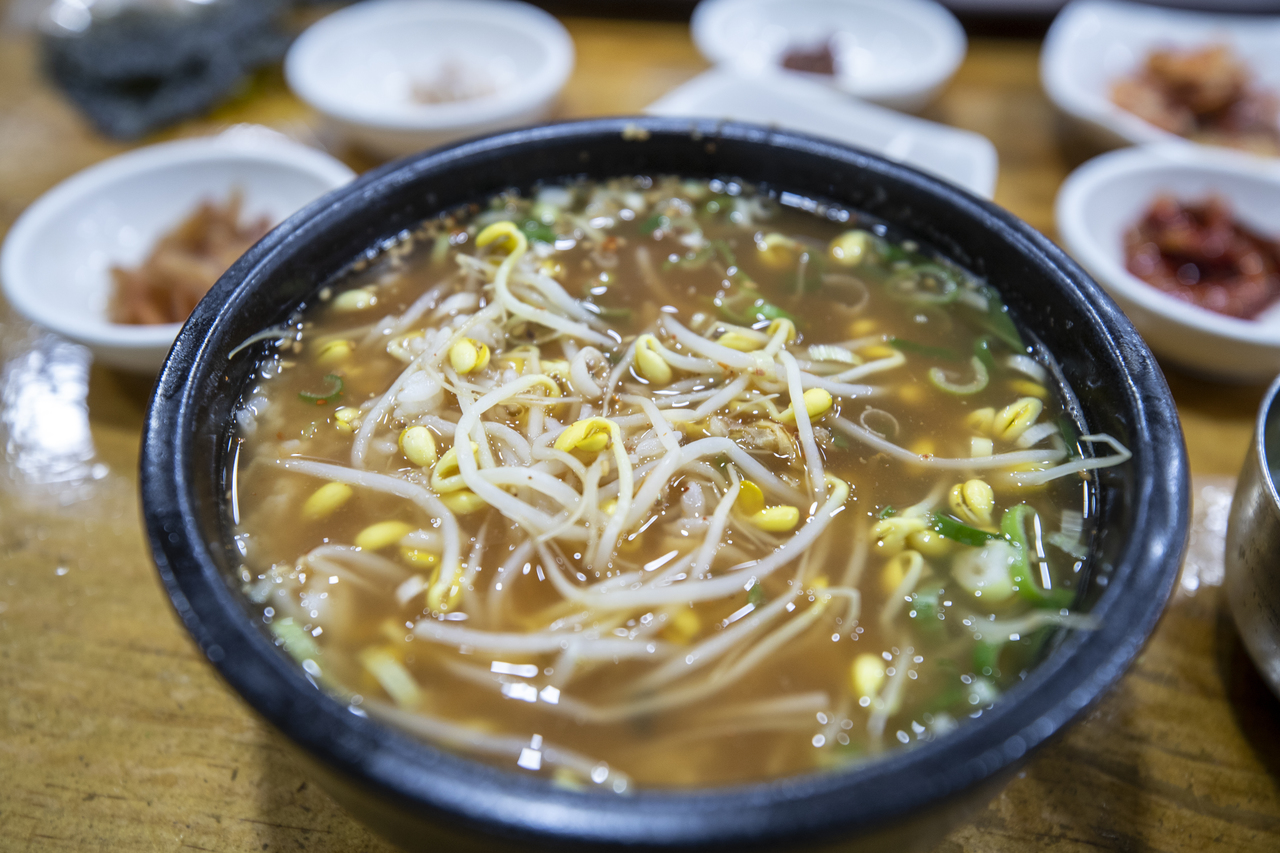
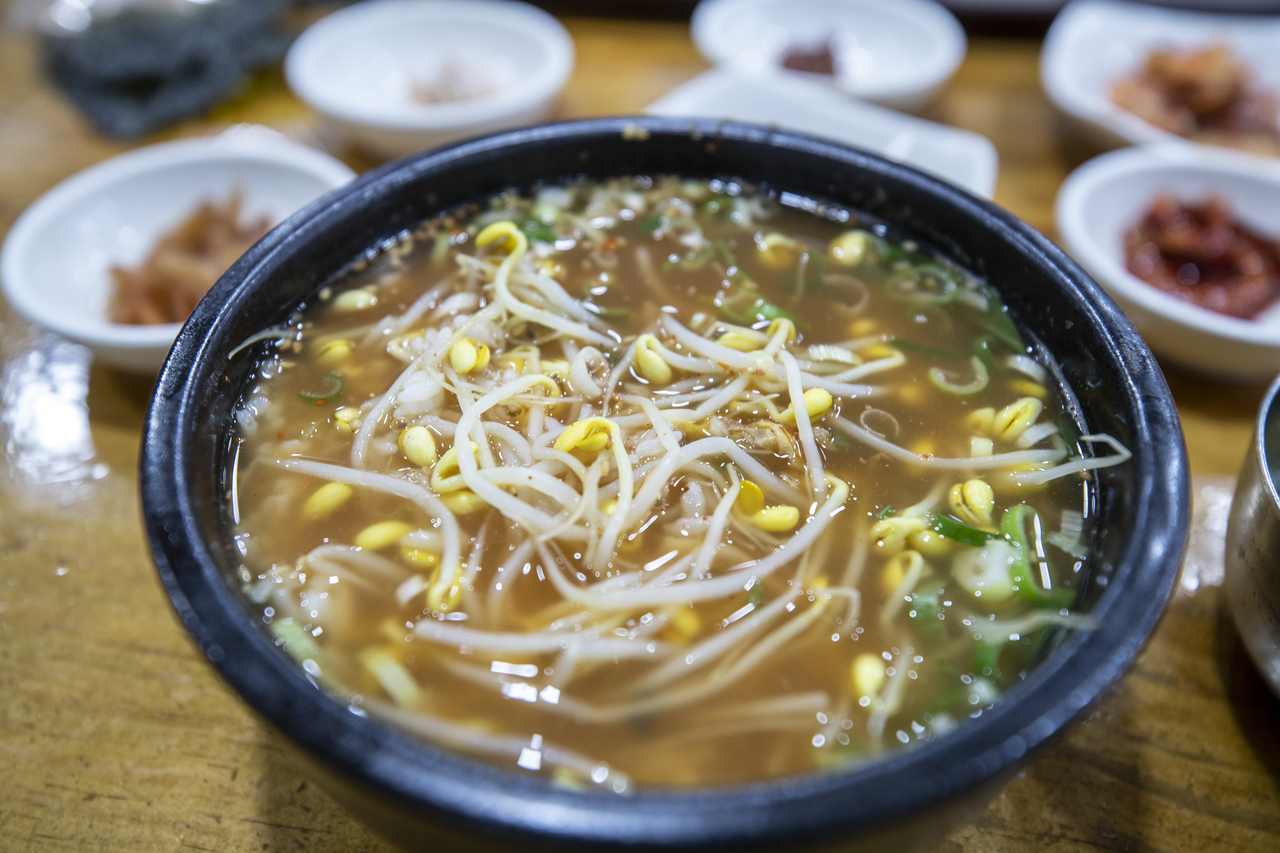
A hot bean-sprout and rice soup in an anchovy-and-kelp broth, often served with an egg, is one of Jeonju's most closely associated everyday dishes and is listed among the city's representative foods. It is cheap, filling and widely available, which makes it a practical meal around a late-running evening festival. Ask before ordering if you need it without egg or seafood broth.
Jeonju is known for its makgeolli-alley culture, where a kettle of the cloudy rice wine arrives with a spread of side dishes. The city is also associated with moju, a low-alcohol drink of makgeolli simmered with medicinal ingredients. This is a regional drinking tradition to try in the city, not something guaranteed at the festival grounds.
Jeonju has been a UNESCO City of Gastronomy since 2012, and bibimbap, rice topped with seasoned vegetables, egg and other toppings, is named alongside kongnamul gukbap as the city's representative food. Locally grown soybean sprouts are one of the ingredients associated with it. This is a city specialty to try in a restaurant; it is also the theme of this festival, but menus and prices at the temporary stalls were not published.
A hot soup of soybean sprouts and rice, listed with Jeonju bibimbap as one of the city's representative foods and built on the same locally grown sprouts. It is an easy, inexpensive second meal in town. Ask before ordering if you need it without egg or seafood broth.
See Jeonju Bibimbap Festival →Photo: Korea Tourism Organization / Lee Beom-su, gwamegi drying racks in Pohang (KOGL Type 1)
Guryongpo gwamegi (구룡포 과메기)
Gwamegi is split Pacific saury or herring dried in cold coastal air. Pohang City's Gwamegi Culture Center identifies Guryongpo as its main production base and explains that the modern split form is cleaned, opened and usually dried for about four days. It is commonly served in strips with seaweed and vegetables.
See Pohang Sunrise Noodle Festival →Original Korea Seasons illustration showing the general appearance of dried persimmons; not a documentary photograph
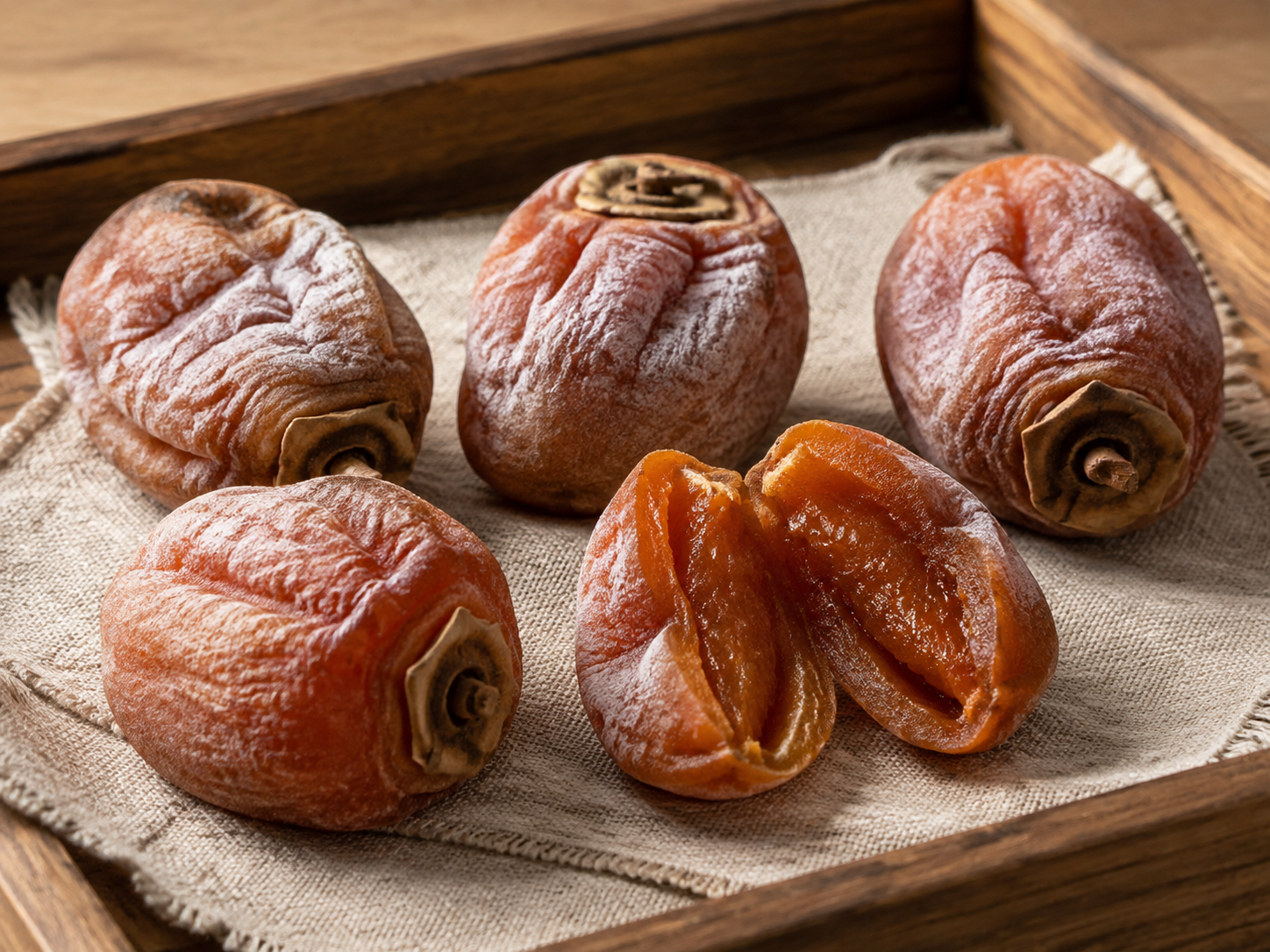
Sancheong dried persimmons (산청곶감)
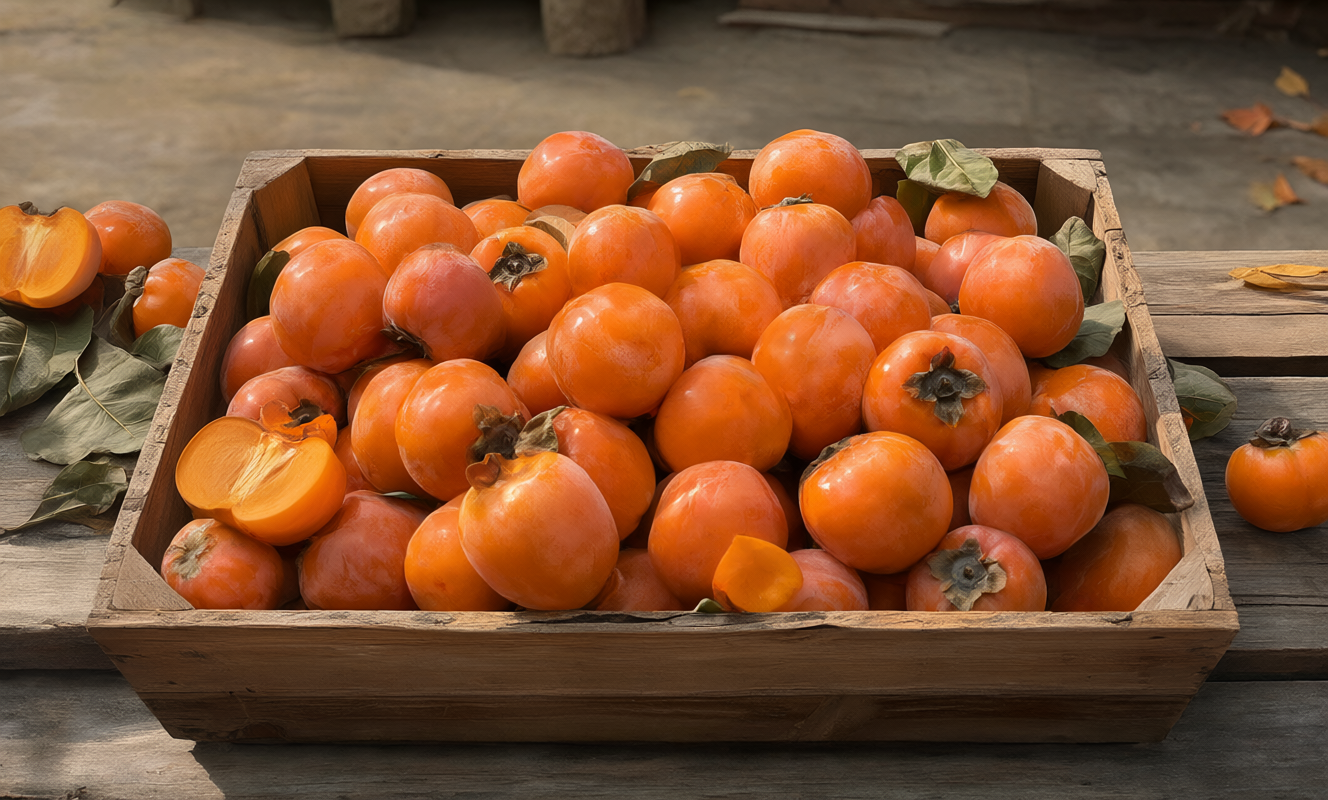
Whole persimmons dried by repeated winter freezing and thawing around the Jirisan foothills. Sancheong County identifies them as Korea's first dried persimmons registered under the Forest Service geographical-indication system (No. 3). Their season is December to February, so do not assume fresh-season stock at an October visit.
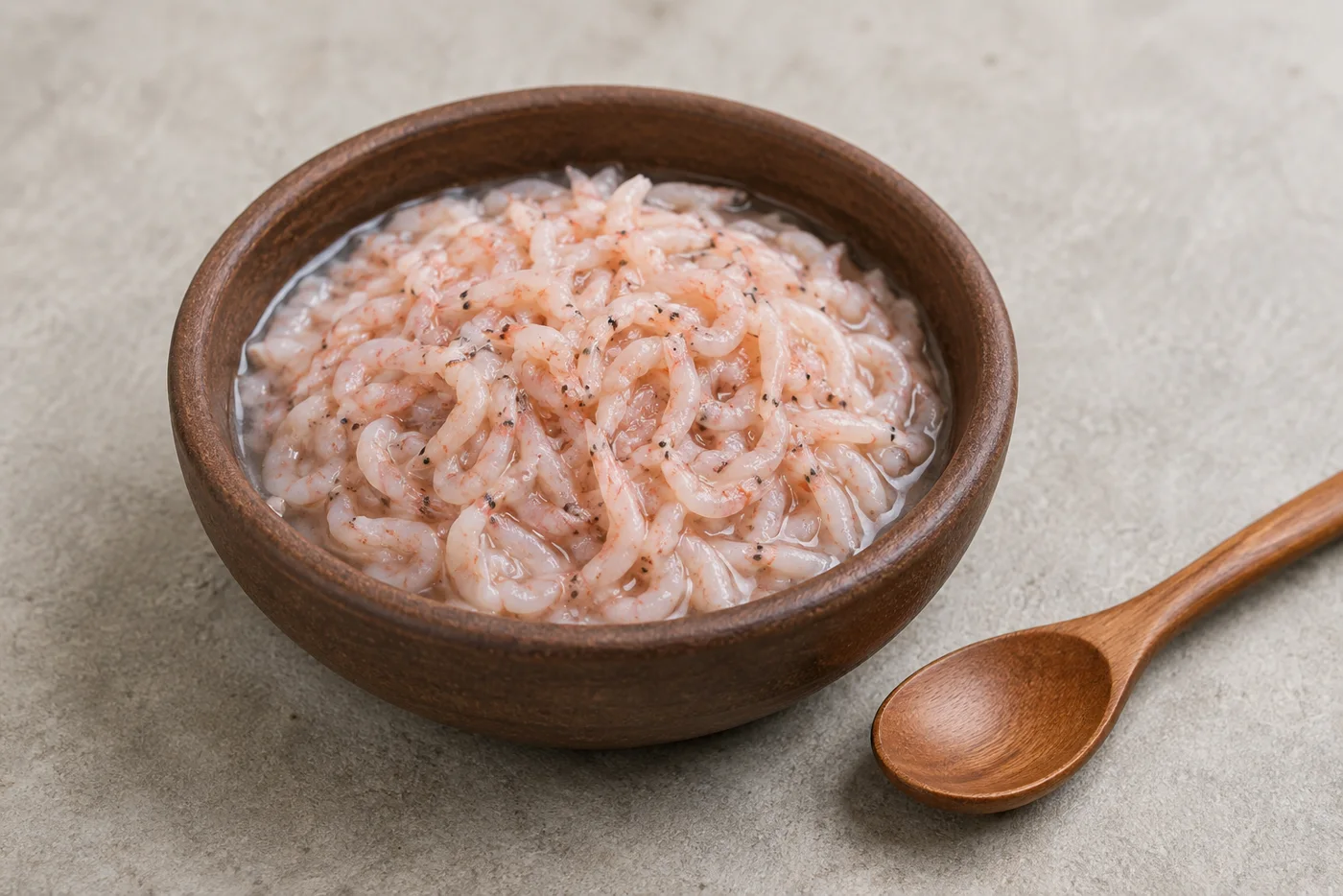
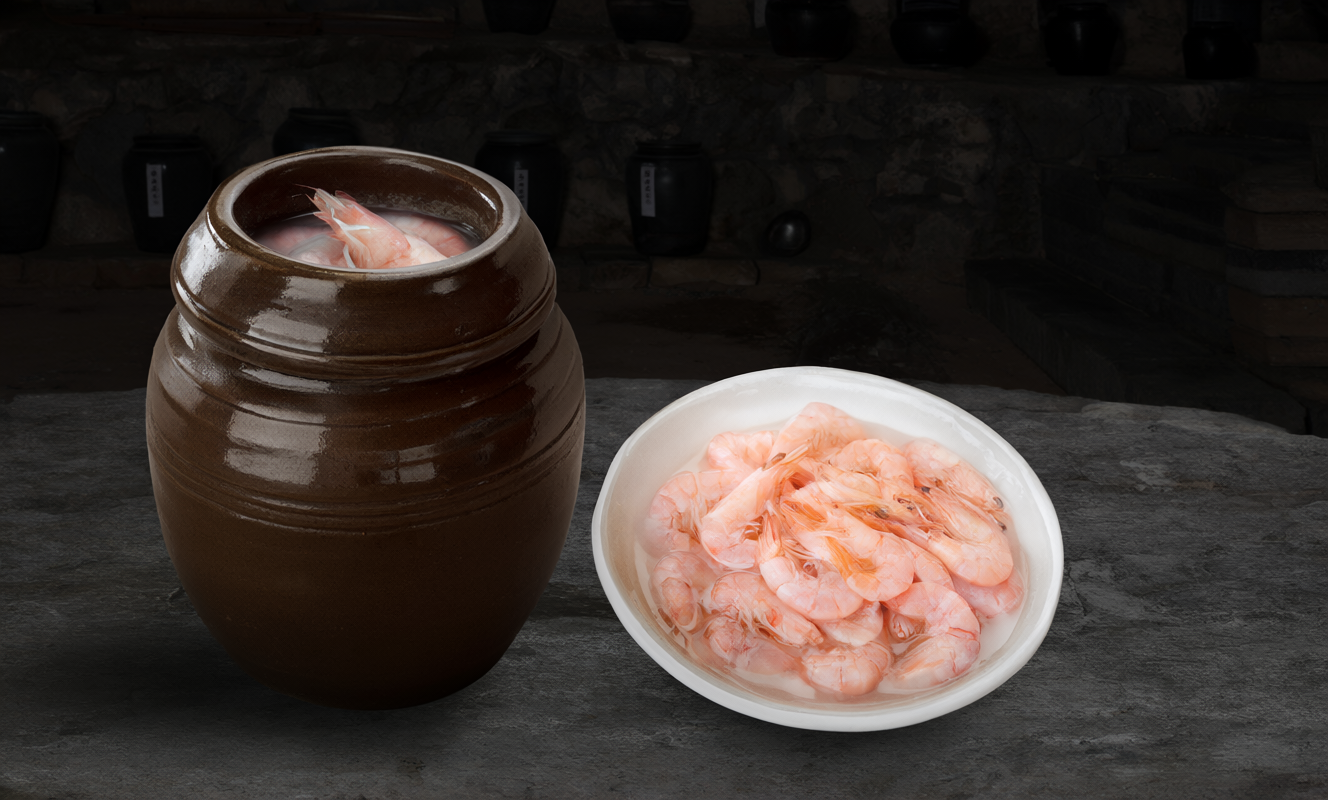
Salted tiny shrimp are tied to Sorae's working-port history: shrimp boats and the old narrow-gauge railway helped turn the port into a market for seasonal grades such as ojeot, yukjeot and chujeot. Treat it as a salty seasoning rather than a side dish eaten by the spoonful.
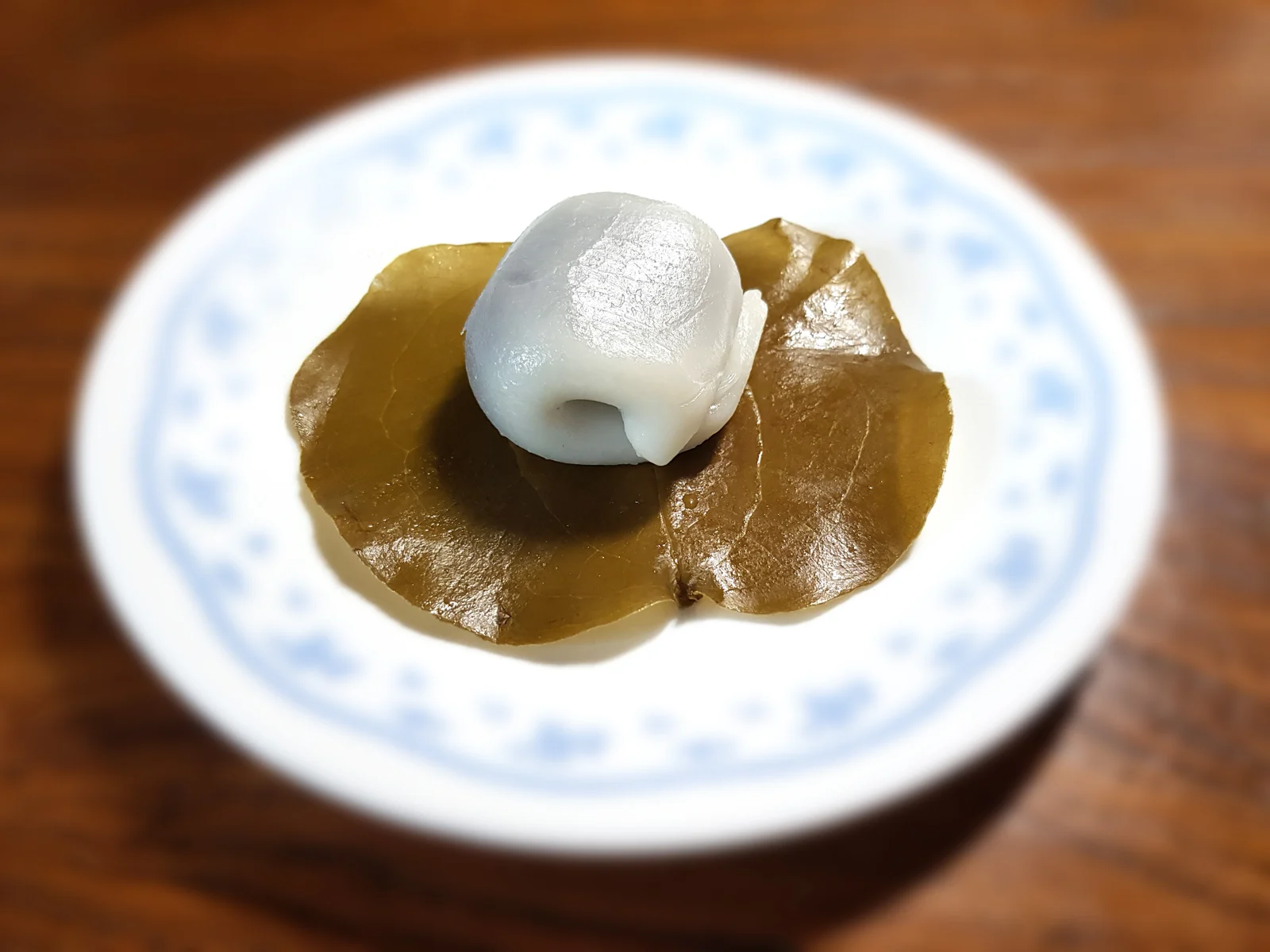
See Soraepogu Festival →Photo: Centrair / Wikimedia Commons — Uiryeong manggaetteok on a greenbrier leaf (CC BY-SA 3.0).
Uiryeong manggaetteok (의령망개떡)
A soft rice cake filled with sweet red-bean paste and wrapped in a greenbrier (Smilax china) leaf, which keeps it from drying out and adds a faint herbal scent. Uiryeong County lists manggaetteok as a signature local product, and 'Uiryeong manggaetteok' is a registered geographical-indication food. Sold at shops around the old town market rather than being a festival-only item.
Uiryeong is known locally for buckwheat noodles, called soba here, served cold with a dipping broth. Long-running noodle houses cluster in the Uiryeong-eup traditional market, and county and regional food coverage name the dish as one of the town's representative foods. No photo is shown because no rights-cleared image was available.
Uiryeong is one of Korea's main greenhouse-watermelon growing areas, farmed on the fertile flats along the Namgang and Nakdong rivers and sold under the county's 'Toyoae' brand. It is a spring-to-summer crop, so it is a regional-fame note rather than something you will buy fresh at an October festival. No photo is shown because no rights-cleared image was available.
Yeongcheon is Korea's largest grape-growing area and its best-known domestic wine region, sometimes called an 'Eastern Bordeaux'; the city's low rainfall and high sunshine suit wine grapes, and roughly 18 wineries operate here. Grape wine is produced under the shared Yeongcheon Wine name (ycwine.or.kr), and the festival runs alongside a dedicated Yeongcheon Wine Festa with tasting and label-decorating. This is a regional product, not a claim about what any single festival stall will pour.
Byeolbit Hanwu is Yeongcheon's local Korean-beef brand, run by the Yeongcheon Livestock Cooperative, which opened a dedicated Hanwu Plaza retail hub in December 2025. During the festival an outdoor grill-restaurant sells Yeongcheon Byeolbit Hanwu on site at a reported 10–30% discount. It is a local specialty recommendation, not a promise about prices or availability on any given day.
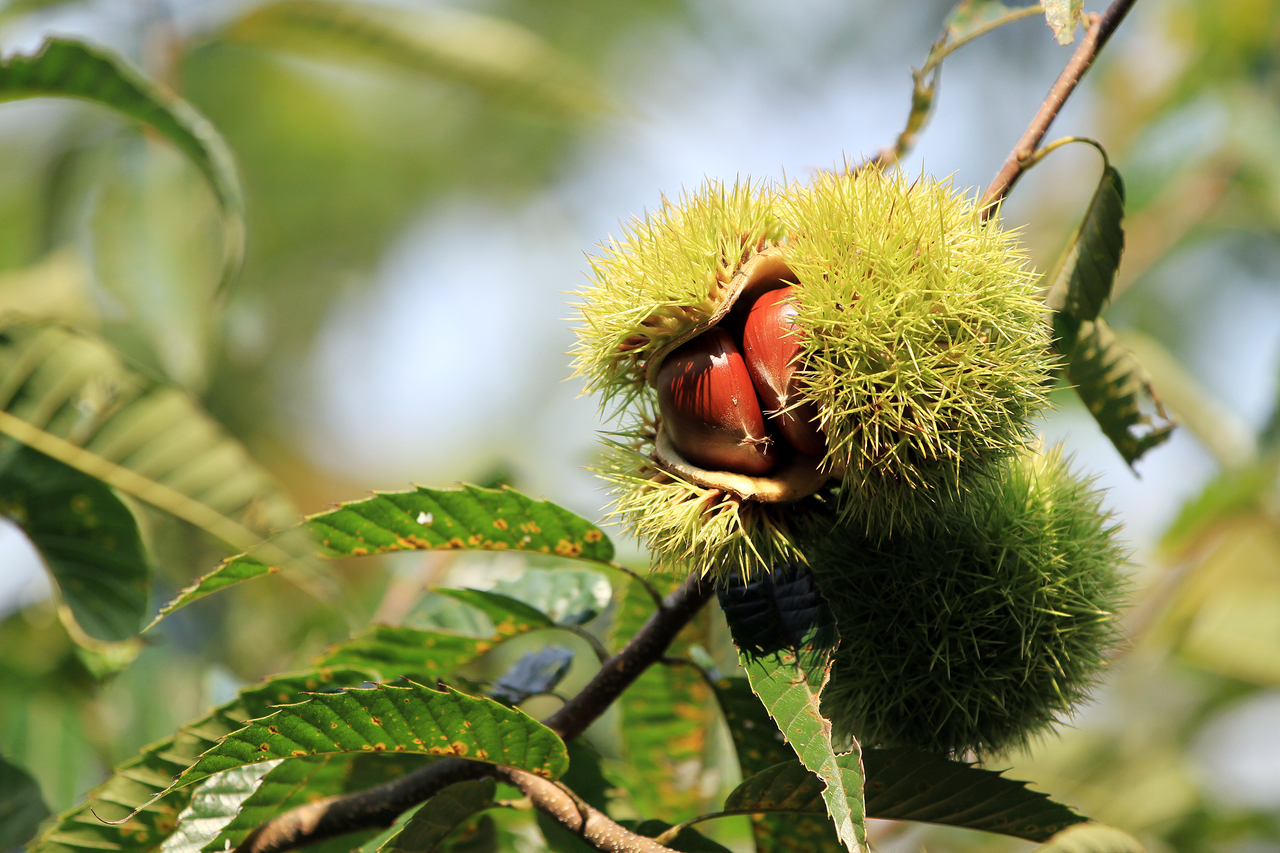
Gongju is one of Korea's best-known chestnut regions, centred on Jeongan-myeon, and 'Jeongan bam' holds national geographical-indication registration (No. 4, granted 2006). The city's chestnut appears fresh in autumn and in processed goods such as chestnut jelly, chestnut honey, cakes and rice-cakes; the festival itself runs chestnut sales and a chestnut-fed Hanwoo beef event. This is a regional specialty of Gongju, not a claim about what any single festival stall will sell.
Chicken marinated in a red chilli-paste sauce and stir-fried on a hot plate with cabbage, sweet potato, rice cake and other vegetables. Chuncheon's tourism office lists it as the city's representative local food, and the Myeongdong Dakgalbi Alley in the downtown grew up around it from the 1970s-80s. This is a city specialty, not a promise about what the festival's own food stalls will sell.
Cold buckwheat noodles, served either tossed in a spicy sauce or in a chilled broth. Chuncheon's tourism portal names it as a second representative local food alongside dakgalbi, and many dakgalbi restaurants serve it as the noodle course. Buckwheat suits the Gangwon highlands, which is part of why the dish is tied to this area.
Jinju City's tourism office identifies this as a local dish, also called chilbo-hwaban for its flower-like arrangement. Its documented local form combines rice, assorted seasoned vegetables, mung-bean jelly, seaweed, raw beef and a clam-based sauce; this is a city specialty, not a claim about food sold at the event.
Jinju City's tourism office identifies this composed rice dish as a local food and also calls it chilbo-hwaban, or a flower-like bowl. A common local version is topped with seasoned vegetables and raw beef; it is a city specialty, not a promise about what temporary festival stalls will serve.
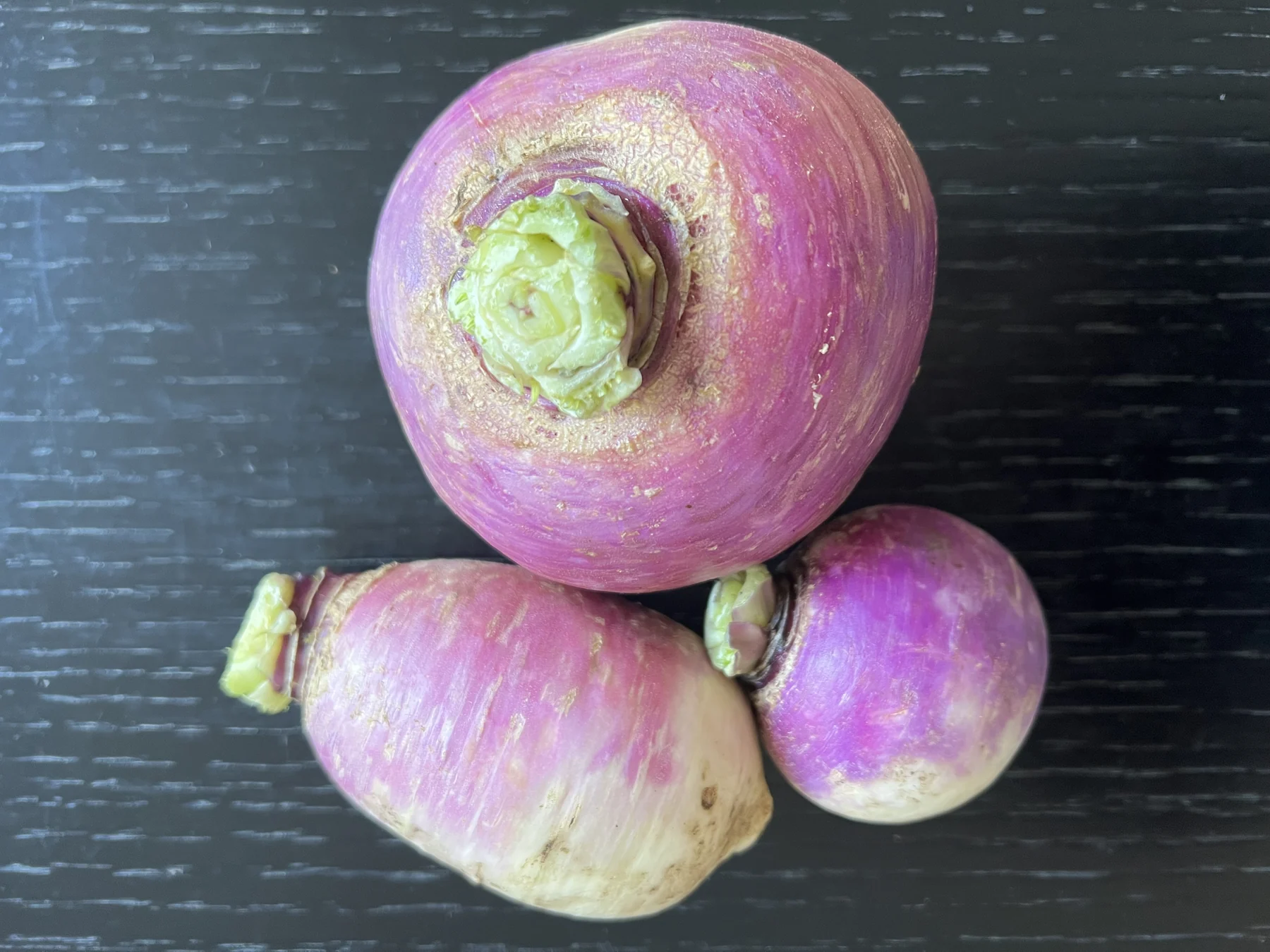
See Jinju Namgang Lantern Festival →Photo: HaJunkiyada / Wikimedia Commons (CC BY-SA 4.0); representative purple-top turnips, not verified Ganghwa-grown produce
Ganghwa turnip (강화순무)
Ganghwa County identifies its turnip as a local specialty: a rounded root with a violet upper section, a pale lower section and a sweet, mustard-like edge. Turnip kimchi is the usual local preparation. The photograph shows the same purple-top type for identification, not produce from a verified Ganghwa farm and not a promise that it will be sold at the festival.
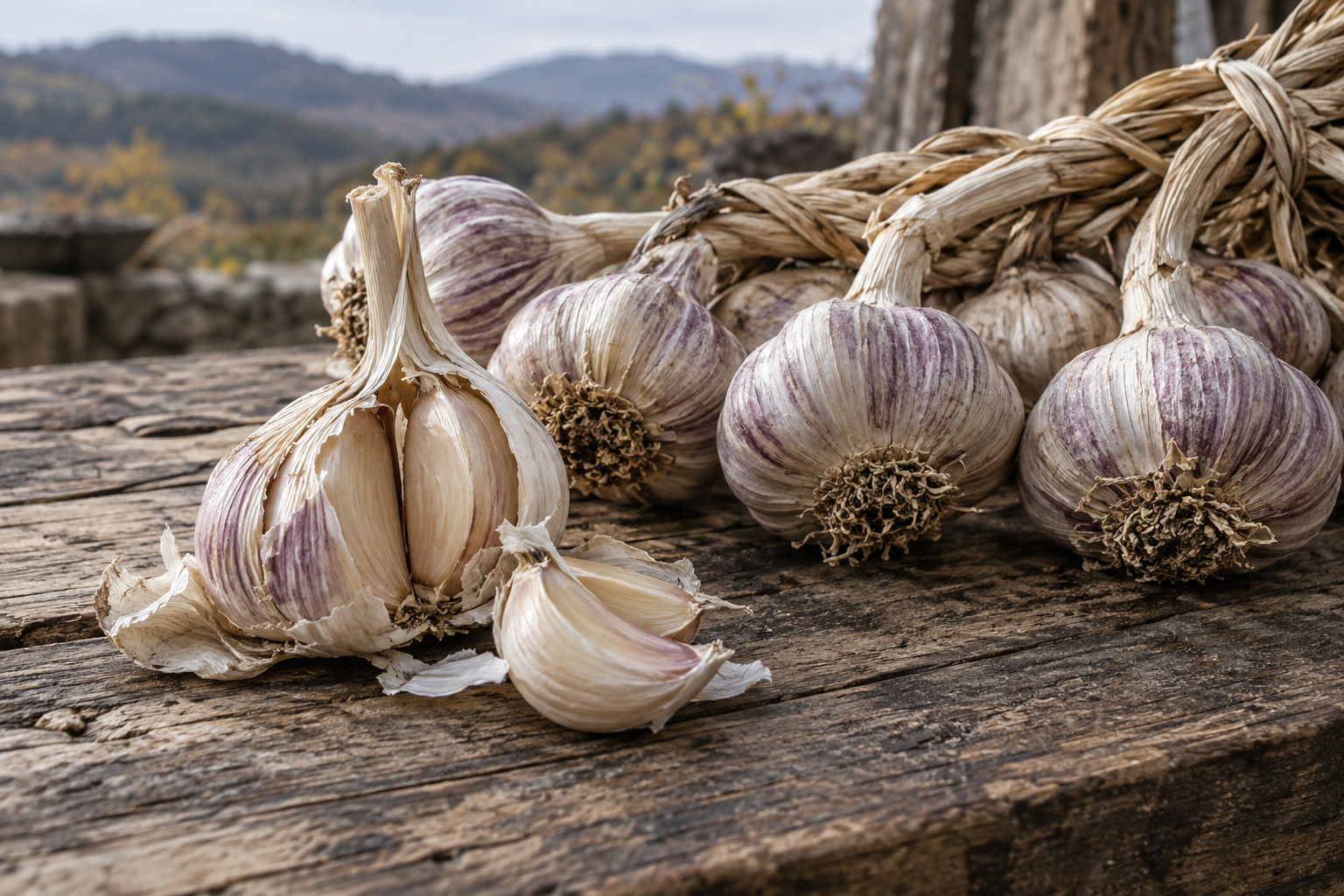
Uiseong is Korea's largest producer of hanji (northern-type) garlic, grown by roughly 1,485 farms on about 781 hectares. The bulbs are prized for firm cloves, strong storage life and a high allicin content. The county markets it as a specialty year-round and runs a Garlic Museum and a Garlic Experience Hall in Uiseong; it is the region's signature product, not a promise about any single festival stall.
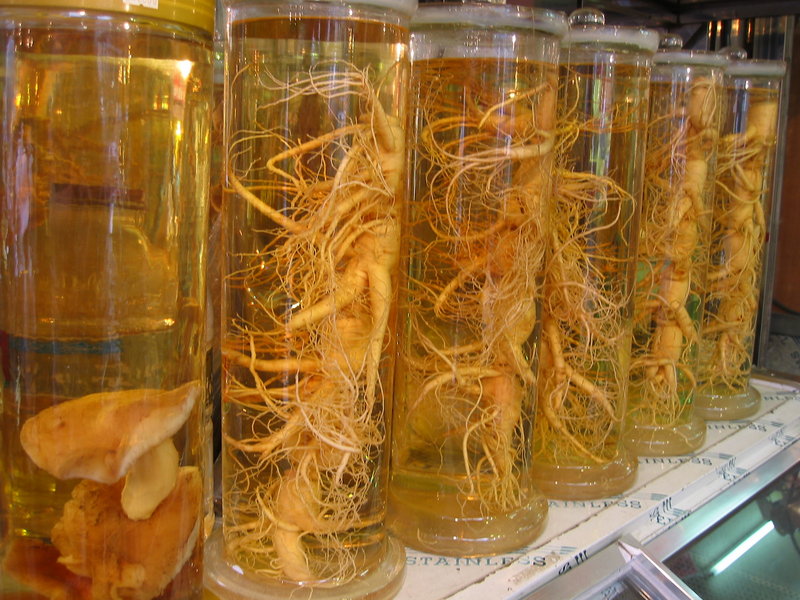
See Uiseong Super Food Garlic Festival →Photo: Richardfabi, 'Ginseng in a market in Korea', via Wikimedia Commons (CC BY-SA 3.0). Shows Korean ginseng roots at a market, not a Punggi-specific stall.
Punggi ginseng (풍기인삼)
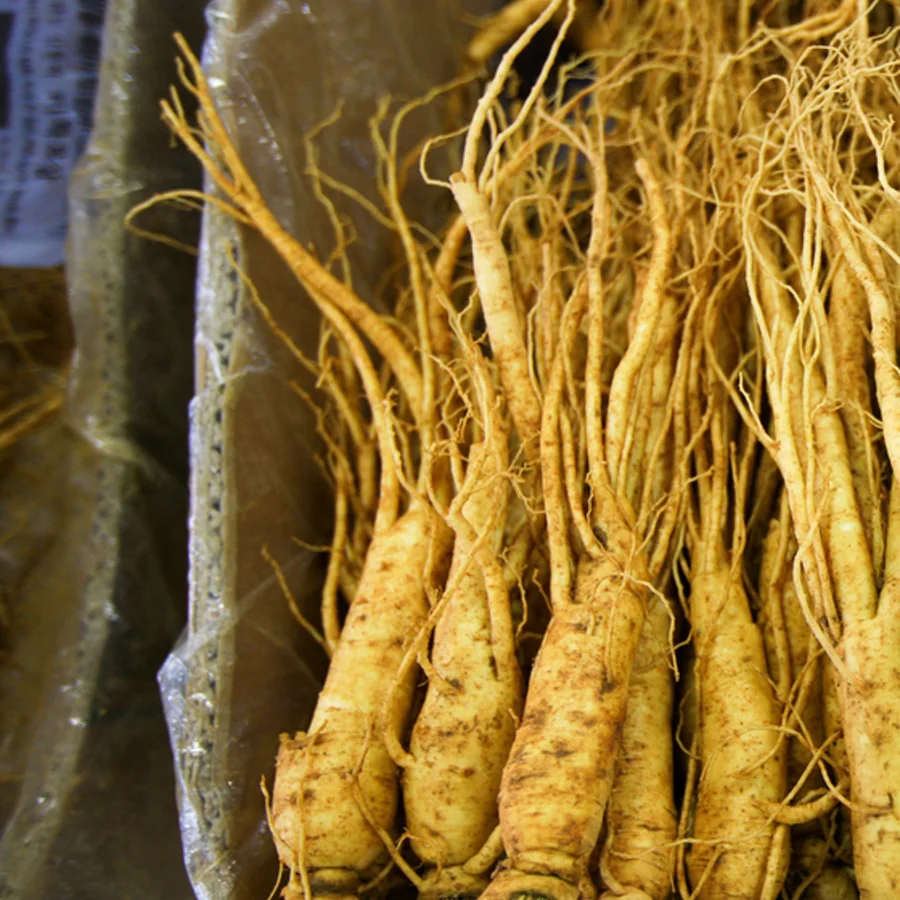
The reason the festival exists. Punggi ginseng is a registered geographical-indication product: only ginseng grown in Yeongju may be sold under the Punggi name. Yeongju's agricultural pages credit the sandy, organic-rich soil and cold continental climate of the Sobaeksan foothills for a hard-fleshed root with a high saponin content. Cultivation here is traced to 1541, when the magistrate Ju Se-bung is said to have first trial-grown ginseng in the county — the same figure the festival's procession reenacts.
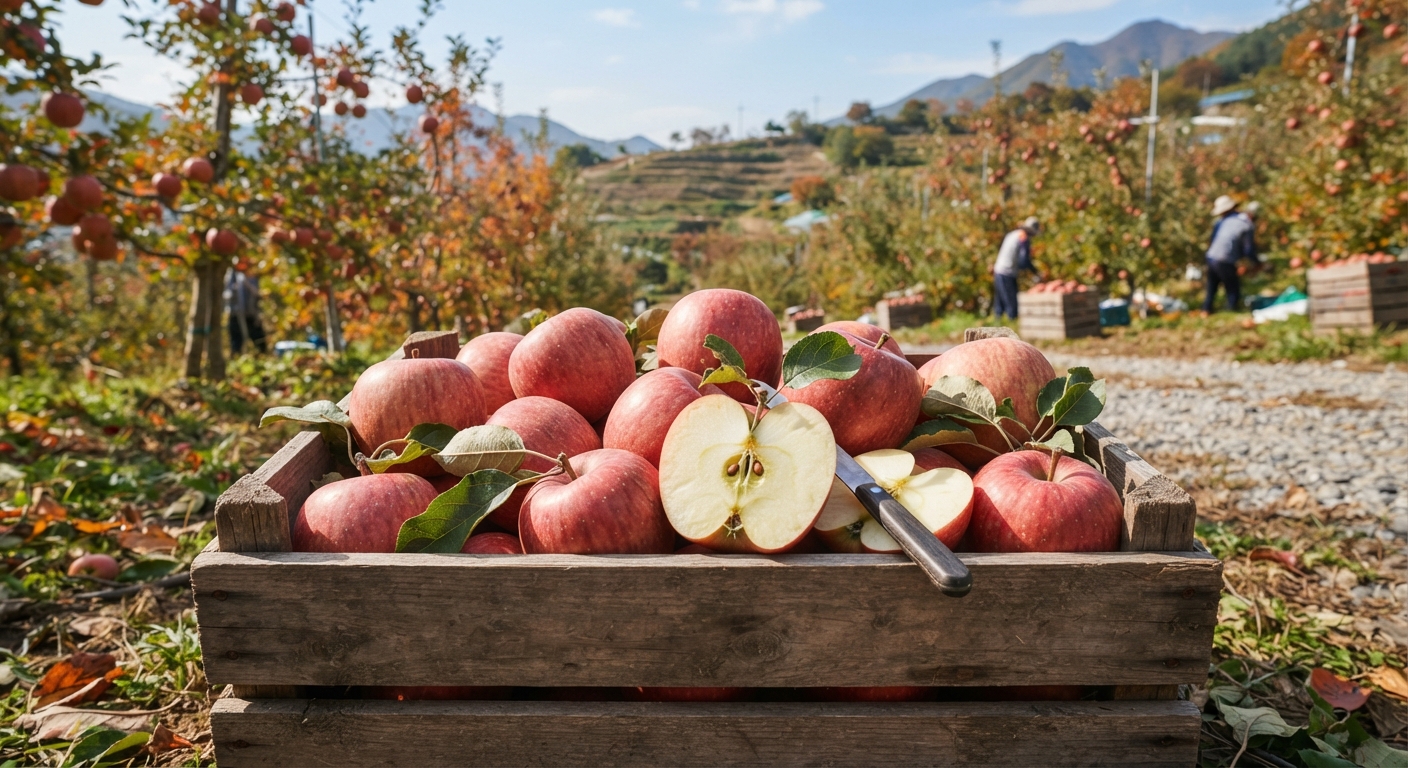
Yeongju is one of Korea's largest apple-growing districts, with high-altitude orchards on the southern slopes of Sobaeksan. Yeongju apple is registered as a geographical-indication agricultural product (No. 54, 2009). The wide day-night temperature swing at altitude is the quality Yeongju growers point to. The city runs a separate apple festival, and the two crops are promoted together, so October is apple season here as much as ginseng season.
Suwon wanggalbi (Suwon-style beef short ribs) (수원왕갈비)
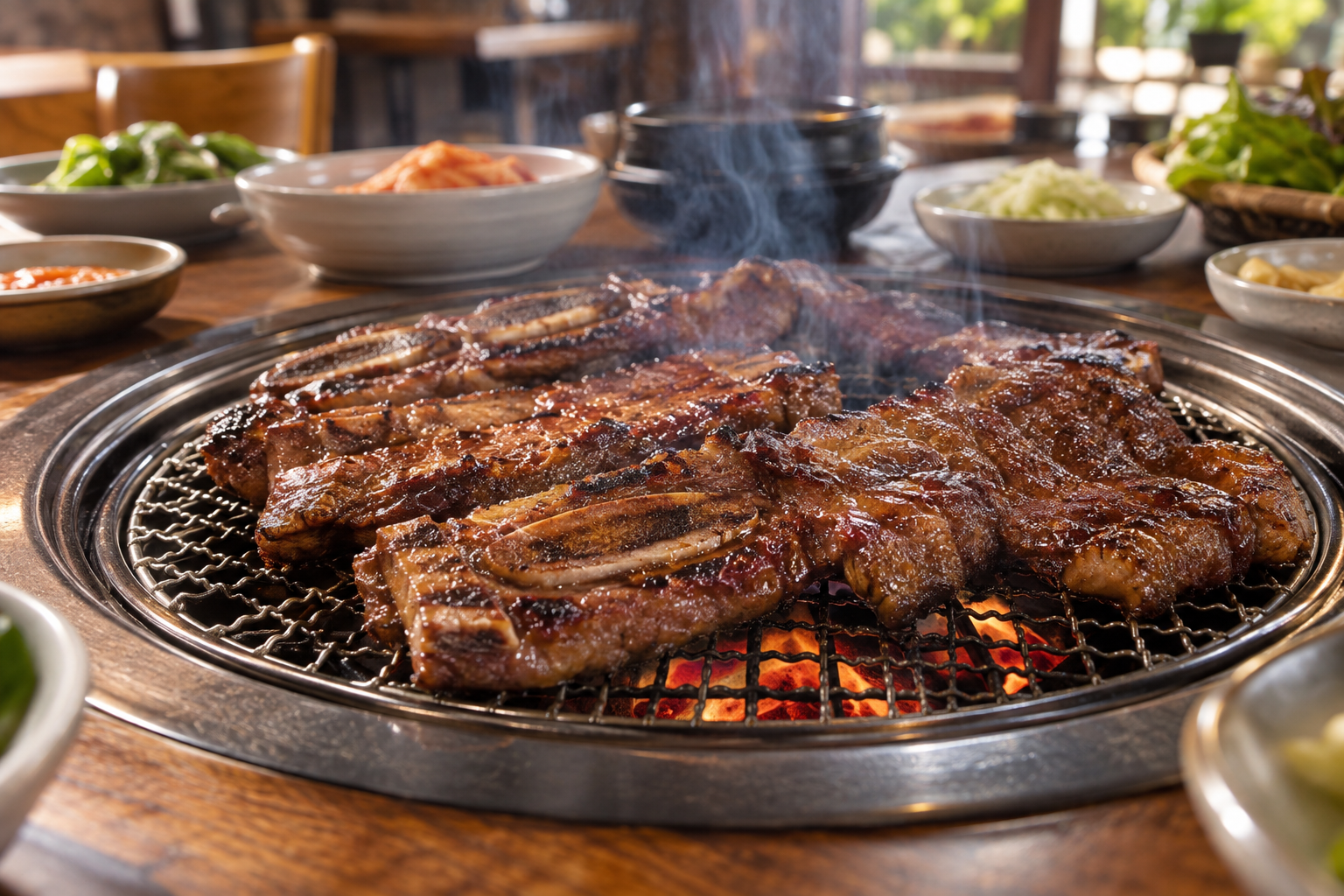
Suwon's best-known food. The Korea Tourism Organization and Gyeonggi Province trace the style to a 1940s Yeongdong Market restaurant, and Suwon City designated Suwon galbi an official local specialty in April 1985. It is grilled over hardwood charcoal in unusually large cuts — the reason for the 'wang' (king) nickname — and traditionally seasoned with salt rather than a heavy sweet soy marinade. This is a city specialty, not a claim about what any temporary stall will serve.
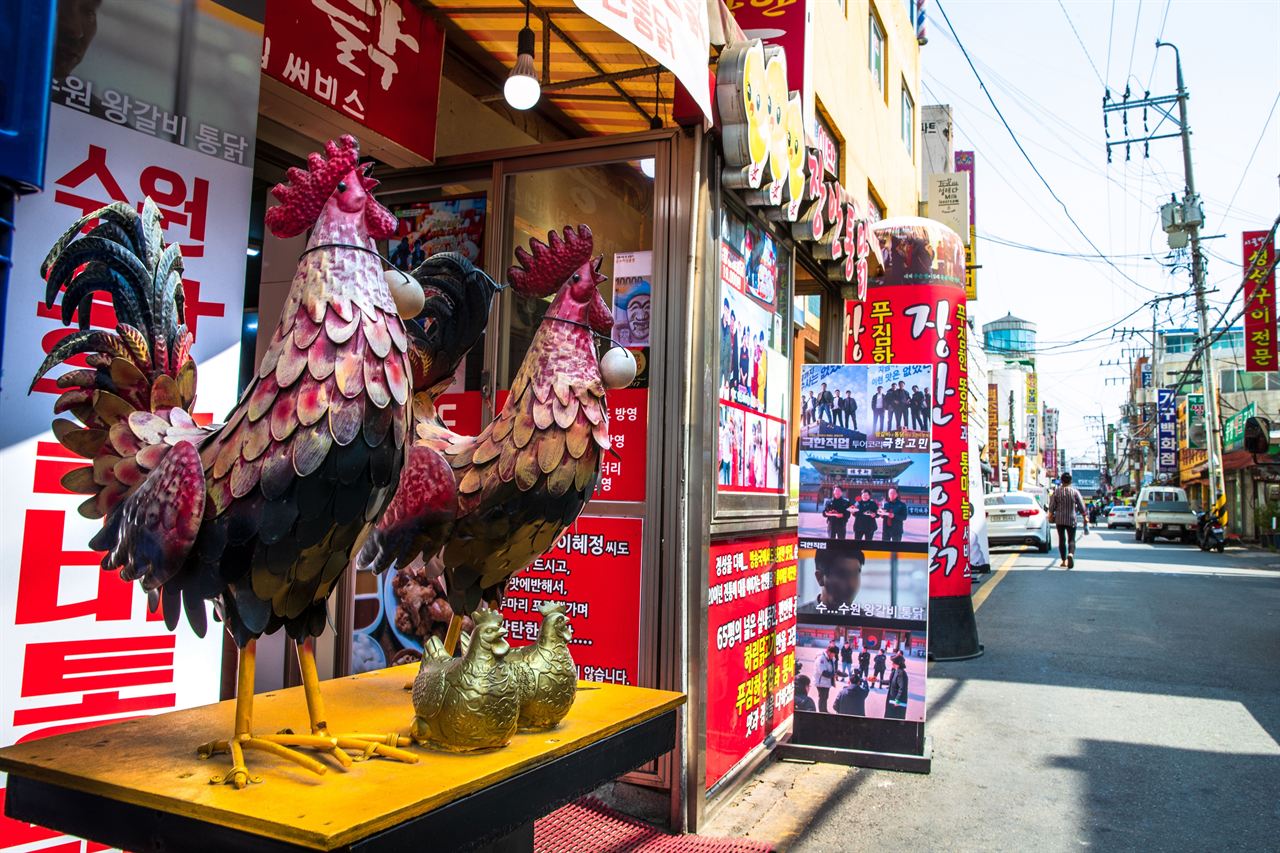
A cluster of long-running fried-chicken shops near Paldalmun and Jidong Market, a short walk from the festival area. The Korea Tourism Organization lists it as one of Suwon's food-theme streets, and it featured in September 2026 coverage of Suwon as a regional food destination. Whole fried chicken here is typically cooked in a large cauldron; it is a neighbourhood eating tradition rather than a festival programme.
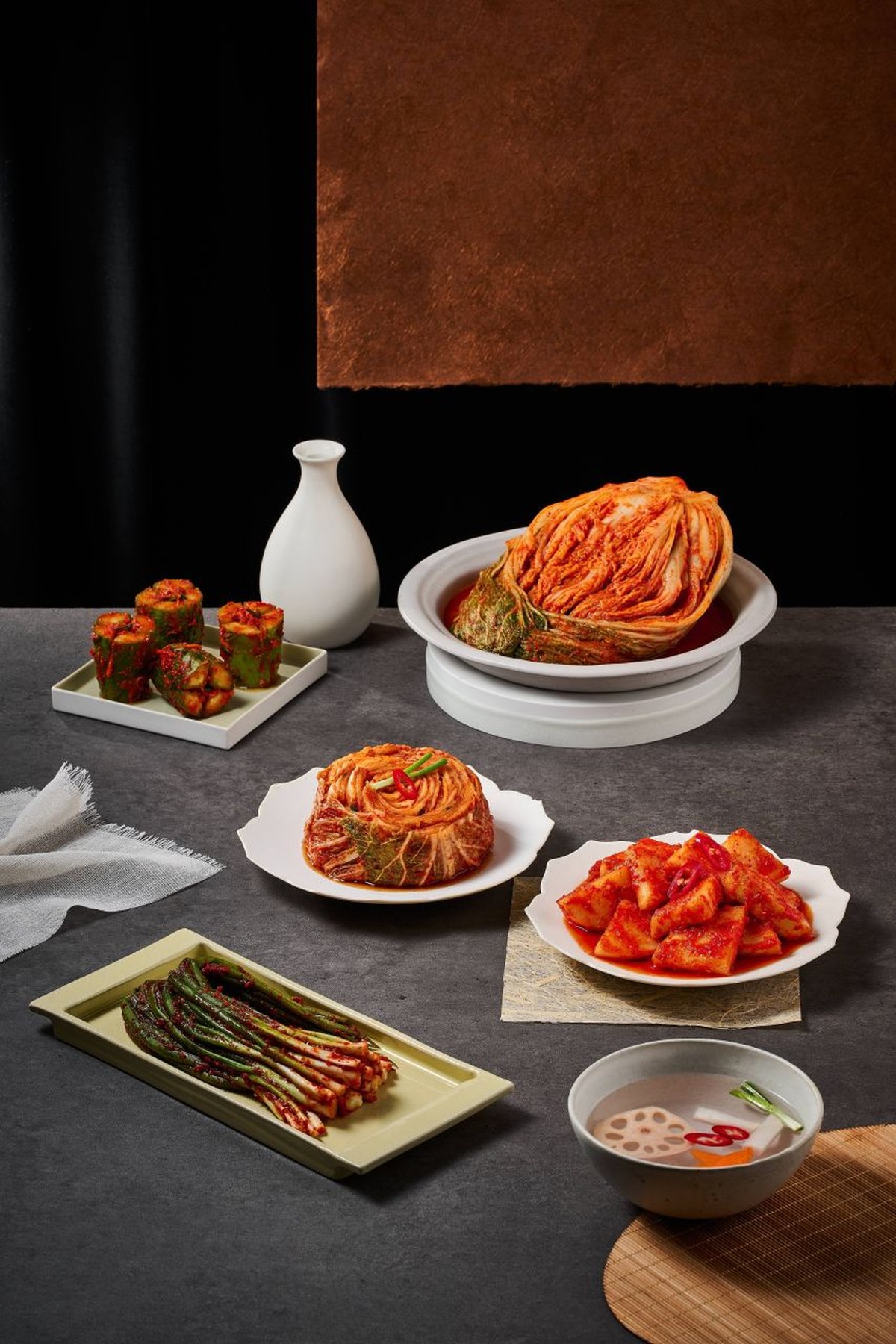
Gwangju City's tourism office lists kimchi as a representative local product, describing the local style as generously seasoned with the region's vegetables, anchovy sauce and glutinous-rice paste. Gwangju leans hard on this identity — it runs an annual kimchi festival and a dedicated Kimchi Town in Nam-gu. This is a city specialty to seek out in restaurants, not a promise about what temporary festival stalls will serve.
Grown on the slopes of Mudeungsan, this is a large, thick-rinded watermelon that Gwangju City's tourism office lists among its representative specialties; historically it was sent as tribute to the royal court. It is a niche, seasonal, expensive product that appears from around mid-September, so its harvest window overlaps the festival dates. No verified reusable photograph was found, so this entry carries a description only.
Hoengseong is the county most closely tied to hanwoo, Korea's native beef. It is a geographically indicated product, the town historically held one of the country's largest cattle markets, and the local climate of clean water and sharp day-night temperature swings is credited with the quality. This is the region's defining specialty in its own right, not just what the festival happens to serve.
Naju's best-known agricultural product. The wide Naju plain along the Yeongsan River is one of Korea's signature pear-growing districts, and the fruit — large, round, russet-skinned Asian pears with crisp, sweet white flesh — is a Naju specialty rather than something invented for the festival. The 2026 event runs a Naju Agriculture Festa where regional produce is sold.
A clear beef-bone soup with sliced beef and rice, associated with Naju's old market district and listed among the city's representative local foods. Unlike milkier bone soups, Naju gomtang is known for a comparatively clear broth. It is a year-round local dish, not a festival stall menu.
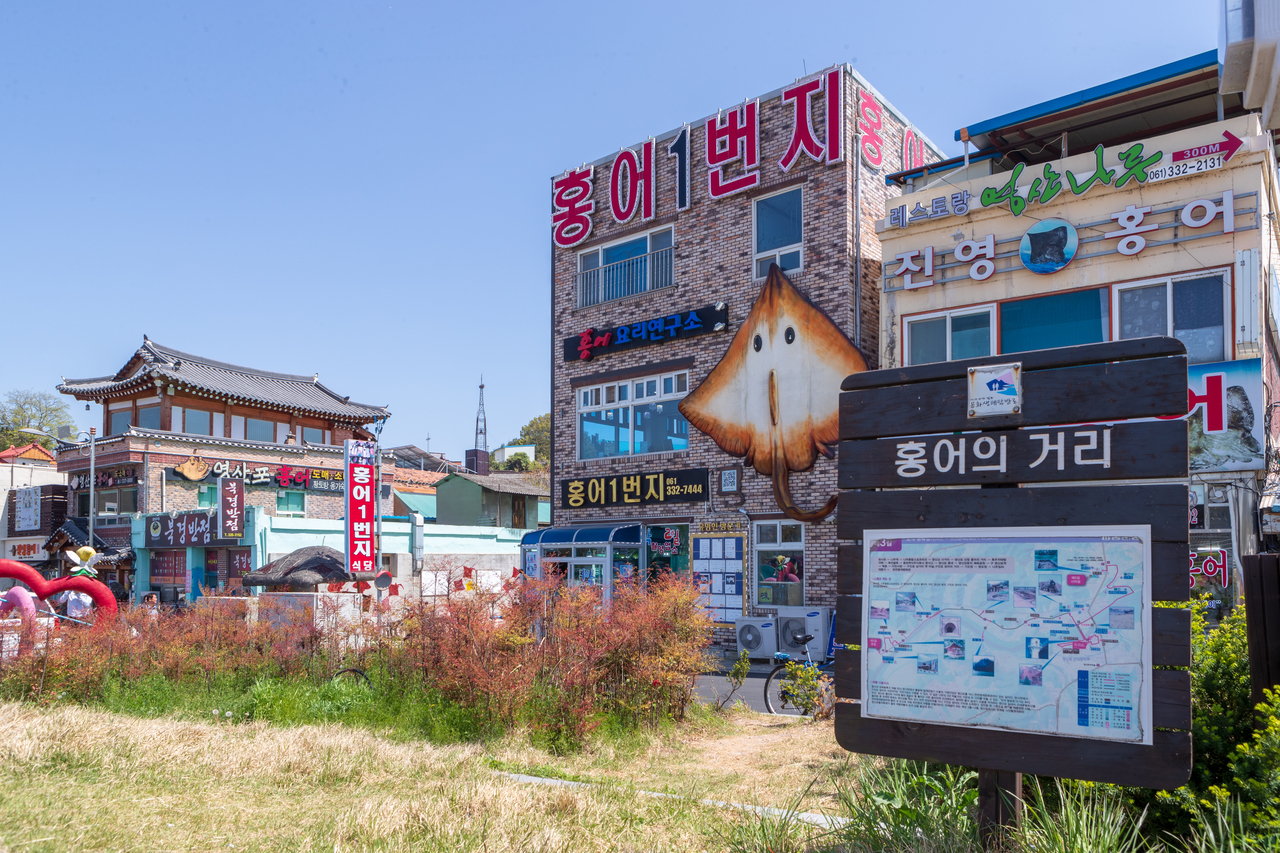
Yeongsanpo, the old river port inside Naju, is the historic centre of Korea's fermented-skate trade, with a dedicated 'Hongeo Street' of specialist restaurants and shops. The dish has a strong ammonia pungency that is an acquired taste; approach it as a regional curiosity, not a crowd-pleaser.
The Gangwon provincial wiki lists six-year ginseng as one of Hongcheon's five signature products and says the county accounts for about a third (33%) of the province's six-year ginseng output. It is also the subject of this festival, so it is the one local product you can compare directly at the producers' stalls.
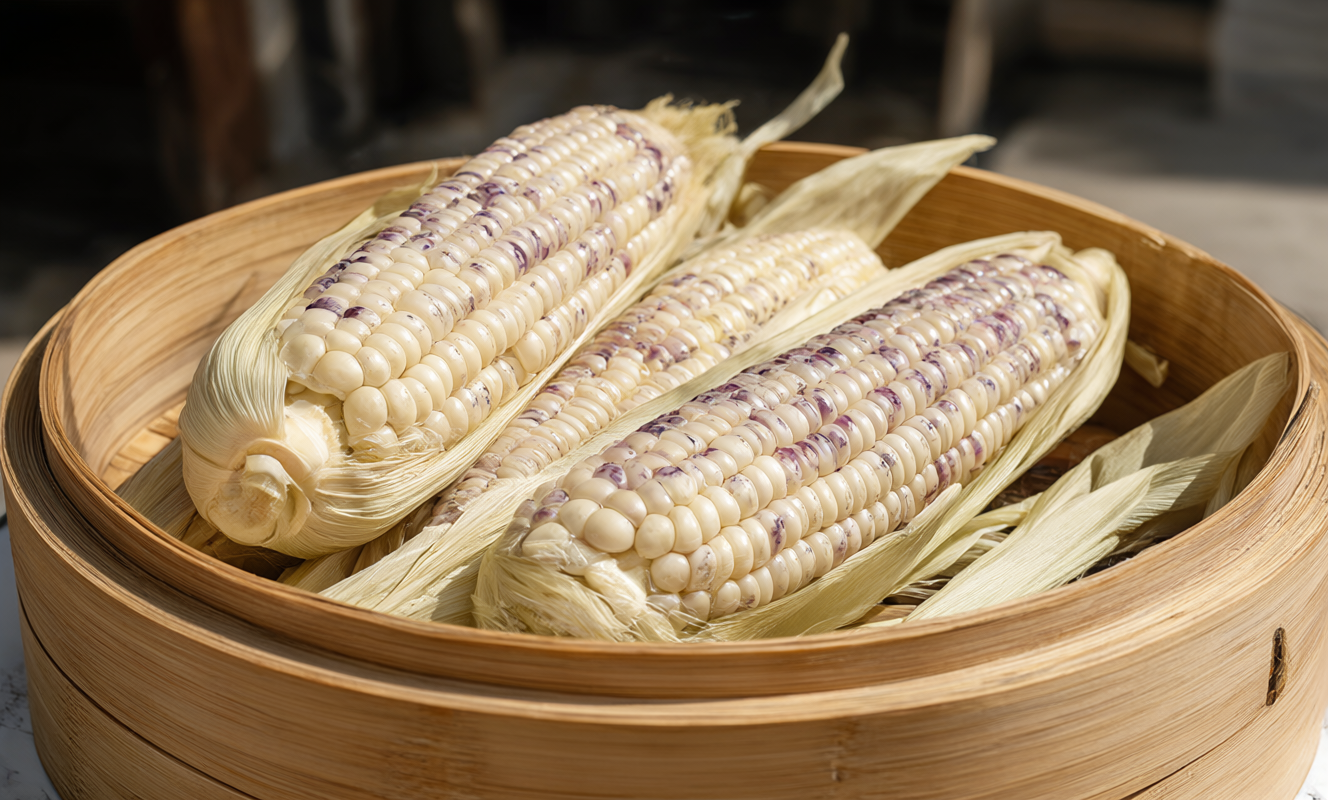
The same provincial wiki names waxy corn among Hongcheon's five signature products, and the county holds its own corn festival in summer. It is a late-summer crop, so do not expect it to be the focus of an October ginseng and beef event.
Imsil is Korea's first cheese-producing region, and both the county and the Korea Tourism Organization identify Imsil cheese as its signature product. It is sold as fresh curd and aged cheese and, in a form popular at markets, as grilled cheese sticks. This is a regional specialty, not a claim about which 2026 festival stalls will sell it.
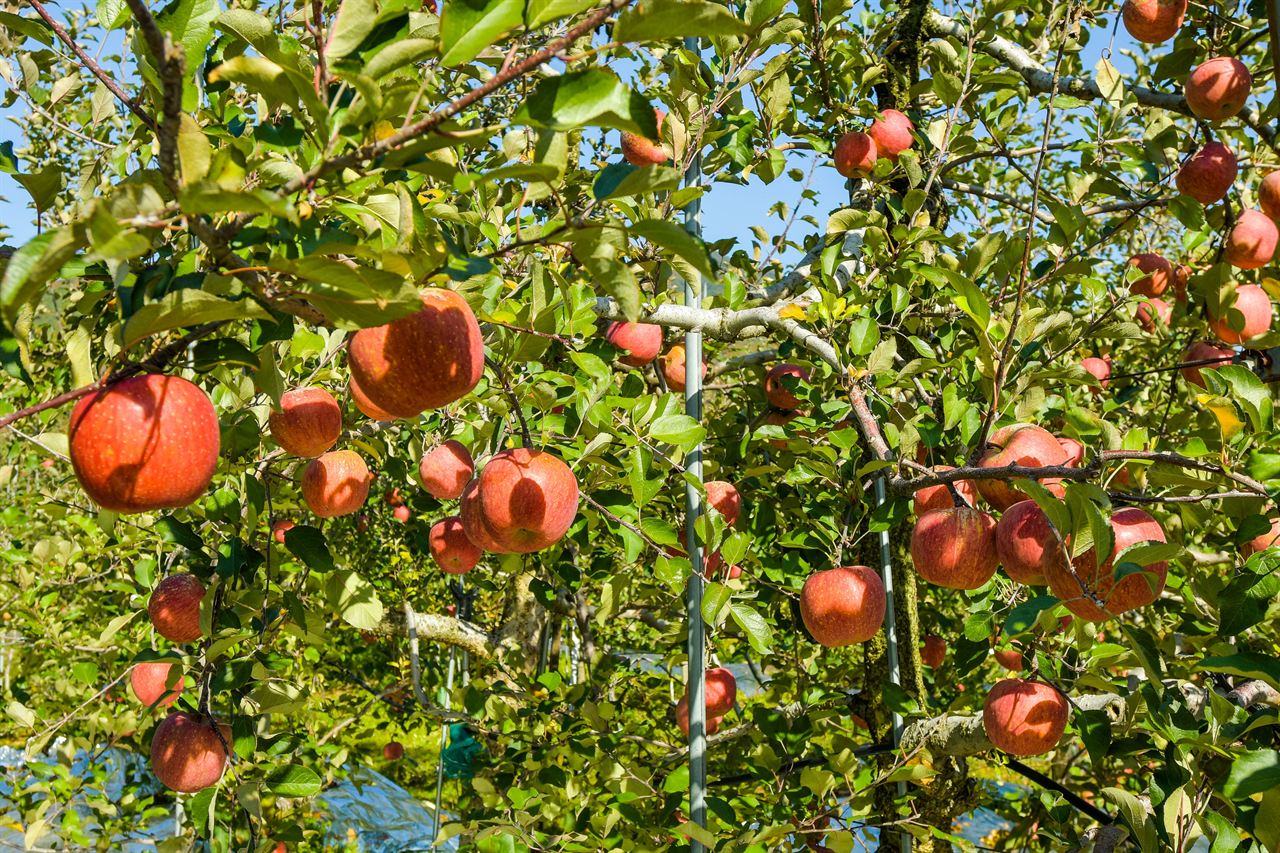
Jangseong-gun's tourism office lists the apple as a county specialty, describing local growing conditions well suited to the fruit and typical sweetness of about 16-17 Brix, with quality control run through the county agricultural cooperative. This is a regional product recommendation, not a claim that festival stalls will sell it.
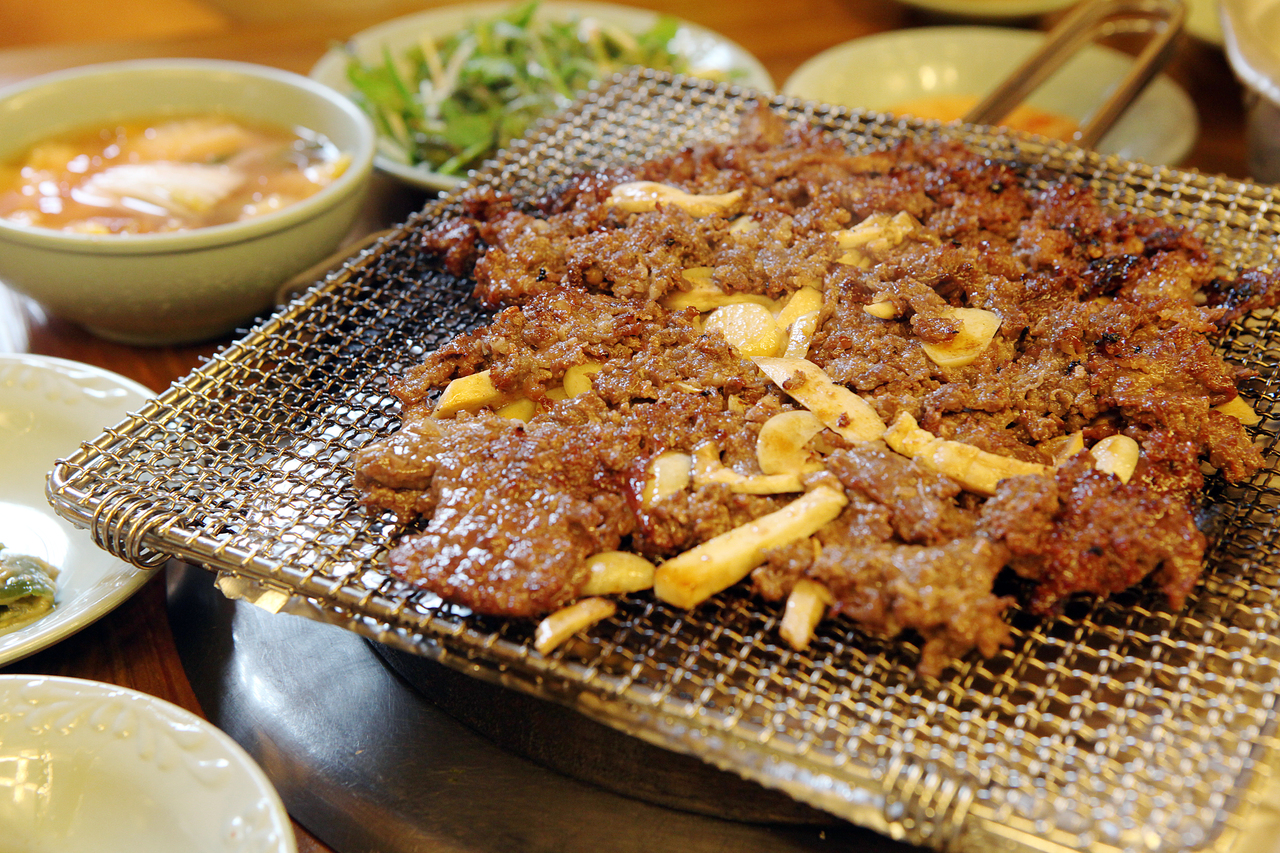
Thinly sliced, lightly seasoned Korean beef grilled over charcoal on a fine wire mesh, the signature dish of Ulsan's Ulju-gun. The Eonyang and Bonggye areas grew into a beef-grilling district on the grasslands below the Yeongnam Alps; Eonyang bulgogi was recognised as a local specialty food in 1988 and Ulju-gun designated the Eonyang–Bonggye hanu bulgogi zone as a special district in 2006.
See Ulsan Industrial Festival →Photo: Fir0002 / Wikimedia Commons, CC BY-SA 3.0. An Asian pear (Pyrus pyrifolia), the type grown in Ulju.
Ulju (Seosaeng) pear (울주 서생 배)
Ulju-gun is a long-established pear-growing area, and the pears from Seosaeng, on the coast near Ganjeolgot, were the first pears registered under Korea's geographical-indication system. Grown with strong sunshine and sea breeze off the East Sea, they are prized for firm, sweet, juicy flesh, sold under local brands such as Ulsan Bobae and Seosaeng Ganjeolgot pear.
See Ulsan Industrial Festival →Photo: Korea Tourism Organization / Live Studio (KOGL Type 1). Representative Korean apples, not a specific Chungju orchard.
Chungju apple (충주사과)
Chungju is one of Korea's leading apple-growing areas — the crop has been cultivated here since 1912, and Chungju apple was registered as a protected geographical indication in 2006. The city's agricultural office credits the wide day-night temperature range and strong sunshine for the fruit's colour and sweetness. This is a regional specialty to look for in the festival's farm-produce market and around the city, not a claim about a particular stall.
A Chuncheon local dish of chicken cooked with a red pepper-based seasoning and vegetables, commonly prepared together on a wide pan. Chuncheon City's tourism portal identifies its Myeongdong Dakgalbi Alley as a place for the city's representative dakgalbi; this is a regional-food recommendation, not a claim that the festival sells it.
Chuncheon City identifies potatoes as one of the city's representative agricultural specialties and runs the separate Chuncheon Potato Festa around the crop. This entry refers to locally grown potatoes, not to a promise that raw produce or a particular potato dish will be sold at the coffee festival.
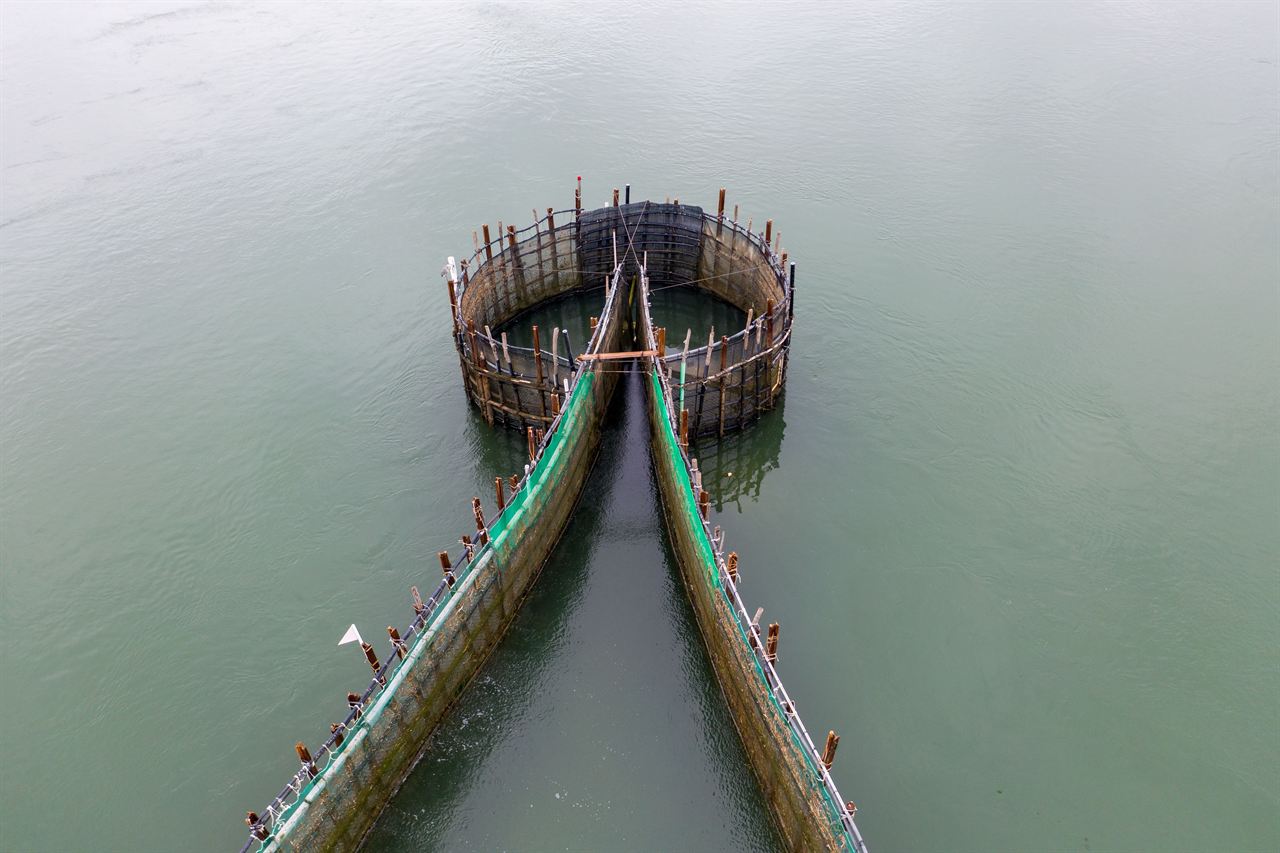
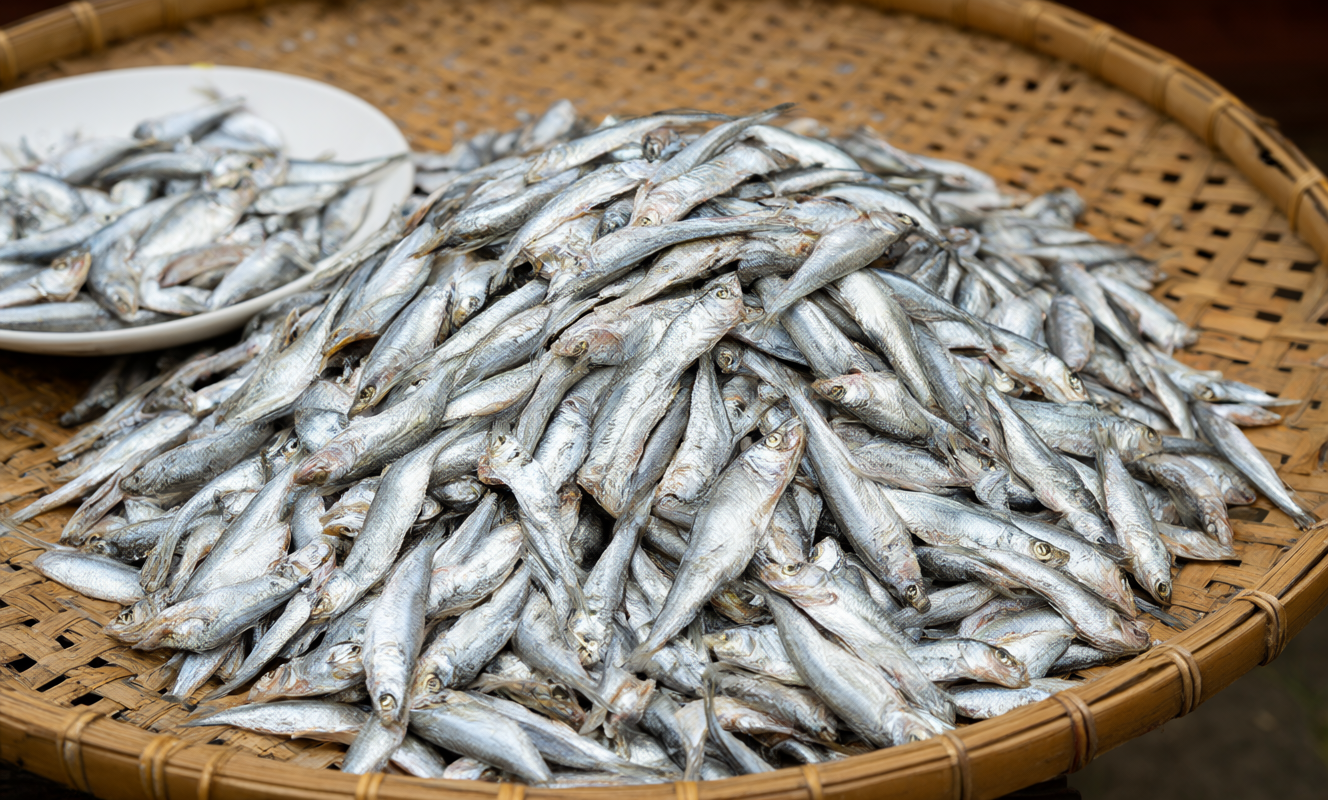
Anchovies caught in V-shaped bamboo-stake fish weirs set in the Jijok Strait off Namhae. The weir fishery is a designated Important National Fisheries Heritage site, and the catch is regarded locally as a premium anchovy. This photo shows one of the weirs, not the fish itself. A regional specialty, not a promise about what the festival stalls will serve.
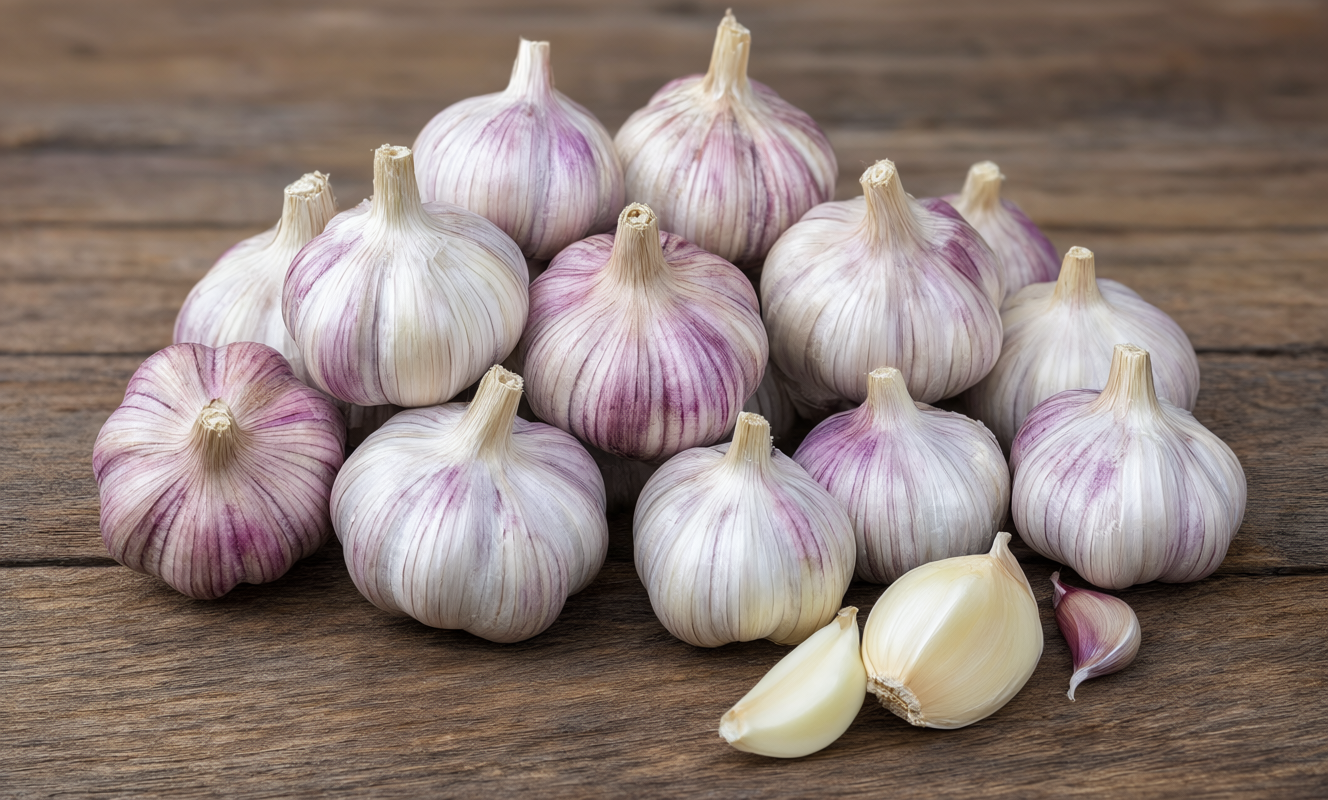
Namhae County lists garlic as one of its main crops; the local variety is mainly Namdo garlic, described by the county as sharp and pungent and well suited to kimchi seasoning. It is registered as Geographical Indication No. 28. The festival's food page lists Namhae garlic pork belly among its stalls, but we cannot say which vendors will be open. The image is an illustration of garlic in general, not a photo of Namhae garlic.
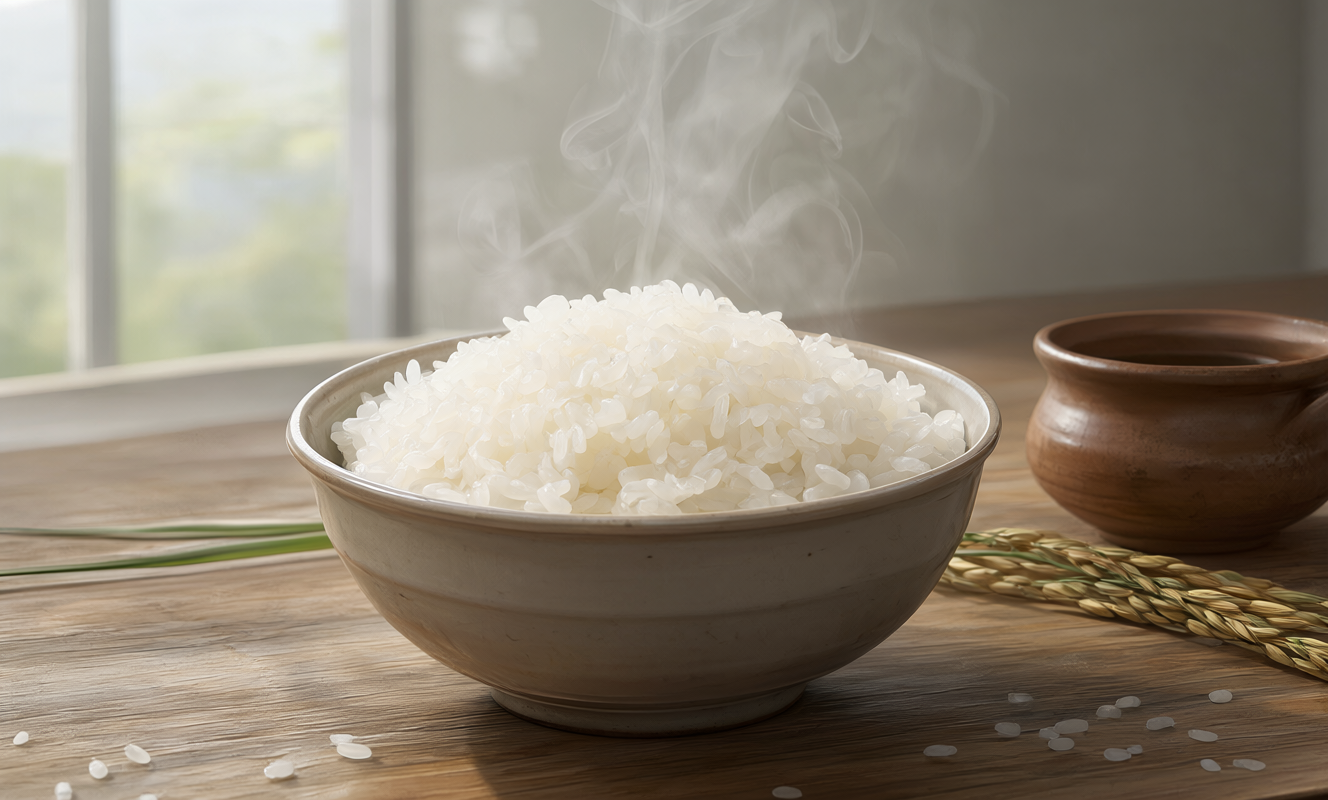
Icheon rice is the city's best-known farm product. Korean press describe it as Joseon-era tribute rice for the royal table, sold since the early 1990s under the Imgeumnim-pyo ("King's brand") label, and in 2005 it became the first rice registered under Korea's geographical-indication system. It is a regional product, not a claim that the festival sells it.
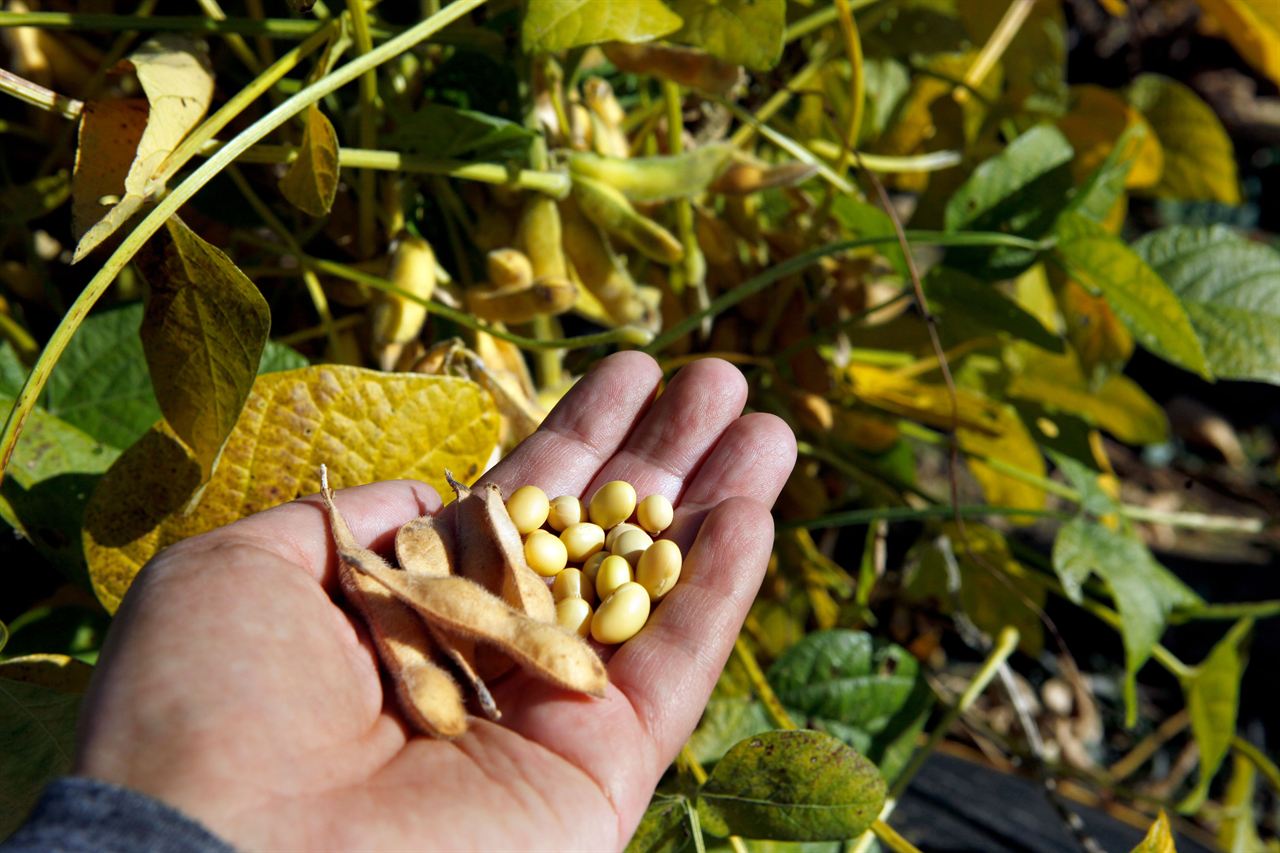
Paju is known for Jangdan soybeans, named after the Jangdan area. Paju City's tourism listing and Korea's national culture portal both present them as a local product, and the older 'Jangdan three whites' (soybean, rice and ginseng) are cited as the city's traditional specialties. They are a regional product, not a promise that any festival stall will sell them.
Sejong's Jochiwon district has grown peaches for more than a century — the city traces cultivation to an early-1900s experimental orchard — and 'Jochiwon peach' was registered as a geographical-indication collective mark in 2018. It is a summer fruit, harvested roughly July to August, so it is out of season during the October festival; this is a regional specialty to know about, not something the festival stalls will be selling fresh.
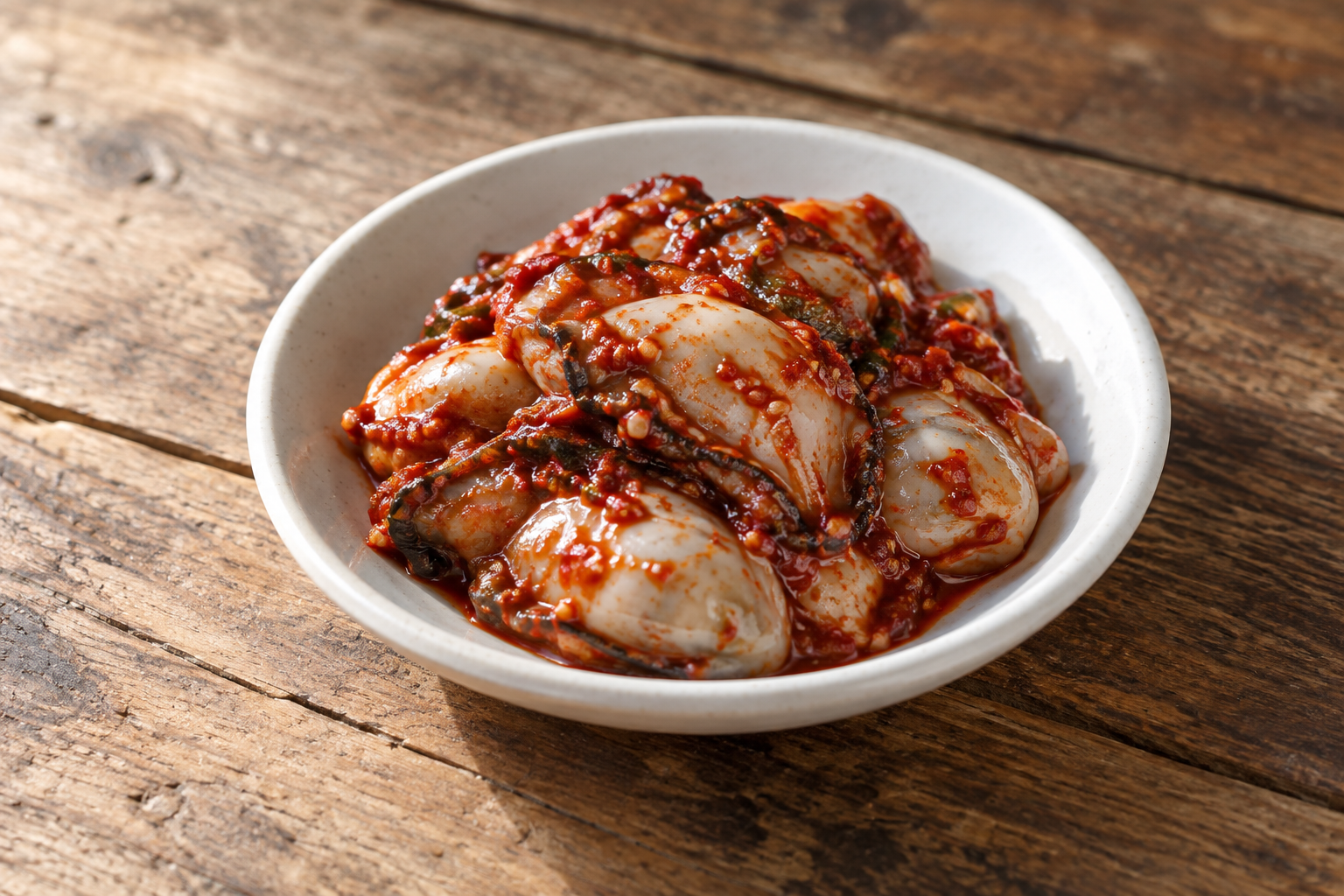
Spicy salted oysters from Ganwol Island in Seosan, seasoned with chili powder. Seosan City lists it as a local specialty, and it appears in Korean records as a tribute food sent to the Joseon court. This is a Seosan regional dish, not a promise about what festival stalls will sell.
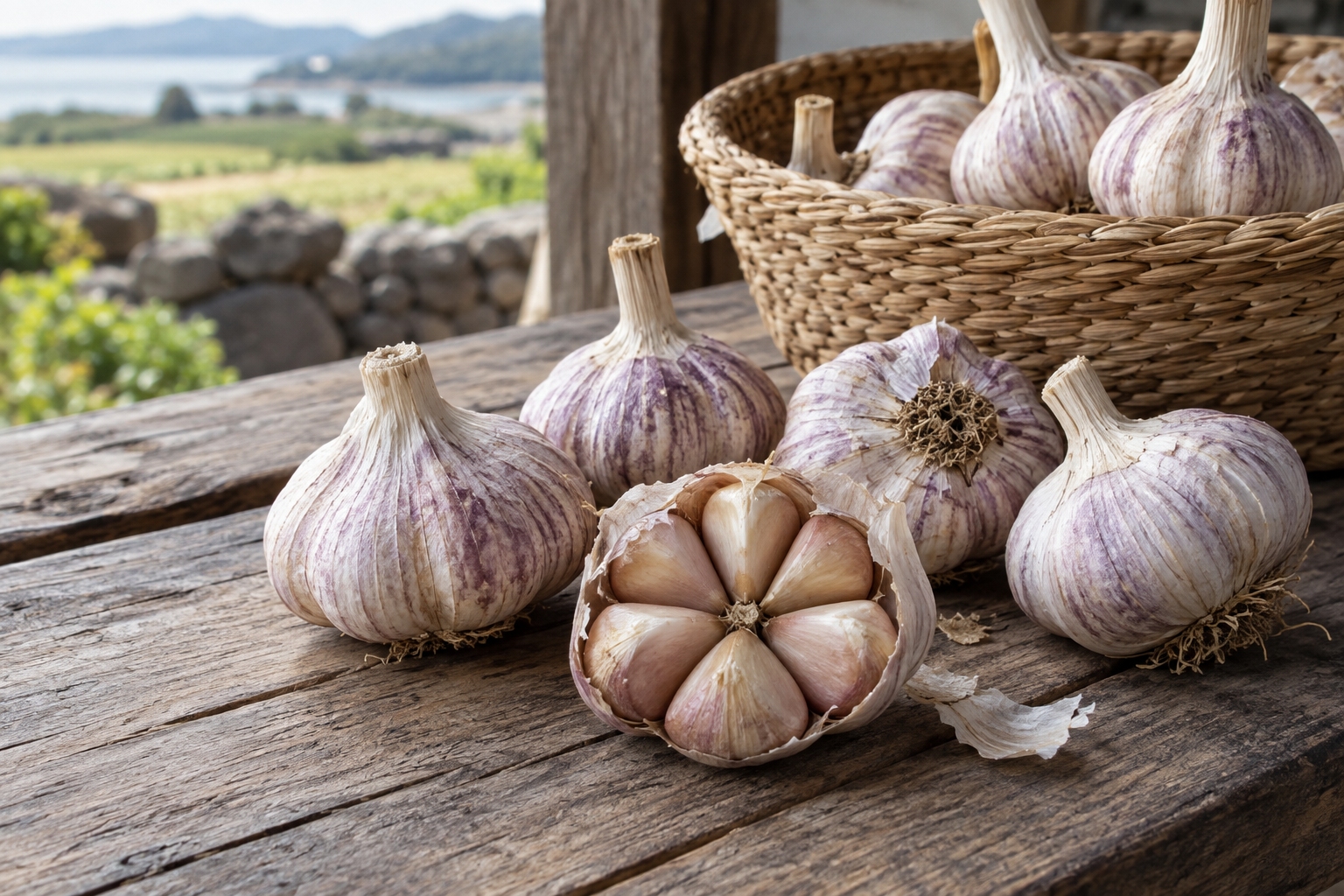
A firm, purple-streaked garlic that reliably forms six cloves per bulb. In March 2005 it became the first Korean farm product to register a geographical-indication collective mark, and Seosan City lists it among the city's representative specialties. It is a regional produce recommendation, not a festival stall listing.
Kimchi made from Dolsan mustard leaf, grown on Dolsan Island in Yeosu. Yeosu City lists it among its Ten Tastes, and both Dolsan mustard leaf and the kimchi made from it are registered as geographical indications (2010). It has a sharper, more peppery bite than cabbage kimchi. It is a city specialty, not a promise about what the festival's weekend stalls will sell.
Gurye is the country's leading sansuyu district and supplies well over half of the national crop; 'Gurye Sansuyu' was registered as a geographical-indication forestry product in 2008. The small red fruit is dried and used mainly in teas and traditional medicine rather than eaten fresh, and the hillside sansuyu villages north of the town turn bright yellow when the trees flower in early spring. This is a regional specialty of Gurye, not a claim about what is sold at the temple.
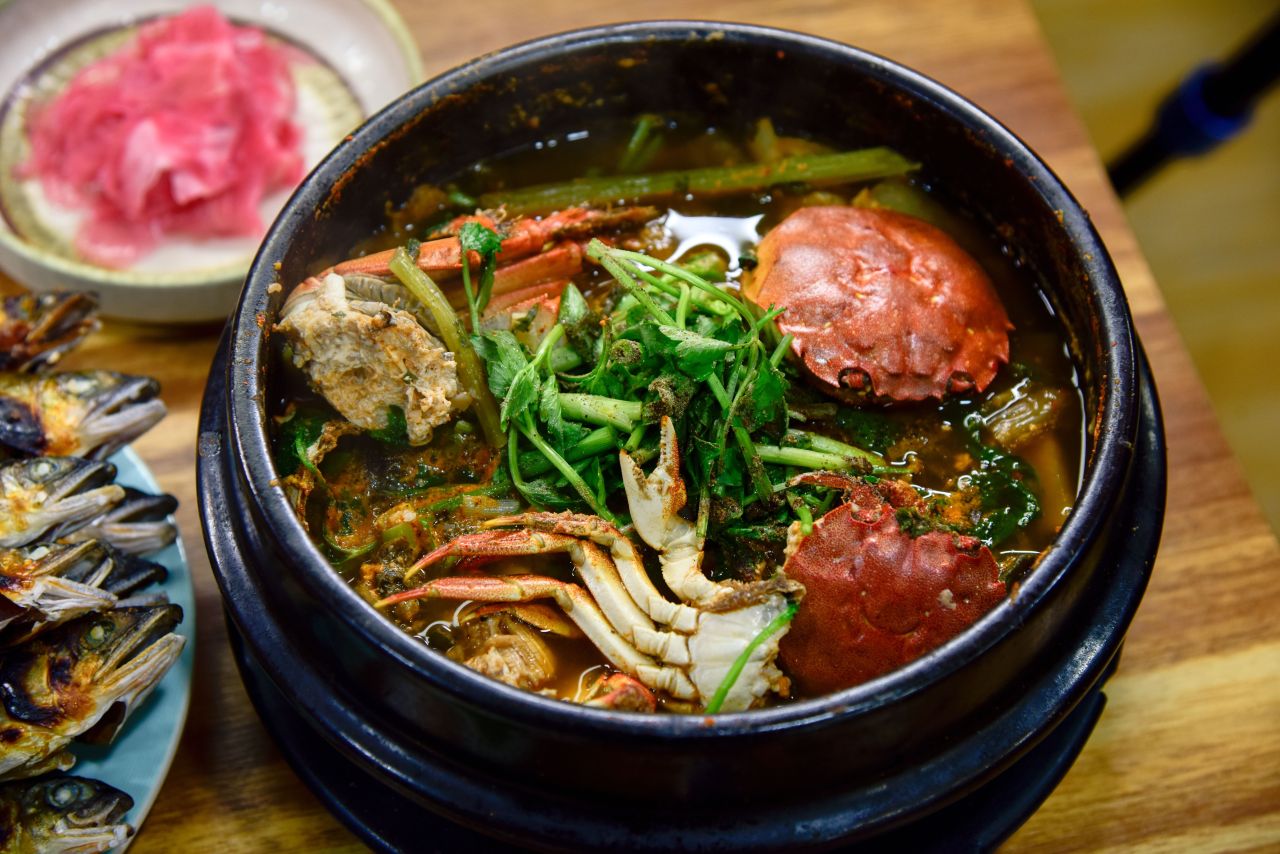
Seomjin River freshwater crab stew (chamge-tang) (섬진강 참게탕)
The Seomjin River runs along Gurye, and its freshwater crab (chamge) is caught in autumn and simmered into chamge-tang, a spicy soybean-and-chilli stew that several Jeollanam-do food guides list among the county's representative dishes. It is a seasonal local specialty around the river, not a dish guaranteed at the festival grounds; the pot pictured is a KTO gallery image of the dish.
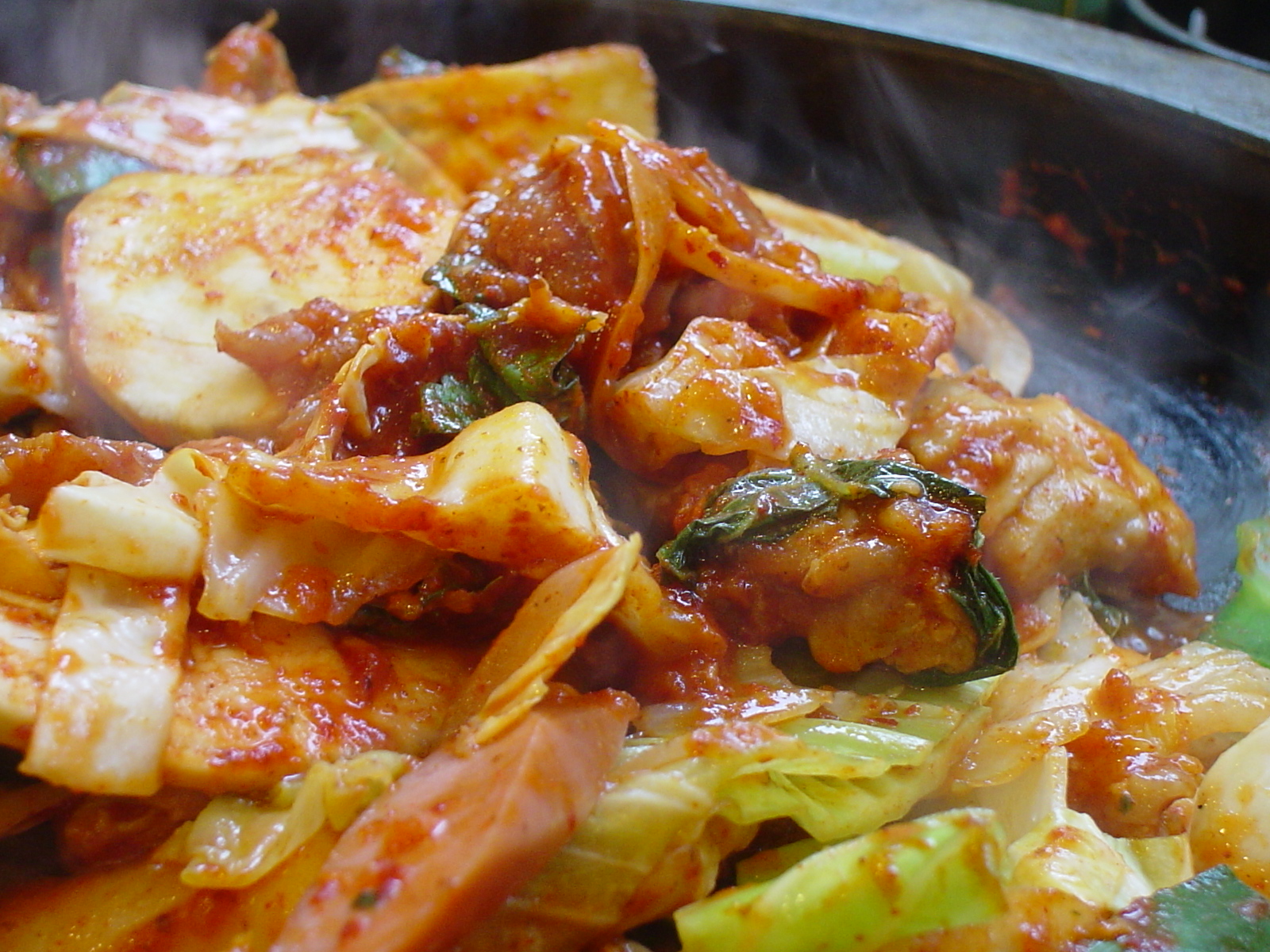
See Hwaeom Music Festival →Photo: Shizu K (shezzz) via Wikimedia Commons, CC BY-SA 2.0. A generic serving of dakgalbi, not photographed at this festival.
Chuncheon dakgalbi (춘천닭갈비)
Chicken cut into pieces, marinated in a gochujang-based sauce and stir-fried on a flat iron pan with cabbage, sweet potato, rice cake and perilla leaves. Korea.net traces the dish to Chuncheon in the late 1960s, when it spread through the back alleys of the city's Myeong-dong area as a cheap, filling meal for soldiers on leave and students; it is now the food the city is most identified with. This is a regional specialty, not a claim about a particular festival stall.
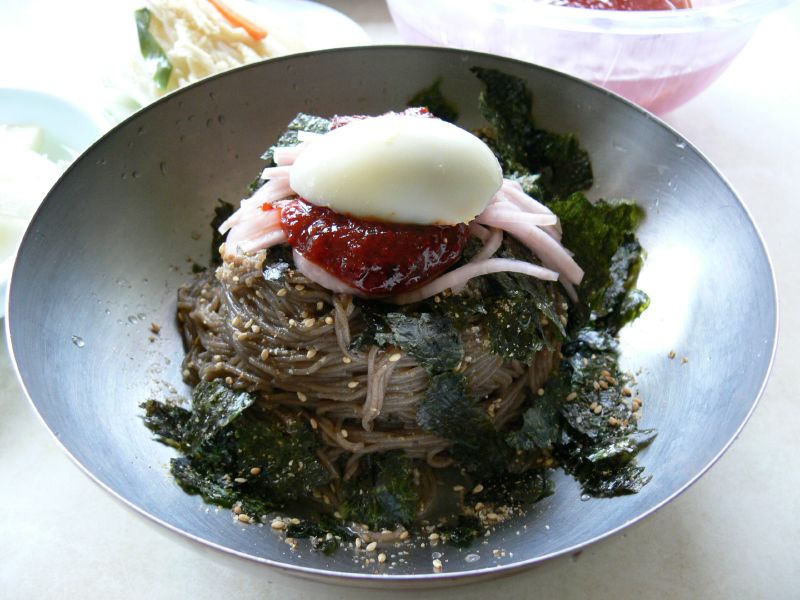
Cold buckwheat noodles served either dressed with a spicy sauce (bibim) or in a chilled broth (mul), commonly topped with vegetables, seaweed, sesame and a boiled egg. Korea.net describes makguksu as a long-standing favourite in Chuncheon, and the festival itself grew out of an earlier makguksu event before it was paired with dakgalbi. A regional specialty recommendation, not a promise about festival vendors.
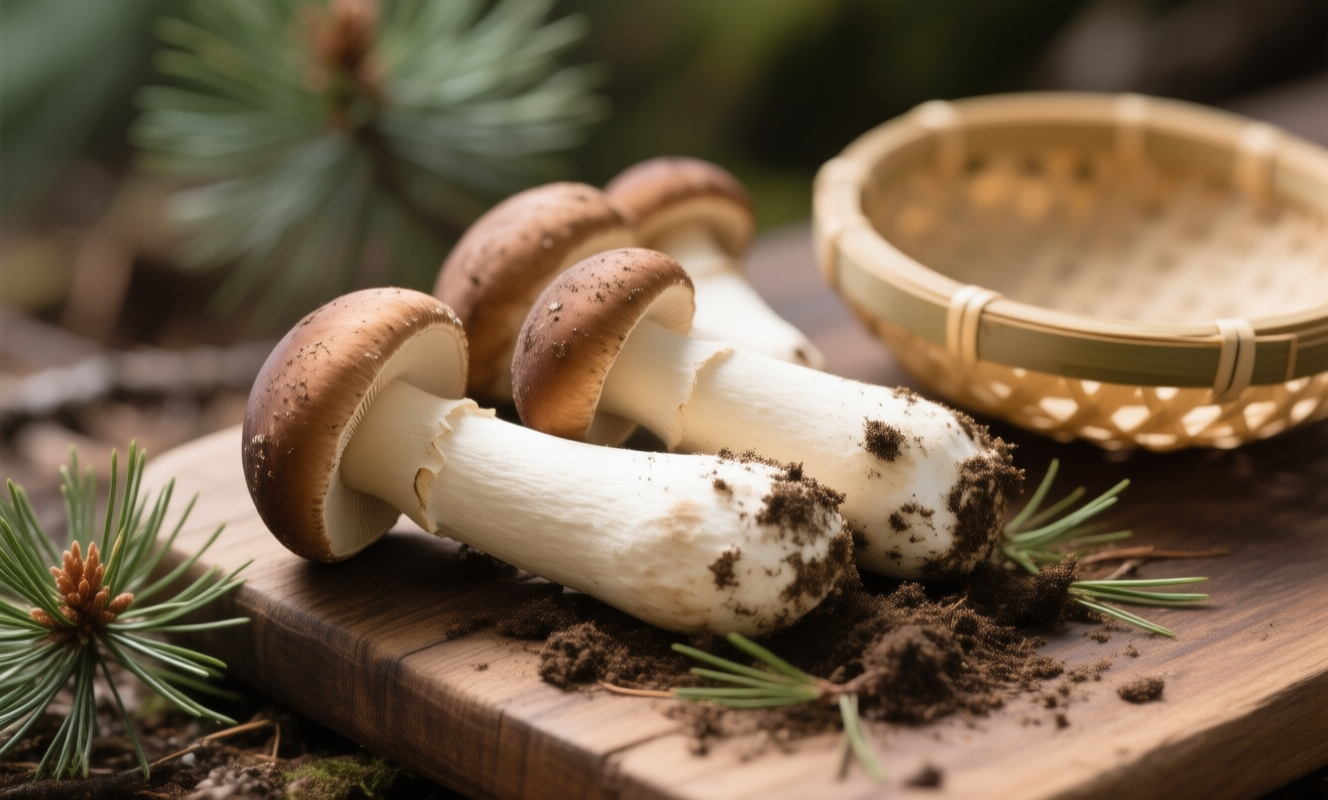
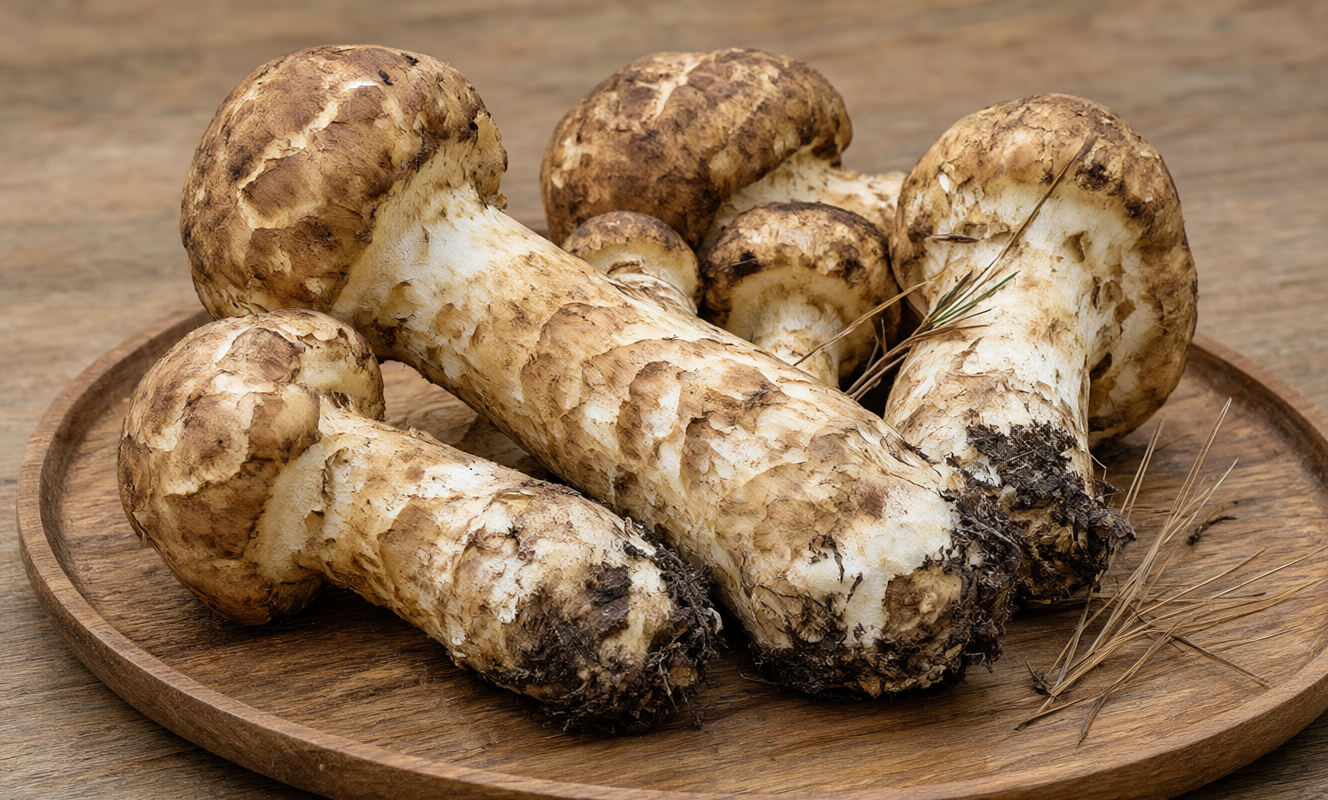
Bonghwa County registered its pine mushroom as a geographical indication with the Korea Forest Service (no. 10, January 2007) and it won the pine-mushroom category of the 2007 Korea Representative Brand award, according to Maeil Shinmun's 2007 report. Pine mushrooms cannot be farmed and are gathered wild in autumn; Bonghwa, Uljin and Yangyang are the three best-known producing areas. The festival is built around the mushroom, so this is both the local specialty and the event's subject.
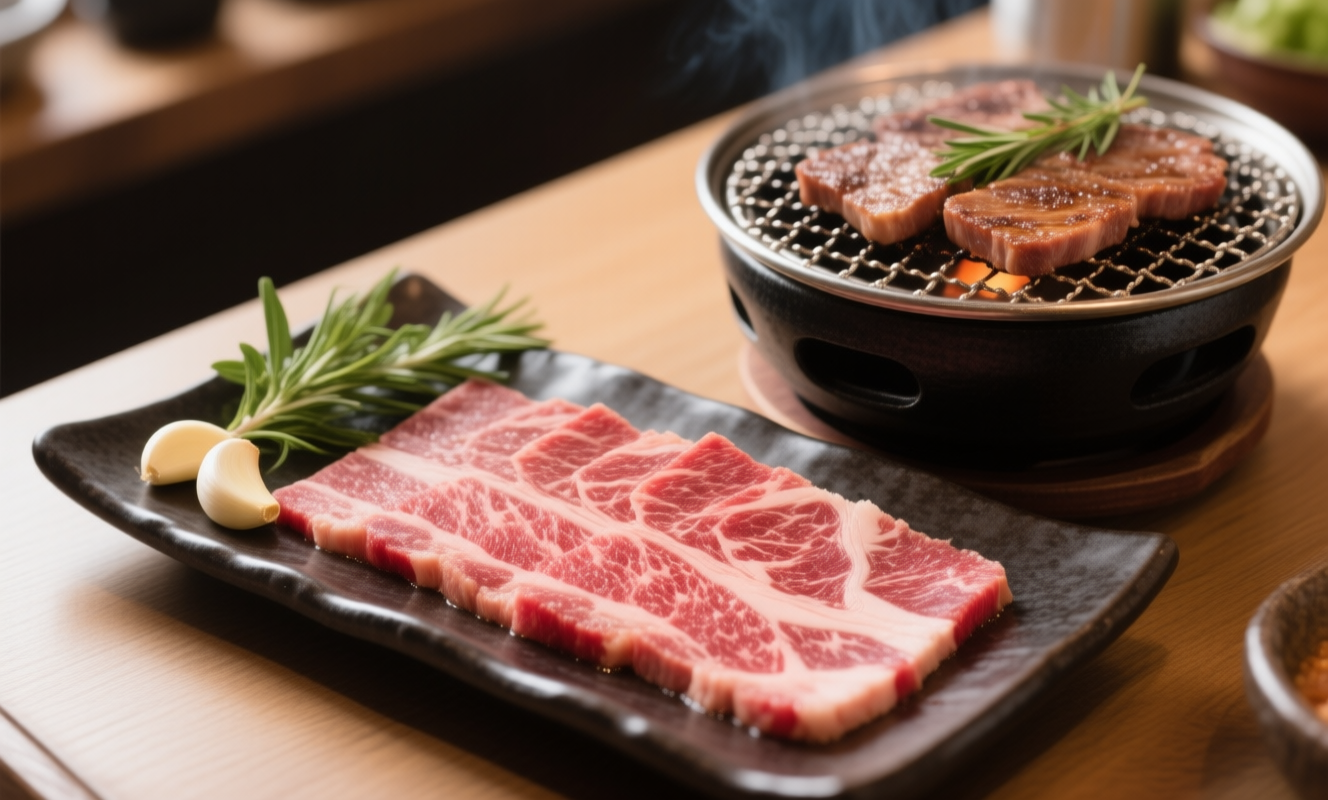
Hanwoo cattle raised in Bonghwa on feed mixed with a herbal-medicine-based probiotic developed by the county and the Gyeongbuk livestock institute, per a 2017 Hankook Ilbo report. It was named an Excellent Livestock Brand for 2022. The festival sets up a beef sales and promotion hall with free bulgogi tasting three times a day, but the illustration is a generic grilled hanwoo plate, not a photograph of local product.
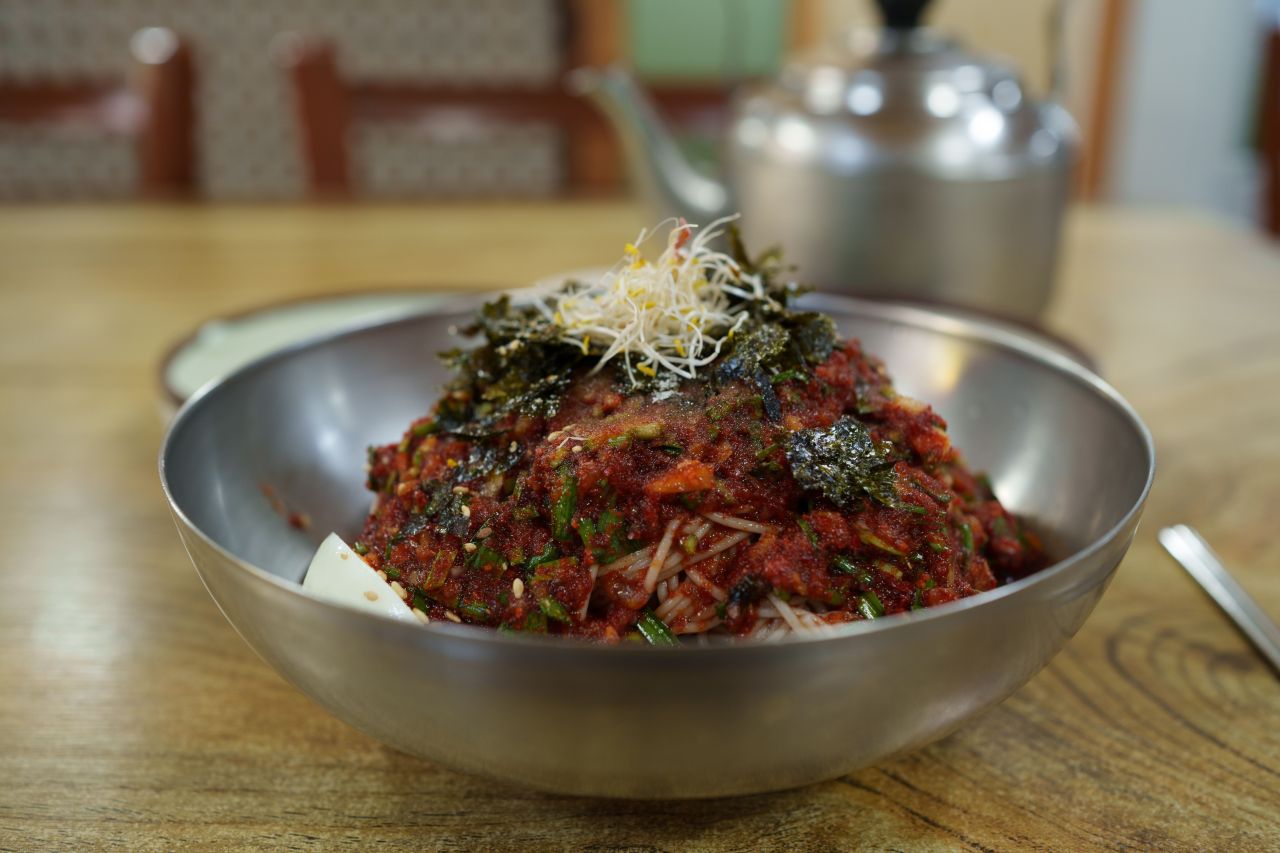
Hagfish, called kkomjangeo in Busan speech and meokjangeo in standard Korean, is not a true eel. It is grilled over charcoal or briquettes, either simply salted or in a spicy red sauce, and Korean food archives list it as a regional dish of Jagalchi Market; Korean travel press also describes a hagfish alley there. It is a market tradition, not a promise about what festival stalls will serve, so look at what the vendors are actually selling.
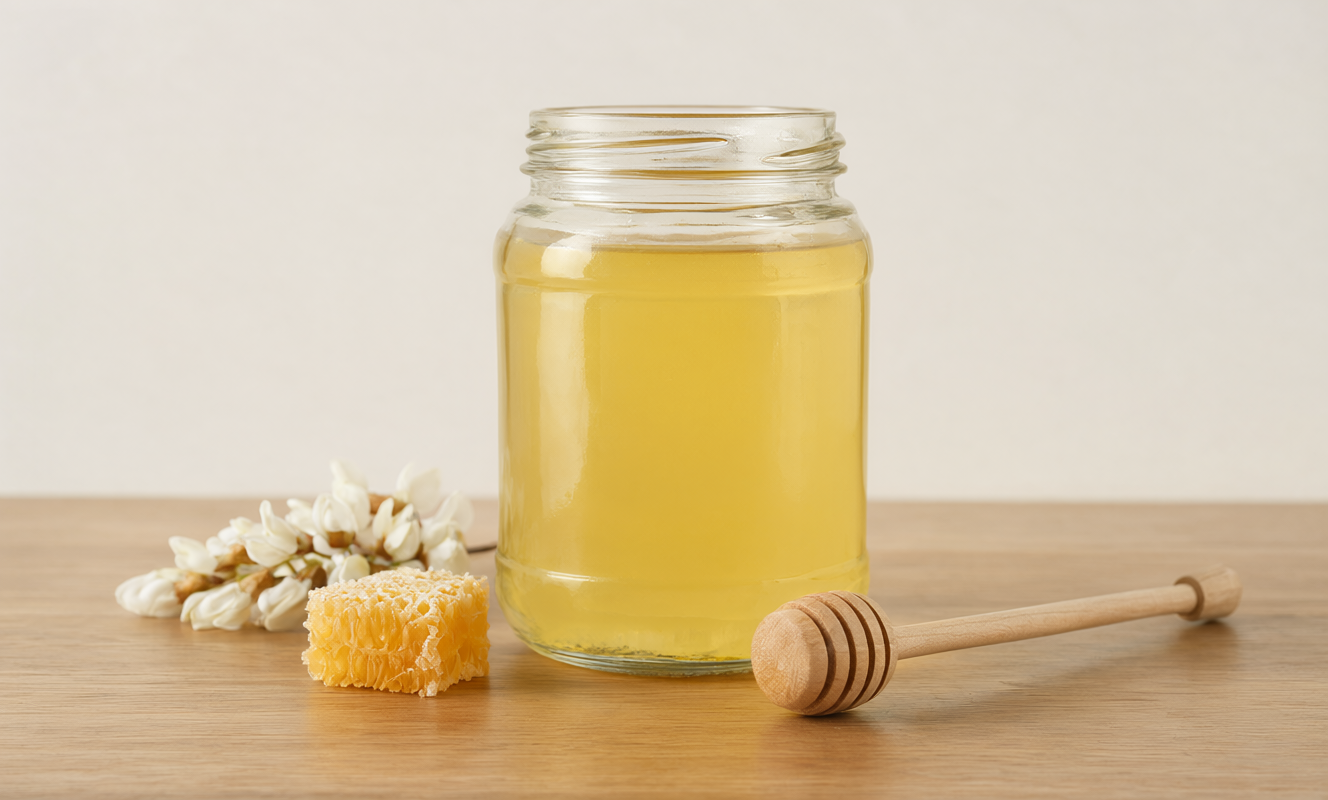
Local press describes naturally matured acacia honey, produced from roughly 1,540 hectares of acacia groves, as the county's representative specialty. The festival's honey-beer pub is also described as using Chilgok honey. This is a county product, not a promise about what any stall will sell.
See Chilgok Nakdong River Peace Festival →Photo: hutch / Wikimedia Commons (CC BY 2.0), yellow Korean melons at an Incheon market in 2007; illustrative, not Chilgok produce
Chilgok honey-bee melon (칠곡벌꿀참외)
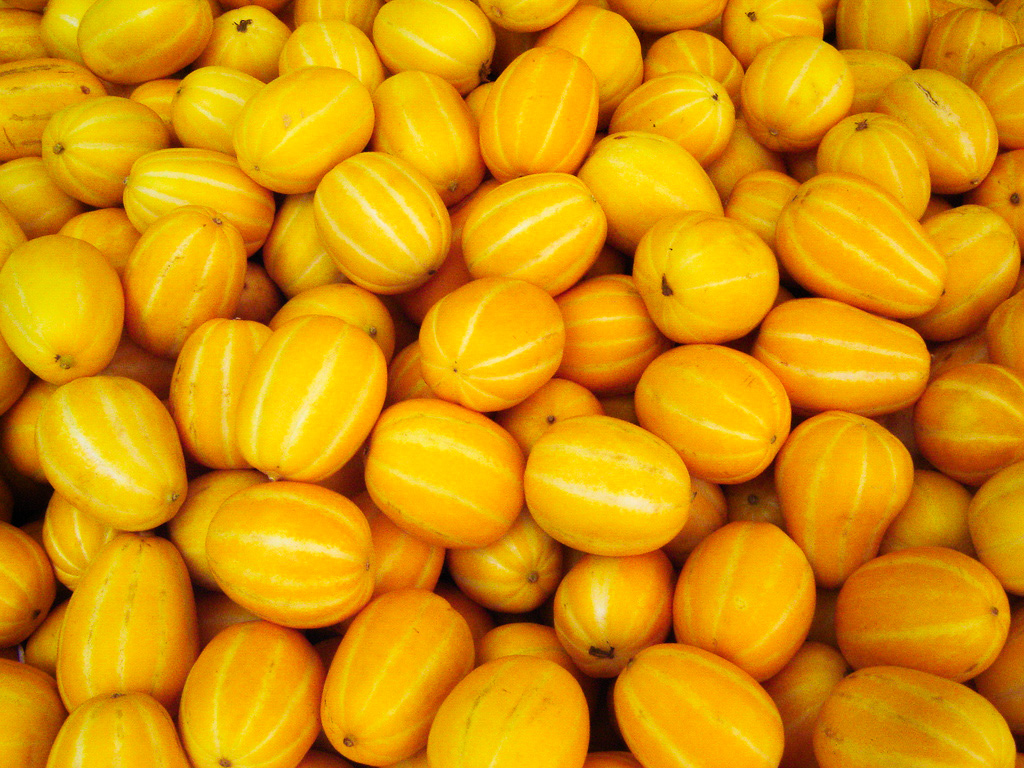
A county-branded Korean melon (chamoe) that Chilgok says was the first in the country to use bees for natural pollination. The photograph shows ordinary yellow Korean melons for reference, not produce from Chilgok.
Salted and fermented shrimp, fish and shellfish, sold in Ganggyeong's market. KTO describes the town as home to the largest salted seafood market in Korea, and Korean encyclopedia sources trace the trade to the days when Ganggyeong was a river port. It is the festival's own subject as well as a year-round local product, so you do not have to wait for October to buy it.
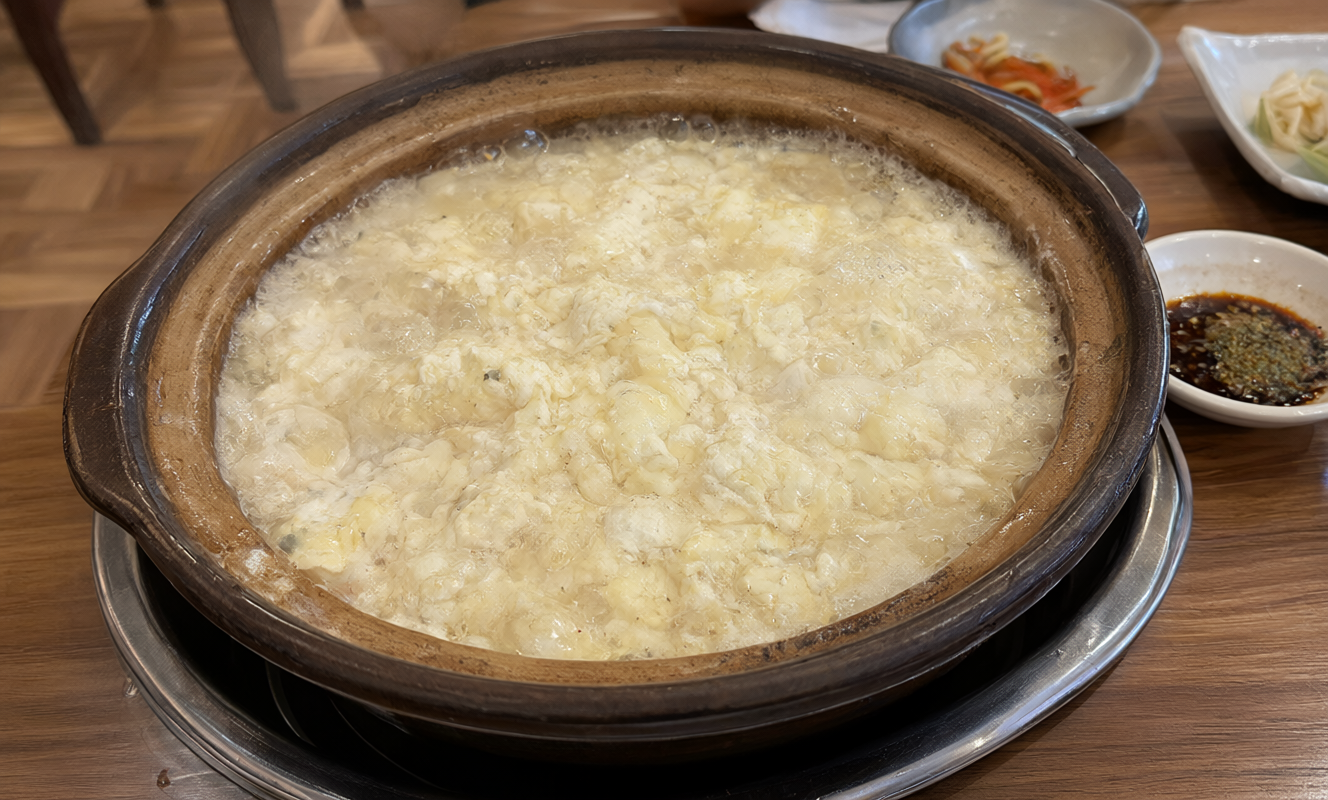
A Gangneung neighbourhood dish: soft, freshly curdled tofu set with East Sea water instead of the usual bittern. The Michelin Guide's Korea site traces the name to the Joseon official Heo Yeop, whose pen name was Chodang, and describes a village of about two dozen tofu restaurants serving it mild, spicy or as a stew. It is a local specialty to eat in town, not something the festival has confirmed it will sell.
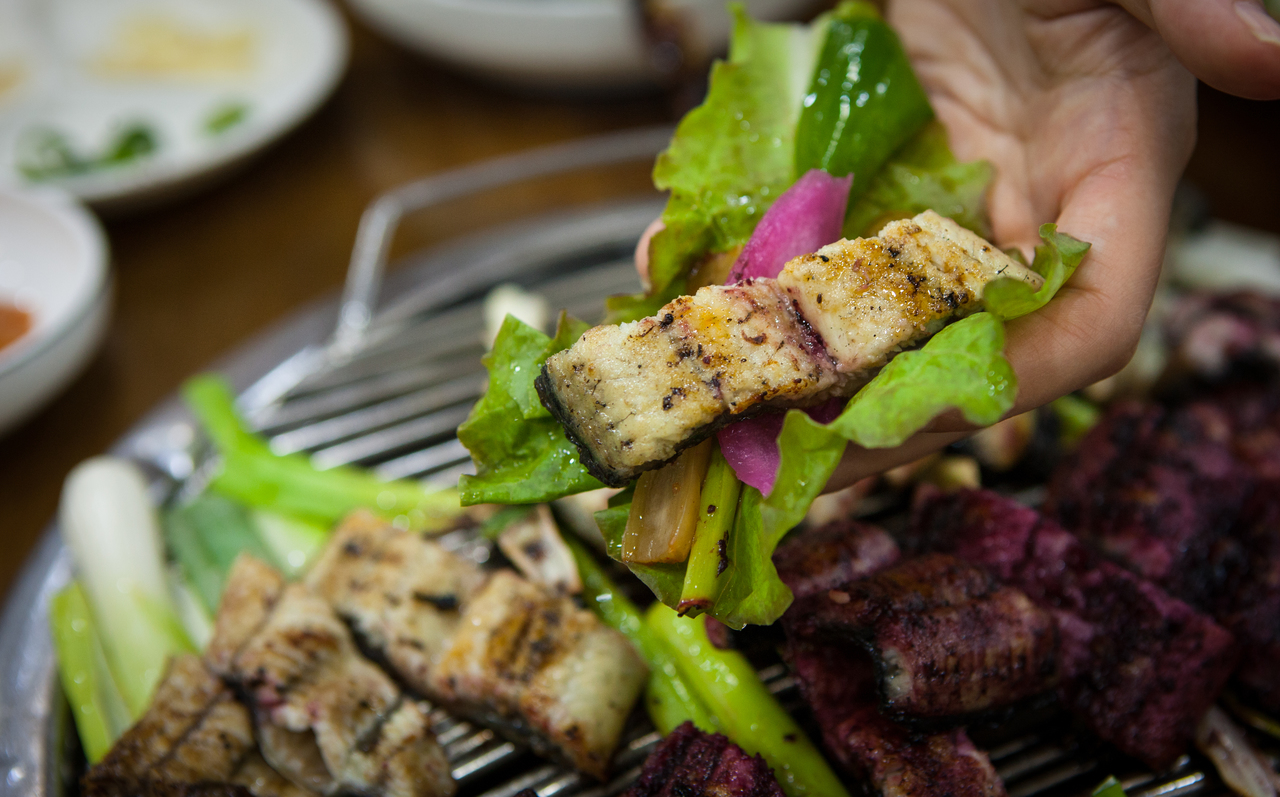
Grilled freshwater eel is one of Gochang's best-known foods. The Digital Gochang Encyclopedia explains that 'pungcheon' is not a place name but a river mouth where the sea tide meets fresh water, here near the mouth of Seonunsan, and KTO's photo record files the dish under Gochang local specialties. It is a county speciality, not a promise about what festival stalls will sell.
Gochang bokbunja (Korean black raspberry) (고창 복분자)
Bokbunja is a dark Korean raspberry that Gochang County presents as one of its flagship local products, most often seen in bokbunja wine and other processed goods. The culture ministry's 2026 plan also lists a Gochang Bokbunja and Watermelon Festival under local specialties. Nothing confirms it will be sold at this festival.
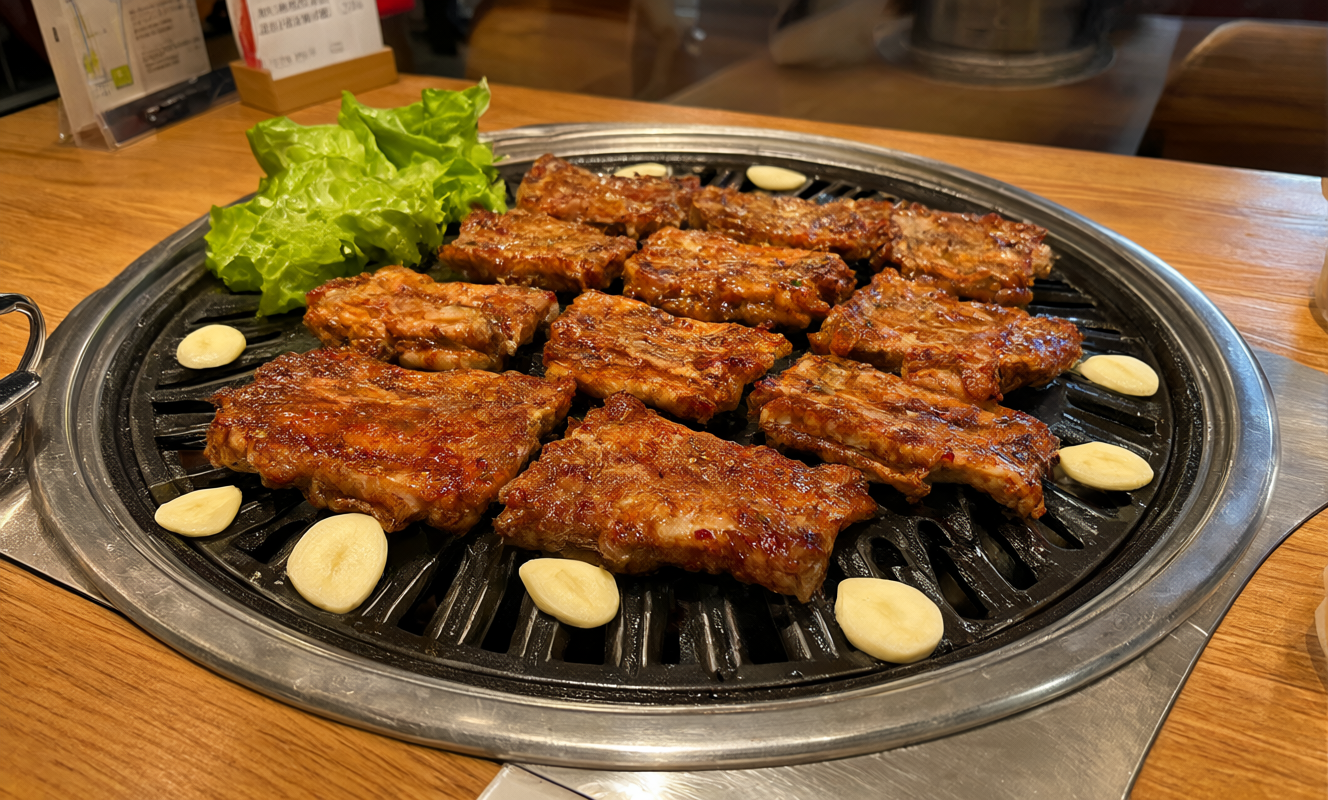
Grilled patties of chopped short rib, named for the Songjeong district of Gwangju, where a whole street of tteok-galbi restaurants grew up. Gwangju's tourism site counts it among the city's five culinary specialties. It is a city dish rather than a festival menu item, and Songjeong is also where the KTX arrives.
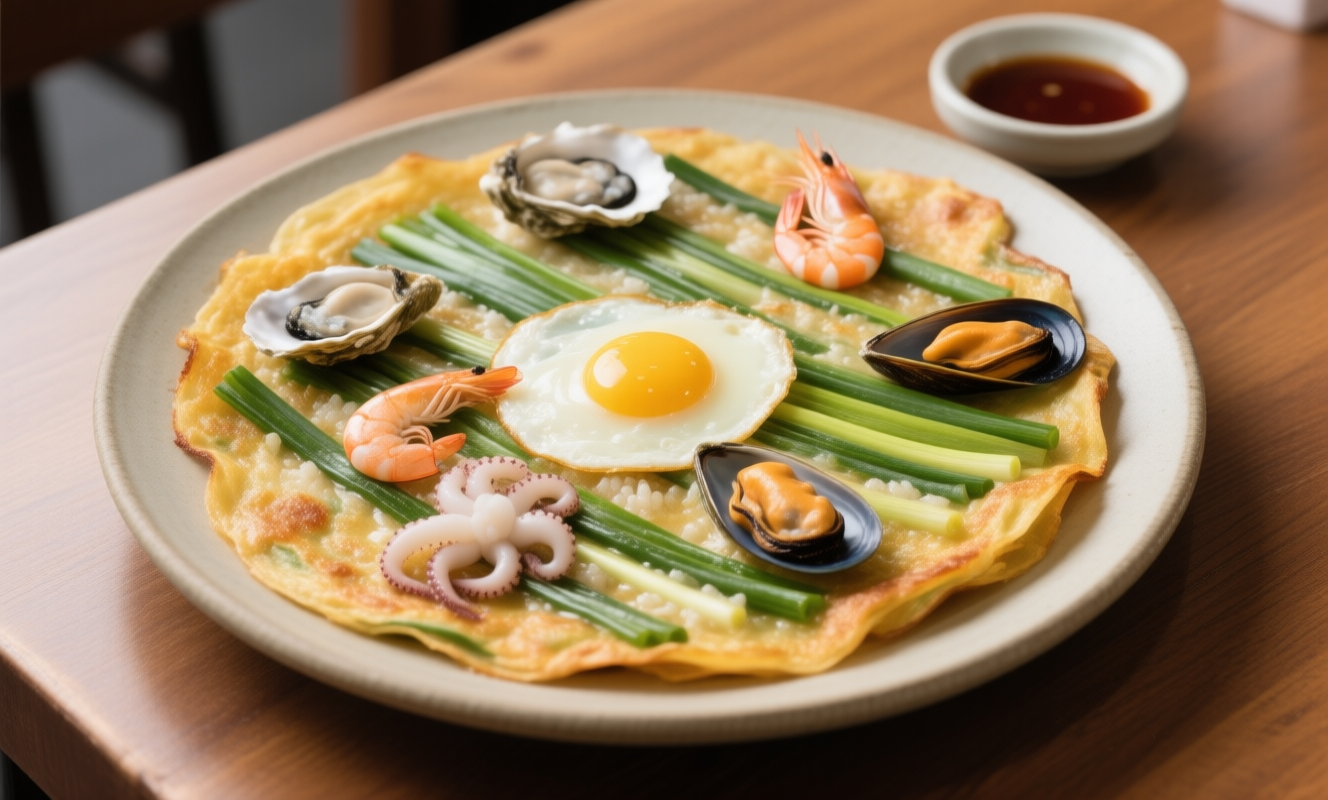
A scallion pancake topped with seafood such as oysters, shrimp and mussels in an egg and rice-flour batter. Korea's Cultural Heritage Administration and the Dongnae-gu office both describe it as Busan's signature local dish; it was named Busan Local Food No. 1 in 1999. It is a district specialty to look for in Dongnae, not a promise about what the hotel's kitchen serves during the festival.
Wonju Agricultural Technology Center lists Chiaksan peaches among the city's specialties. It says they are grown mainly on well-drained slopes around Chiaksan where there is plentiful sunlight; this is a Wonju product to look for in season, not a promise that the festival's temporary stalls will sell it.
Fermented red chili paste, the product the town is known for and the subject of the festival itself. The official festival page ties it to a Joseon-era story in which Yi Seong-gye tasted it in a village home and later had it sent to him as king, and the folk village where it is still made was set up in 1997. KTO's English record describes Sunchang as the renowned home of gochujang. Whether a given stall at the festival sells local or other product is not something this guide checked.
Yeongdong County's tourism office describes the county as a leading grape-growing area, putting it at about 12.7% of national output, with picking running from mid-August to early November. It credits the cool nights and large day-night temperature swing at the foot of the Chuwi ridge in the Sobaek range. This is a regional specialty, not a promise that the festival's stalls will sell it.
The county's tourism office promotes gotgam, persimmons dried naturally in mountain villages, as a local product, and Yeongdong also hosts a dedicated persimmon festival listed in the culture ministry's 2026 plan. Treat it as a regional product to look for in town rather than something confirmed at the music festival.
Anyang was a nationally known grape-growing area from the 1930s. A 2017 Seoul Shinmun report puts the acreage at about 920,000 square metres in the early 1960s, falling to roughly 39,000 square metres with about ten farms; a 2006 Gyeongin Ilbo report describes the revival of vineyards in Gwanyang-dong from 1995. It is a historic regional product now grown on a small scale, and it is not something the festival is known to sell. Grapes are a late-summer fruit, so do not count on finding them in mid-October.
A scallion pancake layered with seafood and associated with the Dongnae district; the festival's own introduction names it among the food on offer, and it has a pajeon tavern stall in the 2026 programme. Dongnae is the neighbourhood the dish is named after, so it is worth trying in a restaurant nearby as well as at the festival, where what is served and the price were not confirmed.
Gimhae City describes dwit-gogi as the mixed pork trimmings left over when meat is butchered and portioned: cheap, plentiful and chewy. In 2024 the city designated a roughly 600-metre dwit-gogi street running between Bonghwang-dong and Buwon-dong with 15 specialist restaurants. It is a city food worth seeking out, not a claim about what festival stalls will sell.
Local reporting describes janggun tea as produced only in Gimhae, by 13 farming households on about 25 hectares, and tied by tradition to Queen Heo, who is said to have brought tea seeds from India. It has been named a 'Korea's best tea' 11 times. The festival programme itself lists a janggun-tea relaxation activity at the tomb and Sureungwon, though what is served is not detailed.
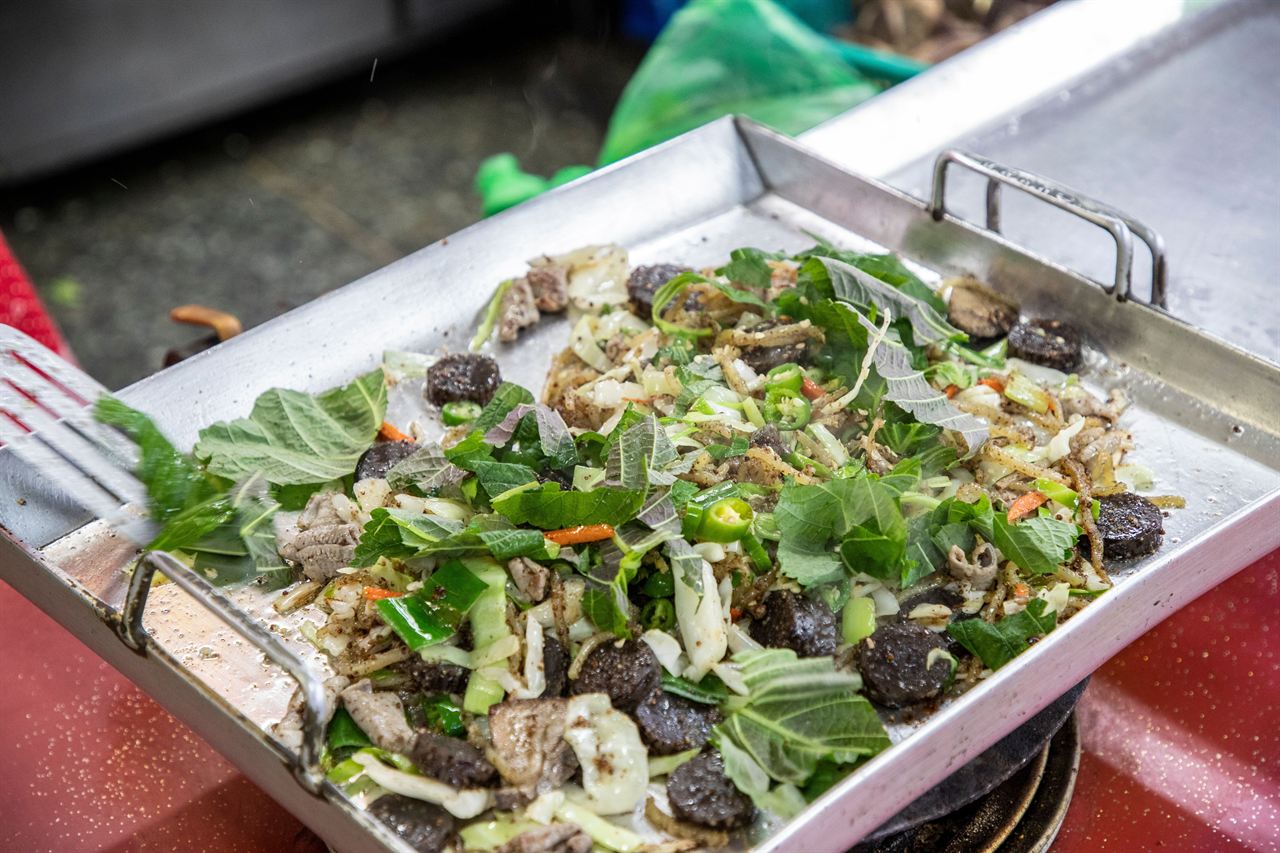
Sillim-dong, a neighbourhood of Gwanak-gu, is known for 'Sundae Town', a lane of restaurants serving stir-fried sundae (Korean blood sausage) with vegetables and perilla leaves. Gwanak District Office lists the Sillim sundae village among its local food sights, and the area traces back to a stir-fried sundae dish sold in Sillim market from around 1977. It is a district speciality, not something the festival says it will serve.
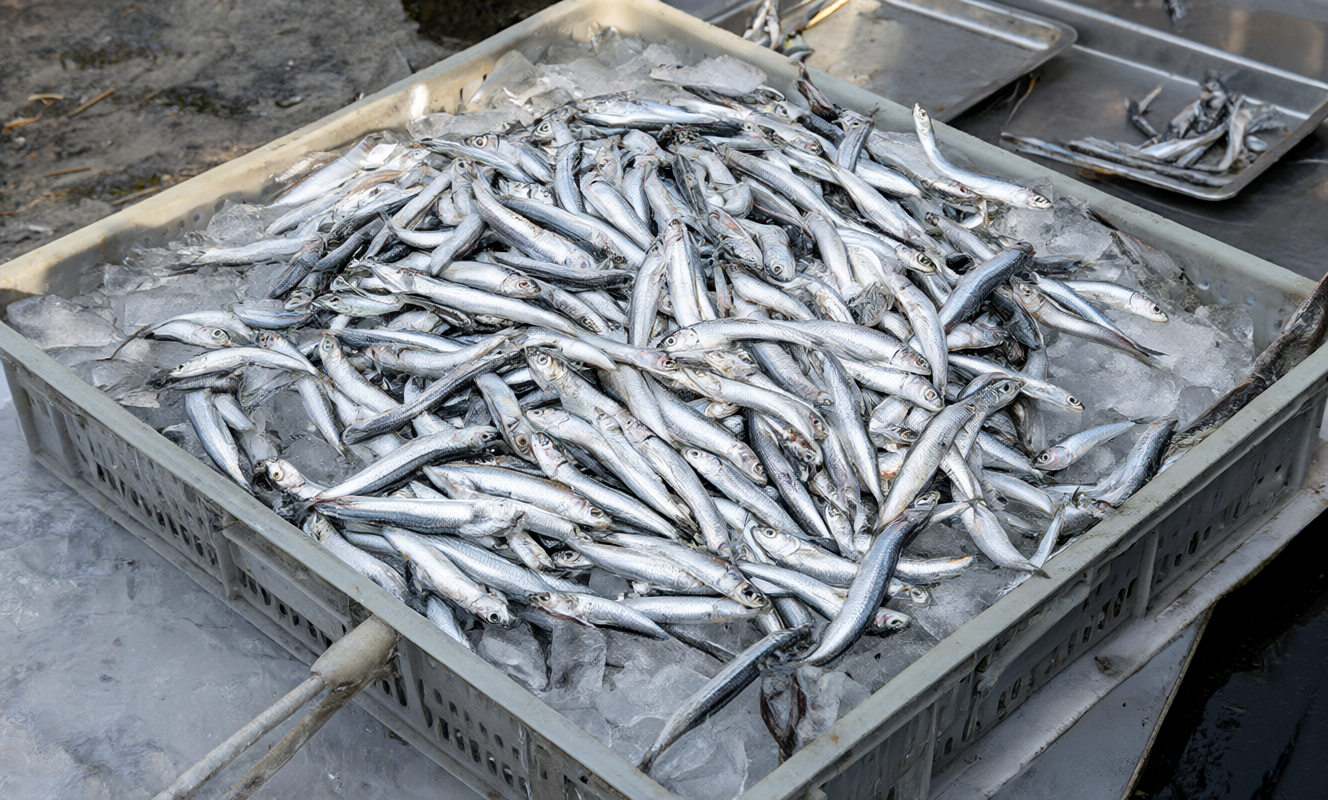
Gijang County's English tourism page calls anchovy one of the area's representative marine products, and Visit Busan names Daebyeon Port as the main landing area, with catches mainly in spring and autumn. Dishes it lists include grilled, fried and salted anchovy and anchovy wraps. This is a district specialty, not a promise that anything will be on sale at the festival.
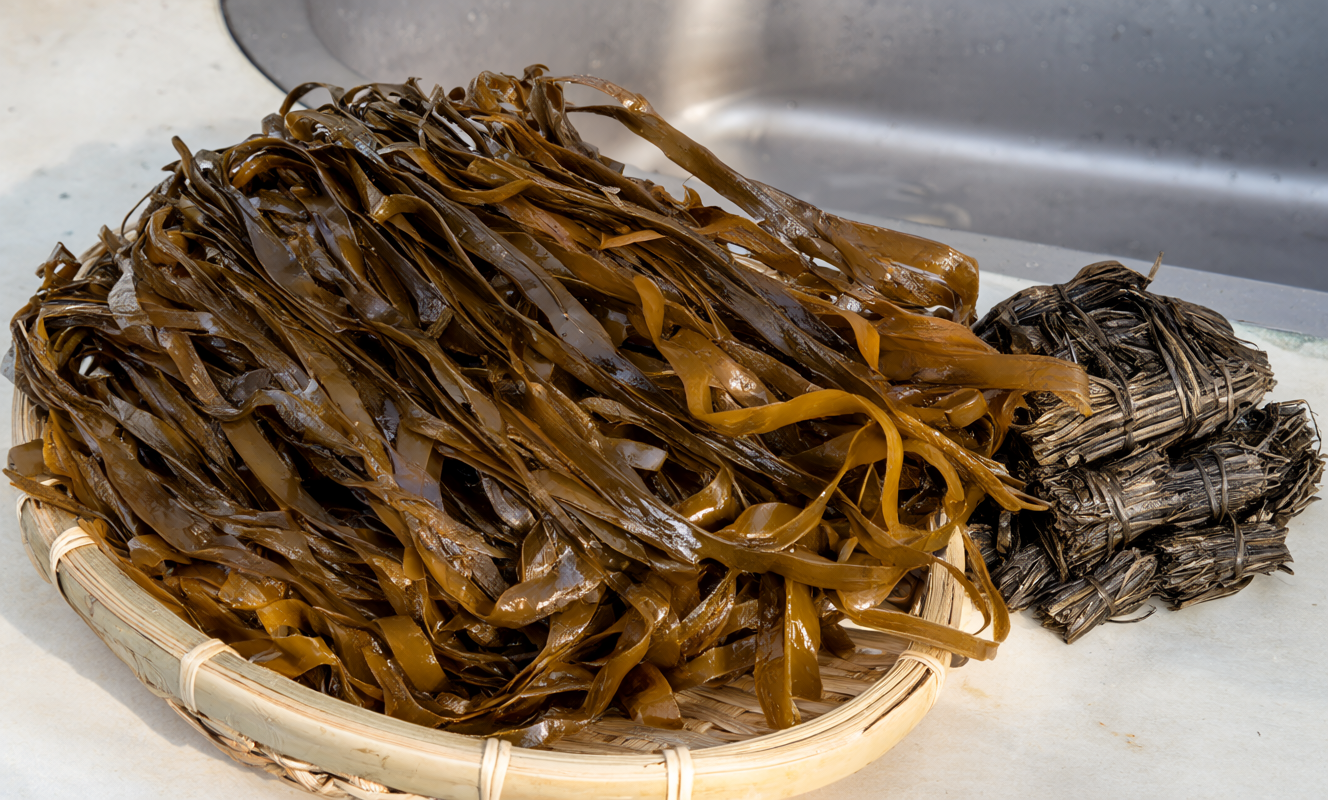
Visit Busan describes seaweed alongside anchovy as one of Gijang's best-known seafoods, with records of both going back to the Joseon period. Miyeok is the brown seaweed used in Korean soups. Again, this is a regional product rather than a festival menu item.
Gondre is the mountain thistle (Cirsium setidens) eaten in Gangwon-do, most often dried and rehydrated and cooked into gondre rice. 'Yeongwol gondre' was registered as a forestry-product geographical indication (no. 51) in 2014, and a Korean agricultural report says Yeongwol supplies roughly 80% of the gondre sold nationally. The illustration shows the dish in general, not a particular restaurant.
Cheongju grills pork belly its own way — marinated in a soy-based sauce and eaten wrapped in pa-jeori, a seasoned scallion salad. Cheongju City is actively developing it as the city's representative dish: there is a dedicated samgyeopsal street, an annual March 3 street festival, and the country's only Handon-certified pork street. A local record even ties the city to pork tribute in the Sejong era, which fits this festival's theme, though that is history rather than a claim about the festival stalls.
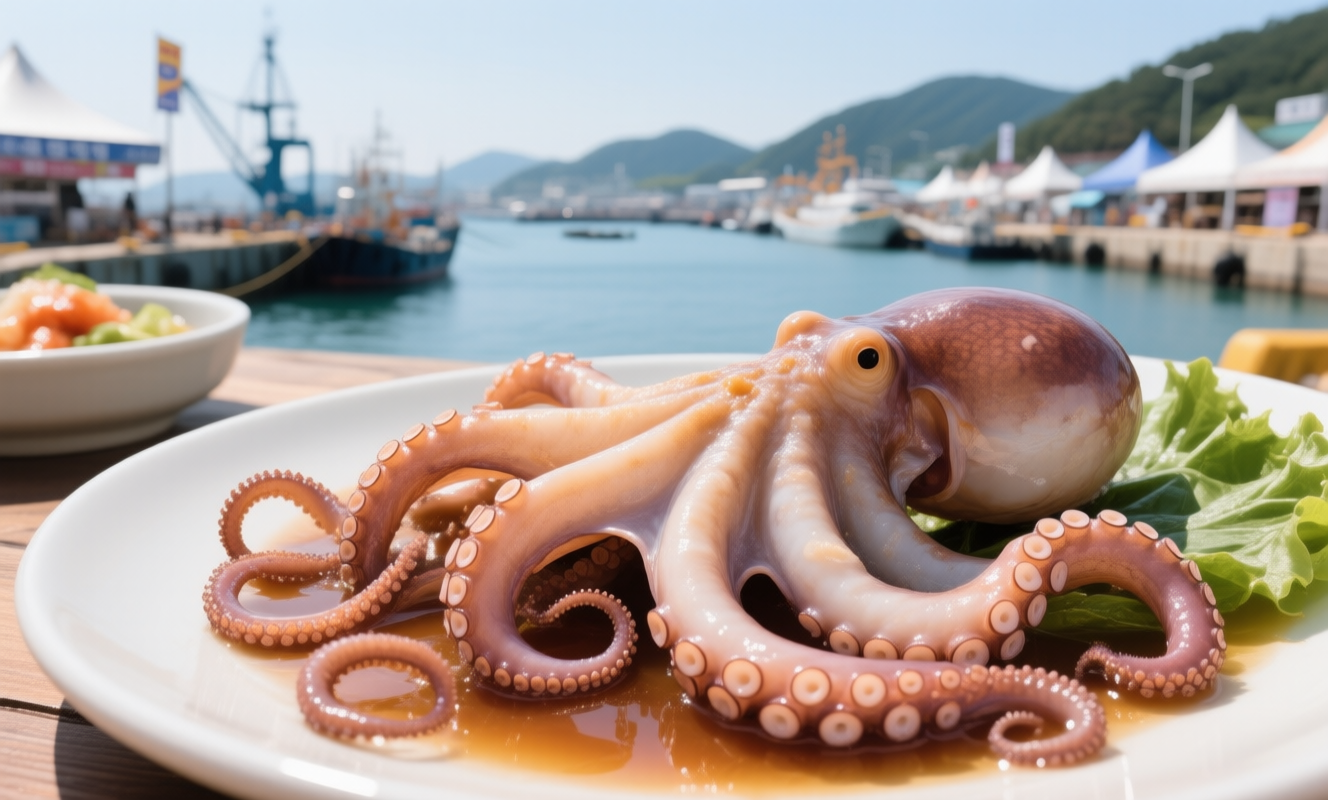
Small, thin-armed mud-flat octopus that Mokpo City lists among its specialty products. The city says its peak season runs from September to February and that locals eat it raw, stir-fried, in hot pots and in other preparations. Whether any stall at the festival serves it has not been confirmed.
Mokpo City describes pre-spawning hairtail caught off Mokpo from late September as especially rich, braised with potatoes, pumpkin and other vegetables. It is one of the city's 'nine flavours' of Mokpo, but nothing confirms it will be sold at the festival itself.
Idong galbi is grilled, marinated short rib associated with Idong-myeon, elsewhere in Pocheon. A national culture-centre listing describes it as a local specialty shaped by the area's military-zone surroundings, and a Korean food-industry report traces it to restaurants serving soldiers and their visitors in the late 1950s. It is a regional dish, not something the festival is confirmed to sell.
Idong makgeolli is a rice wine from Pocheon's Idong area that the same culture-centre listing describes as made with clean water from Baekunsan. It is a regional product, not a confirmed festival menu item.
Korean press reports that Yangyang pine mushroom was registered in 2006 as the Korea Forest Service's first geographical-indication forest product. It is a wild matsutake grown under pine trees and sold at autumn auctions in the Yangyang area. Because it is also the festival's theme, treat this as the district's reputation rather than a promise of what is for sale on site; local broadcaster G1 reported on 3 October that volumes were down and prices high this year.
KTO calls bansi the representative agricultural specialty of Cheongdo-gun. It is described as a seedless persimmon, and a Korean press report notes that a dried-persimmon product made from it, Cheongdo gam-malraengi, was registered as Korea Forest Service geographical indication no. 62. It is also the subject of this festival, so it is the one local product you can be sure the event is built around.
Korean press reports say Cheongdo Hanjae minari was registered in 2010 as geographical indication no. 69, the first dropwort growing area to receive one, and that it is grown in the Cheongdo-eup area. It is a leafy green used in Korean cooking. Whether it is on sale at the festival was not checked, so treat it as a regional product to look for in town, not a festival menu item.
Namyangju City lists the pear (meokgol-bae) among its seven official specialty products, alongside strawberries, Chinese chives, mulberries, maple sap, perilla leaves and mountain ginseng. The city describes it as refreshing and juicy and says it has been exported since 1997. This is a regional specialty, not a claim that it will be sold at the festival.
Jeju's official tourism portal calls black pork (heukdwaeji) one of the island's signature foods, made from the island's native black-haired pigs. It is usually grilled at the table and dipped in meljeot, a fermented anchovy sauce. The photograph shows the Jeju Black Pork Street in Jeju City as titled in KTO's gallery. This is a regional food, not a claim about what the festival's stalls sell.
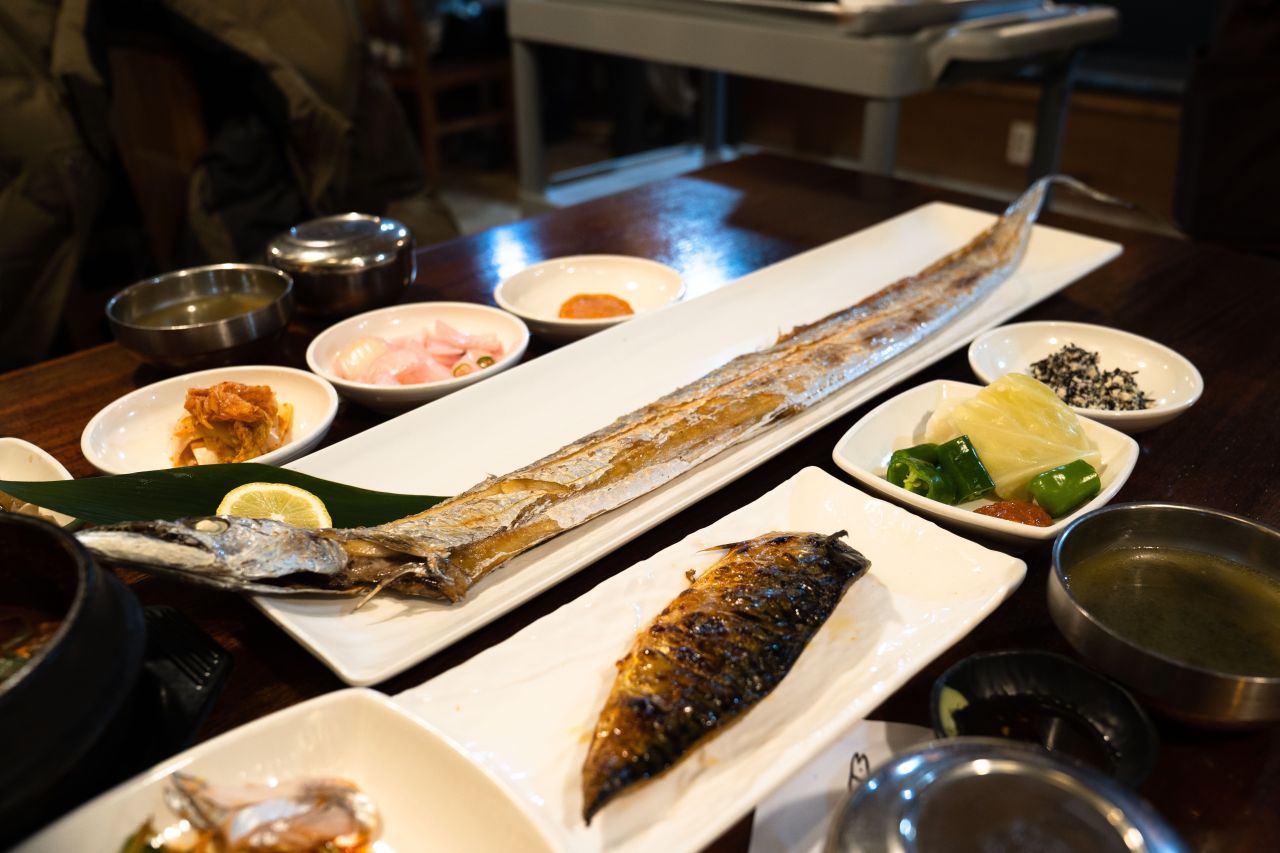
Korean tourism and cultural-promotion sources single out Jeju-caught silver cutlassfish (eun-galchi) as the top grade of this fish, and it is typically served grilled, braised or as sashimi. The photograph shows a grilled cutlassfish set meal from KTO's gallery. It is a regional food, not a claim about what the festival's stalls sell.
Chodang, on Gangneung's coast, is known for sundubu, a soft, freshly set tofu; KTO's Gangneung photo gallery has a record for the Chodang Sundubu Village, and travel guides commonly describe the tofu as set with seawater and eaten fresh. It is a Gangneung specialty to eat in town, not something confirmed to be sold at the festival.
Sacheon City's English tourism page lists jukbangryeom anchovy as a local product. It describes fish caught by wooden stakes set in fast south-coast currents rather than by nets, and says only a small amount is produced because the number of installations and fishing licences is restricted. This is a Sacheon specialty, not a promise that the air-show grounds will sell it.
Gimcheon is one of Korea's main grape-growing areas. It was designated a grape industry special zone in 2006, and 'Gimcheon grapes' were registered as a geographical-indication product in 2010. Shine Muscat is among the varieties grown there. This is the district's agricultural reputation, not a statement that grapes are sold at the festival.
Local sources describe Gimcheon as a leading plum-producing area, with the most active growing in Guseong-myeon, and list Gimcheon plums as a registered geographical-indication product. As with the grapes, this is the region's produce, not a promise about festival stalls.
See Gimcheon Gimbap Festival →Photo: Minseong Kim / Wikimedia Commons — Songjeong-style tteokgalbi (CC BY-SA 4.0), resized. Illustrative of the dish, not a specific restaurant.
Songjeong tteokgalbi (송정 떡갈비)
Grilled patties of minced beef and pork from the Songjeong district, the area around Gwangju Songjeong Station where your KTX arrives. Gwangju's official food list names Songjeong-style tteokgalbi as one of the city's five representative foods. It is a city dish, not a promise about what the festival booths will sell.
See Gwangju Kimchi Festival →Photo: 동네부기 / Wikimedia Commons — duck stew (CC BY-SA 2.0 KR). Illustrative of the dish, not a specific restaurant.
Duck stew (오리탕)
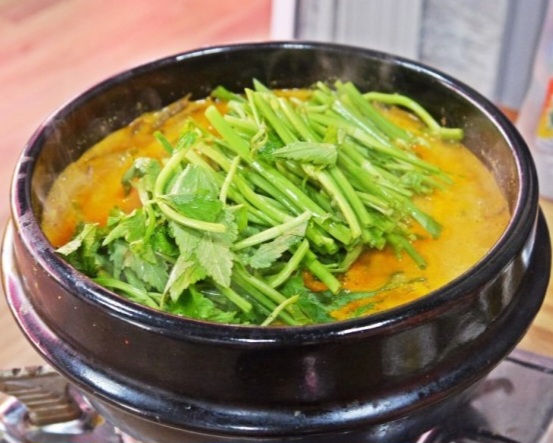
A hearty Jeolla-style duck stew with vegetables, water parsley and ground perilla seeds. It is on Gwangju's official list of five representative foods and is eaten at restaurants across the city, separate from anything served at the festival.
Hampyeong has a long cattle-market history and in July 2008 became the country's first hanwoo industry special zone. The local dish is bibimbap topped with fresh raw hanwoo beef, radish, lettuce, spinach and bean sprouts, and the market area was picked in 2014 for KTO's food-theme-street programme as the Hampyeong Cheonji Hanwoo Bibimbap street. It is a town specialty, not a promise about what festival stalls will sell.
The Digital Iksan Encyclopedia describes yukhoe-bibimbap as a dish of Iksan that began around Hwangdeung Market in Hwangdeung-myeon. Unlike Jeonju or Jinju bibimbap it is served with the rice and seasoning already mixed, topped with bean sprouts, vegetables and thin slices of raw beef, with a clear soup alongside. Ask before ordering if raw beef is not suitable for you; this is a local specialty, not a statement about what festival stalls will sell.
The Digital Seogwipo Culture Encyclopedia names Bomok, a coastal village within Seogwipo, as the main source of jaridom, a small round Jeju reef fish, and describes it as soft-boned and mild in flavour. The Ministry of Culture's 2026 festival plan also lists a Bomok Jaridom Festival at Bomok fishing port. This is a regional specialty, not a promise about what festival stalls will sell.
The Digital Seogwipo Culture Encyclopedia lists silver cutlassfish from Seogwipo's Seongsan area among the city's specialty products, and the Ministry of Culture's 2026 plan includes a Seogwipo Silver Cutlassfish Festival around Seogwipo port. Restaurants usually serve it grilled or braised with radish; whether any stall at the Chilsimni Festival does so is unconfirmed.
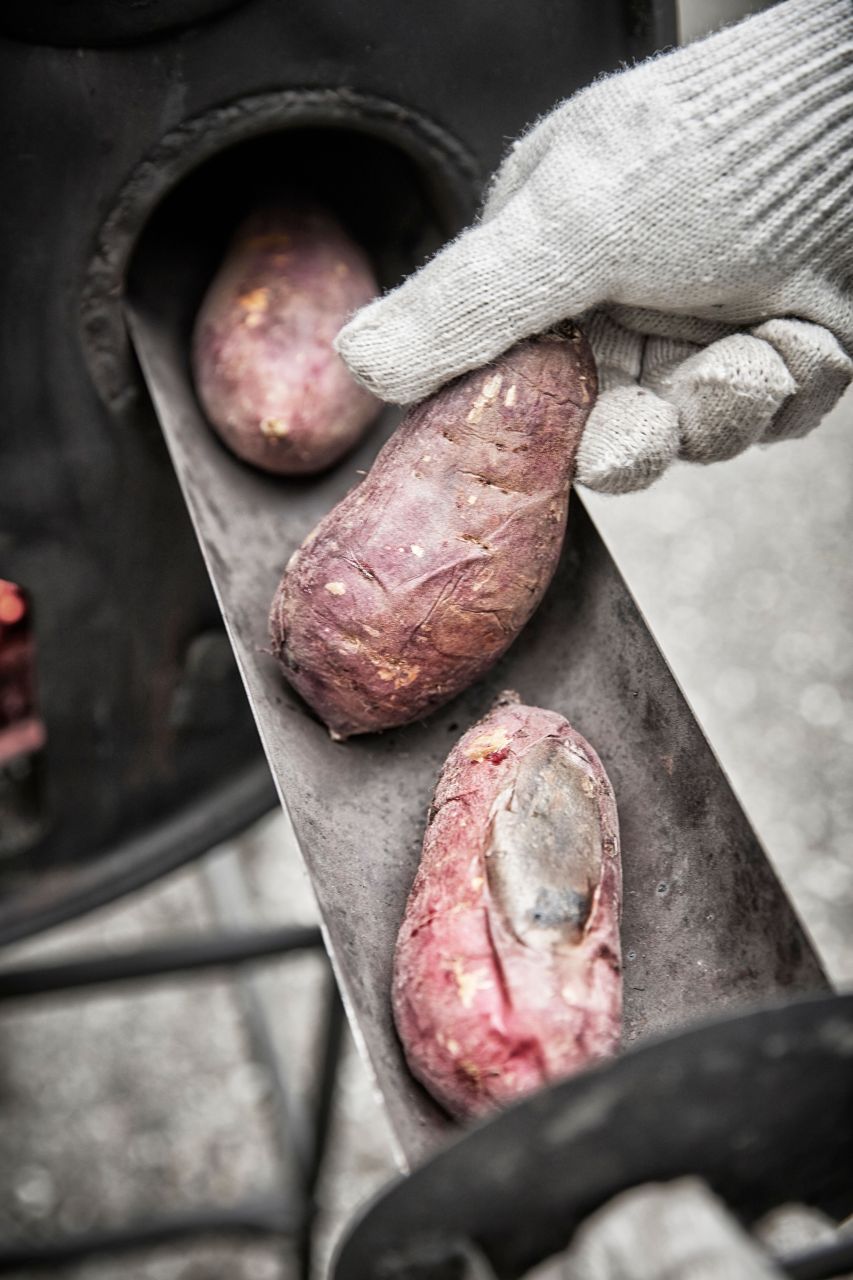
Sweet potato is one of Yeoju's best-known crops; a 2022 Kyeongin report says more than half of Gyeonggi Province's sweet potatoes come from Yeoju, and the city launched a 'Daewangnim-pyo Yeoju Kkuma' brand in 2025. The festival's roasted sweet potato programme draws on this, but the crop is a regional product in its own right.
Yeoju was a rice region that sent rice to the royal court in the Joseon period, and the city sells its rice under the 'Daewangnim-pyo Yeoju Ssal' brand. Yeoju-grown rice is the basis of the festival's cauldron bibimbap, though what any stall serves in 2026 is not confirmed.
Wonju City's tourism site lists chueotang among the city's representative foods: whole loaches are boiled and ground, then simmered with red-pepper paste and vegetables. The red colour comes from gochujang rather than soybean paste, which is how Wonju's version is usually told apart. The city keeps a list of designated chueotang restaurants. This is a Wonju specialty recommendation, not a claim about what festival booths will serve.
A Daegu beef bone soup in which the rice is served in a separate bowl instead of being mixed into the broth; Korea's official tourism site describes it as a Daegu speciality. It is a city dish you will find in restaurants, not a promise about what the festival's stalls will sell.
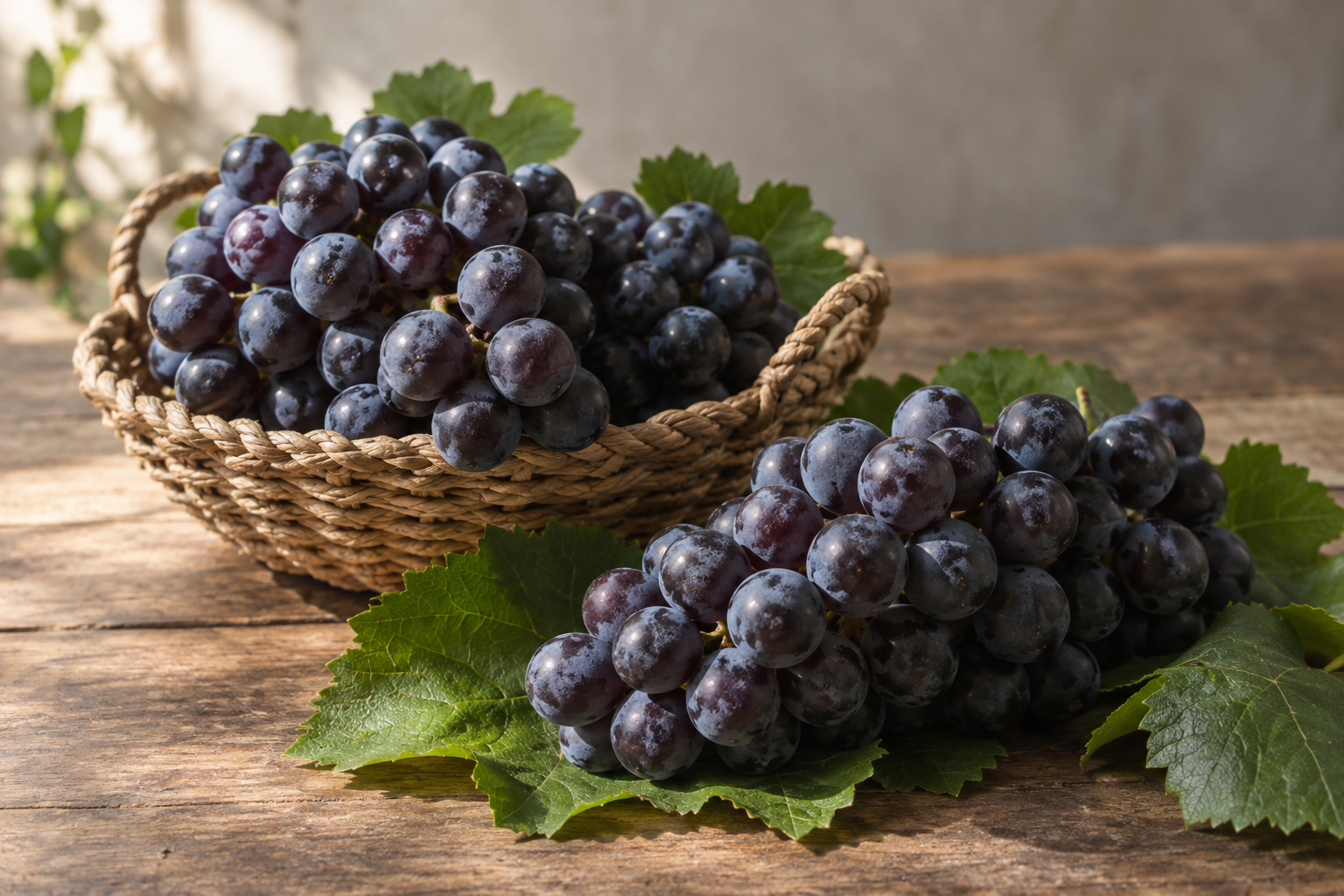
In February 2026 Ansan City named Daebu grapes one of seven representative local specialties. They are grown on Daebu Island, with cultivation reported to have started in 1954 and to cover about 190 hectares, and Ansan has held a Daebu grape festival since 1995. This is a city specialty, not a promise that any stall at the Kim Hongdo Festival will sell them. The picture is an illustration of a generic bunch of dark grapes.
See Kim Hongdo Festival →Photo: Korea Tourism Organization / Kim Ji-ho (KOGL Type 1); jajangmyeon at a restaurant in Incheon Chinatown
Jajangmyeon (black bean noodles) (짜장면)
The Korea Tourism Organization's English site says jajangmyeon was introduced to Korea after Incheon Port opened in 1883 and became popular around the Qing-dynasty concession near the port, and it names the Incheon restaurant Gonghwachun as the place that first recorded the dish's name in Hangeul. Incheon Chinatown, a short walk from the venue, is where most visitors look for it. This is a district specialty, not a promise about what any market stall will sell.
A spicy beef and radish soup served with the rice in a separate bowl, which is what 'ttaro' means. Daegu City's tourism site lists it first among the city's ten signature dishes and describes the red chili oil as made from beef fat rather than stirred-in chili powder. This is a city dish, not a claim about food at the biennale site.
Flat dumplings filled with glass noodles, chives, carrot and cabbage, boiled once, pan-fried and finished with soy sauce, according to Daegu City's tourism site, which counts it among the city's ten signature dishes. The photo shows the dish at a Daegu restaurant; it is not a picture of the biennale.
KTO's description of the festival names Hongseong's livestock, hanu (Korean beef) and handon (Korean pork), as the base of its barbecue, and Hongseong County's English tourism pages list Hanwoo among the area's famous foods. This is the regional product the festival is built around, not a promise about any one stall's menu or price.
Salted shrimp (saeu-jeot) aged in caves around Gwangcheon is one of Hongseong County's best-known products; the county's English tourism pages describe the cave ageing and the area hosts its own salted-shrimp and dried-laver festival. It is a county specialty to look for in the market town of Gwangcheon, not something confirmed to be sold at this festival.
See Hongseong Global BBQ Festival →Photo: Korea Tourism Organization / Lee Beom-su (KOGL Type 1); agujjim at Seoul's Sinsa-dong agujjim street, shown to illustrate the dish
Masan agujjim (spicy braised anglerfish) (마산 아구찜)
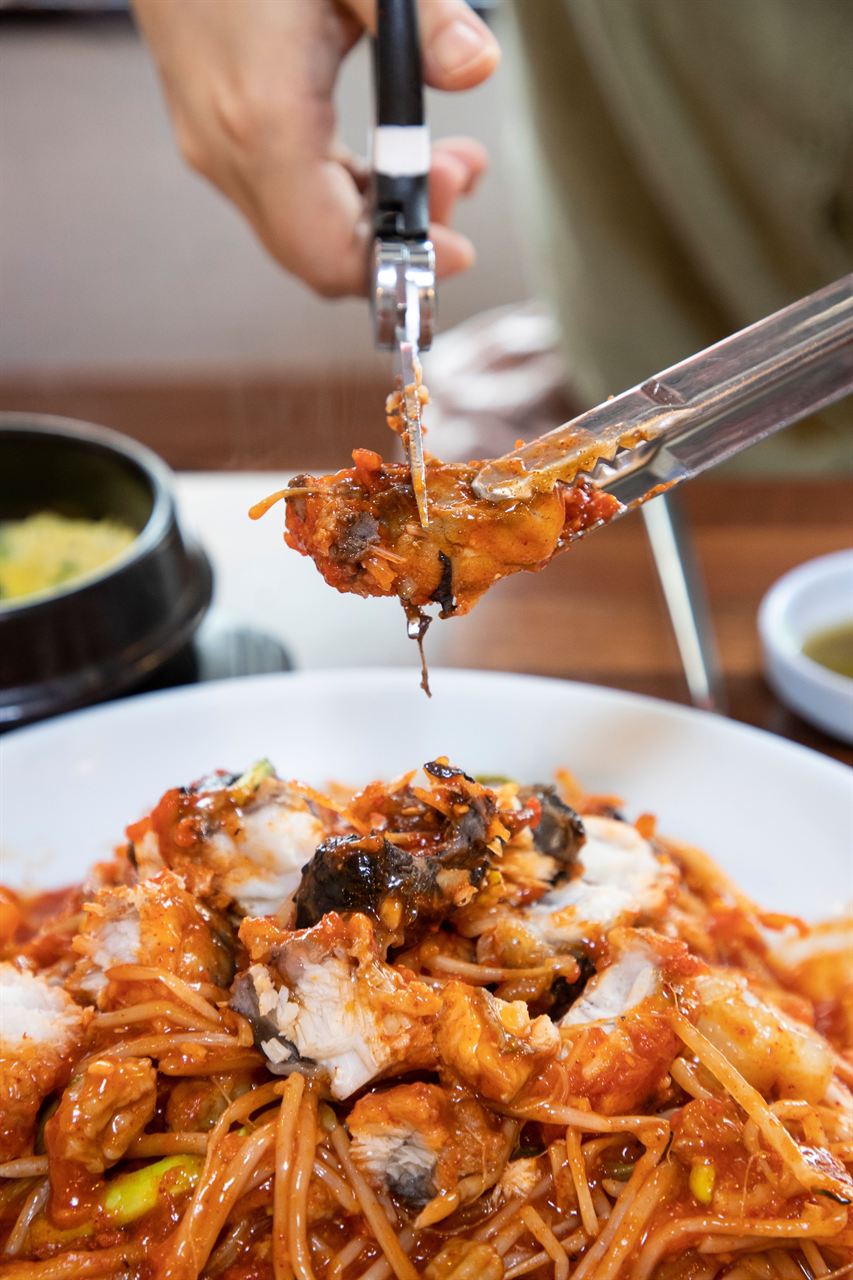
Changwon's Digital Culture Encyclopedia describes agujjim as a Masan dish of dried anglerfish with bean sprouts, minari and chili seasoning, first prepared around 1964 near the fish market in Odongdong, which is still the area most associated with it. The photo shows an agujjim plate from Seoul's Sinsa-dong agujjim street to illustrate the dish; it was not taken in Masan.
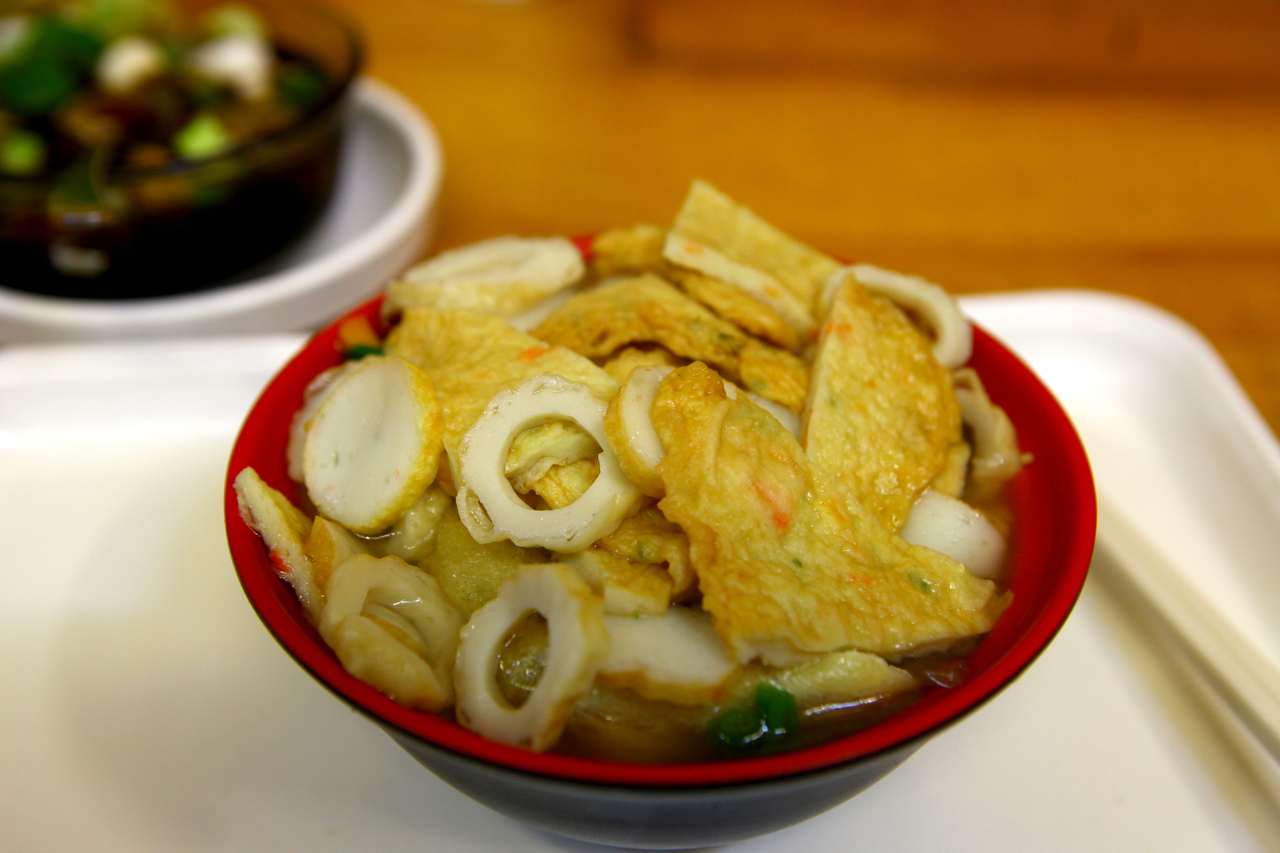
Busan is described by Korea.net and Visit Busan as the national centre of the fish-cake trade, and Samjin, founded in 1953 near the Bongnae market in Yeongdo, is the best-known name; its flagship has a small history museum and experience hall on Taejong-ro in Yeongdo. It is a regional specialty you can find in Yeongdo itself, not a claim about what the festival's food trucks will sell.