Update — rechecked on September 27, 2026, five days before opening. The dates are unchanged (October 2–4), the 10:00–21:30 hours and free admission still stand, and nothing has been postponed or cancelled. The one new visitor-facing item is transport: on September 23 the organiser published a dated bus-route diversion notice, and the official directions page states that road control runs on Saturday and Sunday (October 3–4) across the Bupyeong Station–Bupyeong Market Station and Culture Street–Bupyeong 1-dong corridors. A separate notice postponed only the citizens’ photo-contest result announcement — not the festival. No 2026 festival shuttle, parking allocation or singer line-up has been published.
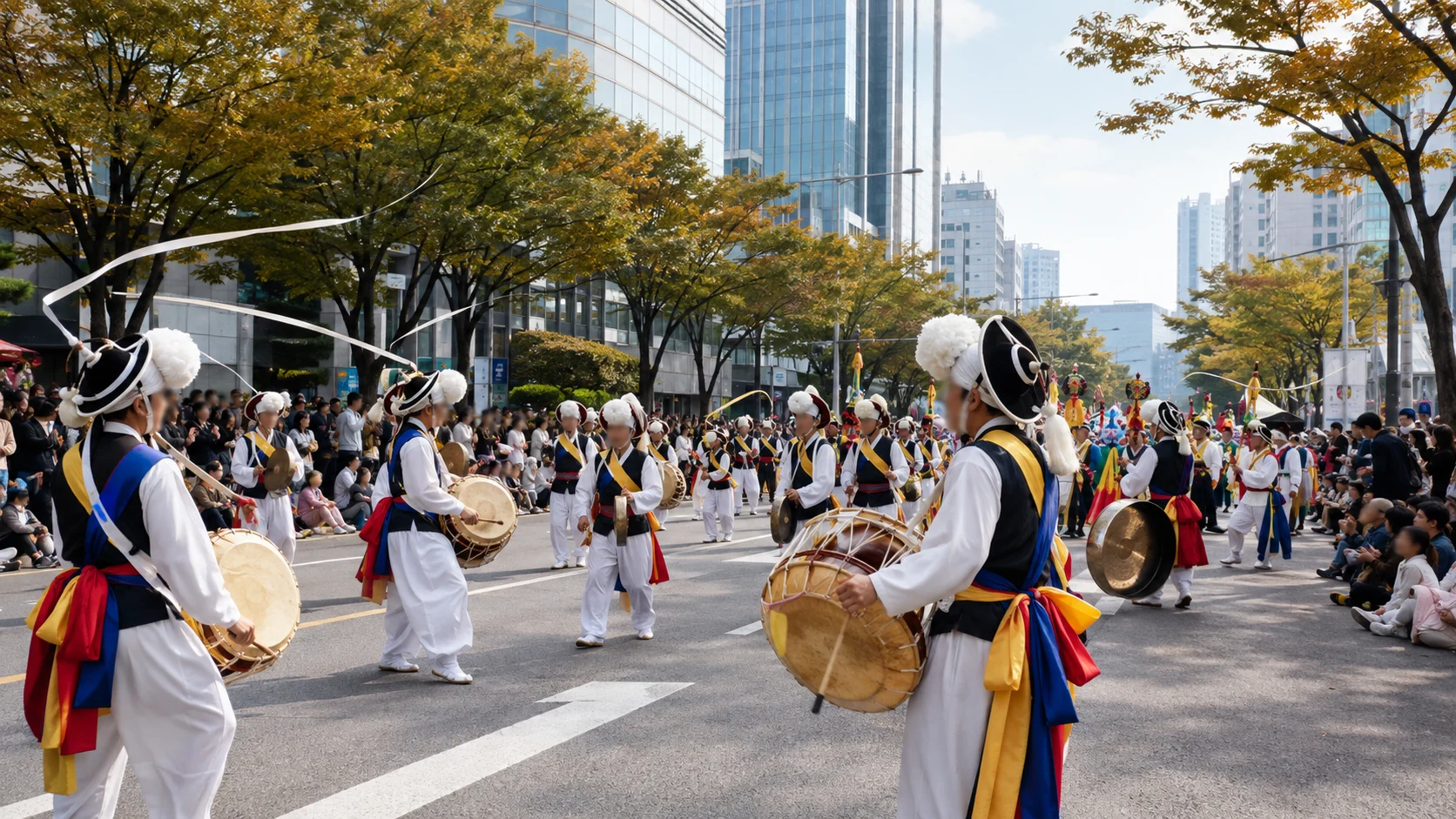
Bupyeong turns a central city road into a performance space for pungmul, the Korean tradition that combines percussion, movement and group play. The 2026 festival is its 30th edition, three decades after its first edition in 1997. It runs for three days, but the geography changes after Friday: the opening day’s neighbourhood performances are at Sintri Park, while the large street programme occupies Bupyeong-daero on Saturday and Sunday. This year the footprint also extends toward part of the restored Gulpocheon Stream.
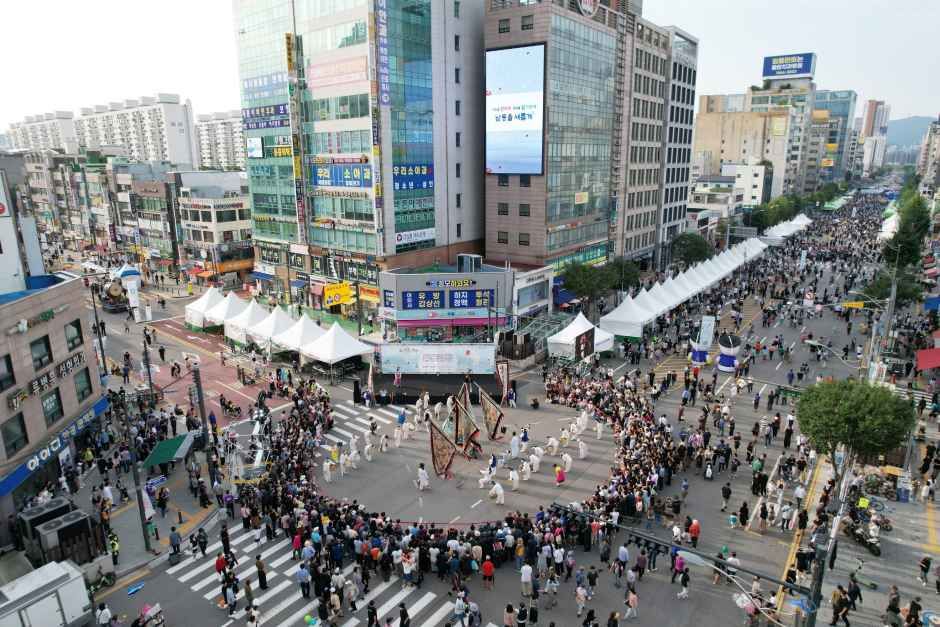
This is not one fenced ground with one entrance. On the street days there is a main stage, four road zones and several squares between Bupyeong Station and Bupyeong Market Station, with another branch toward Gulpocheon.
What you actually do here
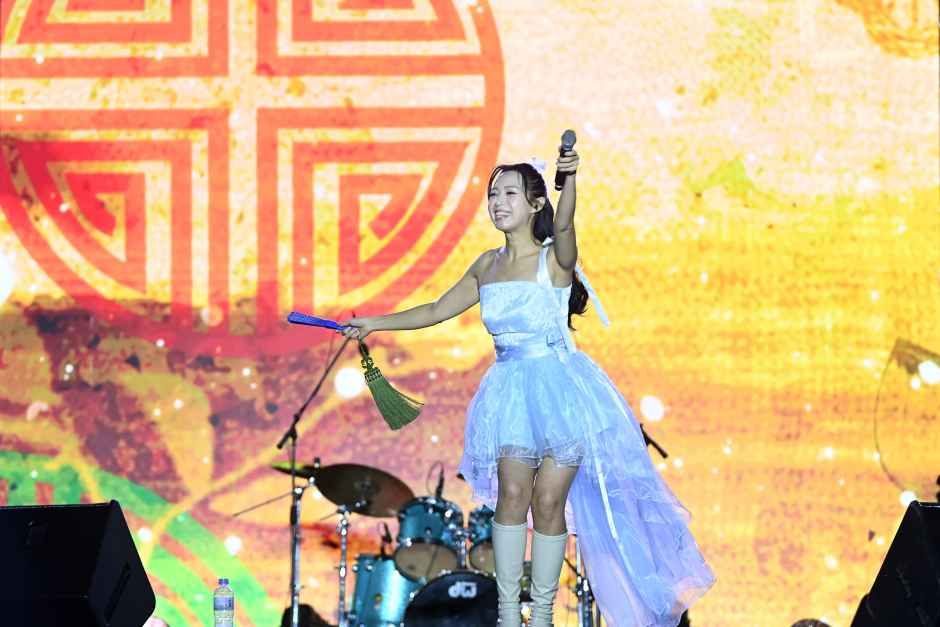
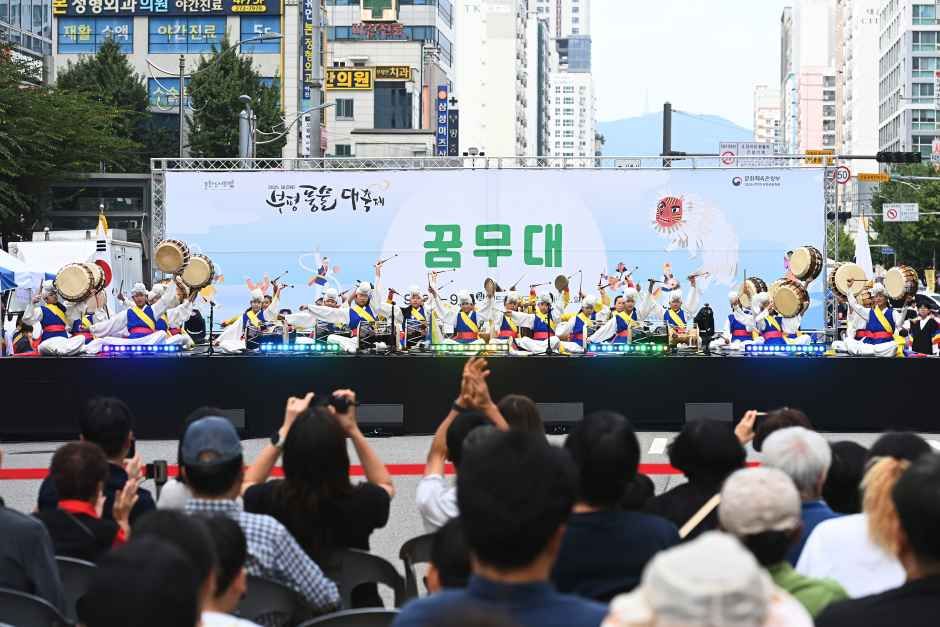
Come primarily to watch and listen, but do not expect only formal seated concerts. Pungmul combines gongs, drums and wind instruments with processional movement and dance. The street layout lets groups play in front of an audience, move through the route and bring spectators into short participatory events. The confirmed programme ranges from neighbourhood ensembles and established regional traditions to student competition, family activities and contemporary street stages.
The local foundation is visible on Friday, when all 22 Bupyeong neighbourhood pungmul groups gather at Sintri Park. Saturday and Sunday broaden the field. Bupyeong-gu’s official preview names Gumi Mueul Nongak, Imsil Pilbong Nongak, Gangneung Nongak and Seo Han-u’s beokku-chum team among the regional traditions assembled for the Daedong Pungmul Hanmadang. The official grids also include overseas folk performers, Bupyeong ensembles and a national student pungmul competition.
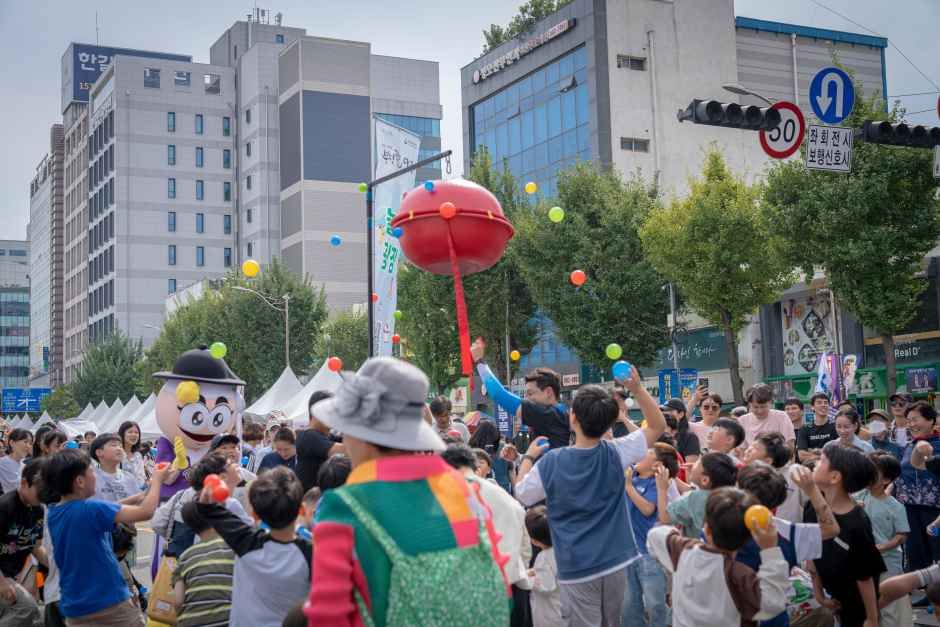
Participation is not limited to joining a percussion circle. The organiser lists Pungmul Hanpan learning sessions, the Budi and Buni sports day, Dance on Street, Voice on Street, a ssireum competition, family and traditional-culture experiences, and a road-surface drawing activity. These names establish what is programmed; they do not establish English instruction, advance places or an individual fee. Check at the relevant zone before joining.
The useful way to plan is around one or two fixed performances rather than treating the whole road as a static attraction. The published grid is dense and simultaneous: while the main stage hosts a competition or theme show, smaller acts and activities continue in the squares and road zones. General admission is free.
Programme and timetable
Friday, October 2 is the community-focused day at Sintri Park. The entrance procession and giwonje, a ritual wishing for local well-being and a successful festival, runs from 09:30 to 10:00. An opening ceremony follows at 10:00. Seven neighbourhood groups perform from 10:30 to noon, and the remaining 15 are scheduled from 13:00 to 16:20. The published closing is at 16:30. This is the clearest day for seeing how Bupyeong’s own 22 groups underpin the festival, but it is not the full Bupyeong-daero street closure programme.
Saturday, October 3 begins on the street at 10:00 with the elementary division of the 27th National Student Pungmul Competition. An opening procession is placed across the street zones at 10:30. From late morning, activities split among the main stage, Pungmul Square, Play Square, Dream Stage and road sections: the official grid includes learning sessions at 11:00, 12:30 and 14:30; a youth stage from 17:00; and the Daedong Pungmul Hanmadang from 15:00.
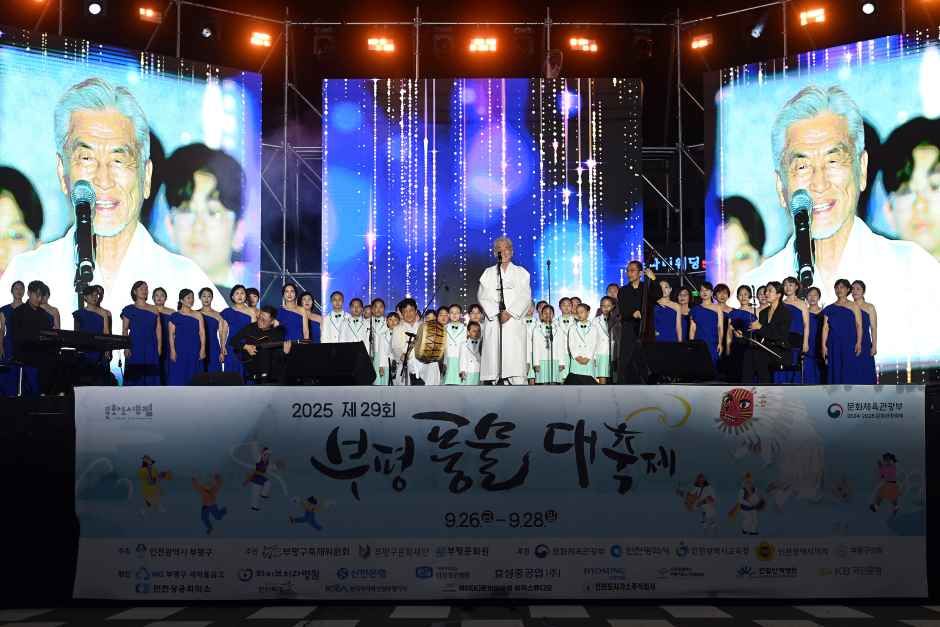
The Saturday anchor is the 30th-anniversary opening theme performance, “30 Years of Resonance, Resonance of Thanks,” at 19:00 on the main stage. Bupyeong-gu says broadcaster Oh Sang-jin will host it. A second programme by the Bupyeong Culture and Artists Association is listed at 20:30. Other performances continue in the satellite zones.
Sunday, October 4 starts at 10:00 with the middle- and high-school division of the student competition and the road drawing activity. The published family programme includes Sing Along × Hello Carbot at 11:00 and 13:00, while Pungmul Hanpan learning sessions appear at 11:00, 14:30 and 16:30. Traditional and local groups rotate through the squares during the afternoon, including the Bupyeong-gu Pungmul Troupe at 13:30 and the combined groups from Bupyeong’s 22 neighbourhoods at 16:00.
The closing performance, “From Bupyeong’s Resonance to the World’s Resonance,” starts at 19:00 on the main stage. The final scheduled event is Bupyeong Pungmul Manmanse at 21:00, shown across the main stage and street zones. Published festival hours end at 21:30. Times and placements can still change outdoors, so use the official programme page again on the morning of the visit rather than relying on a saved screenshot.
Tickets, fees and booking
The current Korea Tourism Organization record states that admission is free, and the official programme does not present a general ticket gate or booking link. You can therefore enter the street programme without reserving a festival pass. The published material does not say whether every workshop or side activity is also free, so this guide does not extend the free-admission statement to every individual booth.
There is no published seat reservation for the opening or closing theme performances. Treat the main-stage area as first-come viewing unless the organiser issues a later notice. Competition registration pages are for participants, not audience tickets.
Getting there without a car
Take Seoul Subway Line 1 from Seoul Station directly to Bupyeong Station. Current journey listings put the station-to-station ride at about 48 minutes, so “about 50 minutes” is a useful planning figure before walking and station time. Check that the train continues toward Incheon: Line 1 branches in the southwest, and the destination display matters more than the line colour alone.
The festival’s directions point visitors to Bupyeong Station exits 5 and 6 and Bupyeong Market Station exits 2 and 3. Bupyeong Station is also an interchange with Incheon Subway Line 1, while Bupyeong Market Station is on that Incheon line. If you are already elsewhere in Incheon, either may be the simpler approach. From central Seoul, the direct Line 1 ride to Bupyeong avoids a transfer.
Use the station that matches the performance zone on the day’s map. The main stage is at the entrance to the Bupyeong 119 Safety Center. Street A runs from Bupyeong Station to Pungmul Square; Street B continues from Pungmul Square to Play Square; Street C runs onward toward Dream Stage near Bupyeong Market Station; and Street D branches from Pungmul Square toward Gulpocheon Square. These are organiser labels, so keep the live web map open rather than searching for all of them as permanent attractions.
Friday needs a separate destination check because the 22-neighbourhood presentation is at Sintri Park. Do not follow a Saturday street-stage pin and assume the Friday programme is there. The official map is the safest final reference as the festival footprint covers multiple public spaces.
Parking, buses and road control
The organiser explicitly asks visitors to use public transport because parking around the venue is limited. It has not published a 2026 visitor parking allocation or festival shuttle, so there is no reliable park-and-ride plan to recommend here. Driving toward the central road and looking for a space on arrival adds exactly the uncertainty the subway avoids.
Road control applies on Saturday, October 3 and Sunday, October 4 — the two dates the 2026 directions page still lists for this year’s closure. On September 23, 2026 the organiser published a dated bus-route diversion notice for the closure, so the reroute is now confirmed rather than assumed. The official directions identify two controlled corridors: Bupyeong Station to Bupyeong Market Station, and the Culture Street intersection to the Bupyeong 1-dong Administrative Welfare Center. The site links a bus-diversion map and says route changes are also displayed on large banners at both festival entrances.
That makes a city bus a less predictable final leg even if it normally stops closer to a chosen stage. If a bus is necessary, consult the festival diversion map and a live transit app on the day; do not rely on the ordinary stop pattern. The subway approaches sit at opposite ends of the principal street corridor and avoid the diverted surface routes.
Regional food, with a distance warning
No dependable 2026 festival stall list or menu was published when this guide was checked, so it would be misleading to promise a particular meal on the grounds. The surrounding Bupyeong centre is a normal commercial district, but individual opening hours, payment methods and festival-weekend queues have not been checked.
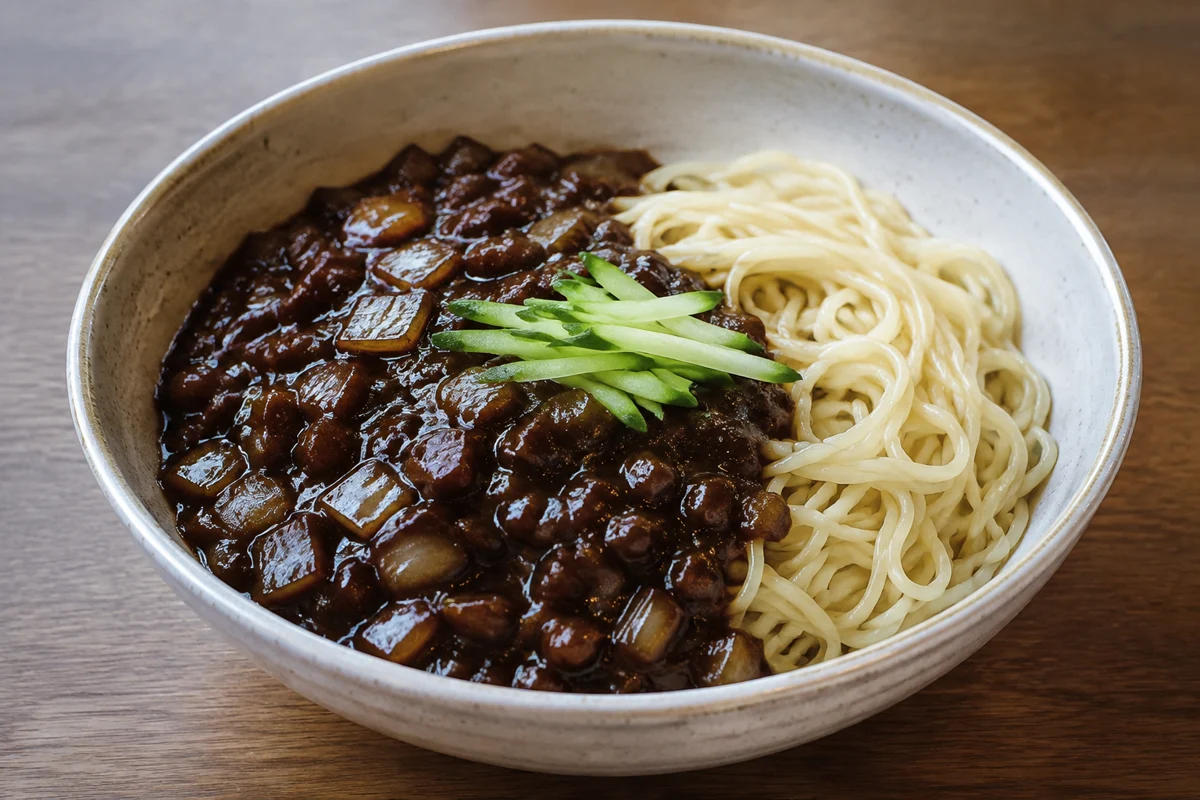
For a documented Incheon food connection, jjajangmyeon belongs to the city rather than specifically to this festival. Incheon Tourism identifies Chinatown as the birthplace of Korean-style jjajangmyeon and operates a museum devoted to the dish in the former Gonghwachun building. The familiar form is wheat noodles mixed with a dark chunjang black-bean sauce.
Chinatown is not beside Bupyeong: it is in the old port area at the other end of Line 1. Treat it as a separate Incheon stop, not as a lunch suggestion between two closely timed Bupyeong performances. Nothing in the 2026 programme confirms that jjajangmyeon will be sold at the festival.
Honest assessment
This is an easy festival to reach from Seoul and does not require a long-distance train reservation. The practical strength is choice: Friday shows the neighbourhood tradition in concentrated form, Saturday offers the anniversary opening and broad street programme, and Sunday combines student competition, family programming and the 21:00 communal finale. A visitor who mainly wants pungmul should prioritise the Friday groups, Saturday’s Daedong Pungmul Hanmadang or Sunday’s late sequence rather than choosing a time from the word “festival” alone.
Its trade-off is scale. Bupyeong-gu estimated about 600,000 visits to the two street-festival days in 2024. That is a previous-edition estimate, not a forecast for 2026, but it is useful evidence that this is not a small neighbourhood performance despite the strong local participation. Expect Bupyeong Station exits, narrow viewing fronts and the main-stage approach to become busy around the opening, closing and procession.
Arrive before the performance you care about, not at its advertised start. Use Bupyeong Market Station if the Dream Stage end is your priority, and Bupyeong Station for Street A and the southern approach; crossing the entire route through a crowd takes longer than the map suggests. For the 21:00 Sunday finale, decide in advance which station end you want afterward rather than moving against the dispersing audience.
The format is percussion-led and visually legible without a long explanation, which makes it more accessible than a dialogue-heavy theatre festival. That is not evidence of language service. The official site currently exposes a foreigners/leaflet area with language headings, but no complete 2026 English material was available on the checked page, so English announcements and assistance remain unverified.
The honest recommendation is a half-day or evening visit built around two confirmed entries. Allow slack between zones, and recheck the programme and diversion notice before departure. Do not plan around an unconfirmed singer line-up, shuttle or food market.