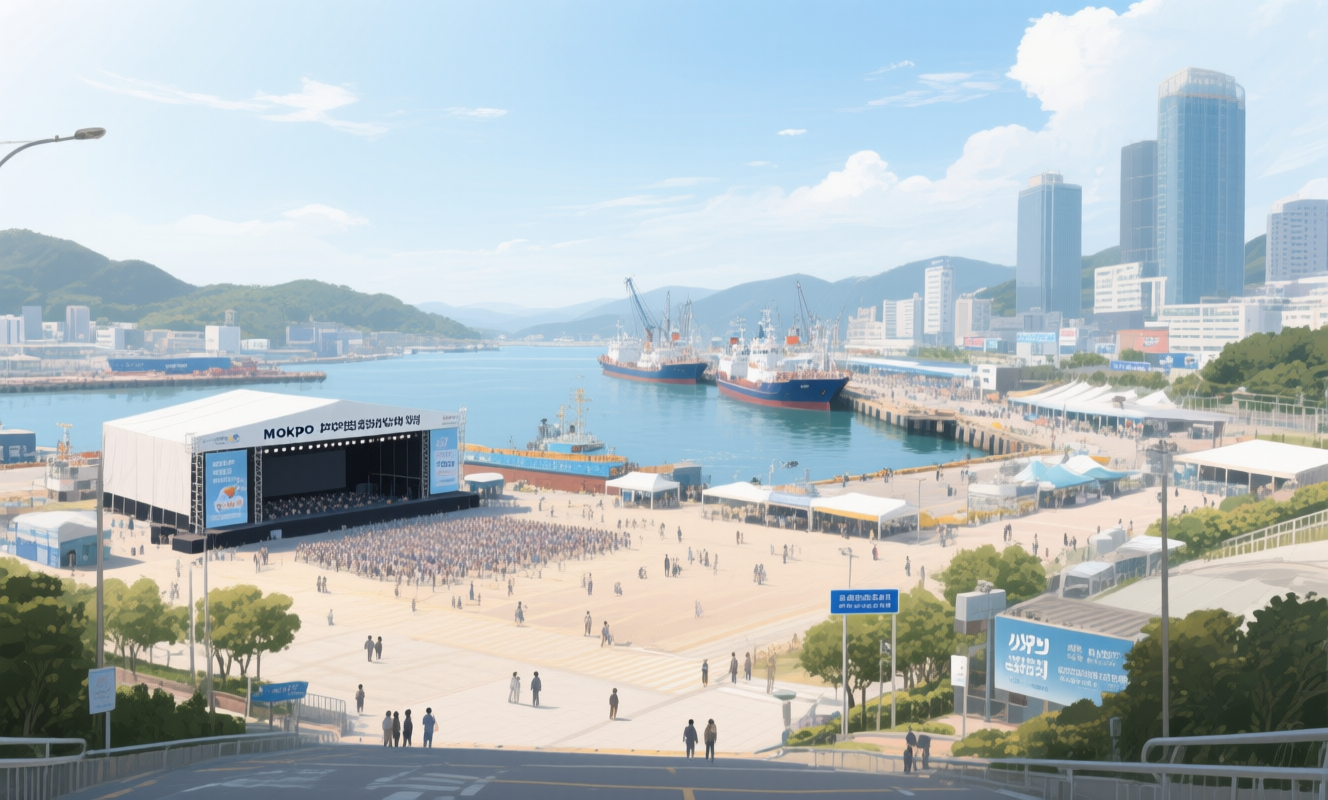
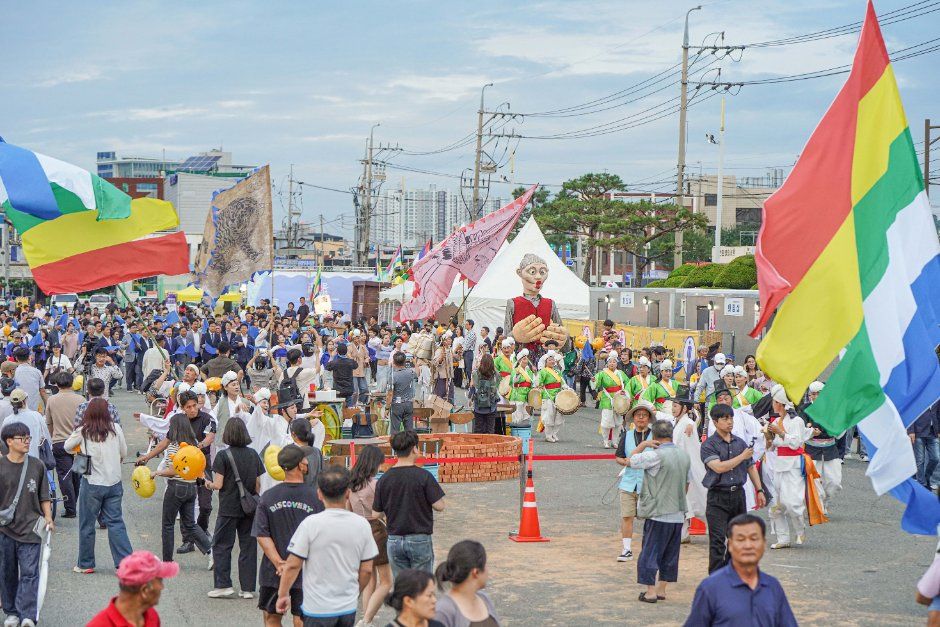
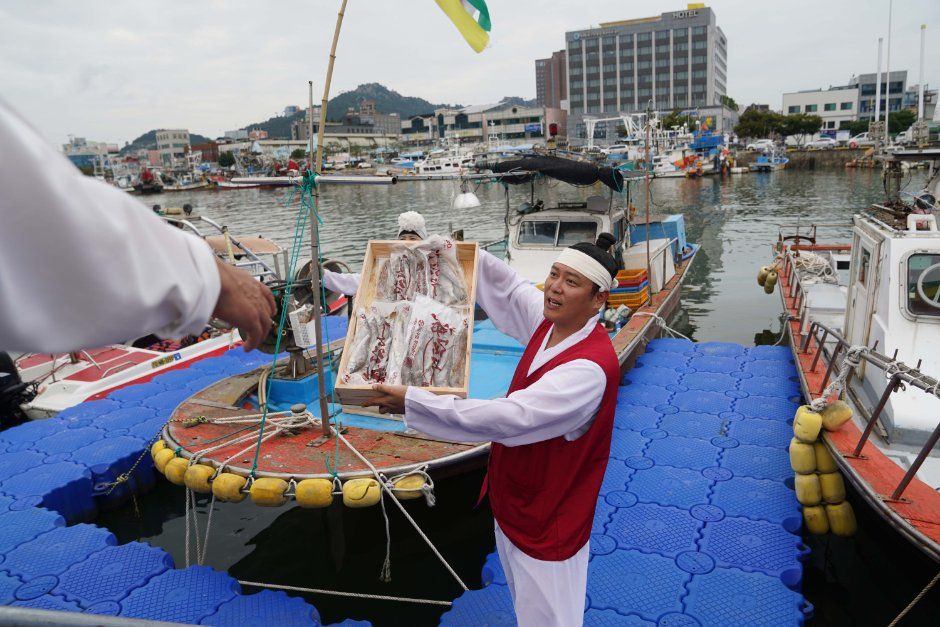
Mokpo’s harbour festival turns the port and the island park of Samhakdo into a stage for the city’s fish-market history. The Korea Tourism Organization (KTO) lists the 2026 edition for October 16-18, a Friday to a Sunday, with the grounds open from 12:00 to 21:00. The central idea is pasi, a seasonal floating fish market that once formed around fishing boats at sea. The festival re-creates it on the quay, so you can watch a mock auction, walk a retro dockside street and eat seafood within the same few hundred metres.
General admission is free. The venue is listed by KTO as the Mokpo Port and Samhakdo area, with a registered address of 6, Samhak-ro 92beon-gil. The organiser is Mokpo City, and its tourism office can be reached on 061-270-8441.
What you actually do here
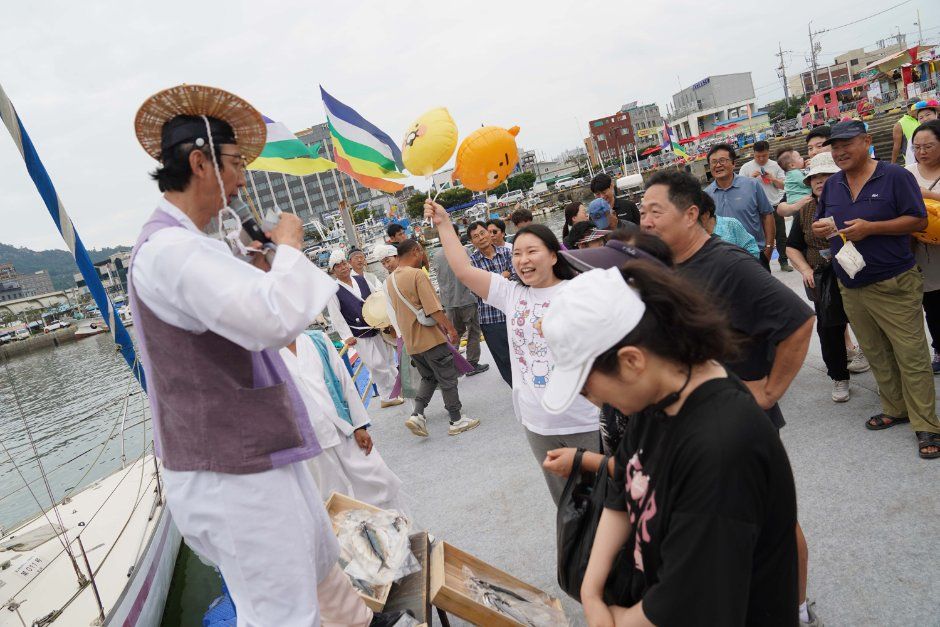
The programme is organised around four themes in KTO’s Korean record. Traditional pasi includes the staged arrival of a fishing boat (“Pasi, Manseon-ida”, roughly “Pasi, the boat comes in full”), a pasi auction show, a fish-market lane and a squid and prawn grill. Modern pasi covers a retro dockside street, wish glass floats, a dockside fashion show and a music café. Food includes a “fisherman’s table”, a market-style food area and a skate-filleting show. Participation includes “A Fisherman’s Day”, a harbour art gallery and bare-handed fish catching.
The official site says the music café plays song requests from the 1960s to the 1990s, and that requests are made through a form on the festival website. The page also describes an area where visitors can grill seafood themselves. I could not confirm how those stations are priced or how they are queued, so treat them as things to look for rather than things to plan the day around.
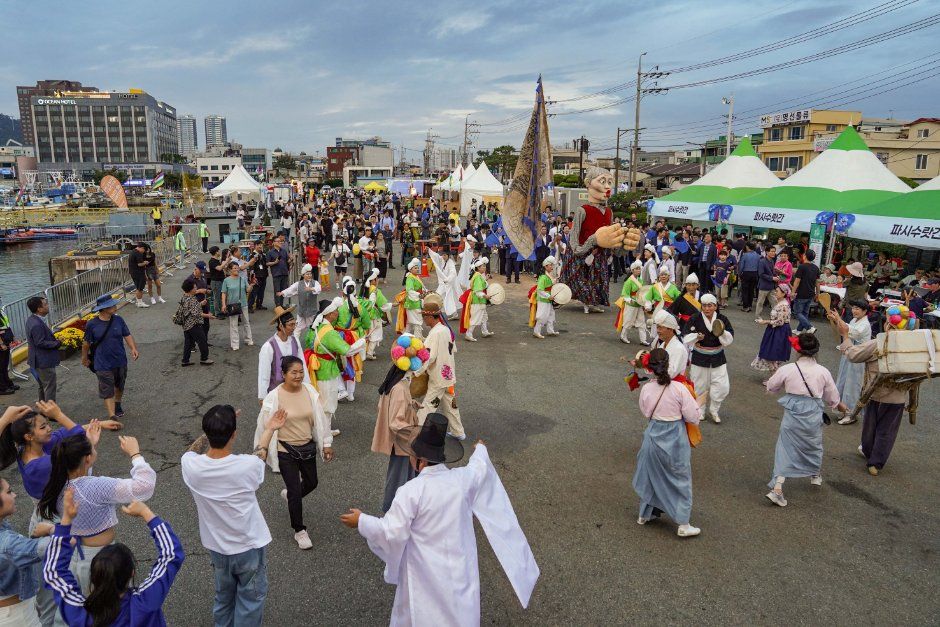
Some of this is performance. The official site names “Pasi, Manseon-ida” as the headline staged event, held at the pasi stage at 18:00 on October 16 and 17. It describes the festival as a “nine joys” format: three things to see, three to eat and three to do. KTO’s overview describes the stow-net fishing boat arrival, the auction show, the retro street and the fish-market street as the unique Mokpo elements.
Programme and timetable
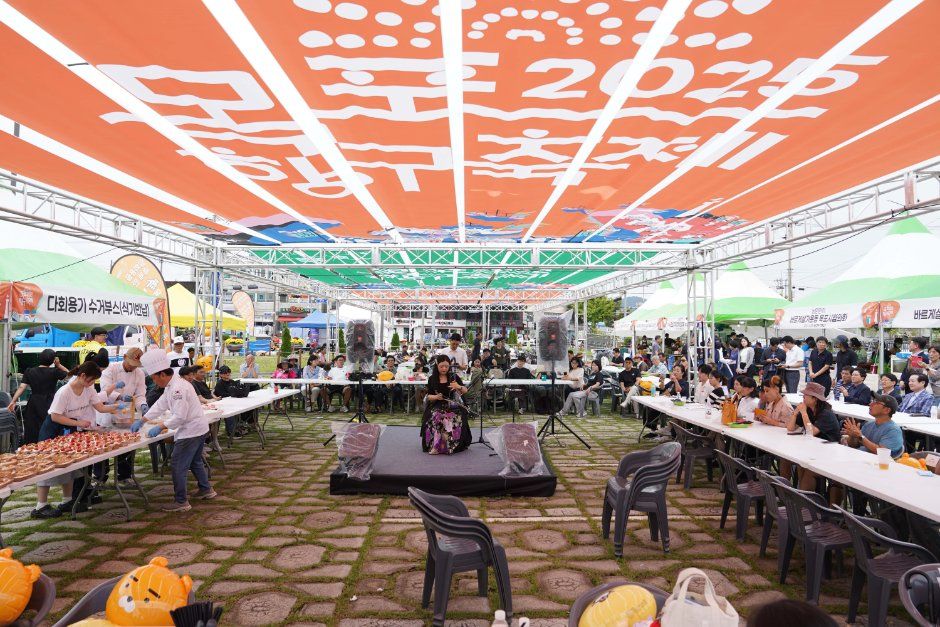
The grounds open at noon and close at 21:00, so there is room to build a half-day or a full afternoon. The official site gives a 19:00 main-stage concert every evening:
- Friday, October 16: the opening sea concert, with Nobrain and Ulala Session listed.
- Saturday, October 17: the harbour concert, with Hwang Garam, Seo Young-eun, Lee Byung-chan and Lim Jung-hee listed.
- Sunday, October 18: the Nanyoung Song Festival, a singing contest. Korean-language sources name invited singers for it, but I did not confirm a list on the official site and have left names out.
The names above come from the official 2026 site. Concert line-ups can change. Treat the evening lineup as the most likely thing to shift. The “Fisherman’s Day” game stage is the programme with registration. When I checked the official site, it showed October 16 at 16:30 and October 17 between 14:00 and 15:30 as bookable slots, and October 18 as already full. That status will have changed by the time you read this.
Tickets, fees and booking
KTO lists admission as free. That covers walking in and watching the performances. It does not cover food, drinks or anything operated as a paid stall. The only booking channels I found on the official site are registration for the “Fisherman’s Day” game stages and the playlist request form for the music café. I did not find a published 2026 price for any food, auction purchase or hands-on activity, so nothing in this guide quotes one.
There is also a tie-in with Mokpo’s Dongbu Market. Korean news on October 2 reported that the market’s evening “Dal-Dal” night market reopens after a summer break, with a stamp tour linked to the harbour festival. The reports describe it as aimed at people visiting the festival, but I did not verify the stamp-tour rules, dates or rewards.
Getting there without a car
The simplest route from Seoul is a direct KTX from Yongsan Station to Mokpo Station. Two independent timetable summaries give roughly two hours twenty minutes at the fast end and about two and a half hours for typical services, so plan on 2 hours 20 minutes to 2 hours 40 minutes and check the exact train on the Korail app or at the station. Slower services take much longer, so avoid anything that isn’t a KTX if you want a same-day return.
From Mokpo Station you still need a local leg to the harbour. The official site lists three festival shuttle routes, but none of them starts at the rail station. Instead they start at:
- a temporary stop at the Namhang car park (20-minute intervals, 11:00-22:00);
- Yudalsan Post Office (15-minute intervals, 11:00-22:00);
- Peace Square and the Cultural Arts Hall (20-40-minute intervals, 11:00-22:30).
All three run to the festival entrance. The site notes that schedules can be adjusted. From the station you will most likely take a taxi or local bus, and a Korean map app set to the festival address will give the current route. I did not verify the station-to-venue taxi time or fare, so none is given here.
Parking, shuttles and traffic control
If you drive, the official site says that parking information around the festival, including the Namhang car park, will be announced later based on final materials. I found no confirmed 2026 parking plan or road-closure list. The shuttle routes above are the strongest sign of the intended approach: park at a remote lot and ride in rather than drive to the quay.
Plan for crowds in the evening, when the 19:00 concerts and 18:00 pasi performance draw people to the same part of the harbour. If you need to leave at closing, note that the shuttles listed on the official site run until 22:00 or 22:30 depending on the route, which is later than the 21:00 close.
Day trip or overnight
A day trip from Seoul is possible on paper given the KTX time, but I could not verify the last return train, so I do not state one. Check the return before you buy the outbound ticket. If you plan to stay for a 19:00 concert, build the return around it, or consider an overnight stay. This guide did not verify any hotel availability, so none is recommended.
Food on site and nearby
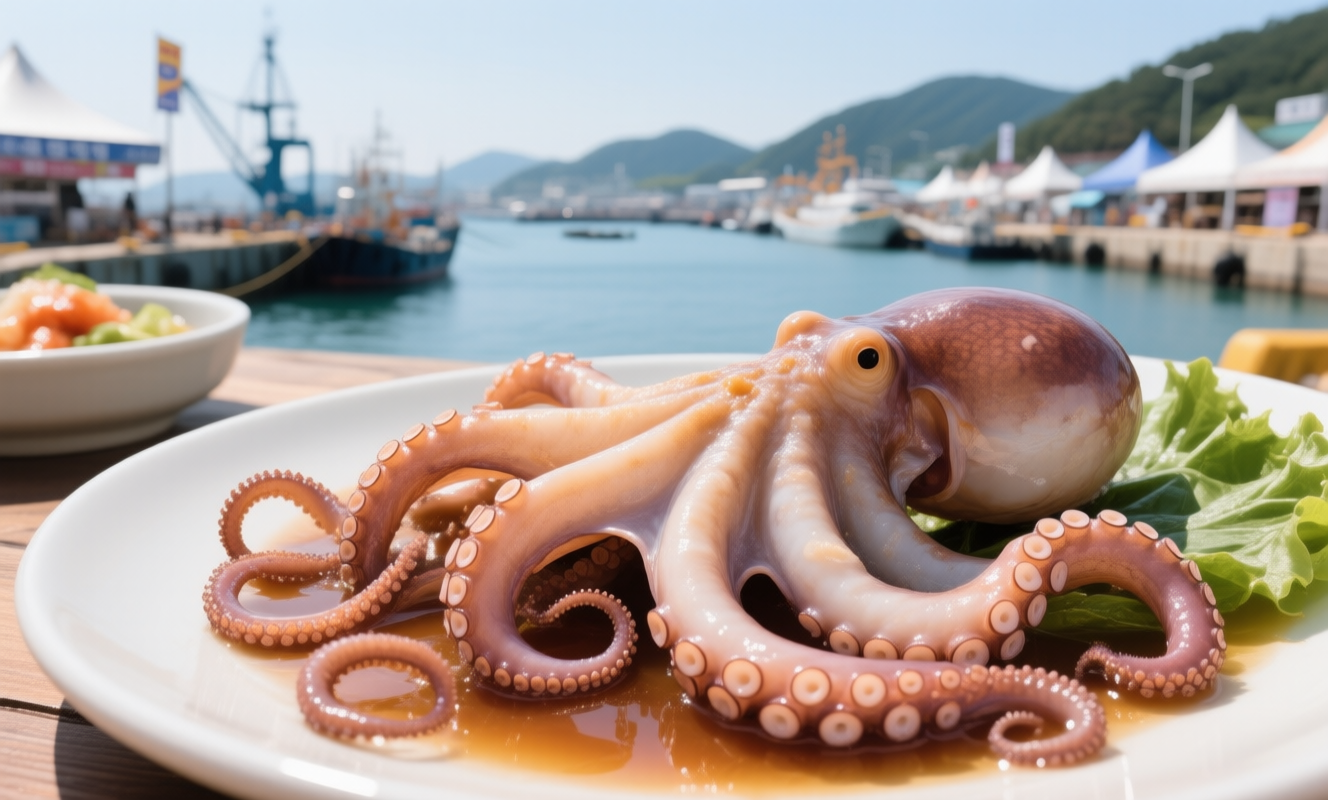
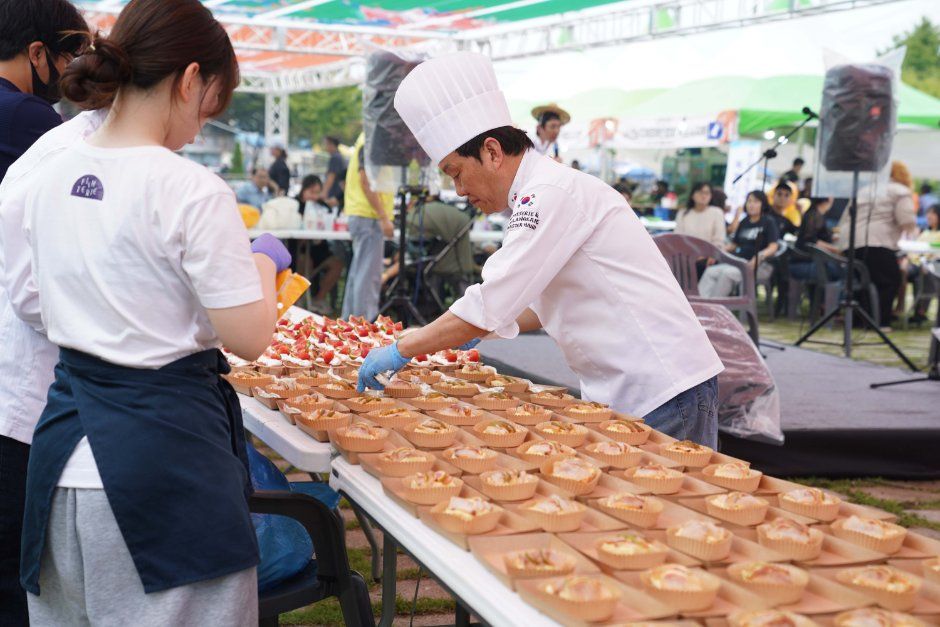
KTO’s Korean record carries a warning: the food notes in it still describe the 2025 festival, and the 2026 food information is being updated. For that reason, I’m not naming specific 2026 stalls or dishes. The official site does describe the food zones: a “fisherman’s table” where chefs and local groups serve Mokpo seafood, a market-style food area, and the grill zone. It also lists the “nine flavours” of Mokpo as a local showcase, including live octopus, fermented skate with pork and kimchi, raw croaker, braised hairtail and monkfish stew.
Raw and fermented seafood is common on Mokpo menus. If you are not sure what a dish contains, ask before ordering. Mokpo City’s tourism pages list sebal-nakji and galchi-jorim among its specialties, and those are described in more detail below.
Honest assessment
The festival’s strength is that the theme is rooted in the setting. A harbour festival held at an actual harbour, with a staged auction and a retro street, gives you more to look at than a generic stage event. The free entry and the shuttle system also make it low-risk to drop in for a few hours.
Its weaknesses are practical. The official site did not have a final parking plan, KTO’s food notes are from last year, and I found no English-language programme details. The official site does link an English version, but I did not review it. The festival was held in late September in 2025, according to Korean news, so this year’s move to mid-October means weather and seafood seasons may feel different from earlier reports. Check the official site’s notice board shortly before you travel.