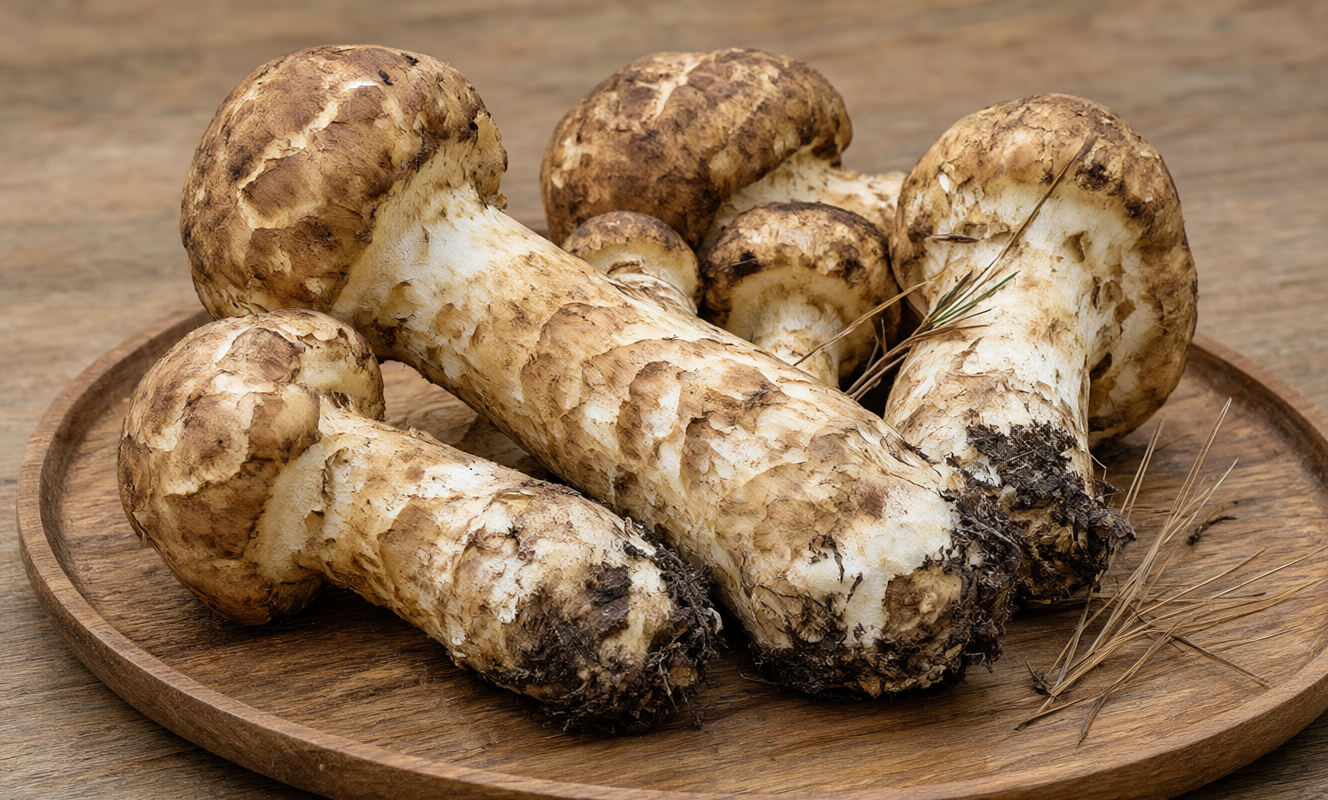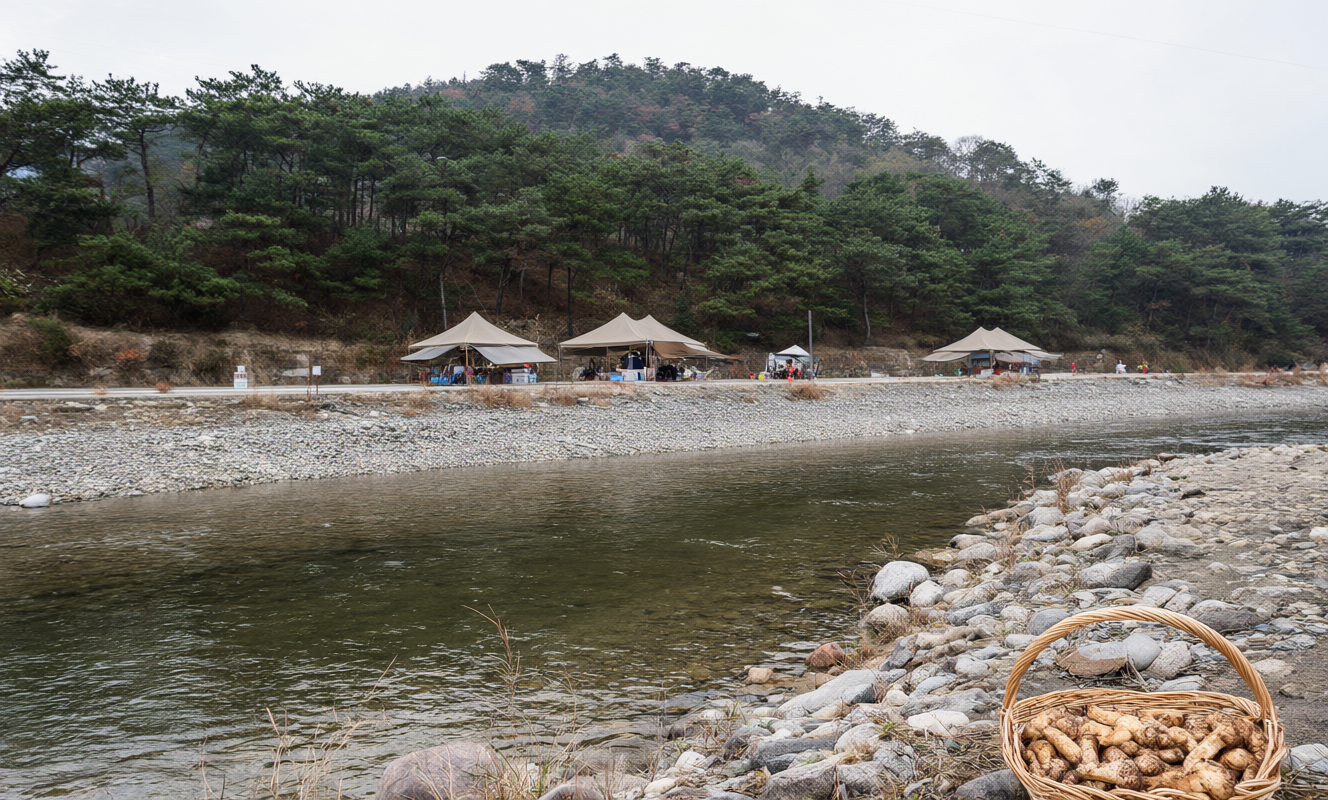
Yangyang’s festival puts two things from the same landscape side by side: wild pine mushrooms from the forested hills and salmon that return to the Namdaecheon river from the ocean. Korean tourism sources say more than 70 percent of the salmon returning to Korean rivers come back to this one, and Korean press reports that Yangyang pine mushroom was registered in 2006 as the Korea Forest Service’s first geographical-indication forest product. The event is on the Namdaecheon riverbank in Yangyang town, at 589 Ilchul-ro.
The 2026 festival runs 16-18 October (Friday to Sunday). KTO and the official site give opening hours of 10:00-21:00, with the proviso that each activity has its own sessions. Entry is free; the participatory activities are where money changes hands, and they are the reason to plan ahead.
What you actually do here
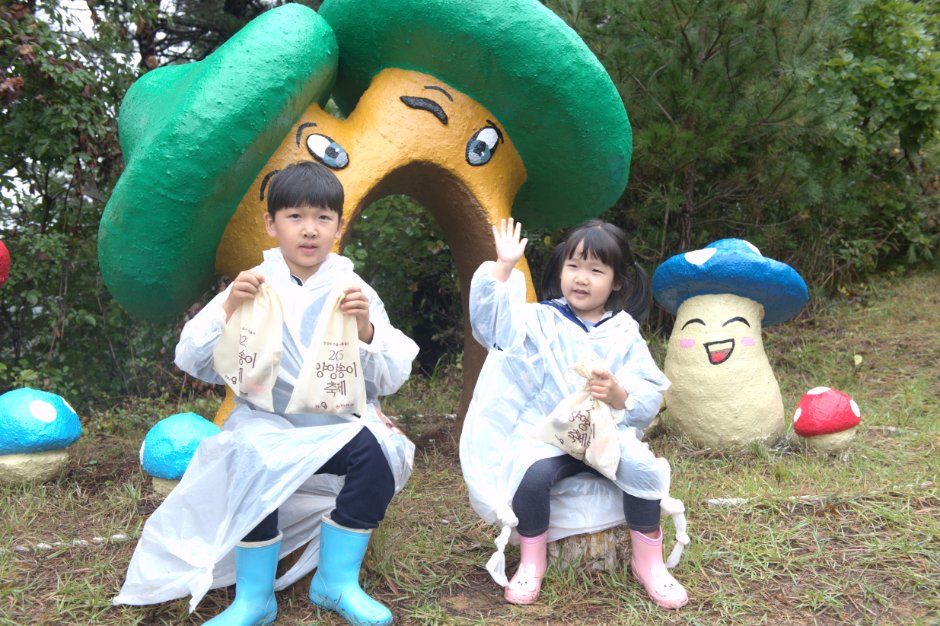
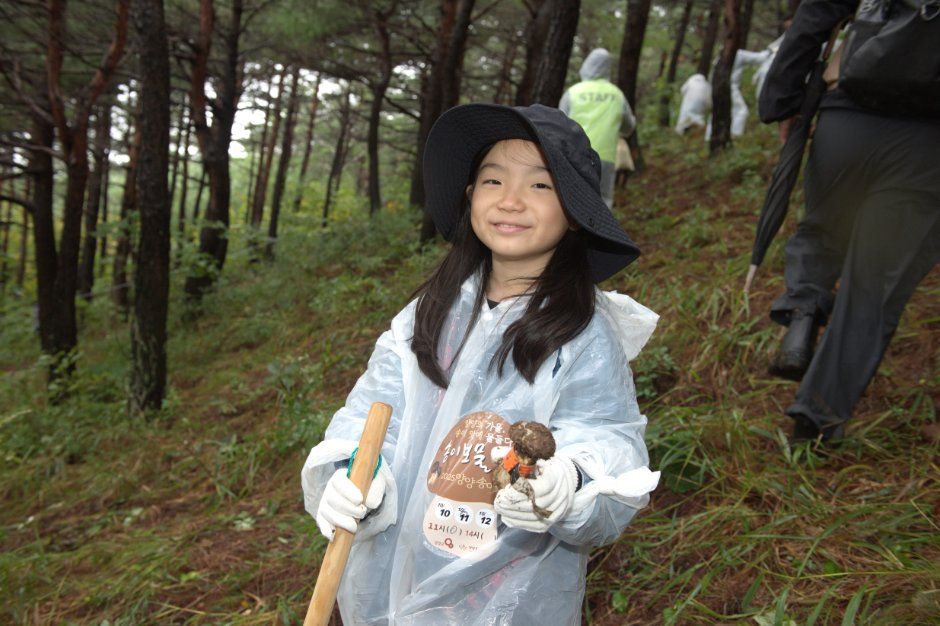
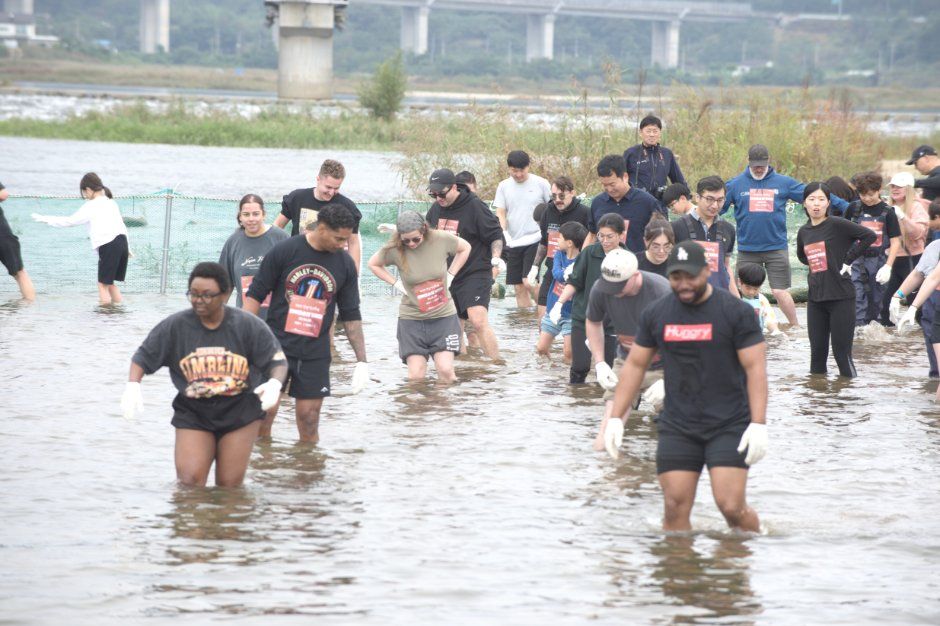
KTO’s programme list names thirteen activities. The two that define the event are the pine mushroom treasure hunt, where small groups walk into a pine forest to search for mushrooms, and salmon bare-handed catching, where participants wade into the Namdaecheon and try to grab fish with their hands. In the official photos, the salmon-catching participants wear matching bibs and stand in shallow, knee-to-thigh-deep river water, so this is a get-wet activity rather than a spectator one. Press reports say to bring aqua shoes, a towel and a change of clothes.
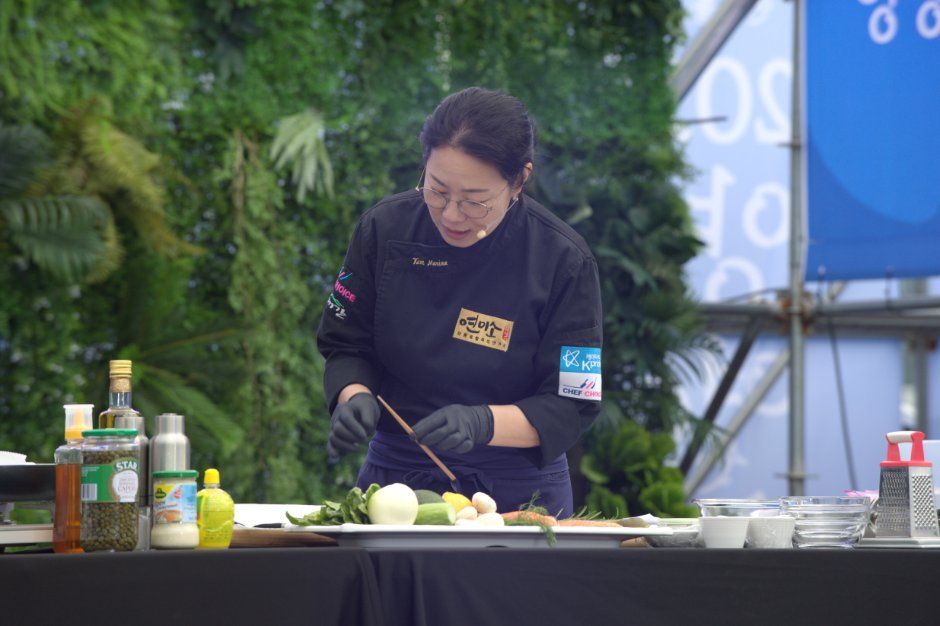
There are also less physical options. The salmon ecology tour is a guided walk where a docent explains the fish’s return journey. A pine mushroom and salmon cooking show has chefs demonstrate dishes on stage. A pine mushroom liqueur workshop lets you make a 330 ml bottle to take home. The Songi-dosa auction show is billed by KTO as starting bids from 1,000 won. For children there are a stamp tour (six stamps complete a poster), a snack-collage activity and a “gacha” zone where you complete missions for small gifts. A custom T-shirt activity is free if you bring a receipt from a festival purchase.
I could not find a source that spells out what participants keep, whether that is the mushrooms found or the fish caught, so do not assume you take anything home beyond the voucher refund and the liqueur bottle. Ask at the registration tent.
Programme and timetable
The official site gives fixed session times for the three headline activities:
- Pine mushroom treasure hunt: 10:00, 12:30 and 14:30.
- Salmon bare-handed catching: 11:00, 13:30 and 15:30.
- Salmon ecology tour (free): 10:30-12:00, 13:30-15:00 and 15:30-17:00.
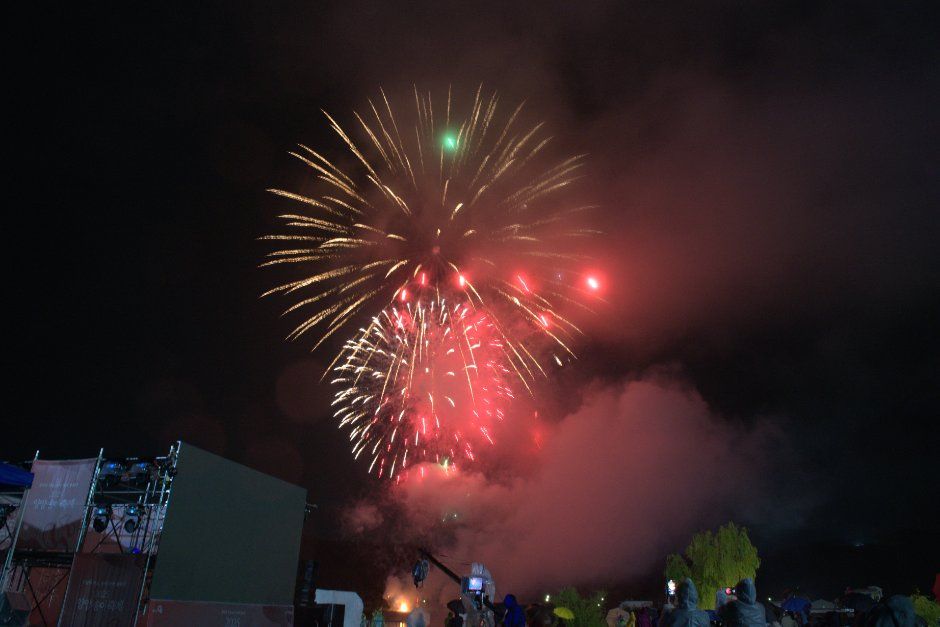
The performance grid is more evening-heavy. On Friday 16 October, small daytime acts run from 11:00 to 13:30. In the evening, pre-show folk performances start at 18:00 and the opening ceremony is at 19:00. Celebration performances follow, ending with trot singer Kim Hye-yeon and a fireworks show at 20:30-21:00. Saturday 17 October has no daytime performances on the published grid. It is a run of evening sets from 18:00, mostly local bands, building to the punk band Crying Nut at 20:30. On Sunday 18 October acts run 11:00-12:30, folk pre-shows start at 15:00, and the closing ceremony and after-party begin at 16:00. Park Ji-heon, a local band and Park Sang-min follow, finishing at 18:00, so the published schedule ends three hours before the nominal 21:00 closing time.
Tickets, fees and booking
There is no entry ticket. For the paid activities, the official site and two separate Korean sources agree on the prices: 30,000 won per person for the treasure hunt and salmon catching, with 10,000 won of that returned as Yangyang local gift vouchers. These vouchers are only useful if you spend them in Yangyang, so budget on the assumption that the net cost is 20,000 won only if you plan to shop locally. On Friday 16 October, a weekday discount takes the headline price down to 20,000 won. The liqueur workshop costs 20,000 won.
Advance booking opened on 28 September at 9:00 and is done through the Korean-language Go-Go Yangyang app. Press reports give per-session quotas: 50 advance and 30 on-site places for the treasure hunt, and 60 advance plus 40 on-site (100 in total) for salmon catching. On-site spots are first come, first served and could fill early. Cancellation and refund rules and any minimum age were not stated in the sources I could check. I also could not confirm whether the app accepts overseas phone numbers, so the safest fallback is to call the organiser on 033-671-3803.
Getting there without a car
The simplest route from Seoul is an express bus from Dong Seoul Bus Terminal to Yangyang, which two travel-guide sources put at about two hours ten minutes to two and a half hours, with departures roughly every 30 to 60 minutes. The bus uses the Seoul-Yangyang Expressway. The Yangyang terminal is at 2700 Donghae-daero in Yangyang-eup, in the same town as the festival. One local listing puts the walk from the terminal to the Namdaecheon at under a kilometre, but I could not confirm the exact festival entrance, so set the festival address in a Korean map app before you walk.
You could also take a KTX train from Seoul Station to Gangneung, which one routing site puts at about 1 hour 51 minutes, then continue north by bus. I did not verify the Gangneung-to-Yangyang leg’s timetable, so the direct bus is the easier plan. If you are staying on the coast anyway, check bus connections from your base on the day.
Parking, shuttles and traffic control
The official site lists five car parks with 730 spaces in total: 200 on the riverbank opposite the Yangyang indoor sports centre, 200 and 80 at the two sports-park lots, 150 in the paid public lot at the sports centre, and 100 at the county council lot on Saturday and Sunday. That is a modest number for a three-day festival with evening concerts, so expect to park some distance away on busy evenings. No shuttle schedule or road-closure notice was published when this article was written.
Day trip or overnight
A day trip from Seoul works for the daytime programme: with a bus of around two and a quarter hours each way, you can reach the 10:00 treasure hunt or the 11:00 salmon session if you take an early service. The unverified piece is the last bus back, which decides whether you can stay for the evening concerts. I have not stated a return time because I could not find one for the festival dates; check it before booking. Accommodation prices and availability were not checked, so no individual hotel is recommended here, but anyone who wants the Saturday 20:30 concert should expect to stay overnight on the east coast.
Food on site and nearby
The official site describes a “local food and specialty market” with Yangyang restaurants, food trucks, grilled salmon sold by the local Saemaul association and products from the fishery cooperative. A rest area with a food court is also listed. The sources do not give menu prices, vegetarian options or payment methods, so none are promised here. Pine mushroom is a premium ingredient, and Korean broadcasters reported this month that supply was down and prices were high, so do not assume that mushroom dishes will be cheap.
Honest assessment
The festival’s strength is that the activities are tied to the place. The mushrooms come from the hills behind the town, and the salmon come up the river you are standing beside, so the programme explains why Yangyang is known for them. The free entry and a free guided ecology tour mean you can have a real visit without paying for the headline activities.
The weaknesses are practical. The two most famous activities are timed and capped, and the booking process is in Korean through a phone app. Pine mushrooms are in short supply and expensive this year, according to local press. There is no published shuttle plan and 730 parking spaces is not many. The performance schedule leans towards local bands and trot rather than a large-name line-up, and Sunday’s ends at 18:00. If you want the hands-on activities, book as early as you can or arrive for the morning sessions; if you only want food and a riverside stroll, the free entry makes that an easy and cheap visit.