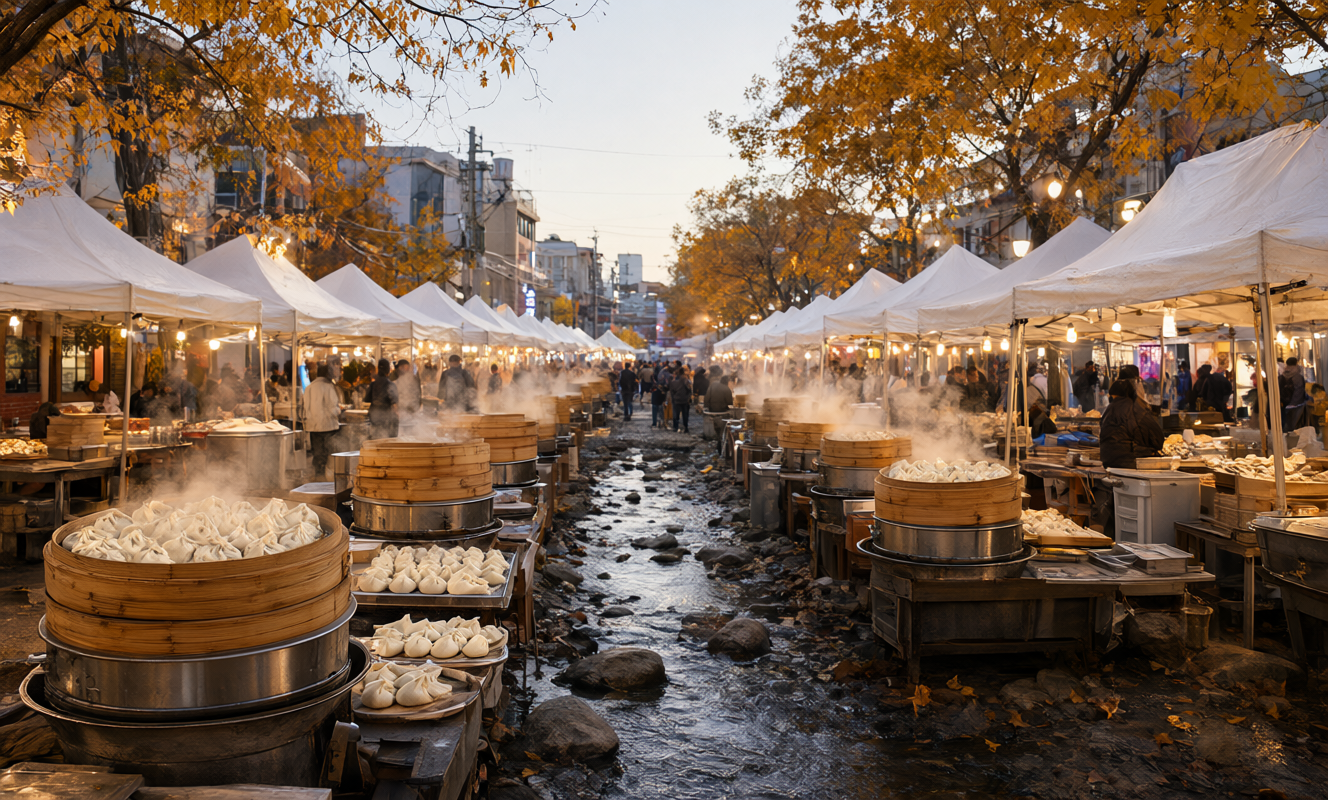
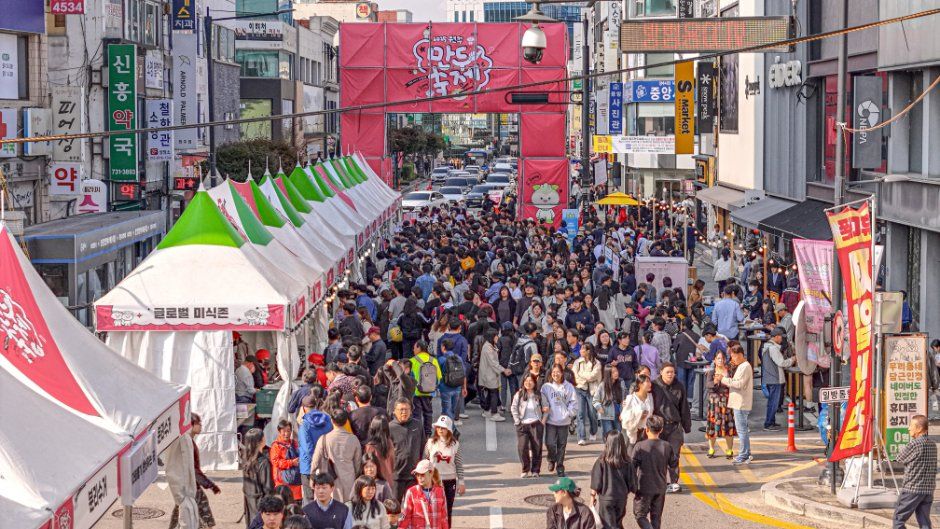
Wonju’s dumpling festival turns a city’s market streets into a three-day food crawl. Wonju City organises it with the Wonju Culture Foundation, and the 2026 edition runs October 23-25 under a slogan that loosely means “a round at the market, full of joy with dumplings.” It began in 2023 according to the Ministry of Culture’s festival plan, and the 2025 edition was held on October 24-26 around Wonil-ro, the road through the old centre. Last December a headline on the city’s own evaluation report cited about 410,000 visitors for 2025, which tells you the scale to expect, though the figure itself was not checked against the report.
The 2026 festival is arranged differently. The city says it has moved the centre of gravity to Wonju Stream and tied it to Culture Street and the Jungang traditional market, partly to reduce the disruption caused by closing Wonil-ro. The Korea Tourism Organization lists entry as free and the operating hours as 11:00-21:00.
What you actually do here
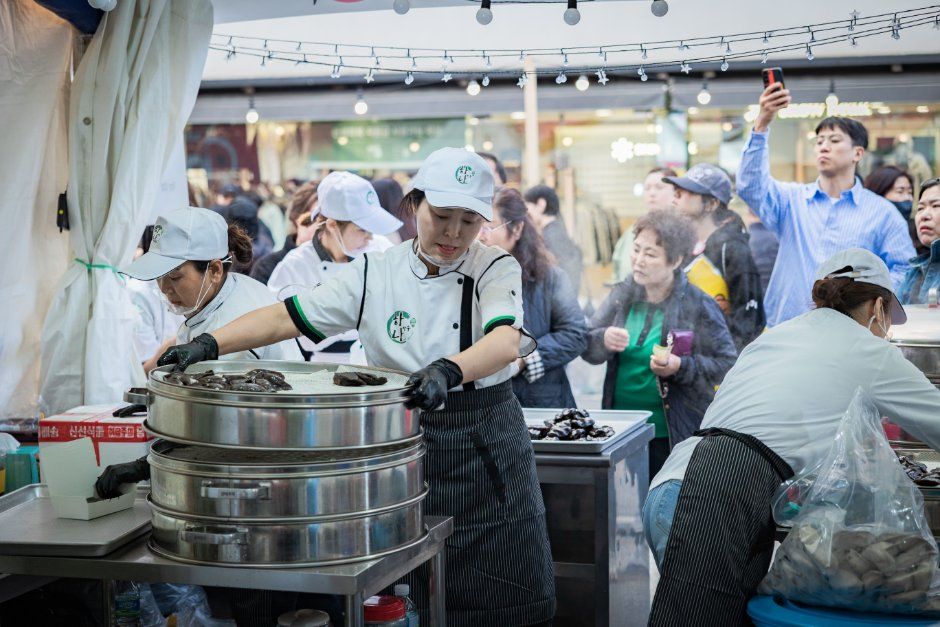
The core is eating, in two named zones. The Wonju Dumpling Zone has 15 local vendors who were chosen after a preliminary tasting round, so the lineup is curated rather than first-come stalls. The Global Dumpling Zone presents dumplings from other countries. The two are meant to be compared: Wonju’s own styles on one side, the wider dumpling world on the other.
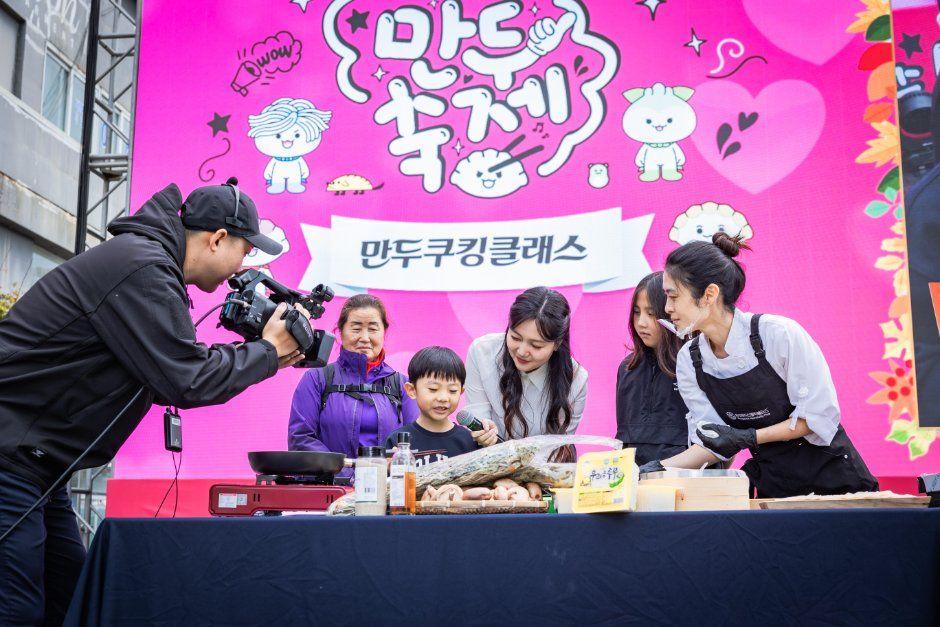
Around the food there are participation programmes. The Korea Tourism Organization lists a dumpling-making experience zone, a culture and arts experience zone, a flea market and an unusual-dumpling contest, and the city’s press material adds a speed dumpling-folding contest and a dumpling-tower stacking contest. The same listing mentions an academic forum and a “dumpling broadcasting station,” though no times were published for either.
The festival is also trying to push visitors into the market itself. Market tours, a receipt-reward scheme and a stamp tour are described as ways to move people from the festival grounds into the surrounding shops. Whether each scheme is open to visitors from abroad, and how the receipts or stamps are redeemed, was not explained in the material available.
Programme and timetable
The opening day, Friday October 23, includes the Wonju Stream nakhwa-nori, a traditional firework-play in which hanging bundles of charcoal are lit and shed sparks. Citizens write wishes on paper slips that are attached and burned as part of it. Kim Yeon-ja and Seodo Band are reported for the same day.
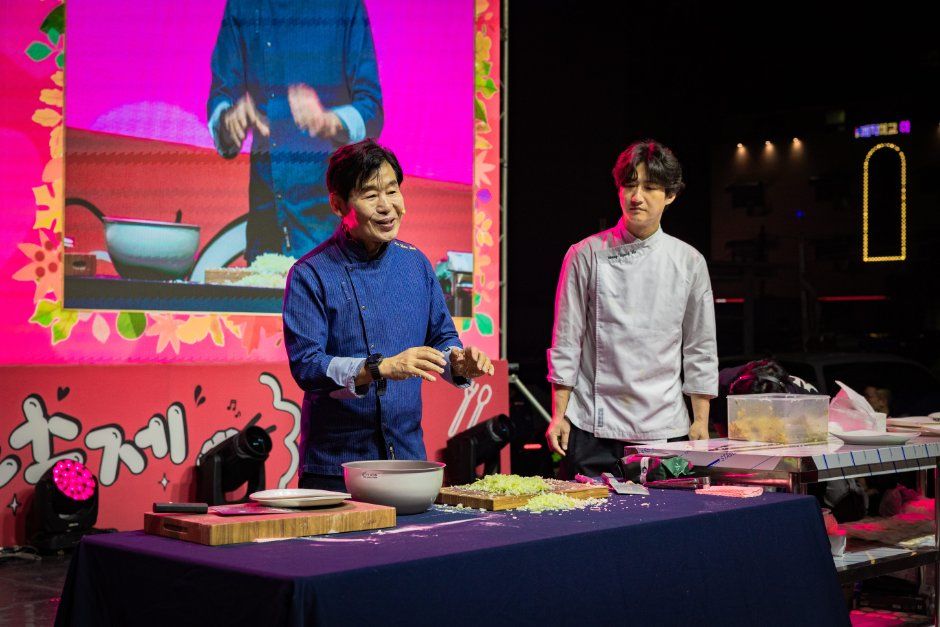
Gukje News reports the rest of the line-up as AUX, Crying Nut and DJ Tuface on Saturday the 24th, and Kim Yong-bin and Harmonize on Sunday the 25th, with Chef Jung Ji-sun’s live cooking show also placed on the 25th. Two cautions apply. This is a single detailed report, and I could not find a second one that repeated the day-by-day names. And another summary of the coverage put the cooking show on opening day, so the date of that event is unsettled. No stage times were published. If one act is the reason for your trip, check the official programme page the day before.
The Korean festival site also lists the festival schedule, a leaflet and a venue map as separate pages.
Tickets, fees and booking
There is no gate ticket. The food is paid for, and the city says QR-code ordering and kiosks are being introduced at the food booths so people can order without standing in long lines. No menu or price list for the Wonju Dumpling Zone had been published, and the payment methods accepted were not stated, so carry some cash and a card and do not assume either will be accepted at every booth.
For questions, the Korea Tourism Organization gives the organiser contact as 033-760-9862. The official site lists a nearby number, 033-760-9863, with office hours of 09:00-18:00 on weekdays. Neither is likely to be answered in English.
Getting there without a car
The fastest route from Seoul is a KTX-Eum from Cheongnyangni Station to Wonju Station, which timetable sources put at roughly 49 minutes to just over an hour depending on the train. An express or intercity bus from Seoul to Wonju is the alternative at about 1 hour 30 minutes before traffic.
Wonju Station is not in the old centre; the station moved out to Musil-dong in 2021. That is why the shuttle matters: the city says it will run three shuttle routes linking the festival area with key points including City Hall, Wonju Station and the Dancing Performance Hall. The route maps, stops and service intervals are published on the official site as images, so they could not be reproduced here, and I have not guessed at them. A taxi from the station to the market area is the fallback.
Parking, shuttles and traffic control
For drivers, the city says it has secured about 1,980 parking spaces near the festival, made up of public and temporary lots. The location of each lot is on the official site’s parking page, again as an image. Closing Wonil-ro was a pain point in earlier years, and the move to the stream is partly an answer to it, but the exact roads closed on October 23-25 and the closure hours were not available. Do not drive into the market area; park at a designated lot and walk or take the shuttle.
Day trip or overnight
A day trip from Seoul is realistic on paper because the rail leg is about an hour each way. What I could not check is the last KTX-Eum back to Cheongnyangni on your date, and the grounds run until 21:00, so look up the exact return before you buy the outbound ticket. This guide does not recommend a hotel, because no availability was verified.
Food on site and nearby
Wonju City’s tourism site traces Wonju-style dumplings to the post-war history of the city’s market and describes them as built around a filling with the crunch of cabbage kimchi. It lists fried dumplings, geonjin dumplings and knife-cut dumpling soup among the forms to look for. Treat that as background to the 15 vendors, not a promise that any particular vendor serves any of them.
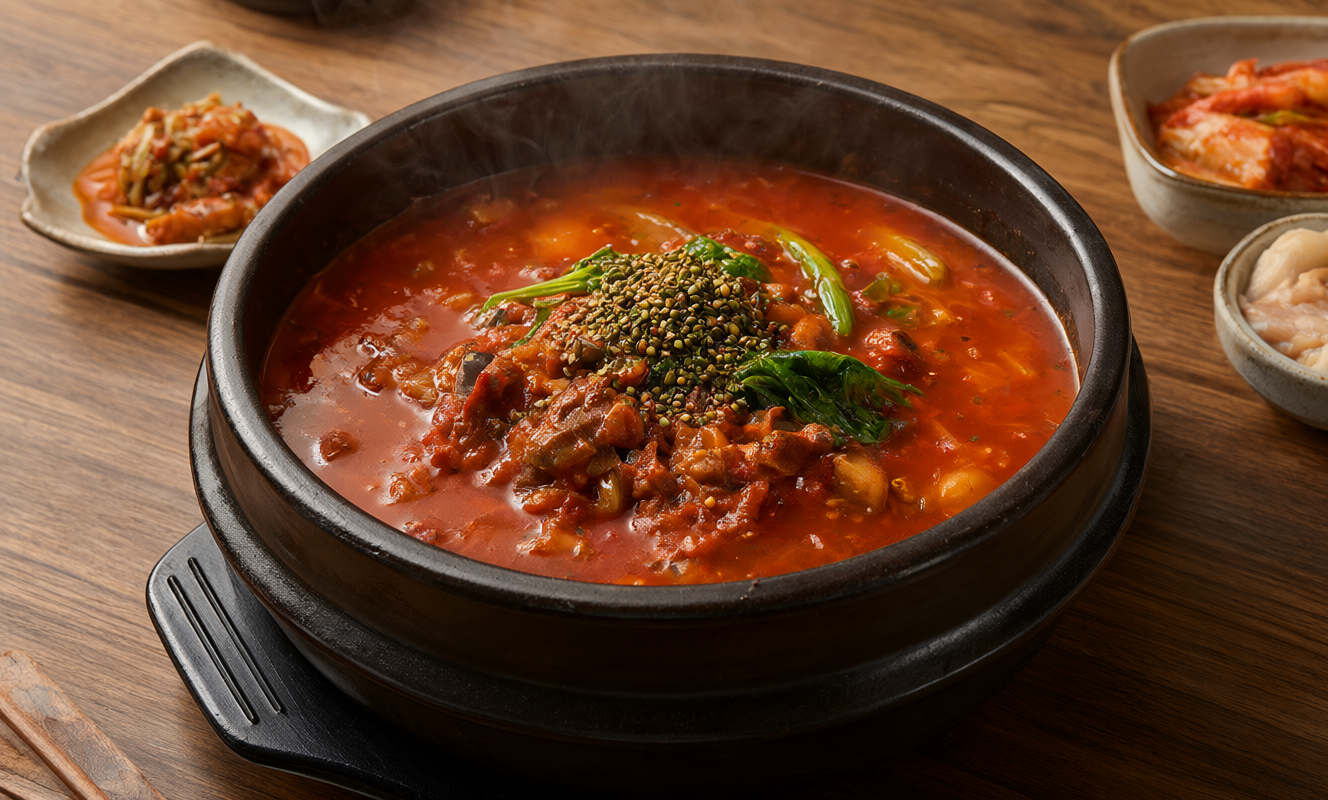
For something outside the festival, the city’s tourism site also lists chueotang, loach soup, among its representative foods. Wonju’s version is red because it is made with gochujang rather than soybean paste. If loach is not for you, ask before ordering.
Honest assessment
The strength is concentration: one free-to-enter festival that puts a city’s dumpling makers, a world-dumpling zone and an old market within a short walk of each other. A curated set of 15 vendors is a better way to compare local styles than wandering a restaurant street, and the market integration gives you a reason to stay past the food booths.
The weaknesses are practical. Almost everything a visitor needs to plan with, stage times, shuttle routes, parking-lot locations, menu prices and road closures, was either not published or published only as an image when this guide was written. The lineup rests on one report, and the date of the cooking show is not settled. The 2025 attendance headline suggests crowds, and the lunch hours on a food-booth festival are when queues are most likely to form, though that is a judgement rather than a measured fact. Come curious about dumplings, arrive with a flexible plan, and check the official site’s shuttle and parking pages shortly before you leave.