The Kim Satgat Cultural Festival is a literary festival in a valley, not a spectacle. It takes place in Waseok-ri, Gimsatgat-myeon, at the historic site of Kim Byeong-yeon, the wandering Joseon-era poet better known as Kim Satgat, “the man in the bamboo hat”. The 29th edition runs Friday, October 16 to Sunday, October 18, 2026, and it is listed as free. Yeongwol County describes the festival as an occasion to honour the poet’s “wit and satire” and to look again at his literary value.
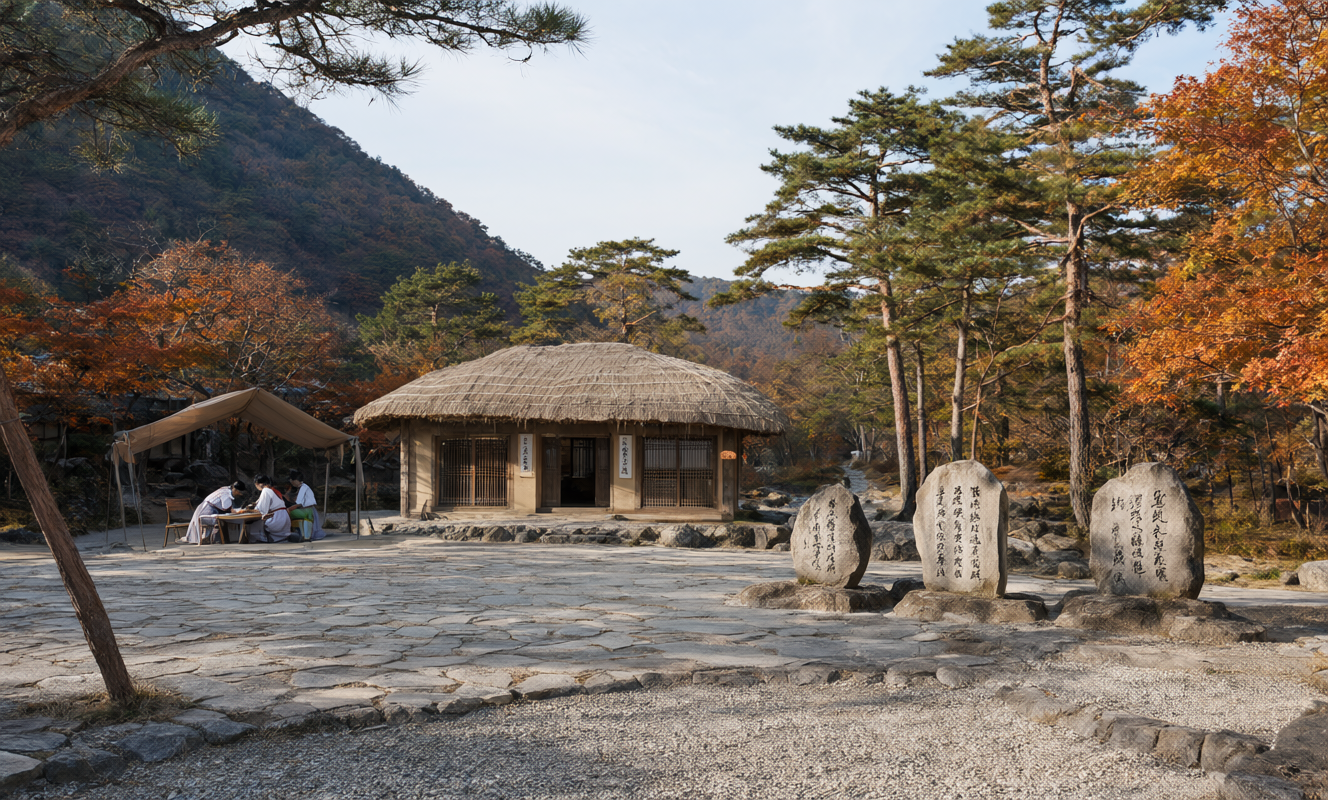
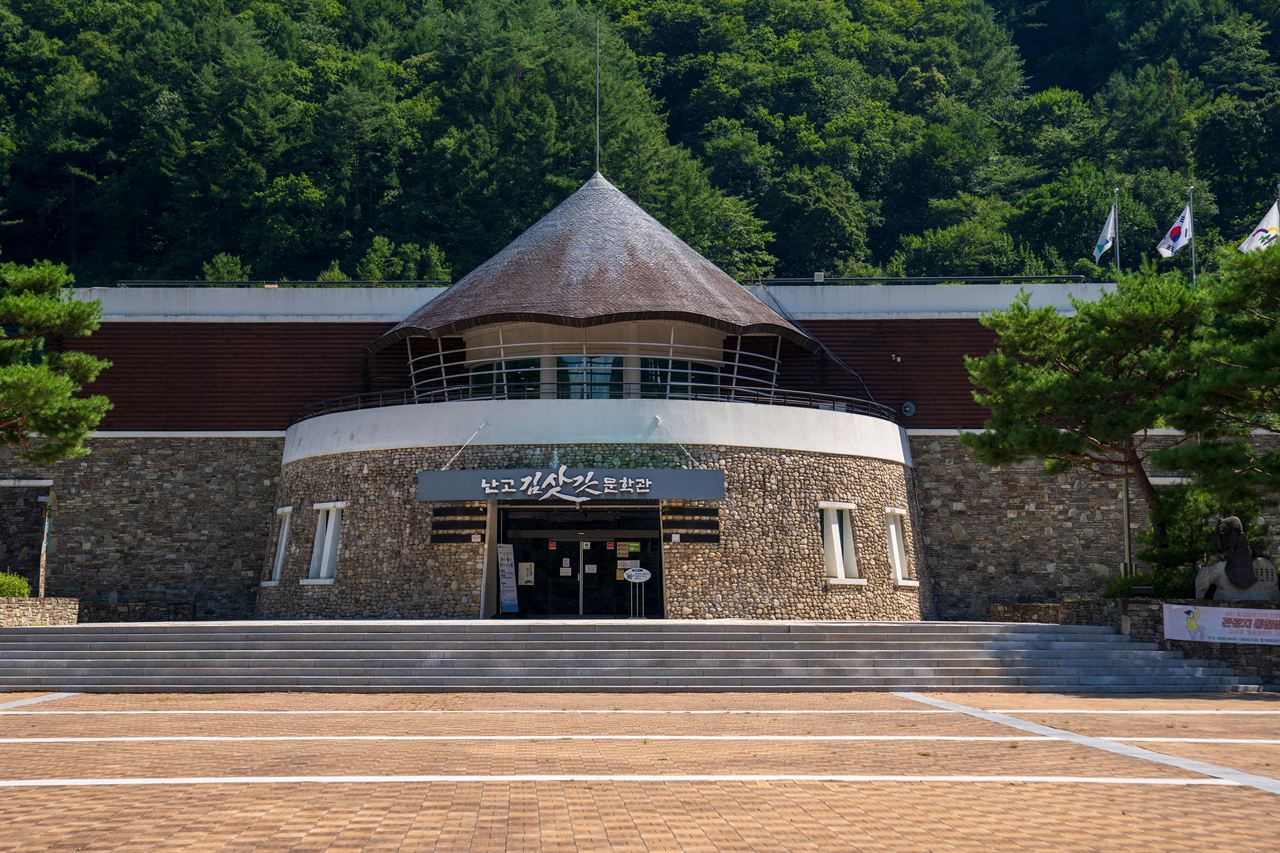
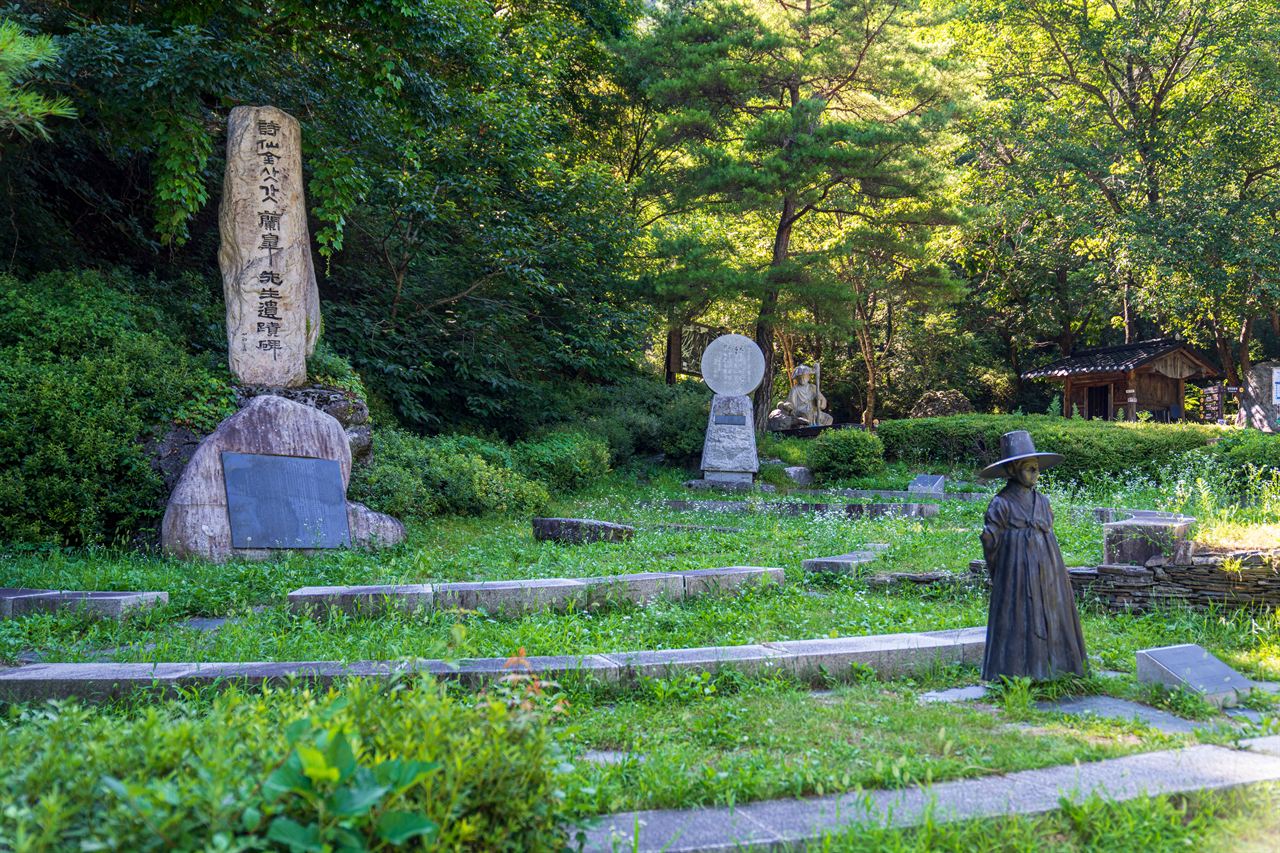
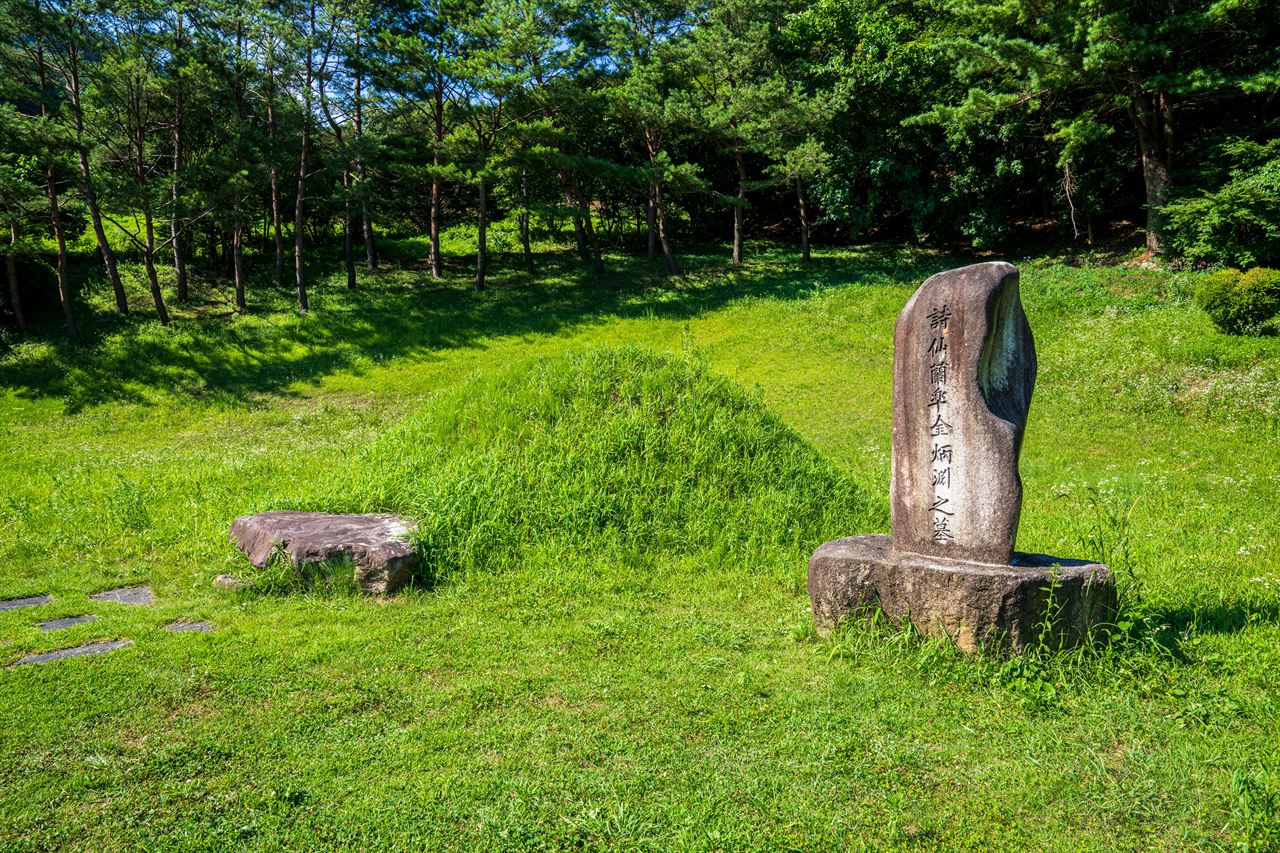
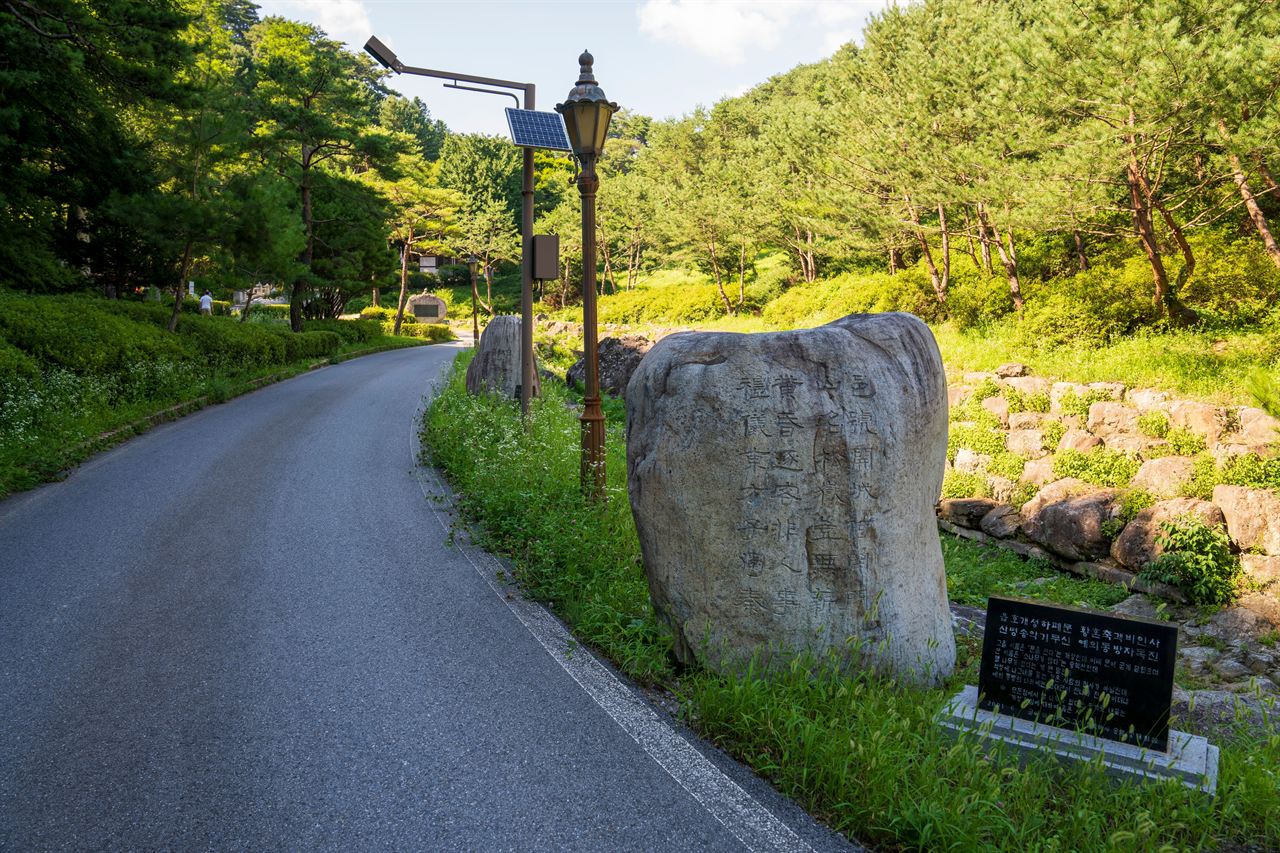
If you have only seen the English-language pages, the first thing to understand is that the place matters more than the programme. The historic site holds the poet’s grave, a memorial to him and the Nango Kim Satgat Literature Museum, and the festival is laid out around that setting. The photographs on this page were taken there in July 2025, not at a festival, and are labelled that way.
What you actually do here
The core of the festival is competition and ceremony in a literary vein. The Yeongwol Culture and Tourism Foundation, which organises it, ran recruitment this September for a national calligraphy contest, a poetry-writing contest (baekilJang), student art contests and a re-creation of the Joseon-era civil-service examination, in which entrants compose verse to a set theme. The county’s own description adds a poem-recital contest and a memorial rite for Kim Satgat. These are mostly Korean-language events; if you do not read Korean you will be watching rather than taking part.
There is also a lighter side. The county page lists rice-cake pounding (injeolmi), straw-craft, folk-print and blacksmith experiences, and the festival portal lists a local-food village. On the foundation’s notice board, selection results for a rap contest, an arts showcase called “Kim Satgat Art Hanmadang” and a community talent contest called “Kim Satgat Got Talent” were all posted on October 6, so those are real, scheduled events, though their running order is not public.
The signature walk is the “Path of Wit and Satire” (해학의 길), a walk along routes associated with the poet. Of everything in the programme it is the one that works without Korean, because it is simply walking through the site.
Literature itself is part of the weekend. The foundation announced the 22nd Kim Satgat Literature Prize this autumn: Park Se-hee’s collection Report of the Stars won the main prize and Yu Ho-geun’s River of Home an excellence award, as reported by the Gangwon provincial press on September 28. The prize ceremony is a listed festival event.
Programme and timetable
The published operating hours are 10:00 to 18:00. That is the window for the festival as a whole, not a promise that every stage runs all day. The foundation had not published a day-by-day timetable when this was written, so the opening-ceremony time, performance slots and contest finals are unknown, and no performers have been named for 2026.
For context only, last year’s 28th edition (October 17-19, 2025) opened at 15:00 on the first day on the outdoor stage at the literature museum, per a Korean press report. Nothing says 2026 follows the same pattern, so treat that as a hint that the opening is not early rather than a schedule.
One firm date: on Sunday, October 18 the foundation is holding the first Kim Satgat Run, which starts at the literature museum and runs past the poet’s grave and a path to his former house. Reports from October 6 put the field at 230 places: 30 for a 2 km uphill race (age 19 and over) and 200 for a 4 km fun run. Registration closes October 16. Expect extra people and some activity around the museum that day.
Tickets, fees and booking
Admission is listed as free, and I found no ticket system for the festival. Entering a contest is separate: recruitment notices for the calligraphy, poetry and civil-service-exam events ran in September and selection results for three of the contests were posted on October 6. I did not find whether on-the-day entry exists, so assume you are there to watch.
For paid add-ons, no prices have been published. Rice-cake pounding, straw-craft and blacksmith sessions are part of the programme, but whether any carries a charge is not stated, so carry a little cash.
The organiser contact is the Yeongwol Culture and Tourism Foundation on 033-375-6392; its festival page also shows 033-375-6353.
Getting there without a car
There is no verified direct train or express service to the festival. The workable route is to take an intercity bus from Seoul to Yeongwol Bus Terminal. The terminal’s information lists Dong Seoul and Gangnam services about every one to one and a half hours, and it warns that buses sell out quickly at weekends, so book through the Bustago or Tmoney GO apps. I could not confirm a Seoul-to-Yeongwol journey time, so check it when you book.
From the terminal, local bus 10 runs via Gosi Cave and Okdong (the Gimsatgat-myeon office) and Waseok to the literature museum, which is its terminus. The timetable I found, dated 2019, gives about 40 to 50 minutes and only five departures a day, with the first at 06:20 and the last from Yeongwol at 18:15. A second listing on Yeongwol’s public-transport site shows a similarly small number of departures, which is consistent but also undated. Do not plan around either: call the county transport line (1577-0545) or ask the terminal desk for the current timetable, and keep a taxi as the fallback. Those listings show departures from Yeongwol only; I could not verify the return times from the museum, so the bus is a poor choice for a return you cannot afford to miss.
Food on site and nearby
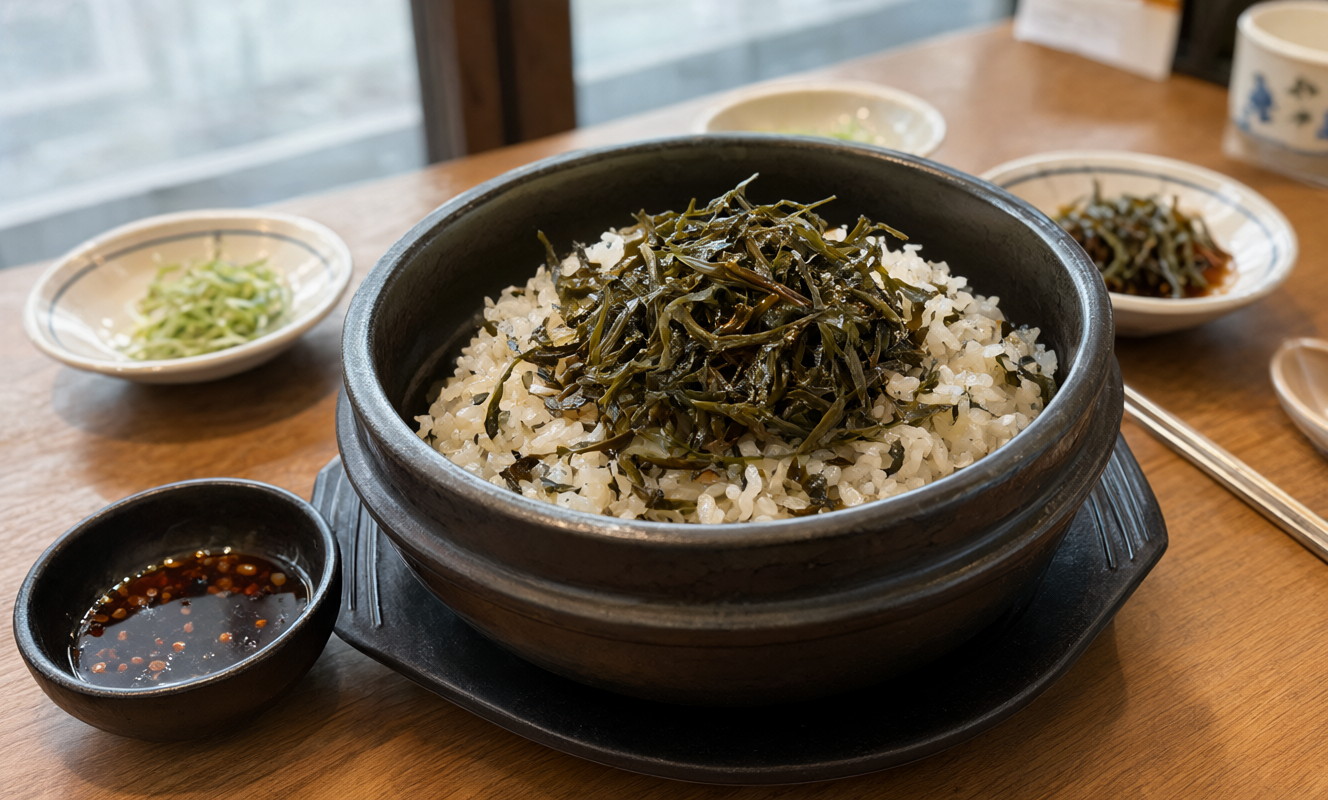
The KTO festival listing mentions a local-food village, but no vendors, dishes or prices have been published, so this guide does not promise any. What is verifiable is the region: Yeongwol is known for mountain vegetables, above all gondre. Gondre is the thistle (Cirsium setidens) usually eaten as gondre rice, and “Yeongwol gondre” was registered as a forestry-product geographical indication in 2014. A Korean agricultural report says the county supplies about 80% of the gondre sold nationally. Yeongwol’s other listed products include sesame oil, honey, Korean beef, acorn jelly and mugwort. If you want a meal built around the local crop, ask for gondre rice at a restaurant in Yeongwol town; this is a regional recommendation, not a claim that the festival’s food village will serve it.
Honest assessment
This is a good festival if you already like the idea of it: a poet’s grave, a museum, stone markers inscribed with verse, and a weekend of contests that put poetry and calligraphy at the centre. It is free, the setting is a quiet historic site in a valley rather than a street, and the Path of Wit and Satire is an easy way to spend an hour without needing the language.
It is not a festival to cross the country for if you want performance. The 2026 line-up is unannounced, the headline events are Korean-language contests, and no English help has been announced. Getting there is the real obstacle: the site is a bus ride beyond Yeongwol town and the only public-bus timetable I found was old and sparse. If you are already in Gangwon-do and want something that explains a piece of Korean literary history, add it. If you are building a trip from Seoul around one day, work out the return leg first, and check the official page the day before you go for the timetable that had not been posted yet.