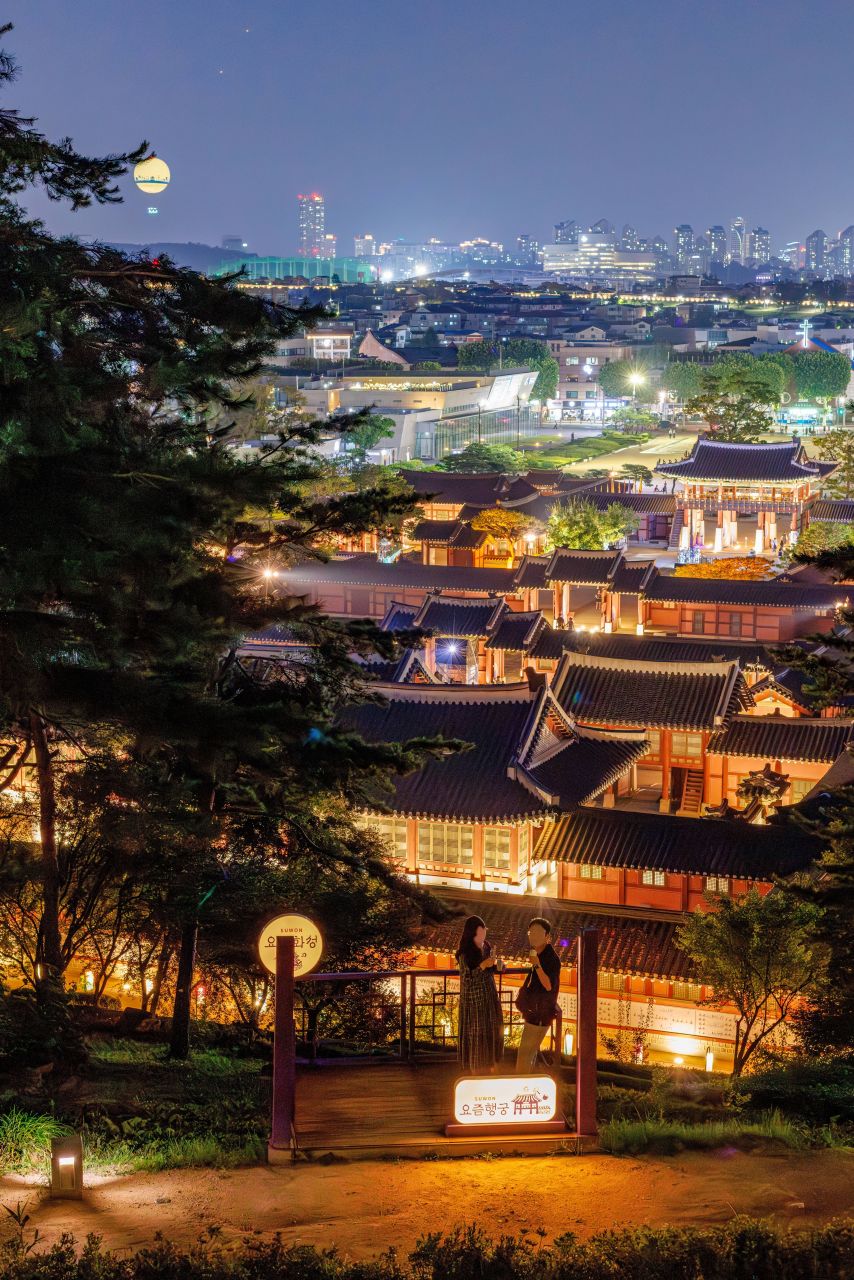
The Suwon Hwaseong Festival is the city’s flagship autumn event, staged in and around Hwaseong Fortress and the Haenggung palace grounds — a UNESCO World Heritage site built by King Jeongjo in the 1790s. The festival’s theme is not a decoration added later: it reworks Jeongjo’s eight-day royal procession to Hwaseong in 1795, an event recorded in the Wonhaeng Eulmyo Jeongni Uigwe, into performances, a large parade, and participatory programmes across the fortress.
For 2026, the Korea Tourism Organization, the KTO festival portal and the official site all give the dates as October 4-11 and operating hours of 12:00-21:00. General admission is free, though some programmes require a separate ticket or advance reservation. The festival is unusually accessible for a major regional event: Suwon is a straightforward train ride from Seoul, which makes it one of the easier autumn festivals in this guide to visit without a car.
What you actually do here
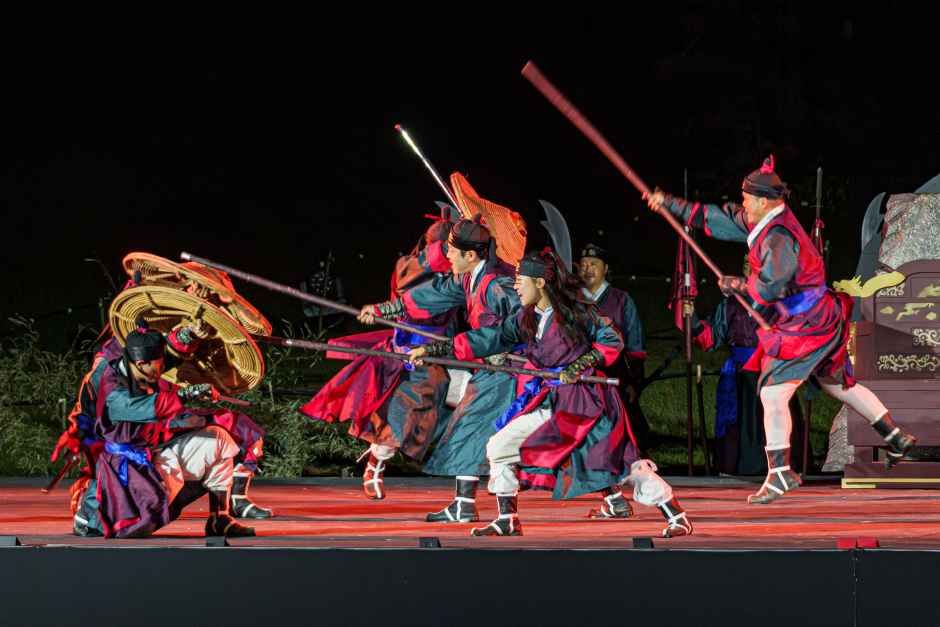
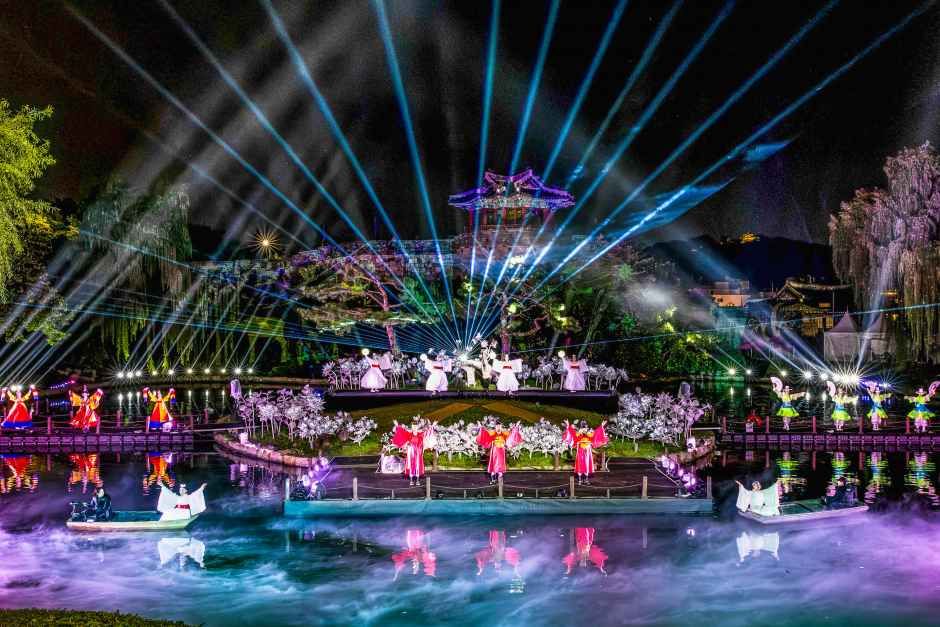
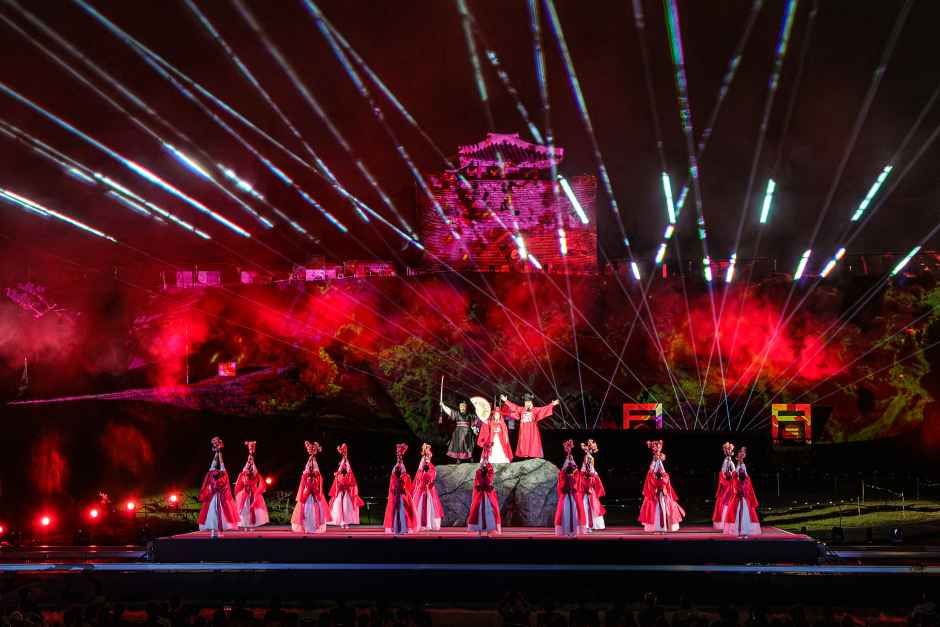
The core of the festival is walking the fortress and Haenggung grounds between scheduled performances and hands-on programmes, rather than sitting through a single show. The named 2026 headline programmes are a themed performance called “Suwon Fantasy: Yajo”, a water performance called “Seonyumong”, a night programme titled Haenggung Night Story (Time Travel: That Day), and a citizen-built architecture piece called “Hwahong.” By their names and the organiser’s own description — daytime for traditional experiences, evenings for high-production performances — these headline pieces are after-dark events, which is the main reason to stay into the evening.
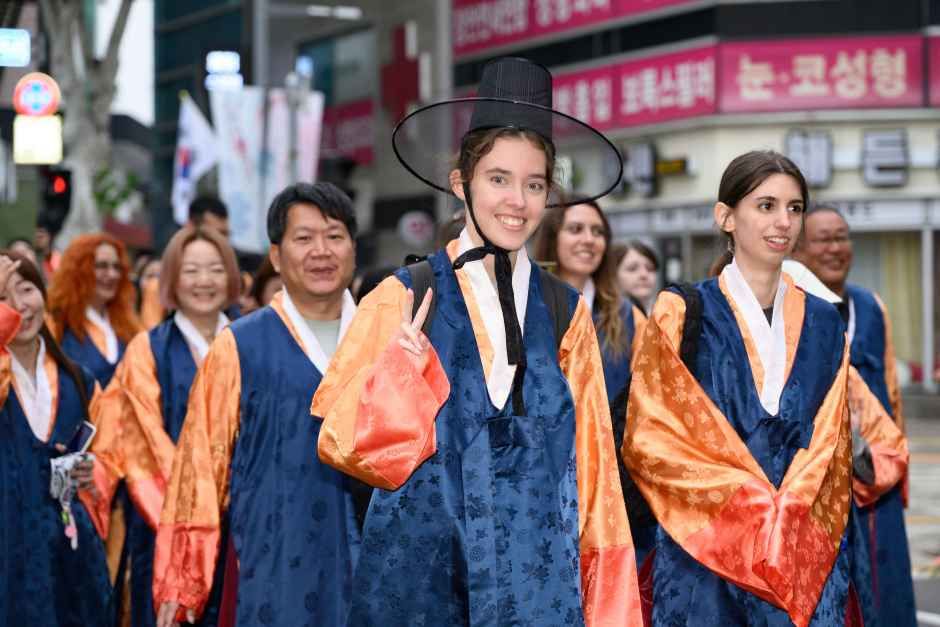
Alongside the stage programmes are participatory activities aimed at ordinary visitors: a citizens’ painting workshop (Simin Dohwaseo), a mock civil-service exam event (Byeolsinal), a senior-banquet reenactment (Yangnoyeon), a Suwon palanquin race, a masquerade ball (New Nakseongyeon) and a fortress-building playground. There is also a Global Village zone with a lounge for foreign visitors and traditional games and refreshments — a useful anchor point if you are visiting from abroad, though you should not treat it as a guarantee of full English signage across the whole site.
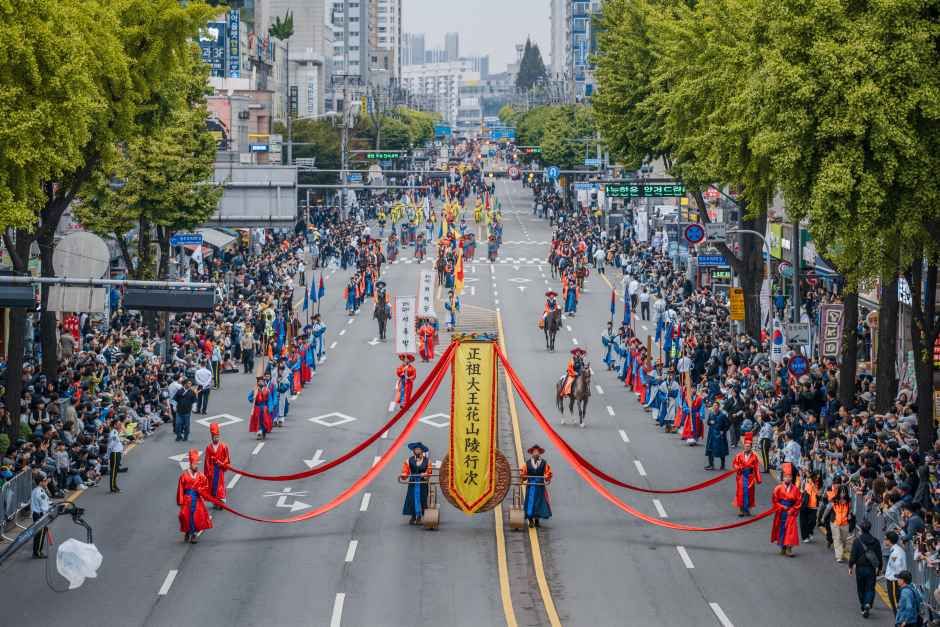
The King Jeongjo Royal Parade
The single biggest event is the King Jeongjo Royal Parade, held on October 4, the opening day. The organisers describe it as the largest royal-procession reenactment in Korea, recreating the 1795 journey to Hwaseong. For 2026 it is a joint production of Seoul, Gyeonggi Province, Hwaseong City and Suwon, with additional support from neighbouring municipalities along the route.
The full procession is staged in segments running from the Seoul and Anyang side toward Suwon; the Suwon segment continues through the city, passing the Suwon Sports Complex and Jangan Gate before finishing at Haenggung Plaza. Because it covers a long route and involves large numbers of costumed participants and horses, exact timings are published on the official schedule closer to the event. If the parade is your reason to come, plan around October 4 specifically and expect road closures and crowds in central Suwon that day.
Tickets, fees and booking
There is no general admission charge. You can enter the festival grounds around the fortress and Haenggung without a ticket, which is what KTO means by “free.”
Free entry is not the same as everything being free. The official site maintains a dedicated “advance reservation & ticket” section, and KTO states plainly that fees vary by programme — that covers certain performances and hands-on experiences rather than gate entry. When this guide was written, a dependable official 2026 price list for those paid programmes had not been published. Some blog posts quote specific figures for night tours and special exhibitions, but those were not corroborated by an official source, so this guide does not repeat them. If a specific paid programme matters to your visit, use the reservation section on the official site or call the organiser at 031-5191-3647 rather than planning around an unverified number.
Getting there without a car
This is the festival’s practical strength. Suwon sits at the southern end of Seoul Subway Line 1, so you can ride Line 1 from central Seoul directly to Suwon Station in roughly an hour with no reserved seat. If you want to move faster, an ITX-Saemaeul or Mugunghwa train from Seoul Station reaches Suwon in about 30-38 minutes; some KTX services also call at Suwon, but not all do, so confirm the individual train before booking.
Suwon Station is not beside the fortress — it is about two kilometres south of the Paldalmun and Haenggung area — so budget one short local leg after arrival. From Suwon Station Exit 4, city buses such as 11, 13 and 35 run to the Paldalmun and Haenggung area in about ten minutes. The walk from the station to Paldalmun takes roughly 15-25 minutes if you prefer to go on foot and pass through the traditional market streets. Set the festival address or “Hwaseong Haenggung” as your map destination rather than simply “Suwon,” and check a Korean map app on the day because bus routing near the fortress can change during a large event.
Food on site and nearby
One practical detail matters here: KTO’s listing states there are no food booths inside the festival grounds and advises visitors to use nearby restaurants. Plan to eat before or after rather than assuming a festival food zone, especially in the busy evening hours.
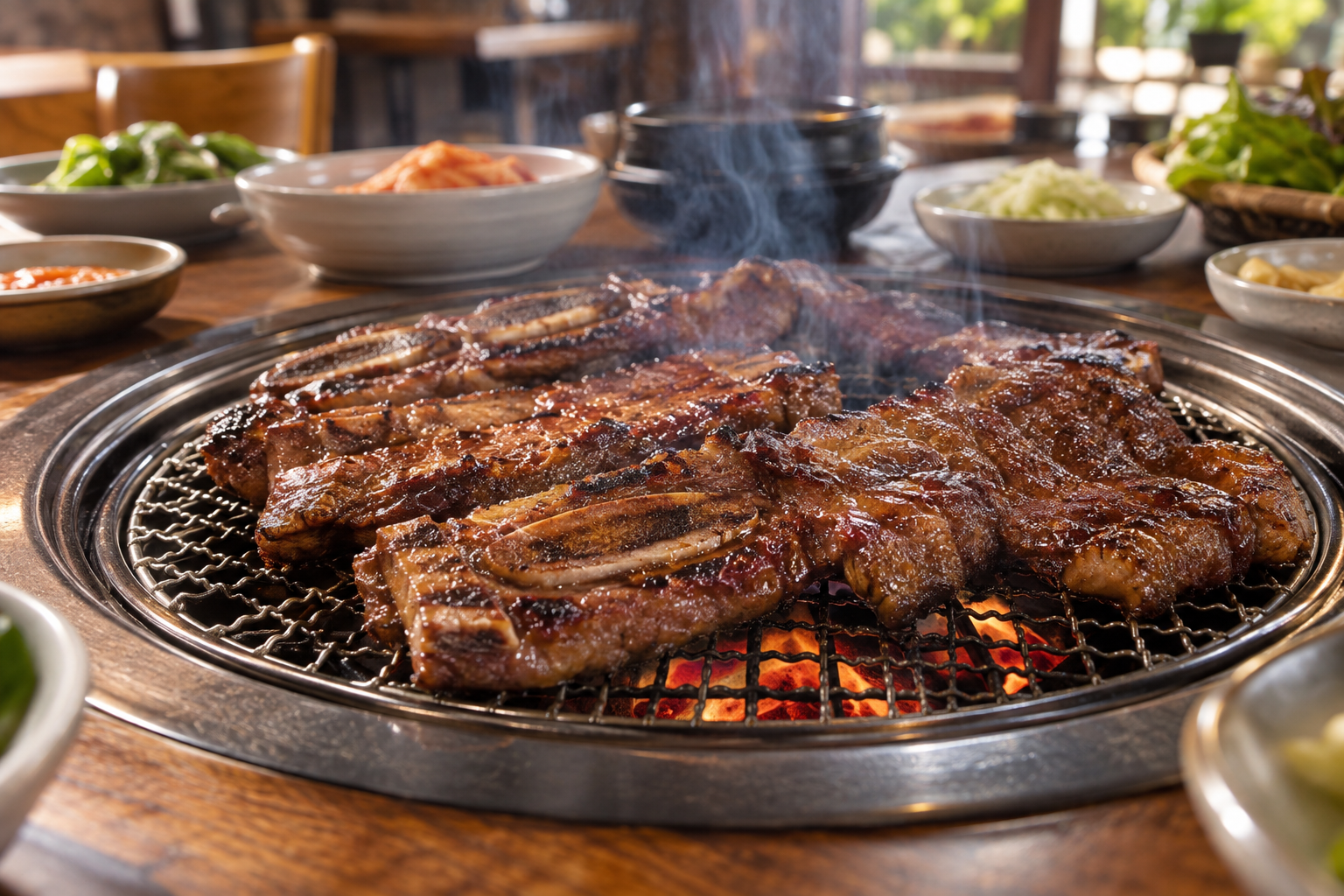
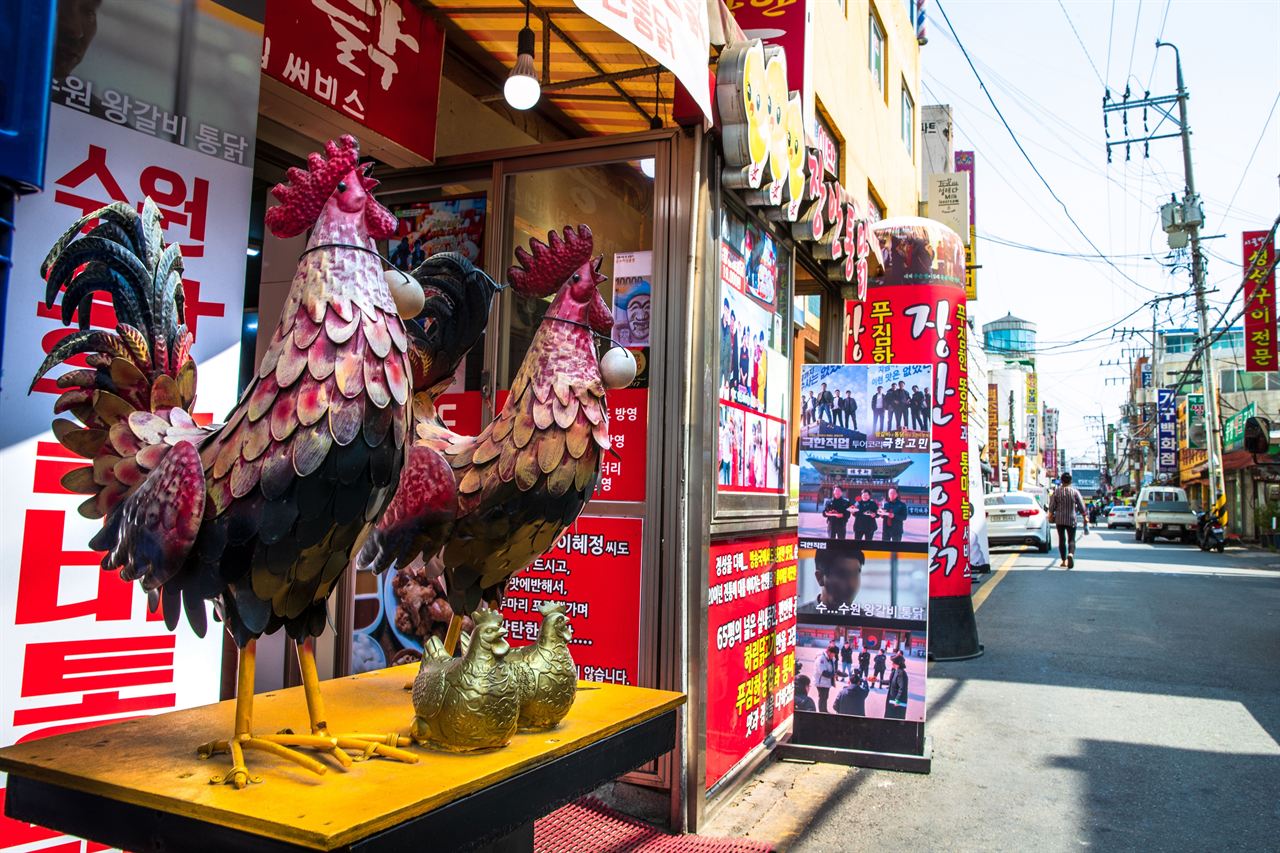
That is easy in central Suwon. The city’s signature dish is Suwon wanggalbi, charcoal-grilled beef short ribs served in large cuts; Suwon City designated it an official local specialty in 1985, and it is traditionally seasoned with salt rather than a heavy sweet marinade. A short walk from the fortress, near Paldalmun and Jidong Market, is a long-standing fried-chicken alley (Suwon tongdak), listed by KTO as one of the city’s food-theme streets. Both are regional recommendations, not claims about what will be sold at the festival itself.
Day trip or overnight
Unlike many festivals in this guide, Suwon works genuinely well as a day trip from Seoul. The train leg is short in both directions, the evening performances end by the 21:00 close, and Line 1 and Gyeongbu-line services run late enough to get back to Seoul the same night. A reasonable plan is to arrive in mid-to-late afternoon, walk the fortress and Haenggung while it is still light, eat an early dinner nearby, and stay for the evening performances.
An overnight stay makes most sense in two cases: if you are coming specifically for the October 4 parade, when the day is long and central Suwon is congested, or if you want to combine the festival with a full walk of the fortress wall and the wider Hwaseong Media Art programme that Suwon runs across the same autumn window. Central Suwon has ample accommodation near the fortress, but availability and prices were not independently verified here, so no specific hotel is recommended.
Honest assessment
The festival’s strength is its setting and accessibility. Hwaseong Fortress and Haenggung are a genuine UNESCO World Heritage site, so the historical backdrop is real rather than staged scenery, and the royal-procession theme reads visually even if you speak no Korean. Being an hour or less from Seoul by train, with free general admission, it is one of the lower-commitment ways to see a large Korean heritage festival.
Its weaknesses are the flip side of its scale. “Hwaseong Fortress and Haenggung” is a broad area, not one compact plaza, and the most-searched details — exact performance times, the parade timetable, and any paid-programme prices — depend on a final schedule that the organiser releases close to the event. The lack of on-site food is a real planning point, and October 4 in particular trades a spectacular parade for significant crowds and road closures. Use the confirmed dates, hours and free admission now, and pull the final daily schedule from the official site before locking in an evening or a parade plan. For a traveller based in Seoul who wants one substantial autumn day out, it is an easy recommendation; for anyone chasing a specific performance or the parade, the payoff depends on checking the timetable first.