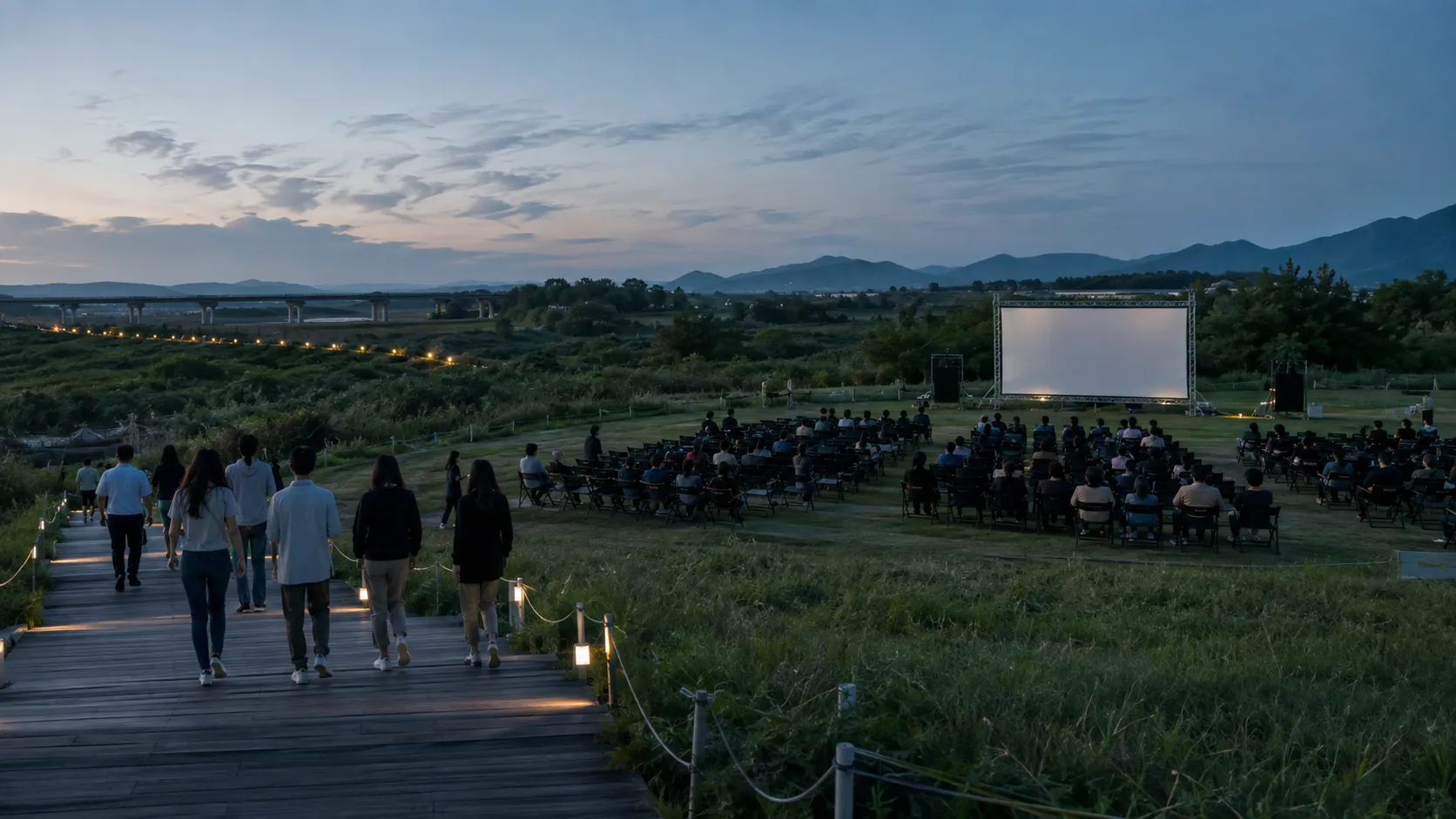
The 18th edition of the DMZ International Documentary Film Festival runs for seven days and presents 147 documentaries from 52 countries. Its programme combines international, frontier and Korean competitions with themed sections, talks and online selections. This is a cinema festival spread across several venues, not a fairground event where you arrive and wander until something starts.
One planning detail matters this year. The Ministry of Culture’s annual festival list names Imjingak Pyeonghwa Nuri, but the festival’s final English programme puts the September 10 opening ceremony and opening film at Paju Bookcity Jijihyang. The regular paid screenings run at MEGABOX Kintex and Lotte Cinema Paju Yadang. Follow the venue printed beside your chosen film.
What you actually do here
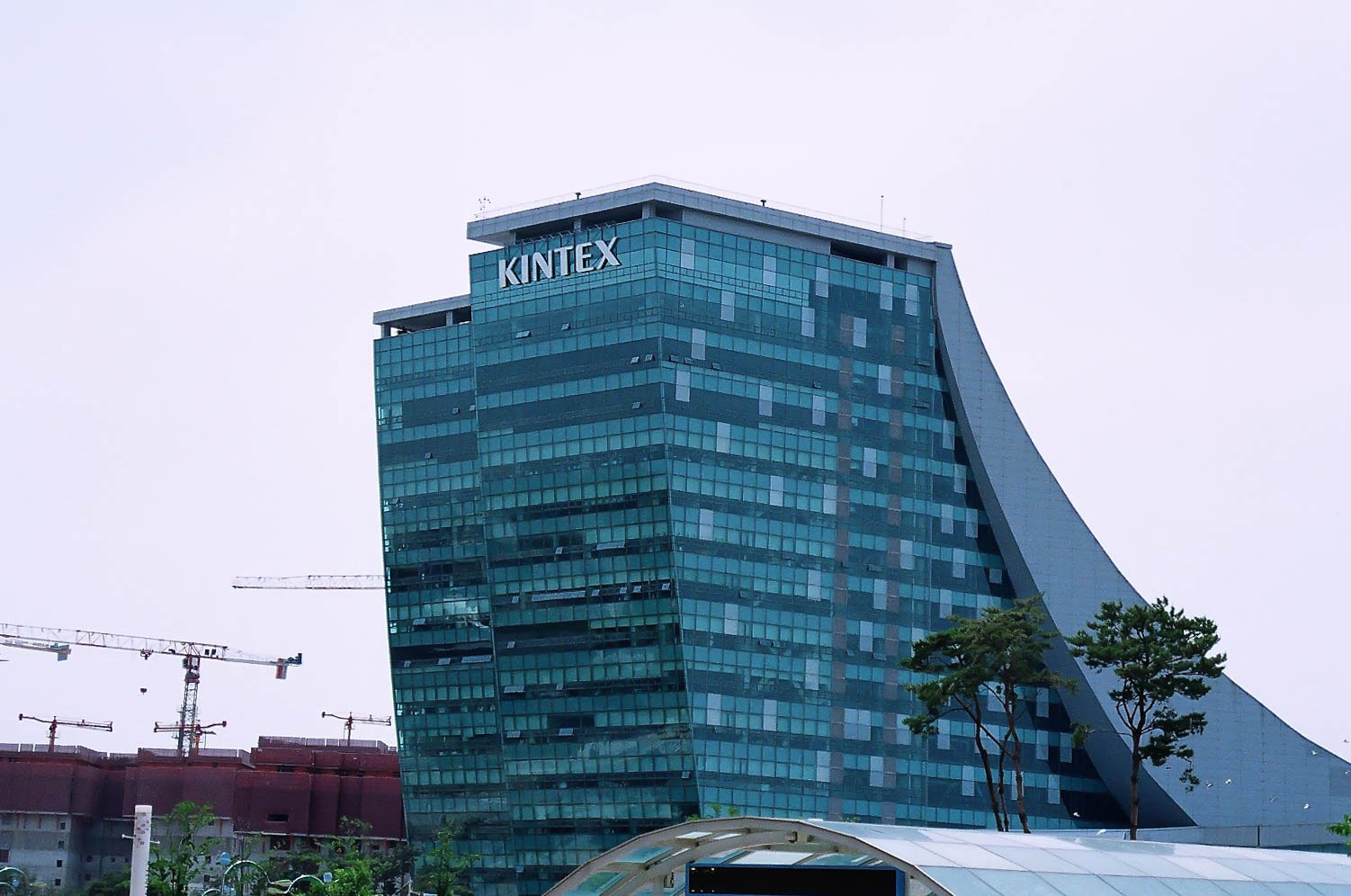
Start with the screening schedule, choose a film, and reserve that specific session. The programme is divided into international, frontier and Korean competitions plus non-competition and focus sections. Many screenings are paired with programme events or guest appearances, but those vary by title and time, so check the individual listing rather than assuming every director will attend.
Standard cinema tickets cost 8,000 won. Online booking remains open until 15 minutes before a screening, subject to availability, and entry uses a mobile QR ticket. The festival also runs online programmes through docuVoDA, but access conditions belong to that separate platform.
The opening film is Hwang Yun’s 125-minute Haje, a documentary about a village affected by the expansion of a US military base. The closing film is Christophe Réveille’s Che Guevara: The Last Companions. Between them, the section list is broad: Verite, Docufiction, Essay and Expanded sit alongside the three competitions. Three focus programmes cover Kamal Aljafari’s work, ecological documentary, and the films of photographer and filmmaker Raymond Depardon. There are also Critics’ Choice, barrier-free and online programmes.
Do not read that list as seven interchangeable days. A film generally has one or two fixed sessions, and a guest visit or discussion is attached to a particular screening. The festival’s programme-event page says, for example, that several master classes begin after the films named in the event listing. Reserve the film session first; the talk is not a floating event that can be joined at another time.
Programme and timetable
Opening night begins at 19:00 on Thursday, September 10 in the multipurpose hall at Paju Bookcity Jijihyang. The published order includes the opening declaration, introductions, a stage greeting by the opening-film director and the screening of Haje. This is the one date when the main public activity is at Bookcity rather than the two regular cinemas.
From September 11, the screening grid and parallel events become the working timetable. Confirmed public events include documentary master classes and post-screening talks at MEGABOX Kintex, plus forums at Gloucester Hotel Kintex and Hyundai Department Store Kintex. The main political-documentary forum runs at the department store on September 13 from 16:30 to 19:00; an international forum on cultural boycotts uses the same venue on September 14 from 16:30 to 19:00. These are useful only if the subject interests you—do not sacrifice the film you came for simply because an event is labelled a forum.
Low-commitment audience events run alongside the screenings. A photo-booth presentation occupies the first floor of Lakins Shopping Mall from 10:00 to 20:00 on September 11–15 and until 15:00 on September 16. A festival lucky draw operates at both main cinema areas for badge holders and same-day ticket holders. Access conditions matter for the evening guest-lounge gathering: the official schedule restricts it to badge holders and same-day ticket holders and excludes minors.
The closing and awards ceremony starts at 18:00 on Wednesday, September 16 in MEGABOX Kintex 7 and is invitation-only. The public-facing closing-film screening follows at 19:30 in MEGABOX Kintex 6. Buying the closing-film ticket does not confer entry to the awards ceremony.
Tickets, fees and booking
The standard price is 8,000 won per screening at MEGABOX Kintex and Lotte Cinema Paju Yadang. Online sales opened August 25 at 14:00 and continue until 15 minutes before each film, while seats remain. A purchaser may reserve up to four tickets per film. Online payment accepts credit or debit cards and mobile payment; this is the basis for the checked cards field above, not an assumption about every temporary counter.
The official page publishes several reductions, but its English tables contain conflicting figures for some on-site categories. It consistently identifies reduced admission for under-19s, eligible disabled visitors and national-merit honorees, groups of at least ten, seniors, and Gyeonggi residents, with proof required. Check the live booking page or box office for the applicable amount instead of relying on a copied discount number. Discounts cannot be combined. Wheelchair seating and group visits are handled through the ticket team, with email preferred and telephone booking available at 031-936-7403 when email is not possible.
MEGABOX Kintex’s festival box office opens at 09:30 from September 11 through 16; Lotte Cinema Paju Yadang’s opens at 09:30 from September 11 through 15. Both close 15 minutes after that venue’s final screening has begun. They accept cash, credit/debit cards, ticket vouchers and festival badges. Gyeonggi local-currency cards and culture gift certificates are explicitly excluded.
Mobile QR entry is the default, and a screenshot of the QR code is not accepted. If a phone ticket cannot be used, collect a paper ticket at the box office. Online cancellation is allowed until one hour before the screening; a same-day cancellation costs 1,000 won per ticket. Once a paper ticket has been printed, cancellation requires the physical ticket and the payment card at the on-site box office.
The separate Docupass cost 30,000 won and required advance registration by August 25, so it is not a walk-up solution for a visitor reading this during festival week. Likewise, professional guest and industry badges have their own eligibility and higher fees. Ordinary visitors can simply buy individual screening tickets.
Entry rules that affect a tight schedule
Doors open ten minutes before the listed start. The festival allows no admission more than 15 minutes after a film begins, and your assigned seat is no longer guaranteed once the screening has started. Short-film compilations are stricter in practice: late entry normally waits until the first film ends, with two named Korean Competition shorts programmes treated as exceptions.
Every viewer needs a valid ticket. Children born in 2023 or later are not admitted, even with a guardian, and under-19s cannot enter an adults-only title. Bring photo ID for an age-restricted film. Inside the auditorium, food is prohibited and only drinks with secure lids are allowed. Photography and recording during screenings are also prohibited.
Online viewing
Selected films marked for docuVoDA stream from 11:00 on September 11 until midnight on September 16. The service is limited to subscribers physically using it in South Korea, its website is not available in English, and some films carry only Korean subtitles. A 1,500-won short-film rental remains viewable for 48 hours after payment, with a limit of 200 viewers per title. Payment cannot be refunded once made, including when the viewer fails to finish inside the access window. Treat this as a separate Korean-market service rather than a remote substitute available from abroad.
Getting there without a car
From Seoul Station, GTX-A reaches Kintex Station in about 16 minutes; the festival directs cinema visitors to Exit 2 for MEGABOX Kintex. From Hongik University Station, the Gyeongui-Jungang Line reaches Yadang in roughly 37 minutes, and Lotte Cinema Paju Yadang is beside station Exits 1 and 2. Allow additional walking and station-transfer time, so about 35 to 45 minutes from the relevant Seoul departure station is a useful working range.
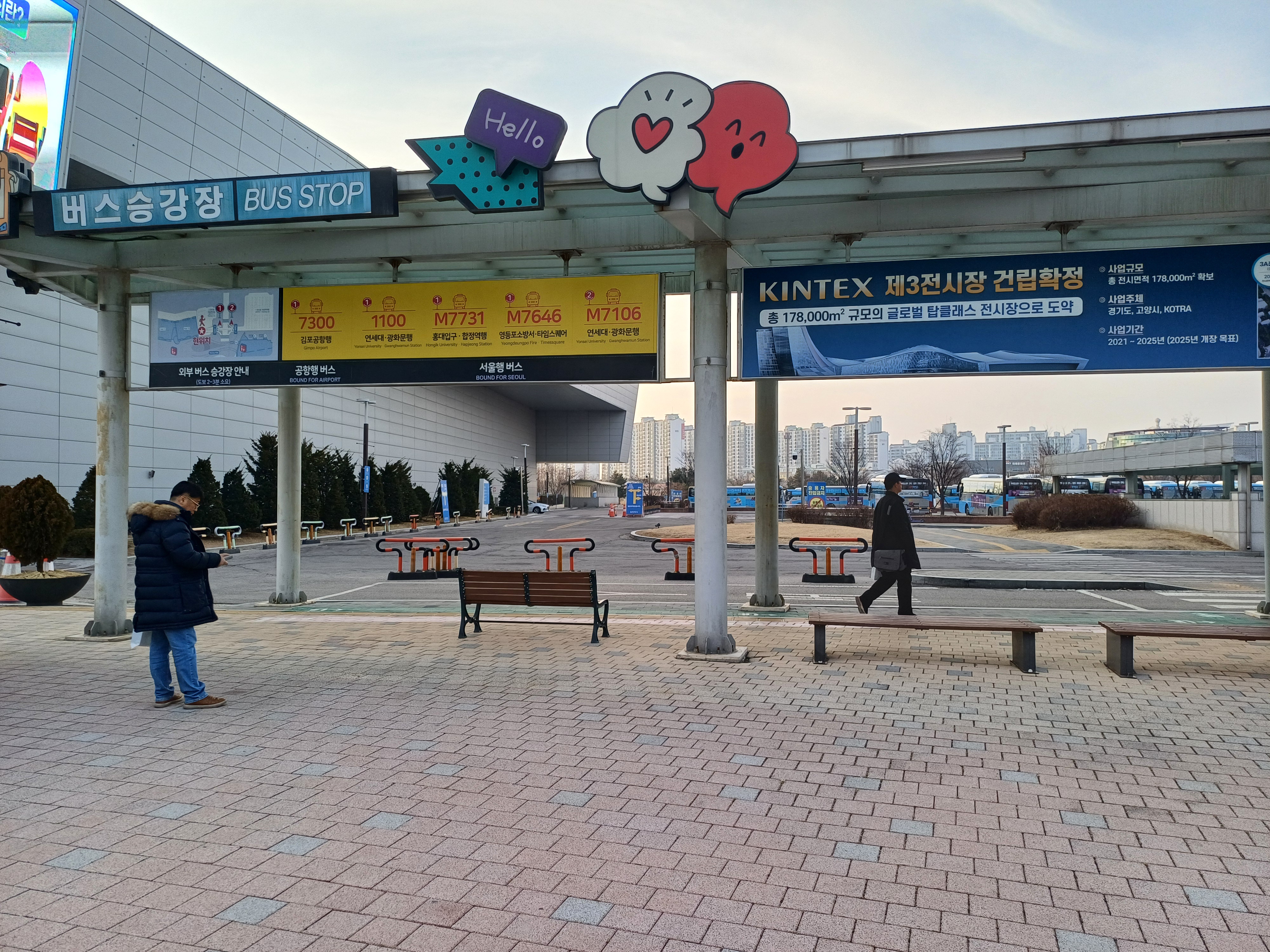
The festival runs a free inter-venue shuttle between MEGABOX Kintex and Lotte Cinema Paju Yadang from September 11 to 15. It is frequent during the afternoon but pauses around lunch and dinner, so the posted timetable matters if two consecutive films are at different cinemas. The September 10 opening is a separate trip to Paju Bookcity Jijihyang; the official guide lists limited shuttle departures from GTX-A Kintex Station Exit 4 at 18:00 and 18:20.
The regular shuttle uses five-passenger vehicles, an important limit when several screenings empty at once. Morning departures are every 30 minutes, there is no service from 12:00 to 13:00, and afternoon service is generally every 15 minutes. Direction-specific dinner gaps follow: no Kintex-to-Yadang run from 18:00 to 18:45 and no Yadang-to-Kintex run from 18:30 to 19:15. Evening departures return to 30-minute intervals, with the final listed vehicle leaving Kintex at 20:30 and Yadang at 21:00. Board at the first-floor rear entrance of MEGABOX Kintex or under the pedestrian overpass at Lotte Cinema Paju Yadang.
Parking and venue logistics
Driving does not remove the need to check the auditorium. At MEGABOX Kintex, park in Hyundai Department Store or Lakins Mall and validate at the DMZ Docs information desk inside the cinema. Validation provides six free hours, after which the official rate is 1,000 won per ten minutes. That six-hour window can still expire during three long documentaries plus discussions.
Lotte Cinema Paju Yadang uses the building’s B1–B3 parking. Register the licence plate at the self-service kiosk on the seventh floor for three and a half free hours; the published overage is 1,500 won per 30 minutes. Its validation cannot be combined with another shop’s parking offer in the building. These are venue parking rules, not a promise that a space will be available at a popular session.
The two festival cinemas do not operate for identical dates: Yadang’s box office and the inter-venue shuttle end on September 15, while Kintex continues through the September 16 closing. On closing day, make Kintex the default unless the screening schedule explicitly sends you elsewhere.
Honest assessment
This festival rewards advance selection. The programme is large enough that turning up without checking venues can leave you at the wrong cinema, and the government’s early venue listing is especially unhelpful this year because it does not match the final public programme. Save the booking page and venue name with each ticket.
The practical upside is that the two main cinemas are close to rail stations and connected by a festival shuttle. A same-day return to Seoul is structurally straightforward for regular screenings, but this guide does not label the trip “day-trip” in the fact card because the end time of your chosen film and that night’s rail timetable still need to be checked together.
The trade-off is ordinary film-festival logistics: popular sessions can sell out, consecutive films may be in different buildings, and a late arrival risks losing the value of a tightly timed day. The small shuttle vehicles and meal-time pauses make a back-to-back cross-venue plan fragile even when the timetable appears to fit. Pick one venue as your base, leave at least one full screening-length gap before changing cities, and use Kintex for the broadest combination of films, talks and closing-day activity.