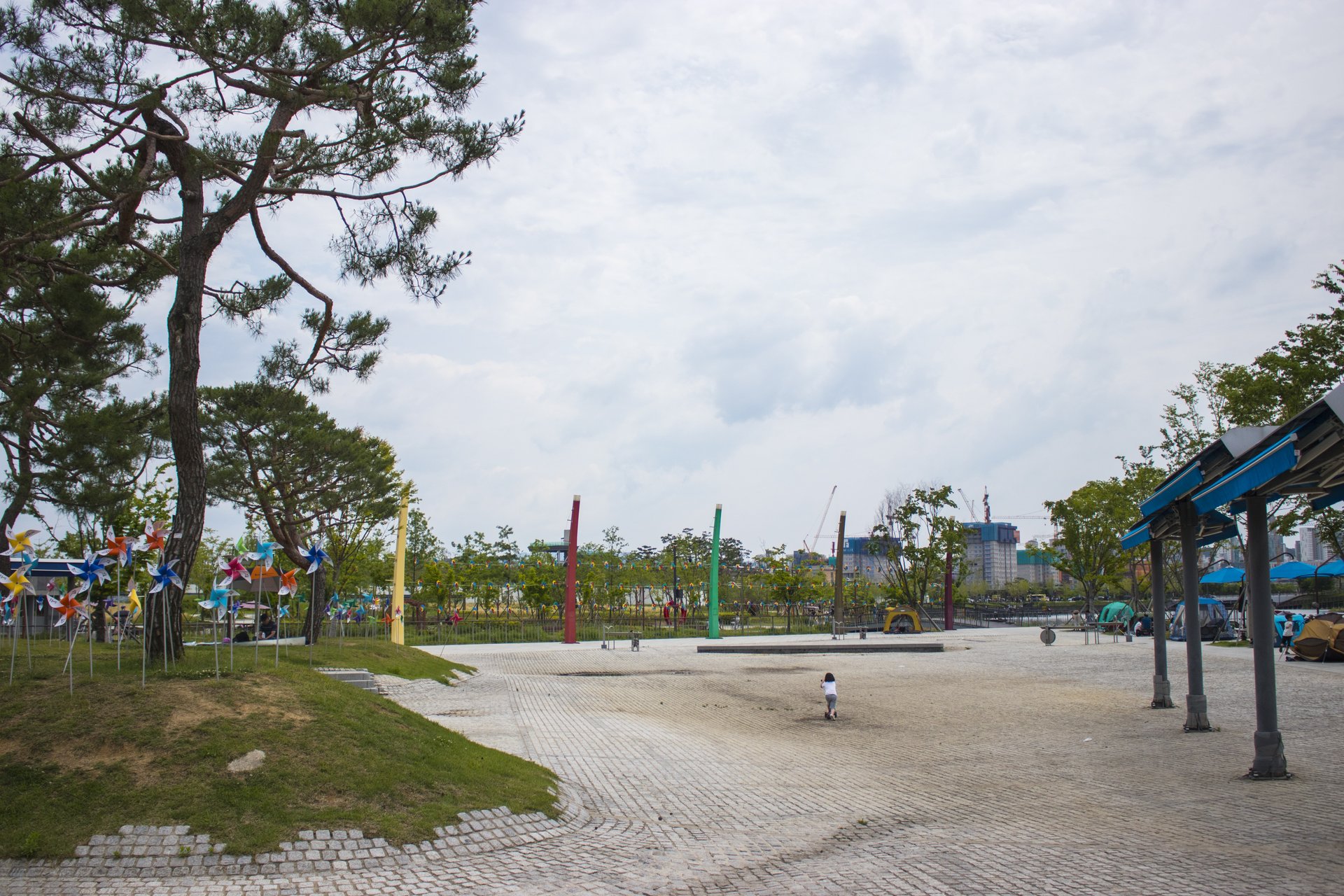
Sejong Hangeul Festival is the city festival of Sejong, Korea’s purpose-built administrative capital, and it is timed to Hangeul Day. The event has run since 2013 and was renamed from the broader “Sejong Festival” to “Sejong Hangeul Festival” in 2025, sharpening its focus on the Korean alphabet. For 2026 it takes place across two adjoining green spaces in the city centre: Sejong Lake Park and Sejong Central Park, at 216 Dasom-ro.
The confirmed 2026 dates are October 9-11. That timing matters this year. October 9 is Hangeul Day, and 2026 is being marked nationally as a “Year of Hangeul”: it is the 100th anniversary of the first Hangeul Day commemoration, held in 1926 as Gagyanal, and the 580th anniversary of the promulgation of the Korean alphabet in 1446. The festival’s headline shows are built around those anniversaries. Admission is free, and the grounds run 10:00-21:00 on the 9th and 10th, closing earlier at 19:00 on the final day.
One practical point before anything else: there is no KTX station in Sejong. The city has no urban rail at all, so every route from Seoul ends in a bus or taxi transfer. That is covered in detail below, but factor it into your plan rather than expecting to step off a train onto the festival grounds.
What you actually do here
This is an open-air, walk-around festival rather than a single ticketed show, and the two parks divide the programme between them. Sejong Central Park holds the main “city festival” stage — the opening and closing concerts, the competitions and the evening aerial shows. Sejong Lake Park’s central plaza and open field carry the hands-on side: Hangeul experience programmes, a safety-experience zone, a children’s “Hangeul playground,” and a floating water stage used for citizen-planned performances and street-artist concerts. The two parks sit next to each other, so moving between the experience zones and the main stage is a walk, not another bus.
Because so much of the content is visual or participatory, you can get a lot out of the day without reading Korean. The Hangeul experience booths, the science and eco-play areas, a biennale exhibition hall and the merchandise fair (“Hangeul shop”) are the kind of activities that explain themselves on the ground. Families in particular can treat the lake-park side as a slow morning and early afternoon, then move to the central-park stage as the evening programme builds.
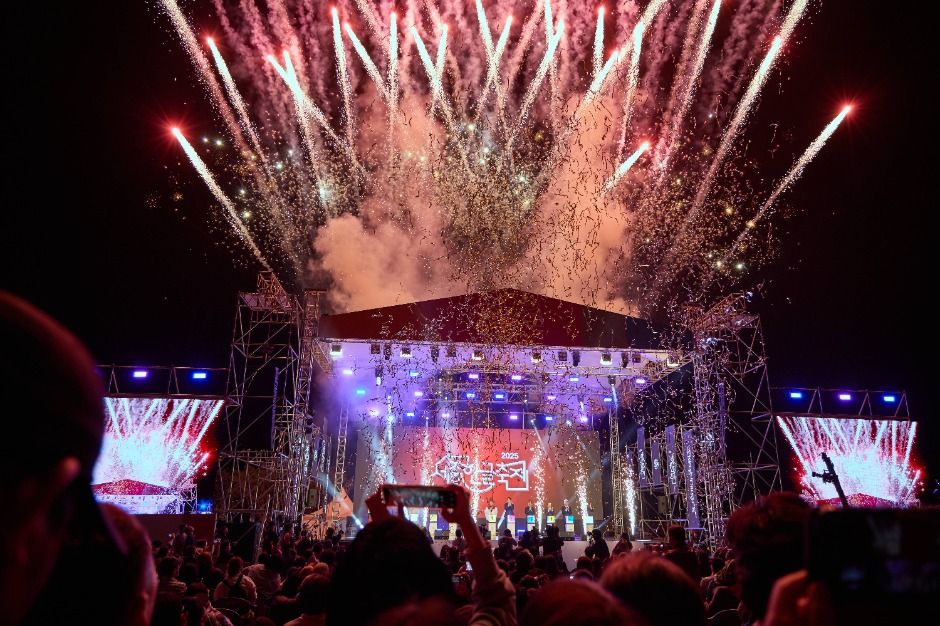
The evening is where the festival concentrates its budget. The first night’s drone show uses more than 2,000 drones to mark the 580th anniversary of Hangeul and the centenary of Hangeul Day; the second night pairs fireworks with drones in a multimedia show. These are scheduled set-pieces, not continuous attractions, so they reward planning your evening around a specific start time rather than assuming they run on a loop.
Programme and timetable
The operating window is 10:00-21:00 on October 9 and 10, and 10:00-19:00 on October 11. Within that, the published 2026 line-up breaks down roughly by day, though the official site is the place to confirm exact stage times before you travel.
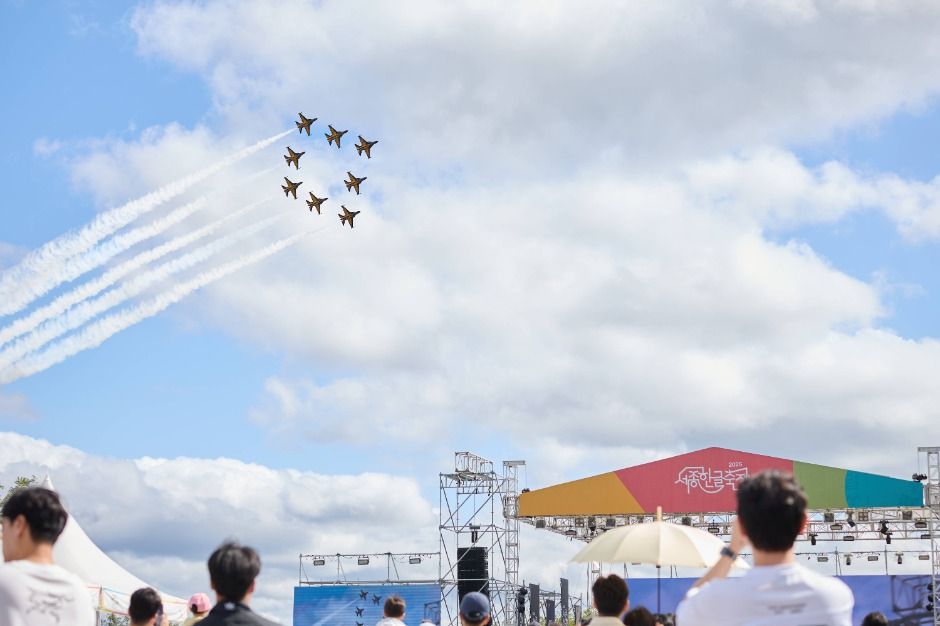
Opening day, October 9 (Hangeul Day). The strongest single day. Announced acts include the Joseon-pop group Seodo Band, the singer Sean, comedian Kim Hye-sun and a jumping-rope performance team, alongside a Hangeul song contest, the opening performance “Mun” by Andamiro Art Company, and the National Jeongdong Theatre’s Hangeul piece. In daylight, the Republic of Korea Air Force Black Eagles aerobatic team performs a flypast over the grounds. After dark comes the 2,000-drone light show.
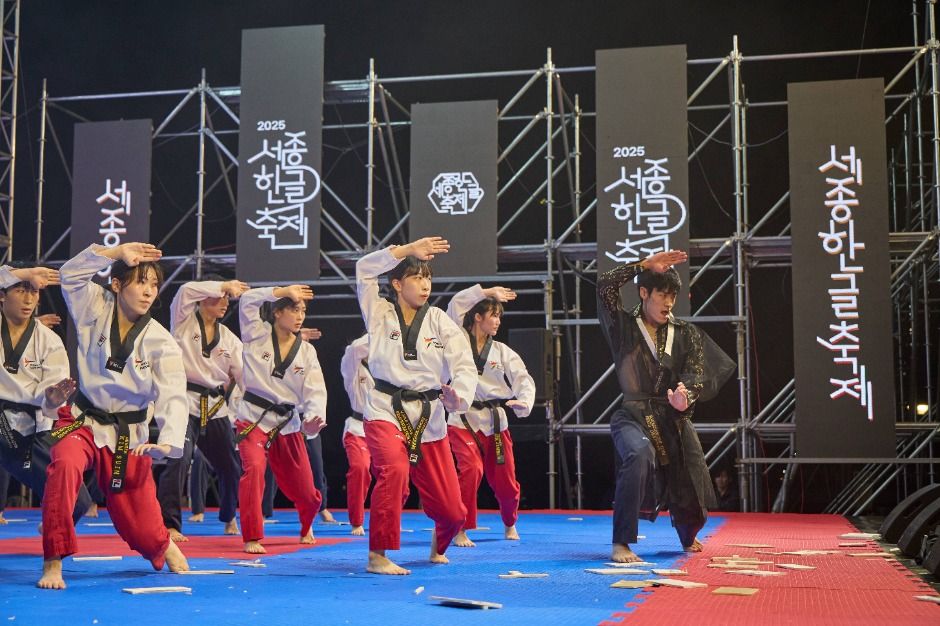
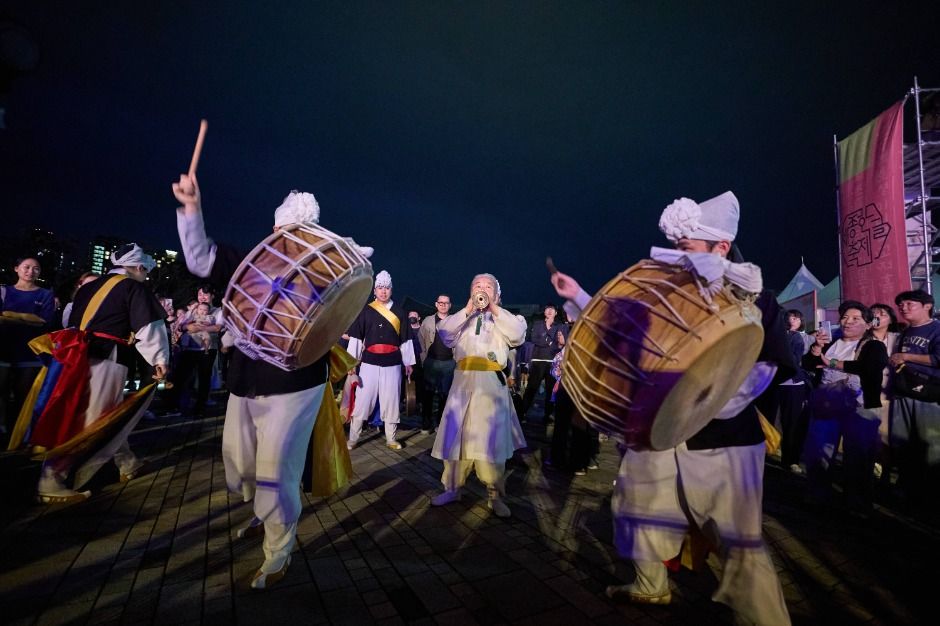
Second day, October 10. Daytime programming leans into Hangeul-and-AI content, a Taekwondo demonstration (“Great Taekwondo”) staged by the Taekwondo Promotion Foundation, traditional dance, and street-artist concerts on the lake-park water stage. The evening set-piece is the fireworks-and-multimedia drone show representing “580 years of Hangeul” in light.
Final day, October 11. A daytime programme that ends at 19:00. It includes an “Ultra Teens” dance competition, a “Ring the Golden Bell”-style Korean-language quiz on spelling and pure Korean words, the closing performance “The Most Precious Thing in the World” by Plotcity, and a closing concert by the Korean National Symphony Orchestra.
Two standing strands run all three days: the second Hangeul Product Fair, paired with a “Sul-sul” festival food-and-drink zone at the central park, and the family fringe programme — a daytime dokkaebi playground, a city horse-riding experience, a “Sejong science hall,” an eco-play area and the biennale exhibition. Because these are continuous, they are the easiest things to fit around the timed stage events.
Getting there without a car
Sejong is unusual among Korean cities in having no train station and no subway, so the trip is always intercity leg plus a local bus.
The rail-plus-bus route is usually fastest. Take a KTX or SRT to Osong Station — about 50 minutes from Seoul Station, or from Suseo on the SRT — then change to Sejong’s BRT (bus rapid transit), which runs from Osong into the city toward the government-complex and lake-park area in roughly 30-40 minutes. That puts a realistic door-to-grounds time at under two hours if connections are clean. Osong is the closest high-speed station to Sejong; the city’s own transport pages point visitors to it.
The direct express bus is the simpler single-ticket option. Buses run frequently from Seoul Express Bus Terminal in Gangnam to Sejong’s bus terminal in about 1 hour 30 minutes before road delays, and the terminal is in the central-city area near the parks. Intercity services also run from East Seoul and Seoul Nambu terminals, though less often. If you dislike changing trains for buses, this is the route to pick.
Whichever you choose, set the destination in a Korean map app to the festival address or to Sejong Lake Park rather than just “Sejong,” and check the live bus times on the day. Large events can bring temporary diversions, and no dedicated 2026 festival shuttle plan had been published when this guide was written, so do not assume one.
Day trip or overnight
Unlike several festivals in this guide, Sejong Hangeul Festival is a genuinely reasonable day trip from Seoul. Admission is free, the fastest route reaches the grounds in under two hours, and the whole thing runs only three days, so there is little penalty to going and coming back the same day. The catch is the evening shows: if the drone or multimedia display is the point of the visit, plan for a late return, because they happen after dark on October 9 and 10. The final day closes at 19:00 and works well as a straightforward daytime outing.
An overnight stay makes sense mainly if you want both a full evening and an unhurried morning at the lake park, or if you are combining Sejong with nearby Daejeon, which the BRT also connects. This guide does not recommend a specific hotel because availability and prices were not independently checked.
Food on site and nearby
The festival runs its own food zones. The central park hosts the “Sul-sul” food-and-drink festival alongside food trucks, and the lake-park plaza adds more food trucks and pop-up stalls. That guarantees there will be food on site, but menus, prices and payment methods for 2026 were not published in a form worth quoting, so treat the stalls as convenience rather than a planned food programme, and eat before the busiest evening window if a proper meal matters.
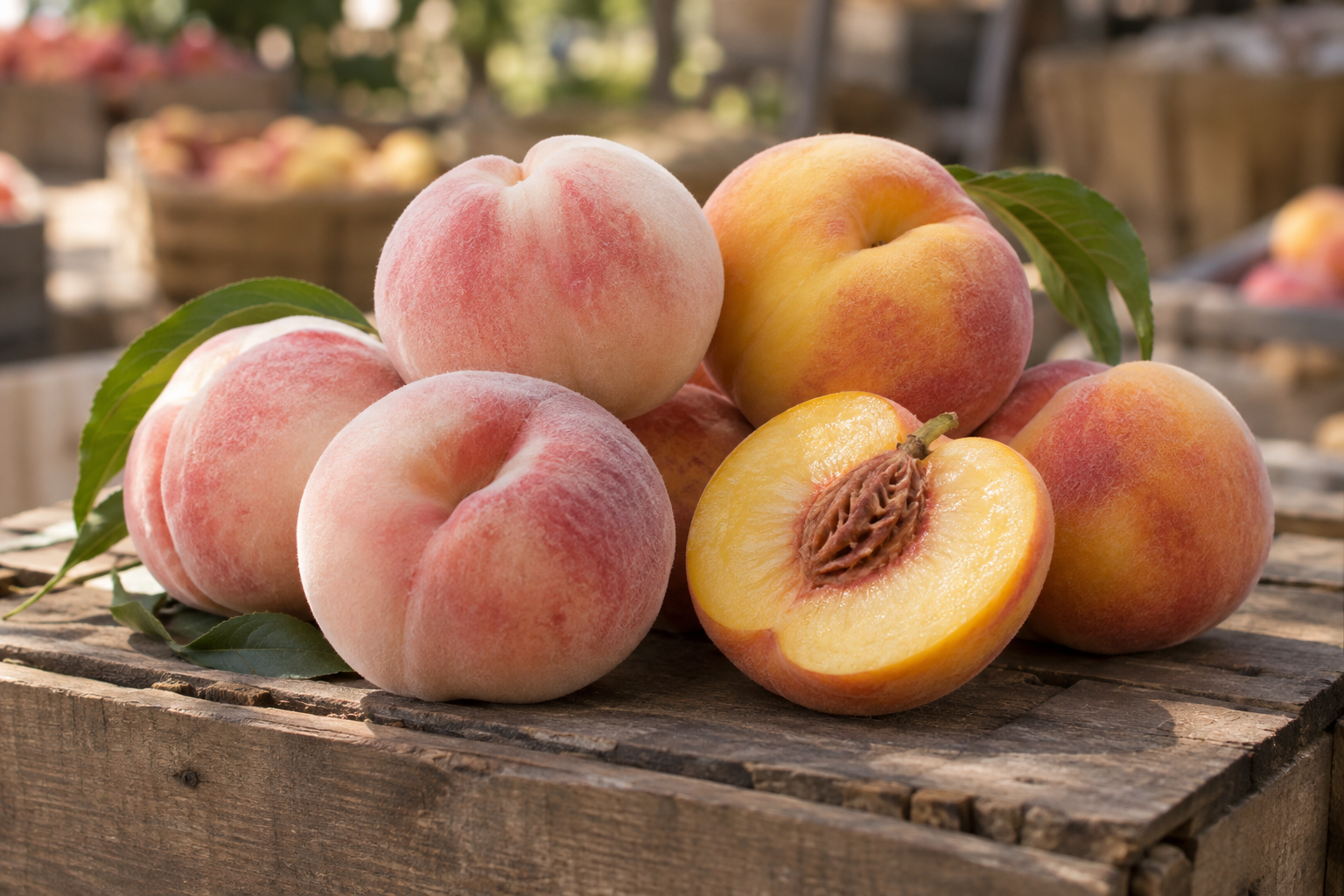
For a regional specialty away from the temporary stalls, Sejong’s best-known food product is the Jochiwon peach. The Jochiwon area has grown peaches for more than a century — the city dates cultivation to an early-1900s experimental orchard — and “Jochiwon peach” was registered as a geographical-indication collective mark in 2018. The important caveat is timing: peaches are a summer fruit, harvested roughly July to August, so they are out of season during an October festival. Mention it as something the region is known for, not as something you will buy ripe at the stalls.
Honest assessment
The clearest reason to come in 2026 is the anniversary framing. A Hangeul-themed festival is well matched to the year Korea is marking the centenary of Hangeul Day and the 580th anniversary of the alphabet, and the organiser has put real production into the evening shows: a 2,000-drone display, a fireworks-and-drone multimedia show, an Air Force flypast and a national-orchestra closing concert are a stronger headline set than most city festivals attempt. The free admission and the two large, walkable parks make it an easy, low-commitment outing, especially with children.
The weaknesses are scale and specificity. “Sejong Lake Park and Central Park” is a broad area with several stages, and the content that draws people — the drones, the air show, named singers — is time-bound. Arriving without the daily schedule is the quickest way to wander pleasant experience booths while missing the act you actually wanted. The other honest limitation is the journey: with no train station in the city, every route ends in a transfer, which turns a short trip into a two-part one.
The fair plan is to decide first which evening set-piece matters, build the visit around its date and start time, use the afternoon for the lake-park experience zones, and confirm the transport for your return before you go. On those terms it is a well-run, genuinely free day out with an unusually strong evening programme for its size.