Taebongje is Cheorwon’s own festival before it is a tourist event. The county sits on the edge of the DMZ in northern Gangwon, and its identity is bound up with Taebong, the short-lived kingdom that Gungye — a renegade prince of Silla — declared after founding Later Goguryeo and moved his capital here in the early 900s. The palace site itself now lies inside the Demilitarized Zone, north of the Military Demarcation Line, so the kingdom survives in Cheorwon mostly as history and as this festival. Held since the early 1980s and marking the county’s day, the 2026 edition is the 44th Taebongje, running October 1-3 at the Cheorwon Sports Complex in Galmal-eup, the area usually called Sincheorwon.
Cheorwon County and the Cheorwon Culture Foundation, which organises the festival, put the 2026 theme as “a Taebong that has held a thousand years, a Cheorwon coloured together.” What that means on the ground is a mix of a historical reenactment, an ancestral rite, and — for most of the three days — a residents’ community gathering with sports, contests and food. Setting expectations honestly matters here: this is not a large ticketed spectacle with a marketed headline act. It is a real county festival, and its strongest moments are concentrated on the opening day.
What you actually do here
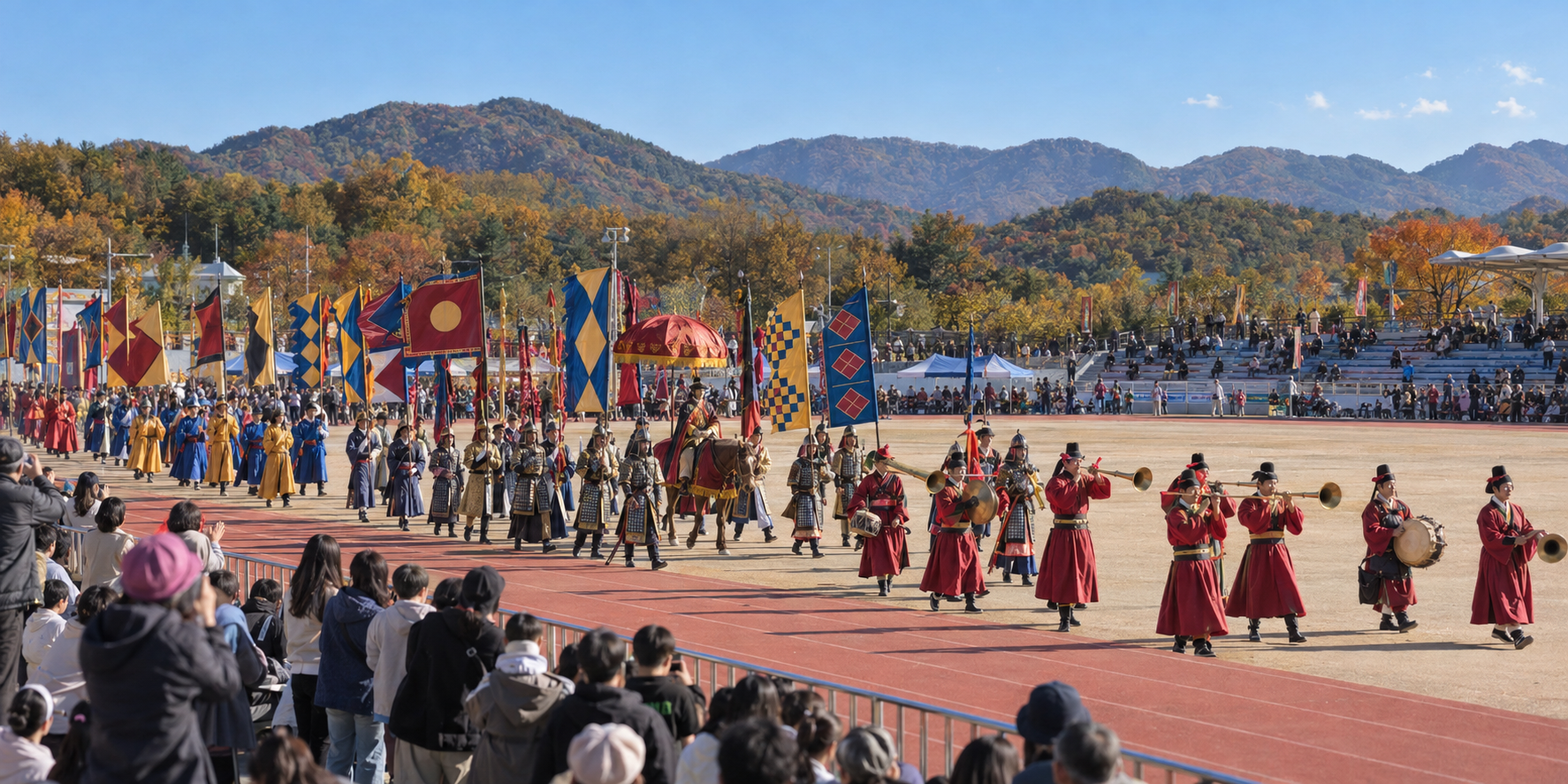
The signature sight is the Gungye royal procession. On the opening day a costumed parade evoking King Gungye’s Taebong court forms up at the Cheorwon Indoor Gymnasium and moves to the main stadium, led by a traditional chwita military band. Alongside it the festival holds the Taebong ancestral rite (Taebongje-rye), the formal ceremony that gives the festival its name. These two elements — the rite and the procession — are what distinguish Taebongje from a generic autumn county fair, and they are the reason to prioritise day one.
The opening day also carries the festival’s civic core: the Cheorwon citizens’ awards, including the long-running Kim Chungmugong Prize presented at the ceremony, followed in the evening by a congratulatory performance and fireworks. Cheorwon County has confirmed that there is a celebrity performance, but it had not named any performer when this guide was written, so this article does not promise a lineup.
Away from the set-piece events, the sports ground works as an open festival zone throughout the run. The organiser lists local-food restaurants, agricultural and folk experience programmes, standing performances and hands-on booths operating across the site. That gives a casual visitor something to do between the scheduled ceremonies, though it is closer to a community fair than a commercial festival street.
Programme and timetable
The three days are structured, and it helps to know which day suits you before travelling.
Day one, October 1, is the anchor. It opens with the Taebong ancestral rite, stages the Gungye procession from the indoor gymnasium to the stadium behind the chwita band, and builds to the opening ceremony with the citizens’ awards. The congratulatory performance and fireworks are evening events. Exact clock times for 2026 had not been published in a form worth quoting when this guide was written, so confirm the schedule on the Cheorwon Culture Foundation’s notices rather than assuming last year’s times.
Day two, October 2, turns participatory and local. The published programme includes the Taebong writing contest (baegiljang), a drawing competition, a kickboard race and a joint daycare-centre sports meet. These are engaging to watch but are built for residents and schoolchildren rather than for outside visitors, so a traveller arriving specifically for day two should temper expectations.
Day three, October 3, is the community sports day (Gunmin Hanmaeum sports meet) — a “one-heart” gathering with around a dozen leisure-sport and folk-game events contested by the county’s towns and townships, complete with the entrance parades of each district. It is a good window onto Cheorwon community life, and much less of a spectator show.
Because the daily grid and precise times were still fluid at this update, the safe plan is to treat October 1 as the day to travel for and to check the foundation’s programme page before committing to a specific hour or event.
Getting there without a car
This is the part that most changes a Seoul visitor’s plan: Cheorwon has no passenger railway. The old Gyeongwon Line through here does not carry regular passenger services to the town, so the realistic public route is by road.
From Seoul, take an intercity bus to Sincheorwon Intercity Bus Terminal in Galmal-eup. Services run from Dong-Seoul Bus Terminal (and are also available from Sangbong), with schedule aggregators putting the ride at roughly two to two and a half hours before traffic. Sincheorwon is the terminal closest to the festival: the Cheorwon Sports Complex is nearby in the same Galmal-eup area, a short taxi ride from the terminal rather than a comfortable walk.
A few practical cautions. Cheorwon has more than one bus terminal — Sincheorwon, Dongsong and Wasu serve different parts of the county — so book to Sincheorwon for this festival and check the destination carefully. Bus frequencies to a rural county are far thinner than intercity rail elsewhere, and the fireworks are a late finish, so plan the return leg before you go rather than assuming a late departure exists. The county had not announced a dedicated festival shuttle when this guide was written; if driving, expect the sports-complex area and its approaches to be busiest around the opening ceremony and fireworks.
Food on site and nearby
The festival runs local-food restaurants and agricultural experience booths on the grounds, so there will be food on site, but the organiser had not published a 2026 menu, vendor list or prices — which means this guide will not promise a particular dish, price or vegetarian option at the stalls.
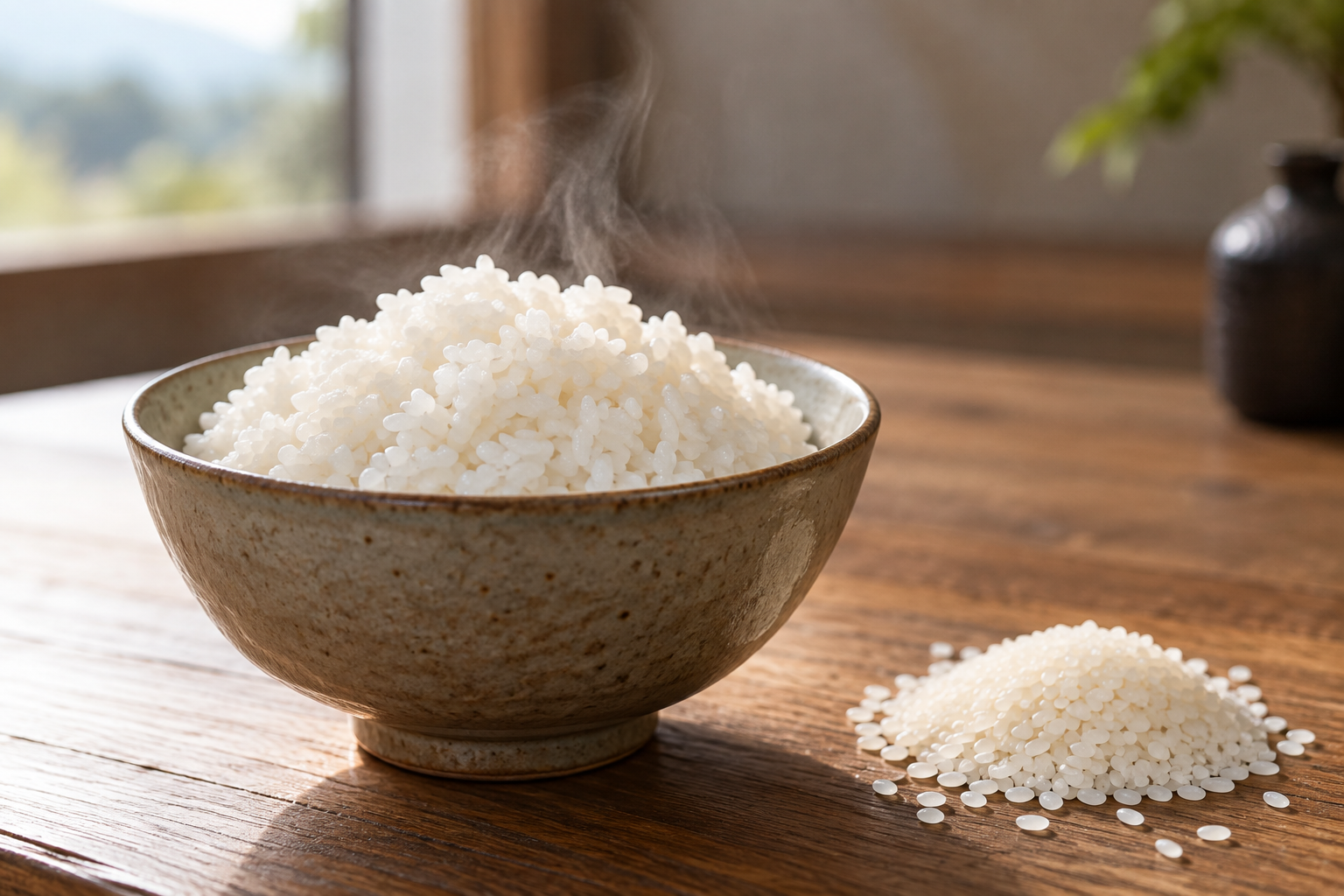
For a specialty worth seeking out beyond the temporary stands, look for Cheorwon Odae rice. Cheorwon County registered “Cheorwon Odae rice” as a geographical-indication collective trademark in 2016, and the Odae rice variety suits the cold climate and wide day-to-night temperature swing of the inland Cheorwon Plain near the DMZ. It is the product the county is best known for, sold in shops and served in restaurants across the area. This is a regional recommendation, not a claim that the festival food zone will feature it.
Honest assessment
Taebongje’s appeal is its authenticity and its history. The Gungye procession and the Taebong ancestral rite tie the festival to a genuine, unusual chapter of Korean history — a capital that stood here for a few years eleven centuries ago and now lies in the DMZ — and the event is run for and by Cheorwon residents rather than staged for ticket sales. For a traveller who wants to see a real county festival and is interested in the Taebong story, that is a strong draw, especially combined with Cheorwon’s nearby attractions such as Goseokjeong and the Hantan River geopark.
The weaknesses are equally clear and worth respecting. Two of the three days are dominated by residents’ contests and a community sports meet, so a visitor who arrives on the wrong day may find little pointed at them. There is no confirmed performer lineup, and much of the 2026 detail — exact times, fees for participatory events, any shuttle — was still unpublished at this update. And the access is real work: no train, a two-hour-plus bus to a rural terminal, a taxi to the ground, and a late fireworks finish in a place where transport thins out at night.
The fair plan is to travel for October 1, arrive for the rite and the procession, stay for the evening ceremony and fireworks if your return transport allows, and check the Cheorwon Culture Foundation’s programme for confirmed times before you commit. Pair it with Goseokjeong or the Hantan River rather than treating the sports-ground festival as a full day on its own. Come for the history and the community atmosphere; do not come expecting a headline concert or a polished tourist production.