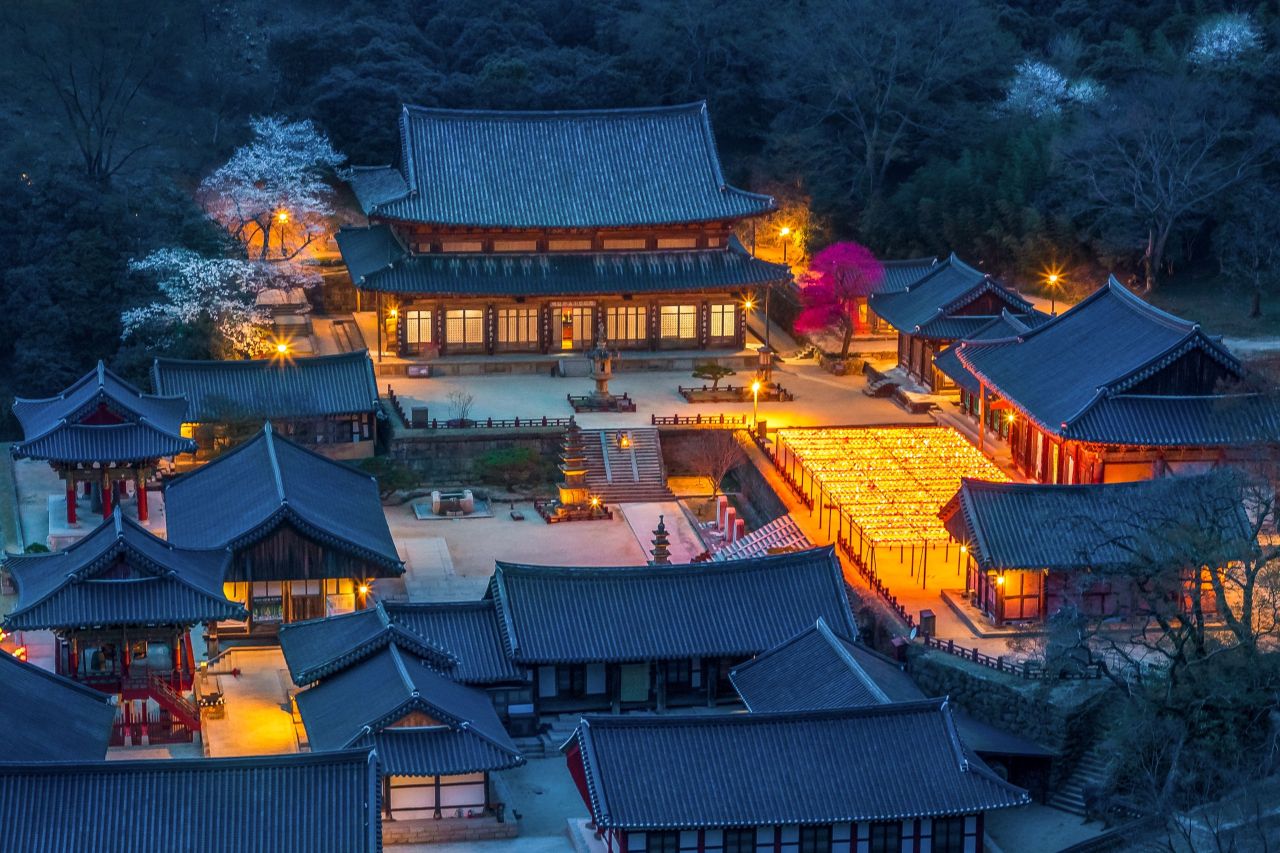
The Hwaeom Music Festival is not a fairground with a stage bolted on. It is a single evening concert held in the courtyard of Hwaeomsa, a temple founded in the sixth century at the foot of Mount Jiri in Gurye, and it forms the centrepiece of the wider three-day Hwaeom Culture Festival. For 2026 the culture festival runs October 9-11, and the music festival itself falls on the second evening, Saturday, October 10, starting at 19:30. As of the morning of October 10, we found no postponement, cancellation or date change, and Korean reports from October 9 describe the festival as having opened on schedule. An earlier government festival plan listed October 3-5, but the temple’s own 2026 announcement and eight separate news reports agree on the later dates, so this guide follows them.
Two things are worth settling before you plan around this. First, the concert is genuinely one evening, not a weekend of stages, so the trip is built around a single date. Second, this is not the temple’s well-known summer “mosquito-net film music concert,” where the audience lies under nets in the courtyard; that is a separate, ticketed event held in August that has sold out in seconds. The autumn Hwaeom Music Festival is a different programme with a different character.
What you actually do here
The evening is structured as a slow build from ritual into music. Rather than an MC or an opening announcement, the concert begins with three strikes of a bamboo clapper by a temple monk, marking, in order, a pause, an awakening and a new beginning. From there the reported programme moves through Buddhist sound and ceremony — a dharma drum, the great temple bell, a formal six-offering rite and the reedy tone of the saenghwang mouth organ — before opening out into a concert bill. In other words, you are watching a temple set the scene on its own terms first, then hand the courtyard over to performers.
The 2026 line-up named in Korean reports spans several worlds on one stage: the gugak vocalist Ha Yoon-ju, the veteran singer Choi Baek-ho, the contemporary-dance group Project M and the rock band Guckkasten. That range — traditional Korean song next to modern dance next to loud guitars, all inside a working Buddhist temple — is the point of the event rather than an accident of booking. You do not need to follow the Korean lyrics to read the evening; the ritual opening, the setting and the contrast between acts carry most of it.
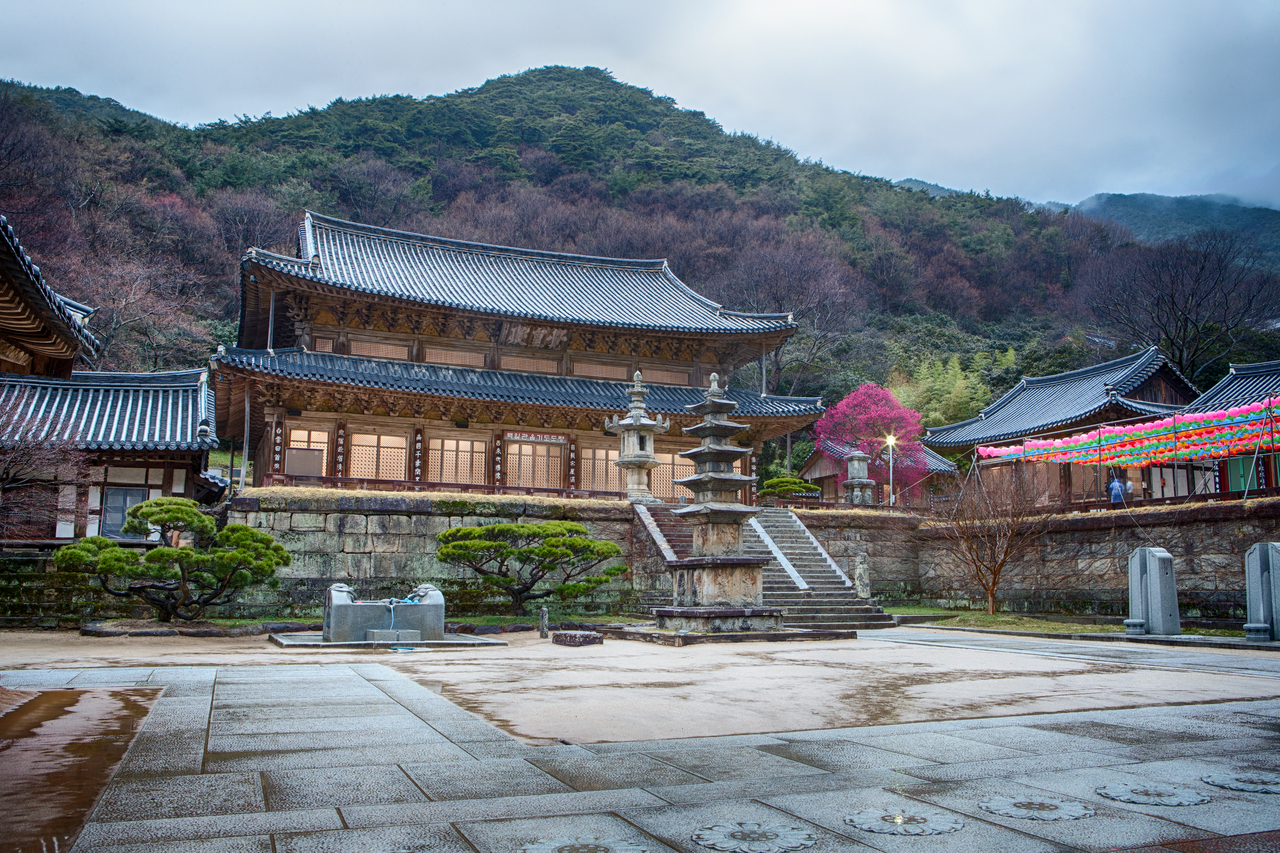
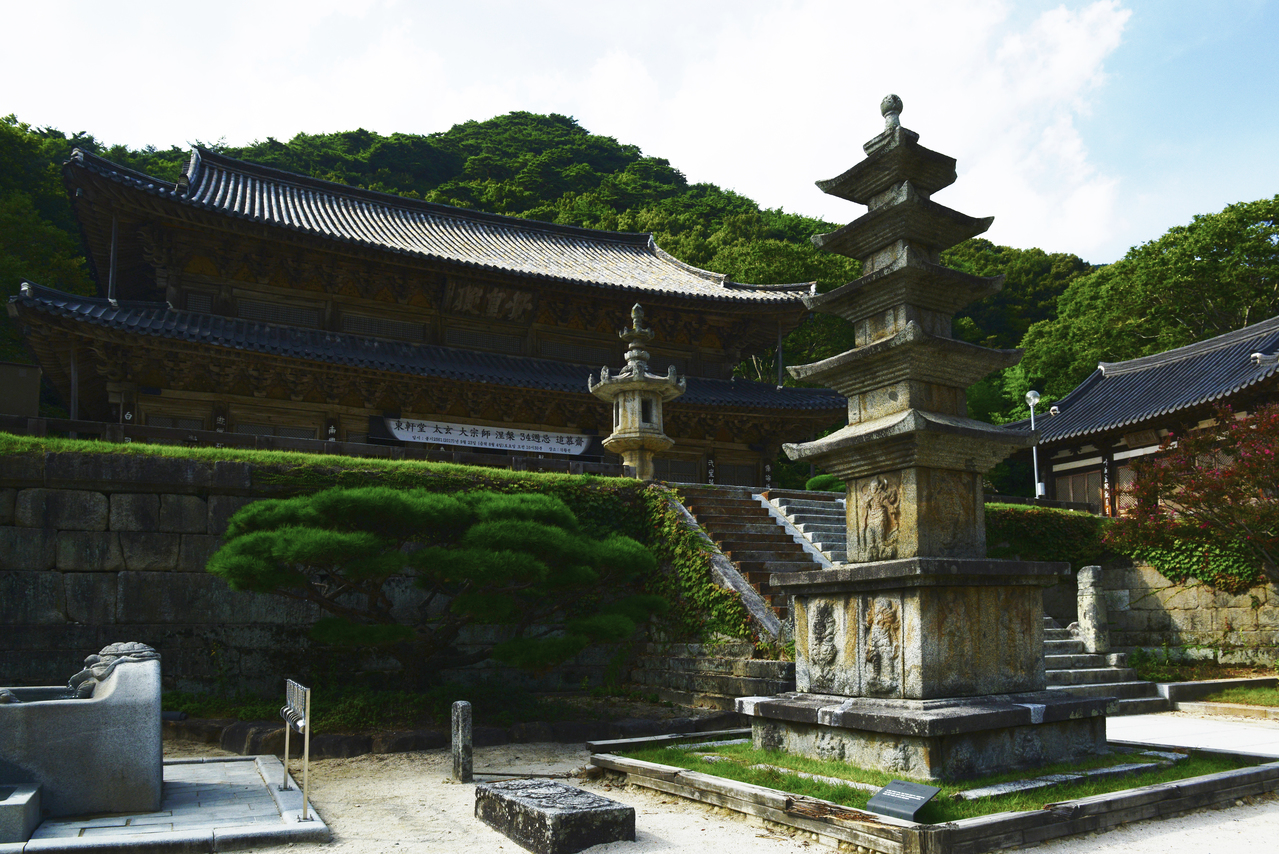
The setting does a lot of the work. Hwaeomsa is one of the major temples of the Jogye Order and holds several national treasures, including the two-storey Gakhwangjeon Hall that dominates the upper courtyard. Arriving while it is still light lets you walk the halls, the stone pagodas and the terraces before the concert, which is far more rewarding than turning up in the dark for the music alone.
Final timetable for October 10
The temple’s published schedule, as carried by Korean outlets in the days before the festival, puts the concert on the special stage in front of Bojeru Pavilion, the large pavilion at the entrance of the upper courtyard, at 19:30. Earlier reports only said “evening”; the time and the stage are now consistent across several outlets.
The reported structure is five scenes, titled wind, sound, life, body and light. As described in the coverage, the saenghwang mouth organ opens the sequence, Ha Yoon-ju sings, Choi Baek-ho follows, Project M dances, and the rock band Guckkasten closes. The opening sequence includes the three bamboo-clapper strikes by the temple’s publicity director, Venerable Beomjeong, and a ritual offering. One report adds that the lighting of the main hall’s lamps is relayed live by drone, and that a single clapper strike returns the temple to silence at the end. Treat the order as the plan rather than a guarantee; running orders shift on the night.
The same day starts early. The sixth Jirisan Hwaeomsa yoga contest begins at 8:30 on the same Bojeru stage, with around 400 participants expected and breathing, singing-bowl meditation and yoga performances. If you arrive in the morning for the temple, expect the courtyard to be in use; if you come only for the evening, the stage will have been reset.
No source we found gives a parking plan, shuttle service, traffic-control notice, seating arrangement or rain contingency for the concert, so none is claimed here. The stage is in the open courtyard, so check the forecast and bring a warm layer for an October evening in the mountains.
The wider Hwaeom Culture Festival
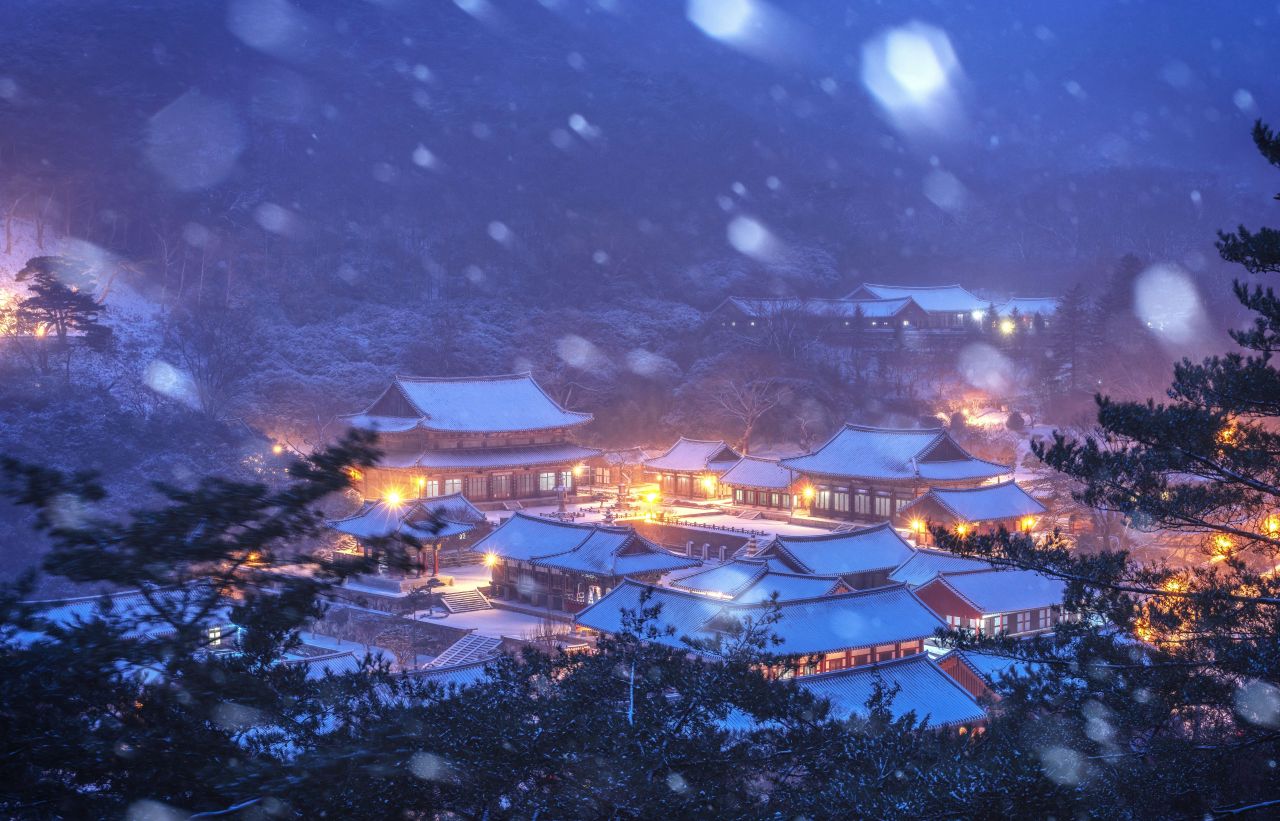
The concert sits inside a three-day programme, and the surrounding events explain why the temple frames the weekend as a culture festival rather than a gig. The 2026 schedule opened on October 9 with a memorial rite at 10:00 — held for Cha Il-hyeok, the police commander credited with refusing orders to burn Hwaeomsa during the conflict of the 1950s — followed at 13:30 by a ceremony centred on the temple’s giant Yeongsanhoe hanging scroll, a designated National Treasure, with traditional Gurye string-and-wind ensemble music.
October 10, the day of the concert, also carries a large temple yoga gathering reported to draw around 400 participants, so the grounds are already busy during the day. October 11 closes with a community line-dance meet from 8:30 (nine teams from Gurye’s districts are reported), a sixth “Mother’s Path” walk, and a trot-music performance. None of these are the music festival, and they happen at different times, so if one of them is your actual reason for coming, check the temple’s daily schedule rather than assuming everything runs continuously.
The 2026 edition is billed under a theme that translates roughly as “light a lantern in the wind,” and the temple’s material leans on history, Buddhist culture, traditional performance, yoga and meditation. That mix is a fair description of the whole weekend: it is a temple’s own event, opened up to visitors, rather than a municipal festival staged on temple land.
Tickets, temple entry and what it costs
There is good news on cost and a genuine gap in the record. Hwaeomsa stopped charging a cultural-heritage admission fee in May 2023, when national-park temples across Korea dropped the charge, and the temple made its car park free from 2026. You can therefore reach the courtyard where the concert is held without paying an entrance or parking fee, which is not something you could say a few years ago.
What is not published is any ticket, reserved-seat or registration detail for the October 10 concert itself. That does not mean seats are guaranteed or that there is nothing to arrange; it means the information was not available when this guide was written, so this article does not invent a price or a booking method. If a guaranteed seat matters to you, contact the temple office directly rather than relying on an old blog. And again, do not confuse this with the summer mosquito-net concert, which genuinely is ticketed and famously hard to get into.
Getting there without a car
Gurye is deep in the south-west, and there is no way around the distance. The rail option is a KTX on the Jeolla Line from Yongsan Station to Gurye-gu Station; current timetables put that at roughly four and a half hours. Gurye-gu Station is actually across the Seomjin River from the town and is not beside the temple, so you then transfer by city bus or taxi to Gurye Intercity Bus Terminal and continue to Hwaeomsa, which has its own frequent bus service from the terminal through the day.
The intercity bus is the alternative from Seoul, running from the Central City and Nambu terminals to Gurye. It drops you closer to the town centre than the rail station does, but it is exposed to expressway and, on a festival weekend, local traffic. Whichever you choose, treat the final leg to the temple as a separate step in the plan, because “Gurye-gu Station” on a map is not the same as standing in the temple courtyard.
Because the concert is an evening event and the trip is long, the last connection back matters more than usual. This guide deliberately does not name a last train or bus, since those depend on your exact date and can change; look up the specific return on the day you travel before you commit to a same-night departure.
Day trip or overnight
On paper a Seoul day trip is possible; in practice it is a poor match for this event. Nine hours or more of round-trip travel, a local transfer at each end and a concert that only starts in the evening leave almost no usable margin, and any delay turns the return into a scramble. If the music festival is the reason for the journey, an overnight in Gurye or the Hwaeomsa area is the sensible structure.
Staying nearby also lets you use the daytime properly — the temple itself, the Jirisan foothills and the Seomjin River valley reward slow time far more than a rushed in-and-out. Availability and prices were not independently checked here, so no specific accommodation is recommended, but book ahead: a festival weekend at a single well-known temple concentrates demand on a small town.
Eating before a 19:30 concert
Timing matters here, because Gurye is not a late-dining town. A Kyunghyang Shinmun report on September 30 says about half of the county’s 520 licensed restaurants concentrate on daytime trade and that evening closing is often around 7 pm. The county has launched a “Gurye Night Meal” scheme in which ten selected restaurants near the main tourist areas or the town centre stay open until at least 9 pm. We could not confirm which restaurants are in it or whether any is close to the temple, so do not rely on it: eat before the concert, or check the restaurant’s hours by phone, rather than assuming a late table.
Local food and specialties
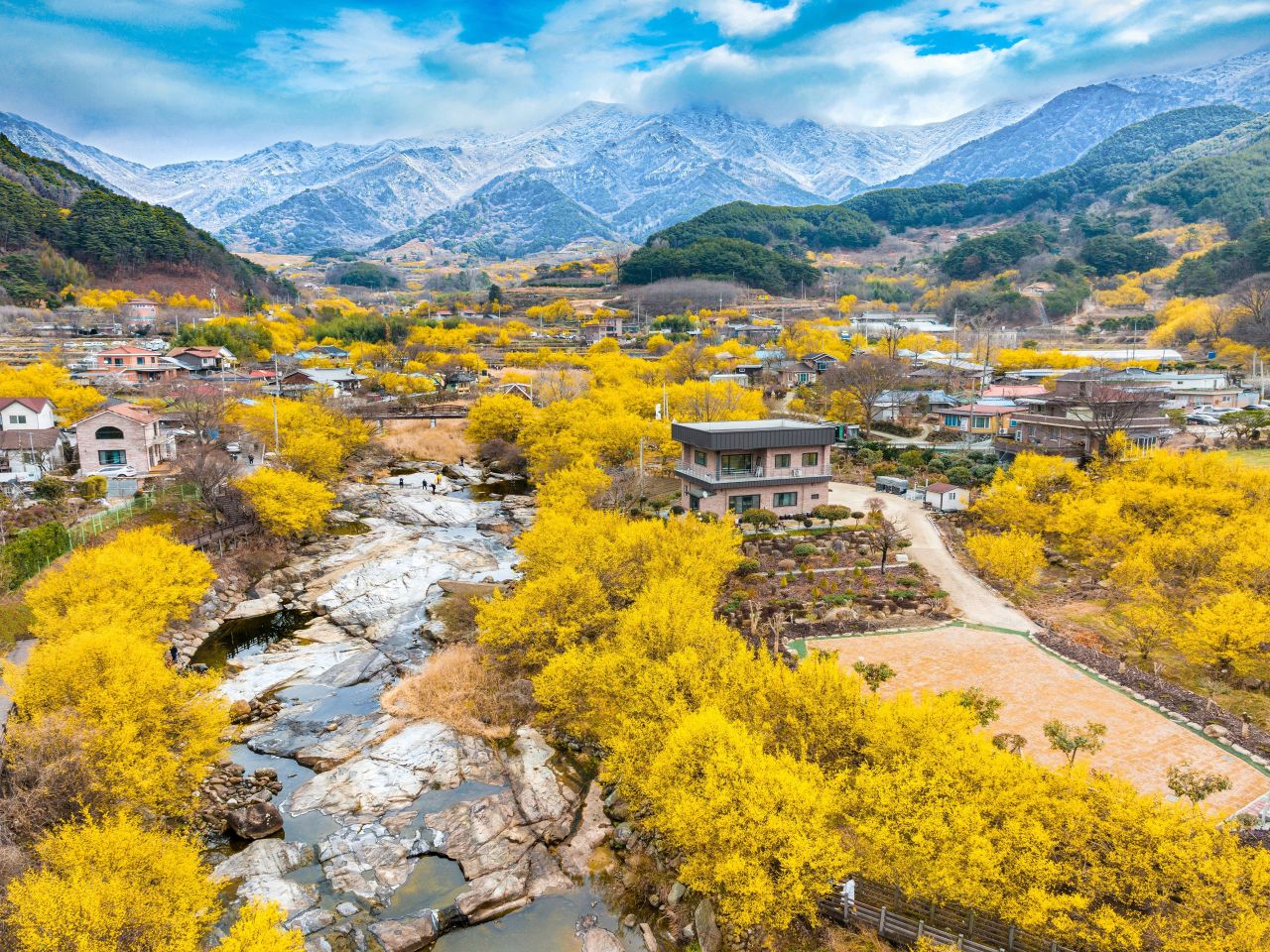
Away from whatever is operating on the grounds, Gurye has two things worth knowing about. The county is the country’s leading district for sansuyu, the small red cornelian-cherry fruit, supplying well over half of the national crop and registered since 2008 as a geographical-indication product; the fruit is dried for teas and traditional medicine rather than eaten fresh, and the hillside sansuyu villages blaze yellow when the trees flower in early spring.
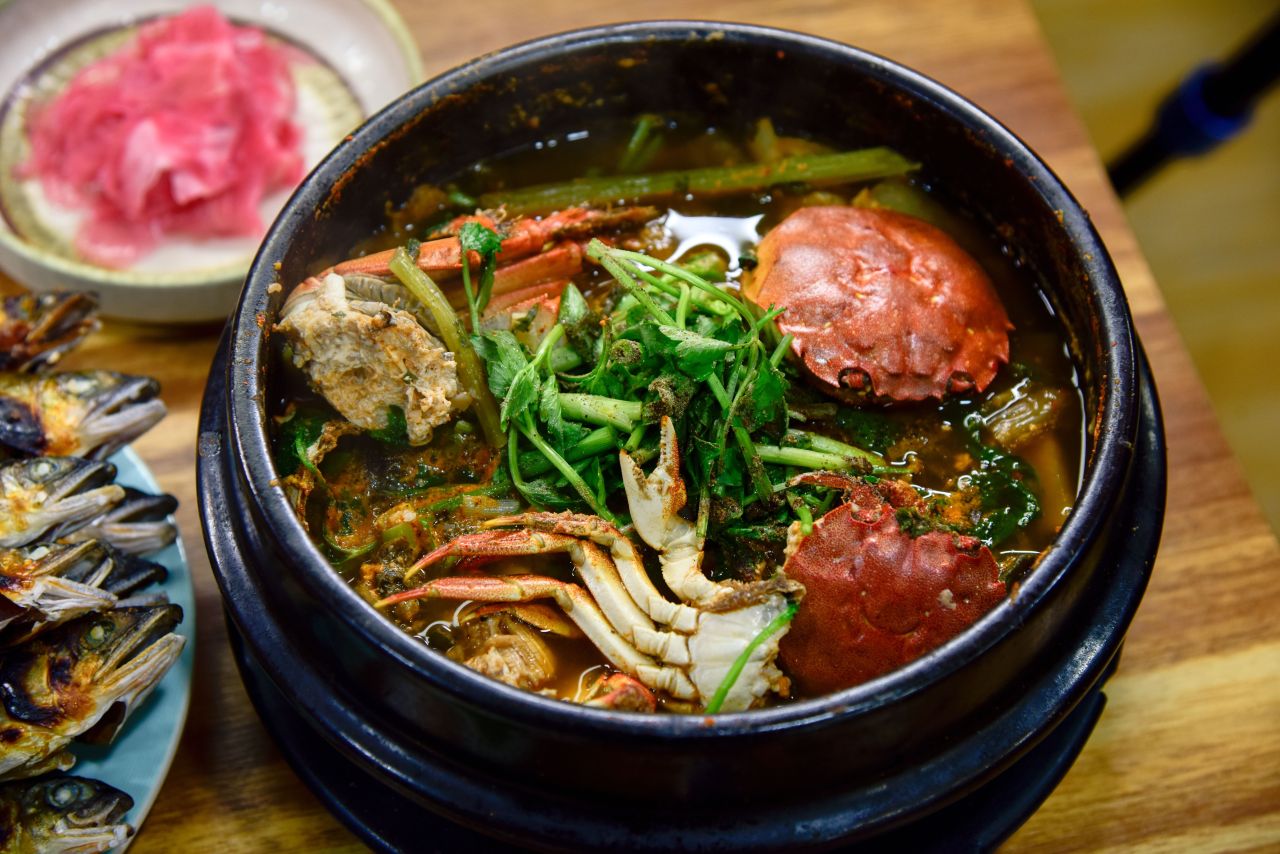
The other is the river. The Seomjin River that runs along Gurye yields freshwater crab, and in autumn that crab is simmered into chamge-tang, a spicy soybean-and-chilli stew that regional food guides list among the county’s representative dishes — a seasonal specialty that happens to line up with the festival’s timing. Both are recommendations for Gurye generally, not promises about food stalls at the temple.
Honest assessment
The strength of the Hwaeom Music Festival is exactly its restraint. A concert that opens with a bamboo clapper and a six-offering rite, then puts a gugak singer, a dance company and a rock band on the same courtyard stage inside a thousand-year-old temple, offers something a city festival cannot fake. The free temple entry and free parking, both recent changes, make the setting more accessible than it used to be, and the surrounding three-day programme gives a full weekend of reasons to be there.
The weaknesses are equally clear, and they are mostly about distance and scale. This is one evening’s concert at the far end of a four-and-a-half-hour rail trip, so the effort-to-payoff ratio only works if the temple setting and the specific bill appeal to you. The concert’s own ticketing and seating were not documented at this update, the day dates had to be corrected against an outdated government plan, and the grounds are already busy with a daytime yoga event before the music starts. Come for October 10, arrive in daylight, plan to stay the night, and treat the ritual opening — not just the headline names — as the part worth being on time for.