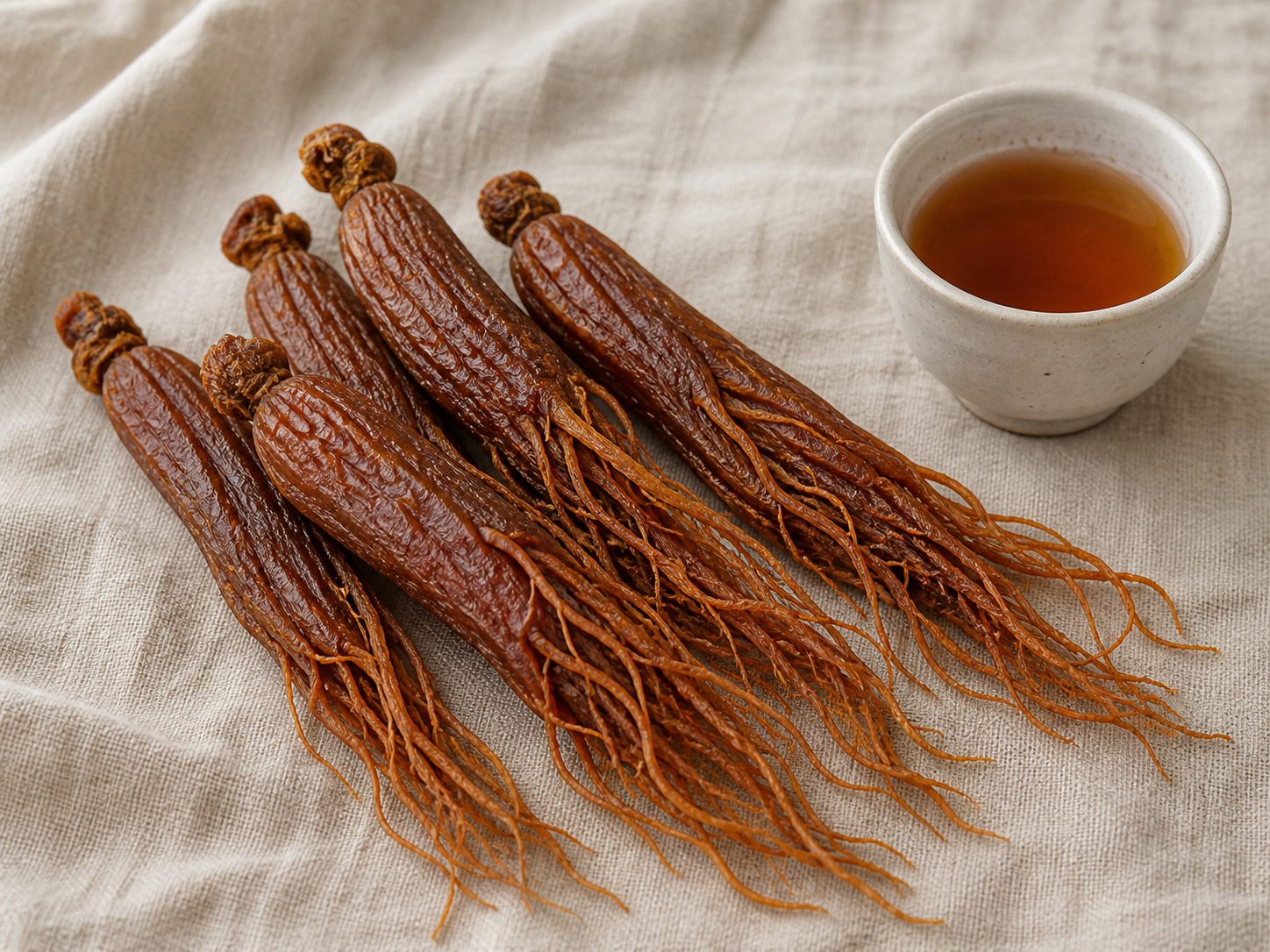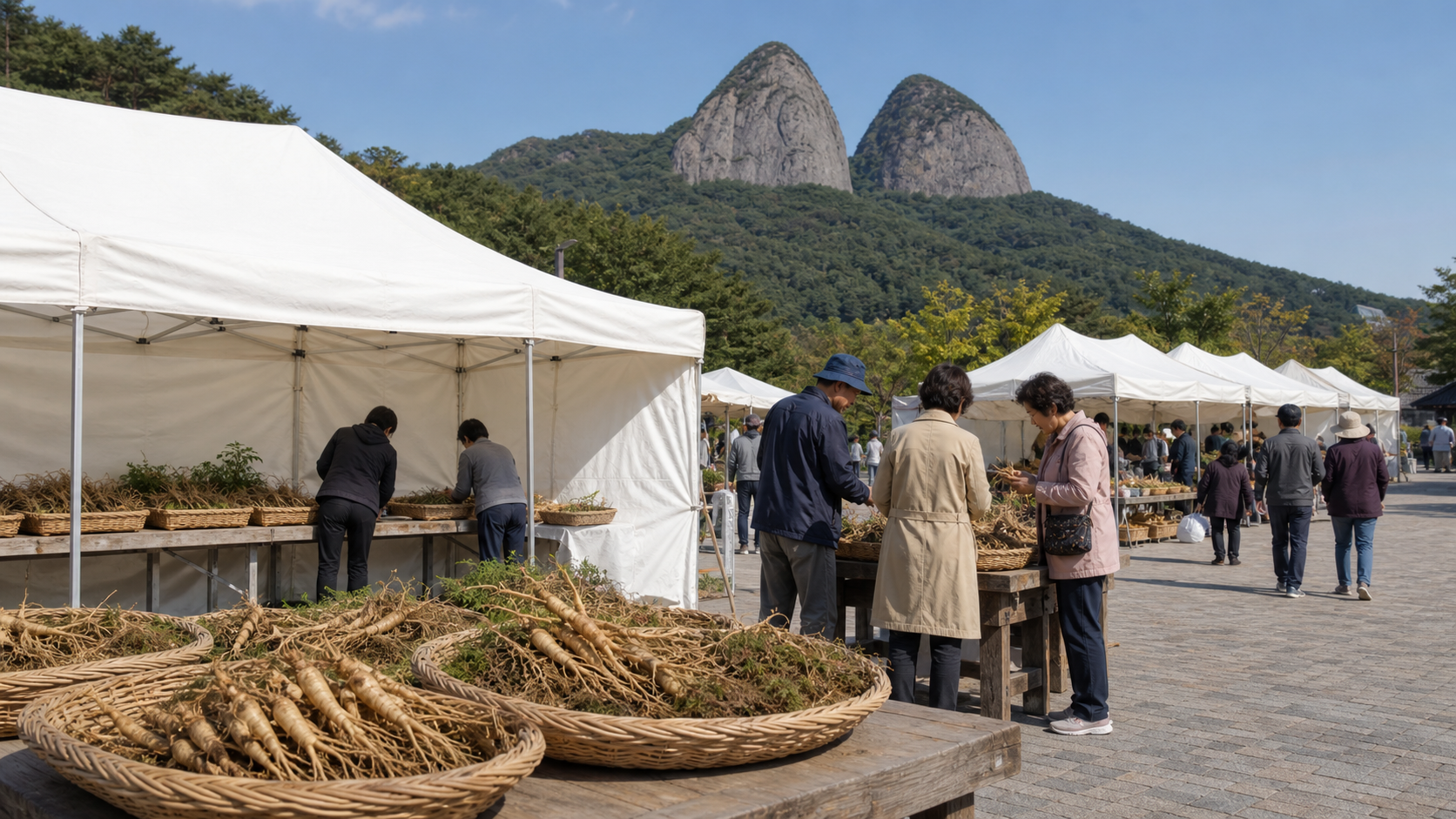
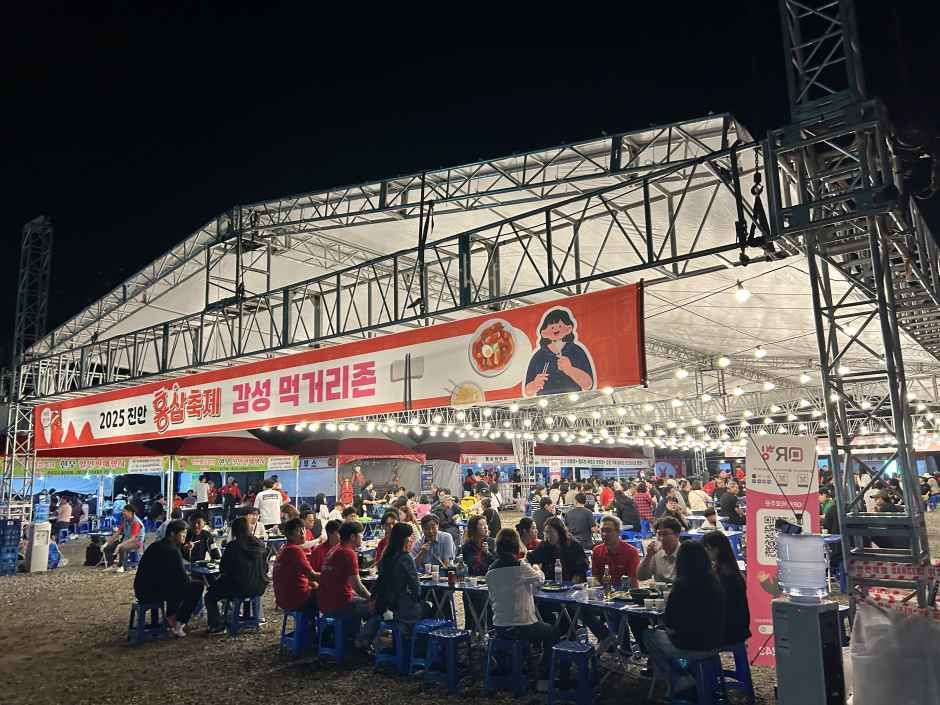
This is a county produce festival with Maisan as its backdrop, not a general food fair with ginseng added to the name. The 2026 programme centres on red-ginseng food, cooking, wellness activities, product stalls and performances, running under the county’s 2026 slogan, a Korean pun that loosely reads “steep yourself in the charm of red ginseng.” It works best if you are curious about how fresh ginseng becomes red ginseng, want to compare certified Jinan products, or need a family programme that mixes short activities with stage shows.
A re-check on September 10, eight days out, found the dates, hours and free admission unchanged: no postponement, cancellation or date change. The county’s programme, shuttle, line-up and nakhwa-nori notices are still the set published on September 4, all reflected below.
The practical date range is slightly wider than the three festival days. The main grounds run September 18–20, 10:00–21:00, while the official eve event, Red Ginseng Light nakhwa-nori, is at 21:00 on Thursday, September 17 beside Jinan Highland Market. That fire display is in town, not at the northern Maisan festival ground, so do not arrive at the mountain site on Thursday night expecting the full fair to be open.
What you actually do here
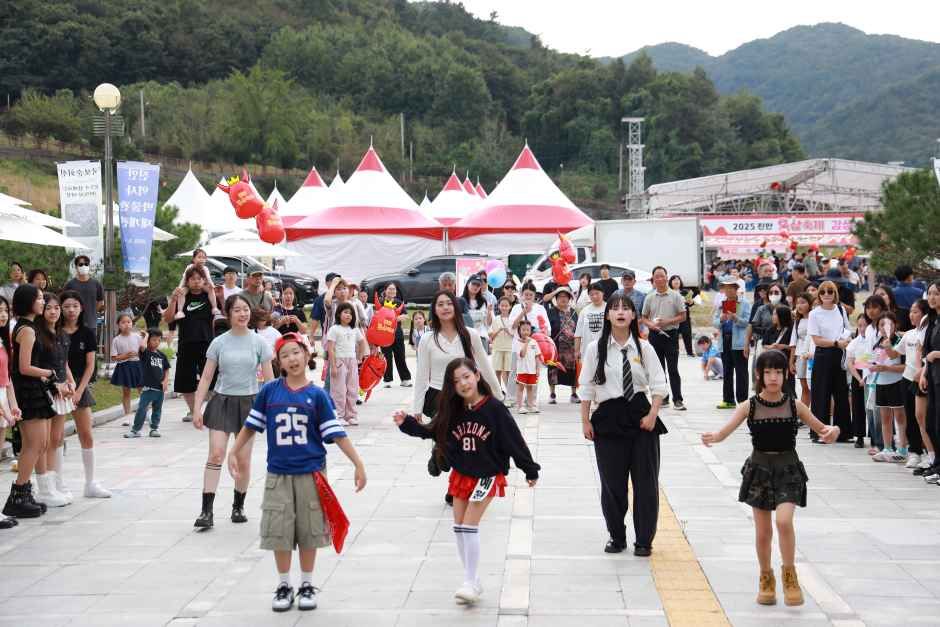
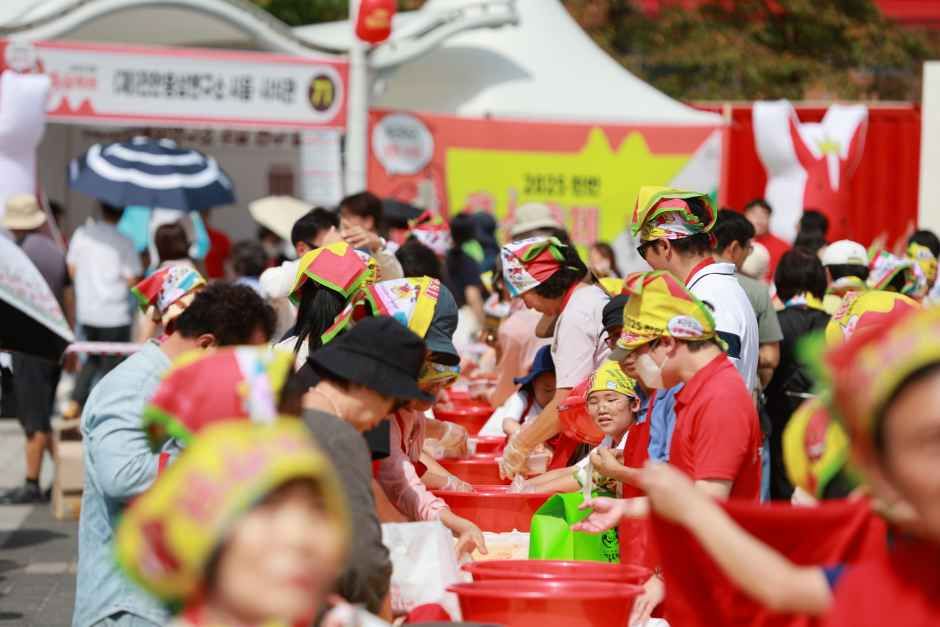
The programme divides fairly cleanly into eating, learning and family entertainment. Food activities include red-ginseng barbecue, red-ginseng tteokbokki made in collaboration with Dookki, a communal red-ginseng meal, and making and sharing kkakdugi with Jinan produce. These are not evidence that every dish is free or available continuously; the KTO listing explicitly says some experiences charge separately.
For a closer look at the product, the Red Ginseng Master Class covers the festival’s distinctive preparation process and offers a completion certificate and red ginseng. A separate steaming demonstration shows the traditional method used by a master designated by the Ministry of Agriculture, Food and Rural Affairs. The permanent themed hall explains the growth of Jinan ginseng, red-ginseng manufacture and the county quality-certification system. Together these are more informative than simply moving between sales booths.
The active options include the Red Ginseng Power Zone, a stamp tour, health walking around Maisan and wellness sessions built around yoga, meditation and singing-bowl sound. Families get a children’s zone, a Catch! Teenieping sing-along and photo session (the show’s producers confirmed the Jinan date as September 19), magic, bubbles and balloon acts, a circus performance, outdoor footbath and VR bus. The published list also includes a random-play dance and K-pop performance, a youth culture festival and the 35th Infantry Division’s band.
Quieter stops include special exhibitions at the Scissors Museum and Jinan History Museum. The programme also names Jungpyeong Gut, a local traditional performance.

Programme and timetable
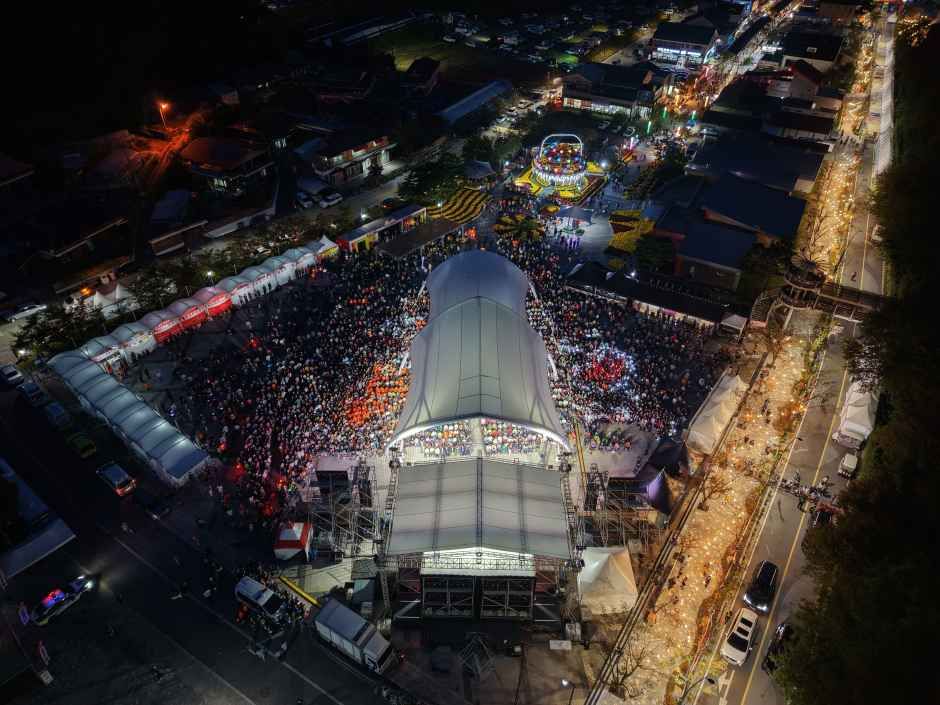
Three evening anchors are confirmed. At 18:00 on Friday, September 18, the opening ceremony, concert and fireworks feature Ailee and Daybreak. At 18:00 on Saturday, September 19, the youth-focused Red Energy Festa lists Guckkasten, HYNN, chan and Hwanhee. At 17:00 on Sunday, September 20, the tenth Jinan Highland Trot Festival lists Sim Soo-bong, Lee Chan-won, Jang Min-ho, Kim Da-hyun, Miss Kim and Yoon Soo-hyun. These names and times come from the festival’s September 4 line-up notice, not an unofficial “expected singer” list.
The KTO record also names a grand parade, health walking, community stage slots and the linked Jeonbuk Throwdown competition. Check the detailed daily grid just before travel: a headline time does not say when a workshop opens, whether a session has filled or when weather will move an outdoor act.
The eve programme deserves separate planning. Red Ginseng Light nakhwa-nori begins at 21:00 on September 17 beside Jinan Highland Market. The organiser warns spectators to remain in the designated area, protect their face and clothes from falling embers, take extra care in wind and watch their footing in dark areas. Children should remain with a guardian. This is a controlled fire performance, so the safety perimeter is part of the event rather than an optional viewing suggestion.
Tickets, fees and booking
General admission is free. Some experiences are paid, but the sources checked do not publish one complete 2026 price sheet, so there is no honest single “activity budget” to quote.
One bookable programme does have a confirmed price. Sangol-Ae Red Ginseng Hansang runs from 11:30 to 13:00 on Saturday, September 19 in the wellness zone behind Jinan History Museum. The meal includes perilla red-ginseng samgyetang, red-ginseng side dishes and dessert from participating Jinan Highland restaurant operators. Capacity is 48 people, booking opened through the linked Google form on August 24 and closes when full. The fee is 20,000 won per person; confirmed participants receive a 10,000-won local gift certificate after attending. Payment confirmation is what completes the booking, and solo applicants may share a four-person table. The organiser also publishes an allergen list, so read it rather than assuming the set meal can be adapted.
For everything else, ask at the booth. Free entry does not establish activity prices or card acceptance; the latter remains unverified.
Getting there without a car
The simplest route is a direct intercity bus from Seoul’s Central City Terminal to Jinan. Jinan County’s access information puts the trip in the roughly 2.5-to-3-hour range, and the current timetable checked for this guide lists only two departures from Seoul, at 10:10 and 15:10. Traffic and sparse service matter more than the difference between those estimates: reserve the exact departure and verify it on the booking system rather than expecting a frequent turn-up-and-go route.
During the festival, use the dedicated town shuttle instead of waiting for the ordinary county bus. Route 1 runs every 20 minutes in a loop through Mannam Square, Jinan Intercity Bus Terminal, Jungang Elementary School, Hanbang Yakcho Center, the temporary lot in front of Hakcheon District, the county office, the Eup office, the rotary and the festival ground. Route 2 runs every 30 minutes between the Agricultural Technology Center, the certified-red-ginseng complex and the grounds. Both operate 10:00–21:30 from September 18 to 20.
There is also a dedicated Jeonju shuttle once an hour. Outbound buses leave between 10:00 and 17:00; return service runs 13:00–21:00. Its three starting points are Hanok Village’s Pungnammun, the Jeonju Local Food Hyocheon branch and the Jeonbuk Provincial Government north gate. One route calls across from Jeonju Station. Check the official map for intermediate stops; traffic can add five to ten minutes.
Outside festival-shuttle hours, Jinan County’s regular northern-Maisan bus covers the 5 km from town at 07:30 and then hourly from 08:20 to 18:20; return departures run through 18:30. That remains useful for an early start, but it is not the bus to depend on after an evening concert.
The train alternative is KTX from Yongsan to Jeonju, followed by an intercity bus from Jeonju to Jinan and then the local Maisan connection. Jinan County lists roughly 1 hour 40 minutes for the KTX leg and 40–50 minutes for the Jeonju–Jinan bus, before transfer waits. It offers more Seoul departure choices but adds two changes.
Parking, shuttles and traffic control
The organiser says vehicles are completely barred from the festival grounds. Do not navigate to the entrance and expect to find a visitor space there. Use a satellite lot and shuttle instead. The two lots singled out in the notice are the Agricultural Technology Center, 238 spaces, and Gowon 2 parking lot, 120 spaces. Other mapped parking includes areas by the public stadium, county office and Jinan Technical High School, connected by Route 1.
The plan does not guarantee an empty lot or an on-time bus. The 358 spaces across the two highlighted lots are finite, and the organiser anticipates delays. From Jeonju, the dedicated coach avoids both parking and a terminal transfer.
Food on site and nearby
The confirmed festival programme includes red-ginseng barbecue, red-ginseng tteokbokki and a general food area. The official site also separates listings for snacks, meals, agricultural produce, fresh ginseng and red-ginseng products. Those categories establish that food and shopping exist; they do not establish each vendor, price or dietary accommodation.
For a meal outside the booths, the official guide lists Baekje Hoegwan for mountain-vegetable set meals and Jinan Mai Don for grilled pork, both on Maisan-ro. These are directory entries, not endorsements; confirm festival-weekend hours directly.
On September 9, ahead of the festival and Chuseok, Jinan County launched a joint public-private price-stabilisation campaign against overcharging, with officials and merchant and consumer representatives promoting price displays and fair pricing at the county office, Ssangdari, Jinan Highland Market and the bus terminal. The county says it will monitor prices during the festival and run an overcharging report centre with on-site inspections. That is a commitment to oversight, not a guarantee of any particular price, so still check posted prices at the stall before ordering.
Red ginseng is also a regional product rather than a theme imported for the event. Jinan County describes itself as Korea’s only red-ginseng special zone and operates a county quality-certification system. If you are buying packaged extract or roots, compare the certification mark, quantity and form rather than treating every red box as interchangeable. The official programme says purchasers of Jinan red ginseng and agricultural products receive 20% back, capped at 20,000 won, but confirm the redemption procedure at the sales area before calculating it into your budget.
Day trip or overnight
A focused daytime visit is possible from Seoul if you take the morning direct bus, use the festival shuttle from Jinan Terminal and leave before the headline concert. It becomes a poor day trip if the 18:00 stage, fireworks or 21:00 closing period is the reason you came. The shuttle gets you back into Jinan town until 21:30, but no verified late direct service then carries you to Seoul.
Stay in Jinan for the evening programme. The official accommodation directory includes Hongsam Vill near the northern Maisan area with 44 rooms, plus hotels, motels, pensions and camping sites elsewhere in the county. That directory confirms the properties and room counts, not live availability or quality. Book directly and check the precise location: “Jinan County” can mean a substantial taxi ride from the festival, whereas a room near the northern Maisan grounds or central Jinan fits the shuttle network.
An overnight also makes the September 17 nakhwa-nori feasible: see the 21:00 display in town, sleep locally, then begin the main festival after 10:00.
Honest assessment
Come for a focused half-day or an evening with one chosen headline, not for a vast fairground. Much of the value is in sampling, comparing products and joining ginseng-themed activities. The master demonstration and themed hall give the event more substance than a row of sales tents, while the children’s shows and active zones make it workable for mixed-age groups.
The weak point is the journey from Seoul. Direct buses are sparse and the train option requires changes. The 2026 shuttle network helps once in Jinan or Jeonju, including after the ordinary Maisan bus stops, but hourly Jeonju service leaves little room for a missed departure.
Expect the approaches to feel busiest before the 18:00 Friday and Saturday concerts and the 17:00 Sunday trot show. That is an inference from fixed performance times, parking limits and vehicle control—not a measured forecast of attendance. Arrive earlier than the act you want, use the permanent exhibitions or food area while waiting, and check the official notice board on the morning of travel for weather or line-up changes.
On September 9, Jeonbuk Province named the festival among the autumn events it is inspecting before opening, checking safety-management and crowd-management plans, temporary structures, and electrical, gas, fire and traffic safety. That confirms an official crowd plan exists but does not publish gate-by-gate figures or a 2026 traffic-control map, so treat the vehicle ban and satellite-parking-plus-shuttle arrangement above as the practical constraint to plan around.
If red ginseng holds no interest, combine the visit with northern Maisan rather than stretching booth browsing to fill a day. Otherwise, see the manufacture demonstration and certification display before shopping; they explain why Jinan distinguishes certified products from generic packaging.