
Autumn · Gyeongsangbuk-do · Field listing
Gimcheon Gimbap Festival 2026
The essentials first: whether it is open, what it costs, how hard it is to reach and what to expect if you do not speak Korean.
When
Oct 23 — 25ConfirmedConfirmed dates
Where
Jikji Culture Park, Samyeongdaesa Park and the Eco-friendly Ecological Park, Daehang-myeon, GimcheonGyeongsangbuk-do
Admission
FREEEntry is listed as free by Korea Tourism Organization. Food is sold separately, and 2026 gimbap prices and any paid activity fees had not been published when this guide was written.
From Seoul
About 1 h 30 m by KTX to Gimcheon-Gumi Station, plus a shuttle or taxi to the festivalTake a KTX from Seoul Station to Gimcheon (Gumi) Station, then a festival shuttle or the 'picnic taxi' to Jikji Temple and the festival parks. The city also runs direct festival shuttles from Seoul (Jamsil Station, Sadang Station, Seoul Station), booked through the Kakao T app; fares and departure times had not been confirmed.
Hours
09:00-18:00 daily; 10:00-18:00 on Friday 23 October (per KTO's Korean record)
Organiser
Gimcheon City, 054-420-6714
Is this one for you?
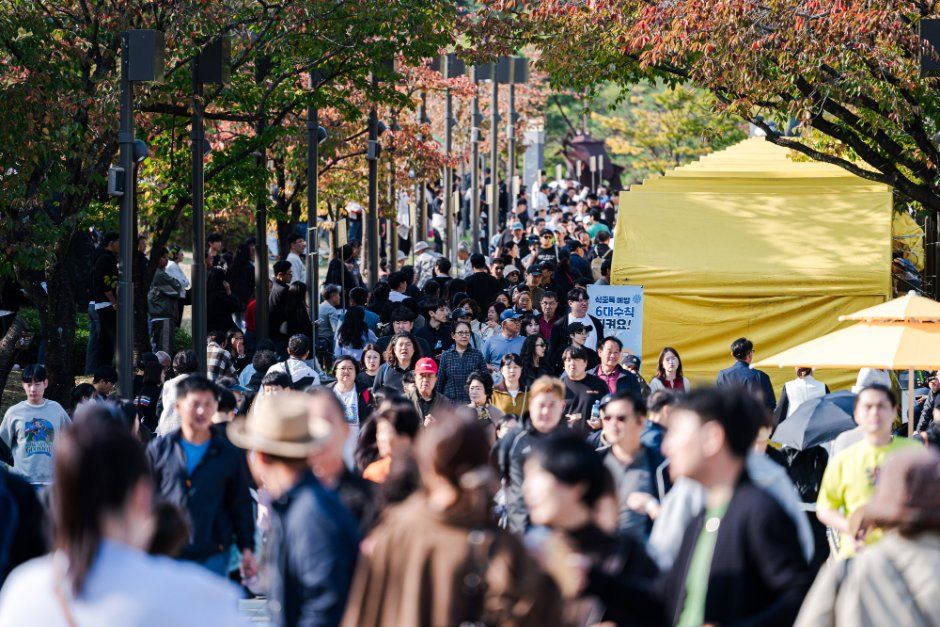
Who it suits. This suits people who like eating their way through a festival and are happy to queue, sit on the grass and graze on many small rolls, with a free outdoor concert in the afternoon. It is a weaker choice if you dislike crowds or cannot manage standing in lines, since the festival drew roughly 150,000 people last year and long queues for gimbap were its main complaint. It is also not a fit if you need a fully English-language experience, because nothing about 2026 English signage has been confirmed.
When to go. Aim for the Friday opening if your schedule allows, since it is the only weekday and starts an hour later than the other two days; that is a judgement, not a published crowd figure. Whichever day you pick, arrive when the gates open at 09:00 or 10:00 rather than at the 16:00 headline slot, and try ordering by QR code on your phone instead of lining up. Shuttles stop at 19:00 and the programme ends at 18:00, so do not plan on an evening here.
LOCAL WEATHER
Weather near the festival
The festival date is outside the current forecast window. Check again closer to your trip.
Korea Meteorological Administration forecast
Need something we do not list — a stall menu, a parking gate, a last bus? The Korea Travel Helpline answers in English around the clock: dial 1330 inside Korea, or +82-2-1330 from abroad.
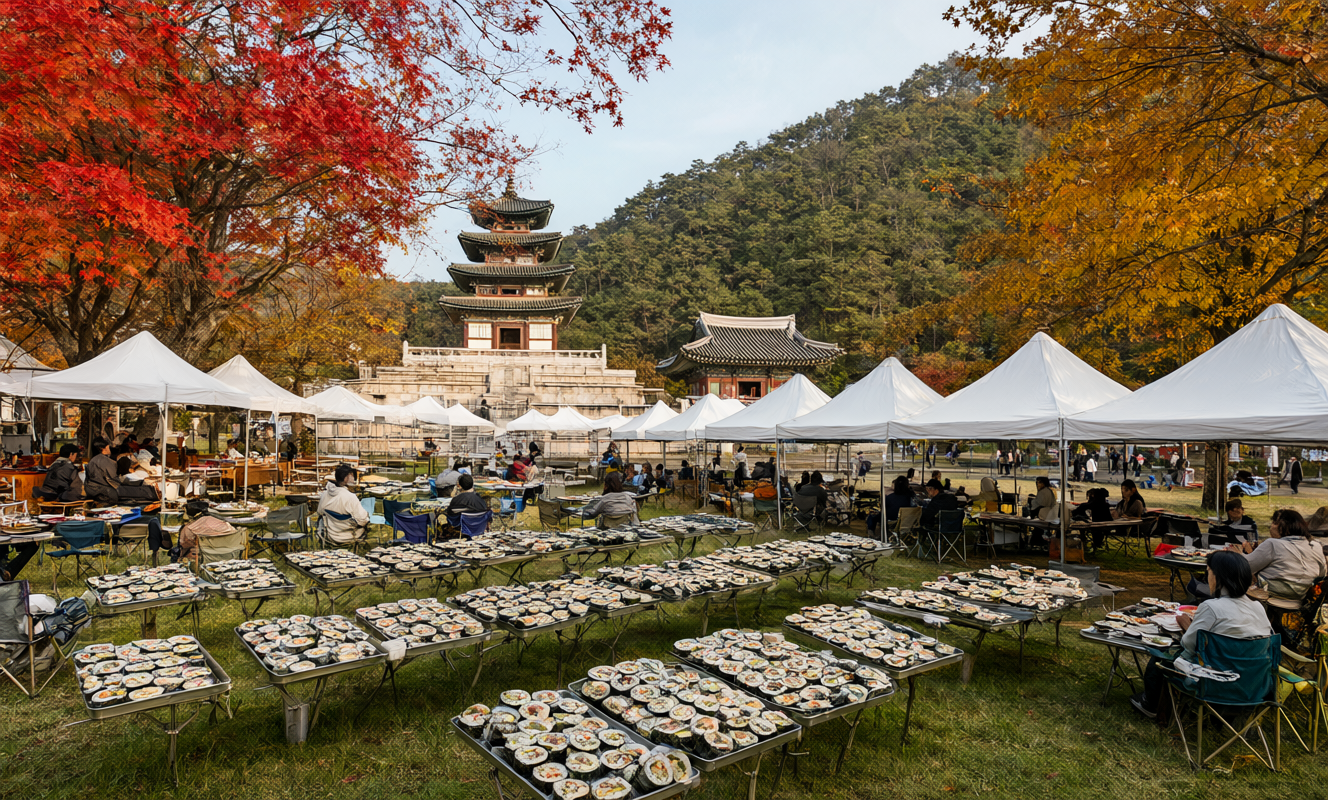
Gimcheon is a mid-sized city in Gyeongsangbuk-do, and its gimbap festival started as a joke. According to KTO, the idea came from a playful word association between Gimcheon and “Gimbap Cheonguk” (gimbap heaven), the name of a well-known chain of snack restaurants, and turned into a festival in 2024. Korea Herald reports that the first edition drew more than 100,000 visitors and that 2025 drew around 150,000, and that scale shapes how the festival feels to attend.
The 2026 festival runs 23-25 October, Friday to Sunday. It has been extended from two days to three and now uses three parks instead of two, according to several Korean press reports from 8 October. The grounds are at the foot of the hills near Jikji Temple in Daehang-myeon, about a taxi ride from the city’s train stations. KTO’s English record lists the address as 1189-52 Hwangak-ro, and its Korean record as 118 Jikjisa-gil, both in Daehang-myeon, so set your map to the festival or Jikji Temple rather than to “Gimcheon”.
What you actually do here
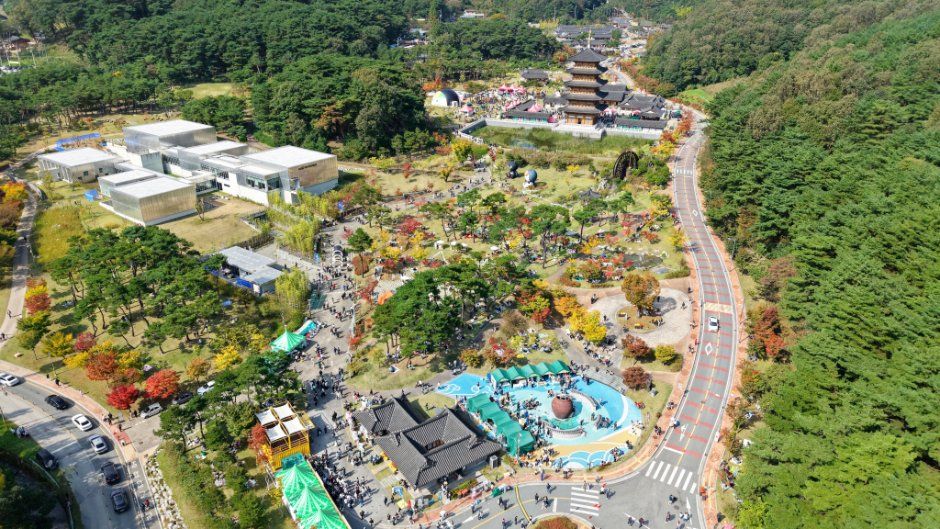
This is a festival about eating, and the programme is organised by park. KTO’s Korean listing describes it as follows:
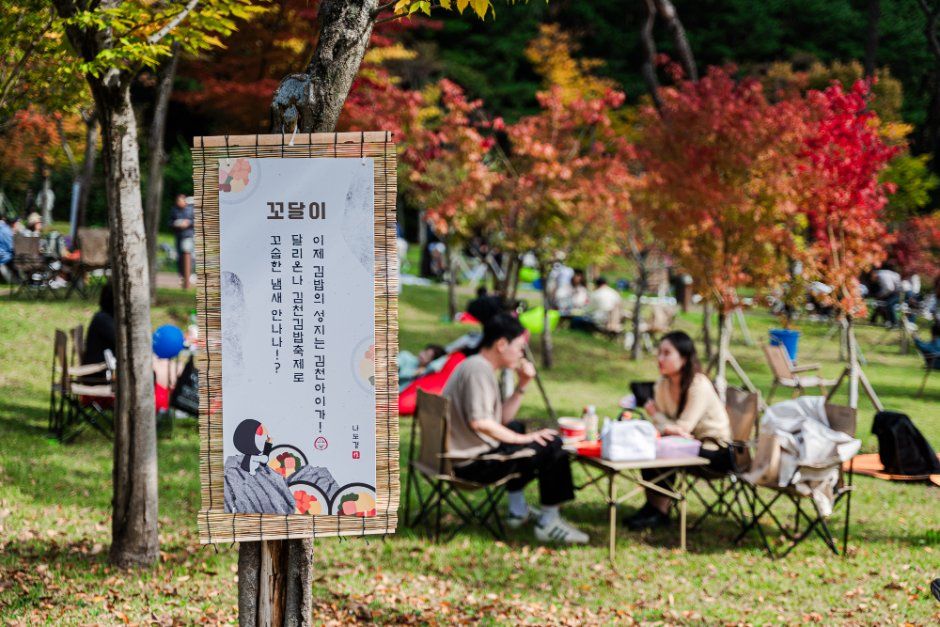
- Jikji Culture Park (the “gimbap plaza”): a gimbap factory, premium local gimbap, a Gimcheon dessert zone, a local-products zone, the main stage, and an exhibit of three-line poems themed on the festival mascot Kkodari.
- Samyeongdaesa Park (the “gimbap heaven”): nationwide unusual gimbap, “curated” gimbap, the gimbap cooking-contest zone, a gimbap art studio, a gimbap postbox, busking and cosplay.
- The Peace Pagoda area of Samyeongdaesa Park (the event ground): signature Gimcheon gimbap, a Kkodari goods shop, a gimbap-and-cider zone, hands-on booths, hanbok experiences and a fringe stage.
- The Eco-friendly Ecological Park (the “gimbap playground”): making a Kkodari biscuit, a gimbap bouncy castle, a gimbap arcade, a gimbap maze, a gimbap train and more booths.
KTO adds a caveat that matters. Its food section still describes the 2025 festival and is “being updated” for 2026. Treat the zone list as a guide to what the festival looks like, not a guarantee that every item returns.
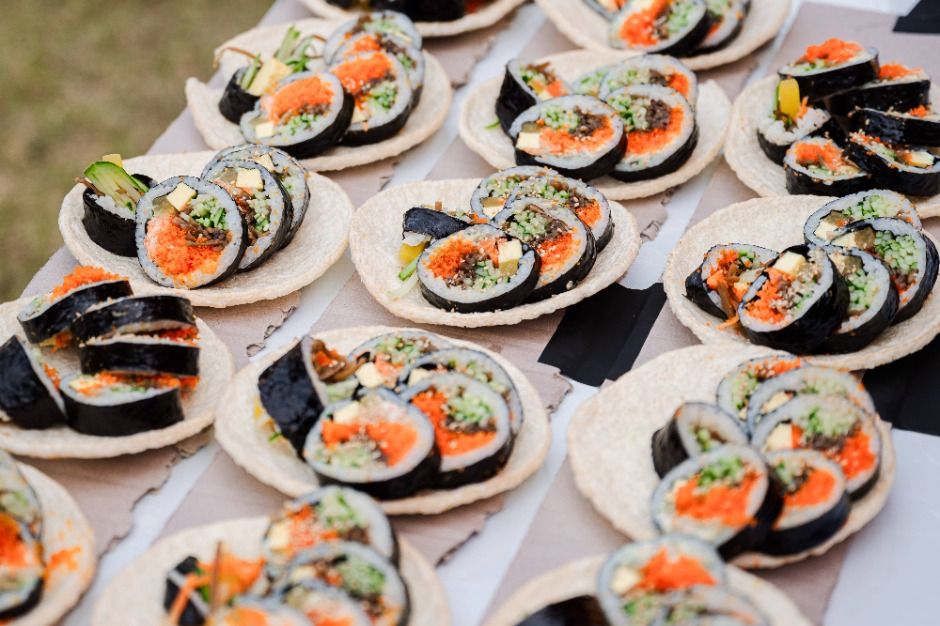
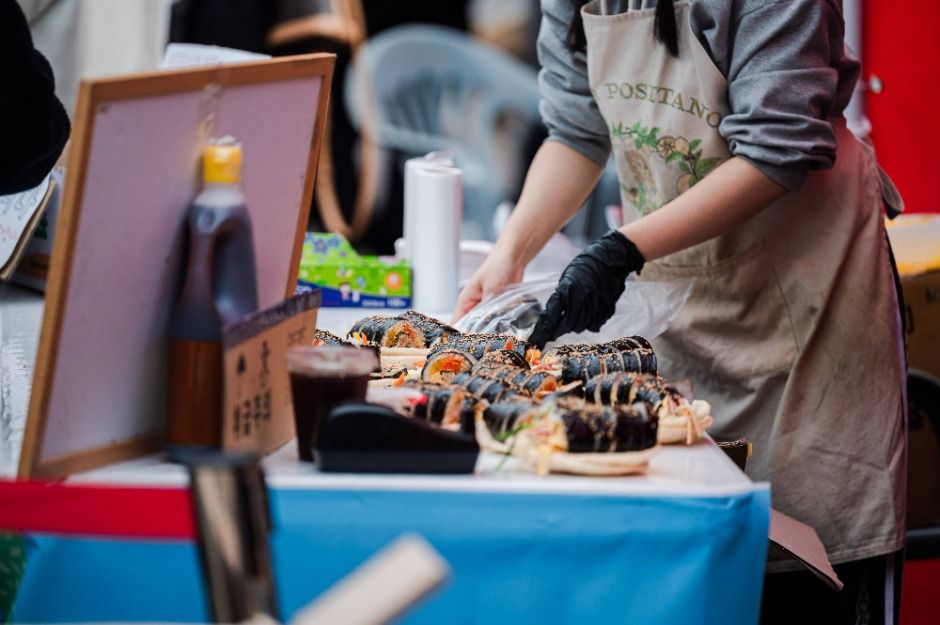
The change for 2026 that the city stresses is the food itself: about 60 kinds of gimbap in total. The press breakdown is 19 premium local rolls, 14 unusual ones, around 20 “nationwide” regional rolls and four winners from the cooking contest. Since I cannot see a menu or prices, I will not promise any particular roll.
Programme and timetable
KTO’s Korean record gives the daily hours as 09:00-18:00, with the opening day, Friday 23 October, starting at 10:00. The English record says 10:00-17:00 but flags itself as 2025 material, so I have gone with the Korean one, which was updated on 2 October. Neither is a substitute for the festival’s own notice board.
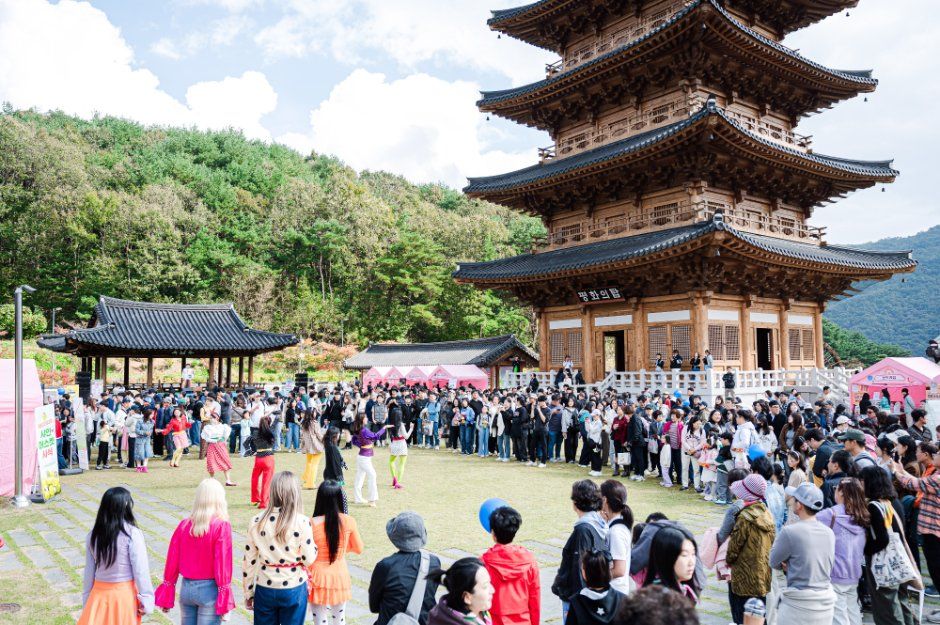
The concert slot is simple. Press reports list one headliner per day at 16:00: Bobby Kim on Friday, Jadu on Saturday and Cheese on Sunday. The Dongmija Bicycle Music Band performs at 13:30 and 15:30 on all three days, and Park Young-jin, a comedian from Gimcheon, is the special MC. Stage times can still shift, so recheck on the day.
Tickets, fees and booking
There is no admission charge listed. What you pay for is food, and this is the part that changed most this year. After the long waits of 2025, the city says it has built a QR ordering and payment system with Kakao Pay, so visitors can order gimbap from their phones without standing in line. I could not find whether cash or cards are also accepted at the stalls, nor any price list, so I have left the card-acceptance field blank rather than guess.
For reservations, the only booked service I found is the direct shuttle bus (see below). Nothing I found suggests you need a ticket for the concerts.
Getting there without a car
The festival says plainly that it wants you off the roads. The simplest route from Seoul is a KTX from Seoul Station to Gimcheon (Gumi) Station. Two timetable sources put the trip at roughly 1 hour 20 to 1 hour 30 minutes, with about two dozen services a day. That station serves both Gimcheon and neighbouring Gumi, so it is not in central Gimcheon, and the festival is a further ride from there.
Three official connections were announced for 2026:
- Festival shuttle buses: about 60 large buses in total, running from Gimcheon Sports Town (40 buses), Gimcheon (Gumi) KTX Station (14) and Gimcheon Station (6) to the Jikji No. 2 public car park. Reports give hours of 10:00-19:00 on Friday 23 October and 08:00-19:00 on 24 and 25 October, roughly every 20 minutes, with a pause at lunchtime and in the afternoon. The fare was not stated in the reports I read.
- “Picnic taxi”: a shared, app-booked tourist taxi seating up to four. Reported one-way fares are 8,000 won from Gimcheon Station and from Gimcheon (Gumi) Station to Jikji Temple, and 5,000 won from Sports Town. The reports do not make clear whether that is per person or per vehicle, so confirm when you book.
- Direct long-distance shuttles: from Seoul (Jamsil Station, Sadang Station and Seoul Station), Daejeon, Daegu, Gwangju and Busan, booked in the Kakao T app’s shuttle menu. The Seoul-area routes use 28-seat coaches, and passengers are said to receive two Kkodari goods and a roll of gimbap. I could not confirm their fares or timetable, or whether foreign visitors can book through the app, so check that before relying on it.
Parking, shuttles and traffic control
If you are driving, there is little I can confirm. The reports describe the shuttle system but do not give temporary car parks, road closures or parking capacity, and the shuttle destination is the Jikji No. 2 public car park, not a general visitor lot. The city’s emphasis on shuttles suggests that driving to the gate is a poor plan, but that is an inference. Look for the official traffic notice a few days before you go.
Day trip or overnight
On timing alone, a day trip from Seoul looks feasible: about 1.5 hours each way by KTX, with the festival open until 18:00 and shuttles until 19:00. I have not verified the last KTX home or the shuttle timetable end to end, so I have not labelled it a day trip in the fact card. Lodging was not checked either, and I cannot recommend a place to stay. If you stay overnight, note that the city is also building a roughly 250-metre “Gimbap Street” opposite Gimcheon Station, which Korea Herald said in late August is meant to be finished by the end of the year, with some elements ready before the festival. Whether it is open by 23 October is not confirmed.
Food on site and nearby
The food is the reason to come, and the notes above apply: about 60 rolls, QR ordering, no confirmed prices. KTO’s English record also lists a “Gimbap Playlist” special performance and a first-birthday fortune-picking ceremony for Kkodari among the programme, but these come from the 2025-based text, so I have not scheduled them into 2026.
Away from the festival, Gimcheon’s best-documented produce is fruit rather than rice rolls. Local sources identify Gimcheon grapes and Gimcheon plums as registered geographical-indication products. Neither is promised at the festival, and I have not checked what is in season in late October, so ask before building a plan around fresh fruit.
Honest assessment
The festival is easy to like in concept and harder to enjoy in practice. Eating many small rolls on the grass in autumn, with free music and a temple-town backdrop, is a pleasant afternoon, and free entry means the cost of trying it is low. The three-day format and extra park are a direct response to size: if 150,000 people came when the city expected far fewer, the organisers are right to add space and shuttles.
The weakness is the same success. The 2025 problems the city itself lists are long waits for gimbap and traffic, and this year’s fixes (QR ordering, 60 shuttles, a taxi service) are announced rather than proven. English information is thin, 2026 menus and prices are missing, and the city’s own press material is in Korean. Come early, order on your phone, take the shuttle or the train rather than a car, and expect to eat standing up. It is worth the trip if the food is the point, and a poor choice if you need quiet or flexibility.
Local specialties to try

Gimcheon grapes (김천포도)
Gimcheon is one of Korea's main grape-growing areas. It was designated a grape industry special zone in 2006, and 'Gimcheon grapes' were registered as a geographical-indication product in 2010. Shine Muscat is among the varieties grown there. This is the district's agricultural reputation, not a statement that grapes are sold at the festival.

Gimcheon plums (김천자두)
Local sources describe Gimcheon as a leading plum-producing area, with the most active growing in Guseong-myeon, and list Gimcheon plums as a registered geographical-indication product. As with the grapes, this is the region's produce, not a promise about festival stalls.
Questions worth asking
Is the Gimcheon Gimbap Festival free?
Entry is listed as free. The gimbap itself is sold, and the city has introduced QR-code ordering and payment through a Kakao Pay partnership. 2026 prices had not been published when this guide was written, so budget from what you see on the day.
What are the opening hours?
KTO's Korean record lists 09:00-18:00, with Friday 23 October starting at 10:00. Its English record gives 10:00-17:00 but says it is based on the 2025 festival, so treat the Korean figure as the current one and recheck the festival site before you go.
Who is performing in 2026?
Press reports give Bobby Kim on Friday 23 October, Jadu on Saturday 24 and Cheese on Sunday 25, each at 16:00. The Dongmija Bicycle Music Band plays at 13:30 and 15:30 on all three days, and the comedian Park Young-jin is the special MC.
How do I get there from Seoul without a car?
The KTX from Seoul Station to Gimcheon (Gumi) Station takes about an hour and a half. From there, festival shuttles run to the Jikji No. 2 public car park, and a shared 'picnic taxi' links the station to Jikji Temple. Direct shuttles also leave from Jamsil, Sadang and Seoul Station, booked in the Kakao T app; I could not confirm their fares or timetable.
When do the shuttles run?
Press reports say 10:00-19:00 on Friday 23 October and 08:00-19:00 on 24 and 25 October, roughly every 20 minutes, with a pause around lunchtime and mid-afternoon. The interval can change with traffic.
Can I do it as a day trip from Seoul?
On timing it looks workable: about 1.5 hours each way by KTX, with the festival open from 09:00 or 10:00 until 18:00. I have not checked the last train home or confirmed the festival-shuttle timetable end to end, so check your return train before booking.
Before you goFestival Etiquette in Korea: What Visitors Get WrongBooking KTX Trains and Intercity Buses as a Foreign VisitorGetting Out of Incheon Airport and On to a FestivalKorean Festivals With Children: Toilets, Strollers and TimingStaying Online in Korea: SIM, eSIM and the Apps That MatterEating at a Korean Festival Without Speaking KoreanRain, Typhoons and Cancelled Festivals: How to Plan Around ThemHow to Pay for Things in KoreaT-money and Transit Cards in KoreaWhat to Wear to a Korean Festival, Season by Season
LAST UPDATED · Oct 9, 2026