The Gangneung Coffee Festival grew out of a very local habit: drinking coffee by the sea. KTO traces it to the coffee vending machines on Anmok Beach and to the café and roasting culture that Gangneung’s coffee makers built up afterwards. The festival began in 2009, and 2026 is its 18th edition, held October 21-25 on Gangneung Coffee Street and at venues around the city.
Recheck, October 18 (three days out): no postponement, cancellation or date change has been announced, and the official site’s newest notices (October 14-15) still give October 21-25. What has become clear since this guide was first written: the coffee street will be closed to cars, a free shuttle will run, there is one fireworks display on the evening of October 24, and a paid tasting exists inside a lounge aimed at foreign visitors. Details are below.
The registered address is 20-1 Changhae-ro 14beon-gil in Gyeongso-dong, the coast-side coffee-street area. KTO lists the event as partly paid and gives operating hours of 10:00-20:00.
What you actually do here
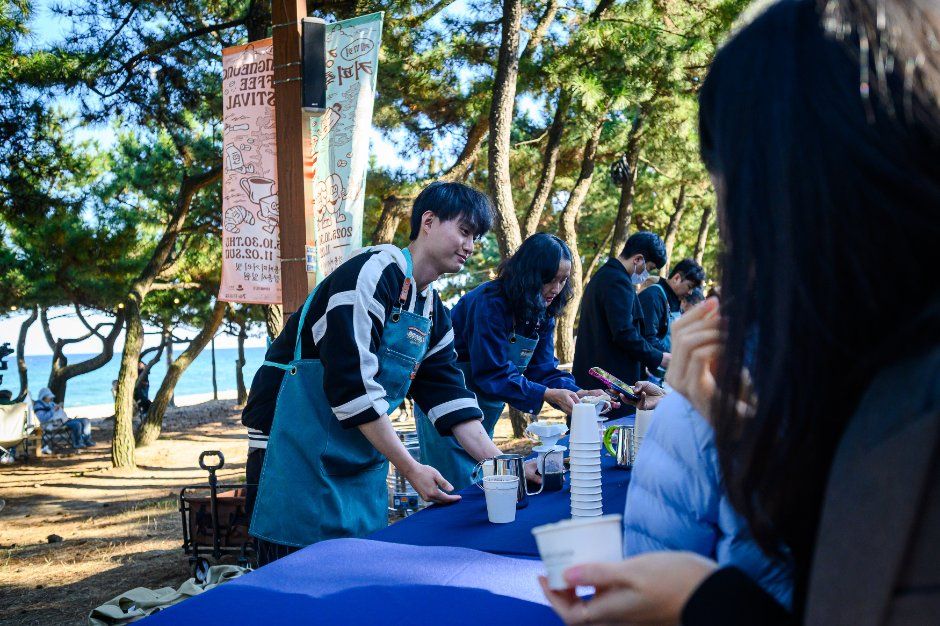
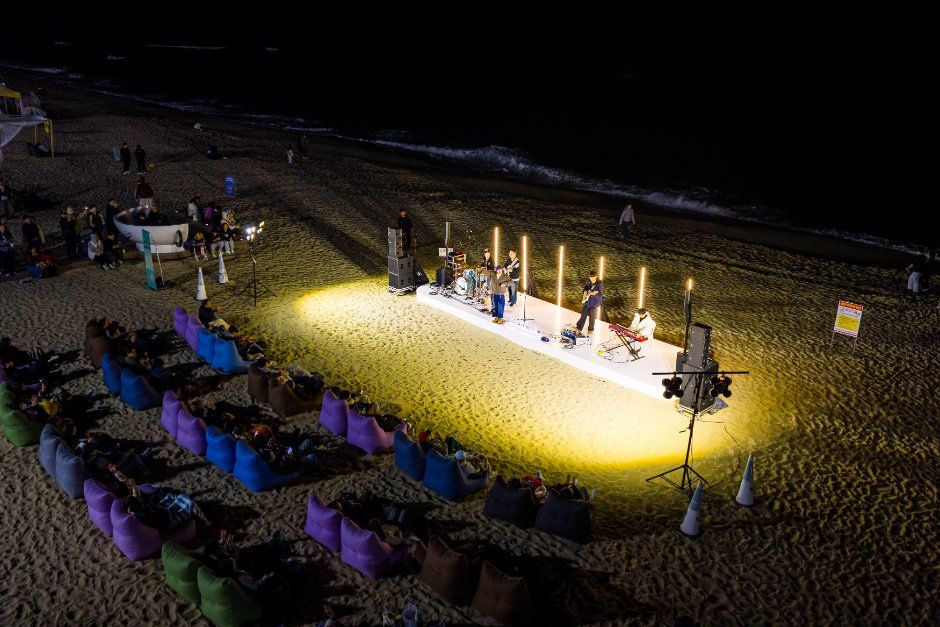
The core of the festival is tasting and wandering. The official programme splits into three groups. The coffee-street core programmes are the heart of it: 100 Baristas 100 Flavors (100인 100미), A Starry Night, Anmok Coffee Radio, coffee busking, Coffee Star, A Variety of Gangneung Coffee, a coffee experience zone, Coffee Picnic, Coffee Wave, Coffee Therapy, a coffee-festival market, a handicraft market, a bean shop called Byeol-ui-byeol, Coffee and Humanities talks and a coffee master class.
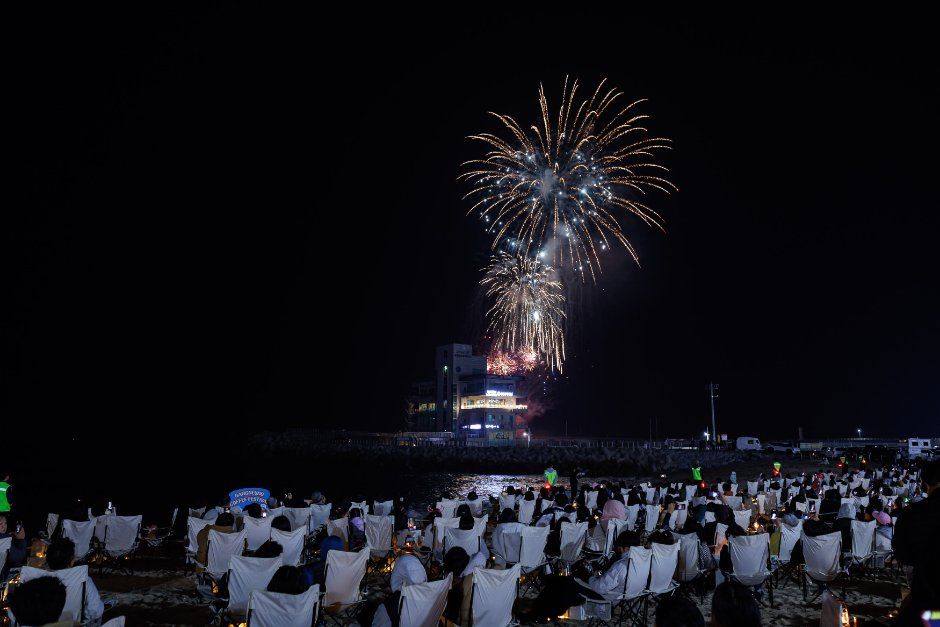
The linked programmes are a festival exchange, fireworks, a kids’ playground and a coffee sports day. The third group spreads coffee through the city: Welcome Coffee Shop, a receipt event, a stamp rally and Coffee Festival, My Neighbourhood Shop. KTO gives these only as titles.
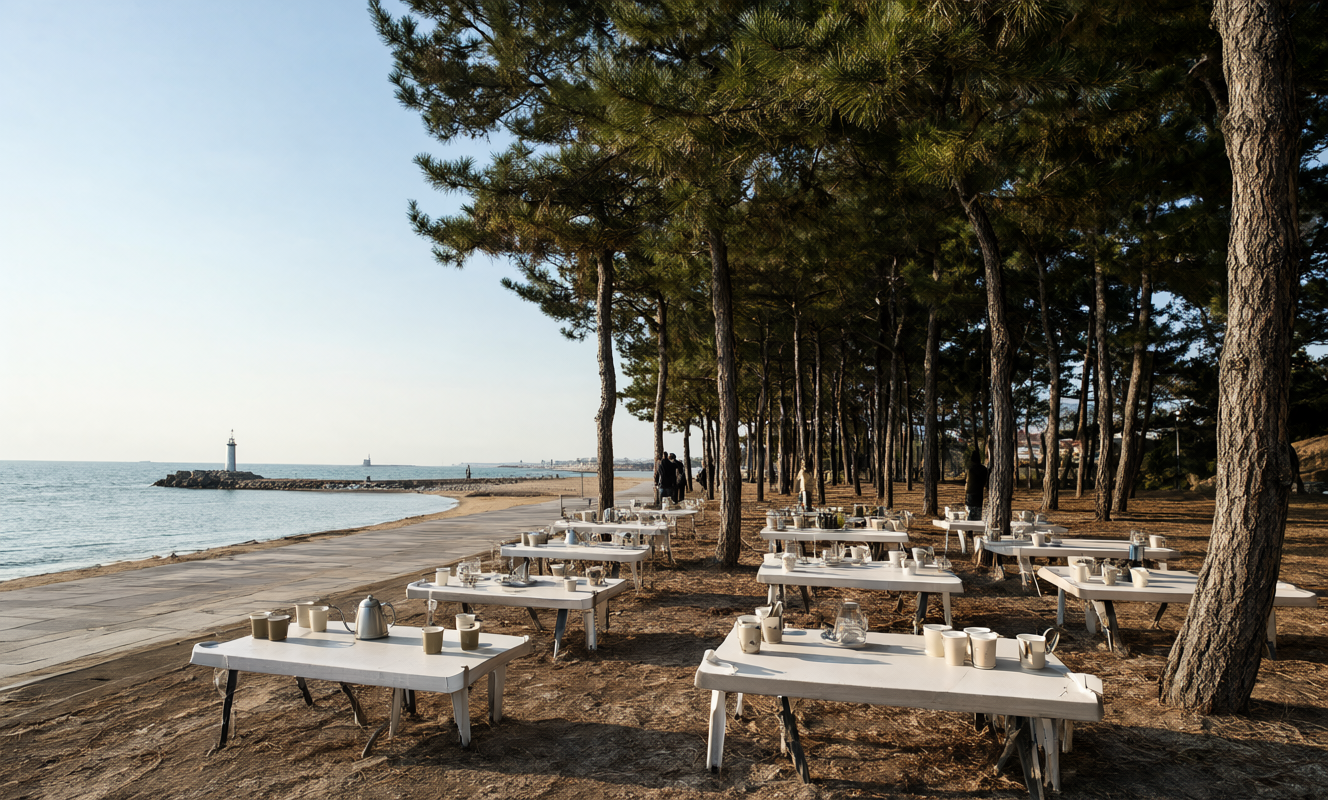
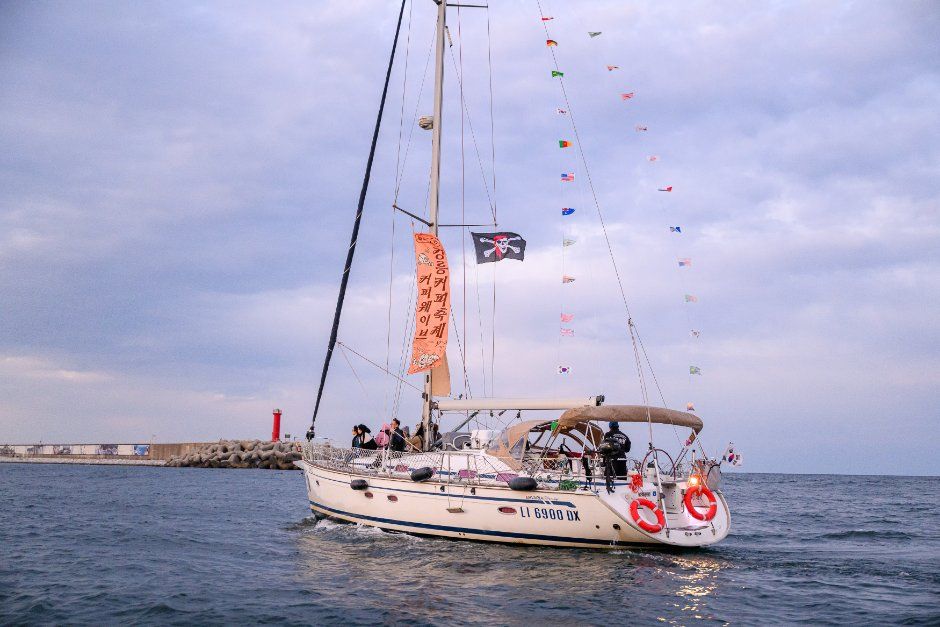
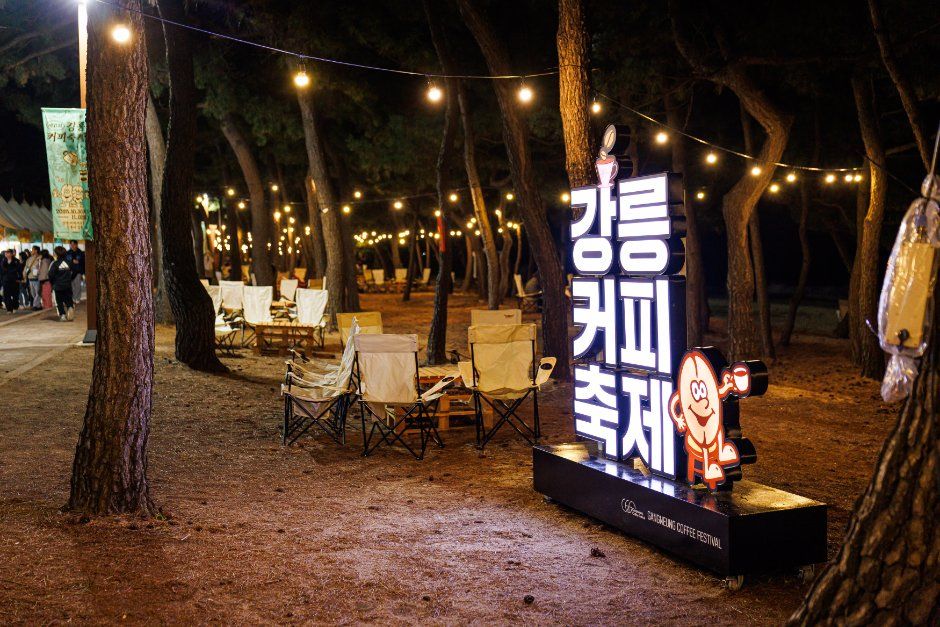
Press coverage in the last week adds some concrete detail. A 350 m stretch of the coffee street is set out as an open-air café with 200 table sets. The Coffee Picnic is set up in the Songjeong pine forest with camping chairs, hammocks and tables. The experience zone offers hand-drip, siphon and roasting; Coffee Wave serves coffee from a yacht at Gangneung Port; Coffee Therapy pairs a singing-bowl meditation and yoga with coffee; and A Starry Night is an evening programme at Anmok Beach.
A practical reading: the street is a drop-in experience, and the pre-registered workshops are where you need to plan.
Programme and timetable
No hour-by-hour grid for every programme was available, and KTO gives only the overall 10:00-20:00 window, so this guide does not name a start time for any individual concert, talk or tasting. Two times are reported with reasonable agreement: the fireworks on Saturday, October 24 at 20:00 (reduced from two displays to one) and the Barista’s Table session described below.
Official notices worth knowing: on October 10 the organisers posted the schedule for Coffee Festival, My Neighbourhood Shop and the booth lists for the coffee-festival market and the handicraft market; on October 14 a traffic-control notice; on October 15 a call for participants in a Coffee and Humanities experience group. The stamp rally has moved to a mobile format that began in September and, per press, runs for about two months beyond the festival. A blog summary of the guidance says issuing it needs a name and phone number and a link sent by KakaoTalk, so ask the organiser whether a foreign number works. Check the official notice board again just before travel.
Tickets, fees and booking
KTO’s wording is “some fees apply.” No entry price for the coffee street had been published, and press describes the performances and experiences as free. The one paid programme I could find is the Barista’s Table in the Global Coffee Lounge: coffee paired with Korean sweets such as hangwa and yakgwa, reported as a one-hour session at 14:00 for 30 people at about KRW 20,000 per person, with advance and on-site registration. One report printed a different price and another said Saturdays are skipped, so confirm both before you plan around it. Market and café purchases are extra. For any workshop you care about, use the official pre-registration notice or call the organiser on 033-647-6802.
Getting there without a car
From Seoul, the KTX is the simple choice. Schedules put the trip at about two hours from Seoul Station and roughly 1 hour 40 minutes from Cheongnyangni Station, with more than ten trains a day and extra service at weekends. A Korean rail-travel article advises booking one to two weeks ahead for the lowest fares, which is sensible when the city is also hosting an international congress.
The express bus is the alternative: from Seoul Express Bus Terminal to Gangneung it takes about 2 hours 50 minutes, with 23 departures between 06:00 and 23:00 and a standard-class fare of ₩26,800 in the timetable we checked. Gangneung’s rail and bus stations are separate.
The festival is not at the station. The new option is the free circulating shuttle: press describes 5 buses every 15 minutes, 10:00-20:00 daily, running between Gangneung Station, the sports complex, the convention center, the E-zen Green City Experience Center and the festival grounds. Take the boarding points from the official map. Otherwise city buses ending at Anmok take roughly 20-30 minutes and a taxi about 10 minutes in ordinary traffic. Set the destination in a Korean map app to the coffee street, not just “Gangneung.”
Parking, shuttles and traffic control
Reports of October 13-16 give the traffic plan, and three outlets agree on the times:
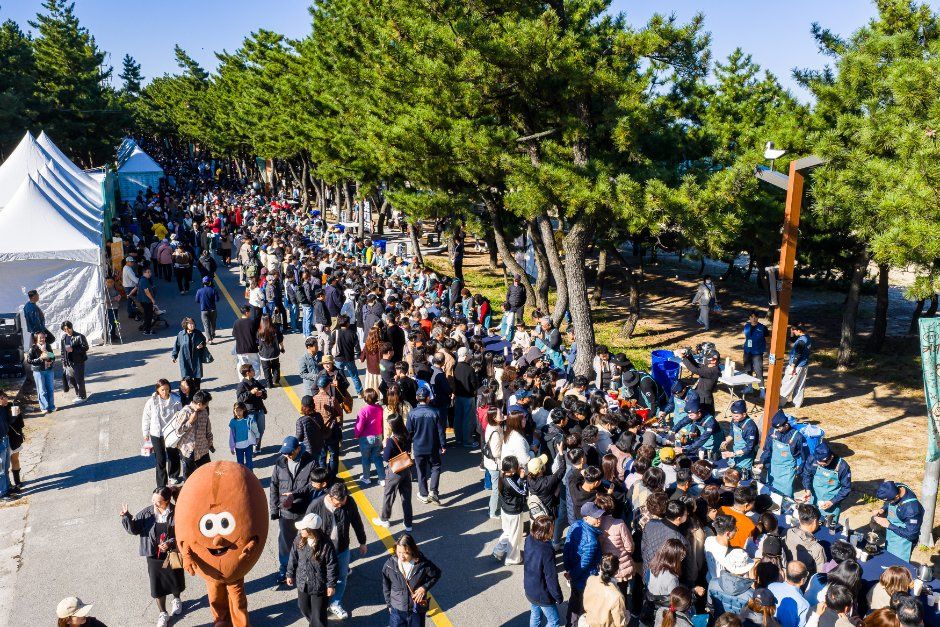
- Anmok: from the Anmok visitor center to the Anmok restroom intersection, no vehicles from 08:00 on October 21 to 21:00 on October 25. The coffee street is a walking street for the festival.
- Songjeong: from Songjeong-dong 268-7 (the former Pepsi-Cola site) to the Songjeong futsal field, no vehicles from 05:00 on October 19 to 18:00 on October 26.
- The Jukdo-bong circular road construction zone is also restricted.
The organiser has arranged 13 parking lots near the venue and at key points, linked by the free shuttle, and traffic staff will be placed on the main roads and junctions to stop illegal parking and redirect cars. The reports expect tens of thousands of visitors. Lot names were not listed in what I read; earlier coverage named Gangneung Port public parking and the Anmok lots, with live vacancy on the city’s ITS parking system. The organisers themselves urge public transport. Gangneung Coast Guard also issued a coastal-accident “caution” on October 17 citing swells and the crowds, so heed notices near the water.
The ITS World Congress runs October 19-23 in Gangneung, so October 21-23 overlap. That is a reason to expect busier roads and tighter lodging midweek, not a measured crowd forecast.
Day trip or overnight
A day trip works: about two hours each way by KTX and a 10:00-20:00 window. Check the return in Korail before buying the outbound ticket, since the last train depends on your date. A same-day return leaves little room for a pre-registered workshop, and the 20:00 fireworks on October 24 will not fit a day trip with a comfortable return.
If you stay, book early for October 21-23. Availability and prices were not independently verified, and no hotel is recommended here.
Away from the street, one report says the Ojukheon boat rides run an “autumn romance” week with live jazz on October 23-25. Treat it as an add-on, not part of the festival.
Food on site and nearby
Coffee is the point: tastings and a coffee-festival market are on the programme, and booth lists for the markets were posted on October 10. KTO adds that the 2026 food information was still being updated, so this guide cannot name a stall, price or vegetarian option. Eat before the busiest part of the day if a proper meal matters.
For a documented local dish away from temporary stalls, Chodang on the Gangneung coast is known for sundubu, soft freshly set tofu. KTO’s photo gallery records the Chodang Sundubu Village, and travel guides describe the tofu as set with seawater and eaten fresh. It is a Gangneung recommendation, not a claim about what the festival sells.
Honest assessment
The festival’s strength is its setting and focus: a coffee event that began on this coast, now with a 350 m open-air café, a walking street and a free shuttle. You can enjoy it without a fixed schedule, which suits a visitor who wants to taste, walk and leave. Talks, workshops and a stamp rally add structure for people who want more.
Its weaknesses are practical. The listed hours end at 20:00, so it is not a late-night festival. Cars are barred from the main street, so the shuttle or a train-plus-bus plan is the way in. Programme times for most items, the fireworks viewing spot and the rain plan were not published in anything I could read. And the overlap with the ITS World Congress on October 21-23 makes midweek transport and rooms a real planning issue.
Come for the coffee street in the daytime, take the shuttle, book trains and any workshop early, and check the official notices on the morning you go. If a specific programme is your reason for coming, confirm its time with the organiser first.