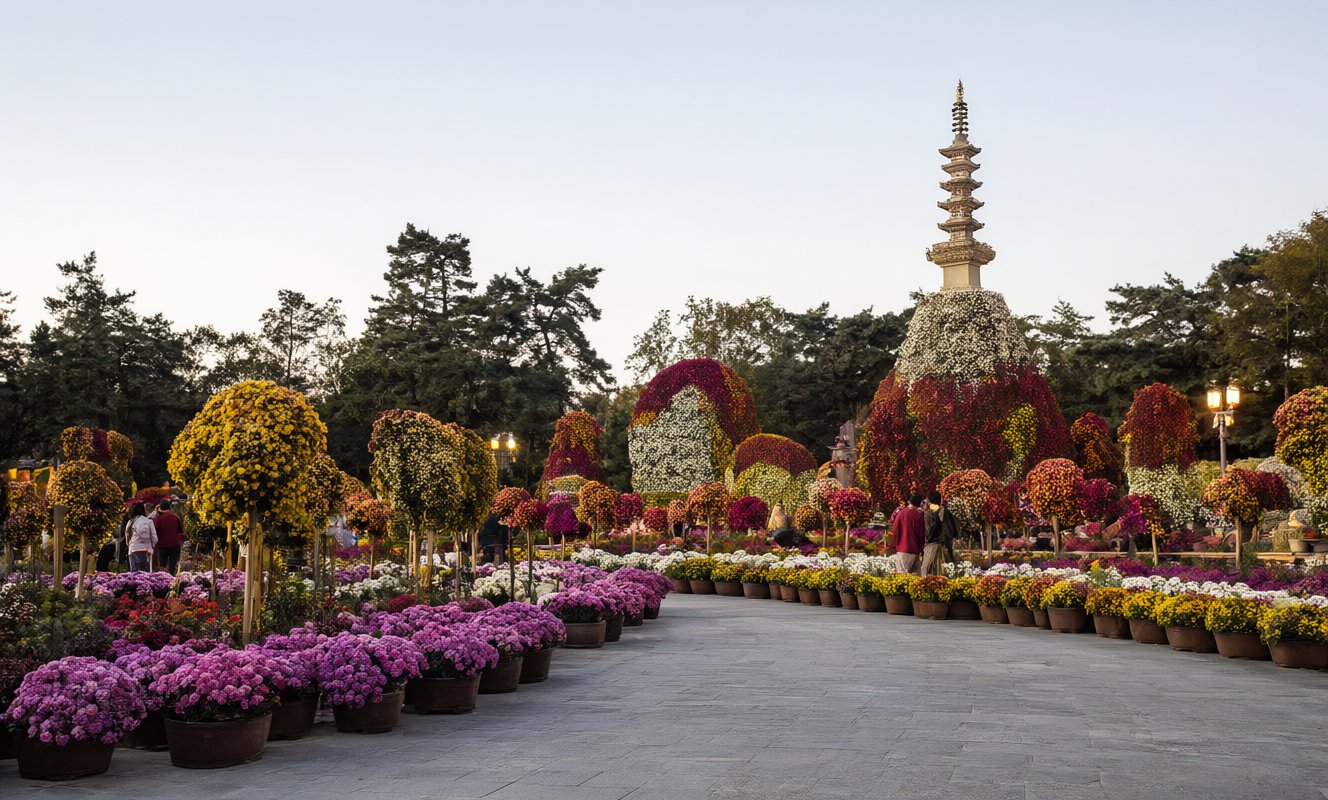
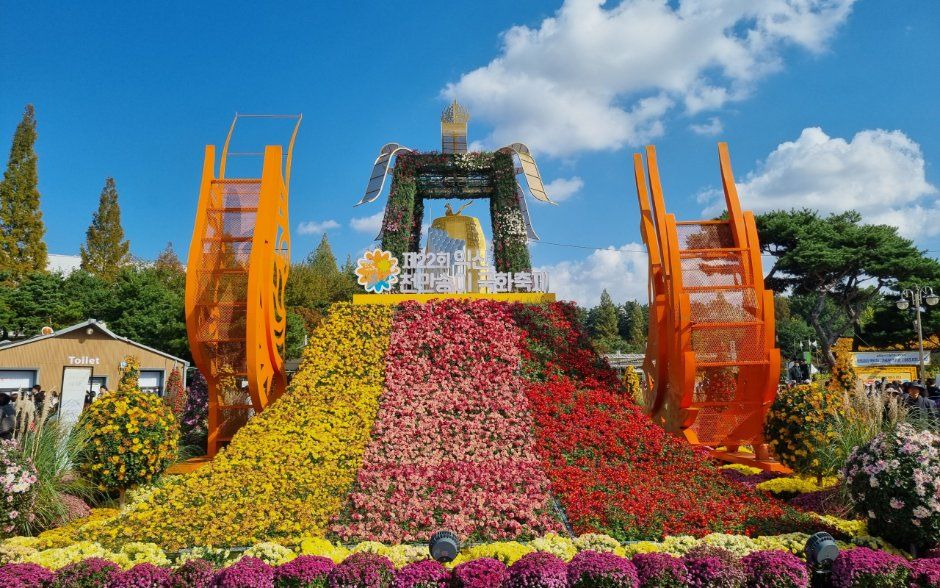
The Iksan Ten Million Chrysanthemum Festival, listed by the Korea Tourism Organization as the Iksan Gukhwa Festival, is a ten-day flower show held every year from late October into early November. The chrysanthemum is Iksan’s city flower, and the festival fills the lawns and paths of Iksan Central Sports Park with sculpted blooms. The 2026 run is October 23 to November 1, from a Friday to the following Sunday. Most 2026 press calls it the 23rd edition, although the city’s own page still carried a “22nd” label when read on October 10.
KTO lists general admission as free and the festival hours as 10:00-21:00. The organiser is Iksan City, reachable on 063-859-4977. The address is 322 Hana-ro, in the city rather than in a remote park, which matters for how you plan the day.
What you actually do here
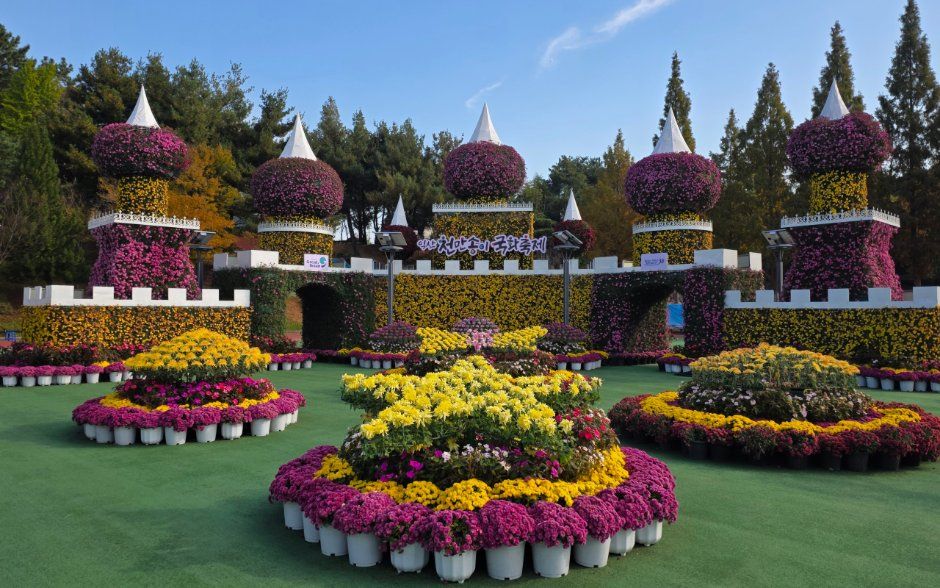
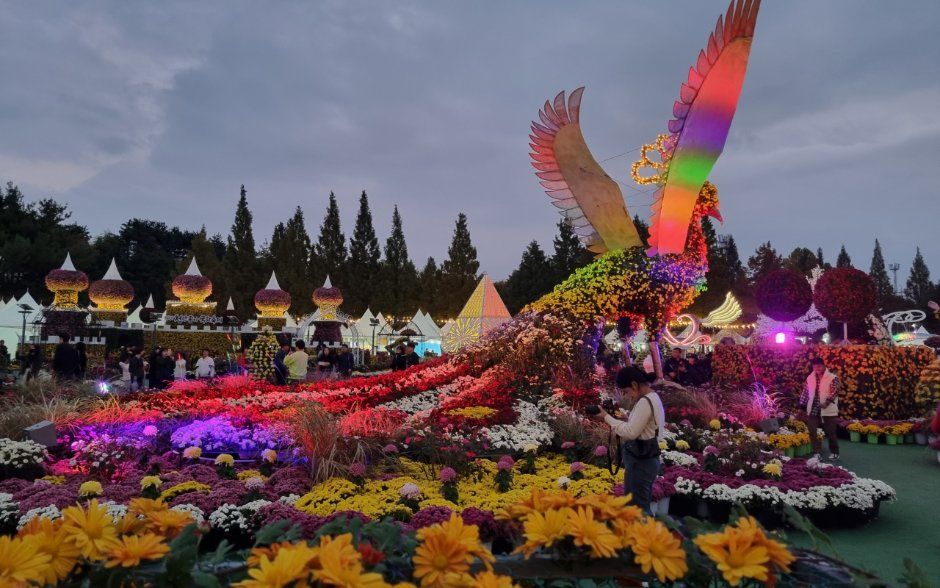
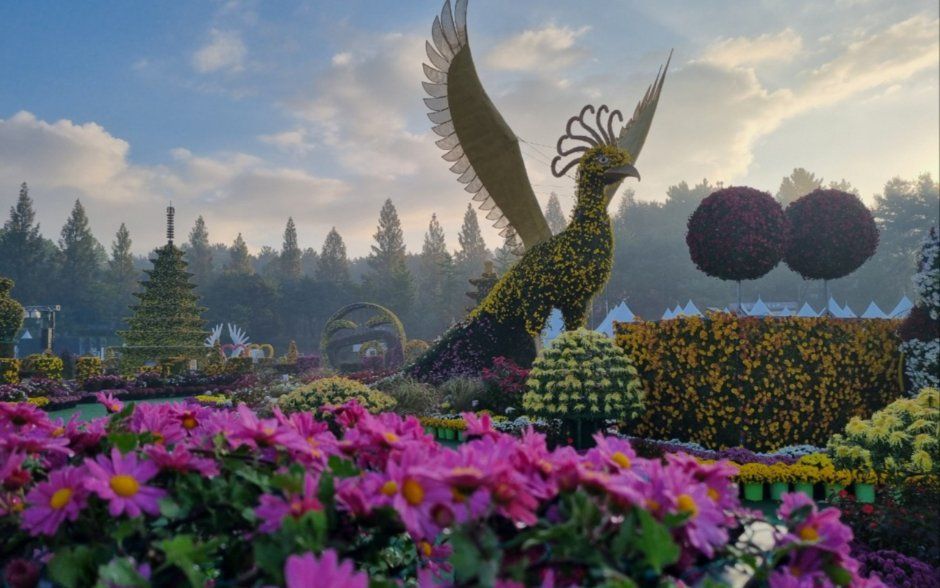
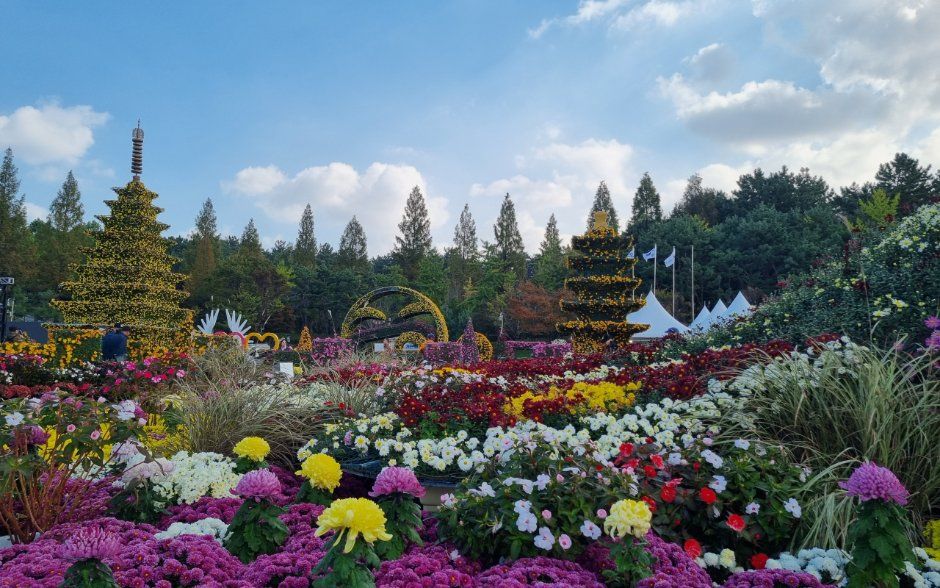
The core of the visit is a long, slow walk through displays. The city’s 2026 page gives these scale figures: about 600 chrysanthemum sculptures, about 60,000 stems of chrysanthemums and other autumn flowers, about 200 chrysanthemum bonsai and about 100 light sculptures. A Herald Corp preview describes large chrysanthemum structures modelled on the stone pagoda of Mireuksa Temple and the story of King Mu, a bonsai exhibition, and an evening walkway lit for after-dark visits. Treat the counts as the organiser’s plan rather than something we counted.
Beyond the flowers there are two kinds of activity. The first is a set of hands-on craft stations that run for the whole ten days. The city’s page lists about fifteen, among them bead bracelets, name bracelets, key-ring making, pressed-flower pieces, balsam-flower nail dyeing, a Baekje-style crown, a mother-of-pearl jewellery box for children, a foam-block craft, mood lamps and an insect-handling experience. The second is a group of dated events: a mobile stamp tour called “Hide, flowers!”, a postcard contest with a story-writing call, a couples’ event on “the last night of October”, and a local-food-and-stay promotion with 100 places a day.
Programme and timetable
There is no confirmed stage timetable. The city’s performance section read “in preparation” on October 10, and its page does not give a ceremony date. One regional newspaper mentions cultural performances, a music fountain and fireworks, but it does not date any of them. A secondary guide names an opening ceremony on October 24 at 18:00, and we could not check that against an official source, so we do not rely on it. Searches in Korean for the line-up and guest singers are common, so expect the city to announce names late. If a particular show is your reason for going, call 063-859-4977 before you travel.
What the city does publish are quotas. The children’s-centre craft yard is set at about 7,200 places over the festival, roughly 600 on weekdays and about 900 at weekends. The stamp tour is set at 4,400 places, with about 400 on weekdays and up to 500 each weekend day. The “last night of October” couples’ event has 22 places. These figures tell you something practical: the organiser expects heavier weekend traffic, and some activities are capped.
Tickets, fees and booking
Entry is free. What the city does not say is whether the craft stations charge, how you reserve a place, or whether the capped events require advance registration. None of those details was on the pages we could read, so this guide does not guess. The sensible plan is to treat anything that uses materials or has a quota as possibly requiring a fee or a sign-up, and to ask at the information point on arrival, or by phone before you go.
The city has also invited local businesses to join a discount scheme tied to the festival. According to Pressian, groups of two or more get discounts or extra items at participating shops, excluding alcohol, and the same applies to takeaway orders. Participating shops are not listed here, so look for the sign in the window.
Getting there without a car
Take a KTX from Yongsan Station to Iksan Station, which takes roughly 1 h 10 m to 1 h 30 m depending on the train. A Jeonbuk Ilbo report on one commuter service gives 1 h 28 m, and a ticket-aggregator listing puts the fastest at a little over an hour. We have not tied this to a particular 2026 timetable, so check the exact train in the Korail app.
The park is not at the station. A regional travel guide puts the taxi leg at roughly 10 minutes, which is the simplest way to do it, especially with children or after dark. City buses also run from the station and the bus terminal area, but we could not confirm a route number or a stop for 2026, and a festival can change stops. Enter “익산 중앙체육공원” or the address 322 Hana-ro in a Korean map app and follow the live route.
Parking, shuttles and traffic control
If you drive, expect the busy times to fill the lots quickly. Secondary 2026 guides refer to ten numbered car parks around the park and a temporary bus-only stop between the Ssangyong Apartments crossing and the park. We could not find the same detail in the city’s own 2026 page, so it should be treated as plausible rather than certain. No festival shuttle was published when this guide was written. Verify the car parks and any road controls with the organiser before you leave, and avoid arriving at the opening on Friday evening or at weekend midday if you can choose.
Day trip or overnight
From Seoul this works as a day trip on the figures we have: rail takes up to about an hour and a half each way, and the listed hours run until 21:00. We did not check the last train home, so this guide stops short of saying you can see the lit displays and still get back. Look up your return train before you buy the outbound ticket. If you want to see the evening displays without a deadline, one night in Iksan is easier. We did not verify hotel prices or availability, so no individual hotel is recommended.
Food on site and nearby
The festival has been paired with a local food promotion, and earlier editions had agricultural, food and local-business sales booths. KTO’s description also mentions food. We have no confirmed 2026 vendor list, price or payment method, so we do not name any.
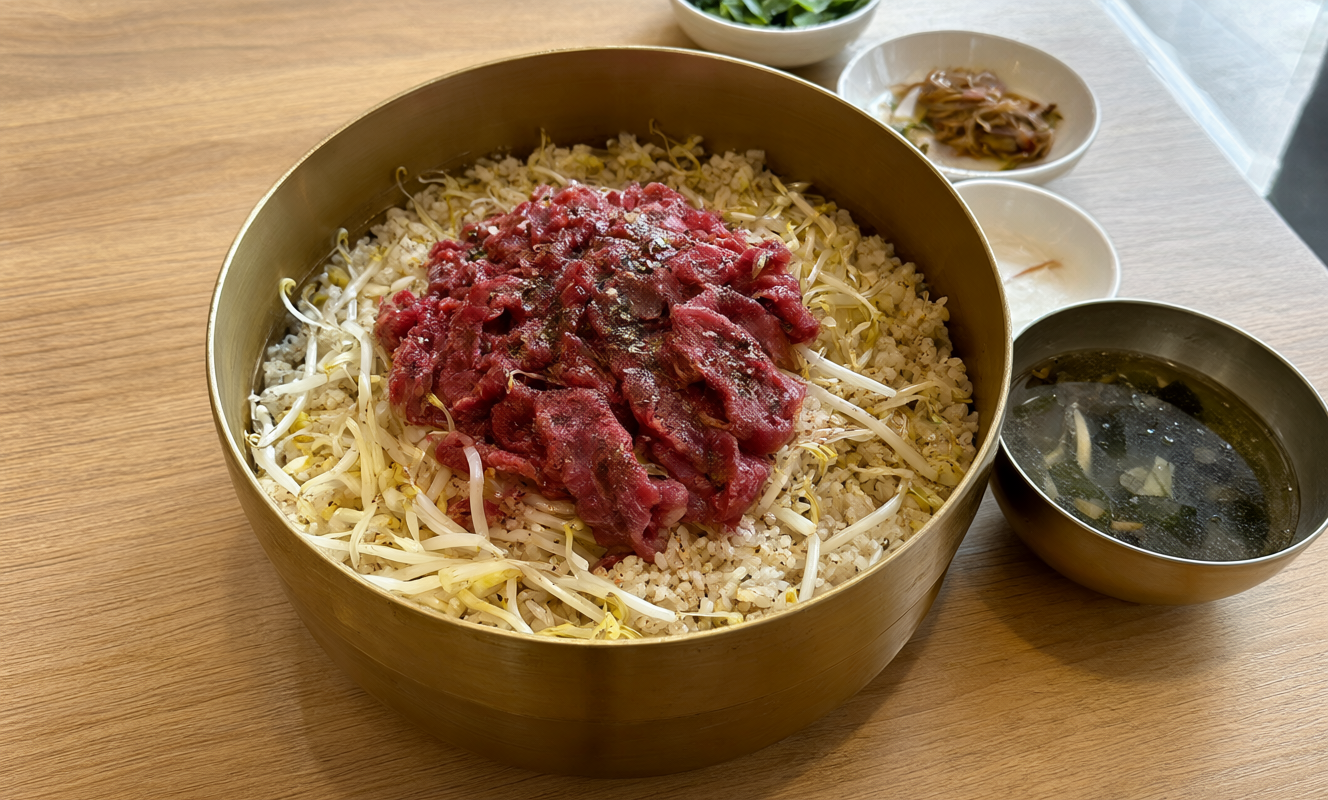
For something with a documented local identity, Hwangdeung bibimbap, also called raw-beef bibimbap, is a dish of Iksan that began around Hwangdeung Market. The encyclopedia entry says it is served with the rice and seasoning already mixed, topped with bean sprouts, vegetables and thin raw beef, with a clear soup beside it. It is a city dish, not a claim about what is sold at the park, and it contains raw beef.
Honest assessment
The festival’s appeal is simple and well matched to its setting: a large park, a late-autumn flower that is at its best in cool weather, and displays big enough to photograph from several distances. Free entry and a long list of children’s crafts make it an easy family outing. A 2023 economic analysis cited by Pressian reports about 724,000 visitors and a regional report gives about 740,000 for 2024, though a Pressian piece questions how the economic analysis around those numbers was calculated. Whatever the exact figure, plan for crowds at weekends.
The weak points are about information, not about the flowers. The performance schedule was blank on October 10, craft prices are not published, and some of the official site still carries the previous edition’s label, so you have to read dates carefully. The photographs on this page are KTO originals from earlier editions, and one shows a sign marked “22nd”, so they show the style of the displays rather than this year’s layout. The hero image at the top is an illustration, not a photograph.
If you are choosing a day, a weekday afternoon is likely to be calmer, and a visit that runs into the evening gives you the lit pieces as well. Check the city’s notice board the week before you go for the performance timetable, parking and any weather changes, because none of these were confirmed when this guide was written.