
Autumn · Gyeongsangnam-do · Field listing
Sancheong Medicinal Herb Festival 2026
The essentials first: whether it is open, what it costs, how hard it is to reach and what to expect if you do not speak Korean.
When
Oct 2 — 11ConfirmedConfirmed dates
Where
Donguibogam Village, SancheongGyeongsangnam-do
Admission
FREEGeneral admission is free. The Korea Tourism Organization's Korean 2026 record states that some items are paid, but no dependable activity-by-activity price list was published when this guide was updated.
From Seoul
About 3 h 10 m to Sancheong, plus the local transferIntercity bus from Seoul Nambu Bus Terminal to Sancheong Intercity Bus Terminal, then a rural bus toward Gahyeon or Hwagye that stops at Donguibogam Village. Check both timetables before leaving; the festival site is outside central Sancheong.
Hours
09:00-18:00
Organiser
+82-55-970-6670
Is this one for you?
Who it suits. This suits travellers curious about Korean herbal medicine and hands-on wellness programmes who are happy to spend a day outdoors moving between exhibitions and activity areas on a hillside site. It is a weak fit if you want a quick market browse near a station, since the venue sits outside central Sancheong and needs a local transfer. It is also the wrong choice if you expect a genuine medical consultation, because the official material does not promise a specific treatment or language service.
When to go. The festival runs ten days from October 2 to 11, 2026, with daily hours listed as 09:00-18:00, so plan a daytime visit and allow several hours rather than a single hour. The sloping outdoor site rewards dry weather and comfortable shoes over a rushed stop. The run covers two weekends if you prefer a livelier day, though no published detail confirms how the crowd or programme differs by day.
LOCAL WEATHER
Weather near the festival
The festival date is outside the current forecast window. Check again closer to your trip.
Korea Meteorological Administration forecast
Need something we do not list — a stall menu, a parking gate, a last bus? The Korea Travel Helpline answers in English around the clock: dial 1330 inside Korea, or +82-2-1330 from abroad.
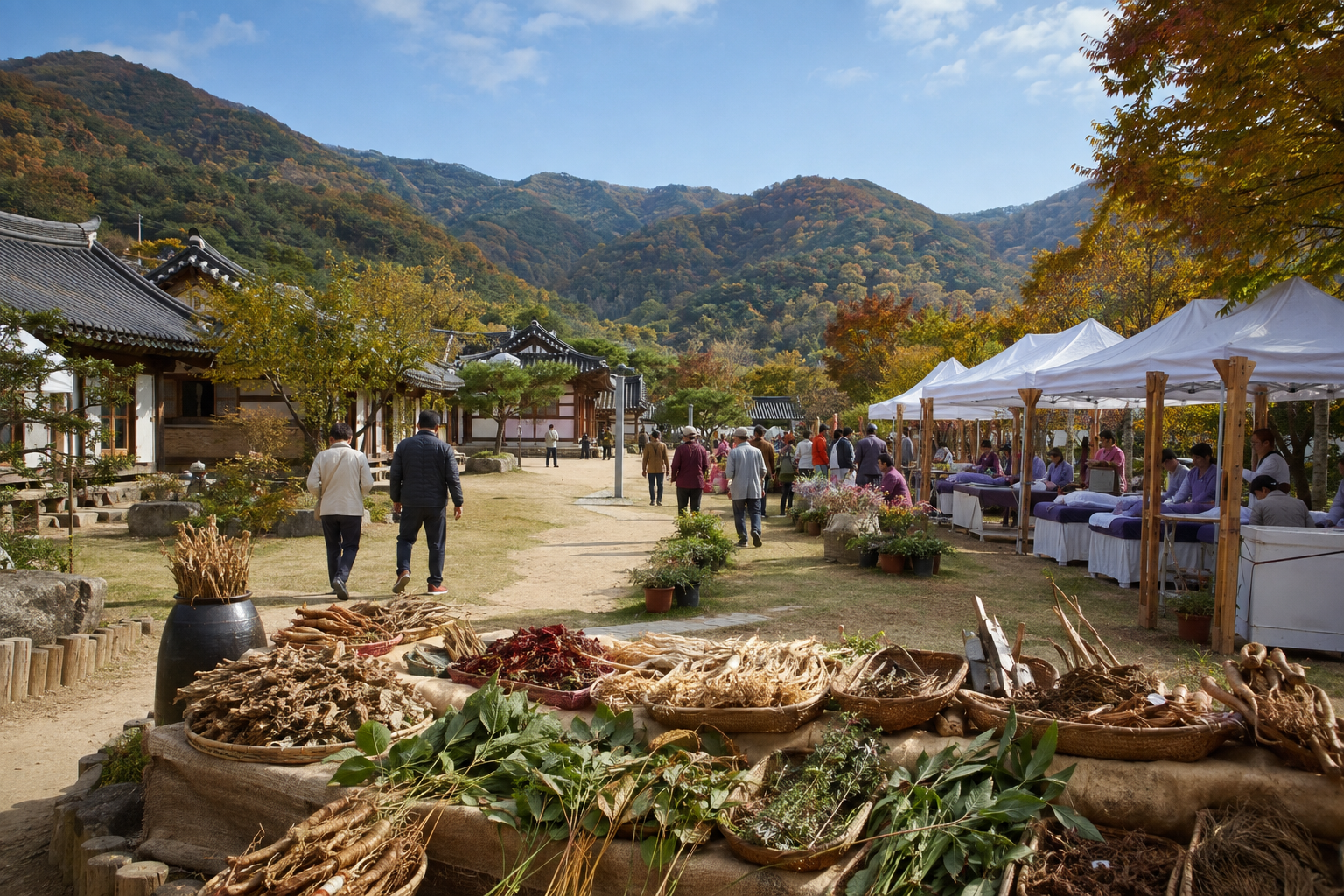
This is a festival about Korean herbal medicine rather than a general autumn market. It takes place at Donguibogam Village, a medicine-themed park in the hills outside Sancheong, and uses the setting to connect the medical reference book Donguibogam, local medicinal plants and present-day wellness programmes. The 26th edition runs for ten days, from Friday, October 2 through Sunday, October 11, 2026, and the current Korea Tourism Organization listing gives daily hours of 09:00-18:00.
The venue matters. This is not a line of stalls beside a convenient railway station: exhibitions, activity areas and permanent village facilities occupy a sloping site at 45-6 Donguibogam-ro 555beon-gil in Geumseo-myeon. Treat it as a day outdoors with several stops rather than a single show that can be sampled in an hour.
What you actually do here
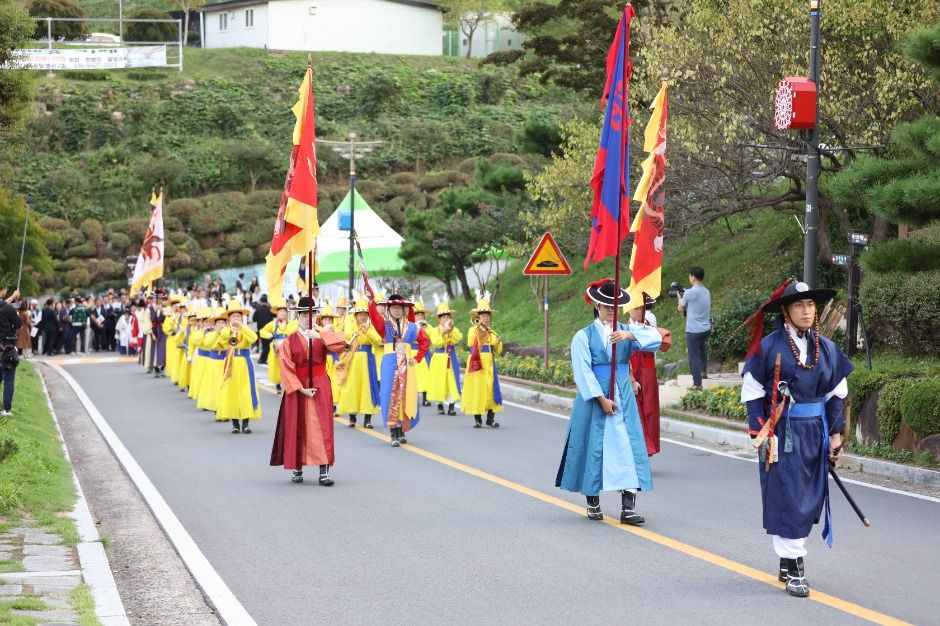
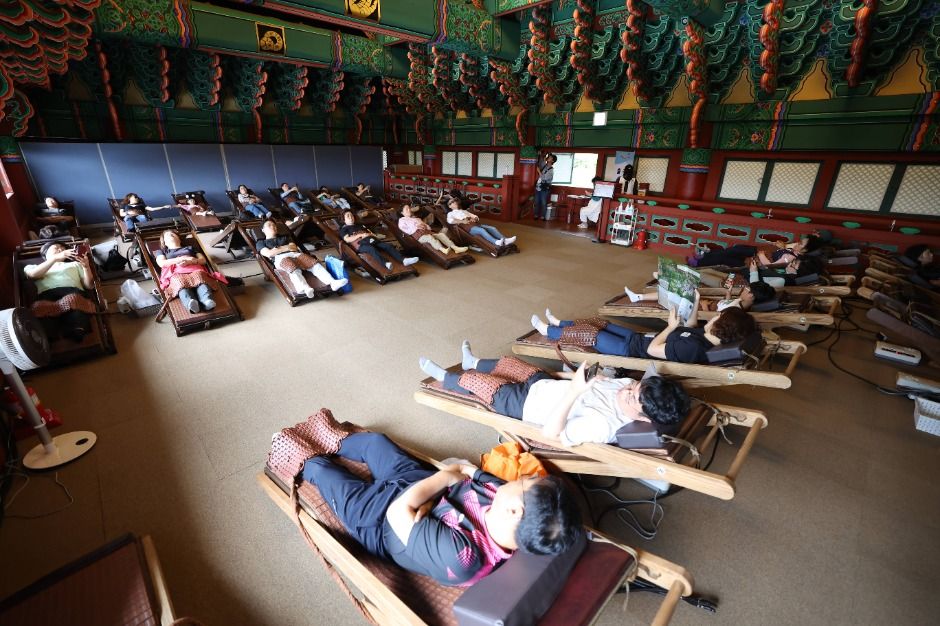
The 2026 programme has three anchor strands: Sancheong Hyeminseo, the Medicine for My Body experience and a Korean-medicine wellness hall. Hyeminseo takes its name from the historical public medical institution; here it is presented as a festival theme programme. The official description does not publish enough operational detail to promise a particular consultation, treatment or language service, so approach it as a programme to investigate on the day rather than a substitute for medical care.
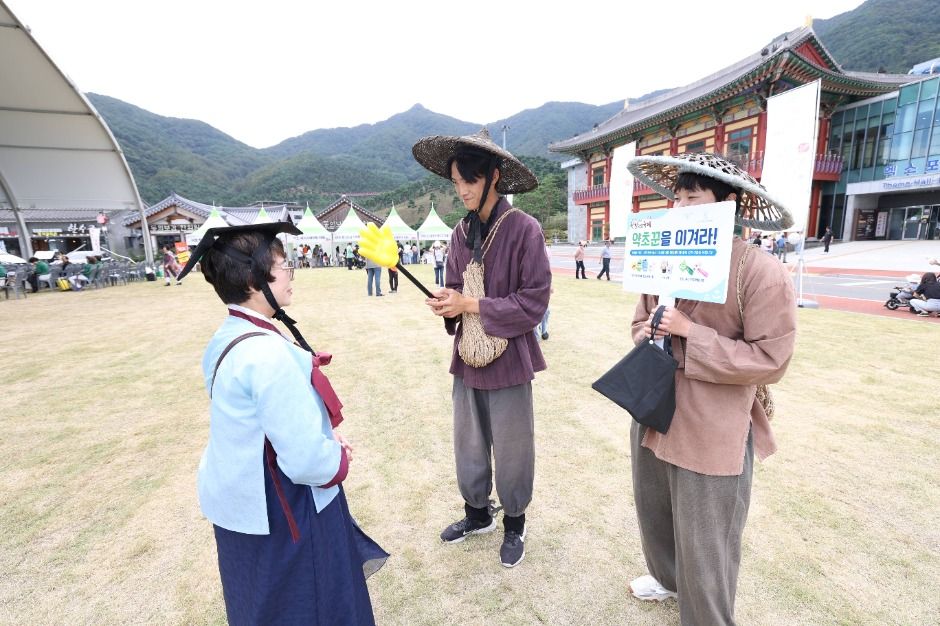
The experience list is broader than those three names. Confirmed family and participation programmes include a K-Herb Demon Hunters stamp tour, a children’s Korean-medicine school, local experience zones representing Sancheong’s townships, a medicinal-herb treasure hunt, a Crown-Haitai snack play area and silent yoga. These are the best reason to come with children or with people who do not want to spend the whole visit reading exhibition panels. Their inclusion is confirmed; their session capacities, age limits, reservation rules and fees were not yet published in a reliable consolidated list.
Three permanent exhibition facilities are also listed as part of the festival programme: the Expo Theme Hall, Sancheong Korean Medicine Museum and Sancheong Medicinal Herb Hall. That gives the visit a useful indoor component and some historical context, though this guide does not claim that every label has English. The published sales areas cover farm products, medicinal herbs and crafts. Buying something from a stall is separate from free admission.
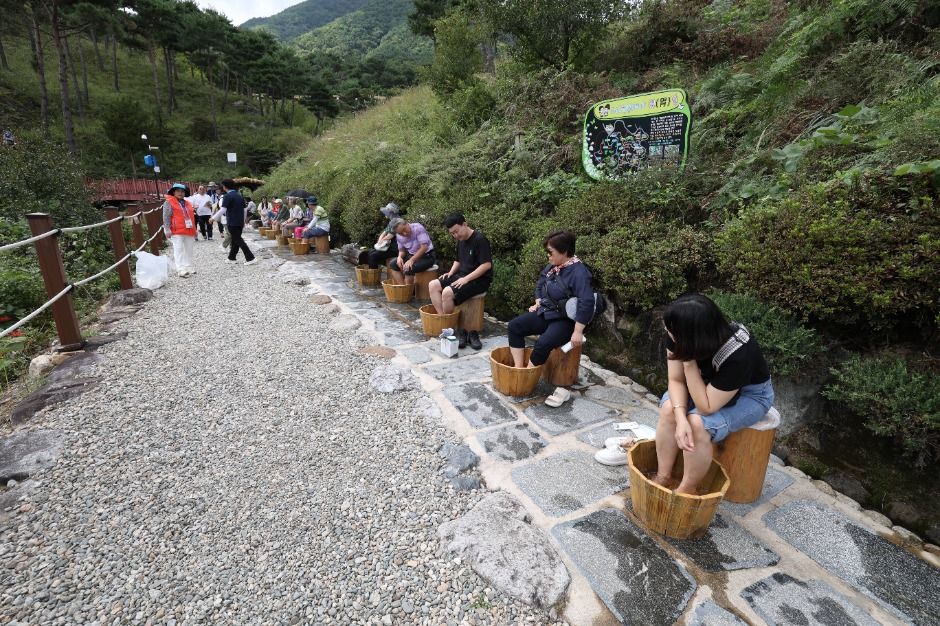
The grounds themselves are part of the visit. Donguibogam Village spreads exhibits and themed facilities across a hillside rather than concentrating everything on one town-centre street. Wear shoes suitable for repeated slopes and a longer outdoor circuit. The official site has dedicated pages for the venue map, principal viewing route and internal circulation bus, but the finished 2026 operating details were not available when checked. Save the final map once it appears instead of relying on an older edition.
Programme and timetable
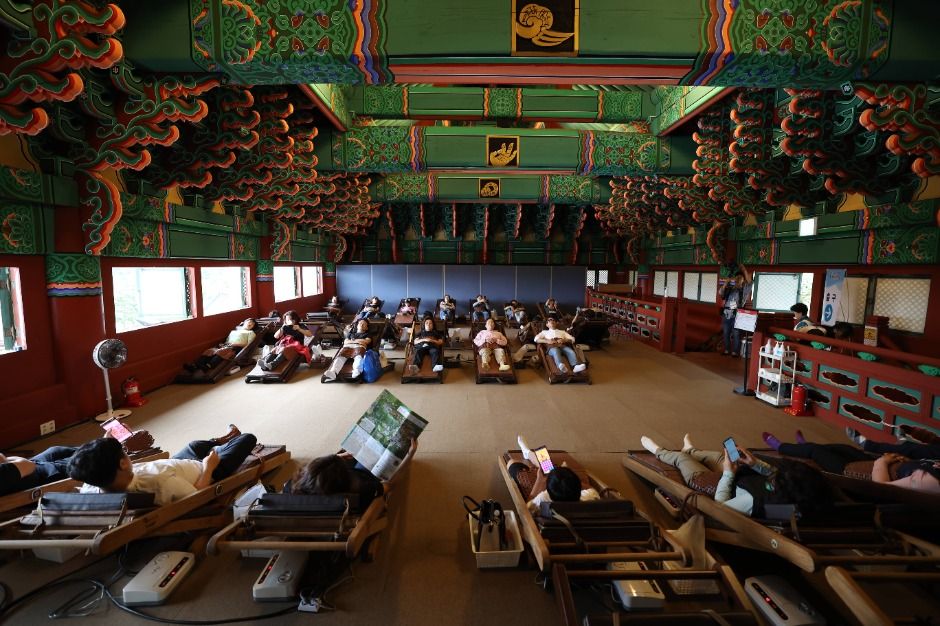
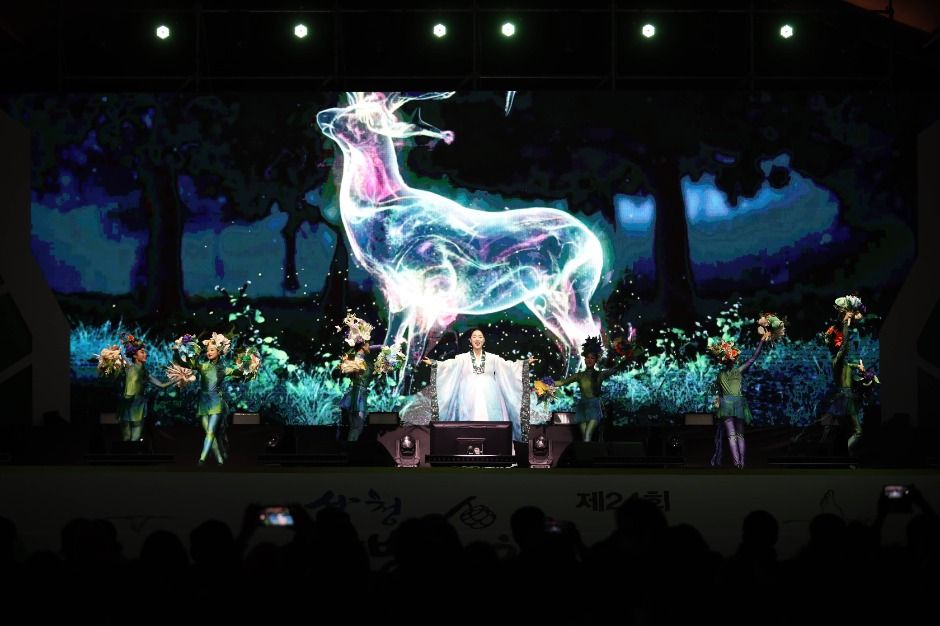
The performance programme names a Sancheong Wellness Retreat Parade, a K-wave festival, a World Culture Festival, roving herb sellers and linked performances across different stages, including madanggeuk by the local theatre company Keun Deul. Opening and closing ceremonies are also confirmed. Those categories establish what kind of day is being built, but they do not establish who performs at a given hour.
That distinction is important for anyone searching for the guest-singer line-up. The official site’s older “field story” cards still surface performances from the 24th edition. They are archive material, not evidence for 2026. At the September 7 check, the current site advertised schedule and programme sections but did not expose a complete dependable daily grid. Use the organiser’s schedule page shortly before travel; do not attach a train or bus booking to an act copied from an old gallery.
The listed 09:00-18:00 hours describe the festival day as a whole. A parade, yoga session, children’s class or stage performance may occupy only a narrow slot, and some hands-on programmes may use reservations. The site provides a “advance reservation” link, but no complete 2026 bookable inventory and terms were available at this update. Choose one or two priorities only after the final grid is live, then leave unscheduled time for the exhibitions and grounds.
Tickets, fees and booking
General entry is free. KTO’s updated Korean record adds “some paid,” which is more precise than the earlier English listing and means free entry should not be read as an all-inclusive pass. Individual workshops, wellness activities, food and market purchases may require payment. Because no verified 2026 price table was available, this guide does not reuse previous-year prices or guess what a treatment should cost.
If one experience is essential, check both the official programme page and advance-reservation page before departure. Look for its date, start time, capacity, eligibility and payment instruction as a set; a programme name alone is not confirmation that walk-ins are accepted. The general enquiry number published by both KTO and the organiser is 055-970-6670 to 6671 (from outside Korea, +82-55-970-6670). No claim about cards or cash is made because neither was field-checked.
Food on site and nearby
The official 2026 notices provide better evidence of the food plan than the older promotional copy. The foundation recruited food trucks and selected an operator for a Sancheong black-pork grill hall; its recruitment notice also says the hall is intended to present Sancheong black pork and organic Hanwoo. This confirms planned food service, not a final menu, price, opening hour or guarantee that every advertised product will be available throughout the run.
KTO explicitly warns that the detailed food text attached to its listing still describes the 2025 event while the 2026 food information is being updated. For that reason, this guide does not promise herb footbath-and-meal packages, tastings or particular dishes based on last year’s material. Check the final layout for the food zone and ask about ingredients on site if dietary restrictions matter; no verified allergen or vegetarian guidance was published.
For a product that is genuinely associated with the county rather than a temporary festival stall, Sancheong dried persimmons (Sancheong gotgam) have firmer documentation. Sancheong County lists them as a local specialty, and they were the first dried persimmons registered in the Korea Forest Service’s geographical-indication system, as No. 3. The county describes fruit repeatedly freezing and thawing during the cold period around the Jirisan foothills. Their production season runs later than this October festival, so regard them as regional context, not a promise of fresh-season persimmons on every stall.
Getting there without a car
The straightforward public-transport route from Seoul is an intercity bus from Seoul Nambu Bus Terminal to Sancheong Intercity Bus Terminal. A Sancheong County transport brochure puts the intercity run at about three hours, while KTO accessible-travel guidance gives roughly three hours ten minutes. Timetables and traffic vary, so the frontmatter uses the cautious longer figure. There is no direct railway station at the festival venue, and routing by train only creates another road transfer.
From Sancheong terminal, KTO access information directs visitors to a rural bus toward Gahyeon or Hwagye that stops at Donguibogam Village. County maps independently place Gahyeon and Hwagye on the approaches around the village, supporting the route direction. The exact 2026 festival-day timetable was not published when checked, so confirm the outbound and return local legs before leaving Seoul and allow transfer margin. A taxi is the fallback, but no verified current fare or journey time is listed here.
The festival website already has navigation headings for shuttle routes, an internal circulation bus and major walking routes. A heading is not an operating announcement. No finished 2026 stop list, frequency or last departure was available, so this article does not tell you to depend on a shuttle. If a festival-day notice appears, compare its date and edition number carefully; search results can retain the previous year’s transport diagram.
Parking, shuttles and traffic control
Drivers should use the exact Donguibogam Village address rather than a generic search for central Sancheong: 45-6 Donguibogam-ro 555beon-gil, Geumseo-myeon, Sancheong-gun. The venue is reached by road in a rural, hilly area, and a large attendance concentrates vehicles onto limited approaches. However, the organiser had not published a complete 2026 parking-lot allocation, road-control window or shuttle frequency at this update.
That leaves one honest planning rule: check the official notice board again in the final week. Use only a diagram labelled for the 26th festival and 2026, note the designated lot before setting out, and do not assume that the normal Donguibogam Village parking arrangement will remain unchanged. The same applies to navigation-app arrival times on the opening weekend and the October 9 Hangul Day holiday; there is no sound basis for quoting a precise congestion delay in advance.
Honest assessment
Come if you are curious about how Korean herbal medicine is presented to the public, or if you want a festival where exhibitions and hands-on activities carry as much weight as the stages. The stamp tour, children’s school, herb hunt, wellness hall, permanent museums and market provide several ways into the subject. If the subject itself does not interest you, the long two-stage trip from Seoul is difficult to justify for a concert whose detailed line-up is not yet confirmed.
Do not mistake the mountain setting for a small event. The 2024 edition reported 420,000 visits across its run, and the venue is reached through a limited local transport link. A weekday is the cautious choice compared with a weekend or public holiday, but there is not enough current evidence to promise a particular quiet hour. Nor does a total attendance figure reveal conditions at a specific gate.
The event also mixes cultural interpretation with commercial wellness and product sales. Read medical or anti-ageing claims as festival presentation, not personal medical advice, and ask what an activity involves before paying. Visitors primarily interested in Donguibogam and medicinal plants should start with the museums and theme programmes; families may get more from the treasure hunt and children’s activities; stage-focused visitors should wait for the final grid.
The sensible plan is to arrive with most of the day available, wear shoes for the slopes, save the current venue map to your phone and confirm the return rural bus before entering the grounds. Build the visit around two confirmed programme slots rather than trying to cover every category. That structure respects what is genuinely known about the 2026 festival while leaving room for the timetable, shuttle plan and prices that the organiser still needs to publish.
Local specialties to try
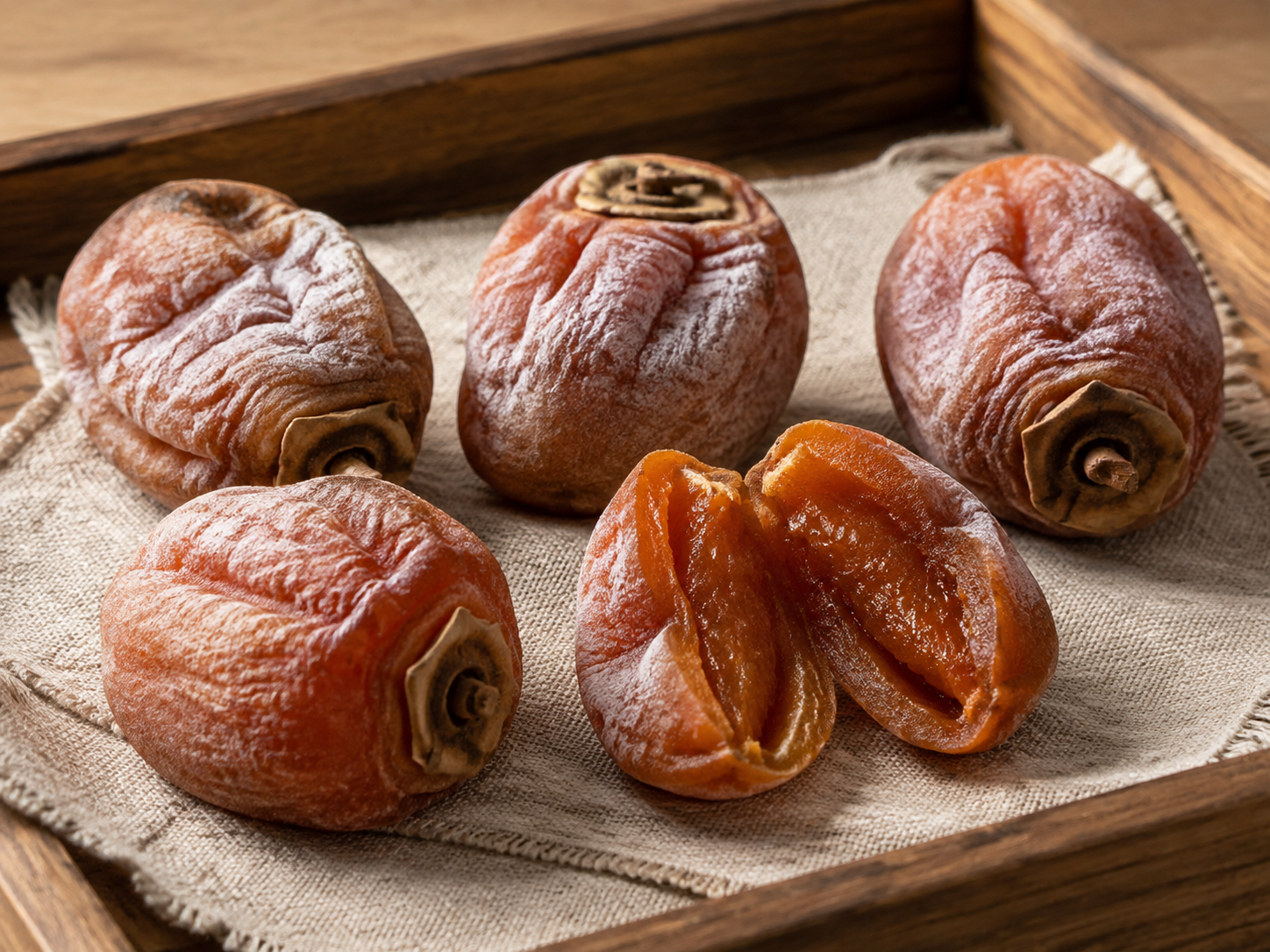
Sancheong dried persimmons (산청곶감)
Whole persimmons dried by repeated winter freezing and thawing around the Jirisan foothills. Sancheong County identifies them as Korea's first dried persimmons registered under the Forest Service geographical-indication system (No. 3). Their season is December to February, so do not assume fresh-season stock at an October visit.
Questions worth asking
Is admission really free?
Yes. General admission is free, but the Korea Tourism Organization marks some items as paid. A reliable 2026 activity-by-activity price list was not available at this update, so check the programme or reservation page before choosing an experience.
Can I reach the festival without a car?
Yes, but it takes two buses. Take an intercity bus from Seoul Nambu to Sancheong, then a rural bus toward Gahyeon or Hwagye that serves Donguibogam Village. Recheck the live schedules before travel because the local leg is the weak point of the trip.
When is the least crowded time to visit?
A weekday is the cautious choice. The 2024 edition reported 420,000 visitors across its run, so a quiet rural setting does not mean an empty festival. No reliable 2026 hourly crowd pattern has been published, so this article does not claim a specific quiet hour.
What are the 2026 opening hours?
The Korea Tourism Organization's current Korean listing gives 09:00-18:00. That is the festival operating window, not proof that every performance or experience runs continuously; use the final daily schedule for individual start times.
Are guest singers confirmed?
The published programme includes a K-wave festival, world-culture festival and linked stage performances, but a dependable date-by-date singer line-up was not available when this page was checked. Do not plan around names shown in older festival galleries.
Before you goFestival Etiquette in Korea: What Visitors Get WrongBooking KTX Trains and Intercity Buses as a Foreign VisitorGetting Out of Incheon Airport and On to a FestivalKorean Festivals With Children: Toilets, Strollers and TimingStaying Online in Korea: SIM, eSIM and the Apps That MatterEating at a Korean Festival Without Speaking KoreanRain, Typhoons and Cancelled Festivals: How to Plan Around ThemHow to Pay for Things in KoreaT-money and Transit Cards in KoreaWhat to Wear to a Korean Festival, Season by Season
LAST UPDATED · Sep 7, 2026