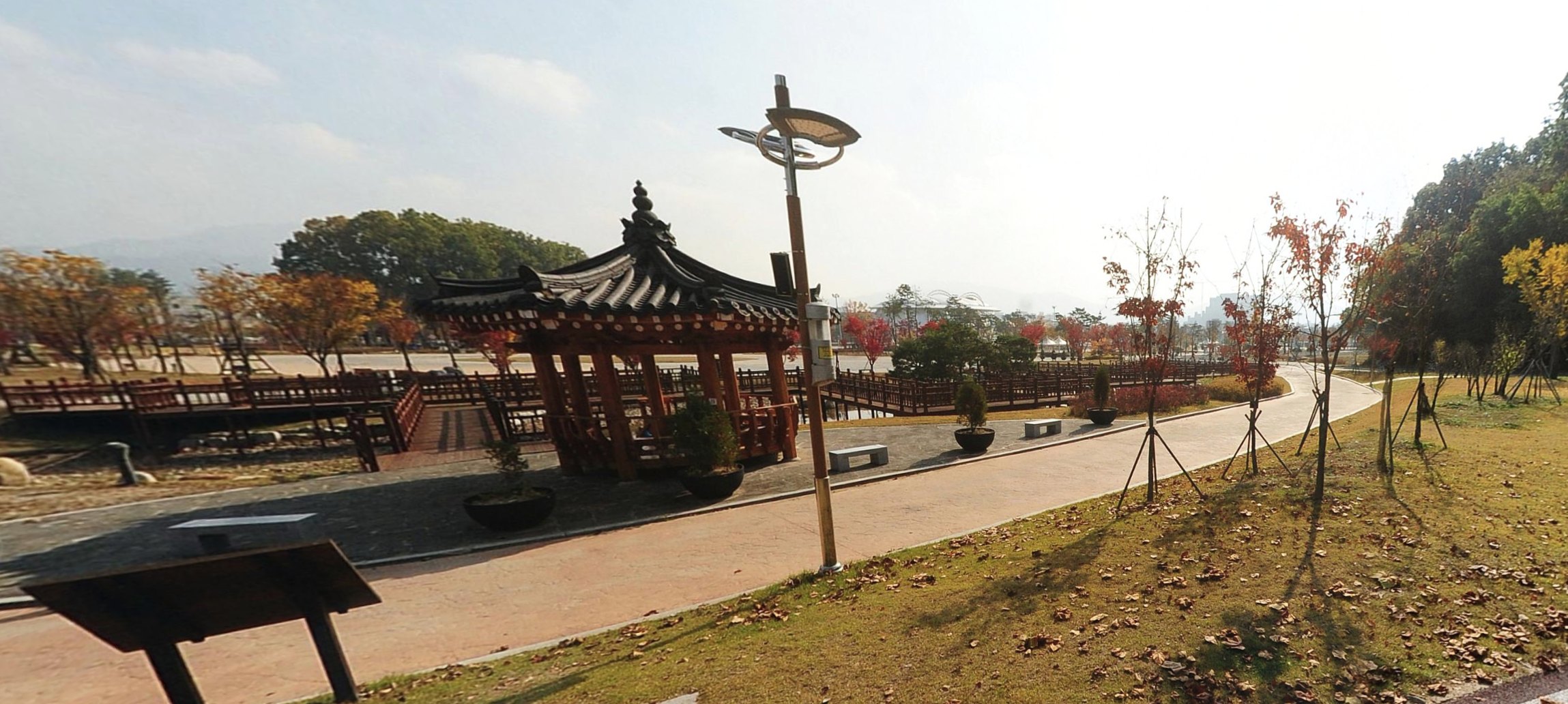
Chungju’s Ureuk Cultural Festival is a community arts festival on the banks of the South Han River, named after Ureuk, the sixth-century musician credited with developing the gayageum, the twelve-string Korean zither. Local tradition places Ureuk at Tangeumdae, the wooded bluff above the river where he is said to have played; the terrace and park there take their name from him, and the festival has used the spot as its home since it began in 1971. The 2026 edition is the 54th, running October 8-11 at Tangeumdae Park and the Chungju Culture Center, with the grounds open 11:00-22:00 and free admission.
This is not a large spectacle festival. It is a civic arts programme — Korean traditional music, choral and dance stages, exhibitions, contests and hands-on booths — organised by the Chungju Arts Council. The one distinctive twist for 2026 is a “newtro” (new + retro) concept that reworks 1980s and 1990s Korean pop culture and nostalgia through the programme, under the slogan the organiser translates as “carrying tomorrow’s Chungju within Ureuk’s resonance.” Treat that as the mood rather than a change to the format.
What you actually do here
The programme is organised around three strands that map to Ureuk’s art: song (ga), dance (mu) and music (ak). On the song side, the festival runs an Ureuk singing contest, a classical concert billed as “That Time, Our Song,” a combined choral event and a nationwide singing-class showcase. The dance strand includes an Ureuk street-dance event and a young-artists project. The music strand centres on a Korean traditional-music performance and a pungmul percussion session. Two theme performances anchor the calendar: an opening show titled “Ureuk: NEXT,” and a closing performance built on song, dance and music.
Alongside the stages there is a citizen-participation layer that needs no Korean to enjoy — a light-hearted amateur singing contest, a chopstick game, a 99-second challenge and an open-mic corner among them. Exhibitions cover art, photography, poetry-and-painting and calligraphy, and there are competitions including a national student music contest, a provincial student art contest and a writing contest. A hands-on zone offers old-fashioned playground games, a “youth uniform salon” (a nostalgia photo idea that fits the newtro theme), bingo and short arts classes. In practice, an afternoon here means wandering between a stage or two, the exhibition tents and the market rather than sitting through one long show.
Programme and timetable
The operating window is 11:00-22:00 on each of the four days, October 8-11. That is when the grounds and booths run; it is not a promise that every stage is active at all hours. The two fixed anchors are the opening on October 8 and the closing performance on October 11, both evening events, so the fuller festival atmosphere is after dark. Korean reports also describe an eve programme featuring a national creative folk-song (hometown-song) contest, and the organiser has flagged a new “Art Expedition” concept for this year.
What has not been published in a reliable form is a full hour-by-hour daily grid. If a specific contest, the opening show or a particular exhibition is your reason for coming, check the organiser’s site (cjart.or.kr) or phone the Chungju Arts Council on 043-847-1565 shortly before you travel, rather than planning a tight schedule around an unconfirmed running order. The date and hours above are firm; the minute-by-minute programme is the piece that tends to firm up only in the final week.
Tickets, fees and booking
There is no admission ticket. The KTO listing records the festival as free, and nothing in the organiser’s material contradicts that, so you can walk into Tangeumdae Park and see the stages, exhibitions and street events without paying or reserving. That makes it an easy festival to fold into a wider Chungju trip without commitment.
Free entry is not the same as everything being free. The competitions — the student music and art contests, the writing contest and the various singing contests — involve prior registration if you want to compete, though watching is open to all. The farm-produce market and food stalls are pay-as-you-go. No verified 2026 price list for any paid experience was available at the time of writing, so bring a normal payment method and don’t budget around figures from an earlier year or a blog.
Getting there without a car
The quickest rail route from Seoul is the KTX-Ieum on the Jungbu Naeryuk (Central Inland) Line, which runs from Pangyo Station to Chungju Station in roughly an hour and ten minutes. There is no direct high-speed train from Seoul Station, so you first take the subway out to Pangyo. Services on this line are limited to a handful of round trips a day, so book the specific train for your date rather than turning up expecting a frequent service. Conventional trains on the Chungbuk line also reach Chungju but take considerably longer and are a poor use of the day for most visitors.
The simplest single-leg alternative is the bus. Express and intercity buses run from Dong Seoul Terminal to Chungju frequently — dozens of departures a day — with a scheduled ride of about two hours when traffic is light, occasionally faster. That drops you at the Chungju bus terminal near the centre.
Whichever you choose, the last leg matters: Tangeumdae Park is northwest of downtown and is not next to Chungju Station. From the station or the bus terminal, take a taxi or a local city bus for the short hop to the park. Use a Korean map app on the day and set Tangeumdae Park (or the festival venue) as the destination rather than simply “Chungju,” and check for any temporary festival diversions before relying on a specific bus route.
Food on site and nearby
The KTO overview says the festival runs a market where you can buy Chungju farm and regional produce and local food, so there will be things to eat on the grounds. It does not, however, justify naming a particular vendor, dish or price in advance, and no dependable 2026 food list was published, so treat the on-site food as a convenience rather than a planned food programme.
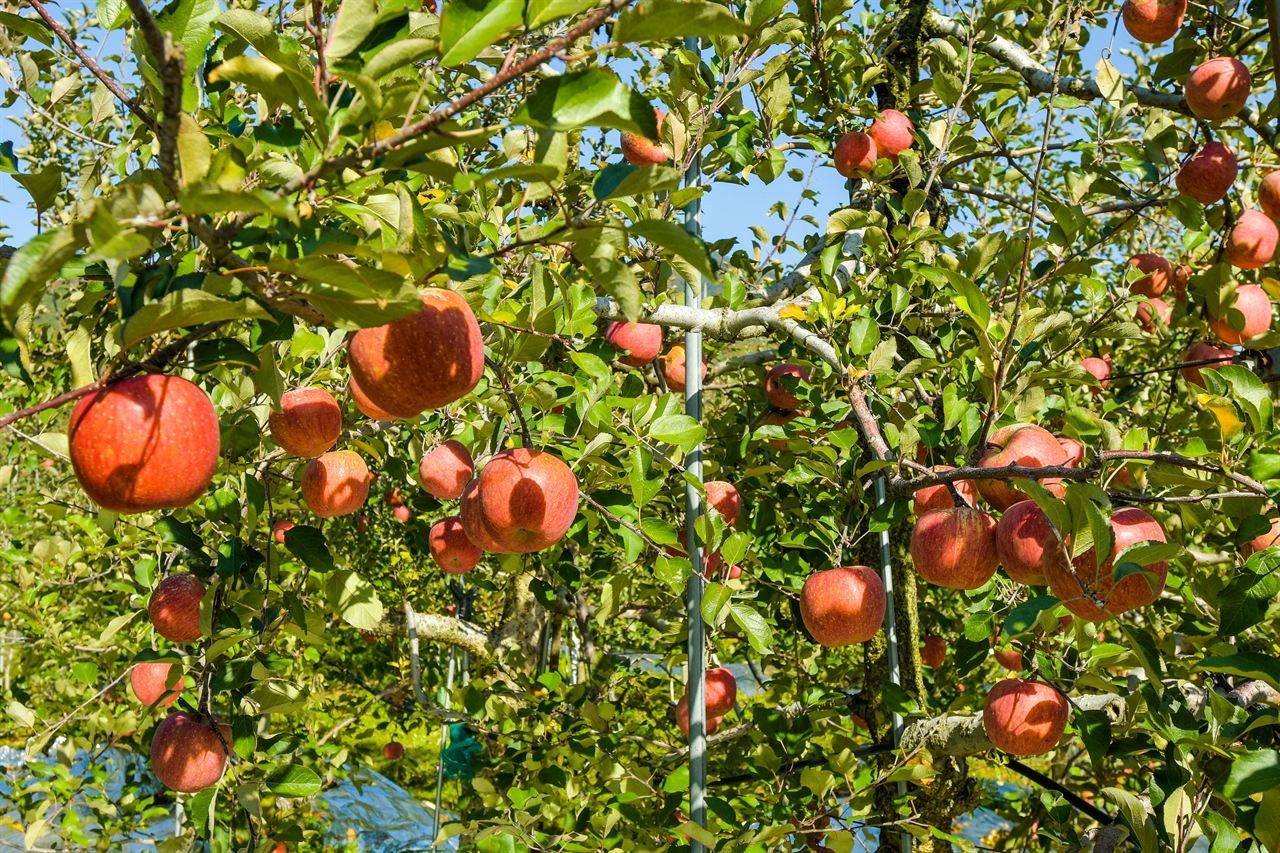
For a documented local specialty away from the temporary stalls, look for Chungju apple. Chungju is one of the country’s major apple regions: the crop has been grown here since 1912, and “Chungju apple” was registered as a protected geographical indication in 2006. The city’s agricultural office attributes the fruit’s colour, sweetness and aroma to the area’s wide day-night temperature swing and strong autumn sunshine — and early October is squarely apple season, which makes the market a sensible place to look. This is a regional recommendation, not a promise about what any single stall will be selling.
Honest assessment
The festival’s strengths are its setting and its price. Tangeumdae Park is a genuinely pleasant riverside spot with a real historical thread — the link to Ureuk and the origins of the gayageum gives the event more grounding than a generic town festival — and free admission makes it low-risk to drop in on. In autumn, with the apple harvest and the leaves turning, the park itself is part of the appeal, and the mix of traditional music, choral stages and hands-on booths is easy to enjoy for an afternoon and evening.
The weaknesses are equally clear. This is a civic, largely amateur programme delivered almost entirely in Korean, with no marquee performers announced and no full daily schedule published in advance. Foreign visitors who need English-language interpretation or signage should not expect much of it here, and anyone hoping for a single headline concert or a large-scale night spectacle will find this a smaller, gentler event than its long history might suggest. There is also no verified card-payment or language-support information, so those fields are left blank rather than guessed.
The fair way to treat it is as an add-on rather than a destination in itself: worth an afternoon and evening if you are already in or near Chungju, or if you specifically enjoy Korean community arts festivals and the riverside park. Come for the setting, the traditional-music strands and the newtro atmosphere, stay past dark for the evening anchor events on the 8th and 11th, and check the organiser’s page for the final programme before you build a tight plan around any one performance.