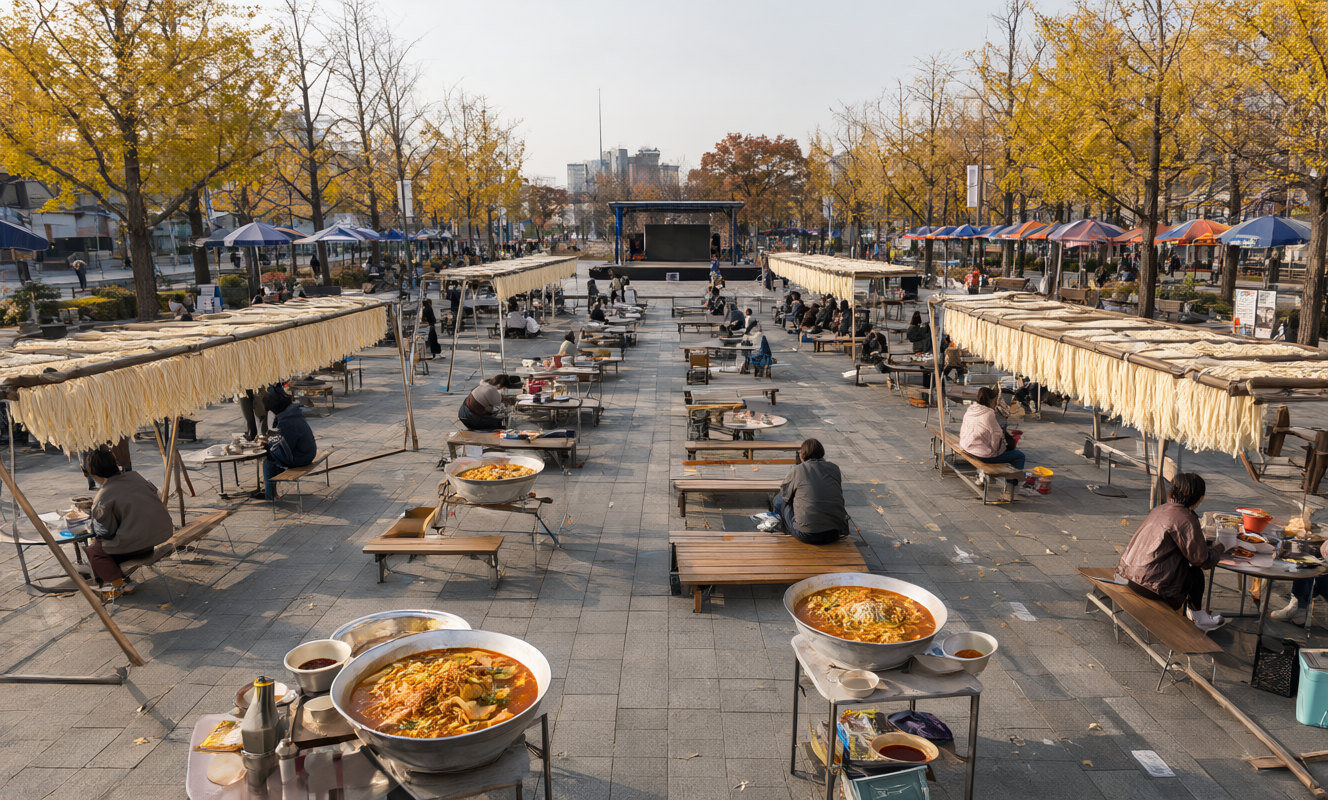
The Gangneung Noodle Festival turns part of Wolhwa Street, a pedestrian route built along a former railway line in central Gangneung, into an outdoor noodle court for four days. The 2026 dates are 15-18 October, Thursday to Sunday. It is the fifth edition, and it is free to enter.
One thing to know before you search for it: until 2025 the Korean name used the loanword for noodles (Nudeul). This year the city renamed it the Gangneung Guksu Festival, using the native Korean word for noodles, and explained that the new name would be friendlier to residents and visitors. English-language coverage in 2026 still says Noodle Festival, which is the name used here. Old results for the previous name describe last year’s dates and a different stretch of street.
What you actually do here
The core of the event is eating. Local press describes four food zones: a “Gangneung original noodle zone” for the city’s own dishes, a “world zone” selling noodle dishes from other countries, a “fusion zone” for new takes, and a “pairing zone” for drinks and desserts. Jang-kalguksu, Gangneung’s soybean-paste-based noodle soup, is the dish the coverage names first, alongside jjajangmyeon and jjamppong.
Around the stalls the programme adds things to do between bowls. Chefs Jo Eun-ju and Ha Jae-man (romanised here from Korean press; the spelling is not official) are named for cooking shows, and the activities listed include noodle-making and dough experiences, noodle painting and a meal-kit workshop. KTO’s festival portal also lists a noodle contest, and one press report names a fast-eating competition. There is an exhibition zone that recreates a traditional noodle-drying yard. Dates and times for each show were not published in the sources found.
Two stages along the street are listed for a singer’s performance, classical music, magic and a DJ. No performer is named in the sources found, so do not travel for a particular act.
Programme and timetable
The grounds are listed as open 12:00-21:00 each day in two aggregated listings of the city’s notice. The official page’s timetable is an image that could not be read as text, so treat the hours as listed rather than guaranteed. Last year’s edition ran 30 October-2 November with a final day that ended at 18:00 instead of 21:00, so the closing time on Sunday 18 October is worth checking.
No session times were found for the cooking shows, the contest or the stages. If one of them is the reason for your visit, ask the organiser before you set a schedule.
Tickets, fees and booking
Entry is free and no advance booking is mentioned. Food is paid for at the stalls. The new ordering method is kiosks and QR codes at the food booths, which local press says is meant to shorten waiting times. Whether the stalls take cards, a local currency voucher or cash was not checked here, so carry some cash as a precaution.
No 2026 prices have been published. A 2024 report put noodle dishes at 5,000 won, which the report described as about half the usual restaurant price, but do not budget from that figure as the pricing may have changed. A “Noodle Road” tie-in with local restaurants is also listed, with a receipt-based prize draw; the details of that draw were not found.
The venue and what is around it
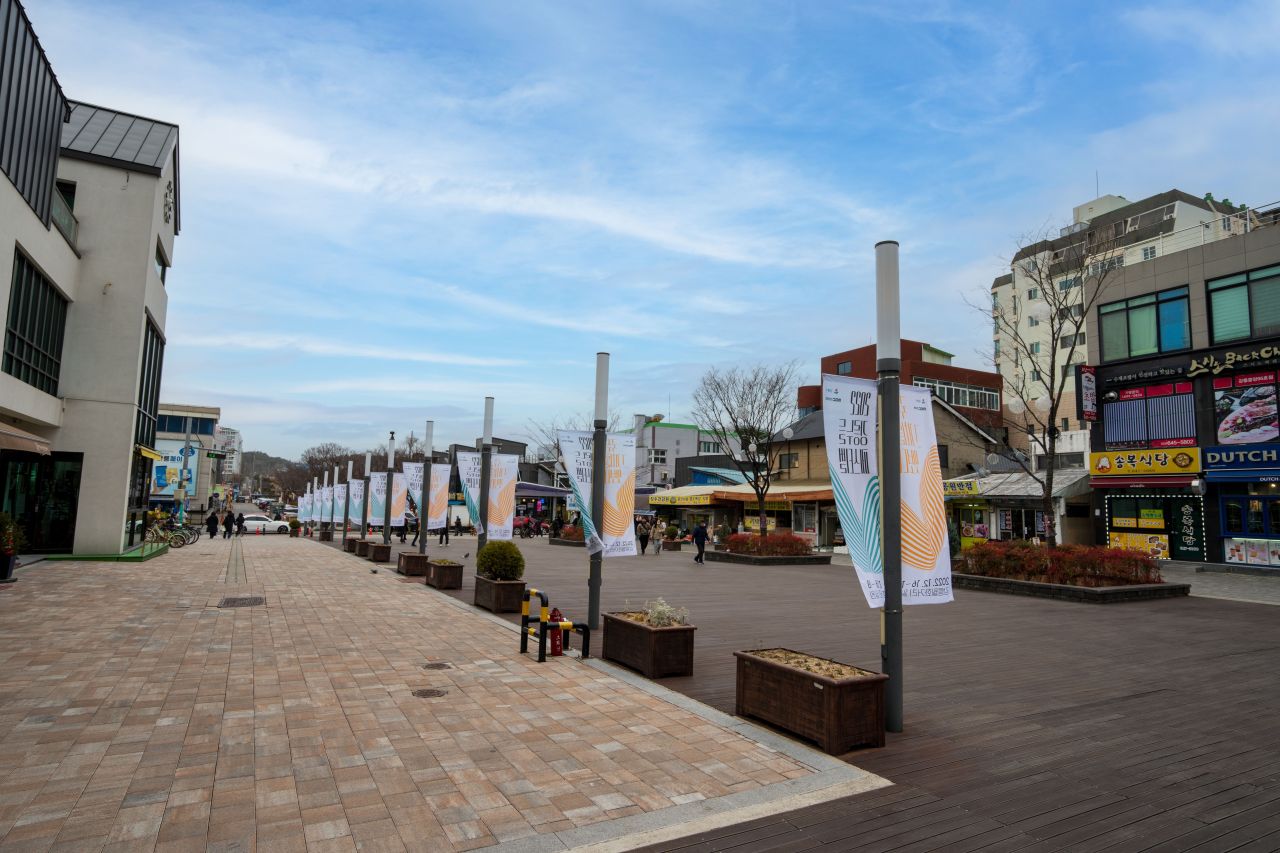
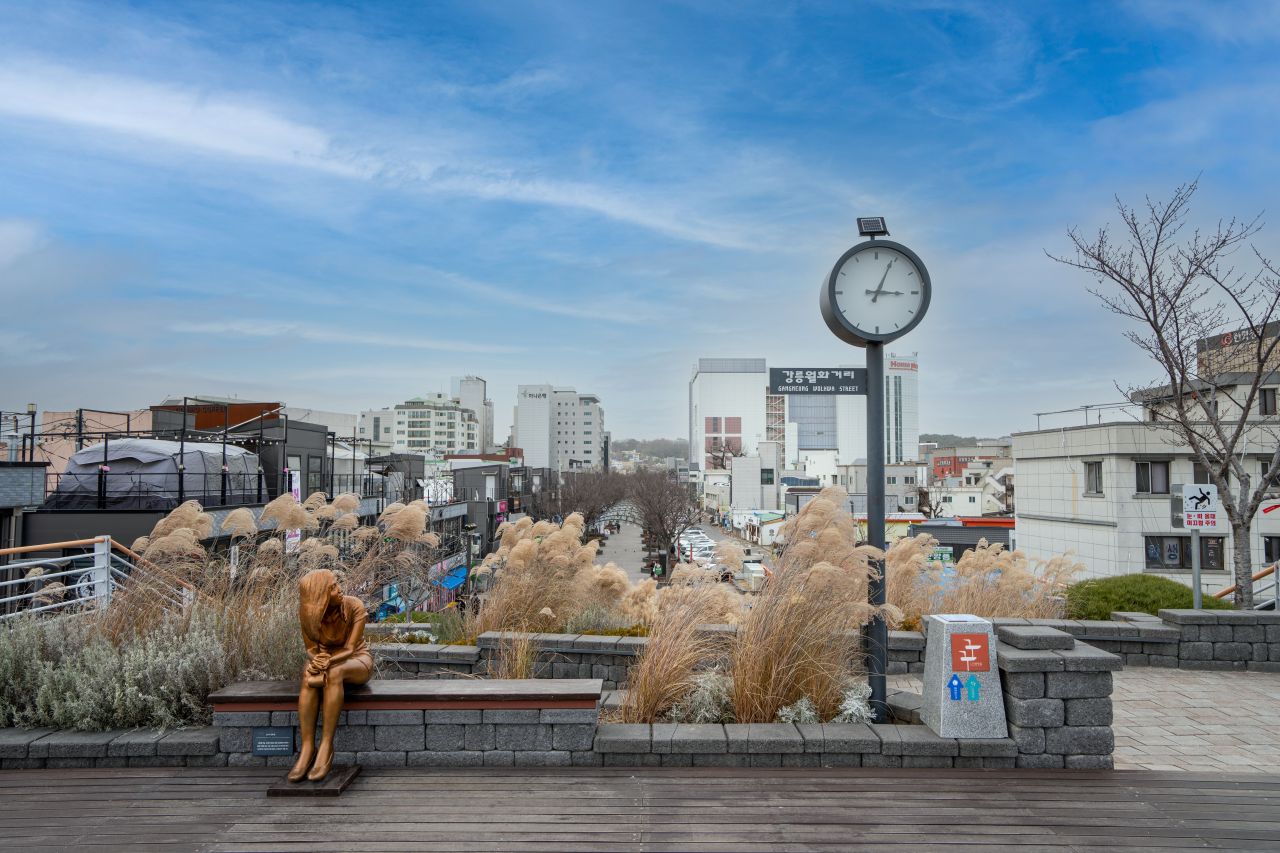
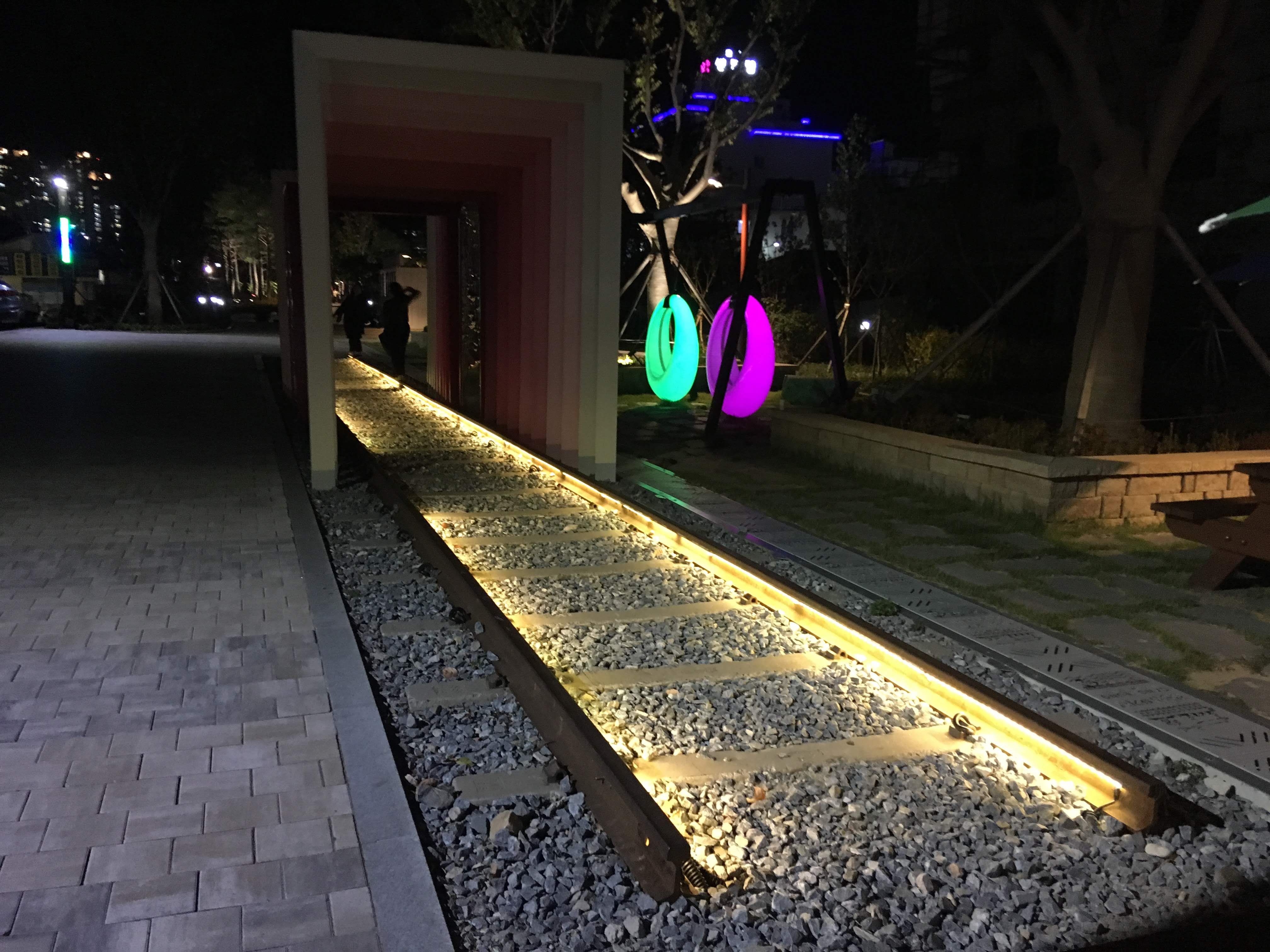
Wolhwa Street is about 2.6 km long and begins at Gangneung Station. For 2026, press reports say the festival site is extended compared with earlier years, from the former KEPCO car park side to Wolhwa Bridge, to make room for the stalls and to link with the nearby traditional market. Gangneung Jungang Market is only a short distance from the street, so it is easy to combine the two.
Seating has been expanded as well: parasol tables, bean bags, raised wooden platforms and a large shade tent are listed. The street also has a seasonal Friday-and-Saturday night market, which the city’s English newsletter describes as running May to November from 18:00 to 23:00. I could not confirm that it operates on the festival weekend.
Getting there without a car
The simplest route is the KTX. A timetable guide updated in August 2026 gives about 1 h 54 m from Seoul Station and about 1 h 40 m from Cheongnyangni Station, with a standard fare of 27,600 won from Seoul Station and 14 departures a day from there. It lists the first train from Seoul at 05:06 and the last at 22:14, and the first return from Gangneung at 05:20 with the last at 22:27. Check exact times on Korail for your date, because this is a secondary source.
Wolhwa Street starts at Gangneung Station, but the festival occupies only part of it. Open a Korean map app and look at where the festival entrance sits relative to the station before choosing whether to walk or take a taxi. This guide does not give a walking time because the sources found do not state one for the festival section.
Parking, shuttles and traffic control
No 2026 parking plan, shuttle service or road closure notice was found in the city page, KTO’s portal or the press coverage. That is a real gap, and it matters if you plan to drive. The street is in the middle of the city, so use the train, or call the contact number, 033-640-5130, before you decide to drive.
Day trip or overnight
A day trip from Seoul looks workable on paper. The 21:00 listed closing time falls before the 22:27 last train home, and the ride is under two hours. Because the closing time and the timetable both come from secondary sources, check them before you buy tickets.
If you decide to stay, hotel availability and prices were not checked. Gangneung is also hosting the ITS World Congress from 19 to 23 October according to local press, so look at demand if your stay runs past the festival.
Food on site and nearby
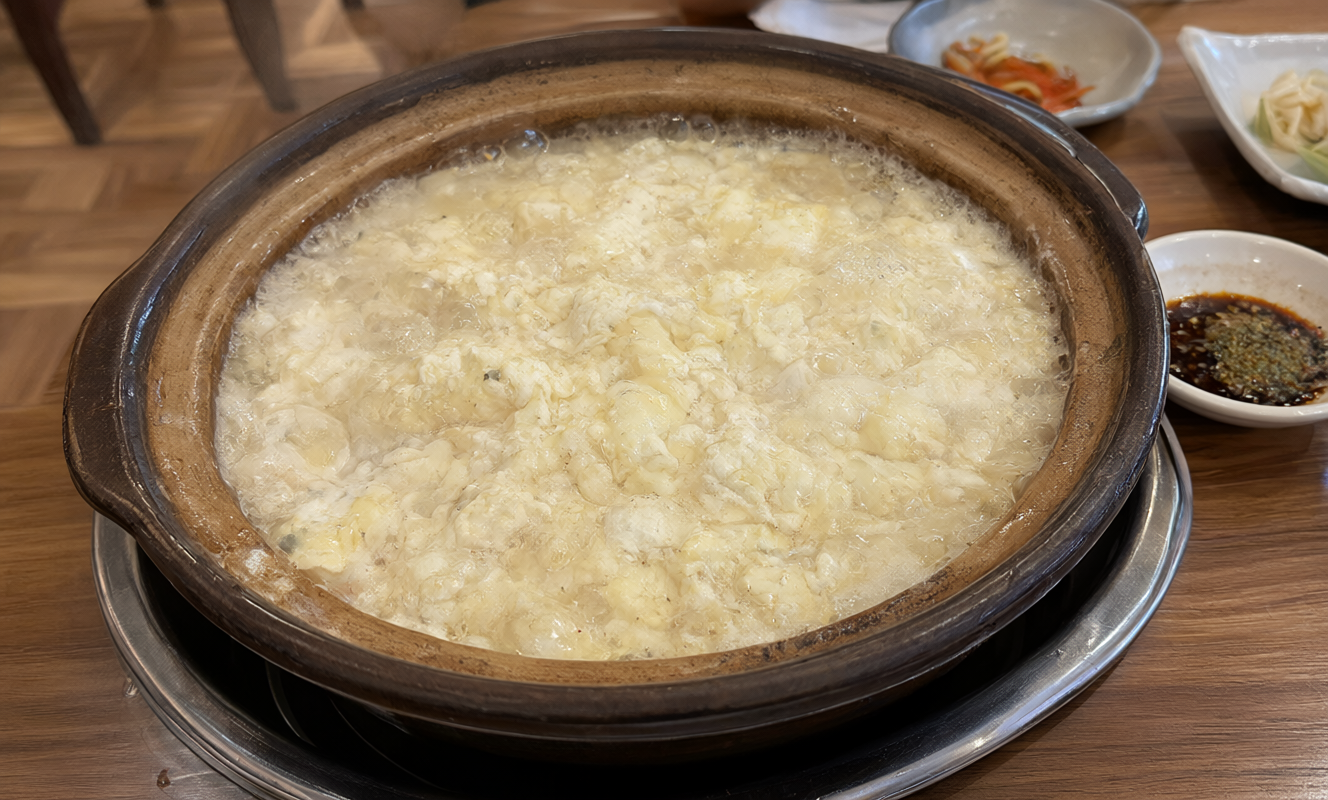
Beyond the festival, Gangneung’s best-documented local dish is Chodang sundubu, a soft tofu set with seawater, served in the Chodang neighbourhood’s cluster of tofu restaurants. It is a good meal to add if you extend the trip, but it is not something the festival has confirmed it will sell. Local press also lists a Chodang food event on 17 October, which would fall during the festival weekend; I only found it in one report, so verify it before relying on it.
If you are cautious about spicy food, note that jang-kalguksu and jjamppong are the lead dishes in the coverage. The sources do not say how many stalls have mild or vegetarian options, so ask at the booth.
Honest assessment
This is a straightforward food festival, and its strengths are simple. Entry is free, the format is easy to follow, and the setting on a pedestrian street near a traditional market makes it easy to extend into a day of eating. The organisers have also tried to fix the usual problem of queues with kiosk and QR ordering, and added seating for people who stay and eat.
The weaknesses are concrete. Prices are unpublished and the timetable for shows is missing. There are no named performers and no parking or shuttle plan. The name change means older web pages show last year’s information, so check dates and the site map carefully. For a visitor who loves noodles and wants a relaxed afternoon, it is worth the trip. For someone who wants a headline concert, a long programme or certainty about costs in advance, it is a weaker choice.