Chuncheon Puppet Festival is a seven-day performing-arts event, not a single fairground that stays the same all week. The 2026 edition runs from September 10 to 16 at Chuncheon Puppet Theater and several venues across the city. The current Korea Tourism Organization record and Chuncheon City’s September announcement agree on those dates, although an earlier ministry planning table begins one day later. The newer organiser-linked sources are the basis for this guide.
This is the festival’s 38th edition. The city says 99 teams from ten countries will present 105 works in 193 performances, including outdoor work, a street procession, making sessions, workshops, an exhibition, an OFF programme and an industry-facing art market.
The essential planning point is geography. Chuncheon Puppet Theater at 3017 Yeongseo-ro is the main base, but it is not beside the downtown venues. City Hall Plaza hosts the large Saturday carnival, Festival Theater Momjit is the parade departure point, and KT&G Sangsangmadang Chuncheon hosts the final-day art market. A programme title without its venue is not enough information to plan the day.
What you actually do here
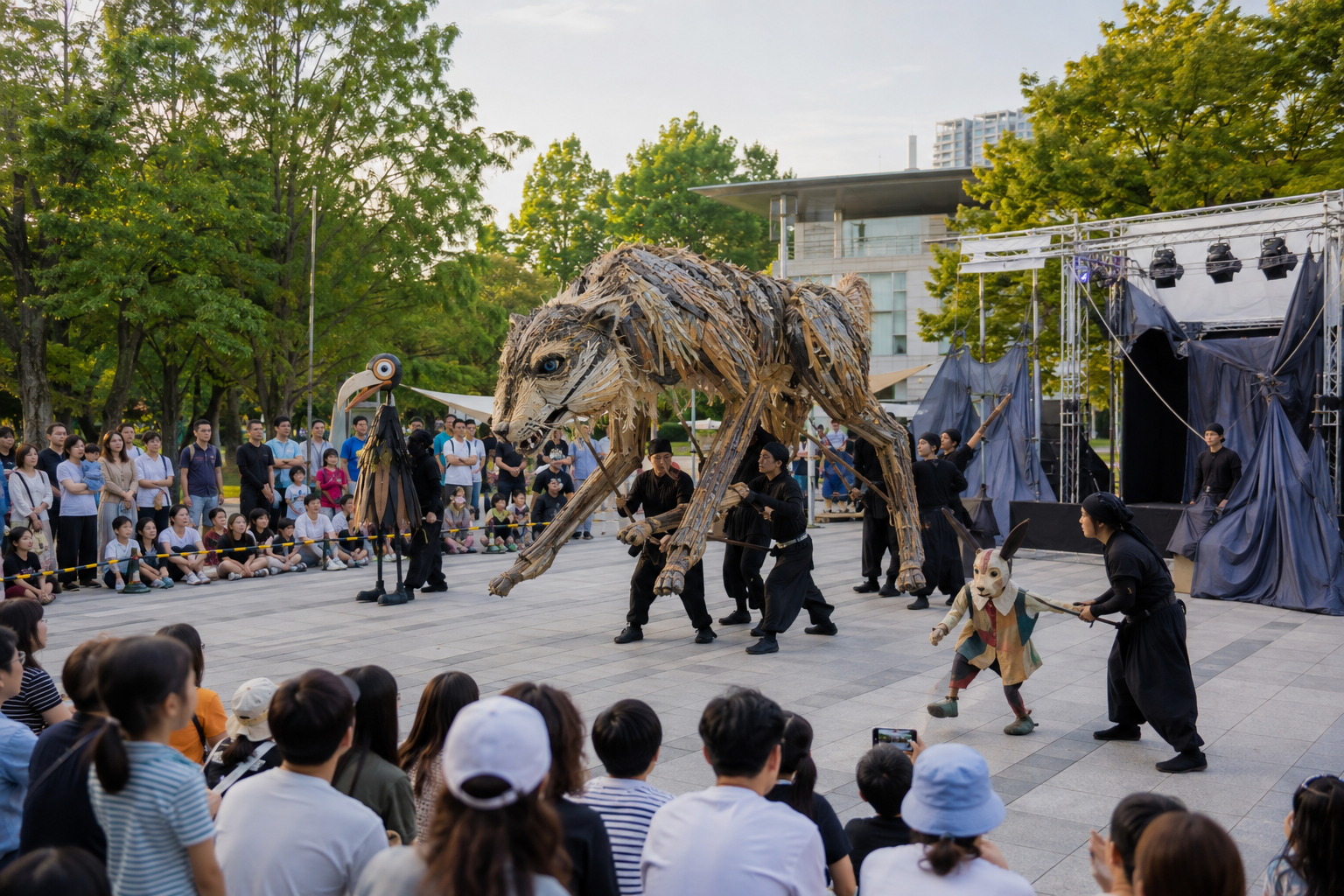
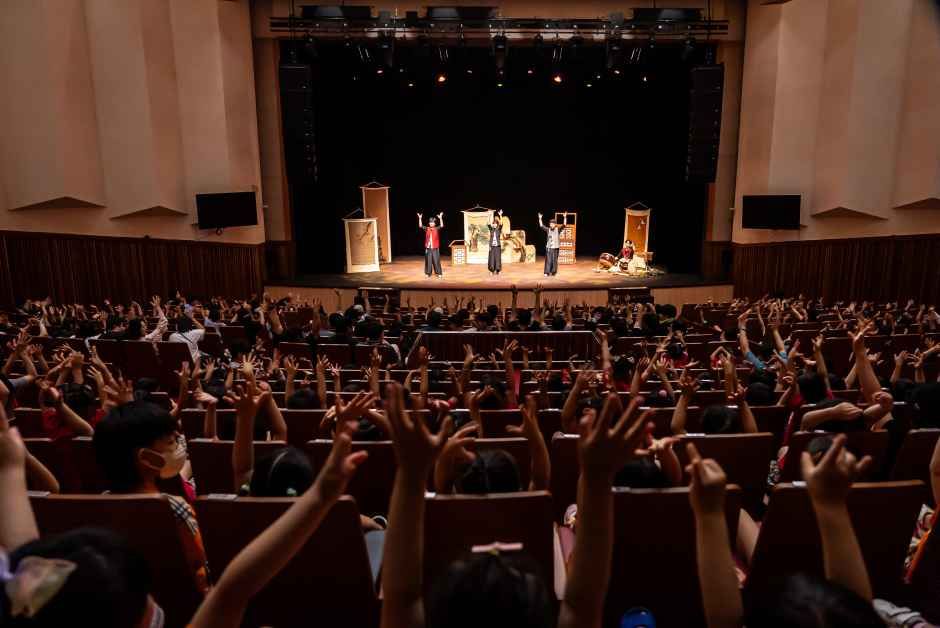
At the puppet theater, choose between ticketed indoor work and the open outdoor programme. KTO lists puppet performances, puppet-making experiences, workshops, a flea market and a special exhibition at the Puppet Museum. The organiser’s current Q&A makes the boundary clearer: outdoor performances and the OFF-festival programme are free, while indoor theatre work, hands-on puppet sessions and domestic or international workshops require a separate ticket or pass.
Families can build a flexible block around outdoor shows and an activity, while visitors focused on puppetry can reserve particular theatre pieces and add a forum or workshop. Age limits vary by performance. Check before paying; admission may be refused when a child is below the stated viewing age.
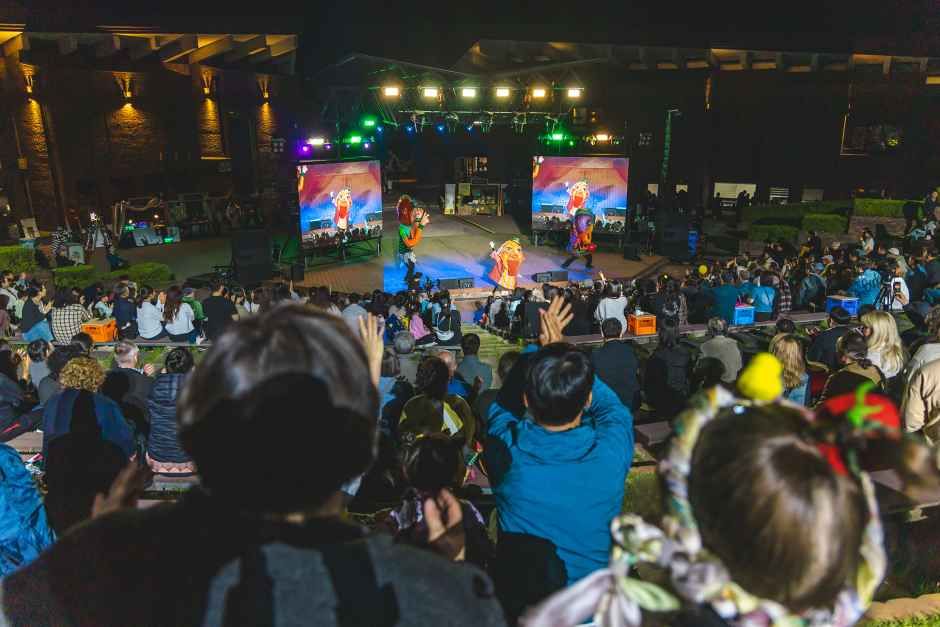
Official 2026 material identifies an OFF-festival line-up, a carnival procession and free work at the main outdoor grounds. The museum exhibition adds a quieter option. None of this establishes English interpretation, so select visually driven work if following Korean dialogue would be difficult.
Programme and timetable
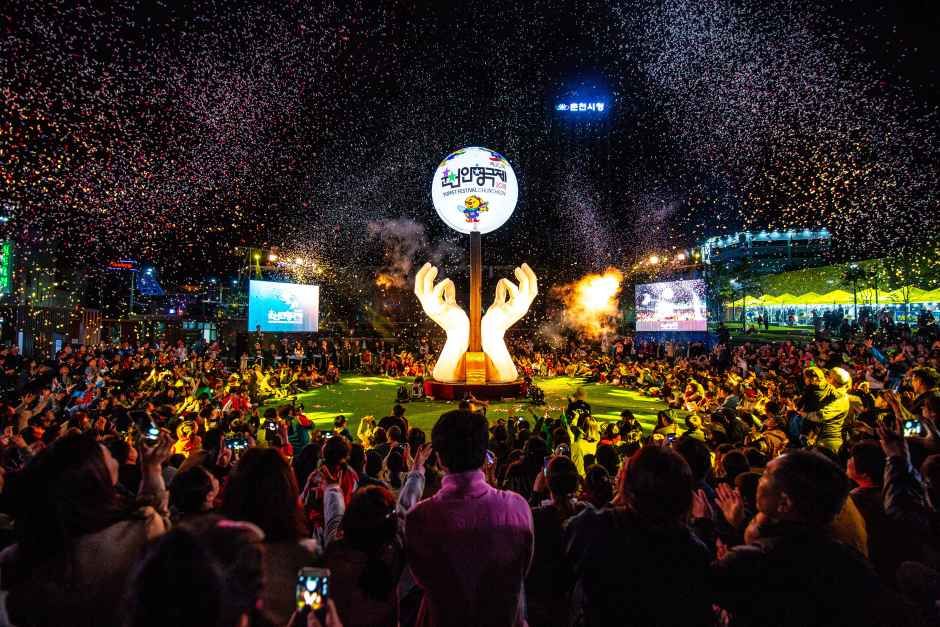
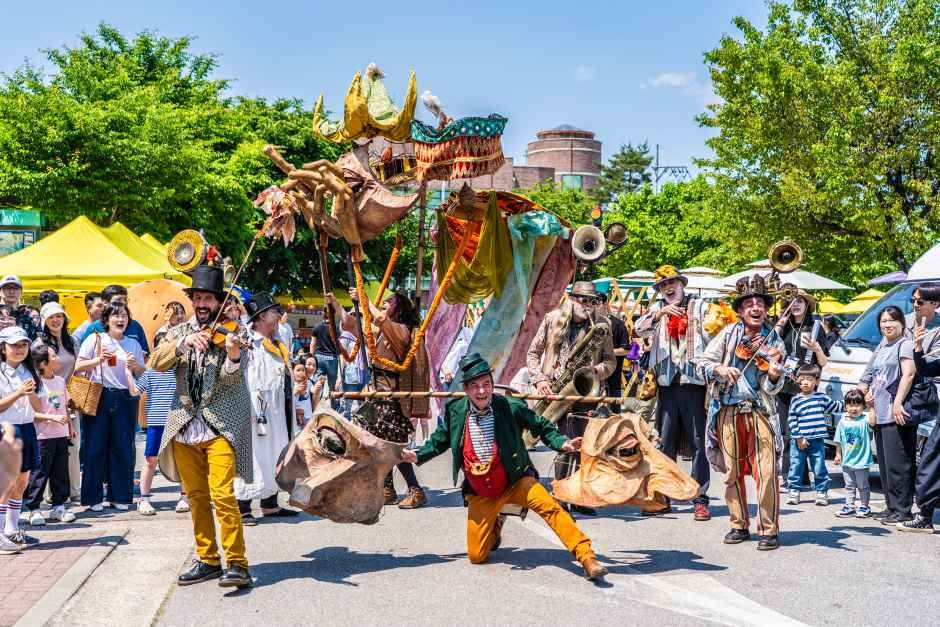
The week’s fixed public anchor is the carnival on Saturday, September 12, from 18:00 to 21:00. Chuncheon City says the procession itself starts at 18:30 at Festival Theater Momjit, follows a roughly 1.5-kilometre route through Ungyo Intersection and finishes at City Hall Plaza. About 1,000 artists and residents are expected in the procession with large puppets and constructed objects. The plaza programme includes preliminary performance, a relay of the parade, a theme performance and a collaboration with the All Generations Choir Festival.
Performances begin on September 10. Operating hours vary by day and show; KTO does not publish one opening-to-closing time for the entire festival. Choose a work on the official performance page, then check its venue and age limit.
The last major block is the puppet art market on Wednesday, September 16, from 16:00 to 21:00 at KT&G Sangsangmadang Chuncheon. KTO lists company information tables, showcases, a special performance and the closing ceremony. Chuncheon City says about 170 domestic and overseas presenters and buyers are expected and that members of the public can participate in judging showcase work. It is partly a professional distribution market, but it is also listed by the organiser as a free public programme.
Forums, roundtables and workshops may require advance registration. Do not assume they accept walk-ins because the outdoor grounds are open. Check the organiser’s notice board and official Instagram for changes.
Tickets, fees and booking
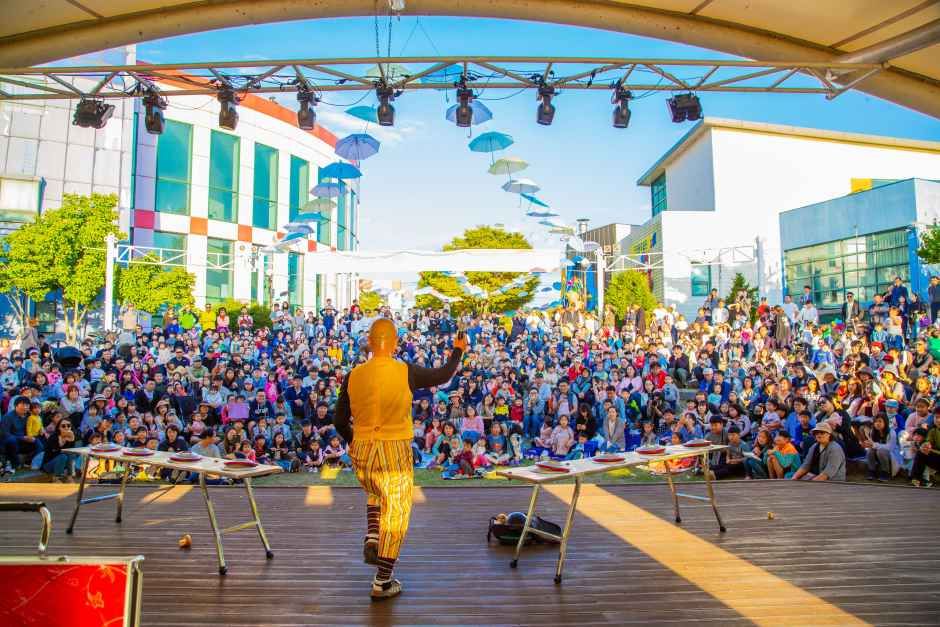
There is no ticket for entering the outdoor festival grounds. Free categories confirmed in the organiser’s September 6 Q&A are outdoor shows at Chuncheon Puppet Theater, the carnival, the September 16 art market, OFF-festival performances and the Puppet Museum programme. “Free festival” is still an incomplete description because indoor performances, making experiences and workshops are paid separately.
No single admission price applies. KTO says the amount varies by programme, and the organiser directs visitors to its online booking system for individual performances. Online booking is unavailable on the performance day. Any remaining seats can be bought at the venue, but the organiser explicitly recommends advance booking because individual shows may sell out.
For a paid indoor performance, collect the ticket from the main desk at that theatre or use the supplied QR code. The organiser asks audiences to do this 30 minutes before curtain. Unreserved seats are allocated in arrival order. Discounted bookings require the relevant proof when the ticket is issued, and lost or damaged tickets are not reissued.
The published refund rule is simple but strict: a full refund is available until one day before the performance; there is no same-day or partial refund, and seats cannot be changed on the day. Cash and cards are both accepted for ticket purchases, but that statement does not establish what every flea-market or food vendor accepts.
Getting there without a car
From Seoul, use the ITX-Cheongchun. Korea Tourism Organization describes it as the Yongsan-to-Chuncheon intercity train, and Chuncheon City’s current rail page gives a typical journey of 65 minutes from Cheongnyangni or 85 minutes from Yongsan to Chuncheon. Individual services vary, so reserve the exact train through Korail rather than building a connection around the typical figure. The same city page lists a weekend final Chuncheon-to-Yongsan departure at 22:13, but verify the September 2026 timetable when booking.
Chuncheon Station is only the intercity arrival point. For the main puppet theater, set Chuncheon Puppet Theater, 3017 Yeongseo-ro as the destination in a Korean map app and continue by local bus or taxi. Chuncheon operates a live bus-information service, and the city specifically recommends it alongside Naver Map and KakaoMap for current routes. This guide does not state an unverified route number because a city bus revision is scheduled later in September and festival diversions can matter.
For City Hall, Momjit or Sangsangmadang, search that venue directly rather than travelling to the puppet theater first. Avoid a tight back-to-back booking across sites, especially during carnival road closures.
Parking and road control
The organiser’s September 5 venue guide names different parking arrangements for each site. At Chuncheon Puppet Theater, use the surrounding streets, the Gangwon Provincial Arboretum area or the Performing Arts Startup Support Center’s dedicated lot. Parking inside the puppet-theater grounds is unavailable on the weekend. The venue map also shows accessible spaces near the theatre entrance, but availability at a particular arrival time is not guaranteed.
Festival Theater Momjit has a free lot and is the September 12 procession departure point. City Hall Annex parking is paid; the official notice says exit registration is available after the September 14 performance and that the facility opens free on the weekend. KT&G Sangsangmadang’s own lot is listed as free. The Performing Arts Startup Support Center has very limited space, and the organiser recommends public transport there.
On September 12, traffic control follows the moving carnival. The section from Momjit to Ungyo Intersection is one-way controlled from 17:00 to 19:30. The section from Ungyo Intersection to City Hall is one-way controlled from 19:00 to 20:00. This is direct evidence that a normal driving-time estimate will not hold around the procession. If the carnival is the main reason for coming, arrive before the first closure and leave the car out of the route.
Food on site and nearby
KTO lists a flea market but no dependable 2026 food-stall roster, prices, dietary guide or payment policy. Do not assume a full meal will be available at every venue.
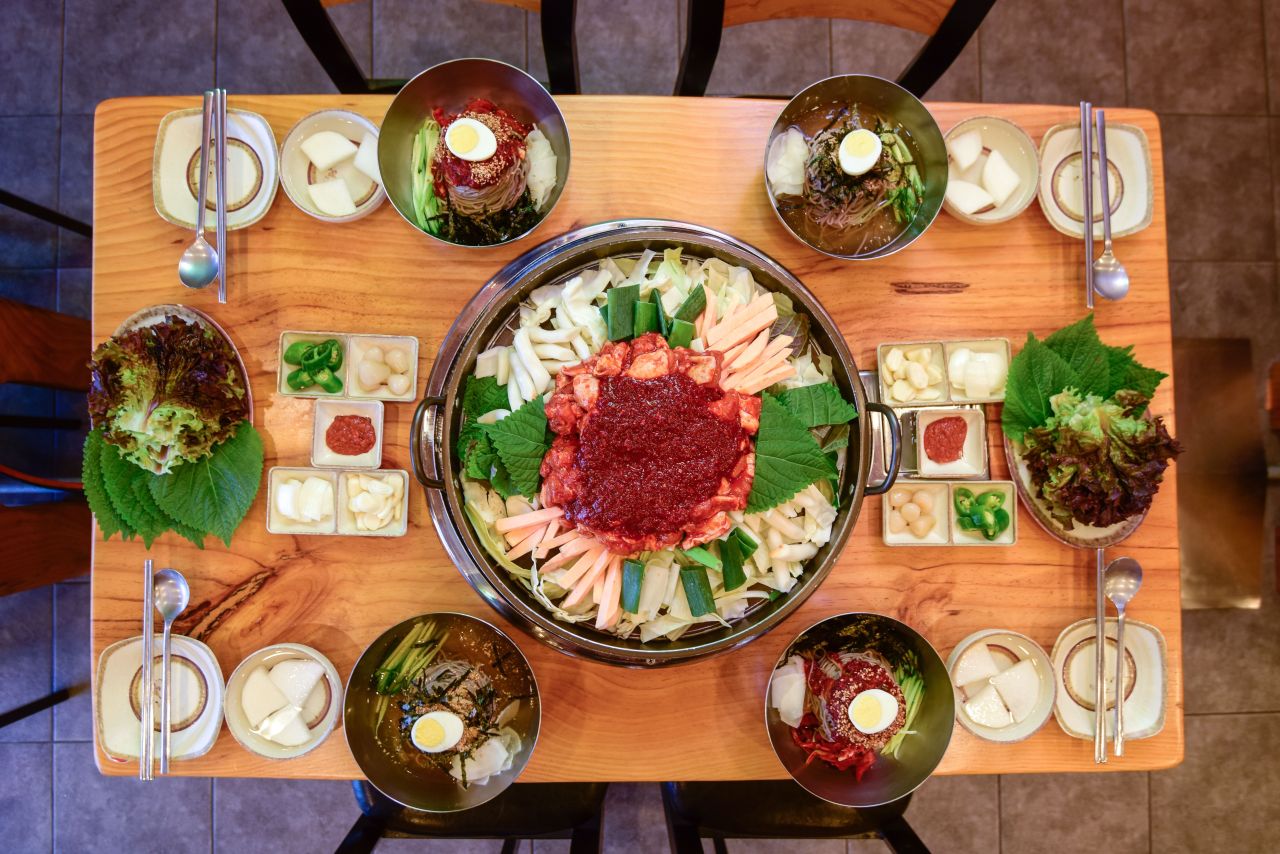
Two well-supported local choices are dakgalbi and makguksu. Chuncheon City describes dakgalbi as a representative food and maintains a tourism listing for the Myeongdong Dakgalbi Street. KTO calls Chuncheon the dish’s birthplace and centre. The familiar pan version cooks chicken with cabbage, sweet potato and other vegetables in a spicy sauce; charcoal-grilled versions also exist, so ask which style a restaurant serves.
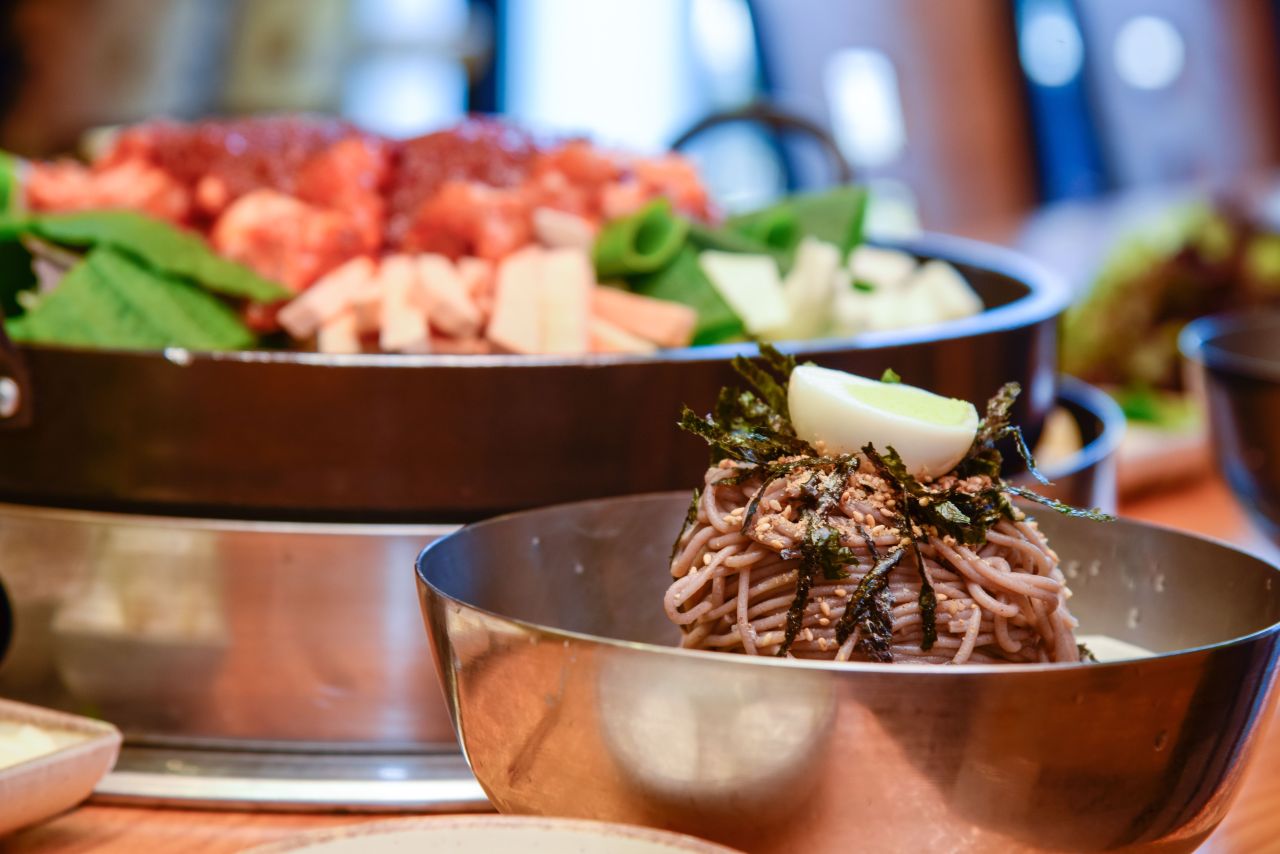
Makguksu is a cold buckwheat-noodle dish served mixed with seasoning or in broth. KTO’s current Chuncheon Makguksu & Dakgalbi Festival page explicitly names both foods among the city’s best-known specialties. These are suggestions for a meal in Chuncheon, not a promise that either appears at a temporary festival stall.
Day trip or overnight
A day trip from Seoul is realistic if you reserve one or two performances and keep them in the same area. The rail journey is a little over an hour from Cheongnyangni on a typical ITX service, and daytime programmes do not force an overnight stay. Add the city transfer at both ends, and leave a buffer for ticket collection.
The Saturday carnival is also possible as a day trip because it ends at 21:00 and Chuncheon City’s published weekend timetable lists a later ITX departure. That margin is not generous once the crowd exits City Hall and reaches Chuncheon Station. Check the exact train, walk or transfer route and road-control notice before committing to the last practical departure.
Stay overnight only if the schedule you choose justifies it—for example, a late programme followed by a next-morning workshop. Accommodation availability and prices were not independently verified, so this guide does not recommend a particular property or claim that one district is best for every venue.
Honest assessment
The festival treats puppetry as more than children’s theatre: there is formal indoor work, street-scale objects, outdoor pieces, exhibitions, workshops and a market for new work. The free outdoor layer lets you sample the event before buying a ticket.
Its practical weakness is fragmentation. “Across Chuncheon” sounds convenient in publicity but creates real transfers. The puppet theater, downtown carnival route and Sangsangmadang are not a single walkable compound, and operating hours depend on the selected show. Build the day from two fields—time and venue—not from a general festival date.
Expect concentrated crowds around the September 12 procession. The city expects about 1,000 participants, the event occupies a 1.5-kilometre street route, and the organiser has published staged road closures. Arrive early, choose a meeting point if visiting with children and avoid a narrow connection immediately after 21:00.
Rain does not automatically cancel the festival. The organiser says the event continues in rain unless there is a typhoon or other natural disaster, while individual outdoor programmes may move or be cancelled. Check same-day notices instead of assuming either outcome. The sensible visit is one reserved indoor performance plus outdoor work at the same venue, or the carnival as a separate evening plan. Trying to cover every site in one day would turn a performance festival into a transport exercise.