Dongnaeeupseong is the walled town of Dongnae, in what is now Busan, and its fall in 1592 was one of the opening engagements of the Imjin War. The magistrate Song Sang-hyeon and the townspeople of Dongnae fought off the Japanese invasion force until the fortress was taken, and this festival is built around that story. It began in 1995 as a memorial rite called Chungnyeolje, and the 2026 edition is the 32nd. KTO describes it as Dongnae-gu’s signature festival combining history education with hands-on experiences, and the Ministry of Culture, Sports and Tourism has named it one of its culture and tourism festivals for 2026-2027.
The dates are confirmed: Friday, October 16 to Sunday, October 18, 2026. As of the morning of opening day, no postponement, cancellation or date change turned up in local press from October 10 to 15 or on the official homepage. KTO lists 10:00-21:00, and the venue is the area around the North Gate of the fortress and the Dongnae Cultural Center at 80 Munhwa-ro. Local press also mentions Myeongnyun 1st Street and the Oncheonjang area as part of the wider programme. Entry is free, though some experiences cost money.
What you actually do here
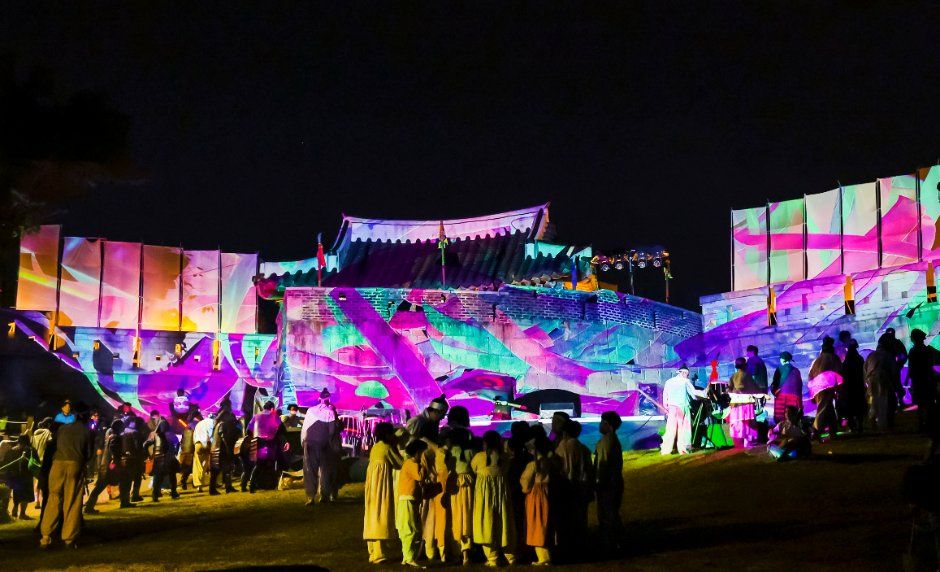
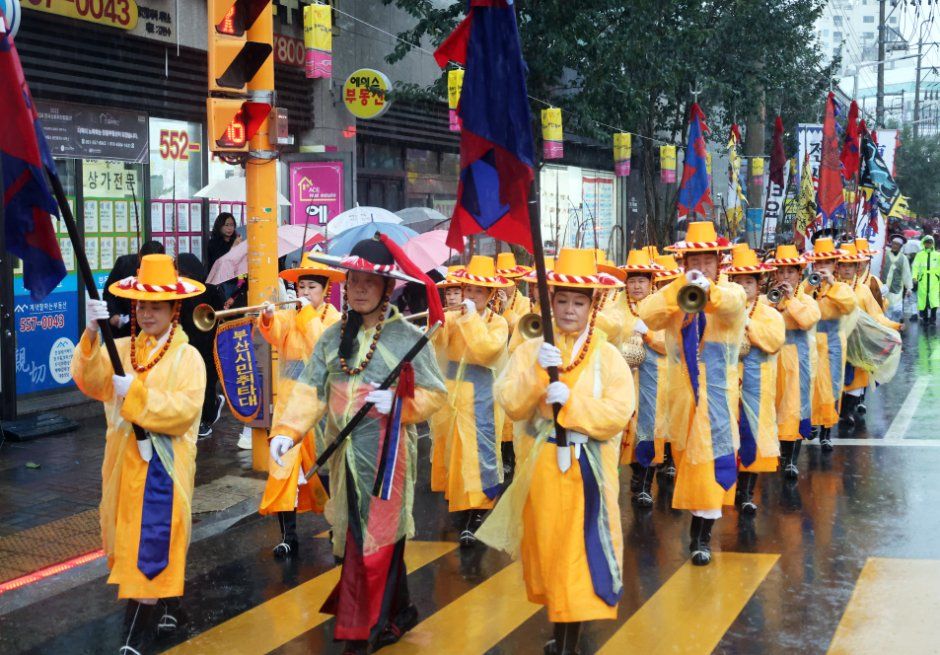
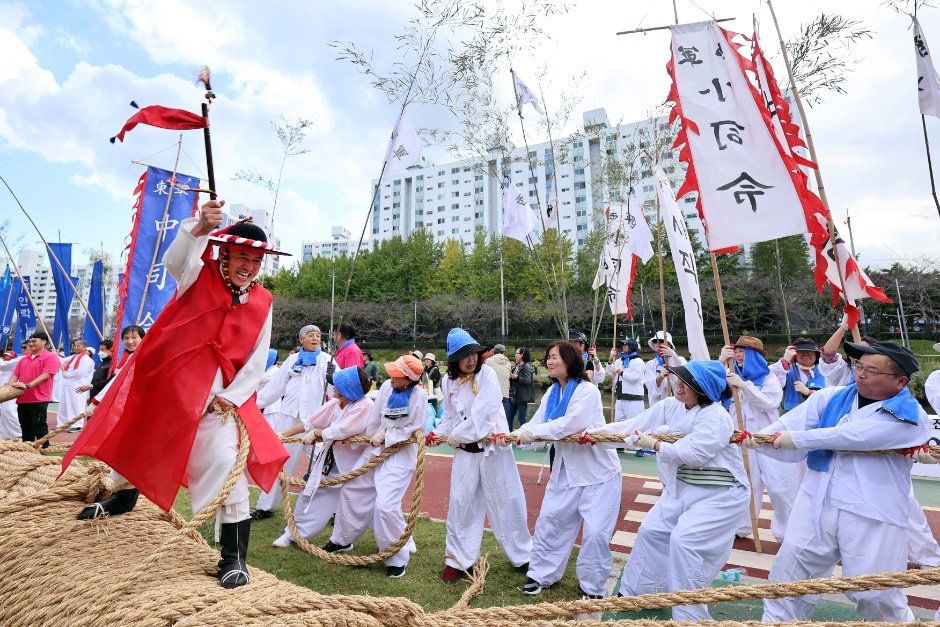
The festival is organised around three headline programmes. The first is the Dongnae magistrate procession, a street parade with hundreds of participants that opens the event. The second is the Dongnae three-strand tug-of-war, where the crowd pulls on one very large rope; the official site describes it as unique in the country, and local press calls it rare elsewhere in Korea. The third is the battle reenactment musical, titled Lonely Fortress (외로운 성), staged on the hillside at the North Gate where the fighting happened. This year the stage has been extended and media art is projected onto the North Gate walls.
Around those three sits a long list of smaller things. KTO’s Korean record counts 57 programmes in five groups: three headline programmes, two themed ones, 19 cultural and stage programmes, 24 participation and hands-on programmes, and nine side events. The two themed programmes are a “gate checkpoint” experience and the Dongnae market, where you carry yeopjeon coins into a recreated Joseon-era marketplace. You can try on a magistrate’s helmet and armour, walk part of the fortress route, and play at an outdoor escape room and a hanbok disco party. The stage list includes traditional tightrope walking, North Gate busking, a hanbok fashion show, storytelling and magic buskers, a children’s English-language musical and an opera adaptation of Chunhyang.
Programme and timetable
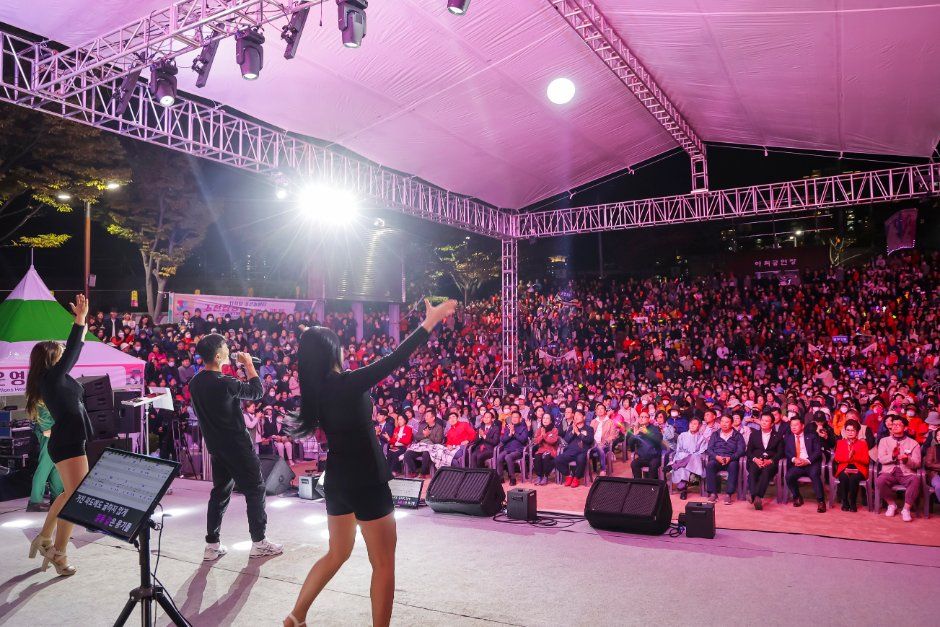
Fixed times that were confirmed for 2026 are few. The opening ceremony is on Friday, October 16 at 18:00 at the musical stage on the North Gate hill, and local press says it will also be relayed to the outdoor stage. The Dongnae Eupseong Song Contest is on the evening of Sunday, October 18 at the outdoor stage of the Dongnae Cultural Center, with guest performances by Ulala Session and Kim Da-hyun. The musical is performed five times across the festival, a mix of daytime and evening shows, but the individual slots were not found.
The festival’s own timetable is published as an image on its schedule page, not as text, and the tug-of-war, the parade and the fireworks do not have times in any source that could be read. A fireworks show is reported by local press, to be fired from a construction site near Dongnae Historical Park, again without a date or time. If one of these is the reason for your trip, ring the organiser on 051-550-4092 or read the image on the official site before you commit.
Some experiences need signing up in advance. The official page carries application notices for the outdoor escape room and for the Dongnae night walk with a moonlit picnic, and the escape room is 10,000 won according to KTO. How many places remain and whether walk-ins are accepted were not found.
Tickets, fees and booking
There is no entry fee. The paid items found are the outdoor escape room at 10,000 won and hands-on experiences at 3,000 to 10,000 won, both from KTO’s listing. Whether the musical needs a seat reservation or stays open to anyone who turns up was not stated in the sources I could read, so treat it as unknown. Dongnae-gu says card payment systems will be in place across the venue, including the food market and the pajeon tavern, according to one local report; that was not confirmed elsewhere, so carry some cash as well.
Getting there without a car
From Seoul, take a KTX from Seoul Station to Busan Station. A direct train takes about 2 hours 15 minutes and trains with stops take 2 hours 30 to 45 minutes. Busan Station is on Busan Metro Line 1. The festival’s official directions page tells visitors to ride Line 1 and get off at Dongnae Station, or at Myeongnyun Station; the ride from Busan Station to Dongnae is around 20 minutes by route-planner estimates.
For 2026 the organiser has published a festival shuttle plan. Route 1 runs from Dongnae Station exit 3 to the front of the small theatre at the Dongnae Cultural Center, every 10 minutes. Route 2 runs from Myeongjang Station exit 3 on Line 4 to the Bokcheon Museum car park, every 20 minutes. The shuttle operates on Friday, October 16 from 16:00 to 21:00 and on Saturday and Sunday from 10:00 to 21:00. The page gives final departures of 20:40 from the stations and 21:00 from the festival grounds. These come from one official page, so check it again before travelling, because shuttle plans can change at short notice.
The page also lists several city bus numbers (110-1, 100, 51, 49, 179, 50, 183 and 189) that serve the area, without saying which stop each reaches. Use a Korean map app for the live route.
Parking, shuttles and traffic control
Driving is discouraged. The official page names two temporary car parks, at the Bokcheon Museum and at the Dongnae Hyanggyo (the old local Confucian school), and states that parking near the venue is short and that visitors should use public transport. No road-closure plan for the parade or the weekend was available when this guide was written. Expect the streets around the Cultural Center to be restricted when the procession passes, and leave extra time if you are in a taxi.
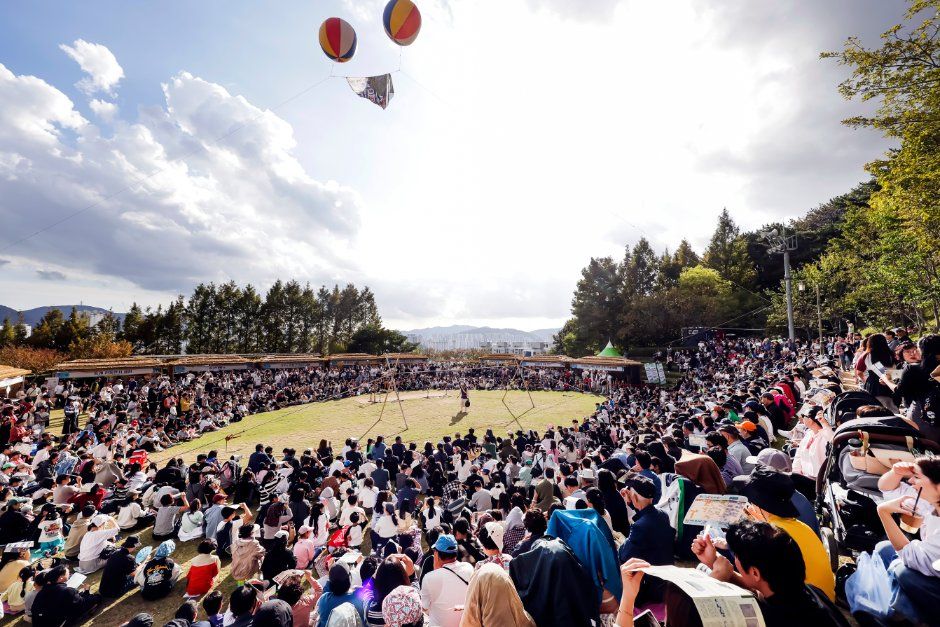
Crowds are not quantified anywhere I could verify. One of the official photographs above shows a packed lawn around a stage at a past edition, which gives a sense of scale, not a forecast. A sensible approach is to be early for any stage you care about and to agree a meeting point before the tug-of-war.
Day trip or overnight
Dongnae sits on Metro Line 1 about 20 minutes from Busan Station, so the arithmetic of a Saturday or Sunday day trip from Seoul works on paper: roughly two and a half hours each way by KTX and a festival that runs until 21:00. I did not check the last departure back to Seoul, and it decides whether you can stay for the evening programme, so look up your return train first. Friday is harder, as the shuttle starts at 16:00 and the opening ceremony is at 18:00. If the Sunday song contest is your goal, an overnight stay is the safer plan. No hotel is recommended here because none was checked.
The same weekend, October 16 to 18, Busan also hosts the 13th Nakdong River Gupo Naru Festival at Hwamyeong Ecological Park, which a local report describes as free to enter as well. It is a separate event and is not covered by this guide.
Food on site and nearby
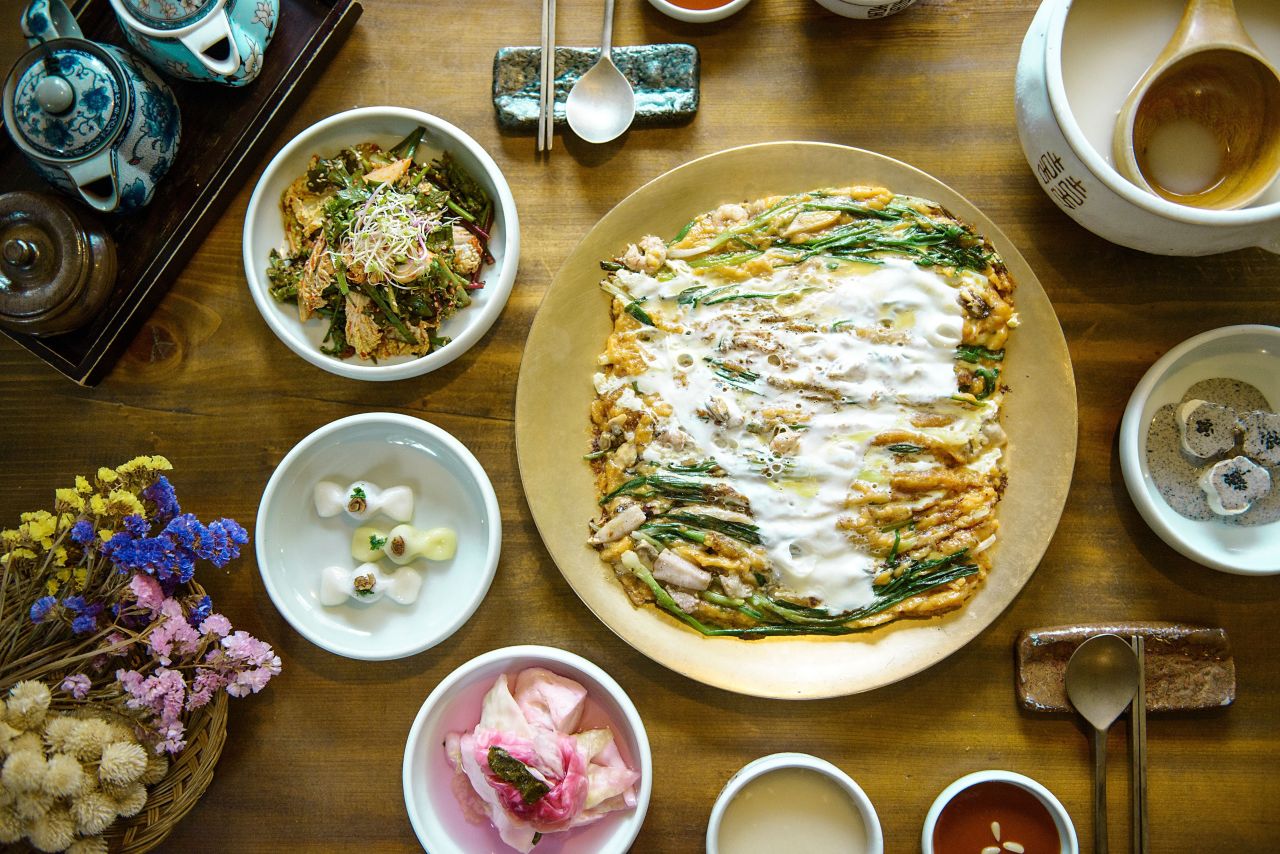
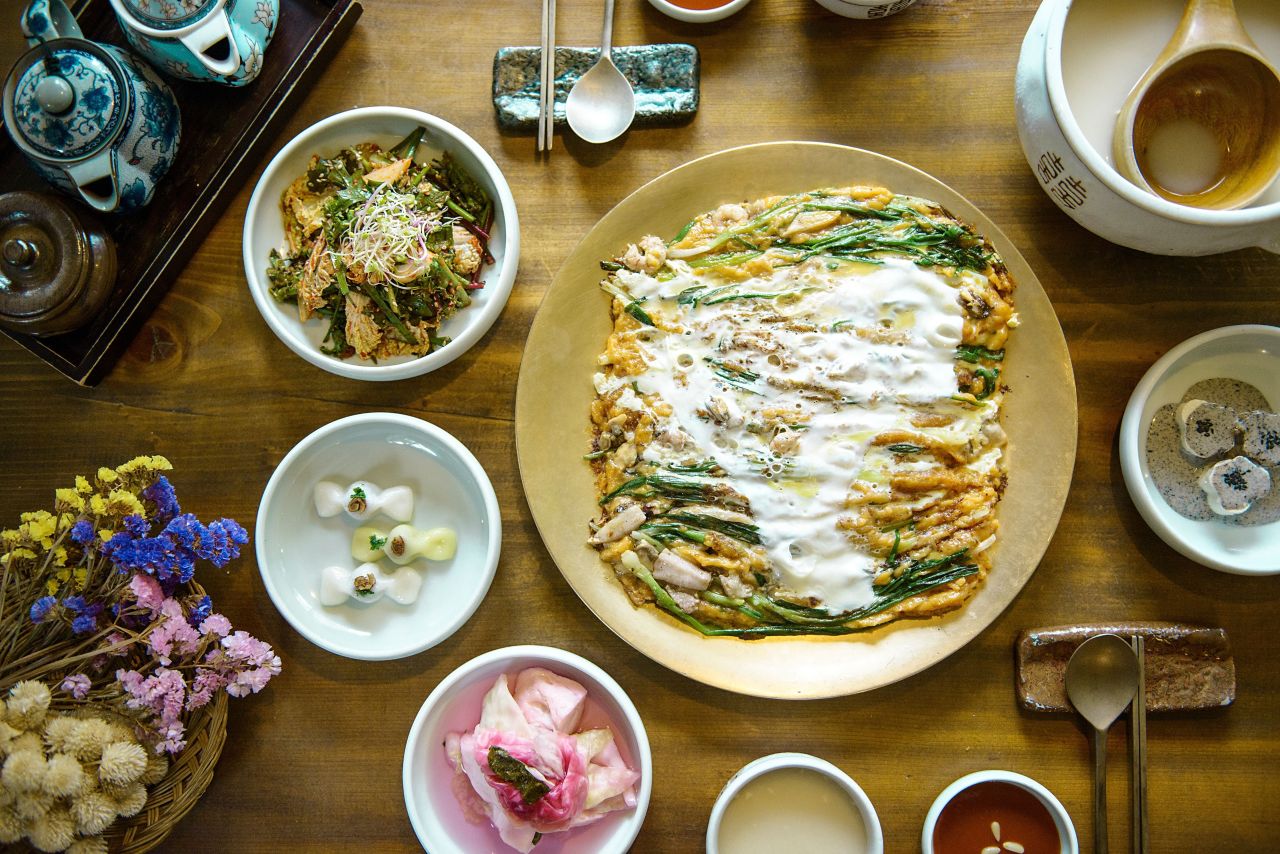
The programme lists an Eupseong residents’ food market, the Dongnae pajeon tavern, a zero-single-use-plastics snack market and a “Byeolmidang” stall that offers character-biscuit making. Menus and prices were not published. The festival introduction itself singles out Dongnae pajeon, the scallion pancake named for this district, as one of the things on offer, so that is the obvious thing to look for. The listed side events also include an Oktoberfest-style beer event, whose date and venue were not confirmed.
The Myeongnyun 1st Street night event is now confirmed by two outlets. Called “Back to the Night” (백투더나잇, the second edition), it runs Thursday, October 15 and Friday, October 16 from 15:00 to 21:30 on the car-free street behind the Mega Mart in Myeongnyun-dong. It is themed on 1980s and 1990s nightclubs, with a street-tent bar serving draught beer and snacks, a stall market, retro arcade games, dalgona candy making and tarot. Busking starts at 16:00 and DJ sets and guest acts from 19:00. Prices were not published. Because it ends on Friday, only opening-day visitors can combine it with the festival; the district’s stated aim is to send festival-goers there for dinner.
Honest assessment
The strength of this festival is the setting. The musical is staged on the slope beside the fortress gate, on the ground where the siege took place, the parade and the tug-of-war give you something to join in rather than watch, and the programme is large enough to fill a whole day. It is also free to enter, so the cost of trying it is low.
Its limits are practical. The timetable is an image, not text, and the sources I found gave times only for the opening ceremony and the song contest. Most of the programme is described in Korean, with multilingual subtitles reported only for the musical and the languages not stated. Parking is scarce, and the shuttle plan comes from a single official page. The hero photograph above is from the 2017 reenactment; the other photographs are the Korea Tourism Organization’s 2026 festival images. The parade photograph shows rain, and no rain policy was found, so check the notices if the forecast is poor. If you can read a little Korean or can go with someone who can, the day is far richer; if you cannot, treat it as a visual, noisy and sociable evening, not a guided history lesson.