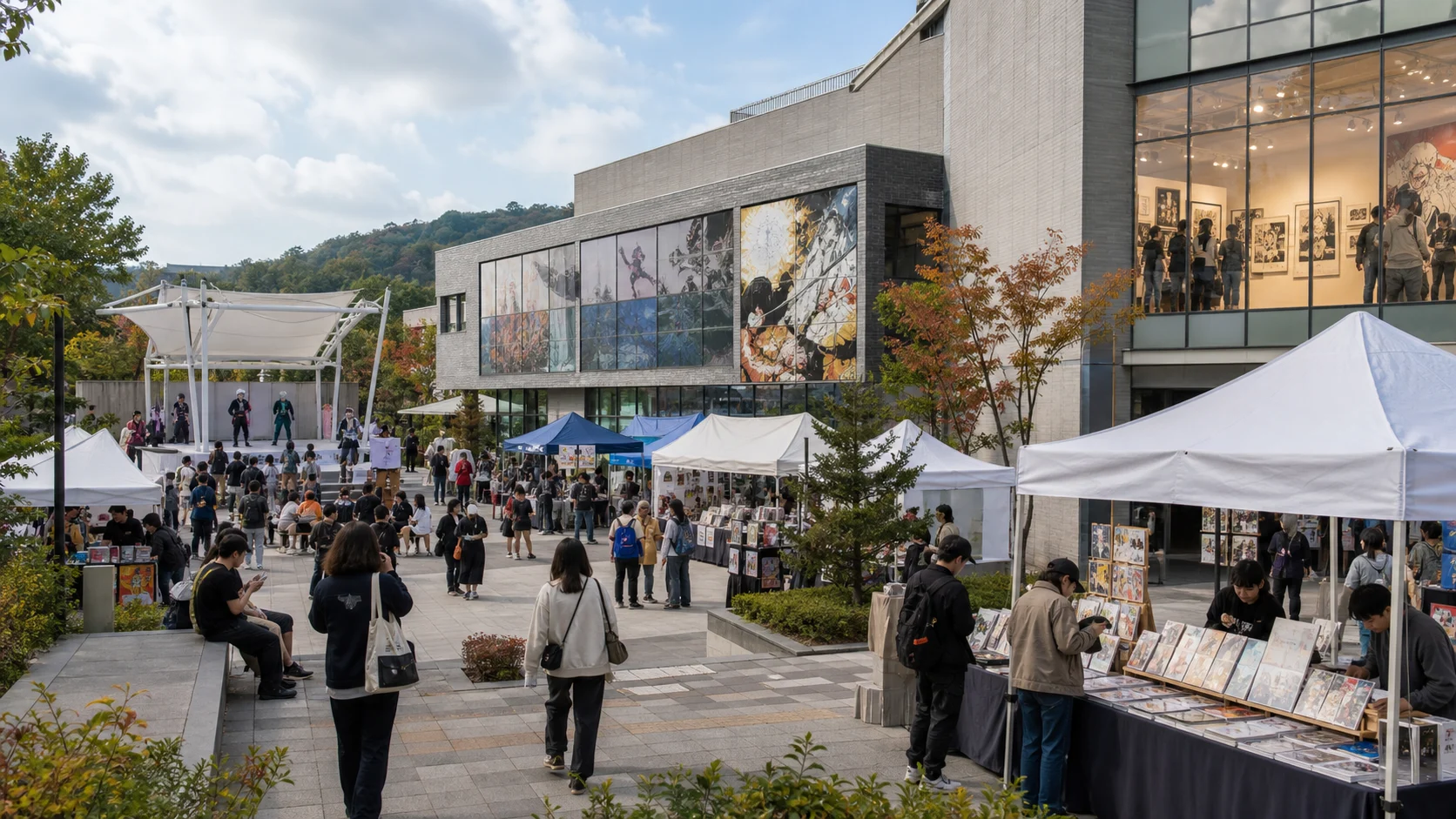
Bucheon’s comics festival is built around the Korea Manhwa Museum and the adjacent Korea Manhwa Contents Agency rather than a temporary downtown stage. The 29th edition runs for three days under the theme “Comics and webtoons are approachable.” In practical terms, it combines museum exhibitions, scheduled artist conversations, a market and activity area, short performances, reading spaces and the Gyeonggi International Cosplay Festival.
This is closer to a compact comics convention spread through a cultural complex than to a street festival. That distinction matters when planning: several of the most specific events happen in rooms with finite capacity, while the exhibitions, playground and outdoor areas are the parts you can use without building the whole day around a clock.
Checked eight days before opening, the 2026 dates are unchanged and there is no postponement or cancellation. On September 8 Bucheon City’s safety-management committee reviewed and cleared the festival’s staffing, facility and emergency-response plan alongside police, fire, electricity and gas agencies, which is the routine sign that a Korean event of this size is going ahead as scheduled. The organizer’s notice board carried no new shuttle, road-closure or capacity notice at that point, so the transport and parking advice below still stands. One thing worth knowing: the same weekend, the industry-focused Gyeonggi International Webtoon Fair runs September 17–19 at a separate Bucheon venue, the Webtoon Convergence Center. It is a distinct event with its own programme, so treat it as an optional add-on rather than part of the museum festival.
What you actually do here
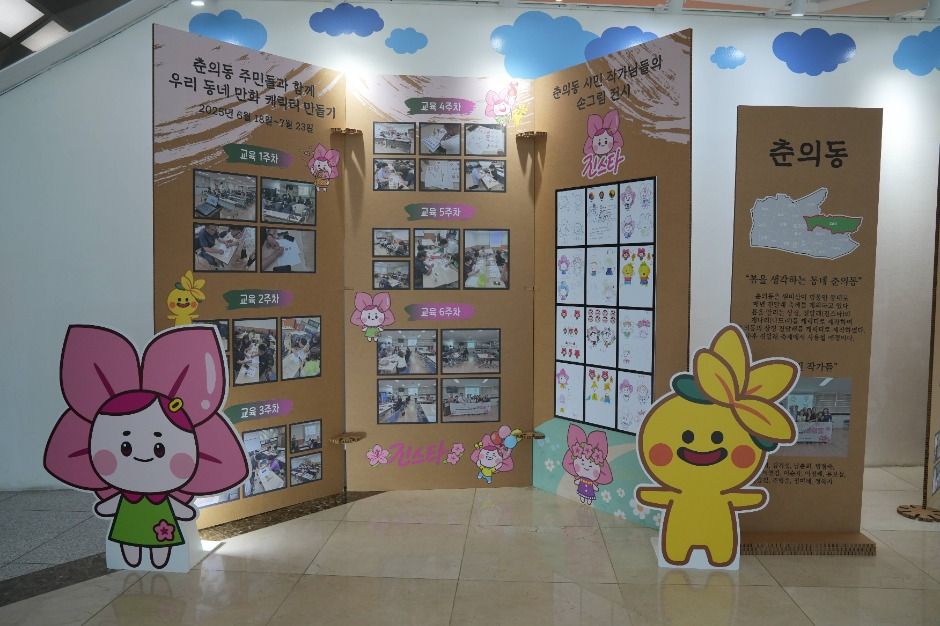
Start by choosing one timed event, then fit the open-ended material around it. The 2026 exhibition programme includes a martial-arts-comics show titled Murim, an introduction to the 2026 Bucheon Manhwa Award winners, a tenth-anniversary GICOF exhibition, student competition winners, an International Comic Artist Conference thirtieth-anniversary exhibition, a Korea–France exchange exhibition and a display of neighbourhood comic characters. Most open with the festival on September 18; several continue to October 15, and Murim is listed as continuing into 2027. Those longer dates make the exhibitions the least fragile part of the plan if a talk fills up.
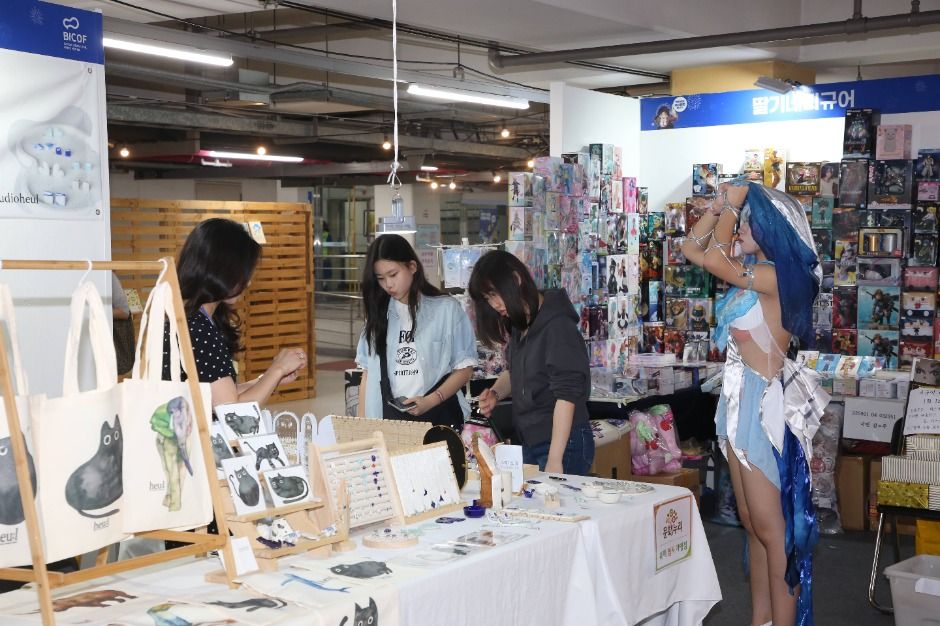
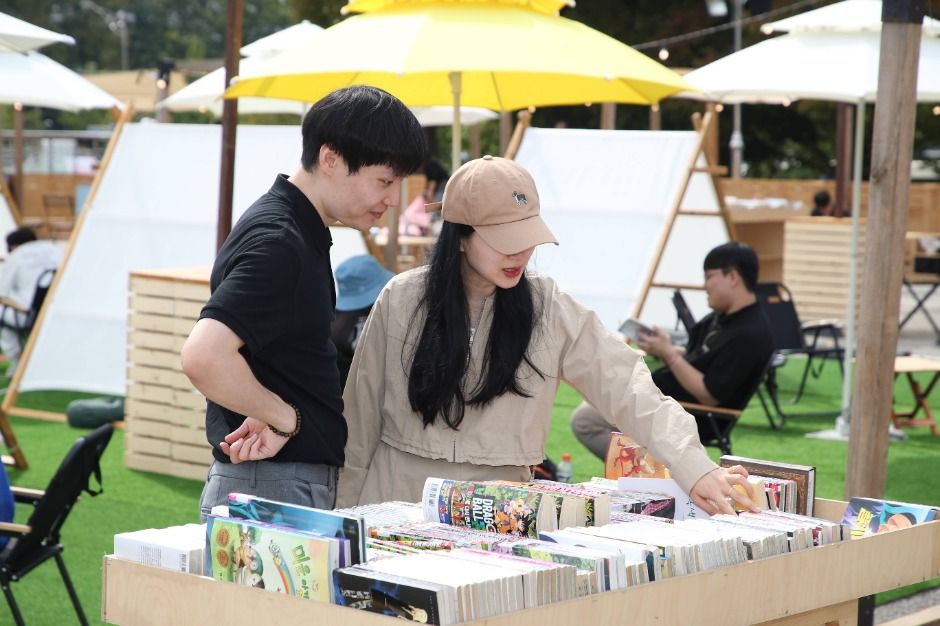
The Playground occupies the ground-level parking area of the Business Center. Its published components include a retro arcade, cosplay costume experience, comics, webtoon and character goods, cultural activities and promotional booths. The caricature programme runs only on Saturday and Sunday. Its online story-submission component has already closed, so do not arrive expecting to join that particular preselected session simply because caricature appears on the programme list.
Outside, the programme places a comics café and the food zone by Samsan Gymnasium Station Exit 5. A second reading area uses the traditional-style Dodam Dodam hanok village. Comics busking appears at the outdoor café and Mini Stage over the weekend, while the museum lobby holds a used-book exchange and a “29+1” wish wall throughout the three festival days.
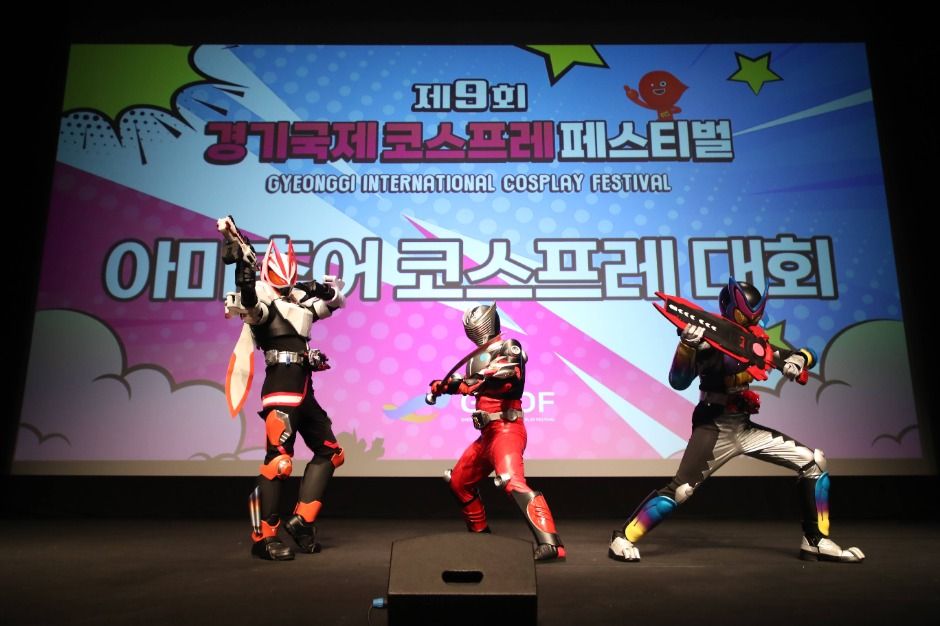
Cosplay is a separate programme strand, not just something happening informally in the queue. The GICOF Championship is scheduled for Saturday, September 19, from 15:00 to 18:00 in the museum theatre. Sunday has a photo show from 11:00 to noon, a period-exam-themed cosplay event at the hanok village from 13:00 to 15:00, and the amateur cosplay competition from 15:00 to 17:00 in the theatre. Costume one-day classes are listed for both weekend days at different locations. The organizer says the international championship involves cosplayers from 14 countries and regions.
Programme and timetable
Friday is the opening-focused day. The outdoor red carpet runs from 16:00 to 17:00, followed by the opening ceremony in the museum theatre from 17:00 to 18:00. The ceremony includes the Bucheon Manhwa Award presentation. The 2026 grand prize went to The Greatest Estate Developer; its creators appear the next afternoon for the award-winner conversation and signing.
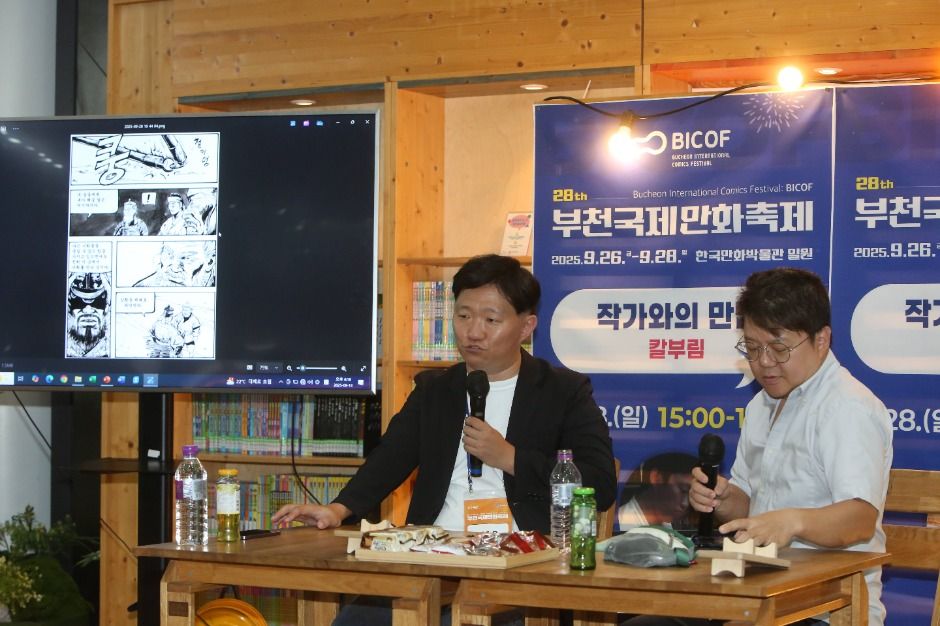
Saturday has the sharpest scheduling conflict. A webtoon-and-theatre conversation about An Old Man’s Dream runs 13:00–14:10 in Business Center room 501, followed by its signing at 14:20. The award-winner talk runs 15:00–16:30 in the same seminar room and its signing follows at 16:40. At exactly 15:00, the three-hour international cosplay championship begins in the museum theatre. You cannot properly attend both the award discussion and the championship; choose before arrival rather than trying to move between them.
Saturday also has the comics/webtoon OST contest on the Mini Stage from 14:00 to 15:30. Busking is scheduled at the outdoor comics café later in the day. The official recommended route places an evening busking set at 18:00, and the overall schedule lists outdoor performances in afternoon and evening slots. Check the live schedule page again on the day because outdoor timing is more exposed to weather and operational changes.
Sunday begins earlier for cosplay, with the GICOF photo show at 11:00. At 13:00, a Korea–France diplomatic-anniversary artist conversation and the J-Robin signing begin in different places. The Instagram-comics talk follows at 15:00 in room 501, overlapping with the amateur cosplay competition. Sunday closes at 18:00, two hours earlier than Friday and Saturday.
There is also a free pre-festival outdoor screening of the webtoon-derived animation The Letter from Yeon at Bucheon City Hall lawn on September 11 from 19:30 to 21:00. It is a separate venue and a week before the main festival, so it should not be folded into a September 18–20 museum itinerary.
Tickets, fees and booking
General admission costs 5,000 won. KTO’s festival portal and the Ministry of Culture, Sports and Tourism both publish an advance price of 3,000 won; the organizer’s ticket link goes to NOL Interpark, and its current sales notice sets September 13 as the early-bird deadline. Buy through the official festival link so that an old or similarly named listing does not get mistaken for the 2026 event.
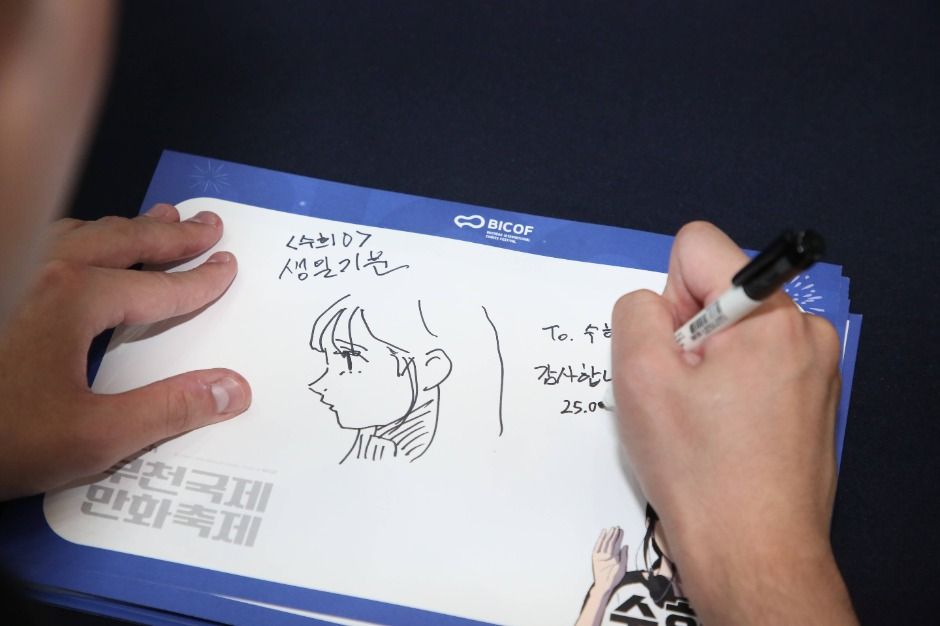
An admission ticket and a programme registration solve different problems. The organizer opened advance forms for the four seminar-room artist conversations on September 19 and 20, but its notice expressly says registration is not a guarantee of a seat or signing place. Read the individual form conditions and arrive with time to find Business Center room 501. For the J-Robin signing at the outdoor photo zone on Sunday, there is no advance form; the published arrangement is first come, first served for 30 people.
No separate fee is stated for the listed talks, exhibitions or cosplay events on the programme pages checked for this update. That does not establish that every activity inside the Playground is included, so check the booth before taking part rather than assuming the gate ticket covers all materials or purchases.
Food on site
The official map places a food zone beside Exit 5, and KTO identifies food trucks as part of the festival. The published schedule gives the zone the same practical operating window as the event: 10:00–20:00 for the two late-running days and 10:00–18:00 on Sunday. KTO’s 2026 portal currently lists individual vendors and menu prices, but temporary food operations can change; use the displayed stall menu as the final price rather than treating an online list as a promise.
Bucheon peach is a local specialty in the historical sense, not a promised festival food. Bucheon City designates peach as the city fruit and describes it as a representative crop: the city was known for peach production from the 1930s until urbanization in the 1970s. That makes it a legitimate regional reference, but there is no verified claim here that the festival food zone sells Bucheon-grown peaches or peach dishes.
Getting there without a car
From Seoul Station, take Line 1 southwest to Onsu and change to Line 7 for Samsan Gymnasium Station. The previously cross-checked station-to-station journey is about 50–60 minutes; allow roughly an hour before transfer waiting. This is ordinary metropolitan subway travel, so there is no intercity ticket to reserve.
Use Exit 5 at Samsan Gymnasium Station. Both the festival’s access page and the Korea Manhwa Museum’s own directions put the venue one minute away on foot. This unusually short last leg is the strongest reason to use rail, particularly for a timed seminar or theatre session.
If Line 7 is inconvenient, the official access page also lists buses from several rail hubs: routes 7, 53 and 87 serve the complex from Songnae-area stops; route 59-1 comes from Hwagok and passes Sinjung-dong, Bucheon City Hall and Sang-dong stations; route 79 connects from Bugae Station. Bus routes are more vulnerable to road conditions, so verify the live stop and arrival in a Korean map app rather than using this list as a timetable.
Parking and traffic
The festival tells drivers to use the Ya-insidae public parking lot and explicitly warns that parking becomes congested during the festival. Its 2026 access information does not announce a shuttle, a festival-specific parking fee or a guaranteed space. Do not transfer the museum’s normal parking arrangement to the festival weekend: the museum ordinarily describes free parking at the agency and a paid overflow lot, but the event publishes its own direction to Ya-insidae.
If driving is unavoidable, search the exact parking-lot name supplied by the organizer and leave enough time to walk from the parked car. For everyone else, Exit 5 removes the parking uncertainty completely. A re-check on September 10, with the festival eight days out, still found no road-closure plan or remote shuttle in the organizer’s published material, so this guide does not invent one.
Day trip or overnight
For a visitor based in Seoul, this is a straightforward day trip. The subway ride is about an hour, the last walk is one minute, and even the two late-running days finish at 20:00. An overnight stay would only make sense for a separate reason in western Seoul, Bucheon or Incheon, not because the festival transport requires it.
A useful visit is four to six hours. Pick one talk or cosplay block, allow time for the exhibitions, then use the Playground, market and reading areas between fixed events. A full day is justified on Saturday if both the exhibitions and evening programme matter, but the overlapping 15:00 events mean staying longer will not let you see everything.
Honest assessment
This is an easy Seoul day trip with a clear subject and unusually little last-mile friction. It is not a quiet alternative to a convention. The official parking warning, finite seminar rooms, a theatre-based cosplay championship and several first-come or condition-based sessions are enough evidence to leave slack around entrances and popular programmes without pretending to know the 2026 attendance in advance.
The best feature is the division between structured and casual activities. A reader who cares about a particular creator can plan around a talk, while a companion can use the exhibitions, retro arcade, goods area or cosplay programme. The weakness is that the strongest Saturday and Sunday events overlap, and advance registration does not necessarily secure access. Treat the schedule as a set of choices, not a checklist.
The mix of indoor galleries and outdoor market, food and reading areas gives some resilience in September weather, but rain would still reduce the value of busking, the outdoor photo zone and the station-side café. Check the official notice board and social accounts on the morning of the visit for weather changes, cancellations or capacity instructions. If you want the least complicated version, arrive near opening, see the museum exhibitions first and make one afternoon event the anchor of the day.