
Autumn · Chungcheongnam-do · Field listing
Seosan Haemi Eupseong Festival 2026
The essentials first: whether it is open, what it costs, how hard it is to reach and what to expect if you do not speak Korean.
When
Oct 9 — 11ConfirmedConfirmed dates
Where
Haemieupseong Walled Town, Haemi-myeon, SeosanChungcheongnam-do
Type
History & tradition
Admission
FREEGeneral admission to the festival grounds is free. One dining programme, the '600 Years' Table' (600년의 식탁), is a separate paid experience, and its 2026 price and booking method were not published when this guide was written. Some hands-on activities may also charge a materials fee on site.
From Seoul
About 2 h 30 m in total: ~1 h 50 m express bus to Seosan, then a ~15-20 m local bus to HaemiThere is no useful rail option to Haemi. Take an express bus from Seoul Express Bus Terminal (Central City) to Seosan — first bus around 06:00, every 20-30 minutes, roughly 1 h 50 m — then a local or intercity bus from Seosan terminal to Haemi (every 10-15 minutes, about 15-20 minutes). Seoul Nambu Terminal also runs buses to Seosan, and some direct services to Haemi.
Hours
10:00-22:00 (city's 2026 listing); opening ceremony 19:00 on October 9
Organiser
Seosan City / Seosan Cultural Foundation, 041-660-2697 or 041-681-3560
Is this one for you?
Who it suits. This suits visitors who like a historic setting used as a stage — reenactment processions, traditional performance and night lighting inside a genuine 600-year-old walled town, with plenty of hands-on activities for families. It is a weaker choice if you want one headline show at a fixed time, since the 2026 daily timetable was not published in advance, or if you are looking for a quiet heritage visit: this is a busy three-day event with a drone show, an EDM party and an invited-singer stage.
When to go. Come in the afternoon and stay after dark. Daytime is when the outdoor reenactments and family experiences run, and the fortress is easy to walk in daylight; the media-facade lighting, night media art and drone show only make sense after sunset, and the grounds run to 22:00. If a specific event such as the Black Eagles flight or the theme performance is your reason for coming, wait for the official daily schedule before fixing your day.
LOCAL WEATHER
Weather near the festival
The festival date is outside the current forecast window. Check again closer to your trip.
Korea Meteorological Administration forecast
Need something we do not list — a stall menu, a parking gate, a last bus? The Korea Travel Helpline answers in English around the clock: dial 1330 inside Korea, or +82-2-1330 from abroad.
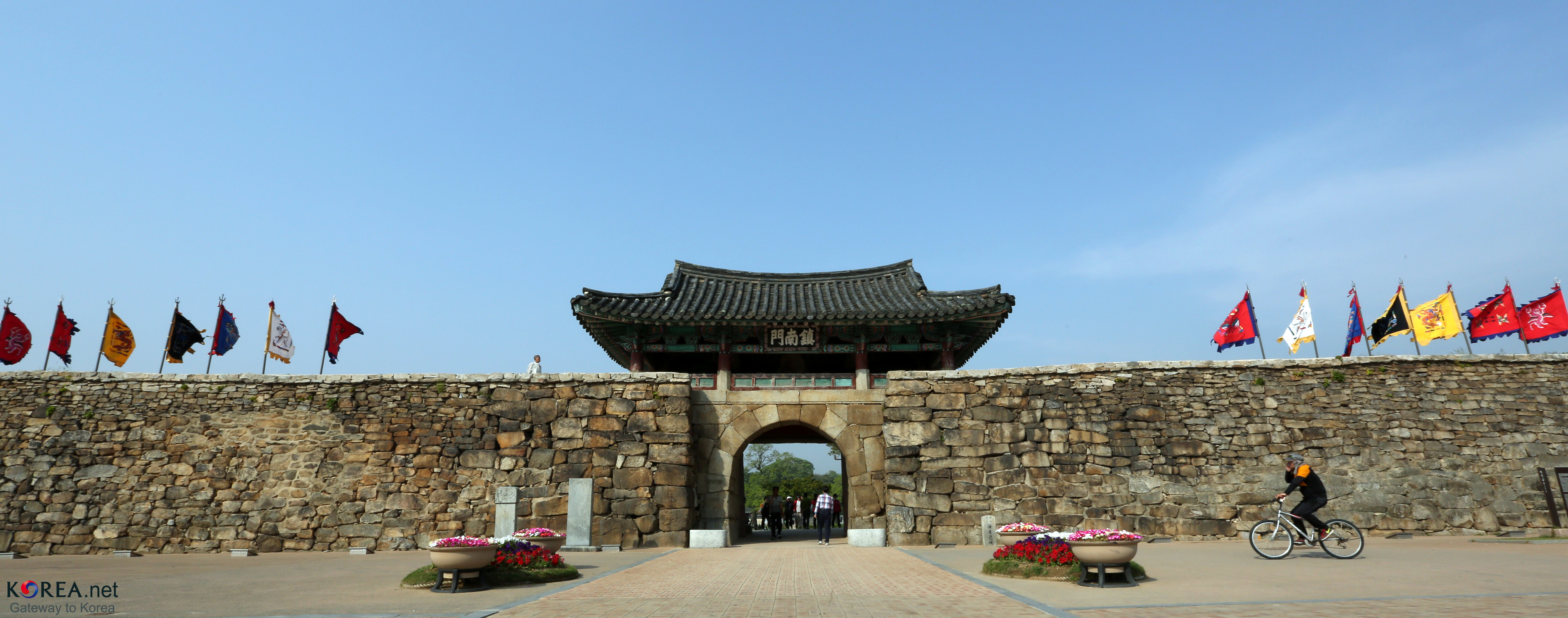
Haemieupseong is a rare thing in Korea: a Joseon-era walled town built on flat ground rather than up a hillside, with its stone circuit and its original south gate still standing in the middle of a working town. It was built in the early 1400s, designated Historic Site No. 116, and is usually grouped with Gochang and Nagan as one of the country’s best-preserved eupseong. The Seosan Haemi Eupseong Festival uses that fortress as its stage. For 2026 this is the 23rd edition, held over three days from October 9-11 under the theme HAEMI UNIVERSE: 1421, the Gate of Time Opens.
The practical basics are settled. The dates are confirmed across the Korea Tourism Organization, the festival’s own portal record and Seosan City, and local news from September 20-21 confirms an October 9 opening. General admission is free. Seosan City’s 2026 listing gives operating hours of 10:00-22:00, with the opening ceremony at 19:00 on the first day; KTO’s English page still carries 2025’s 11:00-21:00 and marks it as being updated, so the city’s later figure is used here. The site address is 143 Nammun 2-ro, in Haemi-myeon, and the organiser is Seosan City with the Seosan Cultural Foundation.
What you actually do here
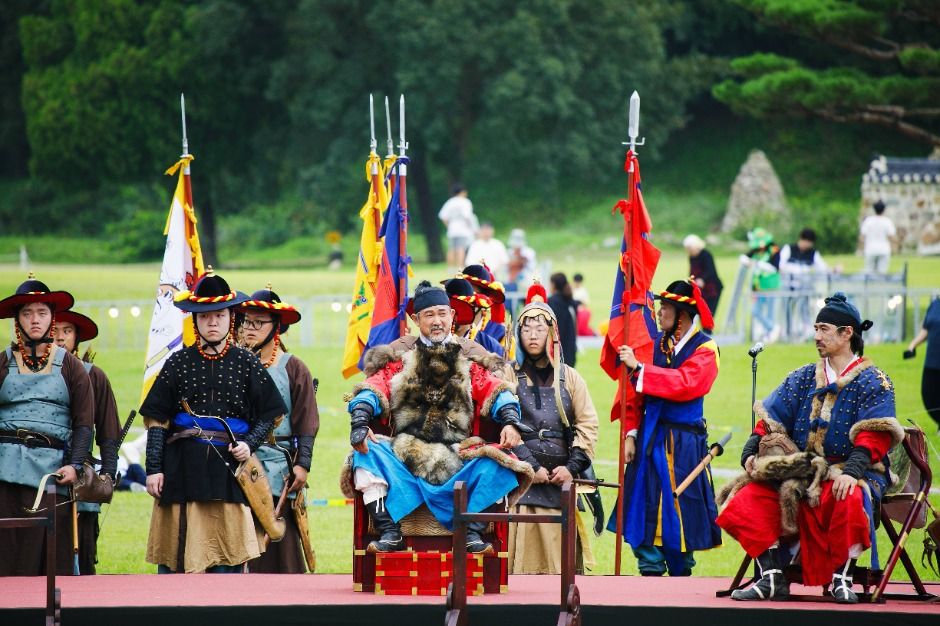
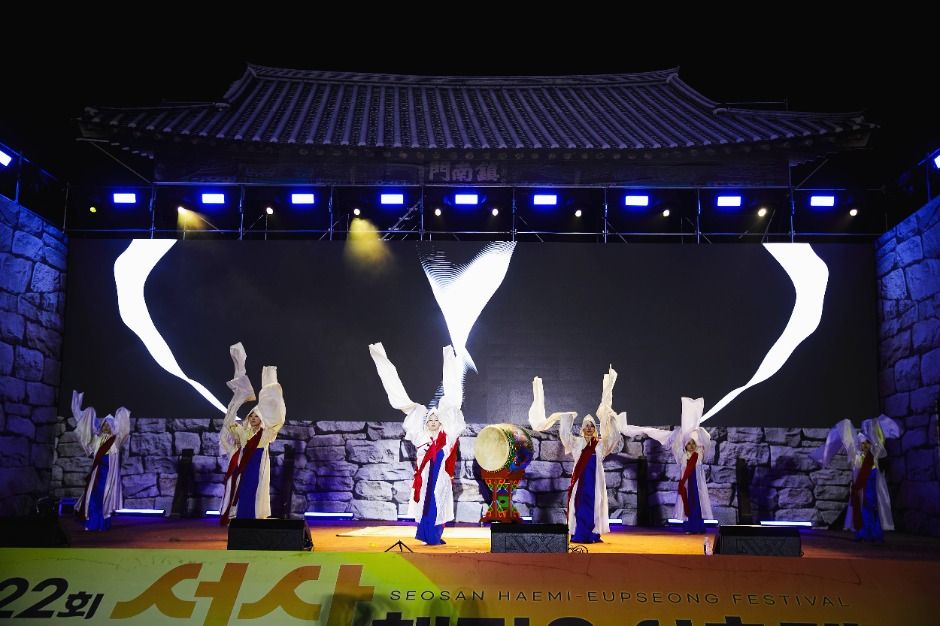
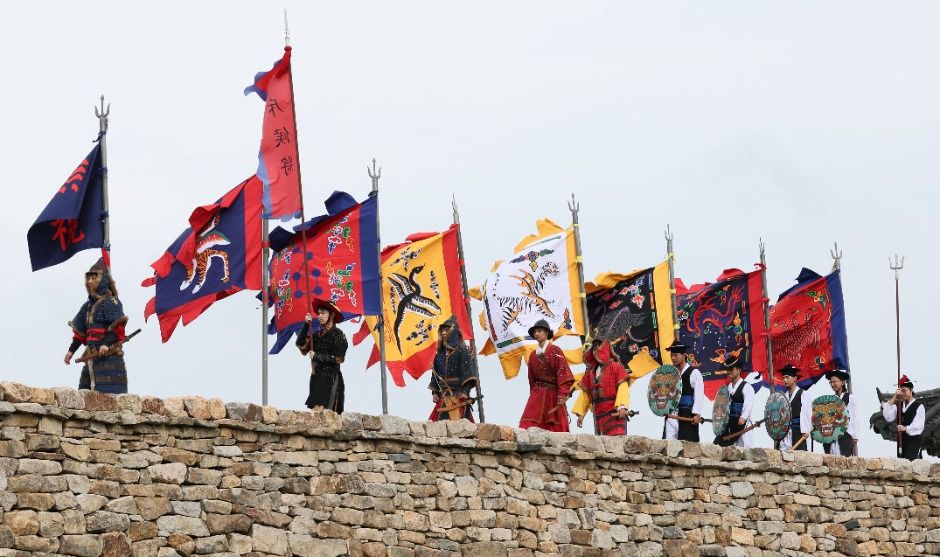
The core of the festival is watching the fortress used as a set. The 2026 programme’s main-stage strand includes a theme performance titled Become the Moon (달이 되어라), a King Taejong military-hunt procession (태종대왕 강무행렬) and a fortress-building procession, a martial-arts performance, a classical-music evening billed as Haemi The Classic, and a street strand called Haemi in K-Street. These are Joseon-costume reenactments and staged performances rather than a single continuous show, so the day rewards moving between the gate, the walls and the interior grounds instead of parking at one stage.
The participatory side is genuinely large, which makes this an easy festival to bring children to. The organiser lists a role-play trail called RPG Haemi Return, a mock military-service examination, traditional-costume fitting, calligraphy, horse riding, traditional archery (gukgung), kite flying, craft workshops and a children’s play zone and flea market. You do not need Korean to take part in most of these, though you should expect a modest materials fee at some booths. Because the fortress interior is open lawn and low buildings, it is comfortable to walk with a stroller in daylight.
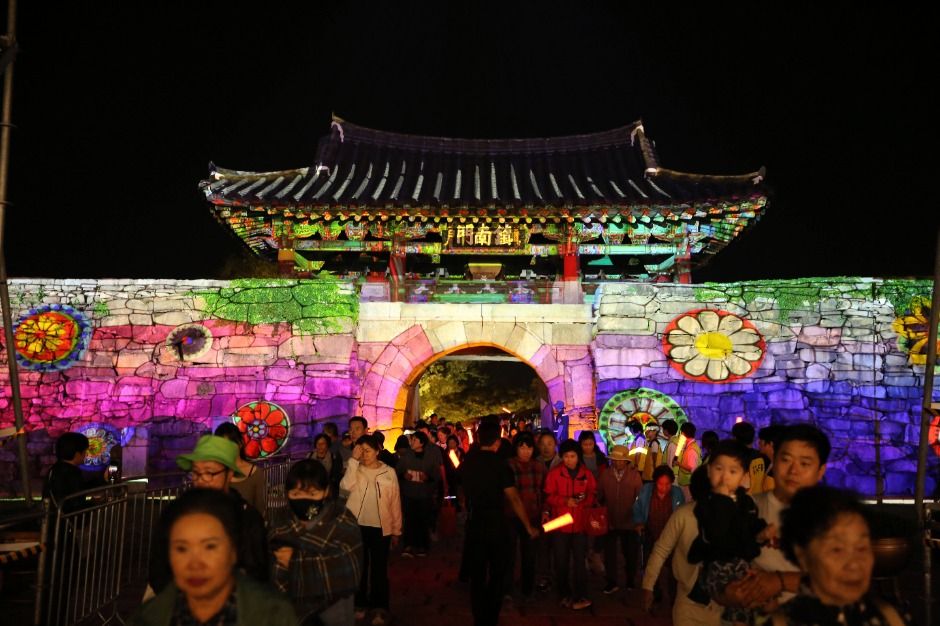
After dark the same walls become the attraction. The night strand lists a media facade projected onto the stonework, night media art and landscape lighting through the grounds, plus a Haemi AI Film Festival and a master-carpenter exhibition. This is why the timing advice below matters: the reenactments and family activities are daytime events, and the lighting only works once the sky is dark.
Programme highlights and timetable
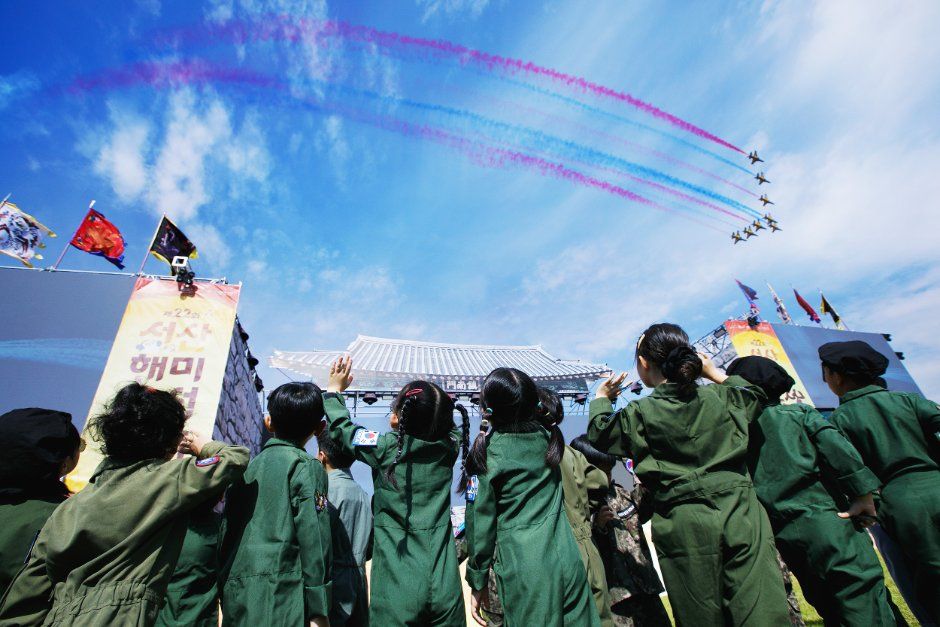
Several headline events are named for 2026 but not yet timed. The programme confirms a drone lighting show, a congratulatory flypast by the Air Force’s Black Eagles aerobatic team, the theme performance, and evening reenactments such as a guard-changing ceremony (파수군 교대의식) and a traditional-wedding recreation. What was missing when this guide was written is the date-and-time grid: the festival runs 10:00-22:00 across all three days, but that is the operating window, not proof that any one act repeats daily.
That gap is the single most important planning point. If you are travelling specifically for the drone show, the Black Eagles flight or a named performance, the safe move is to wait for the official daily schedule on the festival site rather than assuming a slot. KTO’s own record still mixes 2025 material into the 2026 shell and flags it as being updated, so old times found through a search engine are not reliable for this year.
The festival also carries an outside credential worth knowing: the Ministry of Culture, Sports and Tourism selected it for its Local 100 list of notable Korean local attractions in 2023. That does not fix a timetable, but it is a firmer signal of the event’s standing than a promotional adjective.
Getting there without a car
Haemi is a bus trip, not a train trip, and it is honest to say so up front. There is no useful rail connection to Haemi itself. From Seoul, take an express bus from Seoul Express Bus Terminal (Central City) to Seosan: the first bus runs around 06:00, services leave every 20-30 minutes, and the ride is roughly 1 hour 50 minutes. Seoul Nambu Terminal also runs buses to Seosan on a similar timing, and some Nambu services run direct to Haemi.
From Seosan’s bus terminal, local and intercity buses to Haemi leave every 10-15 minutes and take about 15-20 minutes. Haemieupseong is in the centre of Haemi town, a short walk from the Haemi stop, so once you reach Haemi the fortress is easy to find. Set the destination in a Korean map app to the fortress or the festival address rather than just “Seosan”, because the terminal and the fortress are two separate legs.
Driving is possible but comes with the usual festival caveat. The fortress sits inside a small town centre, so parking is limited, and the 2026 parking map, any road closures and a shuttle plan had not been published when this guide was written. Check the official site’s transport notice shortly before you travel rather than relying on last year’s arrangement.
Food on site and nearby
The festival’s own food billing centres on the 600 Years’ Table (600년의 식탁), a themed dining programme that is the one clearly paid element of the event. Its 2026 price, menu and booking method were not published in a form reliable enough to quote here, so treat it as a paid experience to check on the official site rather than a fixed cost. Beyond that, expect general food stalls; KTO’s food description was still 2025 material being updated, so this guide does not name a 2026 vendor, dish or price.
For a documented local meal away from temporary stalls, Seosan has two well-attested specialties. Ganwoldo salted oysters (간월도 어리굴젓) are spicy salted oysters from Ganwol Island in the city, listed by Seosan City and recorded historically as a court tribute food. Seosan six-clove garlic (서산 육쪽마늘) is firm, purple-streaked and reliably forms six cloves per bulb; in March 2005 it became the first Korean farm product to register a geographical-indication collective mark. Both are regional-specialty recommendations, not claims that a festival stall will serve them.
Day trip or overnight
A Seoul day trip works reasonably well here, better than for many festivals of this size, because the total journey is about two and a half hours each way rather than a long rail haul. If your interest is the daytime reenactments, the family activities and an early-evening look at the lit walls, you can arrive by late morning and be back in Seoul the same night. Confirm the last Seosan-to-Seoul express departure before you commit, since evening buses thin out earlier than trains.
An overnight makes more sense if the after-dark programme is the point. The media facade, night media art and drone show all depend on darkness, and the grounds run to 22:00, which leaves little margin for a same-night bus back to Seoul after a headline evening event. Staying in or near Haemi also opens up the wider area — the fortress is a short distance from the Ganwoldo tidal-flat coast and Gaesimsa temple — though this guide does not recommend a specific hotel because none was independently verified.
Honest assessment
The strength of this festival is its setting. A genuine 600-year-old walled town, with an original gate and a continuous stone circuit, gives the reenactments and the night lighting a backdrop that a purpose-built festival ground cannot fake. The mix is broad: costume processions and traditional performance for people who want history, a drone show and an EDM party for people who want spectacle, and a deep bench of hands-on activities for families. Free admission makes it easy to treat as a low-commitment day out.
The setting also carries a heavier history that is worth knowing before you go. Haemieupseong was a site of mass executions of Korean Catholics during the 1866 persecution, commemorated at the nearby Yeosutgol Holy Ground. It does not intrude on the festival, but it is part of what these walls are, and some visitors will want to make time for it.
The real weakness is planning information rather than the event itself. The most-searched questions — the singer line-up, the drone-show and Black Eagles times, parking and shuttles — were exactly the details still unpublished for 2026 when this guide was written. Use the confirmed frame now (the October 9-11 dates, free entry, 10:00-22:00 hours and the bus route through Seosan), and retrieve the official daily schedule and transport notice before you fix a tightly timed plan.
Local specialties to try
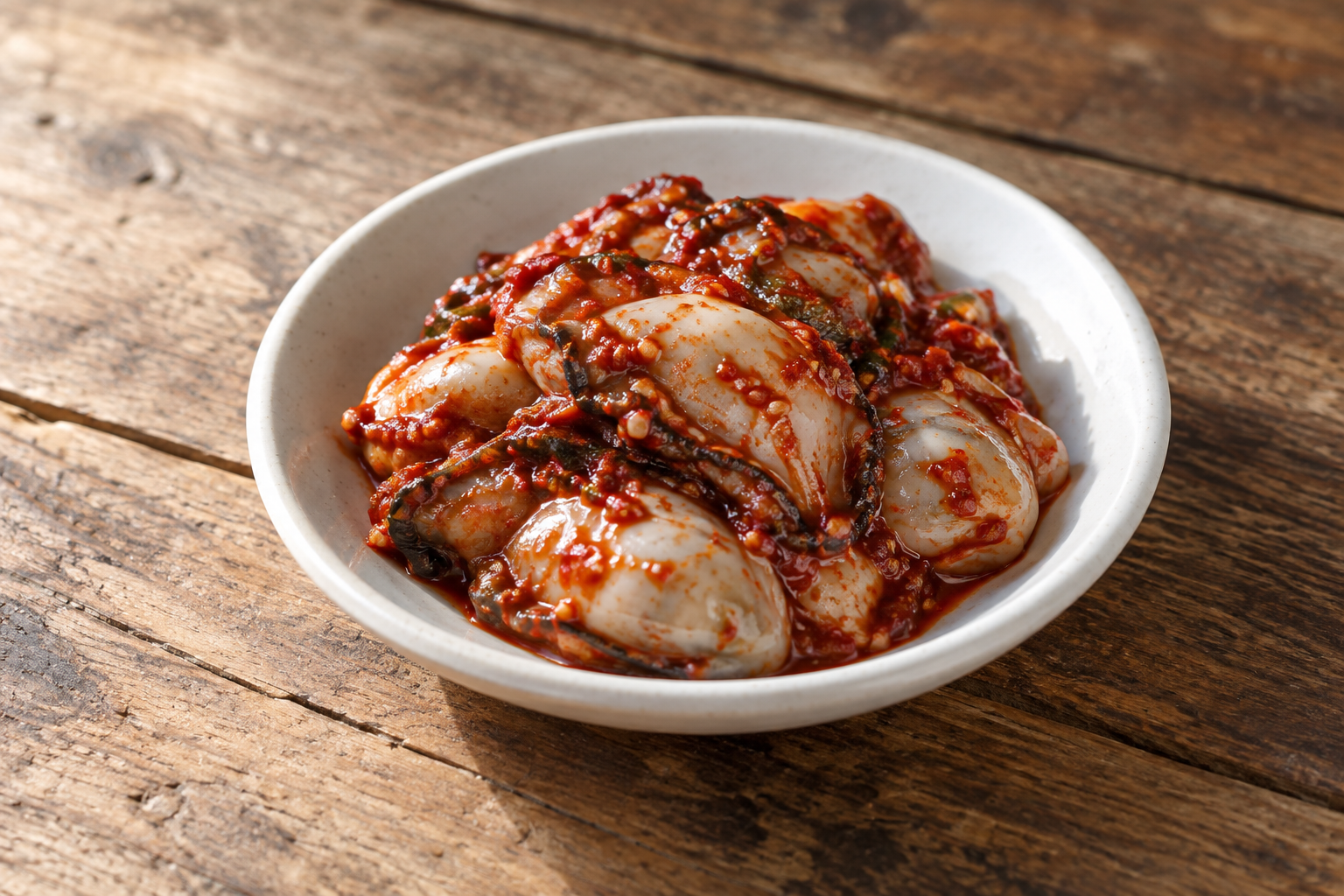
Ganwoldo salted oysters (eoriguljeot) (간월도 어리굴젓)
Spicy salted oysters from Ganwol Island in Seosan, seasoned with chili powder. Seosan City lists it as a local specialty, and it appears in Korean records as a tribute food sent to the Joseon court. This is a Seosan regional dish, not a promise about what festival stalls will sell.
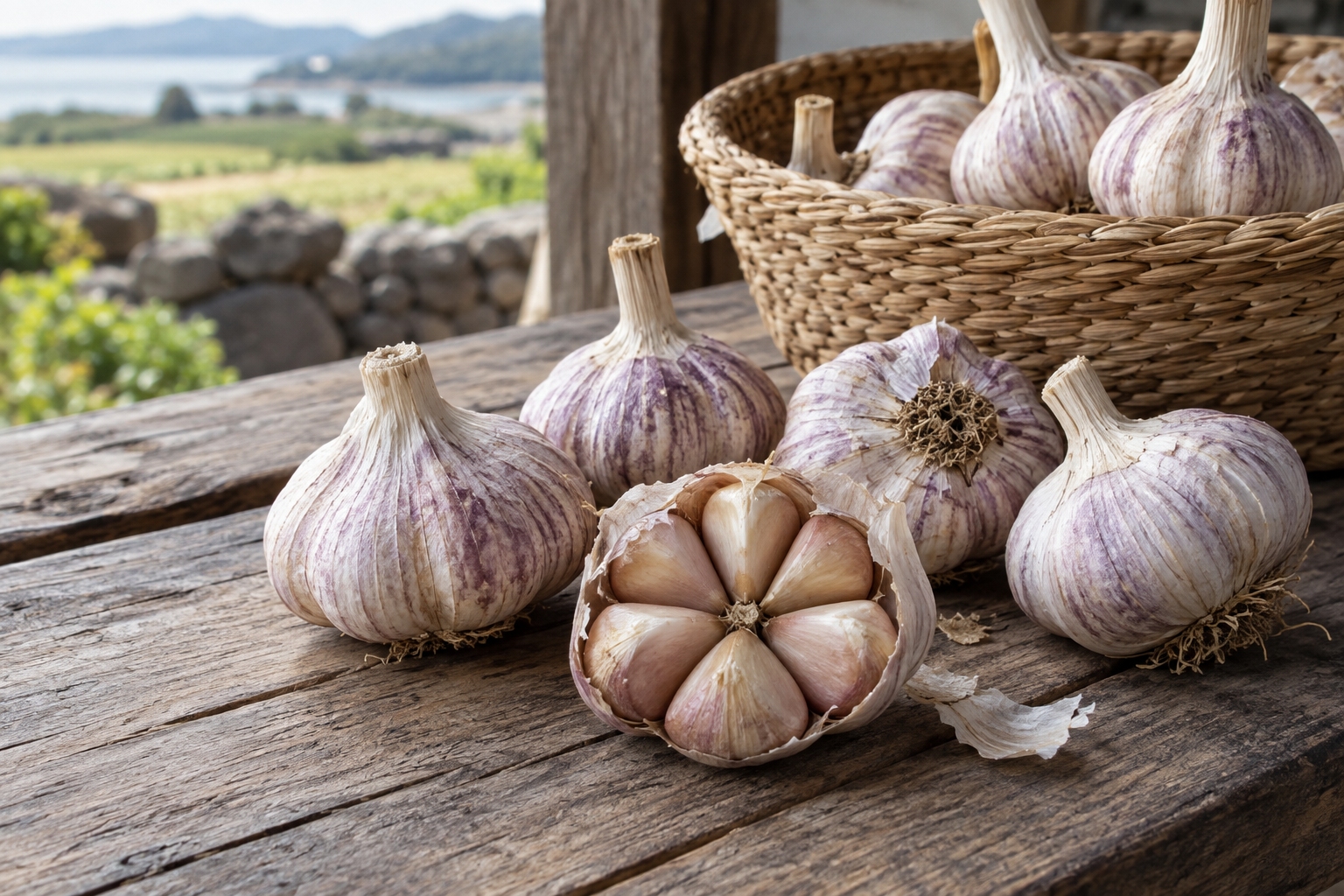
Seosan six-clove garlic (서산 육쪽마늘)
A firm, purple-streaked garlic that reliably forms six cloves per bulb. In March 2005 it became the first Korean farm product to register a geographical-indication collective mark, and Seosan City lists it among the city's representative specialties. It is a regional produce recommendation, not a festival stall listing.
Questions worth asking
Is the Seosan Haemi Eupseong Festival free?
General admission to the festival grounds is free. One dining programme, the '600 Years' Table', is a separate paid experience, and a reliable 2026 price for it had not been published when this guide was written. Some hands-on activities may charge a small materials fee on site.
What are the 2026 dates and opening hours?
The 23rd festival runs Friday to Sunday, October 9-11, 2026. Seosan City's 2026 listing gives operating hours of 10:00-22:00, and the opening ceremony is at 19:00 on October 9. The Korea Tourism Organization's older English page still shows 2025's 11:00-21:00 and notes it is being updated, so treat the evening as the safer end time and check the official site before travelling.
How do I get to Haemi from Seoul without a car?
There is no practical train to Haemi. Take an express bus from Seoul Express Bus Terminal (Central City) to Seosan — about 1 hour 50 minutes, running every 20-30 minutes from around 06:00 — then a local or intercity bus from Seosan terminal to Haemi, roughly 15-20 minutes with departures every 10-15 minutes. Seoul Nambu Terminal also serves Seosan and runs some direct buses to Haemi.
Is there a drone show and a Black Eagles flight?
Both are listed in the 2026 programme, along with a media facade on the walls, night media art, a theme performance and reenactment processions. These are scheduled events rather than continuous attractions, and the exact 2026 times had not been published when this guide was written. Wait for the official daily schedule if one specific event is your reason for coming.
Where do I park, and is there a festival shuttle?
Haemieupseong sits in the centre of Haemi town, so parking is limited and a 2026 parking map, road-closure notice and shuttle plan had not been published when this guide was written. If you drive, check the official site's transport notice shortly before travel rather than navigating straight to the fortress gate.
Which singers are performing in 2026?
The programme lists invited-singer and local-singer stages plus an EDM party, but no performer names had been confirmed by the organiser when this guide was written. This guide does not repeat unconfirmed line-up rumours; check the official site's notice board for the announced list.
Before you goFestival Etiquette in Korea: What Visitors Get WrongBooking KTX Trains and Intercity Buses as a Foreign VisitorGetting Out of Incheon Airport and On to a FestivalKorean Festivals With Children: Toilets, Strollers and TimingStaying Online in Korea: SIM, eSIM and the Apps That MatterEating at a Korean Festival Without Speaking KoreanRain, Typhoons and Cancelled Festivals: How to Plan Around ThemHow to Pay for Things in KoreaT-money and Transit Cards in KoreaWhat to Wear to a Korean Festival, Season by Season
LAST UPDATED · Sep 25, 2026