Yeoju’s autumn festival is built on a piece of local history: in the Joseon period the county’s rice and sweet potatoes were shipped from the Jopo river landing to the royal court in Hanyang as tribute, and the festival re-stages that story with a parade, big communal cooking and a lot of food stalls. In 2026 it runs October 23-25, Friday to Sunday, at the Silleuksa national tourist site in Cheonsong-dong, next to the Namhan River.
KTO lists entry as free and the hours as 10:00-21:00. Newer this year is a push to keep people there after dark with three evening programmes. Their times had not been released when this was written, so the listed closing hour and the evening shows may not line up; check before you plan around them.
What you actually do here
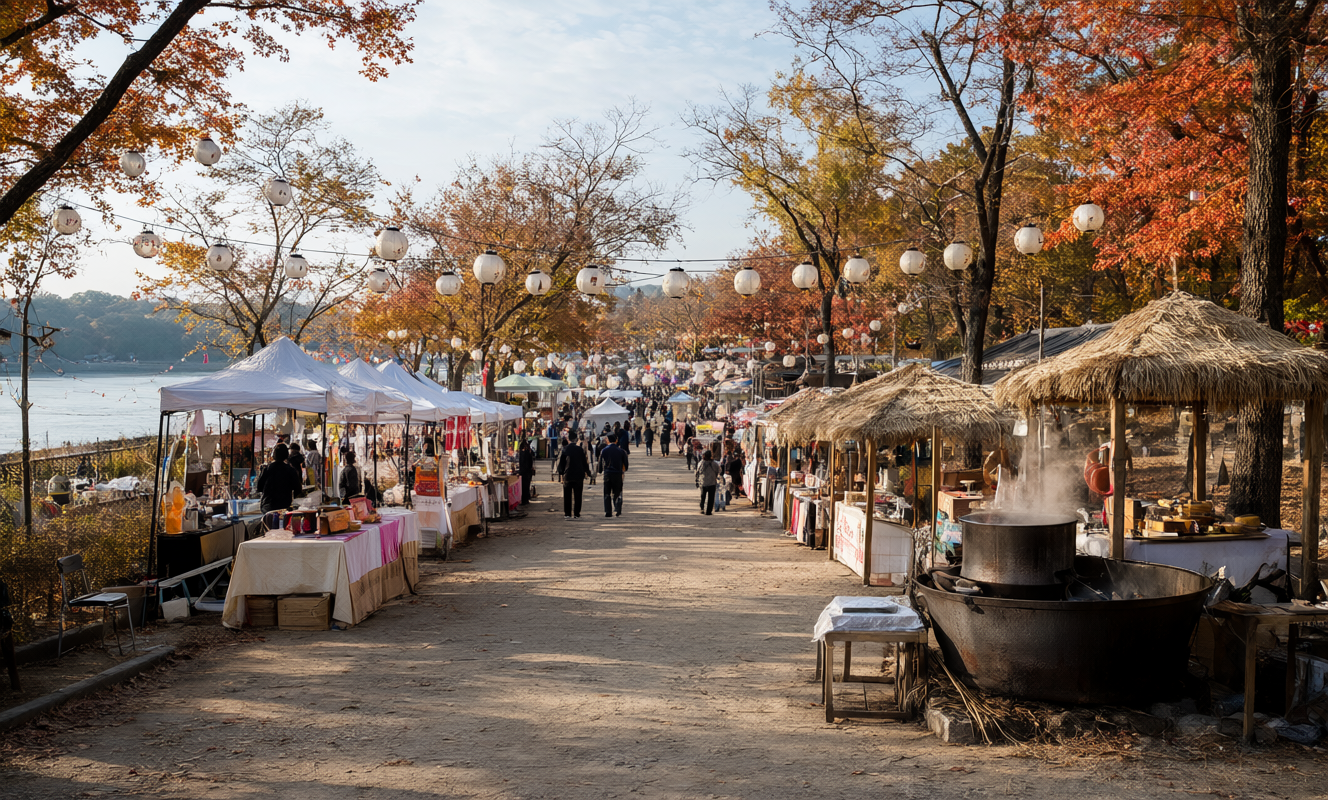
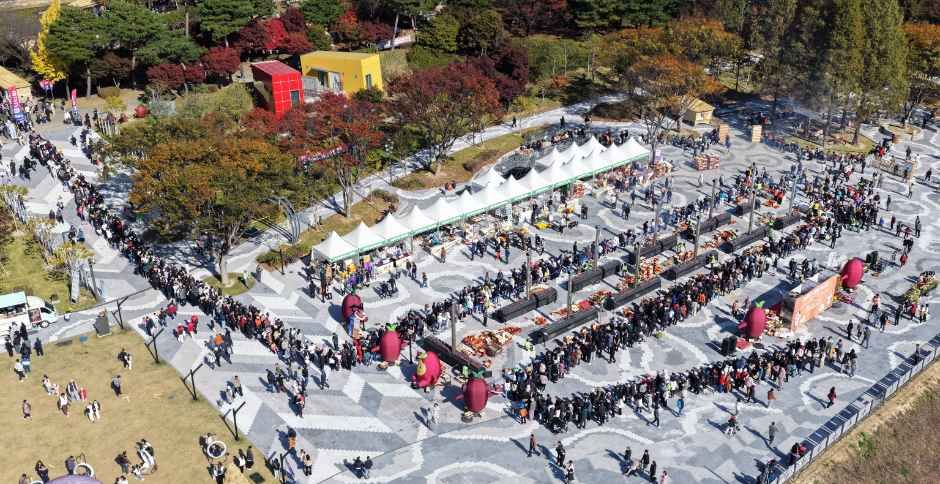
The festival is organised into three zones. The Ogok Madang is the market end, with a grain-and-produce market, a Yeoju rice promotion hall, traditional play areas with straw and rope games, and farm-experience activities. The Naru Madang is the riverside area, with the roasted sweet potato event, a barbecue-skewer experience, a performance stage, the wish paper path and, after dark, the fire performances. The Janchi Madang is the eating zone, with the cauldron bibimbap, a food market, a tasting competition for home-brewed liquor and rice-cake pounding.
Much of it is hands-on: you eat, pound rice cake, play traditional games and walk the riverside. It is more a day of grazing and wandering than watching one show, and the setting around Silleuksa, a temple on the Namhan River about three kilometres east of central Yeoju, is a reason to arrive earlier than you need to.
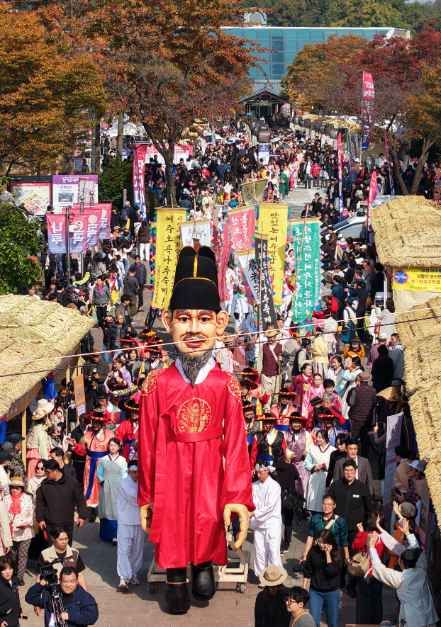
Programme and timetable
KTO names six signature items:
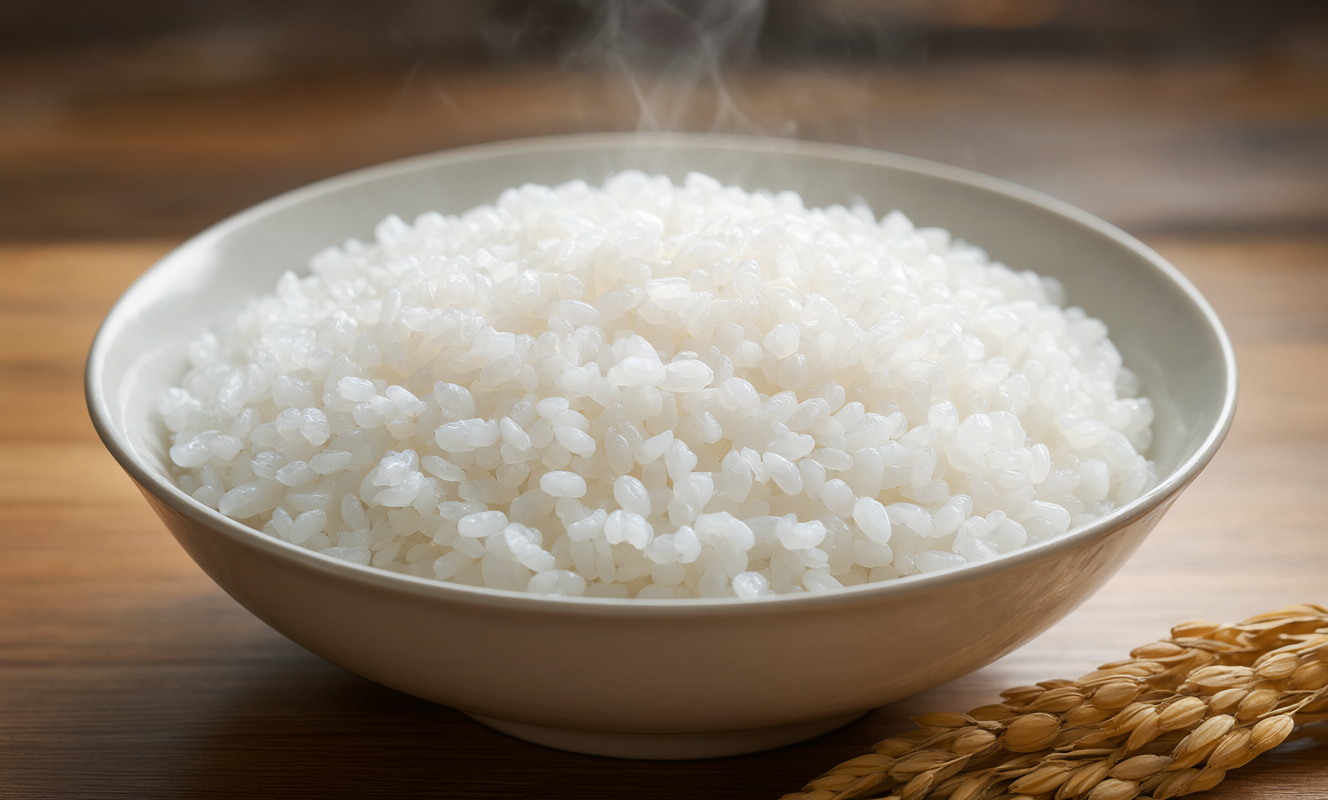
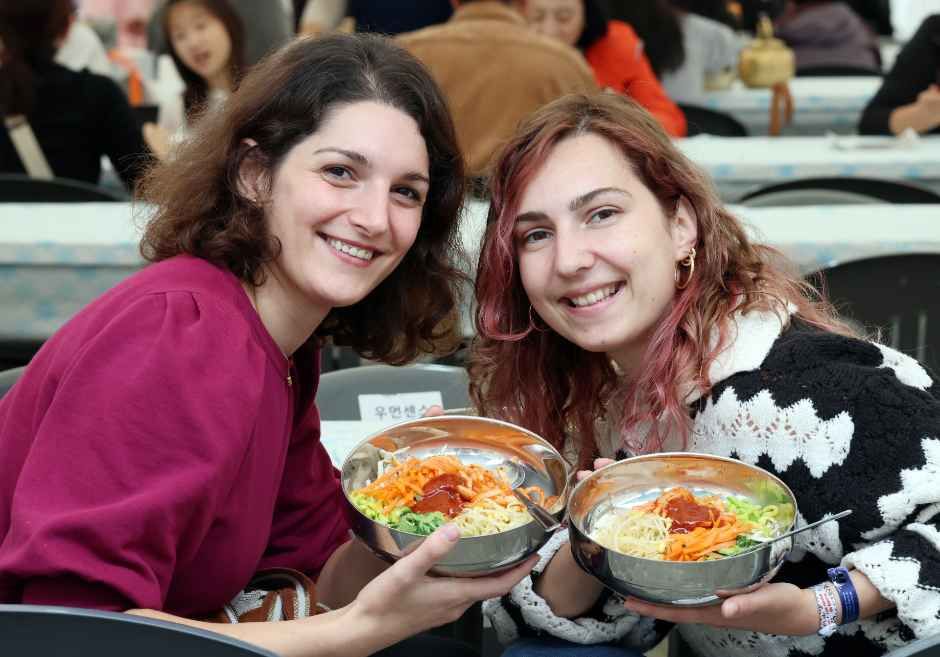
- Cauldron Yeoju rice bibimbap: freshly harvested Yeoju rice cooked in large cauldrons and sold cheaply.
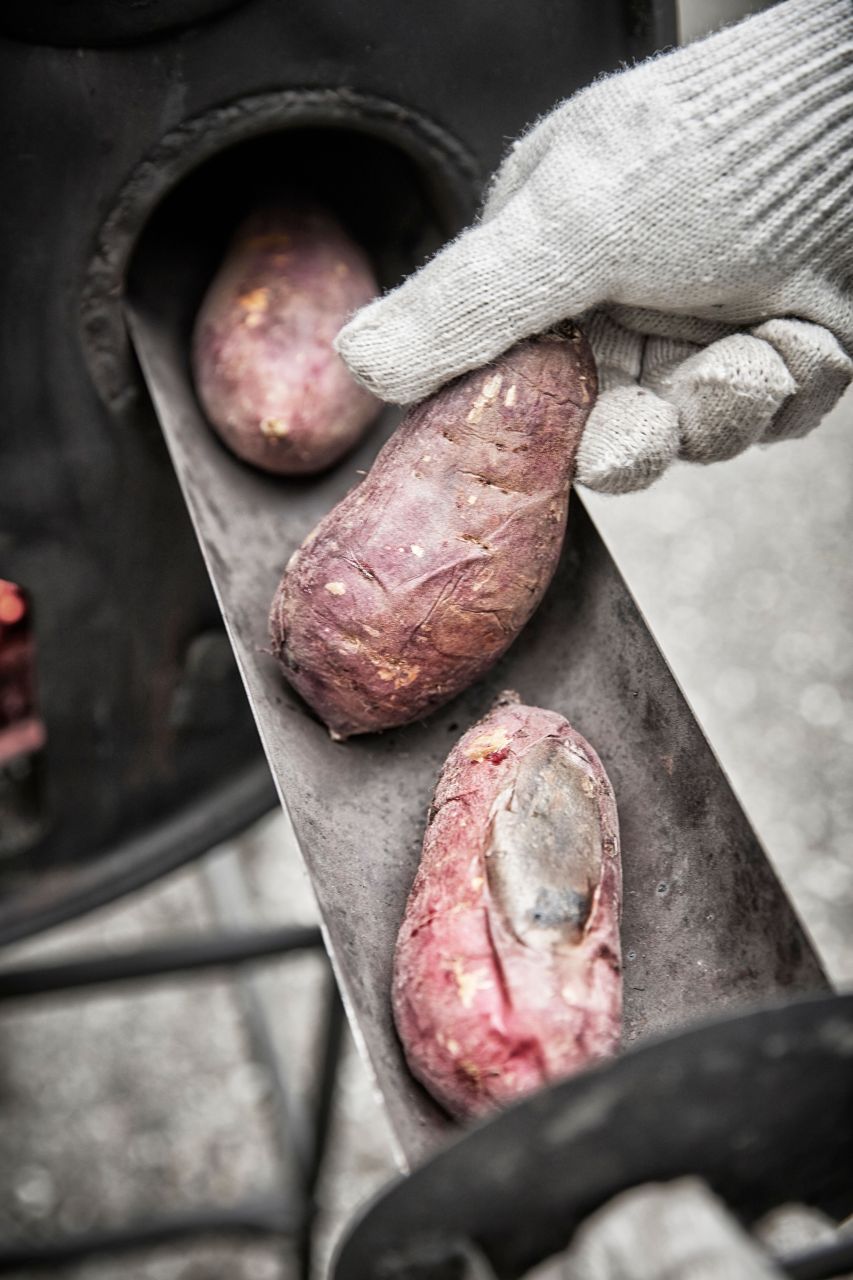
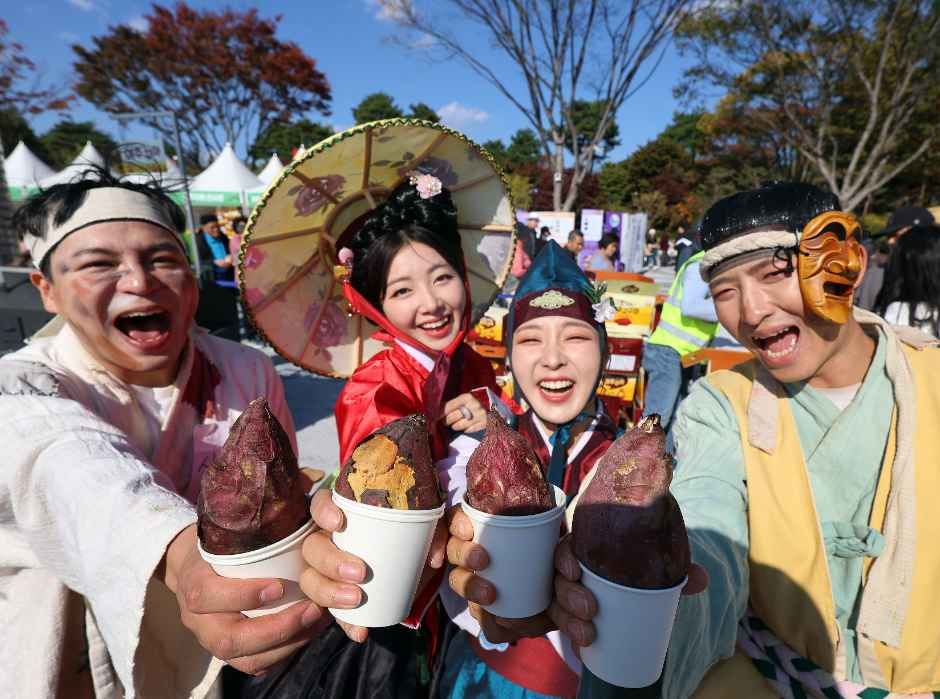
- Roasted sweet potato Guinness: a mass event in which sweet potatoes are roasted in oversized roasters and shared free.
- Tribute parade: a parade re-enacting the Joseon shipment of Yeoju produce to the capital.
- Wish paper path (Sowonji-gil): a trail along the river based on the legend that wishes made while looking at the Namhan come true.
- Heunam-ri twin-dragon tug-of-war: a rope-pulling procession by villagers from Heunam-ri, in Jeomdong-myeon, traditionally held on the first full moon of the lunar year to pray for a good harvest.
- Bondu-ri Nakhwanori: a traditional fire display from Bondu-ri in Ganam-eup, in which sparks fall onto the river.
No source I could read gave a time for the parade, the sweet potato event or the tug-of-war. Treat the day-by-day timetable as unpublished and look for it on the official site.
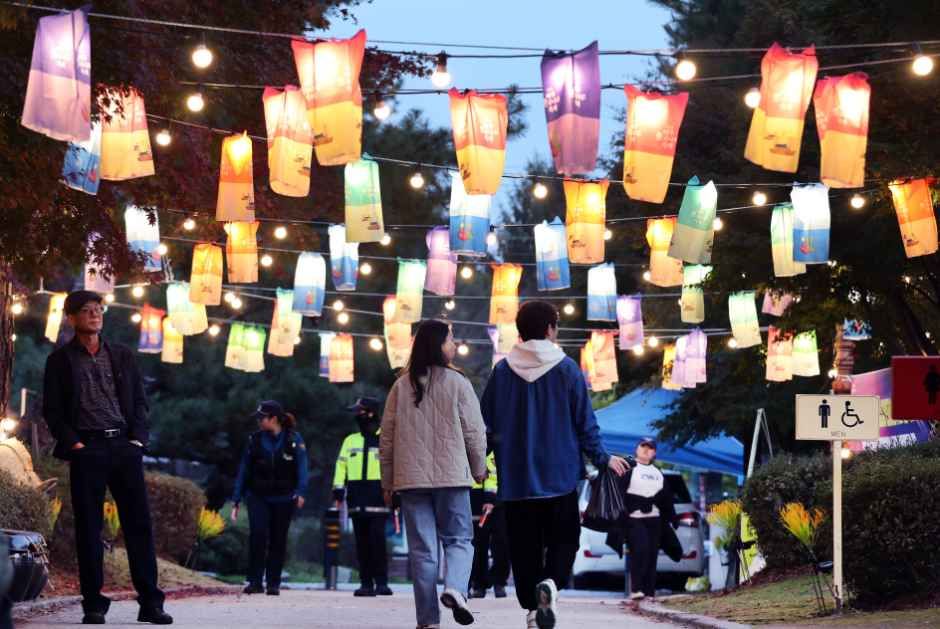
After dark: the new evening programmes
This is what is different about 2026, and it is the part most likely to be uncertain, since it is new.
Naru Nanjang is a new space modelled on a Joseon-era river-landing market. By day it offers platforms and tavern-style stalls for eating and resting, and visitors in hanbok or traditional commoner dress are part of the idea. At night it turns into a place to listen to music. Reports name one featured act per night: the group Lula on Friday the 23rd, Pengsoo and Kim Seong-su on Saturday the 24th, and Ssaibeogeo on Sunday the 25th. Pengsoo and Kim Seong-su are described as Yeoju city ambassadors.
The night performances change each evening. The first night, October 23, is a twin-dragon rope-pulling fire performance, with traditional music and b-boy dance mixed in. On October 24 it is a Joseon-style tightrope performance with falling-spark fire. On October 25 there is a multimedia performance based on a Joseon love story called “Yeonbun,” a fire show, and the closing events.
Yeogang Goetdam: A Night in Joseon is an experience-based programme in which visitors walk through four stories drawn from Yeoju and the river and complete missions along the way. Reports say it mixes local folklore with story elements created for this year. How you join, what it costs and how long it runs were not stated anywhere I could find, so do not assume it is free or that you can just walk up.
Food on site and nearby
The programme is rice and sweet potato at heart. Be aware that KTO’s own listing warns that its food details are from the 2025 festival and are being updated for 2026, so any menu or price you have seen online may be last year’s. What can be said is that the cauldron bibimbap is advertised as cheap and the roasted sweet potato event as free, both according to KTO’s description; neither price was confirmed for 2026.
Yeoju is known beyond the festival for the same two crops. It supplied rice to the royal court in the Joseon period and now sells it as ‘Daewangnim-pyo Yeoju Rice’, and more than half of Gyeonggi’s sweet potatoes come from the city, according to a 2022 Kyeongin report. If the stalls are crowded, you will find both in Yeoju’s restaurants and shops, but this guide does not name any specific business.
Tickets, fees and booking
There is no general admission fee. Where money does change hands, the festival is organised around small purchases rather than one ticket: meals, drinks, market goods and any paid hands-on activities. No 2026 price list has been published, and no source I could read mentions advance booking for general entry.
The one programme that may involve a sign-up is Yeogang Goetdam, because it is a mission-based walk-through. The reports do not say, so ask the organiser at 031-881-9693 before counting on it.
Getting there without a car
The railway is the easy way in. The Gyeonggang Line runs from Pangyo to Yeoju in about 48 minutes, and Pangyo connects to Gangnam on the Shinbundang Line, which puts the whole trip from Gangnam at roughly 1 h 15 m by a route-planner estimate. Yeoju Station is the line’s southern terminus. From there, local buses reach the Silleuksa tourist site in about 10 minutes. Several routes serve the temple area, and sources disagree on the numbers, so check a live Korean map app on the day and search for Silleuksa (spelled Sinreuksa on some maps) as your destination.
The intercity bus runs from Seoul Express Bus Terminal to Yeoju Terminal. A timetable summary gives about an hour off-peak and 1.5-2 hours in congestion on the Yeongdong Expressway, with the first bus around 06:30 and the last around 22:00. Treat those as indicative and check the live schedule, particularly on a festival weekend.
Parking, shuttles and traffic control
None of this had been published for 2026 when I checked. I found no parking map, no road-closure notice and no shuttle timetable. I can’t give you a verified 2026 plan, so I won’t invent one. The practical advice is to use the subway and bus, and to read the organiser’s notice just before you leave if you are driving.
Day trip or overnight
From Seoul this is a straightforward day trip by subway. The question is the evening: the new night programmes are the reason to stay late, and their end times were not published. The last intercity bus to Seoul is listed at about 22:00, but verify before relying on it. If you intend to see the Sunday closing show, plan your return in advance, and since I have not checked accommodation, no hotel is recommended here.
Honest assessment
The best argument for going is how close it is to Seoul by subway, the free entry and a theme that is concrete: rice, sweet potatoes, a river and a riverside temple. The tribute parade, the communal cooking and the wish path are described with enough detail to make a good day out.
The weak point is information. No timetable, no price list, no parking or shuttle plan and no times for the new evening programmes were available, and the food listing is last year’s. Several of the evening features are brand new, so there is no track record to judge them by. Go for the daytime market, food and walk first, and treat the night shows as a possible bonus until the organiser publishes the times.