Eumseong is an inland farming county in Chungcheongbuk-do, and the Myeongjak Festival (음성명작페스티벌) is its showcase for that farming. “Myeongjak” means something like “masterpiece,” and the premise is straightforward: bring the county’s premium crops to one park, sell them directly to the public, and hang a run of free evening concerts on the event to draw a crowd. It is a young festival — it started in 2022 — and it is deliberately local rather than a national headline event.
For 2026, the confirmed dates are September 17-20, a Thursday-to-Sunday run, at Geumbit Neighborhood Park in Geumwang-eup. Eumseong County’s own English tourism site uses the name “Eumseong Myeongjak Festival,” and the dates and venue are consistent across the county pages, the Korea Tourism Organization festival portal and 2026 news coverage. General admission is free. The organiser’s stated theme for the year translates loosely as “flavour that holds time — an Eumseong masterpiece beyond imagination,” which tells you where the emphasis sits: food and produce first, spectacle second.
What you actually do here
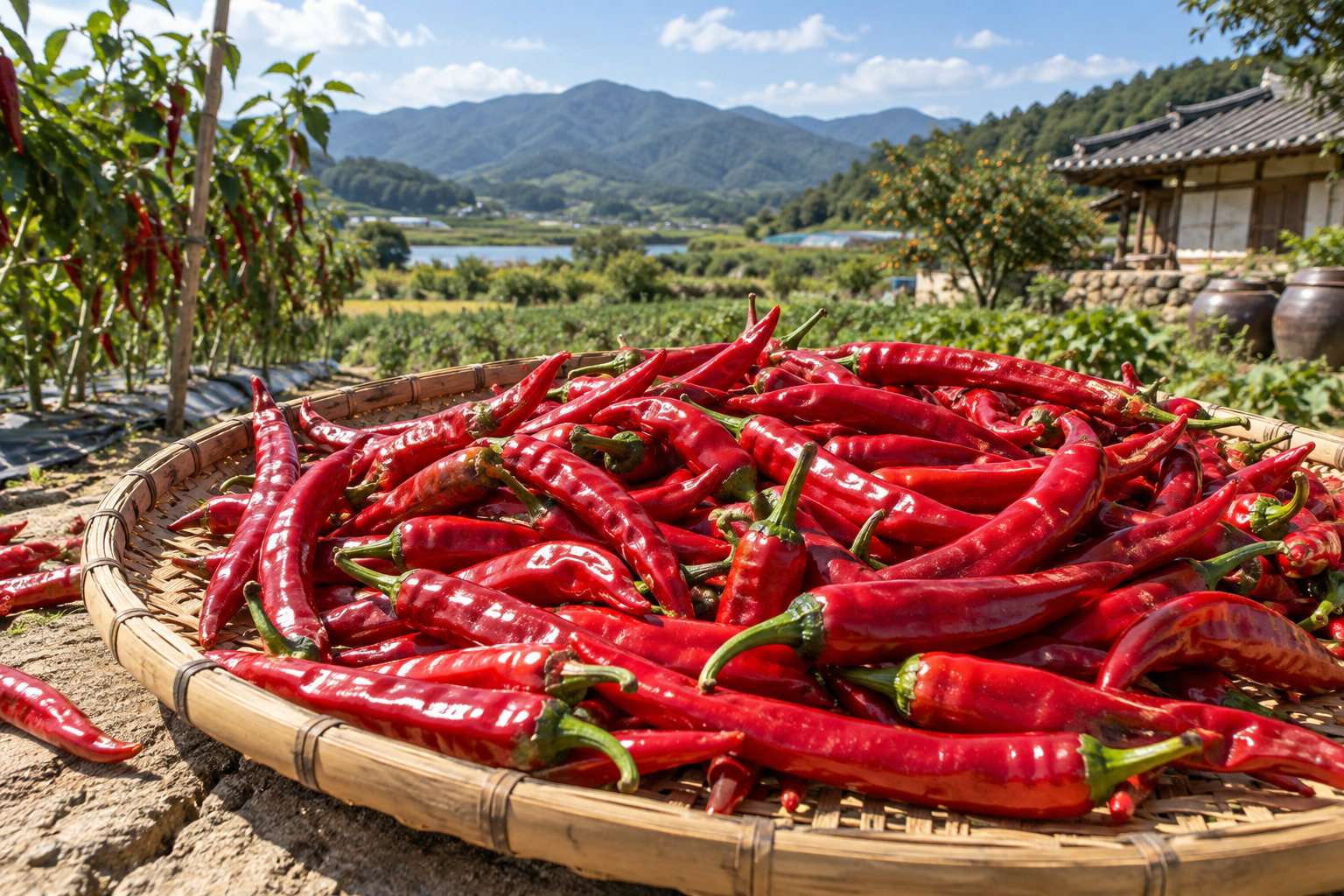
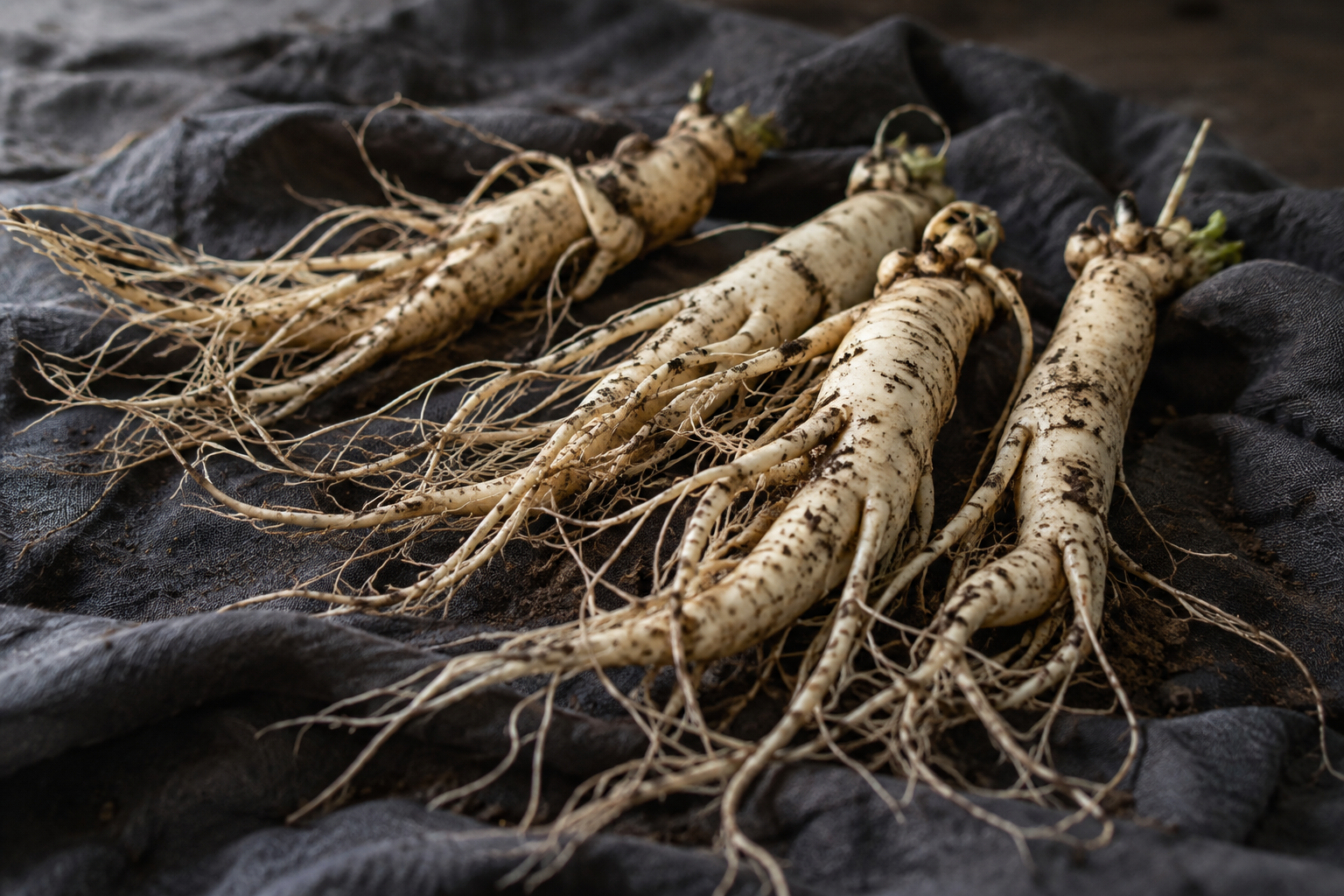
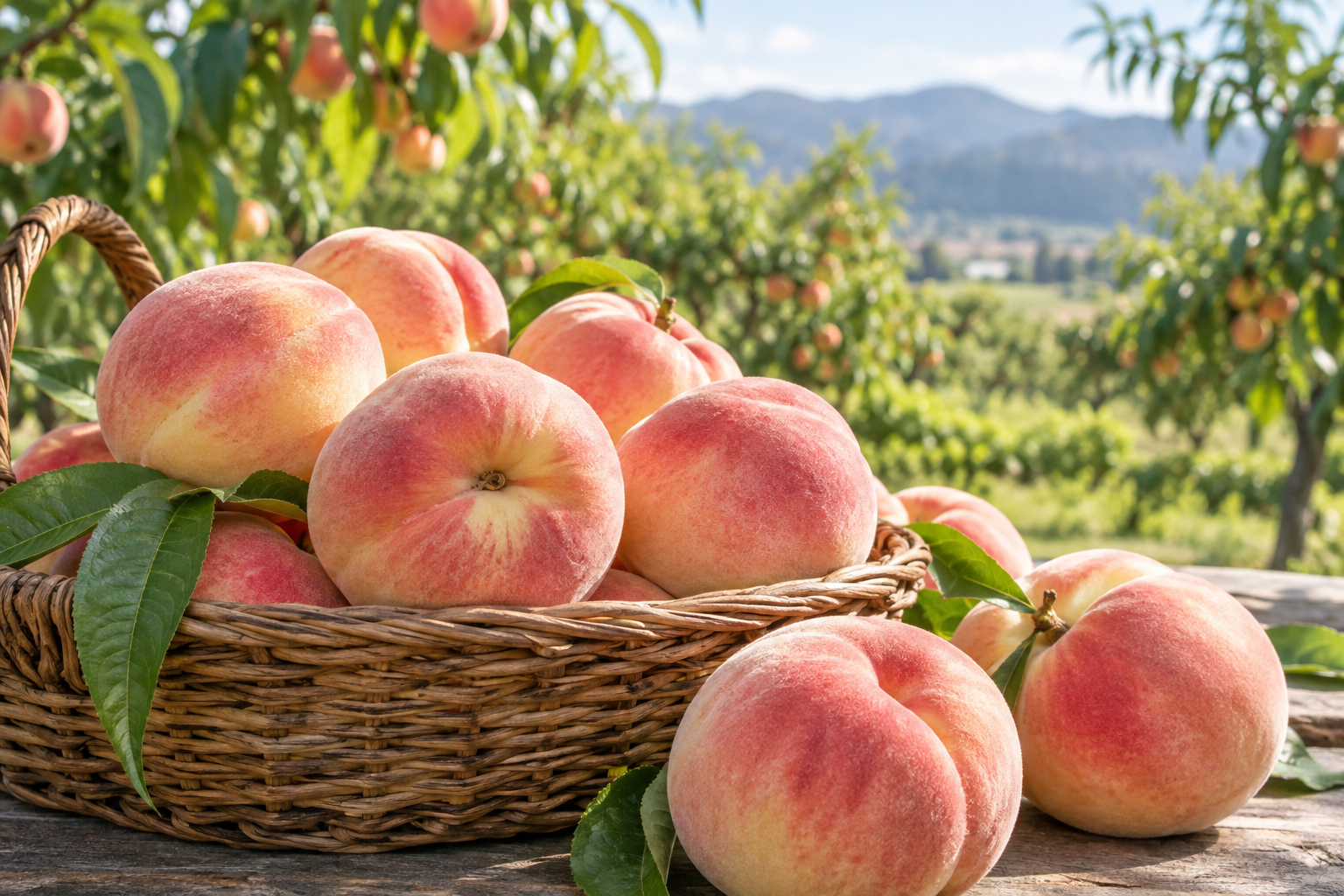
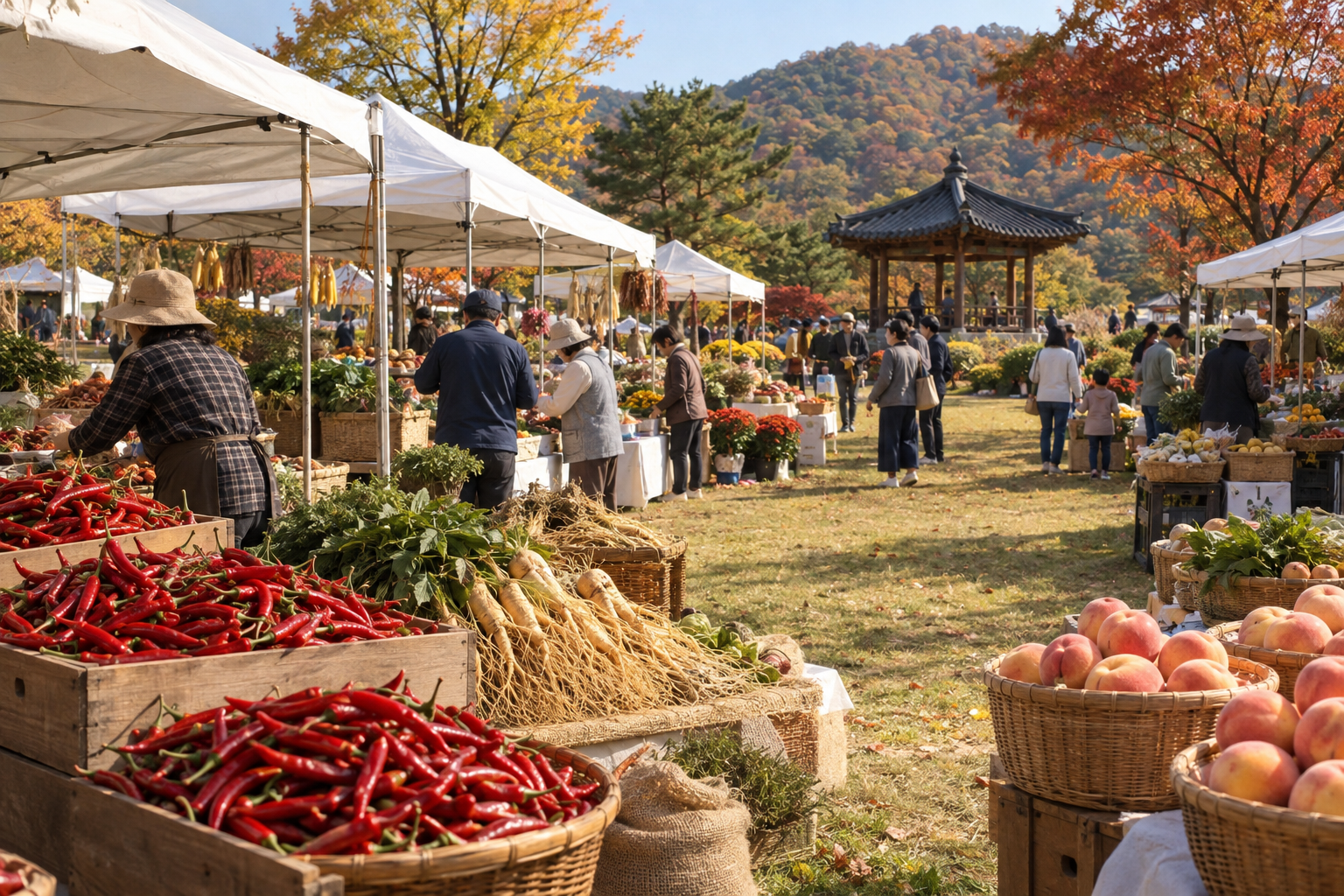
The core of the festival is a produce market, not a performance you sit and watch. The Myeongjak Market sells the county’s six headline crops — hot peppers, ginseng, peaches, rice, orchard fruit and flowers — straight from producers, with time-limited flash sales, tasting events and ₩1,000 bargain specials through the day. For a farming county this is the actual purpose: direct sales between growers and shoppers. A newer sweet-and-salty market adds desserts and snacks alongside the raw produce.
Around the selling there is a layer of games and hands-on booths that make the visit more than a shop. The county lists audience-participation events built around the produce theme — a guess-the-weight game with agricultural products, a blind food-tasting challenge and a festival quiz — plus children’s activities including a “little farmers’ school” and a keycap-making booth. These are the kind of low-key, family-oriented activities that reward an unhurried afternoon rather than a tight schedule.
The evening is where the festival spends its energy. Opening night on the 17th pairs an audience-participation outdoor play (madanggeuk) and a magic performance with a story-based drone show, and each of the four nights has its own free headline concert. If you are visiting from abroad, note that this is a genuinely local event: the programme, signage and stage patter are in Korean, and no English interpretation has been confirmed. You can still enjoy a market and a concert without the language, but do not expect it to be set up for foreign visitors.
Programme and timetable
The concert line-up is unusually specific for a county festival, and it is organised by night. Guckkasten, a well-known Korean rock band, plays the opening on September 17. The 18th is billed as a “Beer On the Beat” concert; the 19th is a “Myeongjak Trot” night featuring trot singer Park Seo-jin among others; and the closing event on September 20 is headlined by Gummy. Because line-ups and start times for events like this are often finalised close to the date, treat the day-by-day list as confirmed in outline and check the official page for exact stage times before you travel.
The one time window that is published is the Moonlight Night Market, which runs 19:00-22:30 with beer, food and night-time performances. A full daytime timetable for the market and side stages had not been posted when this guide was written, so this article does not invent opening and closing hours for the rest of the day. If precise timing matters — for a particular concert or the drone show — the county festival page and the festival’s Instagram account are the right places to confirm it shortly before you go.
The practical reading of all this is that the festival has two distinct modes. In daylight it is a produce market with family booths; after about seven in the evening it becomes an open-air food-and-music night. A visitor who only has a few hours should aim to catch both by arriving in the late afternoon, browsing and eating while it is light, and staying for the night market and the concert.
Tickets, fees and booking
There is no admission ticket and no booking requirement: you walk in, and the concerts are free open-air shows. That makes the festival easy to attend on short notice. What free admission does not mean is a free day out — this is fundamentally a market, so almost everything you actually do here is a separate purchase.
Produce is sold by weight at the grower stalls, with flash sales and ₩1,000 specials scattered through the day. Food stalls are priced individually; the published examples include a ginseng-marinated pork barbecue at ₩20,000, along with peach jam sandwiches and peach ice cream. The organiser also mentions discount coupons, so it is worth checking the official notices for those before arriving. Bring a payment method and do not assume every small stall takes cards, because card acceptance at temporary vendors was not verified for this guide.
For buyers rather than browsers, the festival adds some produce-market services worth knowing about: courier delivery so you can ship boxes home rather than carry them, free ginseng-washing, and a paid mill for grinding chilli into powder on the spot. These are the details that mark it out as a real agricultural fair rather than a themed event.
Getting there without a car
The honest starting point is that Eumseong has no train station, so the rail-first approach that works for many Korean festivals does not apply here. From Seoul the practical route is the intercity bus from Dong Seoul Terminal to the Geumwang (Mugeuk) terminal, which is the closest terminal to the festival site in Geumwang-eup. The fare is about 9,000 won, and the KD group runs roughly 17 services a day on the corridor.
Bus operators do not publish a clean end-to-end duration for this specific leg, and this guide will not print a figure it cannot source. As a planning estimate, the neighbouring Dong Seoul-Jincheon run takes about 1 h 40 m to 2 h and Geumwang is one stop further along, so budget around two hours plus and confirm the live timetable when you book. There is also service via other Chungcheong towns; check the destination board carefully, because “Eumseong” and “Geumwang (Mugeuk)” are different stops on the same route and the festival is at Geumwang, not Eumseong-eup.
From the Geumwang terminal, the festival’s own free shuttle links the terminal with the Geumbit sports-centre and park site, so you do not need a taxi for the final leg if the shuttle is running on your day. A taxi is the obvious fallback outside shuttle hours; the park and the terminal are both in central Geumwang, a short local hop rather than a cross-county trip.
Parking, shuttles and traffic control
If you do drive, the county lists free parking at Geumbit Neighborhood Park. For a four-day event drawing regional crowds, expect the lots nearest the stages to fill in the evening when the night market and concerts overlap, and treat the shuttle as the lower-stress option even if you have a car.
The shuttle itself is the most useful confirmed logistics detail: it runs between Geumwang terminal and the Geumbit sports centre at 30-minute intervals, which is what makes a car-free visit realistic. On the grounds, the organiser also provides an electric-cart service to move between zones, useful if you are carrying boxes of produce back toward the shuttle or parking. A dated road-closure or traffic-control plan had not been published when this guide was written, so check the official notices immediately before travelling rather than assuming last year’s arrangement.
Food on site and nearby
Food is not a sideshow at this festival — it is half the point. The Moonlight Night Market (19:00-22:30) is the evening hub for beer, cooked food and night performances, and the daytime market runs tastings and the sweet-and-salty dessert stalls. Named examples from the 2026 preview include the ginseng-marinated pork barbecue, peach jam sandwiches and peach ice cream, which lean directly on the county’s own crops. Prices are set stall by stall, so use the barbecue’s ₩20,000 listing as a rough guide rather than a fixed menu.
Beyond the stalls, the county’s genuine specialties are worth seeking out for their own sake. Eumseong clean hot pepper is the county’s flagship product and a recognised national chilli brand; Eumseong ginseng accounts for a meaningful share of national output and is one of the festival’s six featured crops; and peaches grown here are sold under the Haetsare brand. These are regional specialties you can reliably buy at the market, not claims about what any one food stall will be cooking.
Honest assessment
The Eumseong Myeongjak Festival is easy to recommend for what it actually is and easy to oversell if you expect more. Its strengths are concrete: free entry, a real producers’ market where you can taste and buy the county’s crops at a discount, and a genuinely generous run of free evening concerts with named headliners on all four nights. The confirmed logistics — a free shuttle from the bus terminal every 30 minutes and free parking — make it unusually painless to reach for an inland county event.
Its limits are just as real. This is a four-day agricultural fair in a neighbourhood park, not a scenic or historic destination, and there is little reason to make the trip for the daytime hours alone. It is a very local event with no confirmed English support, the full daily timetable beyond the 19:00-22:30 night market was not published at the time of writing, and the bus leg from Seoul is around two hours each way with no rail alternative. The sensible plan is a late-afternoon-into-evening visit built around one of the concerts and the night market — arrive hungry, plan to buy produce to take home, and confirm the concert times and shuttle hours on the official page before you set out.