
Autumn · Gyeongsangbuk-do · Field listing
Uiseong Super Food Garlic Festival 2026
The essentials first: whether it is open, what it costs, how hard it is to reach and what to expect if you do not speak Korean.
When
Oct 3 — 5ConfirmedConfirmed dates
Where
Namdaecheon Gubong Park, UiseongGyeongsangbuk-do
Type
Food & local produce
Admission
FREEGeneral admission is free; the festival is held in an open riverside park and no entrance ticket has been used in recent years. Food, farm-produce purchases and some hands-on activities are paid separately, and no per-item 2026 price list had been published when this guide was written.
From Seoul
About 2 hours by KTX-Eum or ITX-Maeum from CheongnyangniTake a KTX-Eum, ITX-Maeum or Mugunghwa train on the Jungang Line from Cheongnyangni Station in Seoul to Uiseong Station, then continue by local bus or taxi to Namdaecheon Gubong Park. KTX-Eum stops at Uiseong only a few times a day, so check Korail for the exact train on your date. An intercity bus from Dong Seoul is the alternative.
Organiser
Uiseong-gun festival/tourism desk, 054-830-6578
Is this one for you?
Who it suits. This suits travellers who want a working regional food festival rather than a scenic landmark — the draw is Korea's biggest garlic-growing county showing off its harvest, with a farm-produce market, a cooking contest and open-air performances in a plain riverside park. It is a weak choice if you want a signature sight to photograph, guaranteed English-language programming, or a quiet visit: it falls on a three-day public-holiday weekend, so expect crowds and busy trains rather than a calm rural outing.
When to go. The festival runs Saturday to Monday over the National Foundation Day holiday weekend (October 3–5, 2026), with Monday a substitute holiday, so the middle of the day and the weekend draw the largest crowds. Recent editions have kept the market and food stalls busy through the afternoon and put concerts and a drone show in the evening, so an afternoon-into-evening visit catches the most; exact 2026 hours had not been published, so confirm the daily schedule before planning around a specific act.
LOCAL WEATHER
Weather near the festival
The festival date is outside the current forecast window. Check again closer to your trip.
Korea Meteorological Administration forecast
Need something we do not list — a stall menu, a parking gate, a last bus? The Korea Travel Helpline answers in English around the clock: dial 1330 inside Korea, or +82-2-1330 from abroad.
Uiseong is not a place most overseas visitors have on a list, and that is roughly the point of this festival. The county, in inland Gyeongsangbuk-do, is the largest garlic-growing area in Korea, and once a year it turns its riverside park into a three-day showcase for the harvest. The Uiseong Super Food Garlic Festival — the English name Uiseong-gun uses on its own tourism site — is a regional food-and-produce event rather than a landmark spectacle, and it is best approached on those terms.
For 2026 the county’s official festival page gives the dates as October 3–5, a Saturday-to-Monday run, at Namdaecheon Gubong Park in Uiseong-eup. Those dates are worth pinning down carefully. The Ministry of Culture’s aggregate 2026 plan listed the festival in mid-September, but the county’s own page and August 2026 news both place it in October, and the window lines up with a public holiday: October 3 is National Foundation Day, and because it falls on a Saturday, Monday October 5 is a substitute holiday. In other words this is a long-weekend festival, which matters more for crowd and transport planning than any single programme detail.
What you actually do here
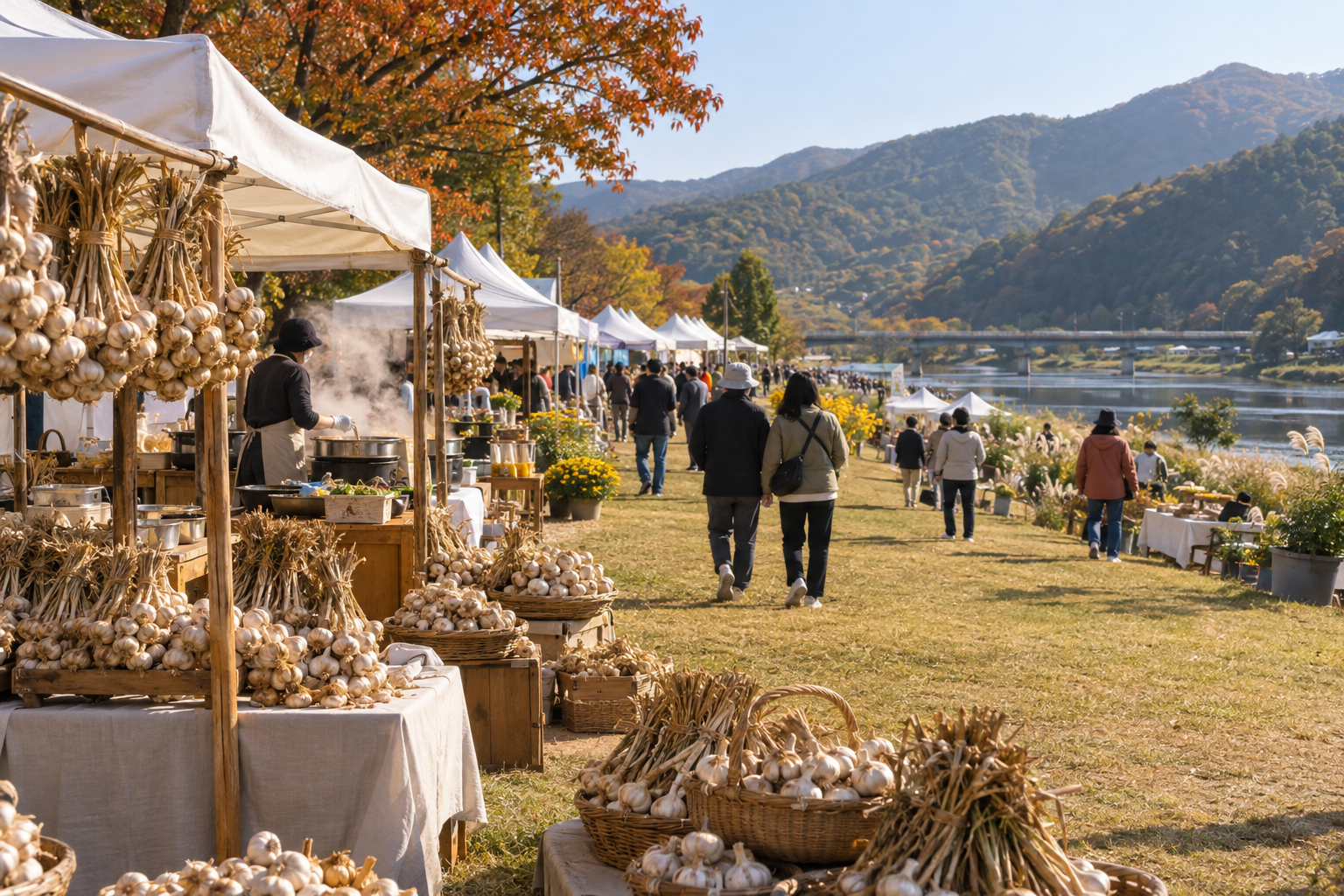
The centre of the event is the garlic itself. Uiseong grows the hanji, or northern, type of garlic, and the festival is built around the market where that produce is sold, alongside a super-food cooking contest and food stalls that lean heavily on garlic dishes. If you come expecting a signature monument or a scenic set-piece, you will be disappointed; if you come to eat, to buy produce, and to see a rural county at its busiest, the layout makes sense.
Around that core, recent editions have added the things Korean regional festivals use to fill a park: hands-on activities, a produce and food market, open-air performances during the day, and larger evening events including concerts and, in the most recent years, a drone show over the river. There has also been a garlic-themed marathon tied to the festival. These are the festival’s recurring elements rather than a confirmed 2026 programme — the detailed daily schedule and performer line-up had not been published when this guide was written, so use the official page for the exact grid before building an itinerary around a particular act.
The park setting shapes the visit. Namdaecheon Gubong Park sits along the river in Uiseong-eup, and the festival spreads tents and stalls across open ground rather than concentrating everything in one plaza. That makes it easy for families and casual visitors to wander, but it also means the experience is diffuse: the reward is the sum of the market, the food and the atmosphere, not one headline attraction.
Tickets, food and spending
General admission is free. The festival takes place in an open riverside park and no entrance ticket has been used in recent editions. That is the honest baseline: you can walk in, browse the market and watch the daytime performances without paying.
Free entry is not the same as a free day. Food, farm-produce purchases and some hands-on activities cost money, and no per-item 2026 price list had been published at this update, so bring a payment method and treat prices as unconfirmed until you see them on site. One practical, verifiable tip if you plan to spend: through late 2026 Uiseong raised the discount on its local gift voucher (Uiseong Sarang Sangpumgwon) to 20% specifically to steer festival spending into local shops, according to multiple August 2026 reports. That is a genuine saving on produce and meals if you are willing to buy and use the voucher, though the exact purchase channels and limits are the county’s to confirm.
The food is the reason many Koreans come, and it is worth eating with the local product in mind. Beyond the temporary stalls, Uiseong sells garlic in forms you can take home — whole bulbs, black garlic and processed goods — and runs a Garlic Museum and a Garlic Experience Hall in the county if you want context beyond the festival ground.
The garlic, and why Uiseong
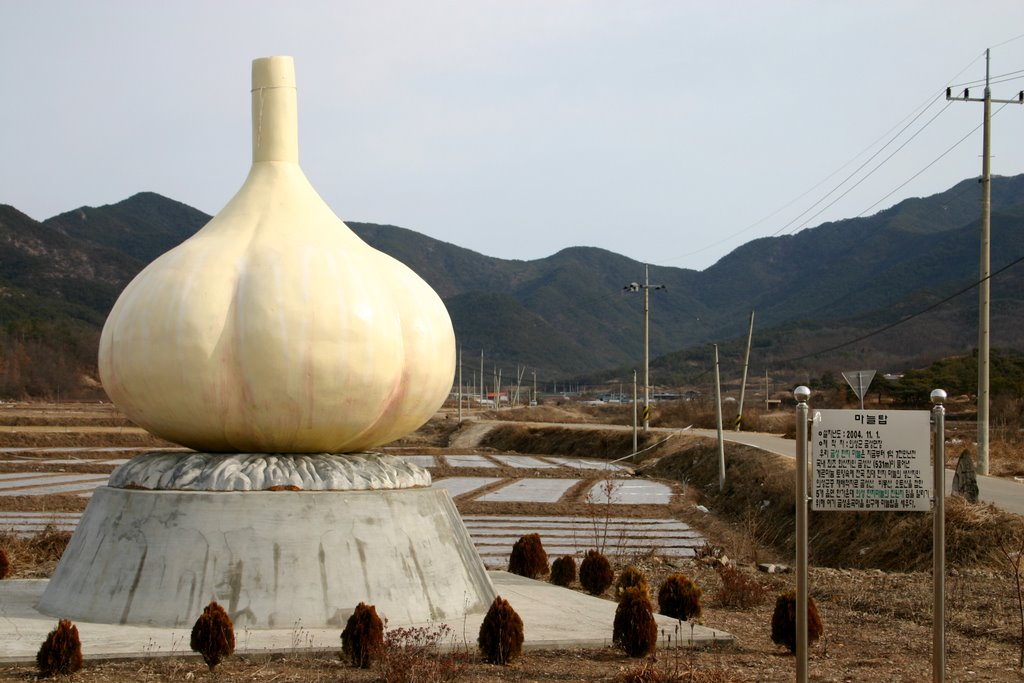
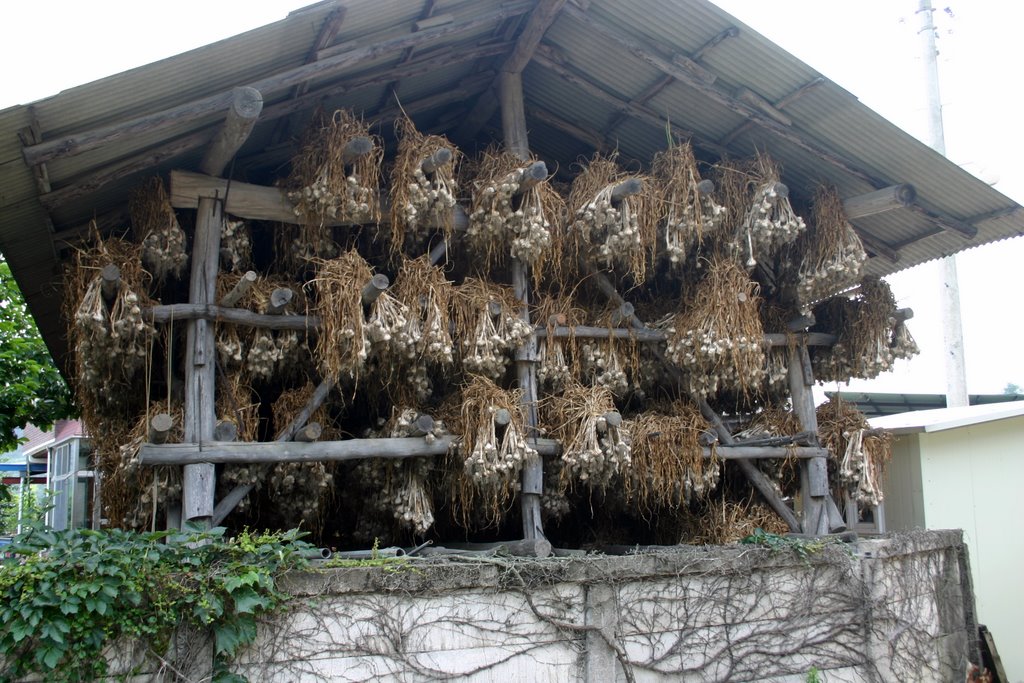
It is easy to treat “local specialty” as marketing, but in Uiseong’s case the claim is well documented. The county is the country’s largest producer of northern-type garlic, grown by roughly 1,485 farms on about 781 hectares, and its garlic is valued for firm, dense cloves, strong storage life and a high allicin content — the compound behind garlic’s pungency and its reputation as a health food. Local agricultural reporting through 2026 consistently describes Uiseong as the leading hanji garlic region and notes supply deals with national food companies, which is the kind of evidence that separates a real specialty from a name borrowed for a poster.
For a visitor, that background is the difference between a generic food fair and a festival with a reason to exist in this specific place. The produce on the market tables is the thing the county is actually known for, which is not something you can say about every regional festival built around a borrowed theme.
Getting there without a car
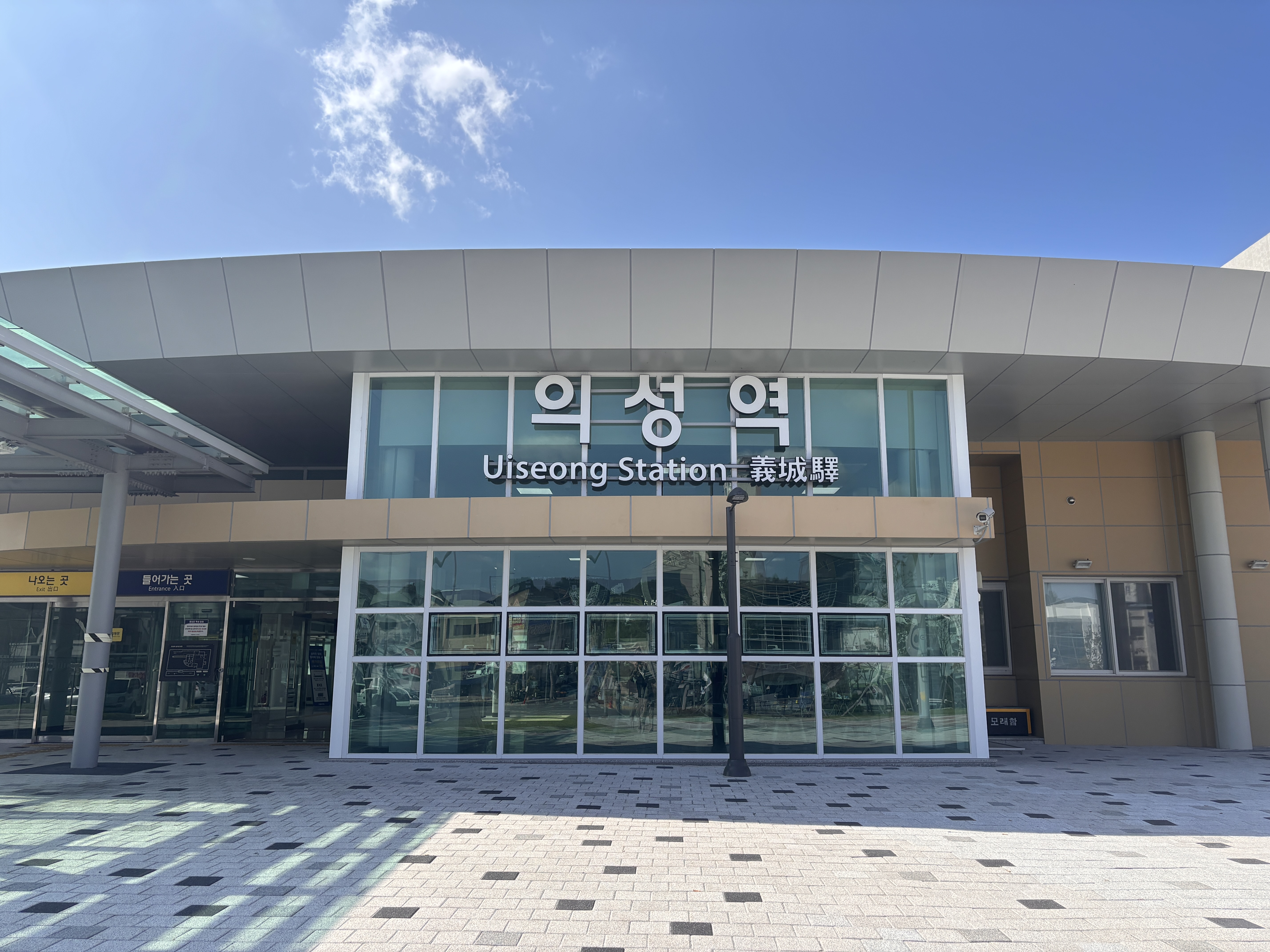
The useful recent change is rail. The Jungang Line was upgraded and Uiseong Station began receiving fast KTX-Eum service in December 2024, joining ITX-Maeum and conventional Mugunghwa trains. From Seoul, the trains you want leave from Cheongnyangni Station, and the trip runs about two hours; the fare is in the low-30,000-won range on the premium services. The important caveat is frequency: KTX-Eum stops at Uiseong only a few times a day, so you cannot assume a fast train at your preferred hour. Check Korail for the exact departure on your date, and book ahead — this is a public-holiday weekend and trains fill.
From Uiseong Station you still need a short local leg to Namdaecheon Gubong Park. A taxi is the simplest option when time matters; local buses also serve the town. Set the park or the festival address as your destination rather than just “Uiseong,” and check live bus information on the day, since routes can be adjusted around a large event.
The alternative is the intercity bus. Uiseong’s bus terminal runs services toward Seoul (Dong Seoul), with a modest number of departures a day. It drops you closer to the town centre than the station in some cases, but it is more exposed to holiday-weekend expressway traffic. Whichever you choose, confirm the return departure before you commit to a same-day plan.
Day trip or overnight
A Seoul day trip is realistic on paper: two hours each way by train, plus a short transfer at the Uiseong end. Whether it works in practice depends on the last convenient train back, which changes by date and which this guide will not guess. If your interest is the daytime market, the cooking contest and lunch, a day trip is reasonable. If you want the evening concerts or the drone show, the maths gets tighter, and one night in the area is the more comfortable structure.
Staying over also makes it easier to combine Uiseong with the rest of northern Gyeongbuk — Andong, for instance, is only about 25 kilometres away by the same rail corridor. Availability and prices were not independently verified here, so no specific accommodation is recommended; book early if you travel on the holiday weekend, when demand across the region rises.
Honest assessment
The strength of this festival is authenticity of a plain kind. Uiseong genuinely is Korea’s garlic county, the produce on the tables is the real local crop, and the event is aimed at the people who grow and buy it rather than at foreign visitors. The recent rail upgrade makes it far easier to reach than most inland county festivals, which removes the main practical barrier to a day trip from Seoul.
The weaknesses are the flip side. There is no marquee sight, the park layout is diffuse, and the experience is essentially a market, food and open-air performances — good if that is what you want, thin if you were expecting a spectacle. English-language support has not been confirmed and should not be assumed. The three-day holiday weekend that makes the dates convenient also makes crowds and full trains likely, so the calm-rural-outing version of this trip is not really on offer.
The fair summary: come for the food and the produce, treat the evening events as a bonus rather than the reason to travel, confirm the daily schedule and your return train before you go, and you will get an honest regional festival. Come for a signature view or a guided, English-friendly day out, and this is not the trip for you.
Local specialties to try
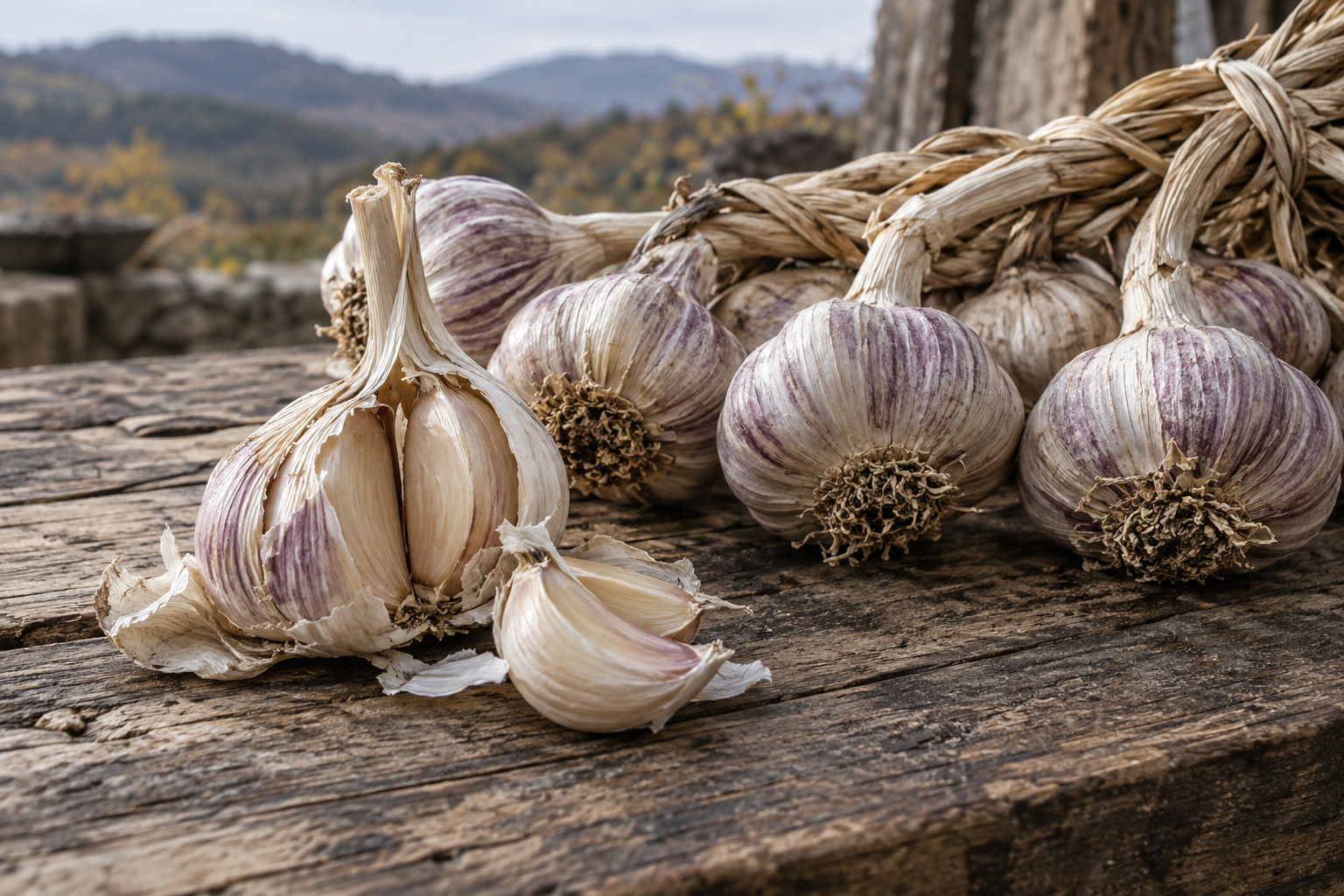
Uiseong garlic (의성마늘)
Uiseong is Korea's largest producer of hanji (northern-type) garlic, grown by roughly 1,485 farms on about 781 hectares. The bulbs are prized for firm cloves, strong storage life and a high allicin content. The county markets it as a specialty year-round and runs a Garlic Museum and a Garlic Experience Hall in Uiseong; it is the region's signature product, not a promise about any single festival stall.
Questions worth asking
When is the 2026 Uiseong Super Food Garlic Festival?
The county's official festival page gives the 2026 dates as October 3 (Saturday) to October 5 (Monday), at Namdaecheon Gubong Park in Uiseong-eup. This differs from the September dates in the Ministry's aggregate plan; the county's own October dates are used here and match August 2026 news that describes an October festival.
Is admission free?
Yes. General entry to the riverside park is free and no gate ticket has been used in recent years. Food, farm produce and some hands-on activities are paid separately, and no 2026 price list was available at this update.
How do I get to Uiseong from Seoul without a car?
Take a train on the Jungang Line from Cheongnyangni Station to Uiseong Station — about two hours by KTX-Eum or ITX-Maeum. KTX-Eum stops at Uiseong only a few times a day, so check Korail for your exact date, and expect trains to fill over the holiday weekend. From Uiseong Station continue by local bus or taxi to the park. An intercity bus from Dong Seoul is the alternative.
What is there to do besides eat?
Recent editions have combined a farm-produce market, a super-food cooking contest, hands-on garlic activities and open-air performances, with a drone show and concerts in the evening. The full 2026 daily programme and line-up had not been published when this guide was written, so treat these as the festival's recurring format rather than a confirmed 2026 schedule.
Is this a day trip or an overnight?
It works as a day trip from Seoul if you leave time for the local transfer at each end, but the last convenient train back is the deciding factor and depends on your date. If you want the evening concerts or drone show, or you are visiting other Gyeongbuk towns, one night in the area is more comfortable. This guide does not quote a last train or recommend a specific hotel because neither was verified.
Before you goFestival Etiquette in Korea: What Visitors Get WrongBooking KTX Trains and Intercity Buses as a Foreign VisitorGetting Out of Incheon Airport and On to a FestivalKorean Festivals With Children: Toilets, Strollers and TimingStaying Online in Korea: SIM, eSIM and the Apps That MatterEating at a Korean Festival Without Speaking KoreanRain, Typhoons and Cancelled Festivals: How to Plan Around ThemHow to Pay for Things in KoreaT-money and Transit Cards in KoreaWhat to Wear to a Korean Festival, Season by Season
LAST UPDATED · Sep 10, 2026