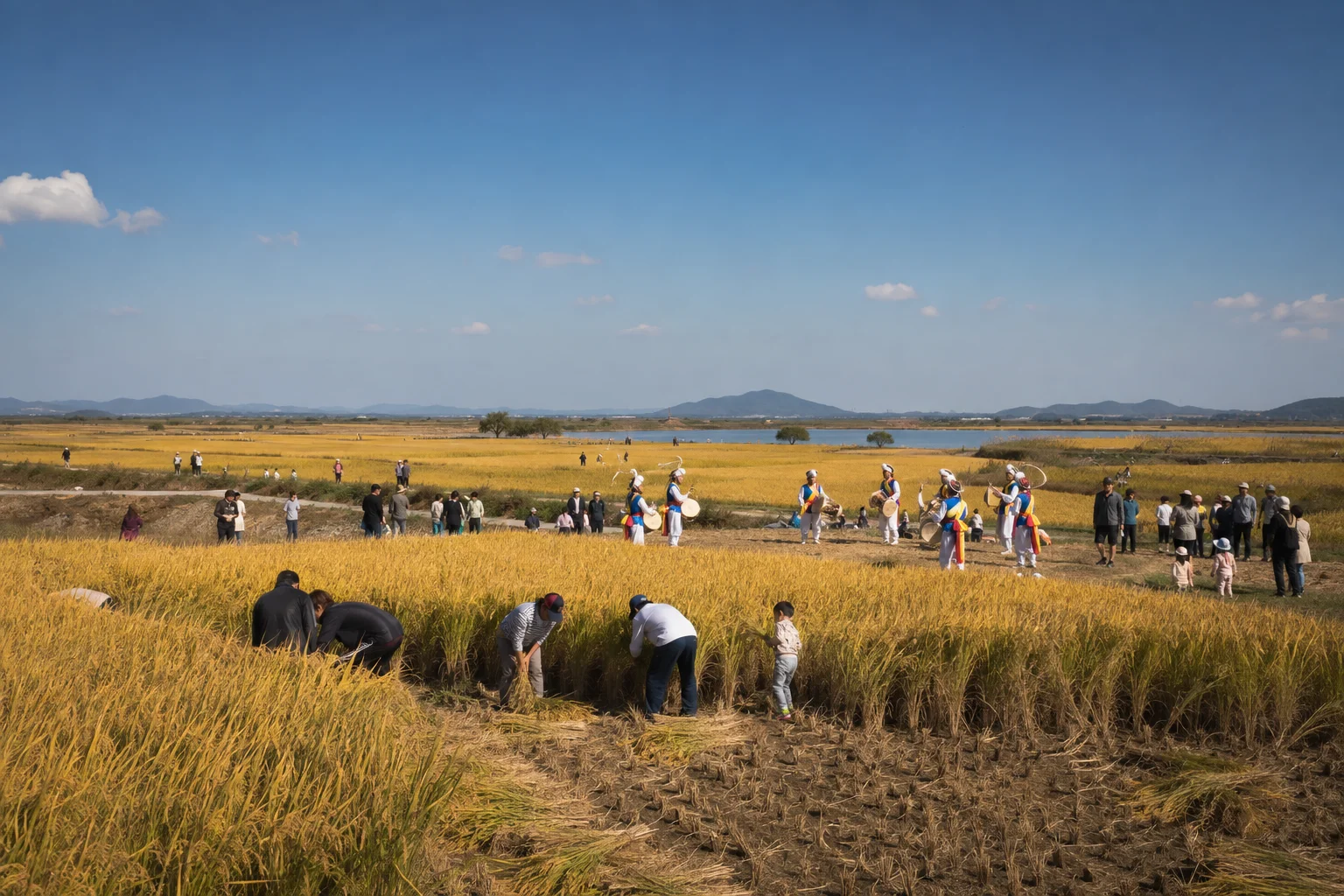
Gimje uses its broad rice-growing plain as the setting for a five-day farming-culture festival. Most activity is centred on Byeokgolje, the historic irrigation site outside the city centre, with additional events in town. The landscape matters here: ripening paddies, the reservoir embankment and the low horizon are part of the visit, not just scenery behind a temporary stage.
The 2026 festival runs from Thursday, October 1 through Monday, October 5. Published site hours are 09:00 to 21:00, but most of the continuously listed family activities run from 10:00 to 18:00. That difference is useful when planning: arriving at 19:00 may work for night scenery or a stage event, but not for rice-field experiences that have already closed.
What you actually do here
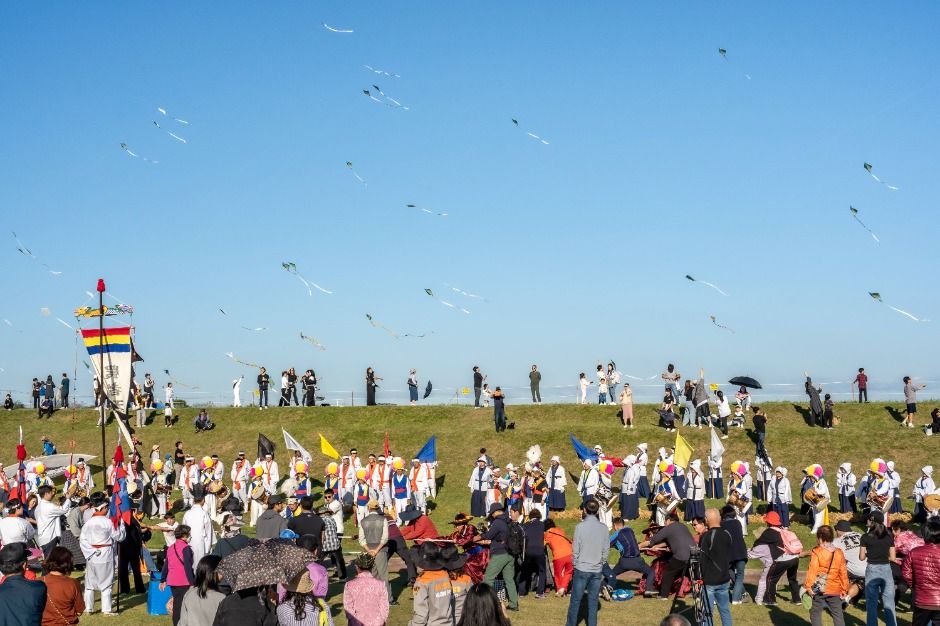
The confirmed programme is built around both watching and taking part. The Presidential Cup National Nongak Competition brings regional percussion-and-dance teams to the grounds. The Byeokgolje Twin Dragon Play turns a legend associated with the reservoir into a community performance involving residents of Buryang-myeon. The Ipseok Tug-of-War is another resident-led event, derived from a first-full-moon custom intended to wish for a good harvest.
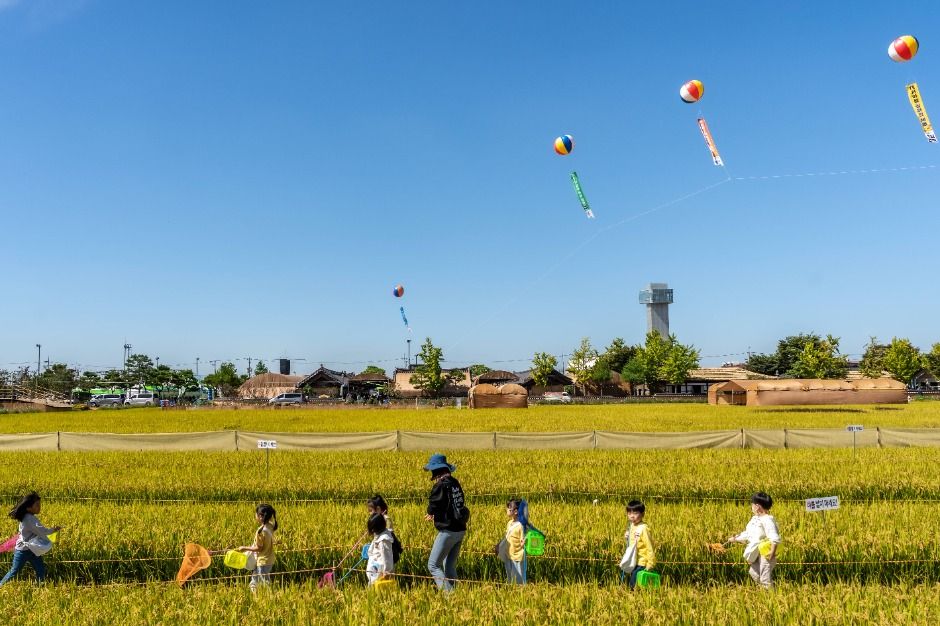
The hands-on side is not a token craft tent. KTO lists rice harvesting and catching grasshoppers, while the current official programme also places straw-rope twisting, mat weaving and rice harvesting in the paddy experience area. The wood-fired rice activity has visitors cook cauldron rice at a small outdoor stove. A land-art zip line crosses the field installation, and the kite programme uses the openness of the embankment rather than squeezing the activity into a plaza.
There are easier diversions for children between scheduled events. The 2026 list includes a kids’ park, a vine tunnel, a stamp activity based around the agricultural museum, a rice-water footbath and a water tunnel entered in a traditional rain cape and conical hat. Most of those named areas operate 10:00-18:00 across all five days. A full visit needs at least half a day if you want one staged tradition, an agricultural activity and time to walk the embankment rather than merely circle the stalls.
New zones and shows for 2026
Ahead of this year’s edition, Gimje City announced a set of new attractions and said it had reconfigured the grounds to broaden the festival beyond watching toward hands-on play — reported consistently across regional outlets on September 18. The clearest addition is a Horizon Straw Theme Park and Leisure World next to the existing vine tunnel, expanding the straw-play area with a straw-maze escape, straw-ball kicking, a straw slingshot, ATV rides and a disco-pang-pang ride, aimed at teenagers and younger visitors rather than young children. A Drone Straw-Ball Stadium lets visitors fly drones to score straw balls into goals, framed as an e-sports-style take on the harvest theme.
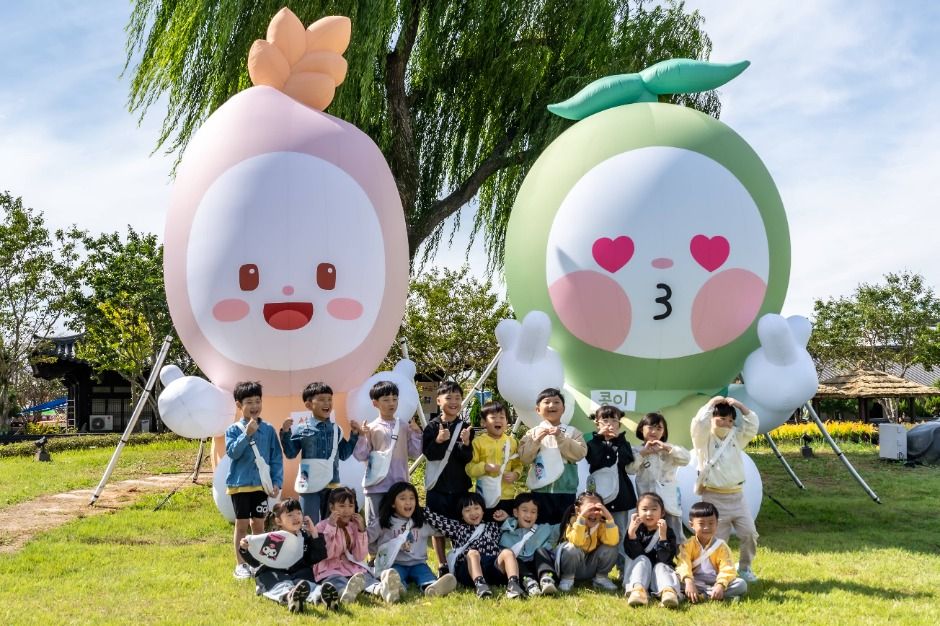
On the food side, a “Ssarikkongi Village” — named after the festival’s rice mascot — pairs the wood-fired cauldron-rice experience with rice-based dishes such as rice pizza and rice beer. Along the Byeokgolje embankment, giant mascot sculptures (a “Giant Ssarikkongi” and a “Danya’s flower garden” installation) are set up as photo landmarks. For families with young children, a “Catch! Teenieping” sing-along show is scheduled for October 5 on the Ssangyong stage, with Teenieping photo zones running throughout the festival. These come from the city’s own announcement rather than an on-site menu, so treat exact placement and hours as provisional until the official programme board is posted; the fact that the additions exist is what is confirmed.
Programme and timetable
Use the official programme page to build the day around fixed-time events. The published 09:00-21:00 span is an overall operating window, not a promise that every attraction runs for twelve hours. Many field and family activities finish at 18:00, and advance-registration events can have one start time or a capped number of places.
Several useful anchors are already published. The Ipseok Tug-of-War is scheduled for 16:00 on October 2 and October 5, moving from the central square toward the Byeokgolje embankment. Tightrope performances are listed at 11:00 and 15:00 on October 2 and 3, at the Twin Dragon Square and Gimje Folk Village. The large kite session is scheduled at 16:00 on each of the five days, with advance registration for 100 people per day.
The paddy experiences, land-art zip line, kids’ park, folk-village activities and several themed zones are listed daily from 10:00 to 18:00. In town, the old magistrate’s residence hosts a free tea programme from 10:00 to 17:00 on October 2-4, but its listing caps each team at 12 people and three teams. That is a separate downtown stop, not something to assume is beside the main Byeokgolje field.
Singer line-ups and fireworks are high-demand search topics, but the dependable approach is to use the official performance board close to departure. The KTO record confirms the Horizon Final Fantasy Show as a night production combining laser, lighting, fireworks and multimedia, but it does not give a nightly 2026 time. This guide therefore does not attach an unverified artist list or exact fireworks hour to the trip.
Tickets, fees and booking
There is no general gate charge. “Free admission” does not mean every activity is free, and the current listings now contain enough examples to set expectations. Making the festival character as dalgona costs 2,000 won. The rice-water footbath area has free and 3,000-won options. Wood-fired rice cooking costs 12,000 won for two participants, then 6,000 won for each additional person; children aged four and under are free for that activity.
Some competitions also charge by entry rather than spectator ticket. The family cooking contest and cooking class each list 10,000 won per team. The domestic Ssarikkongi game costs 10,000 won and explicitly says card payment is accepted for that booking, but that one statement is not evidence that every food and activity stall accepts cards. Bring more than one payment method rather than treating a single programme’s rule as a site-wide policy.
Advance registration matters for the wood-fired rice cooking, cooking events, kite flying, unpowered-glider contest and several other limited programmes. The checked listings use a September 1-16 application period and link to Naver Booking. Capacity varies: the glider contest is capped at 40 children, split between lower and upper elementary grades, while the family cooking contest takes the first 30 teams of at least three people. Read the age, team-size and arrival rules before paying. A free activity may still run out of reserved places.
Getting there without a car
The simplest rail option is a direct KTX from Yongsan Station to Gimje Station. The festival’s current access page lists departures at 09:44, arriving at 12:03, and 17:10, arriving at 19:20: journeys of 2 hours 19 minutes and 2 hours 10 minutes. Korail’s official timetable page has a KTX schedule effective September 1, 2026, which is the version to check when booking the actual date. The later direct train reaches Gimje after most 10:00-18:00 activity zones close, so it is not a sensible outbound choice for a daytime experience visit.
There are many more fast trains from Yongsan to Iksan; the festival access page lists 46, and also lists SRT service from Suseo to Iksan. That flexibility comes at the price of another rail or road transfer before Gimje. Do not compare only the Seoul-to-Iksan express time with the direct Gimje train: compare the entire trip to Byeokgolje, including the connection you can actually make.
Byeokgolje is outside central Gimje. Two current route services using Ministry of Land, Infrastructure and Transport data show bus 11 connecting Gimje Station and the Byeokgolje stop. The variants and platform direction differ by trip, and one current listing shows only eight runs per day with long gaps. Check the live route and boarding platform for your arrival rather than relying on “bus 11” alone. A taxi is the practical fallback when a missed bus would also mean missing a reserved session.
The organiser’s dedicated 2026 shuttle page has since been filled in: rechecked on September 22, it now carries route maps split into an October 1-2 set and an October 3-5 set, so the weekday and weekend-holiday routing differ. What it still does not give is the operating detail — no first or last run, interval or stop list appears with the maps. Its access page recommends that drivers leave cars at Gimje City Hall, 40 Jungang-ro, or the Citizens’ Stadium, 220 Dojak-ro, and continue by shuttle because roads near the grounds may be congested. That confirms both the park-and-ride plan and that a shuttle will run, but not its frequency or its last departure. Call the festival office (063-540-3032) to pin down the times before planning a ride after the night show.
Food on site and what is local
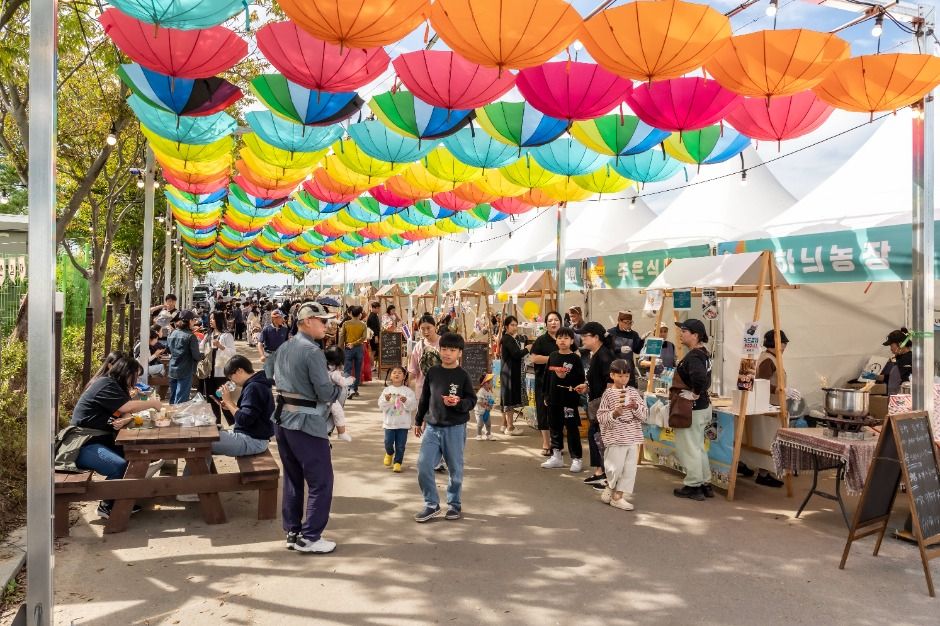
The current official programme confirms three food and shopping areas. The Horizon Food Market, branded “Matbojago Season 3,” lists ten municipal community booths and nine representative Gimje restaurants. The Horizon Welcome Street is described as a food or night market, and a direct-sales market sells agricultural, livestock, fishery and processed products produced in Gimje. These are firmer facts than naming dishes before the vendor menus appear.
KTO’s fuller food description explains that the restaurant selection is intended to address the poor-value food sometimes associated with local festivals, but it also labels its food details as 2025 information while the 2026 material is being updated. The current official page verifies the market’s structure; it does not yet verify every vendor, portion or price. Check menus at the stall rather than assuming the whole market follows one price policy.
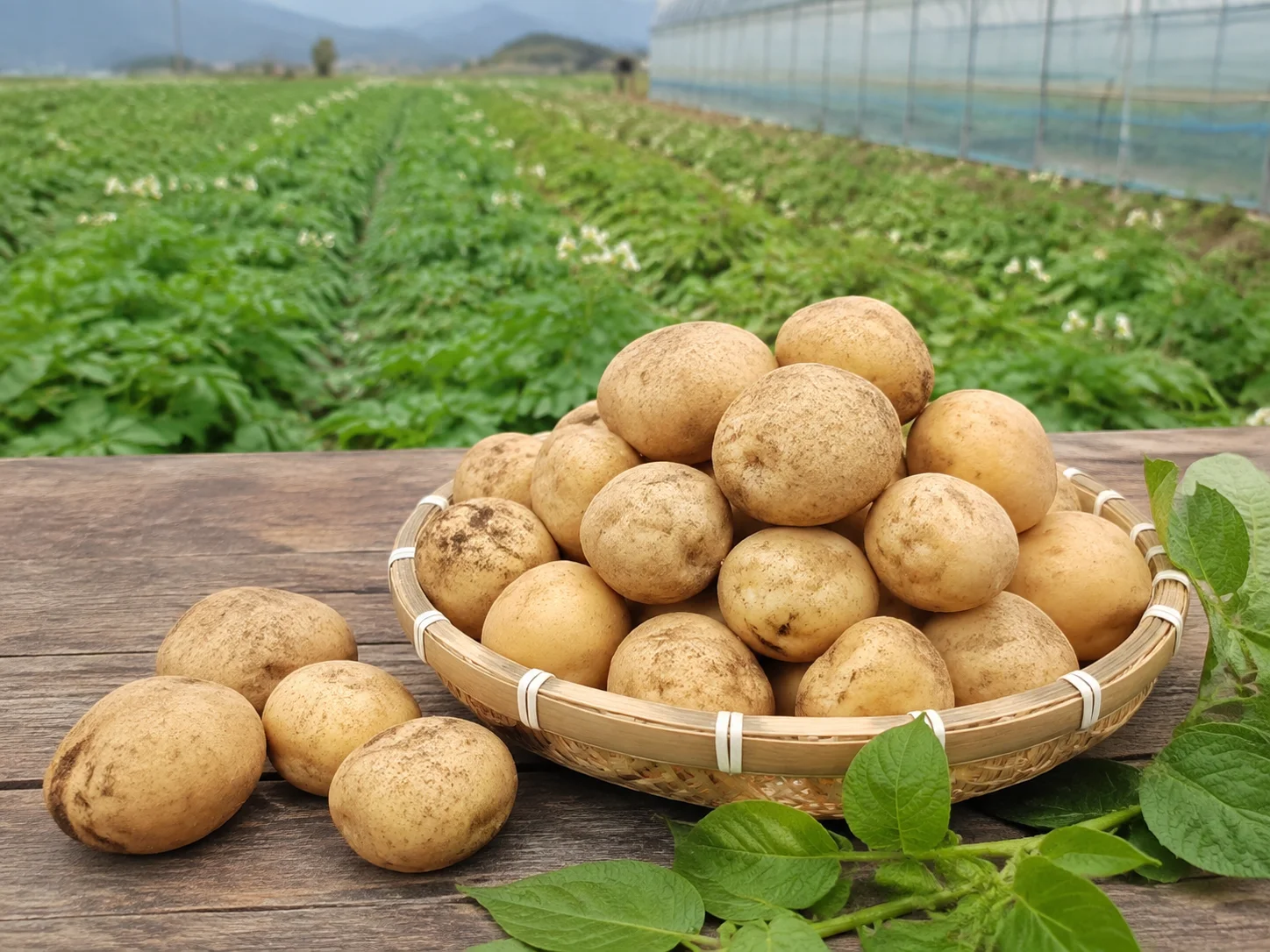
For a regional product beyond the temporary festival menu, Gwanghwal potatoes are documented by Gimje City’s Gwanghwal-myeon office. They are grown under cover in reclaimed-soil fields, planted around late January and shipped mainly from late April to mid-May. The city page distinguishes Sumi potatoes, commonly steamed, from Daeji potatoes used for soup and side dishes. October is outside the stated fresh shipping season, so this is a Gimje specialty to know about, not a promise of newly harvested potatoes at the autumn festival.
Parking and traffic
The official site publishes a 2026 parking map, but a map pin does not guarantee a space at the hour you arrive. The more actionable official advice is to avoid pressing toward Byeokgolje when the approach is busy and instead use the two named remote lots in central Gimje. Put the City Hall and Citizens’ Stadium addresses into navigation before leaving; searching only for the festival naturally routes every driver toward the same rural entrance.
The missing piece is still the shuttle timetable. The route maps are now published, but as of the September 22 recheck they carry no run times, interval, accessibility note or confirmation of a Gimje Station connection. Drivers planning to stay through the night multimedia show should call the office to confirm the last run and keep enough margin to retrieve the car. Public-transport visitors should separately protect their bus, taxi and rail connections—the existence of a parking shuttle does not establish that it serves them.
Honest assessment
Come for participatory farming culture and the open plain, not for a compact city-centre fair. The strong point is that the programme and setting match: rice harvesting, farm cooking, nongak, kite flying and harvest rituals make sense beside Gimje’s paddies. The community performances also have more context here than they would on a generic concert stage.
The trade-off is transport and spread. There are only two direct Yongsan-Gimje KTX services on the published access page, the rural venue requires a bus or taxi after the train, and some programme items are in central Gimje rather than at Byeokgolje. Choose one main-venue block before adding a downtown event; otherwise the transfer can consume the gap between them.
The organiser’s congestion warning is enough reason to build margin, but not enough evidence to declare a particular morning “quiet.” October 3-5 covers a weekend and Monday holiday period, and fixed events can concentrate people even when the grounds feel spacious elsewhere. For a reserved activity, arrive for the check-in rule rather than trying to optimize around an invented crowd forecast.
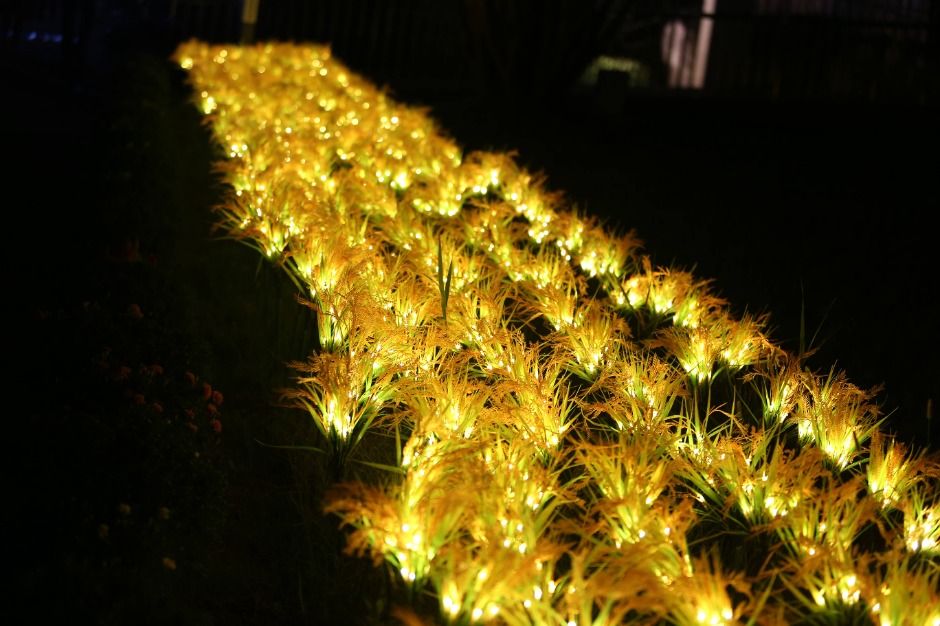
A useful visit is five to seven hours: one traditional performance, one reserved or field activity, a circuit of the embankment and food before the daytime zones close. Staying into the night makes sense for the LED land art and multimedia show, but only after confirming the performance time and the ride back. The festival has enough verified daytime substance that you do not need an unconfirmed celebrity line-up to justify the journey.