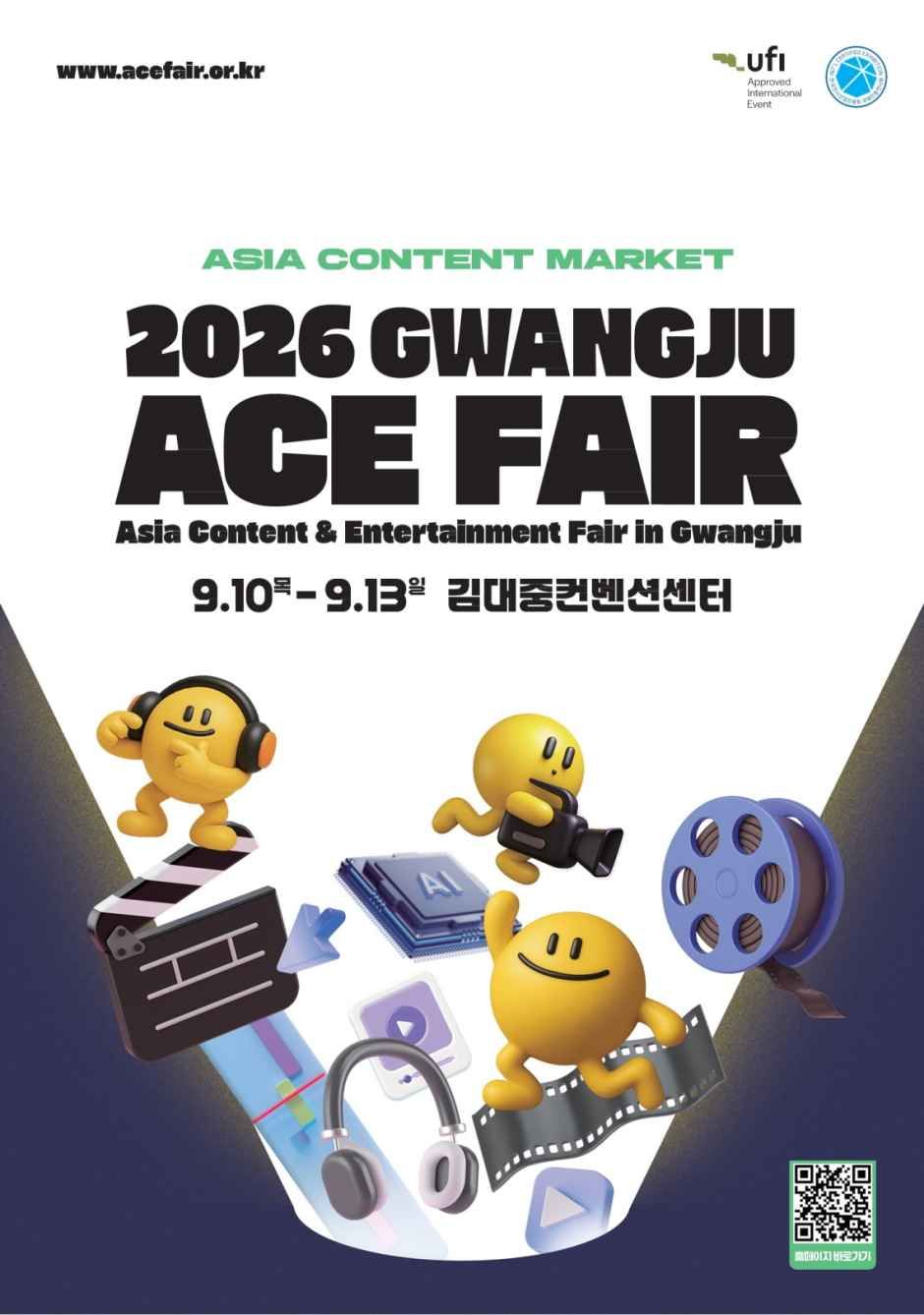
Gwangju ACE Fair is an indoor content-industry exhibition with a public program attached. Broadcasting, animation, characters, games and webtoons share the floor at Kimdaejung Convention Center in Seo-gu, Gwangju. That makes it closer to a compact convention than to a street festival: you move between company booths, creator tables, demonstration areas and scheduled stage events inside one venue rather than walking an outdoor site.
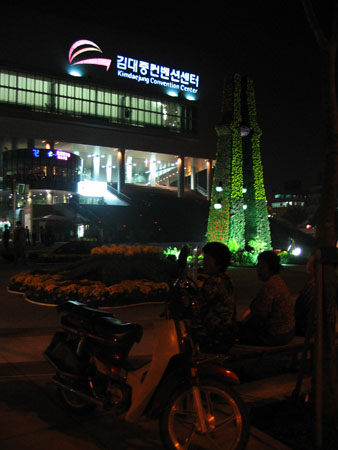
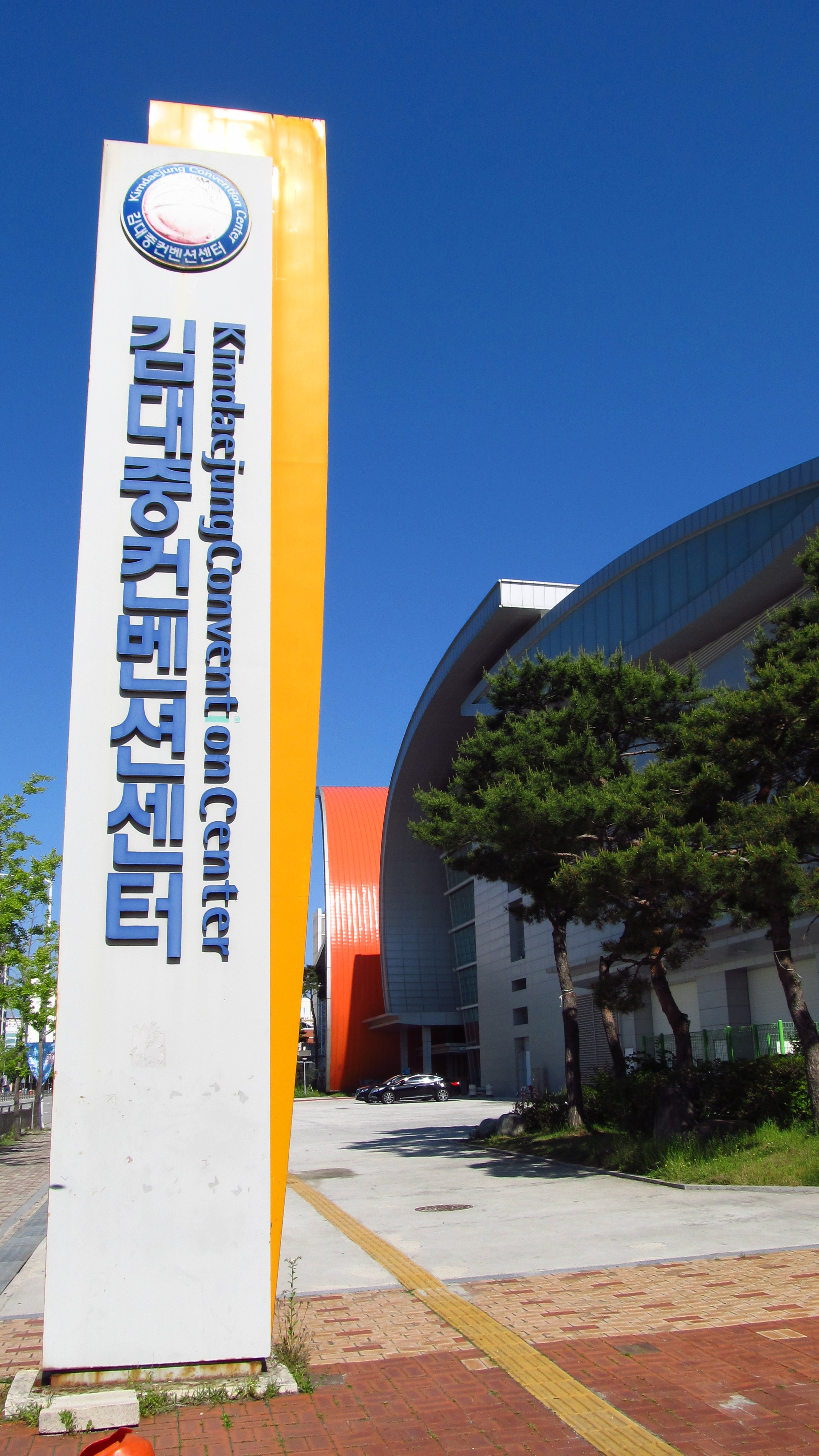
The 2026 fair runs from September 10 to 13. Published hours are 10:00 to 17:00 with last admission at 16:00, and the final day closes an hour early at 16:00. It is hosted by the Ministry of Culture, Sports and Tourism and Gwangju Metropolitan City, and organized by a group that includes Kimdaejung Convention Center, the Gwangju Information & Culture Industry Promotion Agency and KOTRA. That backing is the reason it functions as a real trade platform and not only as a fan event. The photographs on this page show Kimdaejung Convention Center itself; the fair fills its indoor exhibition halls rather than any outdoor ground.
What you actually do here
The main hall is a survey of Korean content businesses. You browse displays from broadcasting, animation, character, game and webtoon companies, then stop at the parts designed for general visitors rather than industry buyers. The 2026 public program names an illustration fair with a participating-artists gallery, a cosplay contest, a board-game zone, and creator markets selling character goods and handmade items. There are stage events with creators and artists across the four days. These are the clearest reasons to visit if you are not attending for work.
The September 2026 exhibitor announcements give a concrete sense of what is on the floor. Reported participants included companies showing 3D animation IP, webtoon and character brands, interactive extended-reality (XR) performances, family board games and children’s education content, alongside university content programs. In other words, the booths range from polished commercial studios to student and regional projects, which is typical of a mixed B2B and B2C fair.
Do not assume every activity is continuously available. A contest, a stage set or a creator appearance may occupy one time slot, while the exhibition booths remain the dependable part of the day. Use the official schedule, once posted, to choose your date and arrival time. If one stage event is the main reason for your trip, check it again shortly before departure rather than relying on a general program list.
Two to four hours is a practical allowance for browsing the exhibition and watching one scheduled event. That is an estimate for planning, not an official recommended visit length. Because the venue closes at 17:00, and at 16:00 on the last day, this is a daytime plan rather than an evening one.
Tickets, hours and registration
This is where the 2026 information most needs a correction. Admission is not free by default. According to the official visitor page, there were two online pre-registration windows: the first, free, closed on July 31, and the second ran from August 3 until 18:00 on September 9. In that second window an adult ticket was 5,000 won and a teenager’s 3,000 won. If you register through neither window, the door price is 10,000 won for an adult and 5,000 won for a teenager.
Several groups still enter free: children, seniors, people with disabilities and national-merit holders. Groups of 20 or more pay the same discounted band as teenagers when they register in advance. Because the cheaper online rates depend on a registration deadline that falls just before the fair opens, the realistic advice for a late planner is to expect the door price and treat any online saving as a bonus, not a certainty.
Prices and registration mechanics change year to year, so confirm them on the official visitor page before you travel rather than trusting a figure from an earlier edition. The secretariat can be reached at 062-611-2248 or 062-611-2249, or by email at ace@acefair.or.kr, for questions the website does not answer.
Getting there without a car
Take KTX from Yongsan Station in Seoul to Gwangju Songjeong Station. The rail journey is about 1 hour 50 minutes; individual services vary with their stops, so use the specific train shown by KORAIL for your travel date. From Gwangju Songjeong, stay within the station complex and change to Gwangju Metro Line 1 toward the city.
Get off at Kimdaejung Convention Center (Mareuk) Station. The metro ride is about 12 minutes. Exit 5 is the useful exit for the venue, and the remaining walk is roughly three minutes straight ahead. The rail station and venue being on the same metro line is the key advantage here: there is no bus connection to decode and no taxi is required. The venue address, 30 Sangmunuri-ro in Seo-gu, is worth saving in a map app in case you arrive by a different route.
For a bus alternative, coaches from Seoul Central City to Gwangju U-Square are listed at about 3 hours 20 minutes. U-Square is not beside the fair, so the train is the simpler choice for a day trip. Treat all journey times as scheduled travel time and leave room for the transfer in Yongsan and for finding the metro platform at Gwangju Songjeong.
Food near the venue
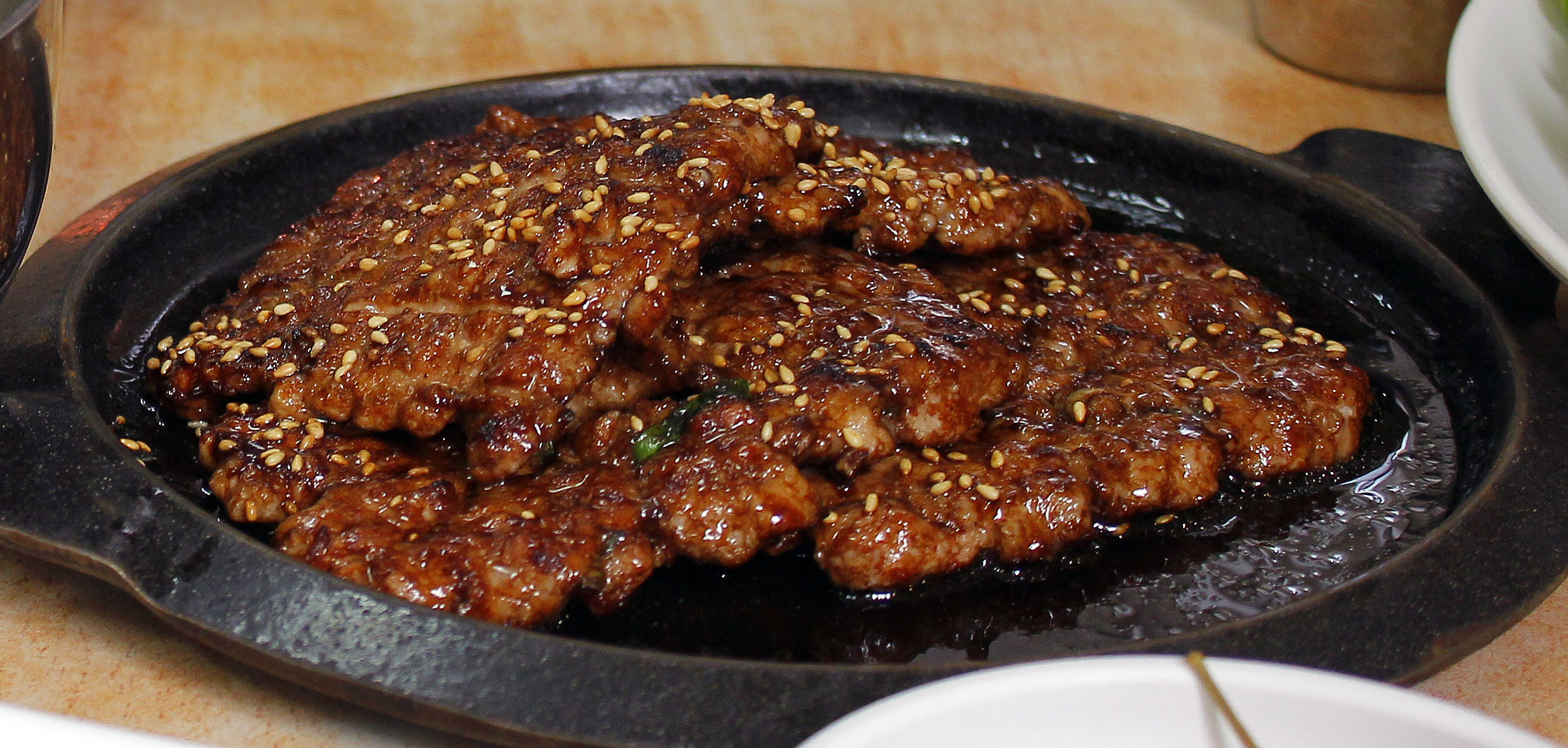
The fair is an indoor convention, so plan your main meal around the station rather than the exhibition hall. The most convenient regional option is Songjeong tteokgalbi (송정떡갈비): grilled patties of minced beef and pork, with a dedicated restaurant street beside Gwangju Songjeong Station where the KTX arrives. Gwangju Metropolitan City named it one of the city’s five representative foods in 2003, and it remained on the city’s revised list in 2019, so this is a documented local dish and not a guess. Eating here on arrival or before your return train fits the geography better than searching for food at the venue.
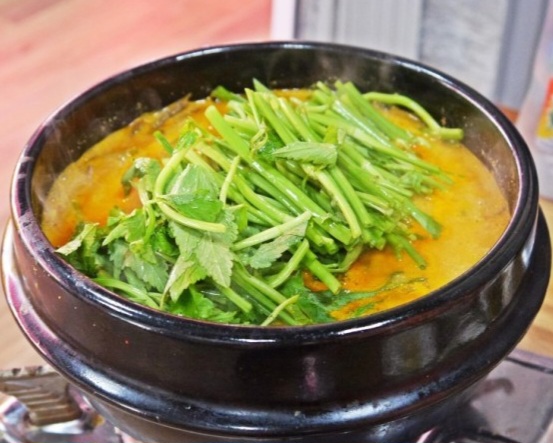
Central Gwangju also has a duck-soup tradition. Gwangju duck soup (광주 오리탕), a simmered duck-and-vegetable soup, appears on the same 2003 and 2019 city food lists and has a long-standing restaurant cluster in town. Both dishes are recommendations for a meal in Gwangju, not claims about what the fair’s own concession stands will serve; that food information had not been separately verified for 2026.
Honest assessment
This works best for visitors who already care about animation, character goods, games, illustration or the business side of Korean content. If those categories are only a passing interest, a trip from Seoul for the fair alone is hard to justify: the dependable core is still rows of exhibition booths, not a citywide cultural event.
It is a real public event rather than a small professional expo. The Korea Exhibition Industry Promotion Association records 23,560 visitors and 280 participating companies for the 2025 edition. That figure supports planning for a substantial indoor audience, but it does not show which hours or days were most crowded, so there is no verified quiet window to recommend. Build your visit around the published stage schedule, keep some flexibility around the cosplay and creator areas, and budget for the door price unless you registered online in time.
The strongest practical point is access. A roughly two-hour rail-and-metro journey each way makes a same-day visit realistic, and the 17:00 closing leaves time for an evening train back. The trade-off is that a day trip gives you little margin if the one program you want changes time; check the official site again in the final week, and confirm the current ticket prices while you are there, because the free-admission claim that circulated for this fair no longer holds in 2026.