The Wonju Dancing Carnival — the city and the Korea Tourism Organization also call it the Dynamic Dancing Carnival — is a three-day outdoor dance festival held at the Dancing Performance Hall in central Wonju, Gangwon-do. It began in 2011, and Wonju describes the 2026 edition as its fifteenth year. Unlike most of the traditional festivals covered on this site, this is a contemporary event built around street dance, K-pop choreography and dance-crew competition rather than folk heritage.
For 2026 the confirmed dates are September 18–20 (Friday to Sunday). The Korea Tourism Organization’s Korean listing gives the venue as the Dancing Performance Hall area, general admission as free, and operating hours as 10:00–22:00. Wonju City’s own festival notice and a run of Korean news reports on September 16 all agree on the same dates and venue, so this is well confirmed rather than a plan on paper.
One caution worth stating plainly: several automated research feeds mix this festival up with the Andong Maskdance Festival because both are autumn Korean festivals with “dance” in the name. Andong is a different event in a different province with different dates. Everything below is drawn only from sources that clearly refer to Wonju.
What you actually do here
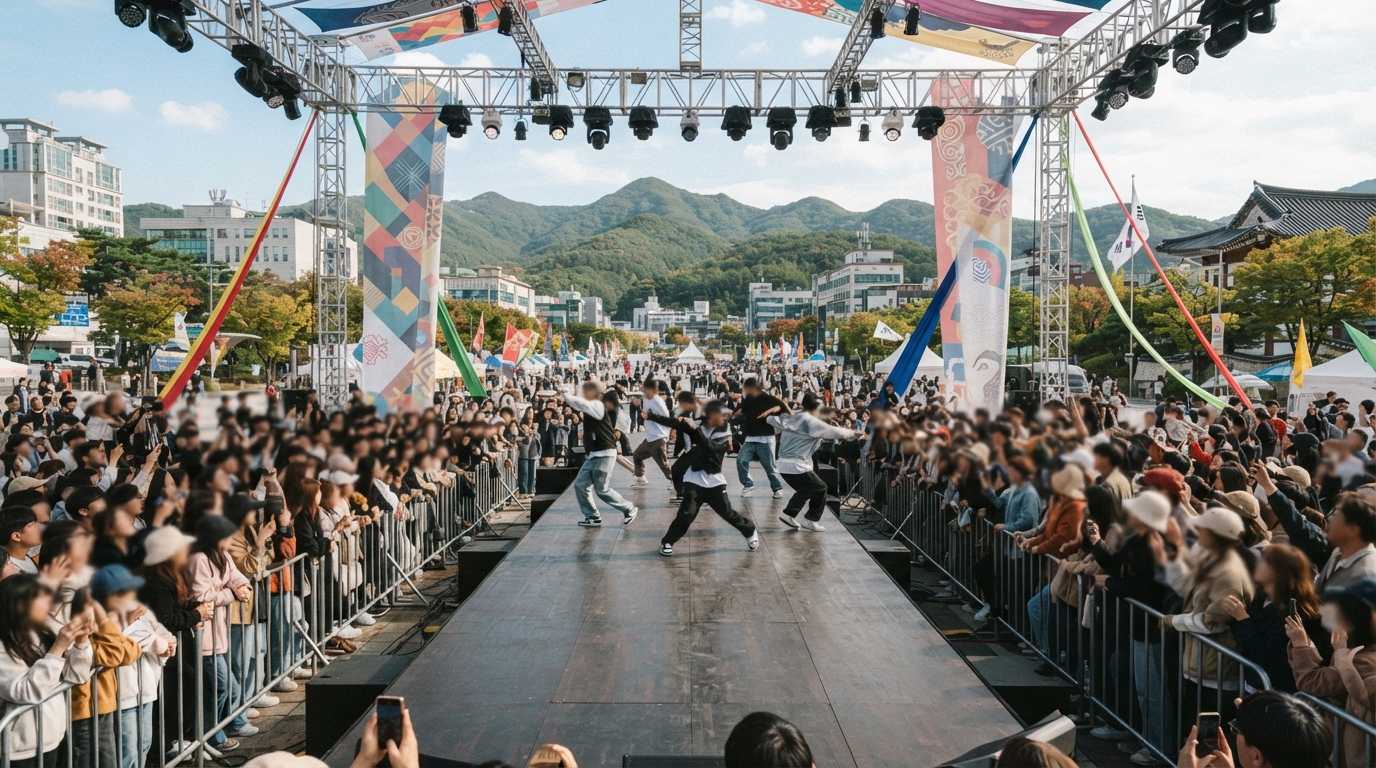
The core of the carnival is competition and performance on a large outdoor stage. Wonju City’s programme lists dance competitions across several divisions — K-street, youth street, senior, lifestyle dance and community (eup/myeon/dong) categories — alongside invited singers and dance teams, a fringe festival, and citizen participation zones. The venue itself is a dedicated outdoor performance hall seating several thousand, so this is a watch-from-the-stands event as much as a wander-the-grounds one.
According to September 16 reporting from Yonhap, Newsis and Newscj, the 2026 edition drew 122 teams — 37 from overseas and 85 domestic. That international spread is the festival’s headline claim, and it is the main reason the programme is heavy on competition heats during the day: many of those teams are competing, not just performing once. If you come for a specific division or country, the day-by-day competition schedule matters more than the general opening hours.
Around the competitions sit the parts that make it a carnival rather than a contest. There are food booths, food trucks and a flea market, DJ-led random-play-dance sessions in which spectators join in, and dance workshops. MBC Gangwon reports the competitions carry total prize money of around 100 million won split between K-pop and free-dance categories, which is a fair indicator of how seriously the competitive side is taken. You do not need to understand spoken Korean to enjoy the dancing, though there is no confirmed English-language service, so the fact card leaves language support unmarked.
Programme and timetable
The grounds run 10:00 to 22:00 on all three days, but that is the operating window, not proof that every stage runs continuously. The document that matters for planning is the daily programme book, which Wonju City said would be updated on the festival’s site and mobile guide on September 18. If a particular act or competition is your reason for coming, wait for that grid rather than working from the outline below.
That said, the invited-artist line-up is already published by day. On Friday, September 18, the K-street competition runs alongside sets by the dance crew 1MILLION and dancer AIKI, of the HOOK crew. On Saturday, September 19, youth street competitions, random-play dance and senior competitions share the bill with HANYA and the band Norazo. On Sunday, September 20, lifestyle and community-division competitions are joined by Jinjo Crew and Koyote. Each day therefore has a distinct headline character, and the choice of day should follow the act you most want to see. The special-judge “judge show” and the champion stage run on the 18th and 19th only, so if those are your reason for coming, avoid the closing Sunday.
One part of the programme does have fixed daily hours. The dance workshops run 13:00–18:00 every day across six zones — K-pop dance, a K-pop “special,” shuffle dance, line dance, zumba and spinning — in 30-minute sessions, roughly ten a day per zone, led by instructors. This is the one block you can plan around by the clock rather than waiting for the full grid, and it is the most hands-on way to take part rather than watch. The organiser also flagged a 1MILLION-led workshop as part of the mix. Two Korean reports (Newspim, August 12, and September coverage from Newscj/Supple) give the same 13:00–18:00 window and zone list.
What is not yet public is the hour-by-hour running order — which stage, and when. The invited-artist sets are the evening draw and the competitions fill the daytime, but this guide does not assign specific clock times to named performances because the full grid had not been posted when this was written. Treat the evening as the headline window and the day as the competition window, and confirm exact times on the official programme book.
Getting there without a car
Wonju is one of the easier Gangwon destinations to reach by rail. A KTX-Eum from Cheongnyangni Station to Wonju Station takes about 50 minutes; two independent timetable sources put services roughly every hour, with a first departure around 05:40 and a last around 22:00. Individual trains vary, so search your exact date on Korail rather than treating one duration as fixed. Note that Wonju has three KTX-Eum stations — Wonju, Seowonju and Manjong — so book to Wonju Station specifically.
The station is not next to the festival. Wonju Station moved to Musil-dong in 2021, a few kilometres from the Dancing Performance Hall in Myeongnyun-dong (Dangu-ro 170). Plan a short taxi or city-bus transfer from the station into the centre. City bus routes and any temporary festival diversions are best checked on Wonju’s live transit information on the day rather than from a fixed list here, and set the venue address — not simply “Wonju” — as your destination.
Bus is the workable alternative from Seoul. Timetable aggregators show the express bus from Seoul Express Bus Terminal to Wonju at about 1 hour 30 minutes, running very frequently through the day, and the intercity bus from Dong Seoul to Wonju at a similar duration. Both leave you at Wonju’s bus terminals in the city, so like the train they still need a final local leg to the venue. Rail is faster; the bus is useful mainly if your Seoul starting point is closer to a terminal than to Cheongnyangni.
Food on site and nearby
There is food on site — booths, food trucks and a flea market are part of the programme — but no reliable 2026 menu, price or vendor list was published, so this guide will not name a specific festival dish. Expect pay-as-you-go stalls rather than an included food programme, and eat before the busiest evening period if a proper meal matters.
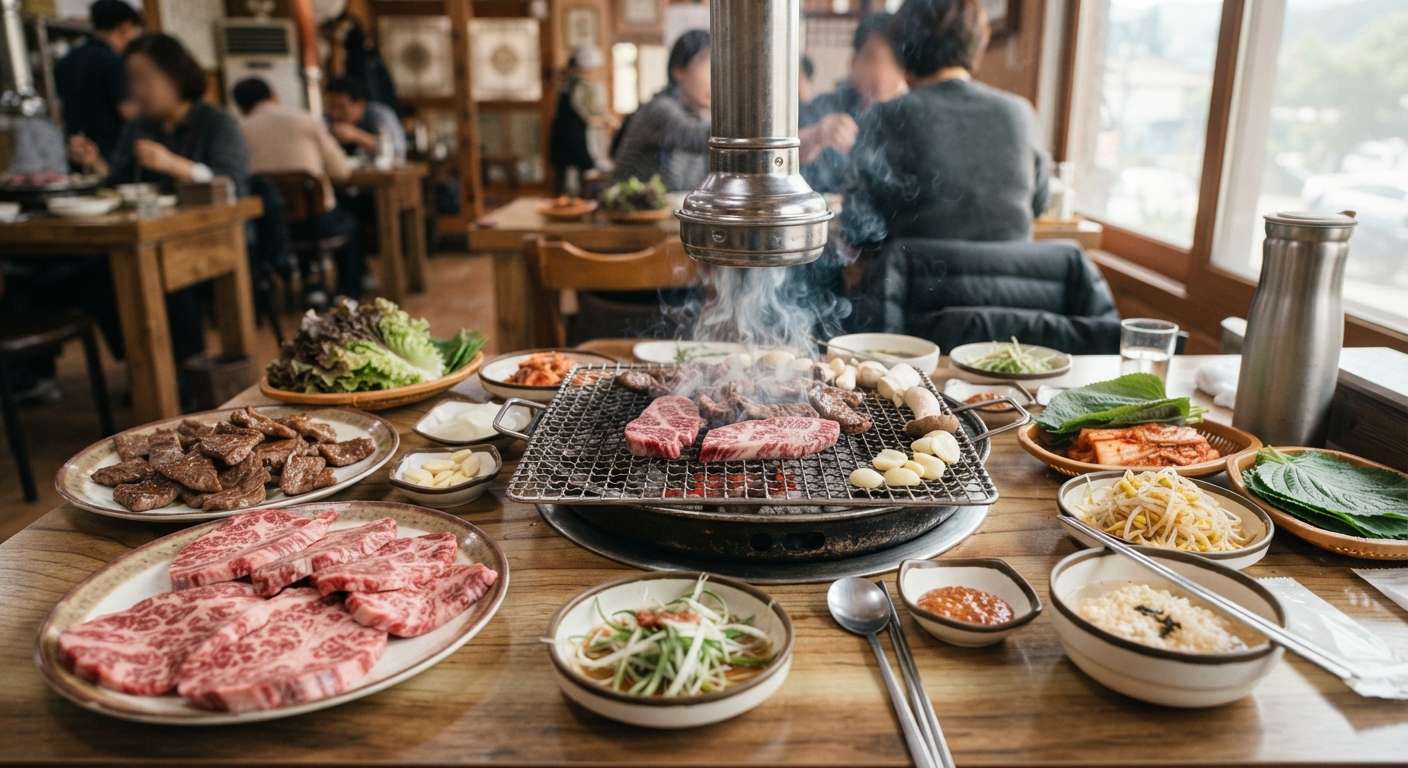
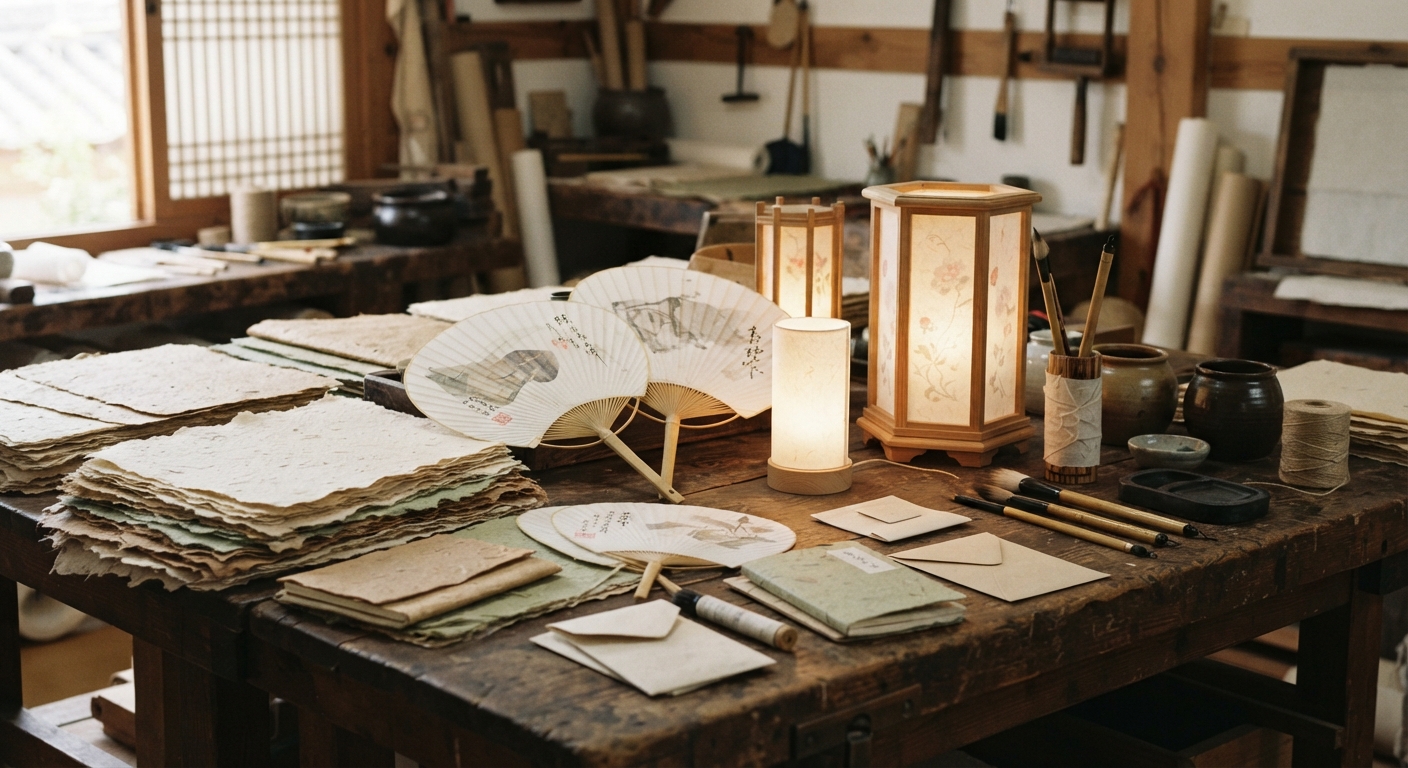
Away from the temporary stalls, Wonju has two documented specialties worth knowing. The first is Chiaksan hanwoo (치악산한우), which the city’s agricultural office lists as an official local beef — raised under managed breeding and HACCP-certified processing and commonly eaten grilled at restaurants near Jungang Market and elsewhere in the city. The second is not food at all: Wonju hanji (원주한지), traditional Korean mulberry paper. Wonju is widely described as the home of hanji and runs a Hanji Theme Park and an annual hanji festival; fans, lamps and stationery made from it are a durable souvenir that survives the trip home better than the region’s seasonal peaches.
Honest assessment
The Wonju Dancing Carnival’s strengths are access and energy. It is genuinely easy to reach — under an hour from Seoul by KTX-Eum — it is free to attend, and with 122 teams from 37 countries it delivers a real range of dance in one place. For anyone who likes street dance, K-pop choreography or the spectacle of crew competition, it is a straightforward, low-commitment day out, and the free admission is meaningful rather than nominal because the competitions and most stages cost nothing to watch.
Its limits are the flip side of the same qualities. This is a modern dance carnival, so travellers hoping for traditional Korean performance should look elsewhere; there is no mask, drum or folk tradition at its centre. The venue is a large open stadium-style ground, which means crowds and standing around the evening headline acts, and the hour-by-hour schedule was still incomplete close to opening, so arriving without the programme book risks catching the food trucks and the warm-up heats but missing the set you came for. There is also no confirmed English-language help, which is why the language row on the fact card is left blank rather than filled with a guess.
The fair plan is to choose your day by the headline act, arrive in the afternoon for the competitions and fringe, and stay into the evening for the main stage — while checking the exact last KTX-Eum back to Cheongnyangni if you want to return to Seoul the same night. It is a good-value trip for what it is: an accessible, free, international street-dance festival, honestly a weaker fit for anyone expecting a quiet or traditional cultural outing.