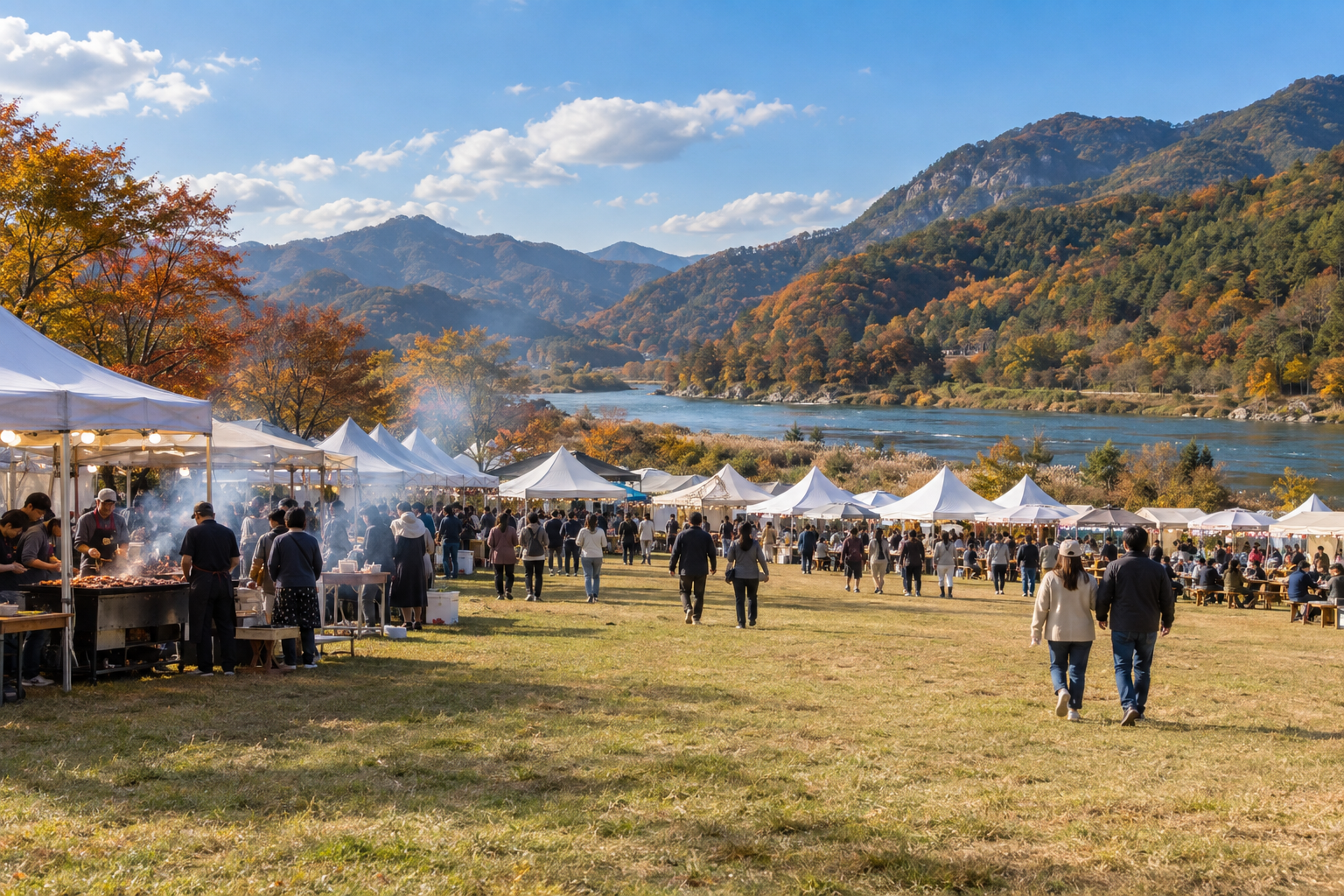
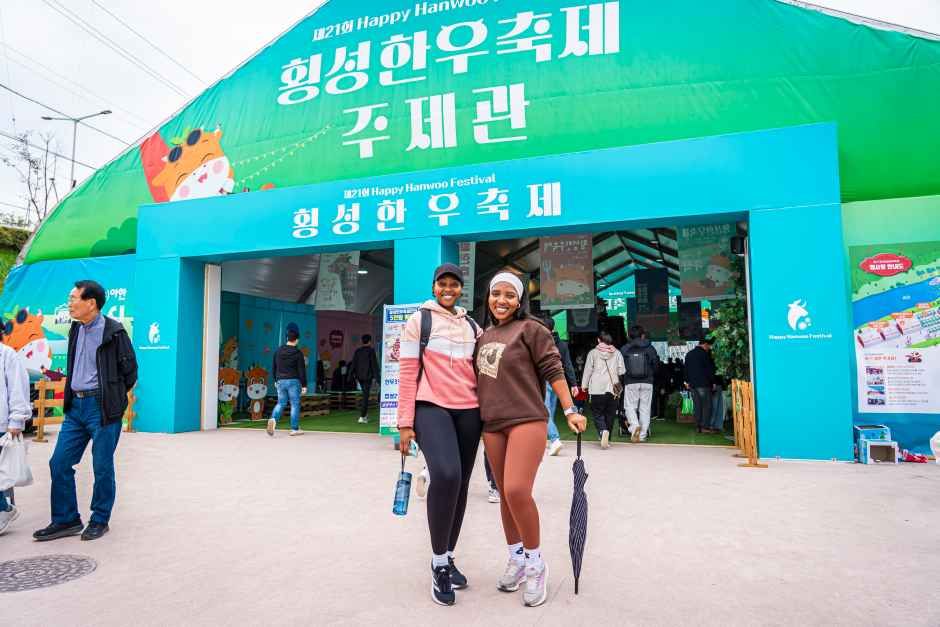
The Hoengseong Hanu Festival is a beef festival, and it does not pretend to be anything else. Hoengseong, a rural county in the mountains of Gangwon-do, is the place most Koreans name first when they think of hanwoo, the country’s native breed of beef cattle. The 22nd edition runs October 7-11, 2026 on the Seomgang riverbank (섬강둔치) in Hoengseong-eup, and the Korea Tourism Organization lists general admission as free, with the grounds open 10:00-21:00 each day. The catch, and the whole point, is that the eating is paid: you come to buy and grill good beef by a river, not to browse a free fair.
That framing matters before you plan a visit. The festival’s own slogan translates roughly as “delicious, stay, shine,” and the organiser markets it as a stay-type event designed to hold visitors through the day and into the evening rather than a quick walk-through. If you understand it as a long, seated meal with entertainment attached, the layout makes sense. If you arrive expecting a cheap street-food festival, the bill at the grill area will be a surprise.
What you actually do here
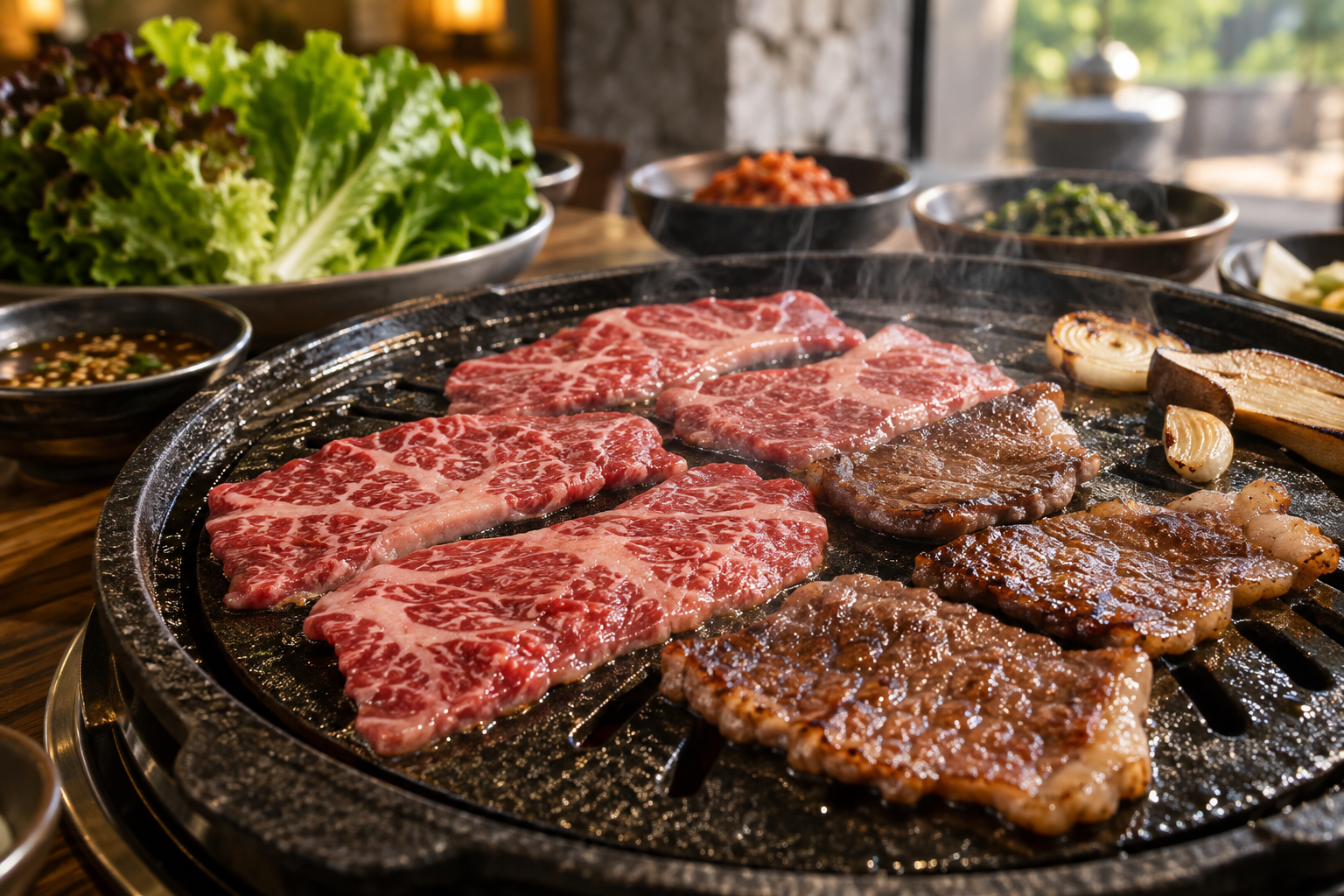
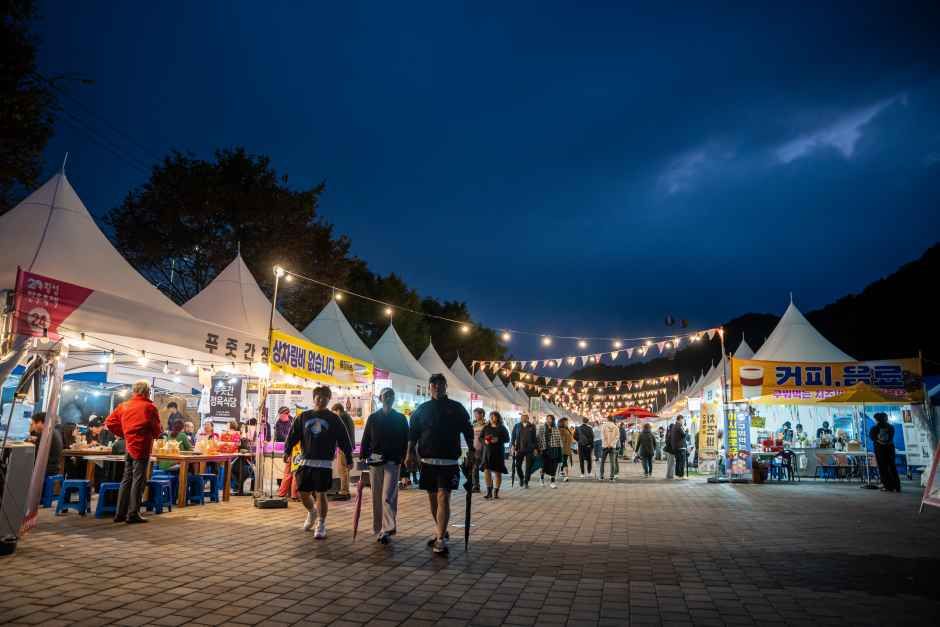
The core activity is grilling and eating beef. The Korean listing describes three grill areas run by the local livestock and farming cooperatives, operating as self-service restaurants: you buy the cut you want and cook it at your table. Alongside them are three sales counters selling every cut of hanwoo to take away, a general food zone of local-business stalls, and a local farm market where nearby producers sell regional agricultural goods direct. In other words, the beef comes in three forms — cook-it-yourself, buy-it-raw, or eat other food nearby — and the produce market rounds out a food-first event.
Around the eating, the programme is organised into three themes (food, culture and arts, and hands-on experience), split into a daytime block (10:00-18:00) and an evening block (18:00-21:00). The Korea Tourism Organization record counts fourteen programmes; news coverage in the final week before opening says seventeen, so the exact number depends on whether you count the newer evening additions. The headline evening draw is a music stage that runs nightly from 19:00 to 21:00, and a multimedia fireworks show on two nights, October 7 and October 10, at 21:00. Note that the fireworks are not a nightly event — a common assumption that trips people up.
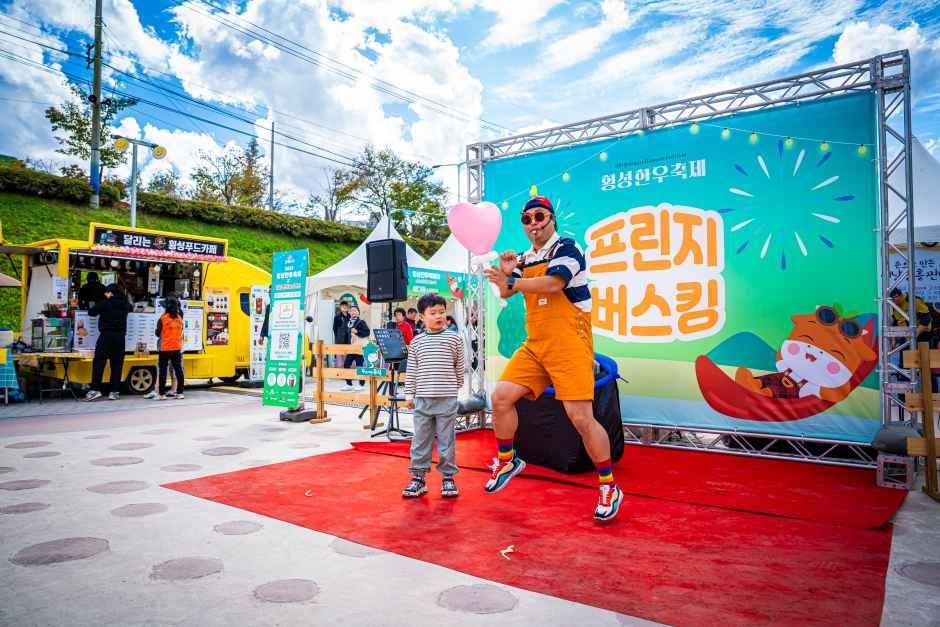
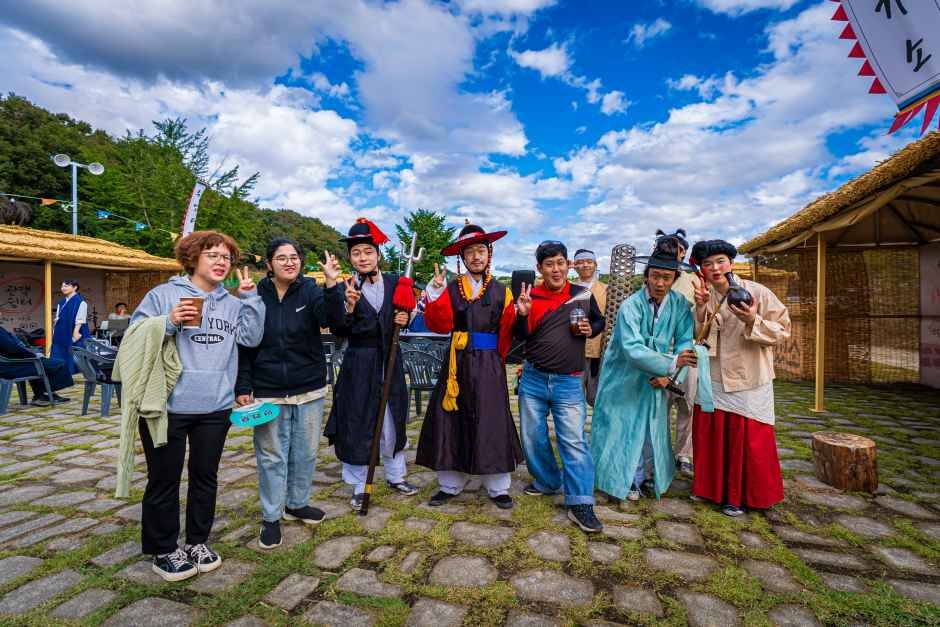
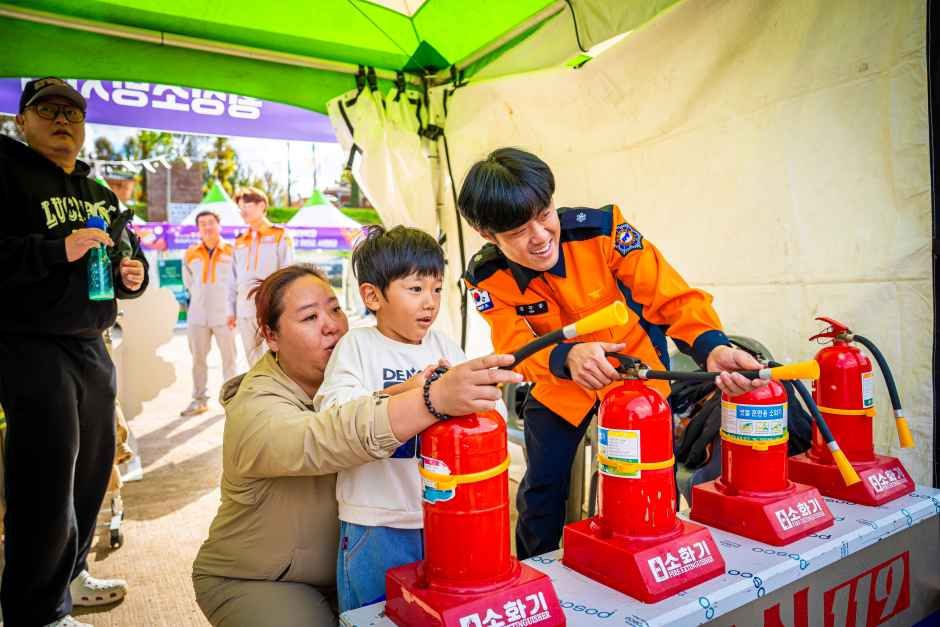
The event is family-usable without much Korean: grilling, browsing a produce market and watching a stage need no translation. For children, pre-opening coverage lists a kids’ busking stage, a “Memory Playground” kids’ park, experience booths and a flower-and-sculpture garden themed on cattle. This is not a festival with a single must-see performance, though; the substance is the food and the setting, and the stage is a pleasant addition rather than the reason to come.
Programme and timetable
The fixed points for 2026 are worth pinning down because they shape the day. The opening is October 7 and the closing is October 11. The grounds run 10:00-21:00 throughout. The music festa is every evening, 19:00-21:00, on the main stage. The fireworks are only on October 7 and October 10, at 21:00. The grill areas, sales counters, food zone and farm market operate throughout opening hours rather than on a fixed schedule.
Update, October 6 (one day before opening): the evening line-up has now been reported. Headliners by date: October 7 Lee Chan-won and Na Sang-do; October 8 Park Seo-jin and Na Tae-joo; October 9 Ahn Sung-hoon and Kim Su-chan; October 10 Choi Su-ho; October 11 Kim Hee-jae and Song Min-jun. Several more names (around fifteen in total) are on the series bill. Exact set times inside the 19:00-21:00 window were not published, and line-ups at Korean festivals can shift, so confirm on the day if one performer is your reason for coming.
Pre-opening coverage also lists two extra evening items, the Seomgang Starlight Lantern Festa and a nostalgia night called Hoengseong Night 1988. Their dates and times were not confirmed in what I could verify, so treat them as possible extras rather than something to plan around. I found no report of any postponement, cancellation or date change as of October 6, and no published rain plan.
Beyond that, a full hour-by-hour grid and exact experience-session times were not published.
The practical read of the timetable is this: the daytime is for eating and the produce market, and the evening concentrates the crowd around the stage and, on two nights, the fireworks. If you want a calmer meal, eat in the afternoon and let the evening programme be a bonus rather than a fight for a grill table.
Eating hanwoo without overpaying yourself
Because the grill areas are self-service and priced at the market rate for premium beef, the cost is entirely in your hands. There is no gate ticket, so you are not paying to enter and then paying again; you simply pay for what you cook. A dependable 2026 per-portion price was not published at this update, and hanwoo is genuinely expensive, so the honest advice is to bring a real payment budget and decide in advance roughly how much beef you intend to buy.
Buying from the sales counters is the other option, and it is the one locals often use: hanwoo is sold there by the cut, and some visitors buy to take home rather than grilling on site. If you are staying overnight nearby with cooking facilities, that can be better value than a table at the grill area. Either way, this is a place where the food is the souvenir.
Getting there without a car
By rail, the useful line is the KTX-Eum on the Gangneung route, from Cheongnyangni to Hoengseong Station in about 59 minutes, with the standard fare around 12,300 won from Cheongnyangni (about 13,900 won from Seoul Station) at this update. The important caveat is that Hoengseong is a selective stop — not every Gangneung-line train halts there — so check that your specific train stops at Hoengseong before booking. For this edition Korail has added two extra stops on October 9-11: KTX-Eum train 881 (Cheongnyangni to Donghae) stops at Hoengseong at 10:37, and train 886 (Donghae to Cheongnyangni) stops at 16:49. Free buses between the station and the festival ground are timed to those trains. That makes a day trip workable on the holiday weekend: arrive mid-morning, eat, stay through the afternoon, and take the 16:49 back. It does not work for the evening stage or fireworks, since the last extra stop leaves well before 19:00; for those you need a regular service, a bus or a night in town. Check that any other train you plan to use also stops at Hoengseong.
The alternative is the intercity bus from Dong-Seoul terminal to Hoengseong, scheduled at about two hours over roughly 78 kilometres, with only a handful of departures a day and a first bus around 07:10. Be warned that the route uses National Route 6 and weekend congestion near Yangsu-ri can stretch the trip toward three hours; some travellers instead ride to Hongcheon or Wonju and change there. The bus drops you in central Hoengseong rather than at the riverbank, so you still need a short local hop.
If you do drive, the site is roughly ten minutes from the Wonju-Hoengseong IC. The official guide map shows ten parking zones with about 2,930 spaces, and local coverage names three dispersed temporary lots: the General Sports Complex (650 cars), the Culture and Sports Park (450) and the stretch from the Wonheung 2nd Apartment to the roundabout (800). Two shuttle routes are announced, one from Hoengseong Station to the grounds and one looping through the town centre and bus terminal. Intervals and road-control hours were not published; expect congestion around the 21:00 fireworks on October 7 and 10, and follow the festival’s own transport notice rather than an old year’s plan.
Combining it with a Hoengseong autumn trip
October is peak autumn in inland Gangwon, and the festival is being marketed alongside the county’s foliage. Local coverage repeatedly pairs it with Hoengseong Lake trail (횡성호수길), a lakeside walking route that turns colour in mid-October, as the natural second half of a visit. The county is also running a 50% discount on experience fees at the Hoengseong Luge Experience Center and the Anheung steamed-bun village this month, but it is for Gangwon-do residents only, so it will not apply to most visitors from Seoul or abroad. Other add-ons named in coverage include the luge, camping at Byeongji and the Hanu Experience Center.
That combination is the strongest case for treating this as more than a lunch stop. On its own the festival is a good long meal by a river; paired with the lake trail and the surrounding countryside it becomes a full autumn day, and it justifies the trip out from Seoul more comfortably than the food alone would.
Honest assessment
The festival’s strength is honesty of purpose. It is beef, in the region that is genuinely known for beef, eaten outdoors by the Seomgang in good autumn weather, with a market and an evening stage attached. Free entry is meaningful here because there is no ticket standing between you and the grounds — you spend only on what you eat. For anyone who likes Korean barbecue and wants to buy it close to the source, that is a clear, well-matched day out.
The weakness is equally clear. This is an expensive place to eat despite the free entry, and the whole event revolves around a single food, which makes it a poor fit for vegetarians or for travellers hoping for a low-cost fair. Crowds are a real factor: organisers reported roughly 320,000 visitors last year, and this year’s October 9-11 falls on a holiday weekend. The published 2026 detail is still thin on per-portion beef prices, shuttle intervals and set times, so a little of your planning has to wait for the festival’s own announcements. Come for the beef and the setting, keep one eye on your budget, and treat the stage and fireworks as extras rather than the main event, and Hoengseong delivers what it promises.