
Autumn · Gyeongsangnam-do · Field listing
Ocean Village 2026
The essentials first: whether it is open, what it costs, how hard it is to reach and what to expect if you do not speak Korean.
When
Sep 18 — 20ConfirmedConfirmed dates
Where
Jangseungpo Portside Park, GeojeGyeongsangnam-do
Admission
FREEGeneral entry is free. Both the Korea Tourism Organization's English and Korean records list the event as free to enter. It is a market, so anything you buy from the food, lifestyle or dessert vendors is paid separately, and some hands-on classes may charge a materials fee; no per-programme price list was published at the time of writing.
From Seoul
About 4.5-5 hours by intercity bus, plus a local transferThere is no train to Geoje. From Seoul, take an intercity bus from Seoul Nambu Terminal to Geoje's Gohyeon Bus Terminal (roughly four and a half hours), then a Geoje city bus or taxi on to Jangseungpo. Many travellers instead go via Busan: KTX to Busan, then a frequent bus from Busan's Sasang (Seobu) terminal to Geoje. Confirm live times in TxBus or the Geoje bus information system before travelling.
Hours
Friday-Saturday 11:00-20:00; Sunday 11:00-18:00
Organiser
Food Travel Co., +82-70-4680-1718
Is this one for you?
Who it suits. This suits travellers who are already on Geoje, or day-tripping from Busan, and who enjoy browsing a curated seaside market — local food, desserts, handmade lifestyle goods and family activities beside the harbour. Families with children fit especially well, thanks to the one-day craft classes and stamp-mission events. It is a weak reason to make a long special trip from Seoul on its own: it is a free three-day weekend market of roughly fifty-five vendor teams, not a large spectacle, and anyone hoping for traditional performance, headline concerts or a ticketed main event should look elsewhere.
When to go. Friday and Saturday run until 20:00, so those are the days to catch the harbour after the lights come on; Saturday also has the busking and live-music slot and will be the fullest day. Sunday closes earlier, at 18:00, so do not arrive on Sunday afternoon expecting an evening. Coming in the late afternoon lets you browse in daylight and then stay for the lit waterfront on Friday or Saturday.
LOCAL WEATHER
Weather near the festival
The festival date is outside the current forecast window. Check again closer to your trip.
Korea Meteorological Administration forecast
Need something we do not list — a stall menu, a parking gate, a last bus? The Korea Travel Helpline answers in English around the clock: dial 1330 inside Korea, or +82-2-1330 from abroad.
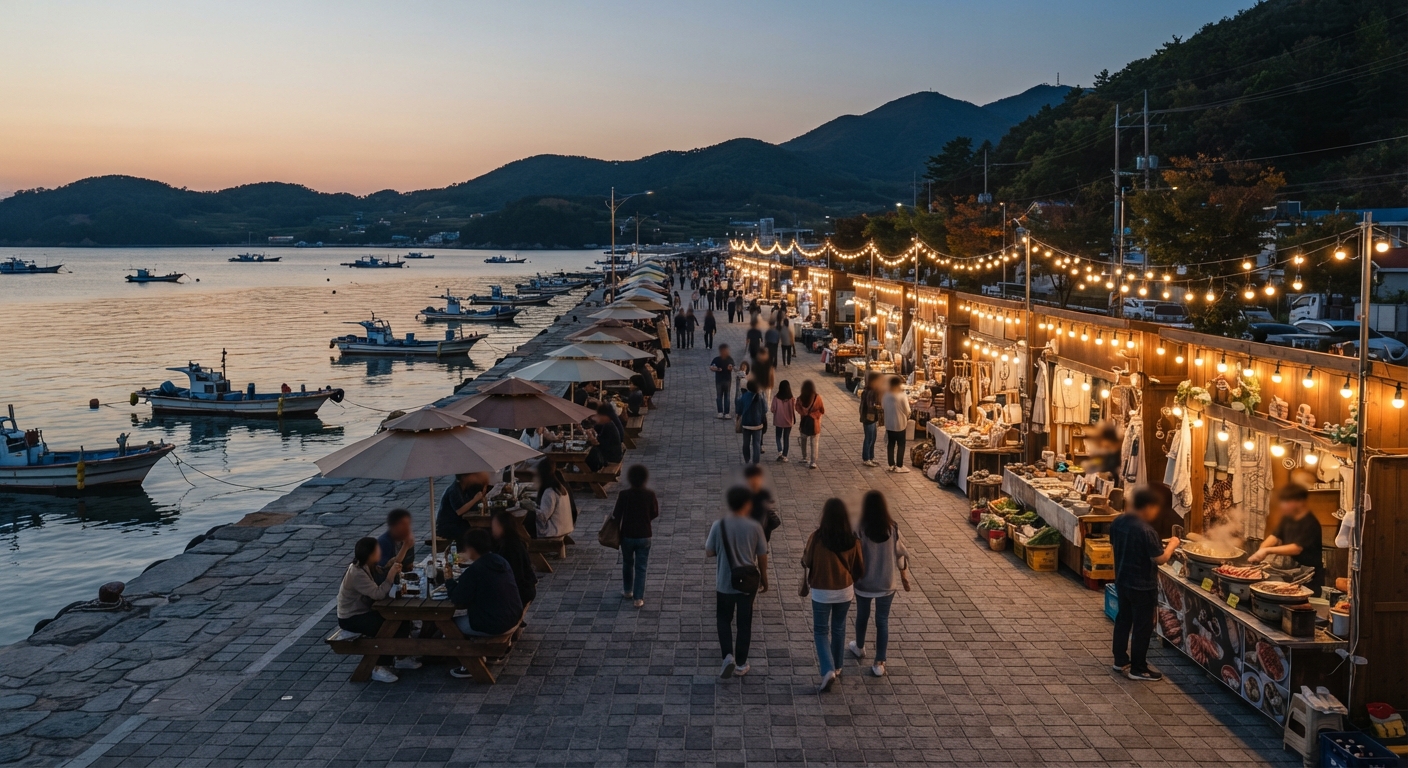
Ocean Village is a three-day seaside market on the waterfront at Jangseungpo, on the eastern side of Geoje Island in South Gyeongsang Province. The Korea Tourism Organization describes it plainly: a local market event that gathers Geoje’s produce, food and makers in one place beside the harbour. For 2026 it runs September 18-20 at Jangseungpo Portside Park, at 138 Jangseung-ro, and general entry is free. This is not a festival built around a stage or a single headline event; it is a curated market you walk through, with food, crafts and a handful of family activities laid out along the quay.
That framing matters for planning. The registered operating hours are 11:00 to 20:00 on Friday and Saturday and 11:00 to 18:00 on Sunday. In other words, only the first two days run into the evening, and Sunday winds down while there is still daylight. The event is organised by Food Travel Co., the market operator both the Korean and English records name; the two records disagree on the co-host, so this guide does not assert that detail.
What you actually do here
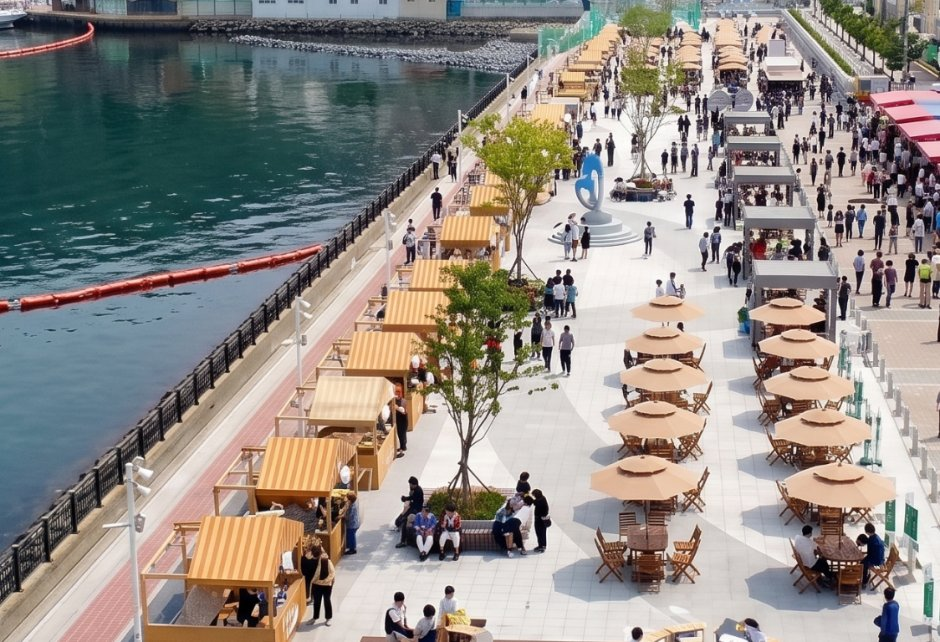
The honest description is browsing, eating and letting children take part — not watching a programme. The Korea Tourism Organization’s Korean listing breaks the site into five zones, and together they add up to roughly fifty-five vendor teams spread along the waterfront. You move between them at your own pace rather than following a timetable.
The core of it is the market itself. A local food market brings together Geoje’s agricultural and marine produce and processed goods from regional producers, plus a small cluster of bakeries and dessert-and-drink stalls. A much larger lifestyle market of around thirty-five teams sells crafts, tableware, interior and living goods, children’s and pet items, and pieces from local creators and small brands. A separate on-site food zone of about ten teams handles cooked street food and pop-up food brands. So the shopping runs from a punnet of local fruit to a bowl of street food to a handmade ceramic — a maker’s market and a food market at the same time.
The five market zones and what is on
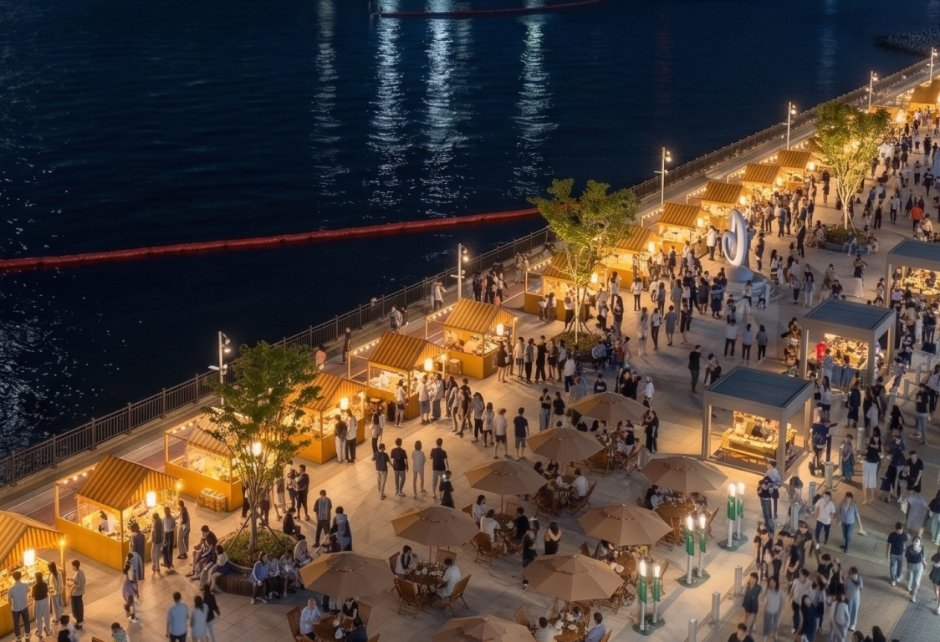
Because Ocean Village is a market rather than a show, the useful “schedule” is really the layout. The five registered zones are the local food market, the lifestyle market, the on-site food zone, an experience-and-activities area, and an ocean shelter and lounge — a seating and rest area facing the water, with a photo point and communal tables where you can eat what you have bought.
The experience and activities zone is where the event does have timed content. It lists one-day craft classes built around Geoje’s local materials and aimed at families with children, hands-on participation programmes, and a stamp-mission game that sends you around the stalls to collect rewards. On Saturday there is a busking and live-music slot, described as small acoustic performances to fill out the weekend atmosphere rather than a main-stage concert. If you are coming specifically for the music or the children’s classes, treat those as the reason to pick Saturday, and check the organiser’s Instagram for the day’s timings, since no minute-by-minute grid was published in advance.
One practical note: a market of this size, free to enter and running only three days, tends to be busiest in the late afternoon and early evening on Friday and Saturday, when the after-work and after-dinner crowd arrives and the waterfront lights are on. If you dislike crowds, the calmest browsing is likely to be when the doors open at 11:00.
Getting there without a car
Geoje is an island connected to the mainland by bridge, and there is no railway to it. From Seoul the direct public route is an intercity bus from Seoul Nambu Terminal to Gohyeon Bus Terminal in Geoje, which timetable aggregators put at roughly four and a half hours; from Gohyeon you continue to Jangseungpo by Geoje city bus or taxi. Build that final local leg into your plan rather than assuming the intercity bus drops you at the market.
For many travellers the easier approach is via Busan. Take the KTX to Busan, then a frequent bus from Busan’s Sasang (Seobu) intercity terminal across to Geoje; this is the standard way onto the island and runs far more often than long-haul services from Seoul. Either way, use the TxBus reservation site or Geoje’s own bus information system to confirm live departure times, because schedules and the last useful return of the day change with the season.
Once you are in Geoje, Jangseungpo is a compact, walkable harbour district, and the market runs along the waterfront park itself. Set your map app to the venue address — 138 Jangseung-ro — rather than simply “Geoje”, which covers a large island with more than one town centre and more than one bus terminal.
Food on site and Geoje specialties
There is food at the event by design: the on-site food zone and the dessert stalls are two of the five zones, and the local food market sells Geoje produce and processed goods. What the tourism listing does not do is name specific 2026 vendors, menus, prices, vegetarian options or payment methods, so this guide will not either. Treat the food as part of the browsing, and carry a cash and card option since a market of small independent stalls may not all take the same payment.
Away from the temporary stalls, two Geoje specialties are worth knowing. The island has long been described as a home of yuja, the fragrant Korean citron, which the city promotes as a signature product and which ripens through autumn — so mid-September is the very start of its season. Geoje’s other defining food comes from the sea: cod is one of the island’s main catches, landed at harbours such as Oepo, and daegu-tang, a clear cod soup, is counted among the city’s representative dishes. Cod is at its best in the colder months rather than in September, so think of it as a reason to eat well in central Geoje rather than something the market is built around.
Honest assessment
Ocean Village’s strength is exactly what it claims to be: a relaxed, free, good-looking market on a real working harbour, with enough range — local produce, street food, a big lifestyle-goods section and genuine children’s activities — to fill a couple of unhurried hours. The waterfront setting does a lot of the work, and on a Friday or Saturday evening with the lights on it is a pleasant place to eat and wander. For families and for anyone already spending time on Geoje or in Busan, it slots neatly into a day.
Its weakness is scale and specificity. This is a three-day pop-up market, not a landmark festival, and the advance detail is thin: no vendor list, no priced activity schedule, no confirmed parking or shuttle plan, and only an Instagram account as the official channel. That is fine for a spontaneous visit and a poor basis for a long, dedicated trip. If you are coming from far away, anchor the day around Geoje itself — the coast, the harbour towns, a bowl of cod soup — and treat Ocean Village as a good addition to that, rather than the single reason for the journey. Come on Friday or Saturday if you want the evening; keep Sunday for an afternoon; and check the organiser’s Instagram close to the date for anything the tourism listing left blank.
Local specialties to try

Geoje yuja (citron) (거제 유자)
Geoje has long been known as a home of yuja, the fragrant Korean citron, and the city promotes it as a signature specialty; local growers describe the island fruit as deep in colour with a thick, strongly scented rind. It ripens through autumn, so mid-September falls at the start of its season. This is a regional specialty of Geoje, not a promise that a particular festival stall will sell it.
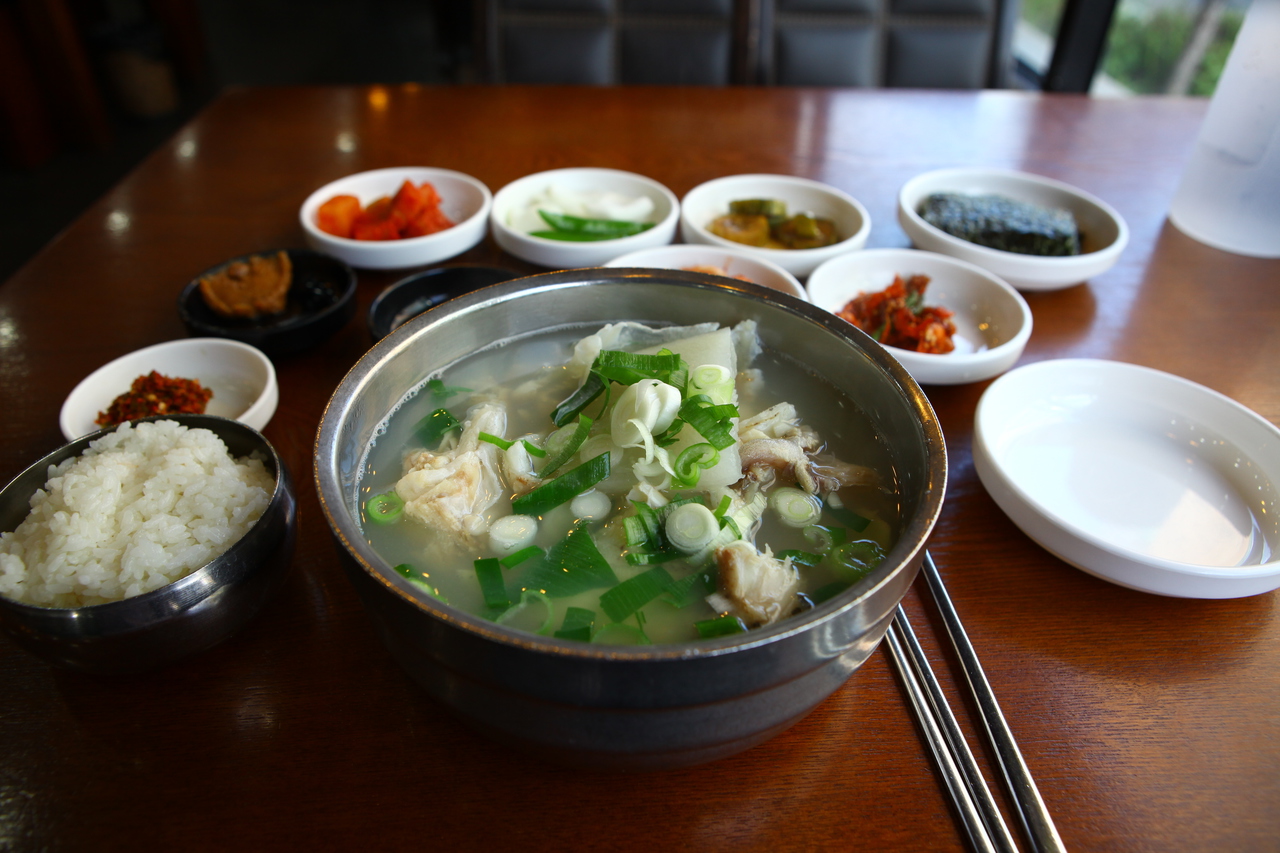
Geoje cod and daegu-tang (cod soup) (거제 대구·대구탕)
Cod is one of Geoje's main catches, landed at harbours such as Oepo, and daegu-tang, a clear cod soup, is listed among the city's representative dishes. Cod is strongest in the colder months rather than mid-September, but it remains a defining Geoje food. This is a regional specialty recommendation, not a claim about the festival's own food stalls.
Questions worth asking
Is Ocean Village free to enter?
Yes. Both the Korea Tourism Organization's English and Korean listings describe general entry as free. It is a market, so anything you buy from the vendors is paid separately, and some children's classes may charge a small materials fee, but there is no gate ticket.
What are the opening hours?
The registered hours are 11:00 to 20:00 on Friday and Saturday and 11:00 to 18:00 on Sunday, across September 18-20, 2026. Sunday ends two hours earlier than the other days, so plan a Sunday visit for the afternoon rather than the evening.
How do I get to Geoje without a car?
There is no train to Geoje. Take an intercity bus from Seoul Nambu Terminal to Gohyeon Bus Terminal (about four and a half hours), then a city bus or taxi to Jangseungpo. Many visitors find it easier to travel via Busan, taking the KTX to Busan and then a frequent bus from Sasang (Seobu) terminal to Geoje.
Is it suitable for children?
Yes. The programme lists one-day craft classes aimed at families, a stamp-mission game around the market and family participation events, alongside the food and lifestyle stalls. The waterfront setting is open and walkable, though it is beside a working harbour, so keep small children away from the quay edge.
Is there festival parking or a shuttle?
No dedicated parking map or shuttle plan had been published when this guide was written. Jangseungpo is a working harbour district with public parking near the waterfront, but it can fill on a festival weekend. Check the organiser's Instagram for any parking notice before driving, or use Geoje's city buses.
Before you goFestival Etiquette in Korea: What Visitors Get WrongBooking KTX Trains and Intercity Buses as a Foreign VisitorGetting Out of Incheon Airport and On to a FestivalKorean Festivals With Children: Toilets, Strollers and TimingStaying Online in Korea: SIM, eSIM and the Apps That MatterEating at a Korean Festival Without Speaking KoreanRain, Typhoons and Cancelled Festivals: How to Plan Around ThemHow to Pay for Things in KoreaT-money and Transit Cards in KoreaWhat to Wear to a Korean Festival, Season by Season
LAST UPDATED · Sep 15, 2026