
Autumn · Seoul · Field listing
Seoul Street Arts Festival 2026
The essentials first: whether it is open, what it costs, how hard it is to reach and what to expect if you do not speak Korean.
When
Sep 19 — 20ConfirmedConfirmed dates
Where
Ttukseom Hangang Park and Seoul Forest, SeoulSeoul
Admission
FREEAll 2026 festival programs are free. Some participatory works require advance reservations; the published reservation window is September 2-16, first come, first served.
From Seoul
About 30–40 minFor Seoul Forest, take Line 4 from Seoul Station to Dongdaemun History & Culture Park, Line 5 to Wangsimni, then the Suin-Bundang Line one stop to Seoul-forest Station. For the riverside stages, use Line 7 Jayang Station, whose Exit 2 connects directly to Ttukseom Hangang Park. Choose the station for the first performance on your schedule.
Hours
10:00–21:00
Organiser
+82-2-2088-7349
Is this one for you?
Who it suits. This suits visitors happy to stand, walk between stages and let a timetable shape the day, especially anyone drawn to circus, movement and non-verbal pieces, and families who can use the children's play areas and Chuseok games. It is a poor fit if you want an assigned seat, a single weatherproof venue or one continuous stage show, since several works are deliberately mobile and spread across two parks.
When to go. The programme peaks after dark, because the moving giraffe production is the largest work and the final long performance at 19:40 on both nights. Both days run the same hours and repeat much of the core programme, so pick whichever day fits and arrive well before the 19:40 start rather than treating a saved timetable as fixed.
LOCAL WEATHER
Weather near the festival
The festival date is outside the current forecast window. Check again closer to your trip.
Korea Meteorological Administration forecast
Need something we do not list — a stall menu, a parking gate, a last bus? The Korea Travel Helpline answers in English around the clock: dial 1330 inside Korea, or +82-2-1330 from abroad.
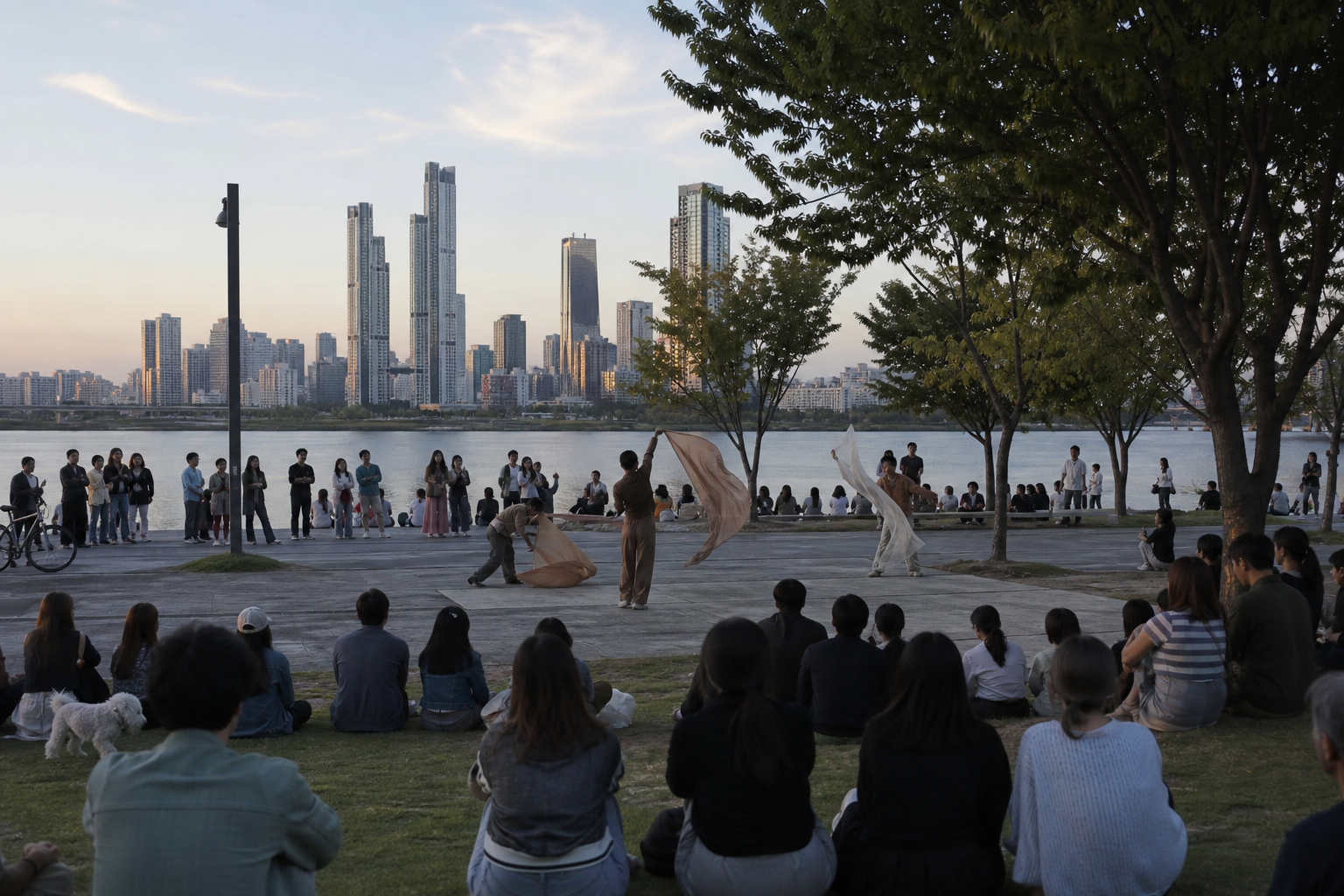
Seoul Street Arts Festival moves out of the city-centre plazas and onto the Hangang in 2026. Across Ttukseom Hangang Park and Seoul Forest, 20 works from Korea and five other countries are scheduled for 62 performances over two days. Nine works come from France, Lithuania, Chile, Slovenia and Brazil, alongside 11 Korean works. This is outdoor theatre in public space: you walk between small circus, movement and participatory pieces rather than sit through one continuous stage show.
Checked nine days out (September 10): the festival is still on for September 19-20, with no postponement, cancellation or date change in the latest Korea Tourism Organization record or in Seoul press from September 10-13. Two things matter for anyone planning now. First, the free advance-reservation window for participatory works closes on September 16, so book those before the weekend rather than on arrival. Second, the street-arts programme sits inside the larger Seoul Autumn Festa, whose own opening gala—an evening dance show called Seoul, Dancing on the Hangang—fills Ttukseom Hangang Park on the evening of Friday, September 18, a day before the street-arts works begin. If you are already by the river on the 18th you can watch that opening, but the 20 street-arts productions described below run on the 19th and 20th.
What you actually do here
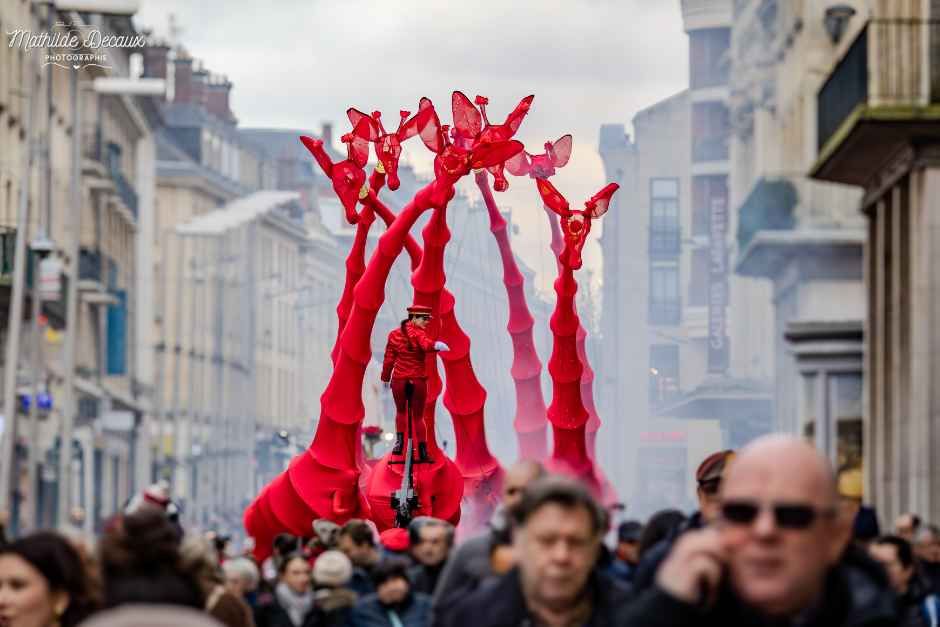
Build the visit around a few named works, not a complete lap of everything. The largest production is Compagnie OFF’s moving evening performance with seven eight-metre red giraffe puppets, opera, circus and small fire effects. It starts in front of the Ttukseom football field at 19:40 on both days and runs for 80 minutes. That makes it a natural finish to a riverside day, but it is not a seated finale with one fixed sightline.
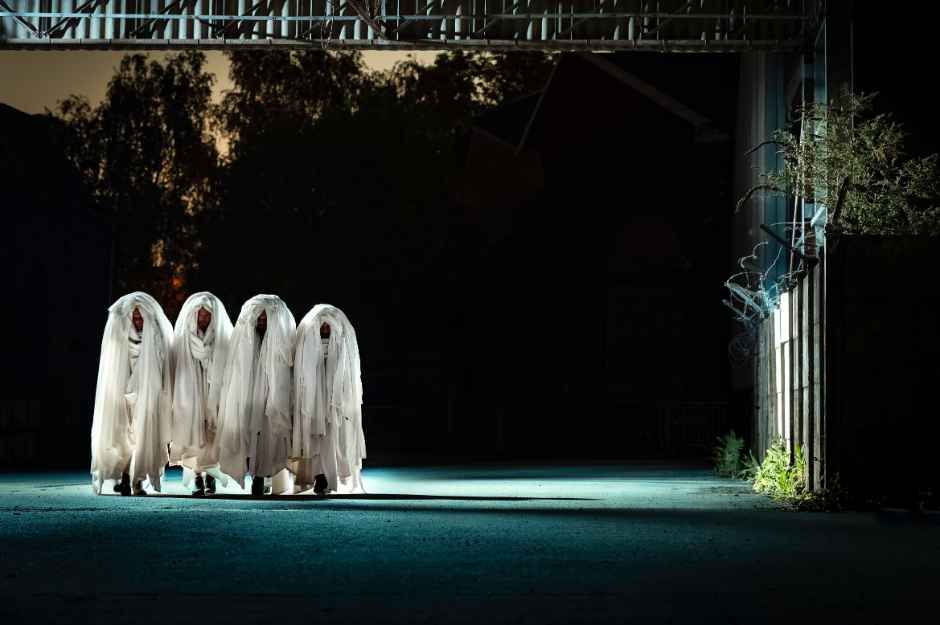
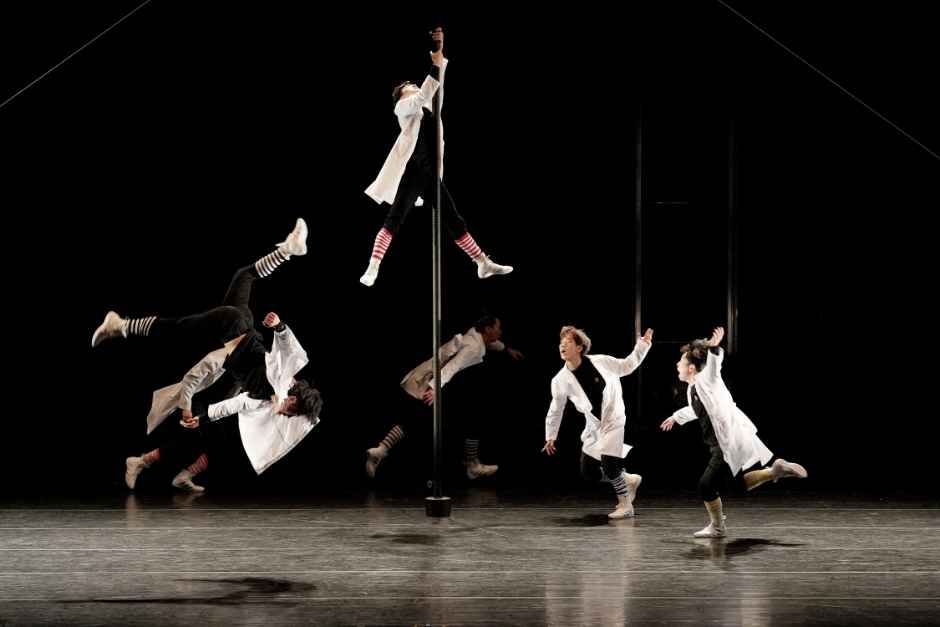
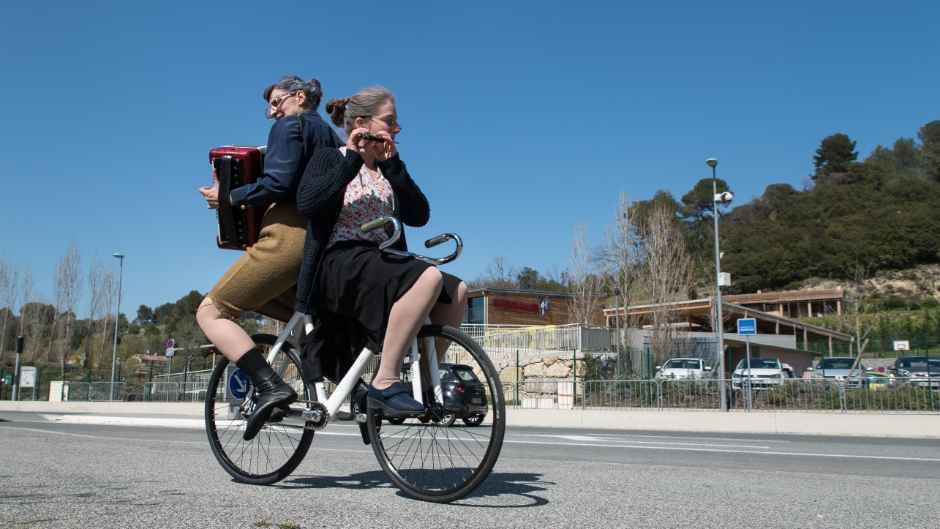
The smaller works cover several distinct forms. Never Retire uses acrobatic bicycles and tightrope work to tell a story about two older friends. Pocket Juggling builds visual comedy from five balls, seven pockets and performers’ hands. Laundry Line turns white sheets and an oversized drying rack into a one-hour, non-verbal street-theatre piece. Korean works include Sketchbook 231, a 30-minute sequence using paper and drawings, and Rotation, a non-verbal contemporary circus work built around a custom rotating device.
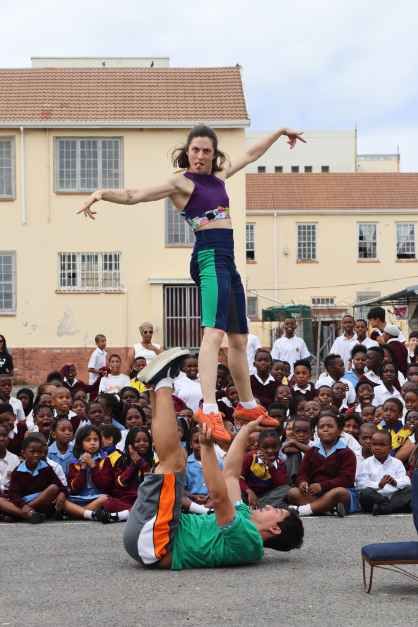
Several pieces require the audience to move or take part. Shared Pathways is a 40-minute Brazilian circus work in which audience movement and participation may be requested. Taking Root sends participants walking with plants while listening through headphones. This distinction matters: “street arts” here does not mean background busking. Some works have a beginning, duration and precise meeting place; arriving midway can mean missing the logic of the piece.
The side programme broadens the day without pretending to be another headline show. The official listings include a children’s EDM party, play areas based on movement, wooden equipment and Chuseok games, kite making, a sticker treasure hunt and the citizen dance contest Find the Joy. These are useful gaps for families, but check their individual programme entries before promising a child a particular session; the overall 10:00–21:00 hours do not mean every activity runs continuously.
Programme and timetable
Both Saturday, September 19 and Sunday, September 20 run from 10:00 to 21:00. The detailed grid, rather than those overall hours, should determine the visit. Many works repeat on both days, which reduces the cost of one clash: Never Retire is listed at 11:00 and 14:30 beside the Ttukseom artificial climbing wall; the ten-minute Chinese-pole work Inner Exploration of a Fish runs at 10:30 and 15:00 at the X-game area; and Pocket Juggling runs at 14:00 and 16:00 in Seoul Forest’s Welcome Garden.
The afternoon illustrates why venue checking matters. Laundry Line begins at 16:30 on the grass in front of the climbing wall, while Shared Pathways starts at 17:00 at the music fountain. These are both in Ttukseom Hangang Park, but not on one compact festival plaza. At Seoul Forest’s outdoor stage, the associated Seoul Stage in Autumn programme has a 15:00 university musical showcase and an 18:30 musical-star gala on each festival day. That programme is speech- and music-dependent, unlike several non-verbal circus pieces.
At night, Adult Matter begins at 19:00 at the cascade fountain, Rotation at 19:00 in the X-game area, and the giraffe procession at 19:40 by the football field. Those overlaps make it impossible to see every evening work in full. Pick either one 19:00 piece followed by a carefully planned move, or go directly to the procession area. The official website’s “My Timetable” function is useful for exposing clashes, but it does not reserve a viewing place.
Tickets, fees and booking
General admission and all published festival programmes are free. There is no gate to pass through and no single ticket covering the two parks. Free, however, does not always mean drop-in: the organiser’s September 1 notice opens advance reservations for selected participatory works from September 2 through September 16, first come, first served.
Use the reservation link attached to the individual work on the official site. Do not reserve merely because a piece sounds popular; most of the fixed outdoor performances are intended for open viewing. The limited places matter for works where the audience becomes part of the action or needs equipment such as headphones. Save the confirmation and read the meeting instructions, because a broad label such as “Ttukseom Hangang Park” is not enough to find a small moving group.
The official programme also publishes accessibility notes per work. These can state whether dialogue is essential, whether sound is important, whether the audience moves, and whether participation or physical contact may occur. That is more useful than a blanket promise about the whole festival. This guide therefore leaves the frontmatter language-support field unfilled: a non-verbal show can be understandable without proving that English help, translated signs or interpretation will be available across the site.
Getting there without a car
From Seoul Station, the quickest published rail route to Seoul-forest Station takes about 26 minutes with changes at Dongdaemun History & Culture Park and Wangsimni; allow roughly 30 to 40 minutes once waiting and the exit walk are included. Seoul’s official park guide places Seoul Forest two minutes from Exit 4 of Seoul-forest Station. Line 2 Ttukseom Station is another approach, about a ten-minute walk from the park.
For performances in Ttukseom Hangang Park, Line 7 Jayang Station—formerly called Ttukseom Resort Station—is the useful stop. Seoul’s Hangang Park guide places the bicycle-rental plaza by Exits 2 and 3 and connects Exit 3 directly to the J-Bug cultural building; the swimming-pool side is reached from Exit 2. Do not navigate only to the festival’s postal address: the programme is spread between two large parks, so route to the exact stage shown on the timetable.
Moving between the parks
Seoul Forest and the riverside grounds are related parts of the festival, not two entrances to one enclosure. The official Seoul Forest map shows pedestrian and bicycle access toward the Hangang embankment, while the Hangang site itself has a long riverside path and 16.6 kilometres of cycleway within the wider park. That makes a walk or ride possible, but it does not establish a dependable door-to-door transfer time between any two festival stages.
For 2026 the organiser has built this movement into the programme itself. Its Art Trekking concept explicitly names three ways to travel between Seoul Forest and Ttukseom—on foot, by bicycle and by the Hangang river bus—so you can watch a piece at Seoul Forest and then continue at Ttukseom. Treat this as the festival’s suggested experience rather than a guaranteed shuttle: the river-bus pier used, its departure times and any festival-day frequency were not published in a dependable form when this guide was checked, so confirm the boat’s schedule on the day before you rely on it to reach a timed performance.
The practical approach is to cluster performances. Spend one block around Seoul Forest’s Welcome Garden and outdoor stage, then one block around the climbing wall, X-game area, fountains and football field at Ttukseom. Do not put a Seoul Forest performance immediately before a riverside start simply because both are printed under one festival name. Bicycle rental exists beside Jayang Station, but hours vary seasonally and riding through a performance crowd is not a shortcut; use a bicycle only if the day’s official route explicitly suits it.
Food and breaks
No dependable 2026 festival-vendor list was published when this guide was checked, so it would be misleading to promise food trucks, a beer zone or a particular meal inside the event. Ttukseom Hangang Park itself has three convenience stores, 18 toilets, drinking-water points, shade structures and seating, according to the city park guide. Its waterside facilities also include a café, food court and restaurant. These are permanent park amenities, not guaranteed festival concessions, and queues or individual opening hours have not been verified.
Seoul Forest has lawns and rest areas, but the sensible meal strategy is to leave space in the schedule rather than carrying an uncovered dish from stage to stage. Cooking is prohibited in Ttukseom Hangang Park, smoking is banned, and visitors are asked to take their rubbish away. For a Seoul food outside the festival, the local-specialty card on this page lists seolleongtang, the pale beef-and-bone soup that Seoul Metropolitan Government identifies among the city’s native foods. That is a regional context note, not a claim that the festival sells it.
Honest assessment
This is a good fit for someone willing to stand, walk and let the schedule shape the day. It is a poor fit if you want an assigned seat or a single weatherproof venue. The confirmed programme uses lawns, paths and the riverfront, and several works are deliberately mobile. Comfortable shoes and slack between performances matter more than trying to check off all 62 showings.
The new setting makes confident crowd forecasts impossible. The 2025 edition used downtown plazas and Cheonggyecheon, so its attendance cannot tell you how pressure will distribute across the 2026 parks. What can be said from the timetable is that the 19:40 giraffe production is the largest work and the final long performance on both nights. Arrive before its stated start, expect standing spectators along a moving route, and avoid a tight restaurant or train reservation afterward.
Weather is a real operational issue, not decorative advice. The festival is outdoors, some apparatus depends on safe surfaces and wind conditions, and the organiser’s own notice archive shows that performances have previously been cancelled, shortened or relocated during a festival. That history does not predict a cancellation in 2026. It does mean the official notice board is the right source on the morning of September 19 or 20, even if a saved timetable says otherwise.
One day is enough. This is within Seoul’s transit network, closes at 21:00 and repeats much of the core programme on Sunday, so an overnight stay is not inherent to the event. A well-paced visit is one park block, a meal break, a riverside block and the evening procession—not a race between every dot on the map. Reserve only the work that needs it, screenshot the exact meeting points, and accept that seeing three complete pieces is better than seeing the last ten minutes of six.
Local specialties to try
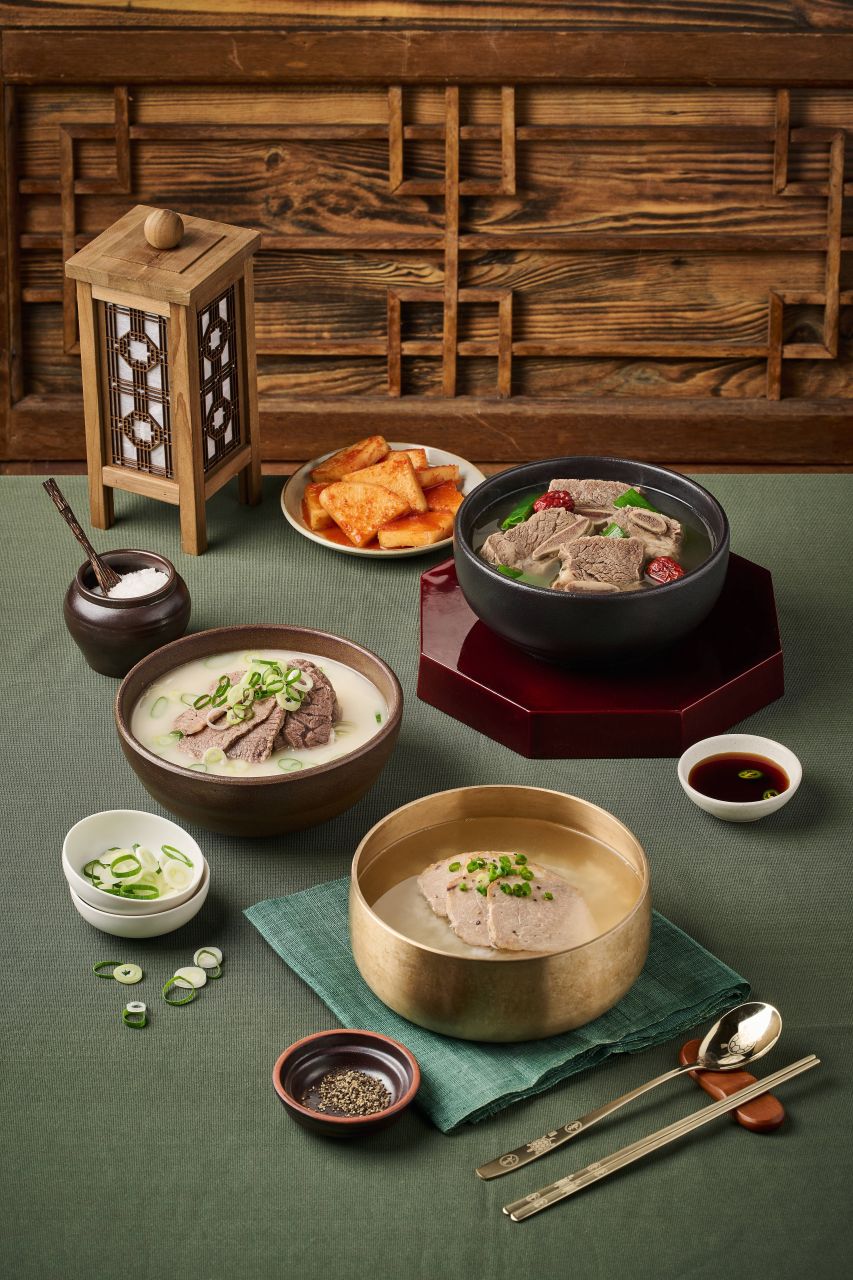
Seolleongtang (설렁탕)
A long-simmered beef-and-bone soup with a pale broth, usually served with rice, sliced beef and chopped spring onion. Seoul Metropolitan Government sources identify it as a representative native Seoul food that spread across the city from the late Joseon period.
Questions worth asking
Do I need a ticket?
General admission and the published programmes are free. Some participatory works still require a reservation; bookings run first come, first served from September 2 through 16 on the official festival site.
Which station should I use?
Use Seoul-forest Station for Seoul Forest and Jayang Station on Line 7 for Ttukseom Hangang Park. The festival occupies both areas, so check the venue beside each performance before setting out rather than treating them as one entrance.
How crowded will it be?
The exact 2026 turnout is unknown because the riverside layout is new. The moving giraffe production is the final and largest work each night, so allow extra time to find its starting area and do not schedule a tight connection afterward.
What happens if it rains?
This is an outdoor festival, and the organiser has previously issued same-day cancellations and venue changes when conditions affected performances. Check the official notice board on the morning of your visit; a free programme is not a guarantee that every listed performance will proceed.
Before you goFestival Etiquette in Korea: What Visitors Get WrongBooking KTX Trains and Intercity Buses as a Foreign VisitorGetting Out of Incheon Airport and On to a FestivalKorean Festivals With Children: Toilets, Strollers and TimingStaying Online in Korea: SIM, eSIM and the Apps That MatterEating at a Korean Festival Without Speaking KoreanRain, Typhoons and Cancelled Festivals: How to Plan Around ThemHow to Pay for Things in KoreaT-money and Transit Cards in KoreaWhat to Wear to a Korean Festival, Season by Season
LAST UPDATED · Sep 10, 2026