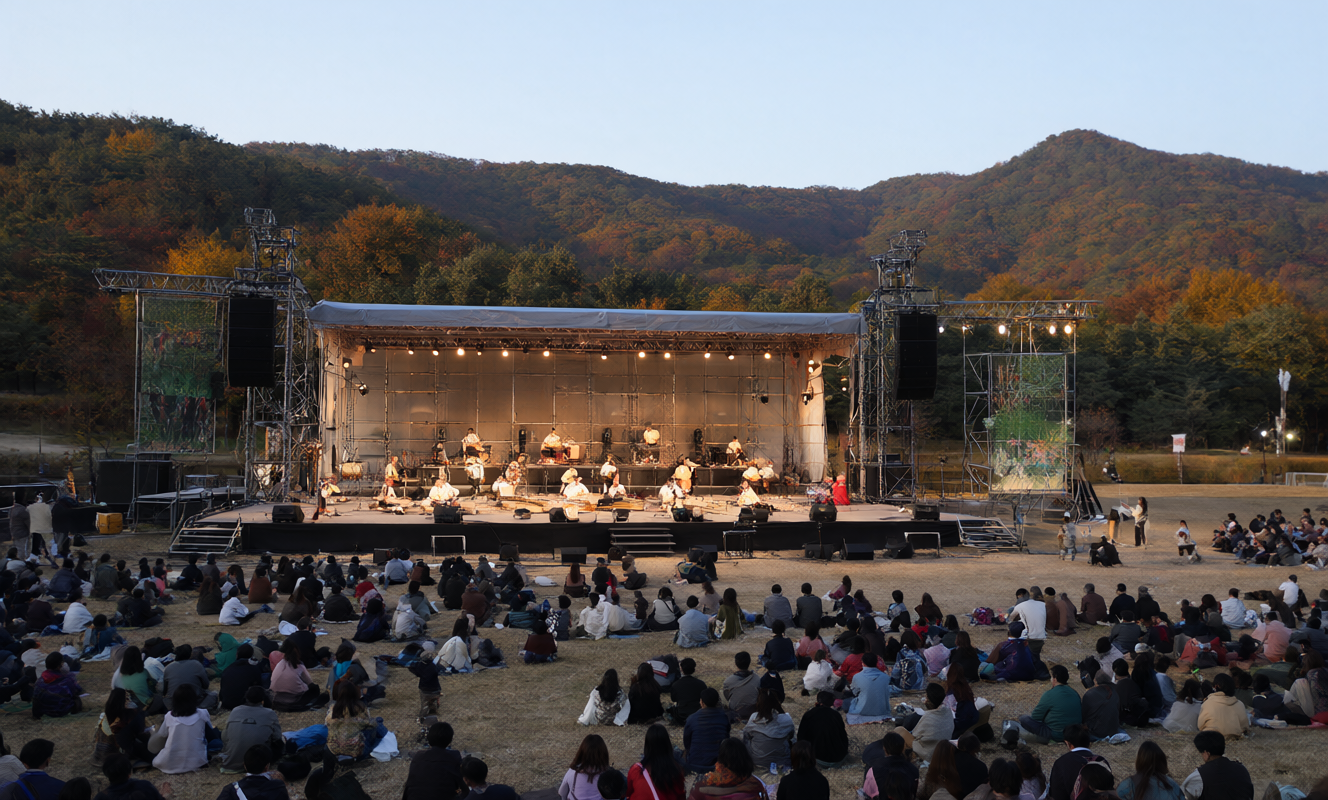
The Yeongdong Nangye Korean Traditional Music Festival is built around gugak, Korea’s traditional music. It is held in Yeongdong, a county town in Chungcheongbuk-do, and honours Nangye Park Yeon, whom Yeongdong County describes as born and raised in the area and counts among Korea’s three great musicians. KTO calls it the only festival in Korea dedicated to traditional music. The 2026 edition is the 57th and, according to KTO, follows on from the 2025 Yeongdong World Traditional Music and Arts Expo.
The confirmed dates are 15 to 18 October 2026, at Yeongdong Rainbow Healing Plaza, 117 Yeongdong Healing-ro. General admission is free. KTO lists daily hours of 10:00 to 20:00, but the festival’s own programme schedules several main-stage events after 18:00, including a 21:00 fireworks show on opening night, so treat the 20:00 figure as a daytime operating window rather than a hard closing time for everything.
What you actually do here
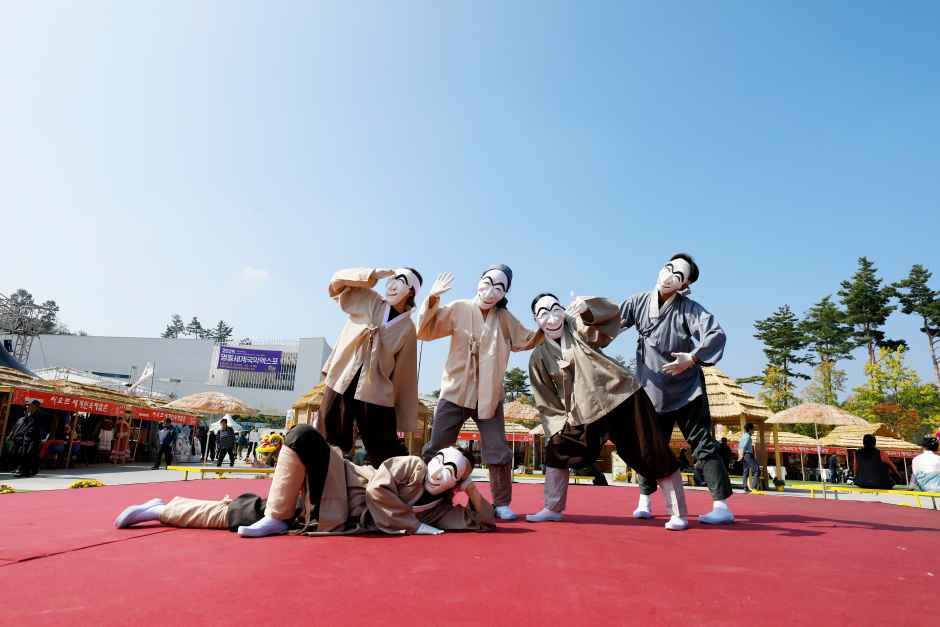
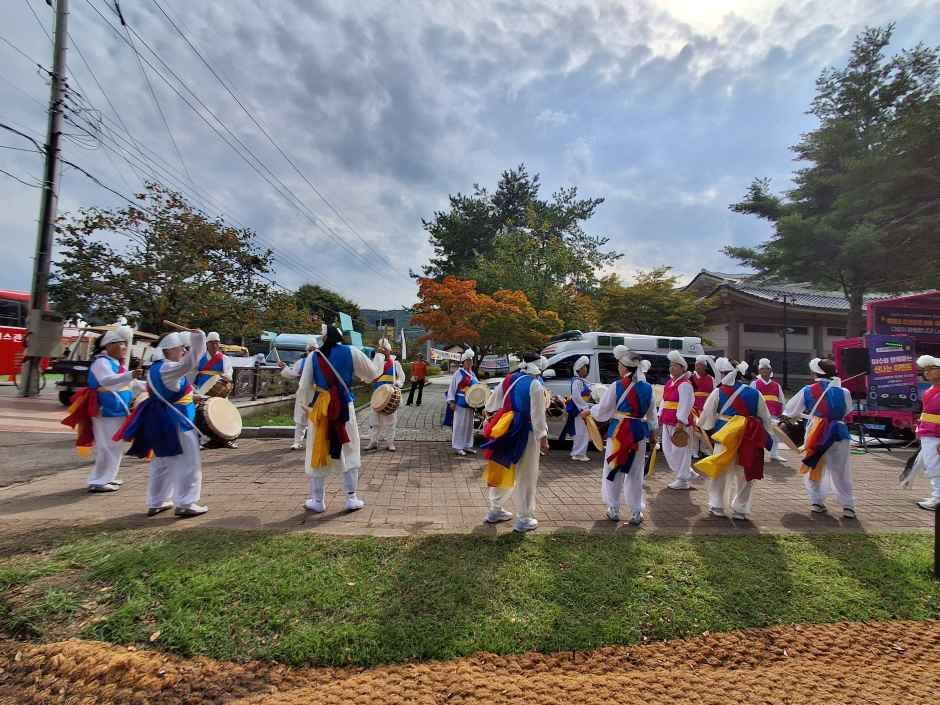
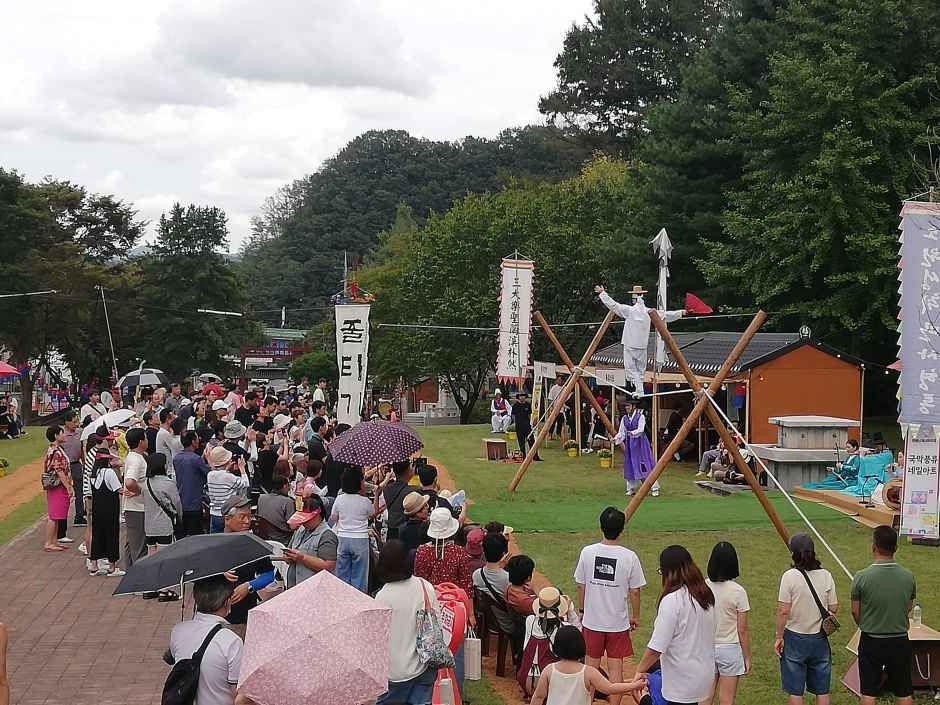
KTO groups the programme into four parts. The core is stage performance: opening and closing ceremonies, traditional gugak, fusion gugak, world folk dance and children’s performances. Around that sit supporting events, including the 21st Chupungnyeong Song Festival, national and county pungmul (percussion) competitions, a gugak radio booth, hanbok trying-on and a karaoke corner. Hands-on programmes include traditional games, a gugak quiz show, a children’s play area and making and playing traditional instruments. The fourth group is fixed attractions, such as a digital gugak museum, a gugak theme park and photo spots.
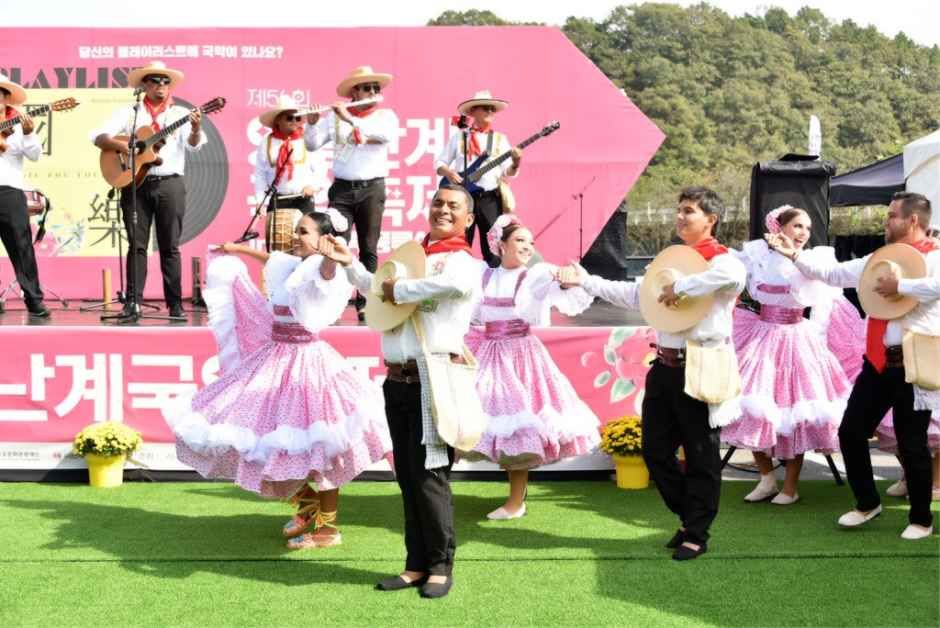
The Korea Tourism Organization photographs in this guide are file images from earlier editions, so the staging and layout in 2026 may differ from what you see here. They give a reasonable sense of the kind of thing on offer: masked folk performers, pungmul bands in bright costume, rope-walking in front of a standing crowd, and visiting folk-dance groups on the main stage.
Programme and timetable
The official 2026 landing page publishes a day-by-day grid for the headline events:
- Thursday 15 October: a memorial ceremony at the Nangye shrine at 09:00; a gugak street parade through central Yeongdong at 16:00; a Nangye Orchestra performance at 18:00; the official opening ceremony at 18:30; a celebration concert at 20:00 with YouKnowAhn (Yoon Do-hyun), Kim Jun-su and the singer Kim Yong-woo; and fireworks at 21:00.
- Friday 16 October: a performance programme titled “Nangye Yeonhui Pan-tasy” at 18:30.
- Saturday 17 October: the Chupungnyeong Song Festival at 18:30.
- Sunday 18 October: a Nangye gugak dance gala show at 12:00 and the closing ceremony at 18:30. The page also mentions a concert marking the first anniversary of the 2025 Expo, but does not say which night it is on.
The grid covers the headline events only. It does not give a daytime timetable for the experience zones or the stage acts between them. Some outside sites have published fuller lineups for the weekend, but they were not on the official page, so this guide does not repeat them. KTO also describes the festival food listing as last year’s, with the 2026 version still being updated, so no stall, menu or price for 2026 can be confirmed.
The festival’s own page also mentions a standing Nangye Orchestra programme and a wellness zone. Their times were not published in the material checked.
Tickets, fees and booking
There is no general admission ticket. You can walk onto the plaza and watch the stage programmes without paying or booking. KTO’s Korean listing says some experience programmes charge between 5,000 and 15,000 won, and that is the only price information found. Which activities cost money, what the booking arrangements are and whether there are any age limits was not itemised.
Separate from admission, the county has run a hometown-giving promotion tied to the festival between 5 and 18 October. It is a donation scheme for Korean taxpayers, not a way of getting a festival ticket, and it is mentioned only because news about it can show up in searches.
Getting there without a car
From Seoul the straightforward route is by train to Yeongdong Station. Two timetable aggregators list about 16 ITX services a day on the Seoul Station to Yeongdong route at roughly 2 h 17 m to 2 h 26 m, plus slower Mugunghwa trains at roughly 2 h 28 m to 2 h 57 m. Exact departures and fares vary, so use Korail’s app for your date.
One listing places Yeongdong Station on the same road as the festival address, Yeongdong Healing-ro in Yeongdong-eup, and puts the taxi ride at around 10 to 12 minutes. That is a single source, so treat it as a rough guide and check the distance in a map app. Local bus frequency and any festival bus service were not confirmed. An intercity bus from Seoul was not checked at all, so this guide does not compare it with the train.
Parking, shuttles and traffic control
As of 4 October, no page checked had published the temporary parking lots, a shuttle bus plan or the times when roads would be closed. The official site, the KTO listing and the county page all lack it. A street parade through central Yeongdong is scheduled on 15 October at 16:00, so some road disruption in the town centre that afternoon is plausible, but no closure notice was found.
If you are driving, check the official site and its notice page on the day before you go, or call the organiser on 043-745-8917. Do not navigate to the plaza and assume you will find parking beside it on opening night or on the Saturday evening song festival.
Day trip or overnight
A day trip from Seoul is possible on paper, with the train taking about two and a quarter to three hours each way, but the best-documented events are at 18:30 and later. After a late-evening show, the return leg depends on the last train, which this guide has not checked and does not guess. Look up your exact return train before you buy the outbound ticket.
The Sunday schedule is the easiest to fit into a single day, because the dance gala is at midday and the closing ceremony at 18:30. Whether to stay over depends on that last train. No accommodation was checked, so no hotel is recommended here.
Food on site and nearby
Treat the festival’s food as unknown for 2026. KTO states that its food information is from 2025 and awaiting an update, and no 2026 stall list was found.
For something with a documented local link, Yeongdong County’s tourism pages promote Yeongdong grapes, with picking from mid-August to early November, and dried persimmons, which the county presents as a naturally dried local product. They are regional specialties, so look for them in town or at direct-sale shops. They are not a confirmed part of the festival’s offering.
Honest assessment
The festival’s strength is its subject. It is a four-day festival devoted to one musical tradition, in a town tied to a historical musician, and the programme mixes the traditional, the fusion and the participatory. The headline schedule is clear for opening night and the main-stage events are mostly in the evening, which is helpful for planning. Admission is free, so there is little financial risk in turning up.
The weaknesses are practical. Most of the detail a visitor needs is missing as of 4 October: parking and shuttle arrangements, the daytime timetable, prices for the paid experiences, 2026 food stalls, and anything about English-language support. The fullest official programme is in Korean. The lineup beyond opening night is also not confirmed on the official page, so do not plan a trip around one named singer on 17 or 18 October without checking the official site again.
If you go, aim for the evening of the day you pick, allow time in the afternoon for the experience zones, and check the return train before you leave Seoul. Read the festival’s notice page again a day or two ahead, because the practical details were still unpublished when this guide was written.