
Autumn · Chungcheongnam-do · Field listing
Baekje Cultural Festival 2026
The essentials first: whether it is open, what it costs, how hard it is to reach and what to expect if you do not speak Korean.
When
Oct 3 — 11ConfirmedConfirmed dates
Where
Geumgang Singwan Park, Mir Island and Gongsanseong Fortress, GongjuChungcheongnam-do
Admission
MIXEDGeneral admission to the festival grounds is free. The signature Mir Island (Baedari) zone is a separate paid ticket: the official fee page lists 7,000 won for adults (19-64), 6,000 won for middle and high school students, and 5,000 won for Gongju residents booking online. Elementary-age children, visitors aged 65 and over, registered national-merit and severely disabled visitors (plus one carer), basic-livelihood recipients and several other categories enter Mir Island free. Every paid Mir Island ticket includes a 3,000 won coupon usable at festival vendors and partner shops during the run. Some hands-on experiences are also charged on site; those per-activity prices were not published when this guide was written.
From Seoul
About 1 h 30 m by express busThe simplest route is an express bus from Seoul Express Bus Terminal (Gyeongbu line) to Gongju Bus Terminal, which is in Singwan-dong next to Geumgang Singwan Park, the main festival site. KTX Gongju Station exists on the Honam high-speed line, but it sits in Iin-myeon well south of the city and still needs a city-bus transfer to the riverside venue, so it is not the natural arrival point for this festival.
Hours
11:00-22:00
Organiser
Gongju City / Gongju Cultural Tourism Foundation, 041-840-8403
Is this one for you?
Who it suits. This suits visitors who want to combine a UNESCO-listed fortress with an evening riverside festival — Gongsanseong by daylight, then lantern boats, light gardens and traditional performance after dark — and it works well for families thanks to the hands-on Baekje village and chestnut food. It is a weaker choice if you want one seated headline show, since the programme is scattered across Singwan Park, Mir Island, Gongsanseong and the old downtown. It is also a poor fit for anyone expecting everything to be free: the standout Mir Island zone is a paid ticket, even though general entry is not.
When to go. The grounds run 11:00-22:00, but the night content — the lantern flotilla on the Geumgang, the bronze-mirror starlight garden and the Gongsanseong media art — is the real reason to come, so arrive in the late afternoon to read the fortress and river in daylight and then stay after dark. The opening evening on October 3 and the closing evening on October 11 both start at 19:00 with the drone show, named performers and fireworks, and both draw the largest crowds; the October 9-11 stretch also overlaps the national market expo, so weekends are the busiest windows. The Gongsanseong night show is only staged on October 4 and 5 (19:00 and 20:30), and the free festival shuttle does not run on October 6-8, so those weekday evenings are better suited to walking the riverside than to a fortress-to-hall hop.
LOCAL WEATHER
Weather near the festival
The festival date is outside the current forecast window. Check again closer to your trip.
Korea Meteorological Administration forecast
Need something we do not list — a stall menu, a parking gate, a last bus? The Korea Travel Helpline answers in English around the clock: dial 1330 inside Korea, or +82-2-1330 from abroad.
The Baekje Cultural Festival is one of Korea’s oldest regional festivals, held every autumn since 1955 across the two former capitals of the Baekje kingdom — Gongju and Buyeo — which face each other along the Geumgang River. The two cities co-host it each year, and the main edition alternates between them. For 2026 the 72nd festival is centred on Gongju, which was Baekje’s capital (then called Ungjin) in the late fifth and early sixth centuries. Buyeo runs its own parallel programme in the Buyeo-eup town centre; this guide covers the Gongju venue, where the confirmed dates, hours and headline programmes apply.
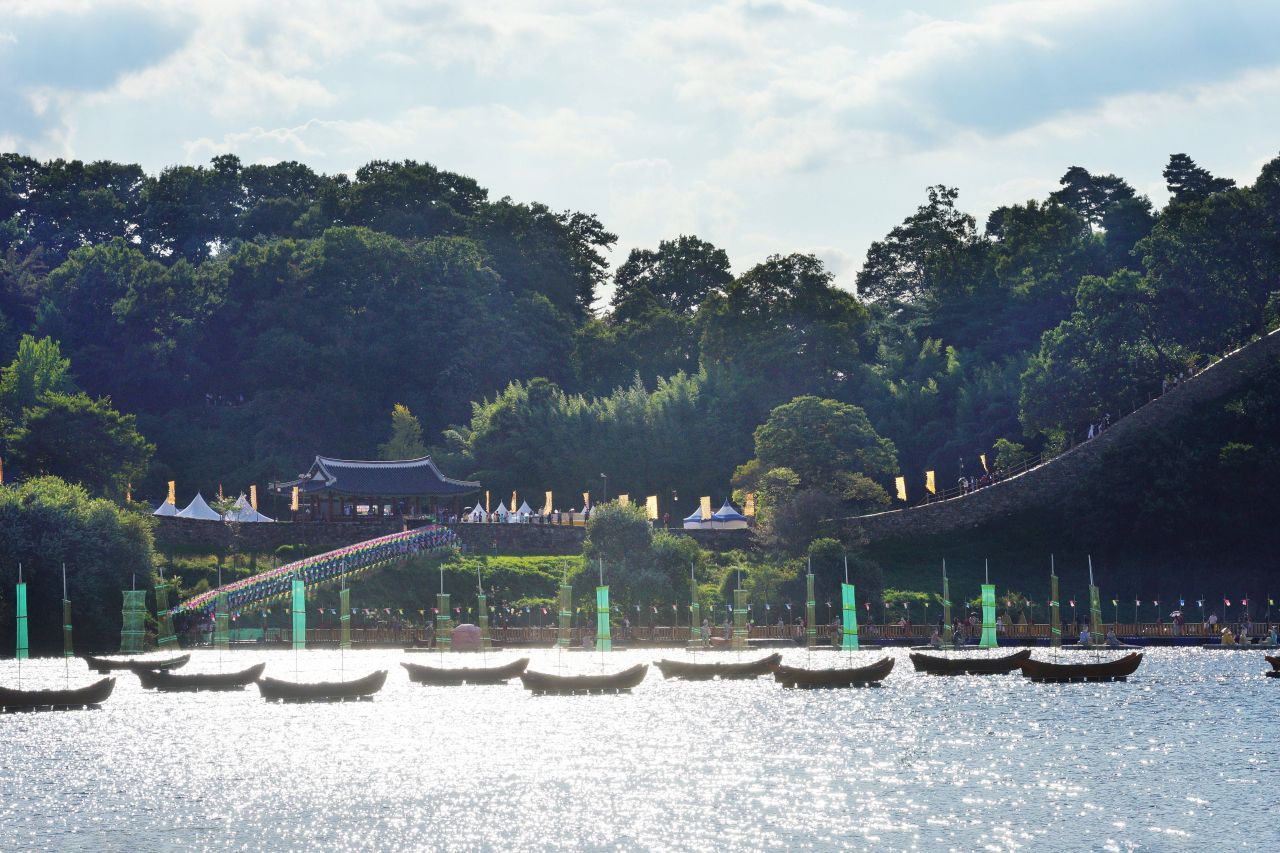
The confirmed 2026 dates are October 3-11, a nine-day run operating 11:00-22:00 each day. The theme is “The Bronze Mirror: Illuminating 1,500 Years of Baekje’s Light,” built around a bronze mirror excavated from the tomb of King Muryeong in Gongju. The sites are Geumgang Singwan Park, Mir Island, Gongsanseong Fortress and the old royal-capital downtown. Gongsanseong is part of the Baekje Historic Areas inscribed on the UNESCO World Heritage List, which makes the fortress worth time in its own right, festival or not. General admission to the grounds is free; the one signature zone that charges, Mir Island, is covered below.
Status on opening day (October 3): no postponement, cancellation or date change turned up in the official pages or in Gongju and Buyeo press of October 2-3, which describe the festival opening on schedule. Two practical details only firmed up this week and are folded in below: a free festival shuttle that does not run October 6-8, and the exact times of the October 4 parade and the October 4-5 fortress night show. No official wet-weather plan was published that we could find, so check the official site on the day if rain is forecast.
What you actually do here
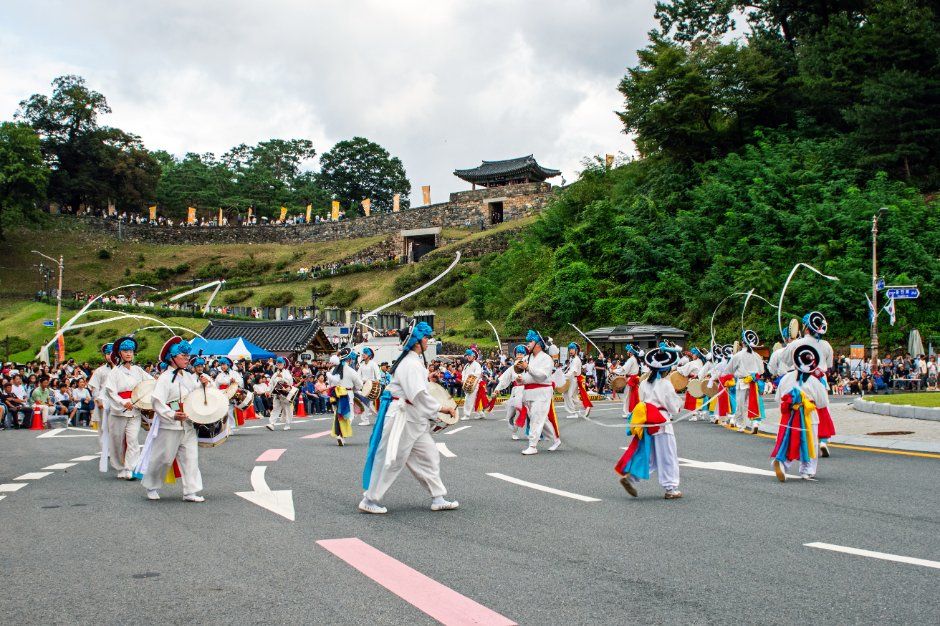
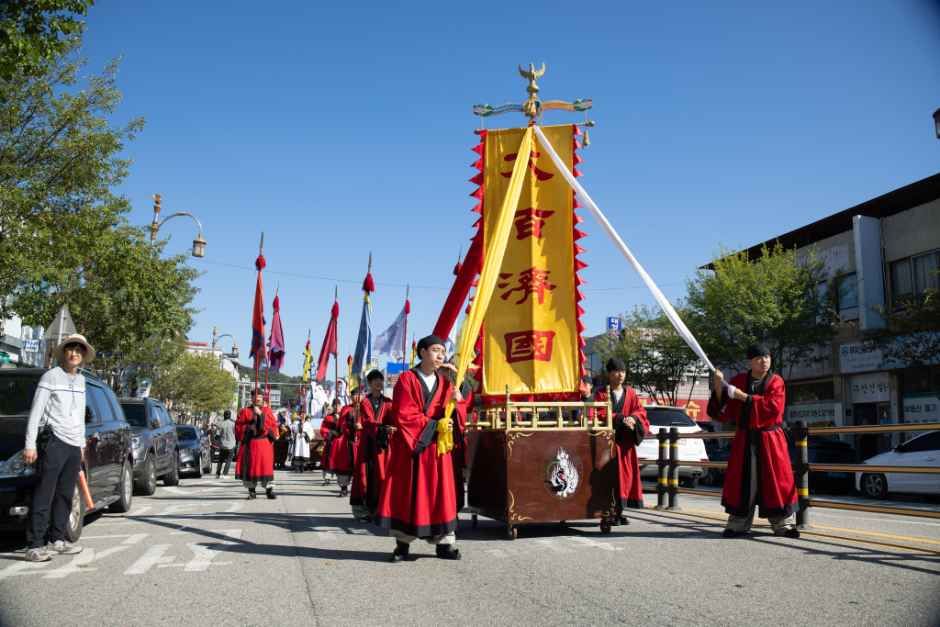
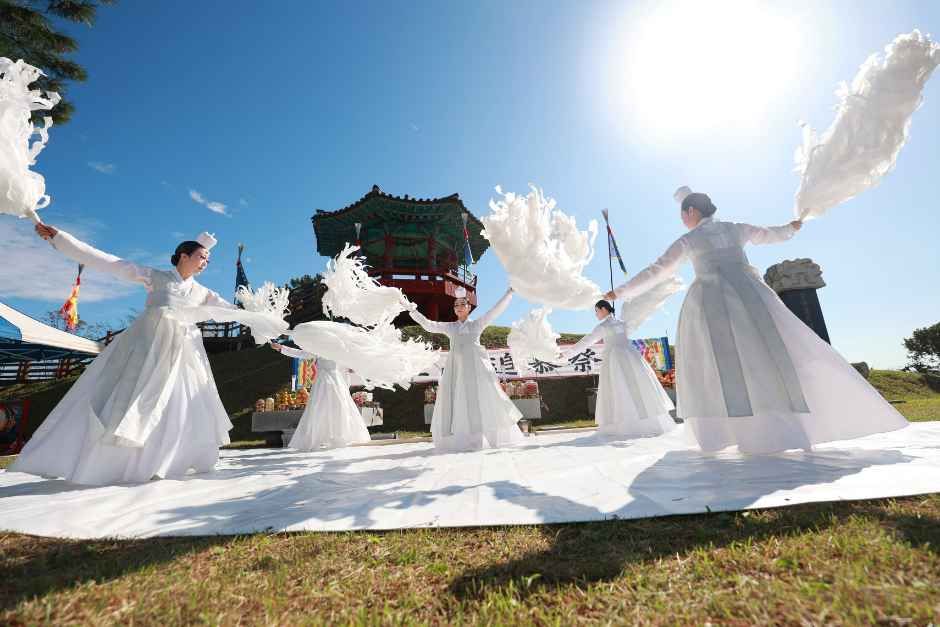
This is a spread-out, walk-between-venues festival rather than a single stage show, and it is weighted toward the evening. The daytime brings street performance and participatory events — the Ungjinseong Parade, a citizen procession reinterpreting Ungjin-Baekje history, which is scheduled for October 4 at 15:00 and runs from the Jungdong area through Sanseong Market to Yeonmun Plaza, plus traditional folk performances and the main and Gomtap stages carrying orchestral, gugak and amateur programmes. Gongsanseong itself is the daytime anchor: climb the walls for the river view before the crowds build after dark.
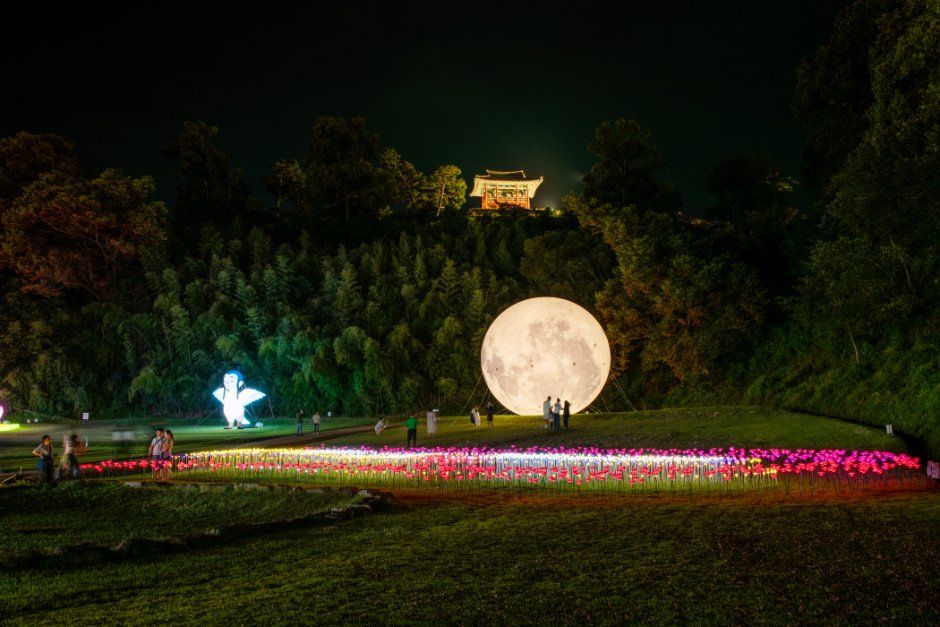
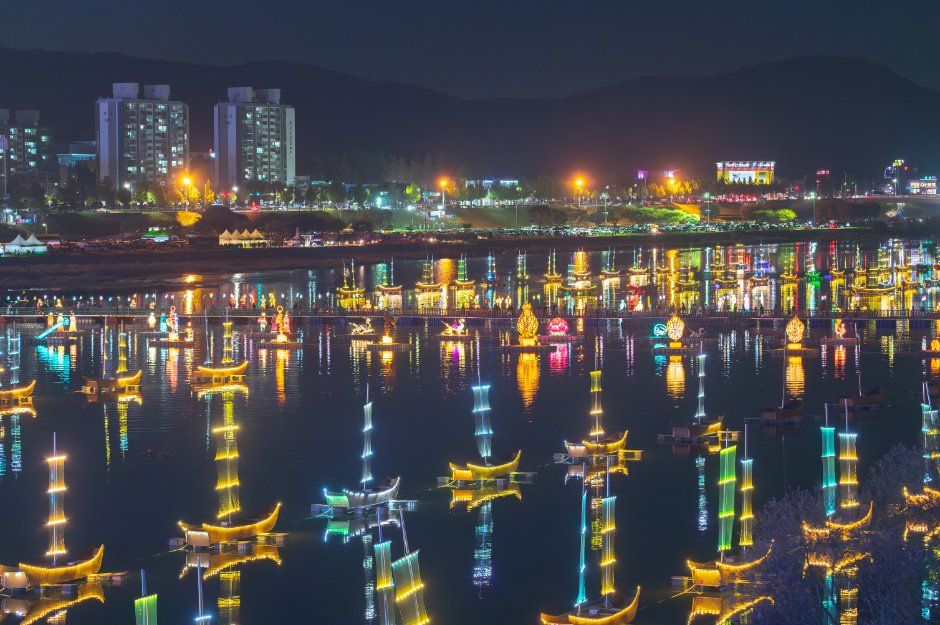
After nightfall the festival changes character. The Geumgang fills with the Ungjin Baekje Lantern Voyage, a flotilla of illuminated Baekje-style lanterns and hwangpo sailboats on the water (Gongju press puts the number at about 250 boats around Mir Island and the river), while the Ungjin Baekje Starlight Garden turns a riverside slope into a bronze-mirror light installation with a large moon sculpture below the lit fortress. A Gongsanseong media-art projection uses the fortress as its screen. A new-for-2026 night performance in the Seongan village inside Gongsanseong, “Jeopgyeong: The Night the Queen Crossed,” marks the 1,500th anniversary of Queen Muryeong’s death and combines media-façade projection, LED lighting, music and dance. Gongju City announced only four shows: October 4 and 5, at 19:00 and 20:30, about 25 minutes each. It does not run nightly, so if the fortress show is your reason to come, those two evenings are the window. Ticketing for it was not stated in the sources we checked.
The headline theatre piece is Ungjin Fantasia, an immersive, largely non-verbal production that leans on the bronze-mirror motif, so it travels reasonably well for visitors without Korean. Families have a dedicated hands-on strand: a Baekje village with period-themed experiences and events, a mobile stamp tour, and traditional Baekje-era games. Because the programme lists around 46 separate events across four areas, arriving with the daily grid open matters more here than at a compact single-site festival.
Programme and timetable
The fixed anchors are the two ceremonies. The opening ceremony is October 3 at 19:00, marked by a 1,000-unit drone show and stage performances from Huh Gak, Yoyomi and Lisenne, opened by a Honbul-awakening ritual and a warm-up set from the Gongju Municipal Choir. Seat entry at the main stage begins at 15:00, and people who arrive earlier are asked to wait in designated holding zones 1-3 near the stage. The closing ceremony is October 11 at 19:00, with Kim Ui-young, Nerd Connection, Haha & Skull and fireworks. These two evenings, both at the main riverside stage, are the busiest slots of the run.
Everything between them — the parade, the folk and main-stage programmes, the immersive shows and the night installations — sits on a day-by-day grid published on the official site. That grid is the document that actually matters if you are travelling for one named performer, the Gongsanseong night show or a particular experience, and it can still shift close to opening day. Treat this guide’s fixed points (dates, hours, the two ceremony times, the Mir Island fee) as reliable and pull the rest from the official schedule shortly before you go.
One overlap is worth planning around. The 22nd National Superior Market Expo runs October 9-11 at the Goma Art Center and Baekje Culture Hall, bringing traders and food from markets nationwide into the festival footprint. That makes the final weekend the fullest and most commercial part of the run — good if you want the market energy, less so if you were hoping for a quieter visit.
Buyeo’s parallel programme
Buyeo, the later Baekje capital (Sabi), runs its own 72nd-festival programme over the same nine days under a different theme, “Beautiful Baekje, Shining Sabi.” The Korea Tourism Organization’s Korean record (updated October 2) lists it as free, open 10:00-22:00, and spread across Buyeo’s town centre — Jeongnimsa Temple Site, Seoktap-ro and the Gwanbuk-ri ruins — rather than the old Baekje Culture Complex. The county counts about 40 programmes in seven strands: rites and Buddhist ceremonies, a historical parade, performances, exhibitions, hands-on activities and night lighting.
Dates the Buyeo press has pinned down: a Sabi capital-relocation proclamation and procession on opening day, the Baekje Historical Culture Parade on October 9, and a media-linked Baekje Culture Night Parade on October 10. The Jeongnimsa main stage carries trot, ballad and concert programmes through the run. Buyeo says it will run free shuttle buses and expanded outer-edge parking, but no route or timetable was published in the sources we checked, and local-currency benefits for town-centre shops were reported as part of the push to draw visitors to the old downtown. Information line: Buyeo County, 041-837-2517.
Gongju and Buyeo are separate towns, so plan one or the other per day rather than both. The Gongju details elsewhere on this page do not apply to the Buyeo venues.
Tickets, fees and booking
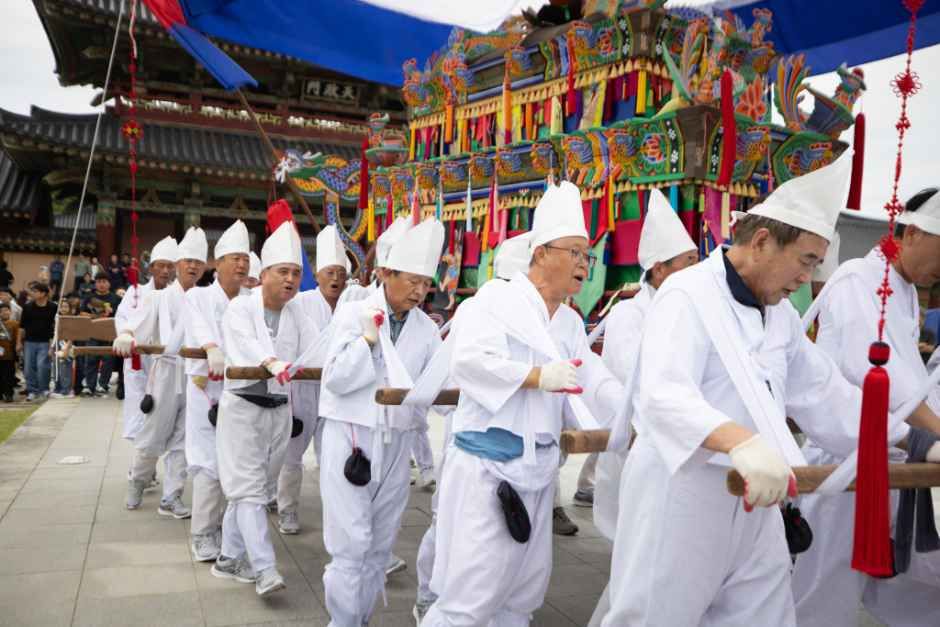
General admission to the festival grounds is free, and you can see the parade, the stages, the lantern voyage on the river and the outdoor light installations without paying. The exception is Mir Island (Baedari), the signature paid zone reached by a pontoon bridge across the Geumgang toward the Gongsanseong-an village side.
The official fee page lists Mir Island at 7,000 won for adults (19-64), 6,000 won for middle and high school students, and 5,000 won for Gongju residents who book online. Free-entry categories include elementary-age children, visitors aged 65 and over, registered national-merit holders, severely disabled visitors with one carer, basic-livelihood recipients, Chungnam Tour Pass holders, people in Baekje traditional dress, and larger families. A ticket buys access to the art and flower installations, the pontoon-bridge crossing and a media-art show, and every paid ticket comes with a 3,000 won coupon usable at festival vendors and partner shops during the run. Online reservation is available through the festival’s ticketing platform.
A free ground pass is not an all-inclusive pass. Some hands-on experiences carry their own charge on site, and those per-activity prices were not published when this guide was written. Carry a payment option and check the price at each booth rather than budgeting around an unconfirmed figure.
Getting there without a car
The most straightforward option from Seoul is the express bus from Seoul Express Bus Terminal (Gyeongbu line) to Gongju Bus Terminal. Current timetable data puts the ride at about 1 hour 30 minutes, with frequent departures through the day; standard fares were around 8,600 won for a regular coach and 12,600 won for the premium “udeung” service at the time of writing. The key advantage is that Gongju Bus Terminal sits in Singwan-dong, next to Geumgang Singwan Park — the main festival site — so the bus leaves you at the event rather than on its edge.
There is a KTX Gongju Station on the Honam high-speed line, which sounds convenient but is not the natural choice here: it was built in Iin-myeon, well south of the city, and still requires a city-bus transfer of some distance to reach the riverside grounds. Unless you are already routing through it, the express bus to the downtown terminal is simpler and lands closer.
Once you are in Gongju, the official site now lists a free, non-stop shuttle between Baekje Culture Hall and Gongsanseong, every 5 minutes, 13:00-23:00 from October 3 to 11, holidays included. Note the gap: it does not run October 6-8 (Tuesday-Thursday), so on those days you walk or take a taxi between the fortress and the hall. The core sites strung along the Geumgang are walkable from Singwan Park.
For drivers, the official site lists five parking areas: the festival-ground lot (Geumbyeok-ro 368), a Kongju National University temporary lot (weekends and holidays only), a Singwan-dong temporary lot, the Art Center Goma lot and the Baekje Culture Hall lot. Capacity and fees were not stated, and no road-closure notice had appeared in the sources we checked, so expect full lots at the 19:00 ceremonies on October 3 and 11 and use the shuttle or the express bus instead if you can.
Food on site and nearby
The festival has a substantial food side — the organiser lists a food-stall zone of roughly a dozen restaurants plus food trucks, alongside a farm-produce sales area and a chestnut-fed Hanwoo beef event. As with most Korean festival food programmes, the specific 2026 vendors, menus and prices are not something this guide can pin down in advance, so treat on-site eating as a convenience and check what is actually operating when you arrive.
For a documented local specialty away from the temporary stalls, Gongju is chestnut country. Jeongan chestnuts (Jeongan bam), grown mainly in Jeongan-myeon, carry national geographical-indication registration (No. 4, granted in 2006), and the region turns the crop into everything from chestnut jelly and honey to cakes and rice-cakes. Autumn is exactly the season for it, and the festival’s own chestnut sales and chestnut-beef event lean on that reputation. This is a recommendation about Gongju’s produce, not a promise that every food zone will sell it.
Honest assessment
The strength of this festival is the combination of a genuine UNESCO World Heritage fortress with a large, water-based evening event. Gongsanseong gives the setting real historical weight, the Geumgang gives the lanterns and light gardens a reflecting surface, and the mix of parade, immersive theatre and night installations means you can build a full day rather than watching one show. Free general admission makes that day accessible, and the express bus dropping you beside the main site makes it one of the more day-trip-friendly regional festivals from Seoul.
The weaknesses are the flip side of the scale. “Geumgang Singwan Park, Mir Island, Gongsanseong and the downtown” is a broad footprint, not one plaza, so without the daily grid it is easy to wander and miss the specific performance you came for. The most atmospheric single zone, Mir Island, is the one that charges, which can surprise visitors who read “free festival.” And the busiest, most commercial stretch — the final weekend overlapping the market expo — is also when crowds and traffic peak. Come in the afternoon, see the fortress in daylight, stay for the lanterns and light gardens after dark, and check the official schedule and transport notice close to your travel date rather than relying on last year’s plan. One more trap from the new shuttle notice: October 6-8 has no shuttle, and the fortress night show is only on October 4-5, so a midweek visit gets you the river lights but not the Gongsanseong programme.
Local specialties to try
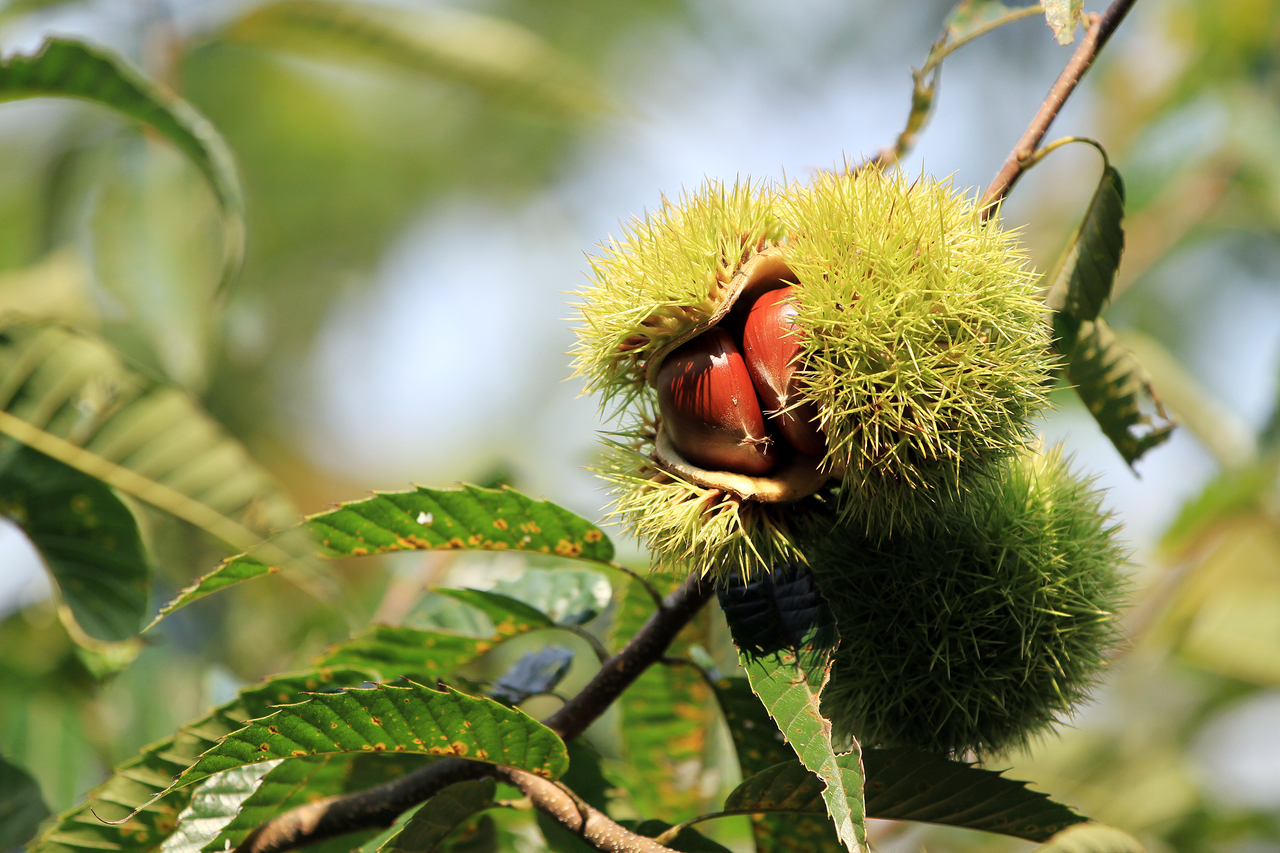
Gongju chestnuts (Jeongan bam) (공주 정안밤)
Gongju is one of Korea's best-known chestnut regions, centred on Jeongan-myeon, and 'Jeongan bam' holds national geographical-indication registration (No. 4, granted 2006). The city's chestnut appears fresh in autumn and in processed goods such as chestnut jelly, chestnut honey, cakes and rice-cakes; the festival itself runs chestnut sales and a chestnut-fed Hanwoo beef event. This is a regional specialty of Gongju, not a claim about what any single festival stall will sell.
Questions worth asking
Is the Baekje Cultural Festival in Gongju or Buyeo in 2026?
Both cities co-host it every year, but the main 72nd edition in 2026 is centred on Gongju — Geumgang Singwan Park, Mir Island, Gongsanseong Fortress and the old downtown — with the bronze-mirror theme. Buyeo runs its own parallel programme in the Buyeo-eup town centre. The Korea Tourism Organization's English entry returns a Buyeo address, but the confirmed 2026 venue and dates in this guide are Gongju's.
Is admission free?
General entry to the festival grounds is free. The Mir Island (Baedari) zone is a separate paid ticket — 7,000 won for adults, less for students and for Gongju residents booking online — and it includes a 3,000 won voucher for use at festival vendors. Children of elementary age, seniors 65 and over and several other groups enter Mir Island free.
When are the opening and closing events?
The opening ceremony is on October 3 at 19:00 at the main stage in Geumgang Singwan Park, with a 1,000-drone show and performances by Huh Gak, Yoyomi and Lisenne; seat entry opens at 15:00. The closing ceremony is on October 11 at 19:00 with Kim Ui-young, Nerd Connection, Haha & Skull and fireworks. The full day-by-day grid for the roughly 46 programmes sits on the official site; check it before travelling for a specific act.
Can I do it as a day trip from Seoul?
Yes, more easily than most regional festivals. The express bus from Seoul Express Bus Terminal to Gongju Bus Terminal takes about 1 hour 30 minutes and drops you next to the main Singwan Park site. Because the strongest content is after dark, aim to arrive in the afternoon and check the last return bus before committing to a same-night trip.
How do I get around once I'm there, and where do I park?
A free non-stop shuttle links Baekje Culture Hall and Gongsanseong every 5 minutes, 13:00-23:00 from October 3 to 11 — but it does not run on October 6-8 (Tuesday to Thursday). The sites along the Geumgang are walkable from Singwan Park. The official site lists five parking areas: the main venue lot (Geumbyeok-ro 368), a Kongju National University temporary lot (weekends and holidays only), a Singwan-dong temporary lot, the Art Center Goma lot and the Baekje Culture Hall lot. No road-closure plan was found, so check the official transport notice on the day.
Before you goFestival Etiquette in Korea: What Visitors Get WrongBooking KTX Trains and Intercity Buses as a Foreign VisitorGetting Out of Incheon Airport and On to a FestivalKorean Festivals With Children: Toilets, Strollers and TimingStaying Online in Korea: SIM, eSIM and the Apps That MatterEating at a Korean Festival Without Speaking KoreanRain, Typhoons and Cancelled Festivals: How to Plan Around ThemHow to Pay for Things in KoreaT-money and Transit Cards in KoreaWhat to Wear to a Korean Festival, Season by Season
LAST UPDATED · Oct 3, 2026