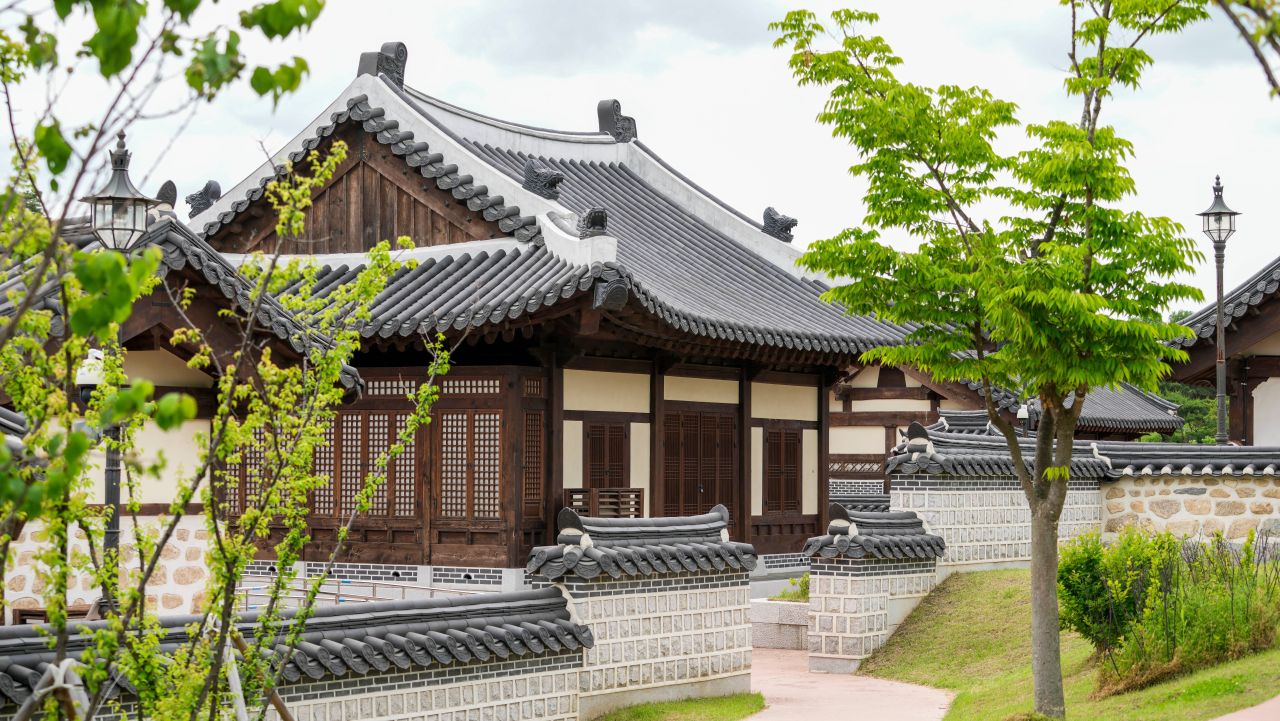
The King Sejong and Chojeong Mineral Spring Festival is held at Chojeong Haenggung, a reconstructed Joseon-era temporary palace in Naesu-eup, on the northeastern edge of Cheongju. For 2026 it runs October 16-18, its 20th edition, from 10:00 to 21:00 each day, and general admission is free. Its theme, in the organiser’s words, is “the gift of Sejong, met at Chojeong.”
The festival is not a generic autumn fair with a historical label bolted on. It sits on a specific record: King Sejong the Great came to the Chojeong spring twice in 1444 and stayed for around four months — sources give 117 to 121 days — drinking and bathing in the naturally carbonated water to treat eye and skin conditions while continuing the state work of his reign. Chojeong water is locally ranked with Shasta in the United States and Napolinas in Britain as one of the world’s notable mineral springs. The event uses that story rather than decorating around it, which is worth knowing before you decide whether the trip suits you.
What you actually do here
The programme is organised into five “yards” — official ceremonies, a performance yard, an experience yard, a participation yard and an exhibition yard — grouped under five themes the organiser attributes to Sejong: the Hunminjeongeum script, invention and technology, Chojeong water, music and the arts, and care for the people.
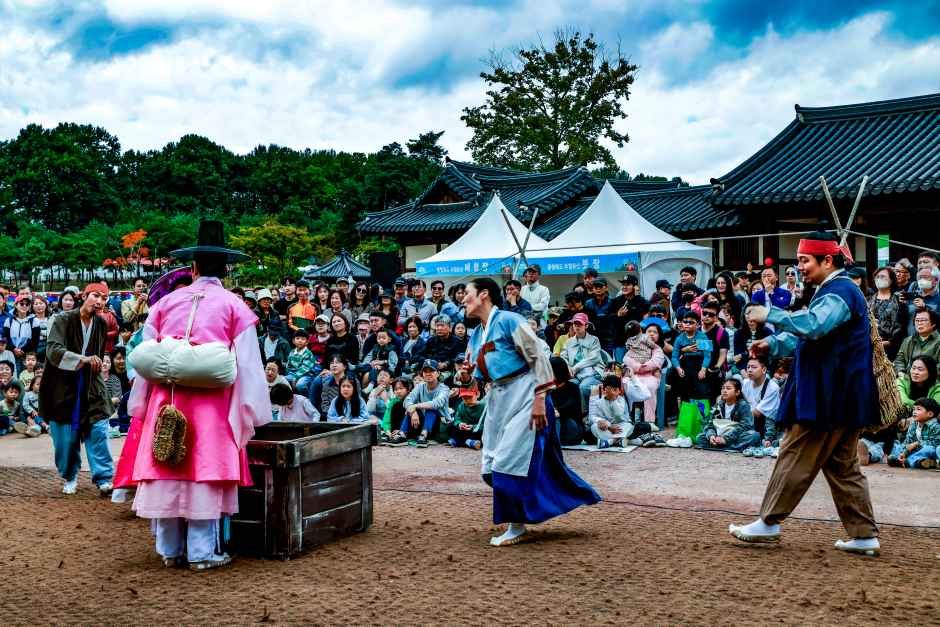
The official ceremonies are the spine of the event and are concentrated at the opening. They include an eoga-haengchaeng, a reenactment of the king’s royal procession arriving at Chojeong; a yeongcheonje, a traditional rite praying over the spring for the area’s wellbeing; and a yangnoyeon, a banquet honouring elders that echoes a courtesy attributed to Sejong. These are staged pieces with costume and procession, so they communicate without any Korean.
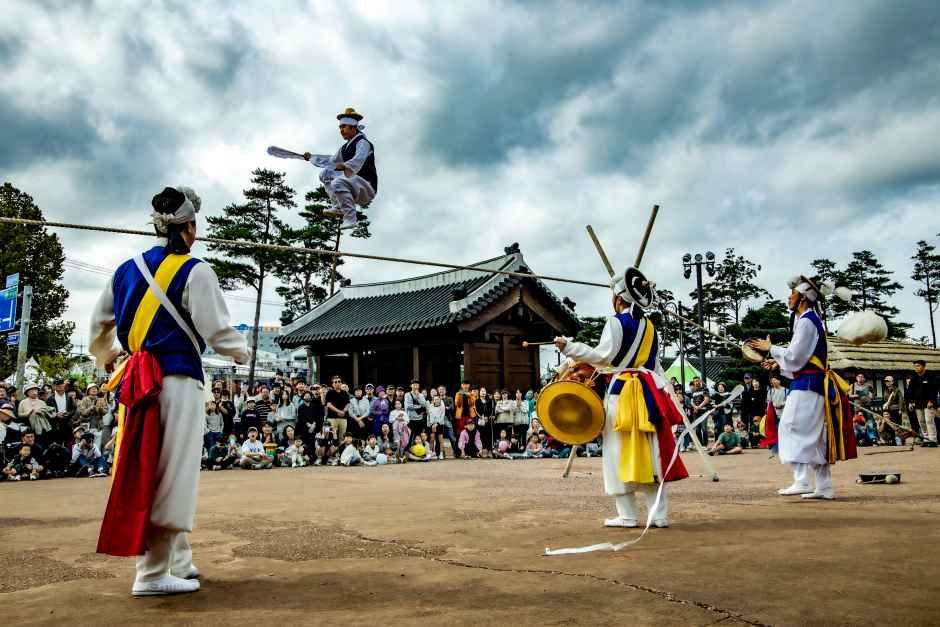
Alongside the ceremonies, the performance yard runs relay stages by local arts companies and citizen groups, plus a jultagi tightrope act — Korean tightrope walking is on UNESCO’s intangible-heritage list. This is the part of the festival that fills the daytime hours between the set-piece ceremonies.
The five gifts: programme and performances
Beyond the headline ceremonies, most of what a visitor actually spends time on sits in the experience and participation yards. The experience yard lists traditional craft workshops, make-your-own sessions and a foot-bath (jokyok) using the mineral water — a direct, low-effort way to engage with the thing the festival is about. The participation yard is family-facing: a nationwide youth writing contest (a baekiljang), a treasure hunt and similar drop-in activities.
None of these come with a published 2026 timetable down to the hour. The Korean detail lists the categories and the named ceremonies, but the organiser had not released a full daily grid when this guide was written. If one specific performance or the procession is the reason you are travelling, check the festival’s official page or Instagram close to the dates rather than assuming a fixed time. The categories are confirmed; the minute-by-minute schedule is not.
The spring, the palace and Hangeul
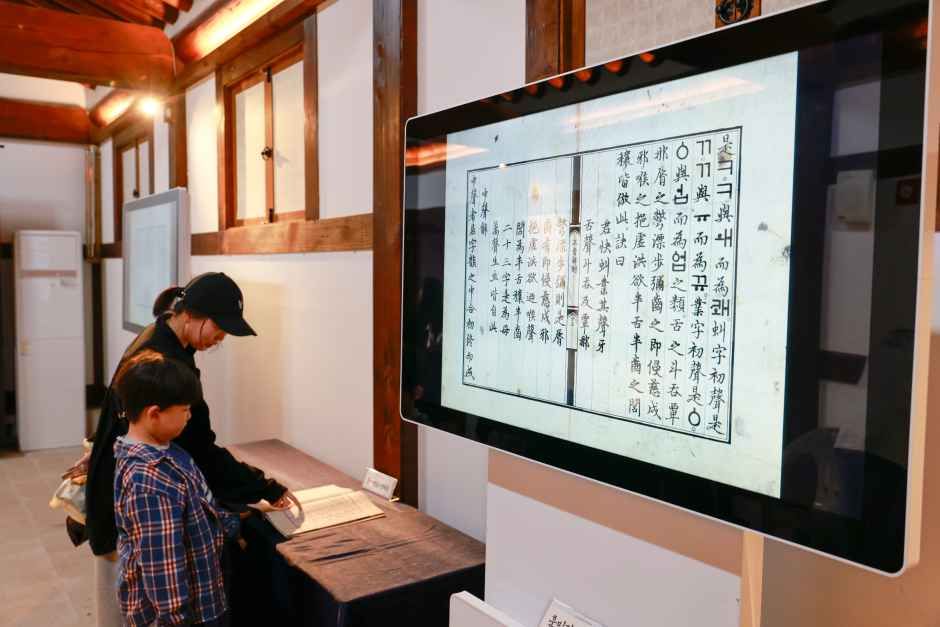
The exhibition yard is where the festival’s historical claim is made explicit. It centres on the Hunminjeongeum — the document that introduced the Korean alphabet — shown both as a book display and as a digital exhibition, with media-art projections on the buildings of Chojeong Haenggung after dark. The link the festival draws is that Sejong’s long stays at Chojeong overlapped with the period of his reign associated with creating and refining Hangeul, so the alphabet’s story is presented on the ground where part of that history took place.
For a foreign visitor this is one of the more legible ways to encounter Hunminjeongeum in context. You are not reading dense panels in a museum hall; you are seeing the text staged as an exhibit inside a hanok complex that itself explains why the king was here. It rewards a slow, daylight visit through the exhibition yard before the evening programme begins.
Exhibitions and lights after dark
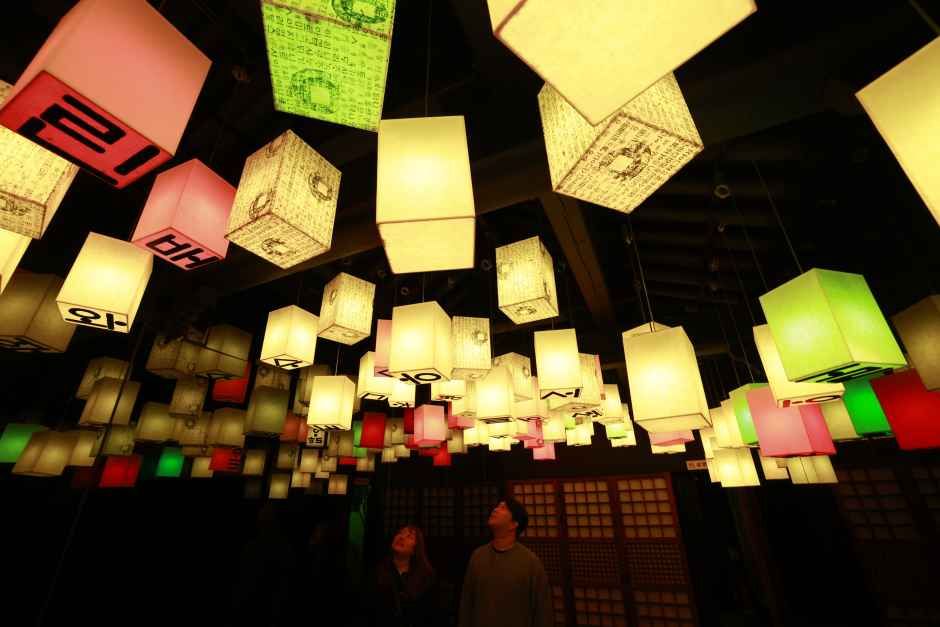
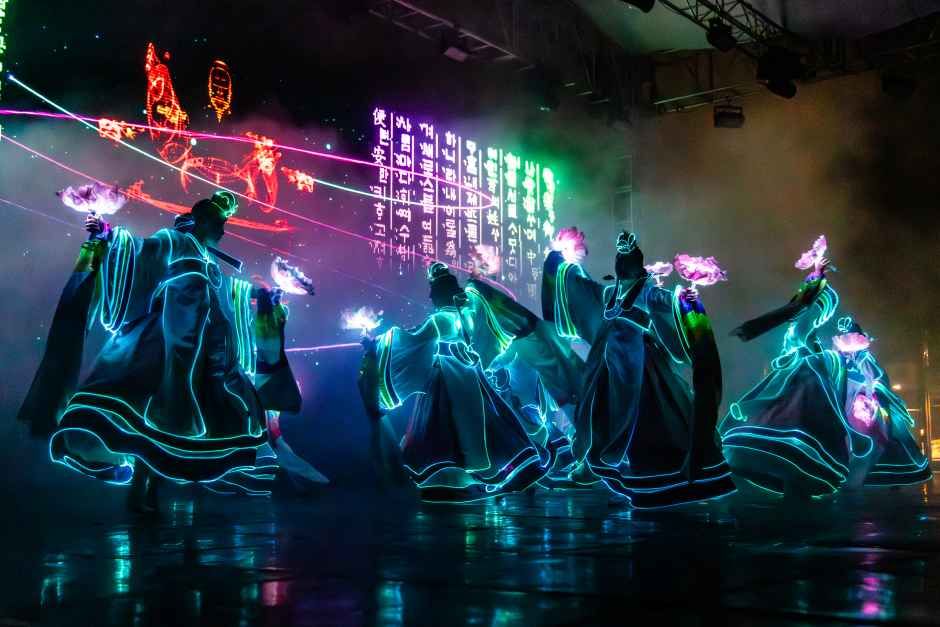
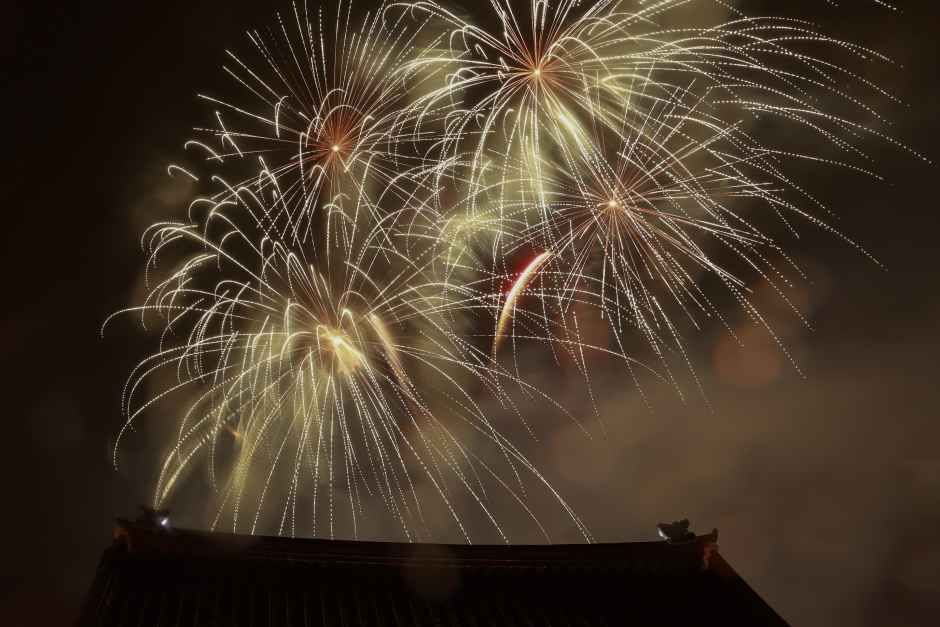
Chojeong Haenggung changes character in the evening. The same courtyards that host daytime craft booths carry lantern installations — including lanterns printed with Hangeul — and the palace buildings become surfaces for projection and media art. The Korea Tourism Organization’s 2026 photographs also show a fireworks display over the hanok rooflines, though a firm date and time for it were not published, so treat it as a listed element rather than a fixed appointment.
Because the site closes at 21:00, this is an early-evening event, not a late-night one. The practical reading is to arrive in daylight for the exhibitions, ceremonies and foot baths, then stay for the illuminated hour or two before closing. Do not plan an itinerary that depends on a specific fireworks slot until the organiser confirms it.
Getting there without a car
This is the honest weak point. Chojeong sits about 16 km northeast of central Cheongju, and Cheongju has no KTX station of its own. Fast trains from Seoul stop at Osong Station, roughly 50 minutes away, but Osong is on the opposite, western side of the city — reaching Chojeong from there means a bus into Cheongju and then another bus out again.
The cleaner car-free option is usually an express or intercity bus from Seoul to Cheongju, about 1.5 hours, and then Cheongju city bus 101, which is listed as serving the Chojeong area, or a taxi for the final leg. Cheongju is running a public-transport promotion around its autumn festival season, which is a reminder that local buses are the intended way in, but routes and stops can shift during events. Use Cheongju’s live bus information or a Korean map app on the day, and set Chojeong Haenggung — not simply “Cheongju” — as the destination.
If you are driving, the site has its own parking as a normal attraction, but a dated 2026 festival parking-and-shuttle plan was not published when this guide was written, so check the official notice before relying on a specific lot.
Food on site and nearby
As at most Korean festivals, there will be food stalls, but the tourism listing does not give a dependable 2026 menu, vendor or price, so this guide will not name one. Expect the usual festival-food range and treat it as convenience rather than a confirmed programme.
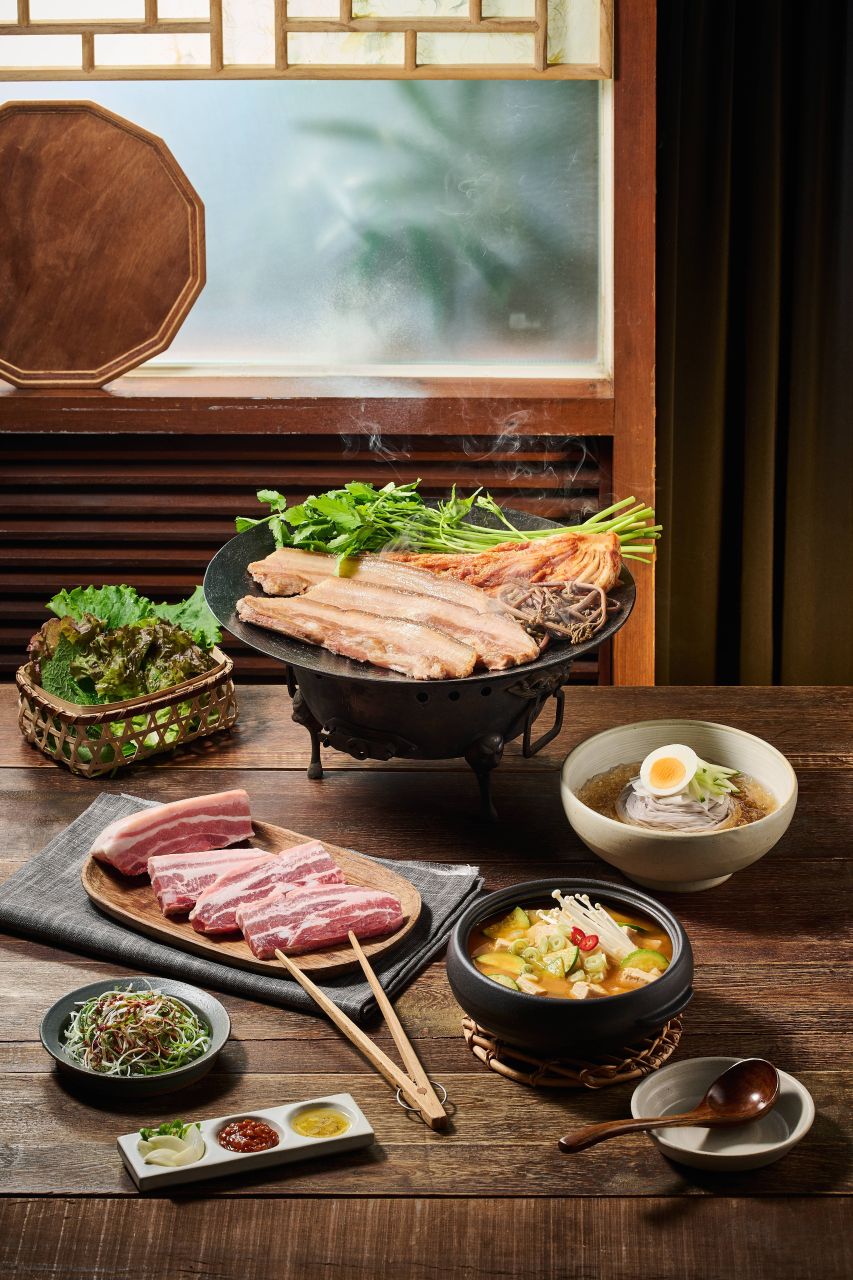
For a documented local meal off the festival ground, Cheongju’s own dish is samgyeopsal, grilled pork belly done the city’s way: marinated in a soy-based sauce and eaten wrapped in pa-jeori, a seasoned scallion salad. Cheongju City has built this into a signature — a dedicated samgyeopsal street, an annual March 3 street festival, and recognition as the country’s only Handon-certified pork street. There is even a local record tying Cheongju to pork tribute in the Sejong era, which is a neat fit with this festival’s theme, though it is history, not a promise about the stalls. This is a city specialty recommendation, not a claim about what temporary festival vendors will sell.
Day trip or overnight
A Seoul day trip is workable if you leave in the morning. The festival is a daytime-into-early-evening event that closes at 21:00, the bus from Seoul to Cheongju is about 1.5 hours, and the ceremonies cluster on the opening day. The realistic constraint is the local leg: budget the transfer out to Chojeong and back in both directions, and confirm the last return bus or train before committing to a late departure. This guide does not name a specific last service because it varies by date.
An overnight makes more sense if you want the evening illuminations without watching the clock, or if you plan to combine Chojeong with central Cheongju’s other autumn festivals, several of which run in the same October window. Chojeong Haenggung itself operates as a hanok-stay outside festival use; availability during the festival was not verified here, so book directly and early if that appeals.
Honest assessment
The festival’s strength is coherence. The place, the history and the programme line up: you are at the spring where Sejong actually stayed, the exhibitions are about the alphabet he is tied to, and the ceremonies reenact his visit rather than inventing a spectacle. For anyone with an interest in Sejong, Hangeul or Joseon court culture, that specificity is the reason to come, and free admission makes it low-risk to try. Families are well served by the foot baths, crafts and treasure hunt, and the traditional performances read clearly across a language barrier.
The weaknesses are location and detail. Chojeong is genuinely out of the way — about 16 km from central Cheongju, with no fast station nearby — so a car-free visit takes planning and at least one transfer. And the 2026 daily schedule, the fireworks time and the festival parking plan had not been published when this guide was written, so precise timing has to wait for the official notice. Come for the history and the setting, use the opening day for the ceremonies, keep the visit to daylight-into-early-evening, and check the organiser’s page for anything you need to time exactly.