The Suseong International Biennale is a free architecture and landscape exhibition run by Suseong-gu, the district of Daegu around Suseongmot Lake. Its 2026 theme is Living Ground, set by artistic directors John Hong of Seoul National University and Kim Ah-yeon of the University of Seoul. The idea is to treat the ground itself, not just the buildings on it, as something that shapes how landscape, architecture, ecology and daily life fit together. This is the second edition; the previous one ran from 15 to 27 October 2024 under the theme Relational Fields. A smaller “Pre-Biennale” preview event for the 2026 edition was held in July 2025, according to Korean news reports of the time.
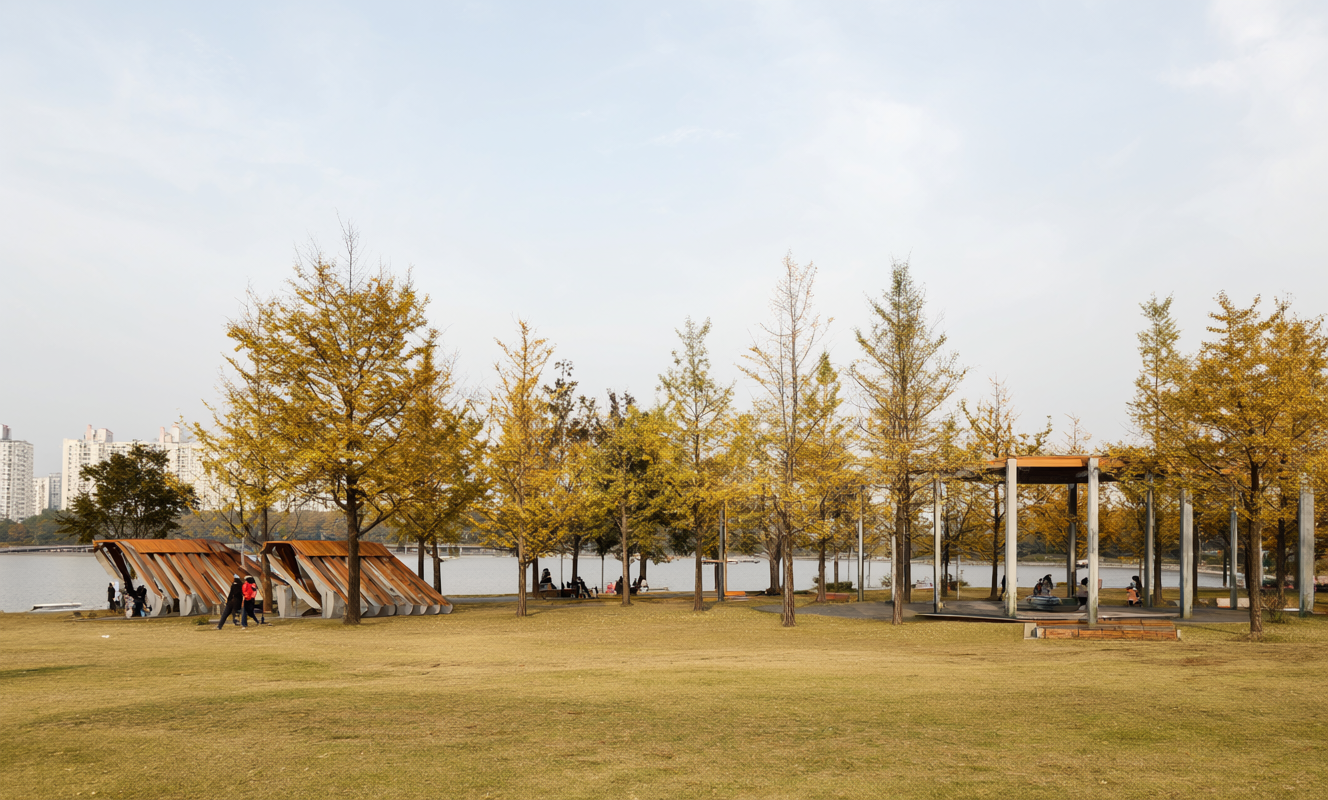
For 2026 the confirmed dates are 27 October to 22 November. KTO and the official 2026 programme page agree on the hours: Monday to Friday 12:00-21:00 and Saturday to Sunday 10:00-21:00. The exhibition is at Sanghwa Dongsan, the lakeside park at 112 Muhak-ro in Dusan-dong. It is a public park rather than a ticketed hall, and admission is free.
What you actually do here
Most of the biennale is a walk-through exhibition in the park. KTO’s programme list names four exhibition strands: works by participating artists, an international studio led by the artistic directors, a culture school in architecture and landscape for Suseong’s children, and architecture and landscape visual artworks from around the world. A separate item lists citizen-participation programmes without further detail.
Part of that visual-artwork strand comes from an open international competition. Its competition listing says the award ceremony takes place during the opening event and that selected entries are shown around Suseongmot from 27 October to 22 November. Treat that as the competition organiser’s description rather than a full floor plan, because the official page does not map where each piece sits. The competition was open to entrants worldwide in two divisions, a youth division for ages 10 to 18 and a general division for ages 19 and over, so the works on show are a mix of professional-style and student entries. Which pieces were selected had not been published in the sources checked.
The weekend programmes are the most hands-on part. KTO lists four standing weekend activities: a hanok-principles experience, roof-tile stacking, stacking a tower of the district mascot Tubi, and a block-built “Living Village” town. Three further weekend programmes are listed as registration programmes: an ecology tour of Suseongmot, a travelling children’s performance featuring Tubi, and a meditation programme. The sources do not say how to register or what any of this costs, so do not plan around a particular session without contacting the organiser.
The setting: Sanghwa Dongsan and Suseongmot
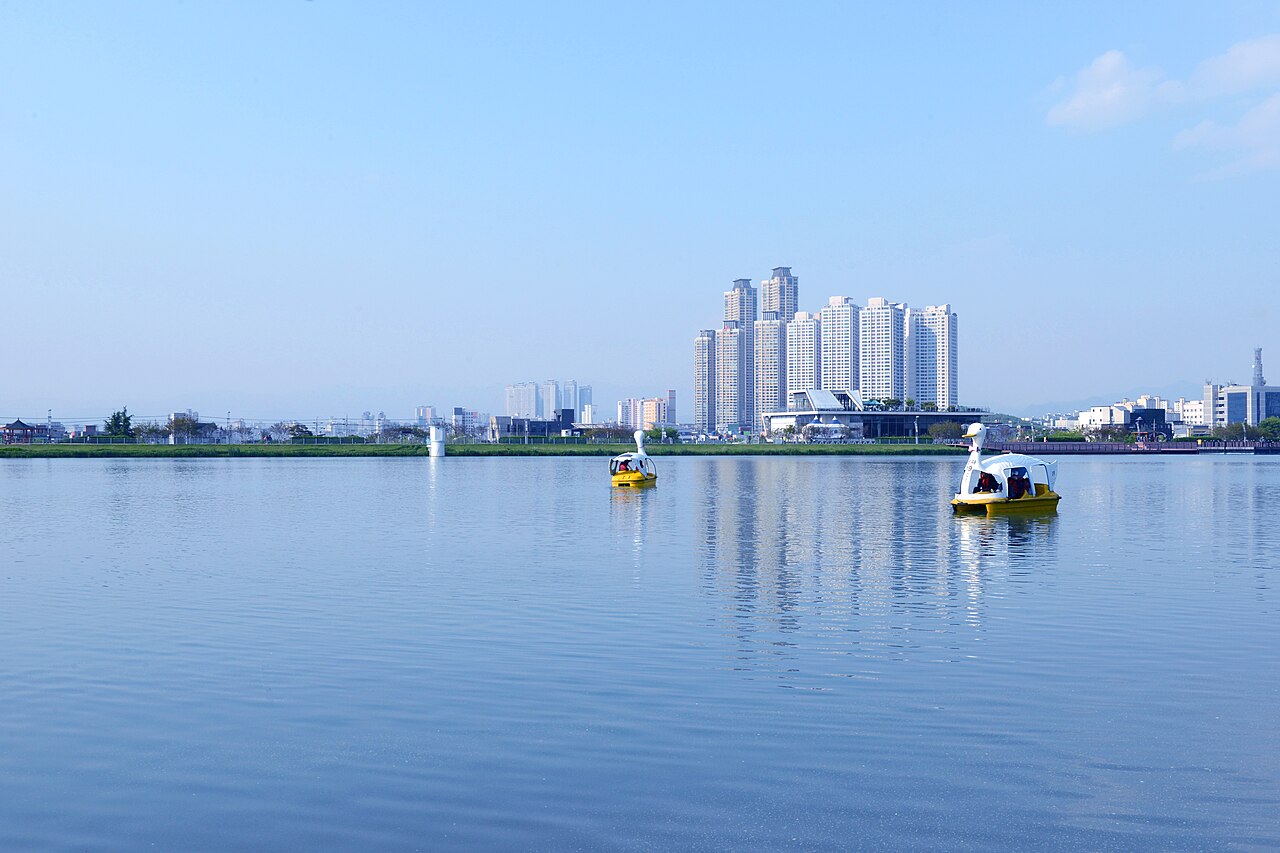
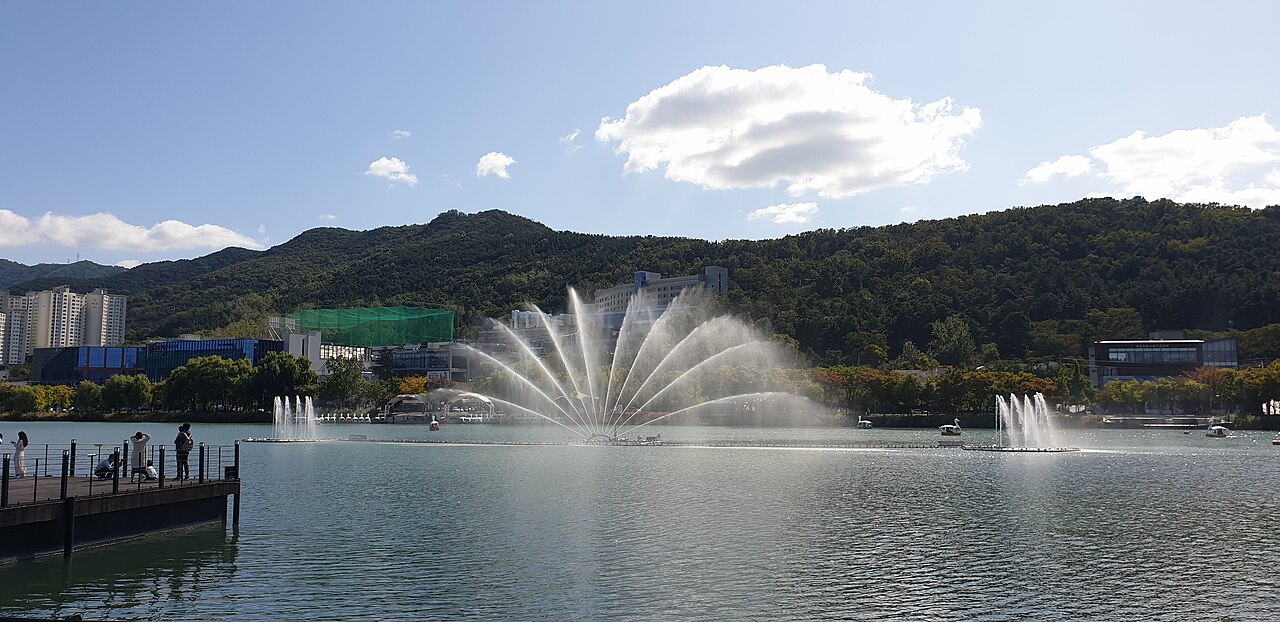
Sanghwa Dongsan opened in 2015 inside the Suseongmot leisure area as a memorial park for the nationalist poet Lee Sang-hwa, whose poem “Does Spring Come to Plundered Fields?” the lake and its surrounding fields inspired, according to the Daegu local-culture encyclopedia. It has a central plaza, a lawn, water features, a “poetry literature street” of sculptures and portraits, sports courts, restrooms and parking. The same source names the Deulan food street, a café district and Arte Suseong Land as neighbouring attractions. The exhibition therefore sits in an ordinary public park rather than a ticketed gallery building.
Programme and timetable
The opening event is on Tuesday 27 October, 14:00-18:00, at Sanghwa Dongsan. The official page describes performances, remarks from the organising committee chair and officials, the announcement of the Living Ground theme by the artistic directors, presentations by participating artists, two keynote talks and a closing panel. KTO’s Korean entry adds that the opening includes explanations of each participant’s work and an expert forum. The official pages are in Korean, and no English interpretation was mentioned in the sources checked.
After the opening, the exhibition runs every day until 22 November. Because the weekday opening time is 12:00 and the weekend time is 10:00, a visit on a Saturday or Sunday gives you two extra morning hours, and the weekend-only activities. The last weekend is 21-22 November.
Tickets, fees and booking
There is no ticket. Both KTO and VisitKorea give admission as free, and the venue is a park. The unknowns are the three sign-up programmes, for which registration details were not found. The organiser’s number in the KTO record is 053-668-1541.
Getting there without a car
From Seoul, take a KTX from Seoul Station to Dongdaegu Station. Timetable sources put the fastest services at about 1 hour 40 minutes and typical ones at about 2 hours; one September 2026 listing shows the 05:03 departure arriving at 06:46. Check the specific train, because stopping patterns vary.
From Dongdaegu, a commonly given route is Daegu Metro Line 1 to Myeongdeok, then Line 3 to Suseongmot Station, about 30 minutes in all. Walking time from the station to Sanghwa Dongsan is given as roughly 6 minutes from Exit 1 in one source and about 10 minutes in another, so allow ten.
One rail change matters if you plan a late arrival. Korail announced that from 30 October to 14 November the last Seoul-Dongdaegu KTX, the 22:58 service, would stop at Seodaegu Station instead, reaching it at 00:56. Alternatives named were KTX 83, leaving Seoul at 22:28 and reaching Dongdaegu at 00:18, and KTX 159, leaving at 22:49 and arriving at 00:30 on Fridays to Sundays. This concerns outbound trains from Seoul, not the return.
Parking, shuttles and traffic control
No dedicated biennale shuttle, parking plan or traffic notice was published in the sources checked. Daegu’s local heritage encyclopedia says Sanghwa Dongsan has restrooms and parking, but gives no capacity.
Two public sources describe a lot near the lake, and they do not agree. The Suseong-gu public-parking page lists a 109-space off-street lot at Sang-dong 481-6, owned by Daegu City and operated by the district as a paid lot, with no fee table on that page. A 2023 district post, repeated on a welfare-information site, describes a newly built 109-space lot at Sang-dong 496-7 with no parking fee and three electric-vehicle chargers. They may be the same lot after a change of rules, or two different lots. The district Transportation Division (053-666-3042) is the number the parking page gives for questions, so ask it before you drive.
Suseongmot is a popular leisure area, so do not count on a free space at a weekend. The simpler plan is the metro.
Day trip or overnight
A weekend day trip from Seoul is workable on paper: about two hours each way by KTX, plus the metro, with the exhibition open from 10:00 to 21:00. This guide did not verify the final Daegu-to-Seoul departure, so find the exact return train before booking. We have therefore not marked this as a day trip or overnight on the fact card. If you want to see the park in daylight and also spend an evening around the lake, staying one night in Daegu is the more relaxed option; no hotel was checked.
Food on site and nearby
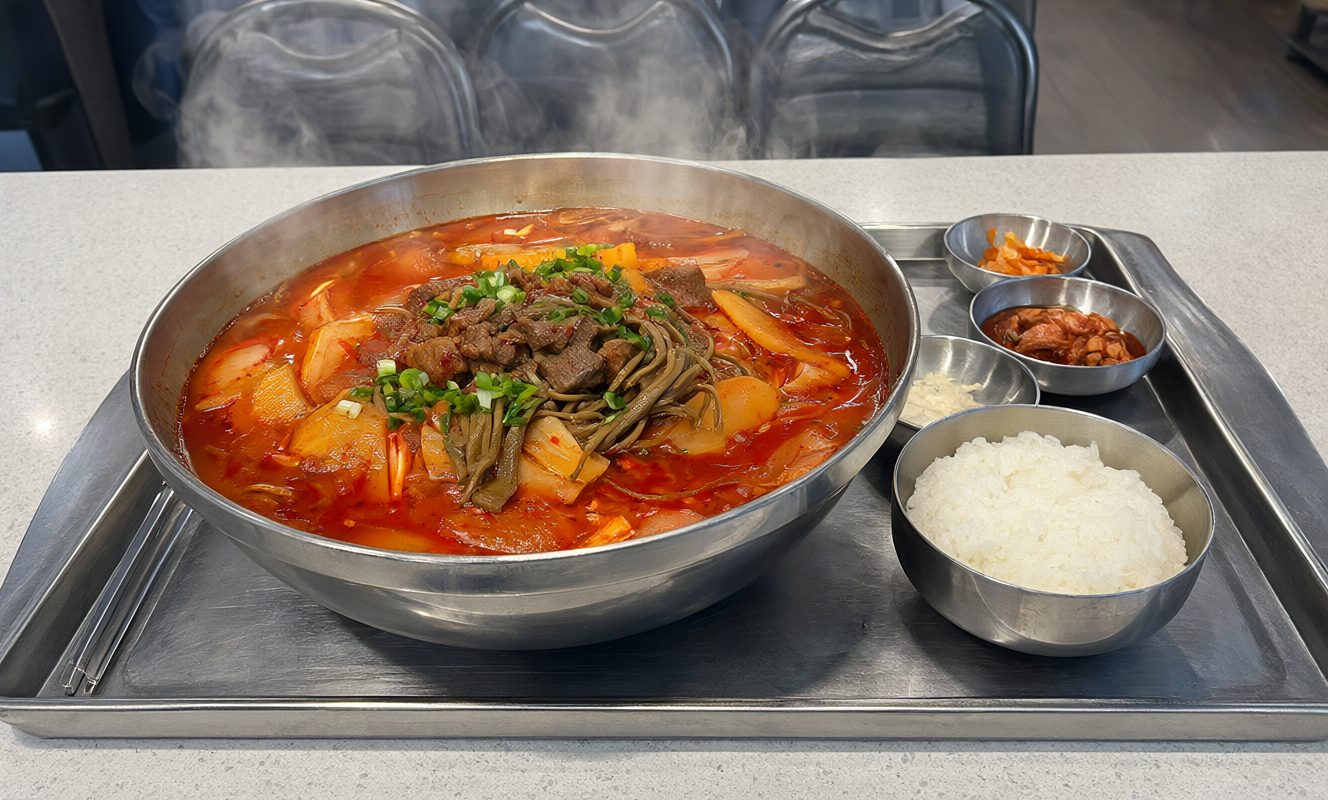
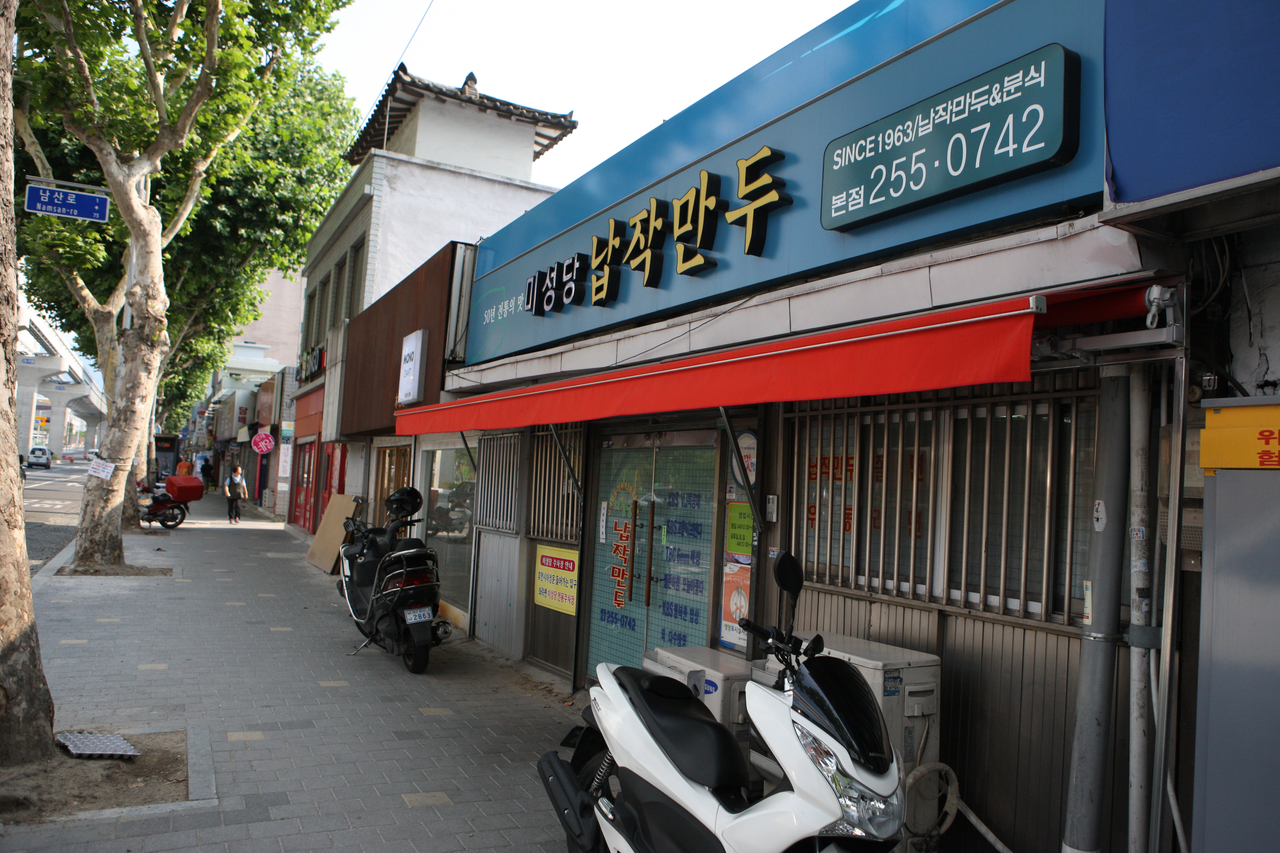
No food programme for the biennale was published. Daegu’s tourism site lists Daegu ttaro-gukbap and napjak-mandu among the city’s ten signature dishes, and both are easy to find in the city; neither is a claim about what will be served at the exhibition. The same page says Daegu ttaro-gukbap became popular during the Korean War, when refugees asked for the soup and rice to be served separately.
Honest assessment
The strength of this event is that it is free, central to a well-used lake park, and an unusual chance to see architecture and landscape design as a public subject rather than a gallery one. The opening-day talks and the weekend activities give a first-time visitor something to do beyond looking.
The weakness is expectation. The headline projects most reported in the news, such as Kengo Kuma’s Jinbatgol timber-friendly city, are not part of what you can visit in Sanghwa Dongsan, and the official project page lists them as under construction. The programme pages are in Korean, no English interpretation was announced, and the sign-up details for the weekend programmes were not found. Go for the park and the exhibition, check the organiser before building a trip around a specific activity, and treat anything beyond Sanghwa Dongsan as unconfirmed until its status is published.