The Korea Reading Festival is a national reading and publishing event that moves to a different host city every year. For 2026 the host is Chuncheon, in Gangwon-do, which is running the main three-day programme on September 18-20 under the theme “Waves of Books, a Chuncheon Walk.” It is the 13th edition; Namyangju has already been announced as the 2027 host, which is one way to confirm that this year’s Chuncheon event is the 13th in the series.
The practical thing to understand before you plan is that the festival uses two sites that are not next to each other. One is Kim Yu-jeong Literary Village, a public literary museum built around the writer Kim Yu-jeong, out beside Gimyujeong Station. The other is the Gongjicheon riverside area in central Chuncheon, around the Onui Bridge, which holds the opening ceremony, the book fair and the outdoor programmes. Reaching both in one visit means a train ride between them, so it is better to decide which site matters to you than to assume a single walkable ground.
What you actually do here
This is a books-and-talk festival, not a visual spectacle, and it helps to arrive expecting that. Chuncheon has built the 2026 edition as 156 programmes across nine fields — an opening ceremony, lectures and book-talks, performances, a book fair, hands-on activities, exhibitions and academic discussion — so the honest planning move is to read the schedule and choose, rather than wander and hope to catch something.
At Kim Yu-jeong Literary Village, the framing is “a festival that visits a literary village.” The announced line-up leans on Korean writers and broadcasters meeting readers in person: celebrity lectures and a series of author talks with names such as Kim Cho-yeop, Lee Sla, Son Won-pyeong and Park Jun. These sessions are in Korean, and the ones that draw crowds are exactly the ones that take advance registration, so a reader travelling specifically to hear one author should book rather than turn up.
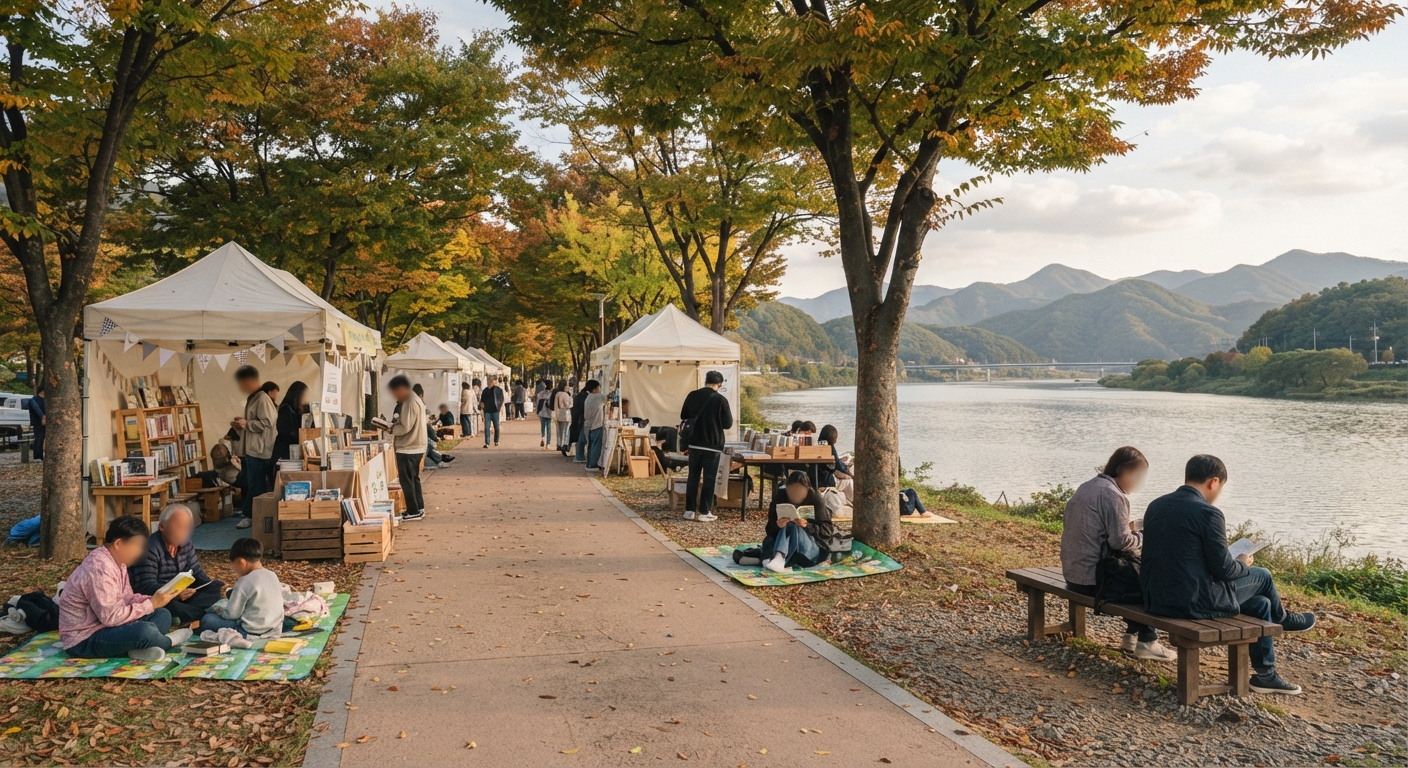
At Gongjicheon, the riverside walk is dressed as a “reading garden.” The confirmed programmes here are the more relaxed, drop-in kind: an after-dark “book camp under the starlight,” busking performances, a light-hearted “book-staring” (read-and-zone-out) contest, and a “book-and-beer lounge.” This is also where the book fair sits — announced at around 100 booths, including a Chuncheon hall for local publishers and bookshops, national and independent publishers, and partner-organisation booths. For families, the city lists a digital-book experience bus, an outdoor library, puppet shows and creative pansori, which makes Gongjicheon the easier half of the festival if you are bringing children or do not read Korean.
Programme and timetable
The dates are firm — September 18 to 20, a Friday-to-Sunday run — and they are confirmed by the official festival site, the Ministry of Culture’s 2026 plan and multiple Gangwon-do news reports. What is not published in a dependable form is the hour-by-hour grid: the operating times for the book fair, the exact start times of individual talks and the evening programme were not available when this guide was written, so this article deliberately states none of them as fact. Use the official site’s schedule and registration pages close to your travel date.
A few anchors are already fixed. The opening day, September 18, carries the opening ceremony and the one-off “Chuncheon Walk literary train” from Yongsan Station to Gimyujeong Station, a participatory programme in which registered riders bring a book to recommend. Because that train is a signed-up event rather than a normal service, do not build travel around it unless you have a place on it. The author talks and the academic forums are the other registration-gated strands; the walk-in parts — the book fair, the exhibitions and the Gongjicheon garden — are where you can simply show up.
Getting there without a car
The two-site split is the thing to get right, because the two venues sit on different kinds of train service.
Kim Yu-jeong Literary Village is a five-to-ten-minute walk from Gimyujeong Station on the Gyeongchun Line. Only the all-stop commuter electric train stops there — the faster ITX-Cheongchun and express trains do not — so from Seoul you either ride the commuter Gyeongchun Line the whole way to Gimyujeong (slower, but a direct single train with no transfer), or take ITX-Cheongchun to Namchuncheon and change to the commuter line for the short hop to Gimyujeong, which is one stop away.
Gongjicheon is in central Chuncheon, reached via Namchuncheon or Chuncheon stations. ITX-Cheongchun from Yongsan reaches Chuncheon in about 1 hour 10 minutes, at a fare in the region of 6,900-7,300 won, and also stops at Cheongnyangni, Gapyeong and Gangchon along the way. From Namchuncheon or Chuncheon Station, the Gongjicheon riverside area is a short local bus or taxi ride; use a Korean map app on the day and set the specific venue, not just “Chuncheon,” as the destination.
Because ITX serves central Chuncheon but not Gimyujeong, the cleanest plan for both sites in one day is ITX to Namchuncheon, the commuter line one stop to Gimyujeong for the literary village, then back into central Chuncheon for Gongjicheon. If you only want the family programmes and the book fair, skip Gimyujeong entirely and stay in central Chuncheon.
Tickets and registration
There is no general admission ticket. You can walk into the Gongjicheon book fair, the exhibitions and the outdoor garden without paying, which is what makes a casual visit easy. The catch is that the most sought-after programmes are capacity-limited and free-by-registration: the author talks, the academic forums and the literary train all take advance sign-up through the official site. “Free” therefore describes the price, not availability — if a specific author session or the train is the reason for your trip, secure a place before travelling rather than relying on a walk-up.
For questions the site does not answer, the organiser is the Chuncheon Municipal Library Reading Culture Team on 033-245-5063. This is a first-year event for Chuncheon, so schedule and registration details were still being filled in close to the opening; a phone check is more reliable than an old cached page.
Food on site and nearby
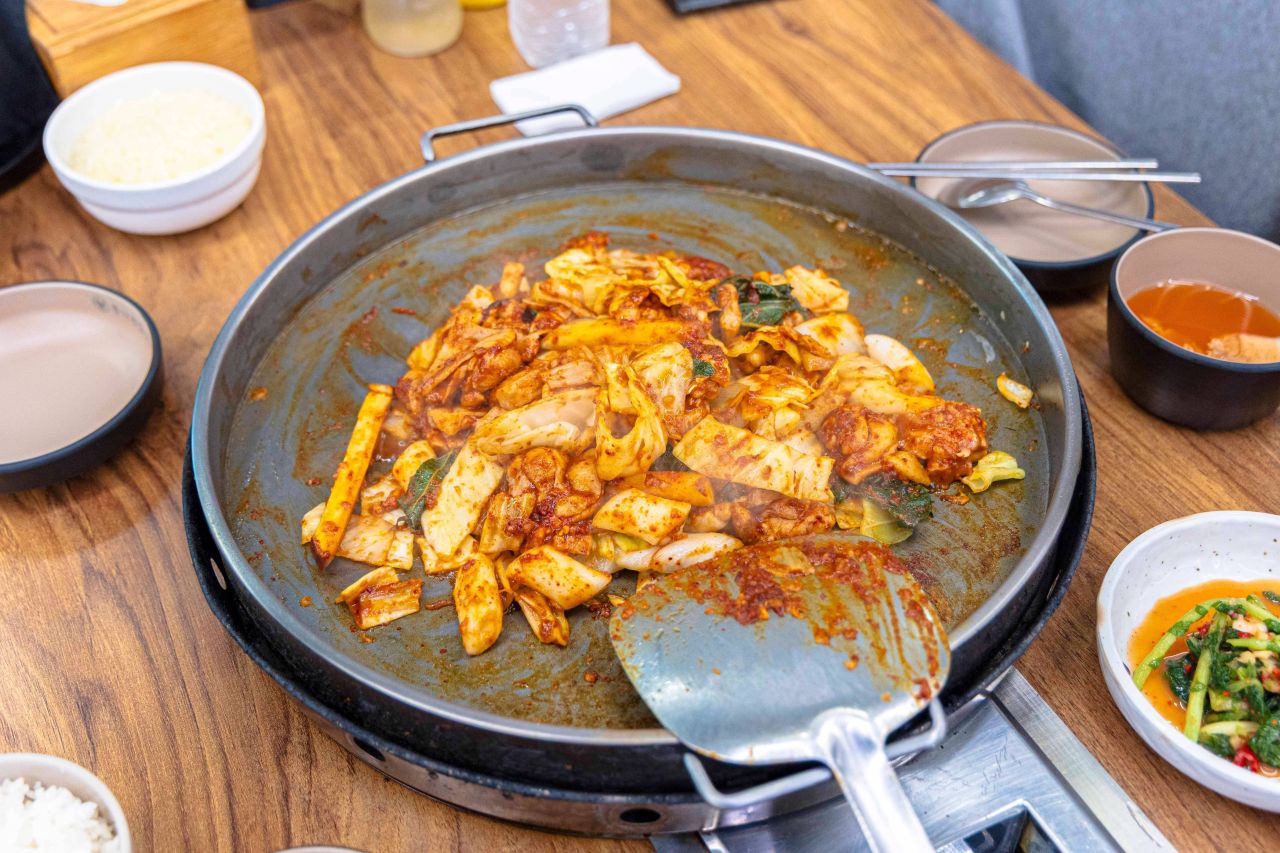
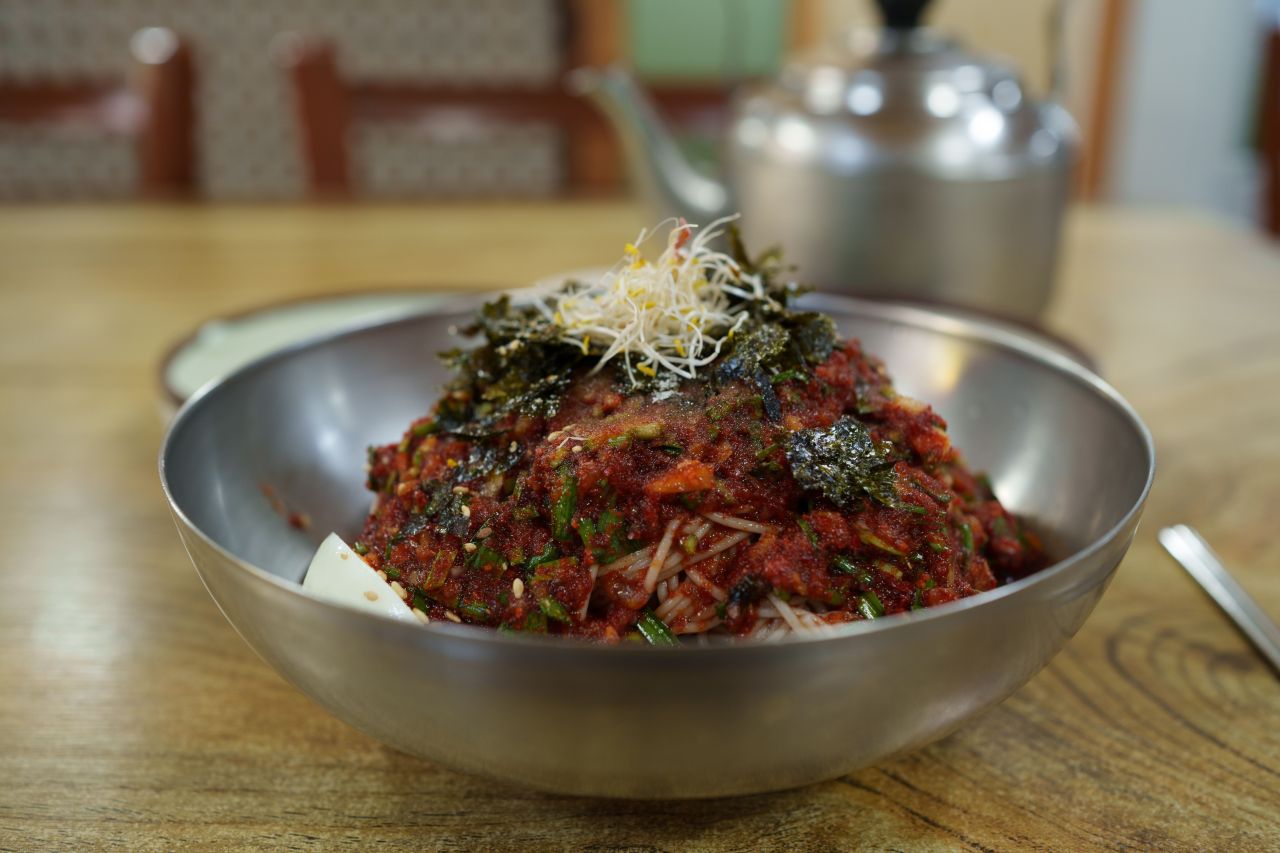
Chuncheon is one of Korea’s better-known food cities, which makes eating here worth planning independently of whatever stalls the festival runs. The Chuncheon city tourism office names two representative local dishes. Dakgalbi is chicken stir-fried with vegetables, rice cake and a red-pepper sauce on a hot iron plate — the city traces it to workers grilling cheap chicken over charcoal from the early 1960s, and there is still a charcoal-grilled version alongside the more common iron-plate one. Makguksu is the city’s cold buckwheat-noodle dish, high in buckwheat and typically served in a chilled radish-water broth; locals often eat the two together.
These are recommendations for the host city, not promises about the festival’s own food zone. Treat any on-site stalls as a convenience and go into central Chuncheon for a documented local meal if the food matters to your day.
Honest assessment
The 2026 Korea Reading Festival is a genuine draw for a specific visitor: someone who likes books, follows Korean writers, or wants a low-key riverside weekend with children rather than a headline attraction. Its strengths are the setting and the range — a walkable book fair and reading garden beside the Gongjicheon water, a literary village with real author events, and a manageable trip from Seoul on the Chuncheon line.
Its weaknesses are equally clear. It is a Korean-language event with no announced English service, so a non-Korean speaker will get far more from the atmosphere, the outdoor library and the family programmes than from the talks and forums. It is spread over two sites on two different train services, which rewards planning and punishes a rushed half-day. And as a first-year event for Chuncheon, its detailed timetable and registration pages firmed up late, so the single most useful step before travelling is to open the official site, check the day’s schedule and register for anything with limited seats. Do that, pick your site, and it is an easy and pleasant day out; arrive cold expecting one big show, and it will underwhelm.