Status, re-checked on October 2, 2026 (opening day): Korean press coverage dated up to October 1 still lists the event as going ahead on October 2-3 with no postponement, cancellation or date change, and the dates, 18:00-22:00 hours and free entry are unchanged. We could not open the official site’s latest notices (its security certificate fails) or the official social accounts, and found no published rain plan, so check the official channels on the day if the weather is doubtful.
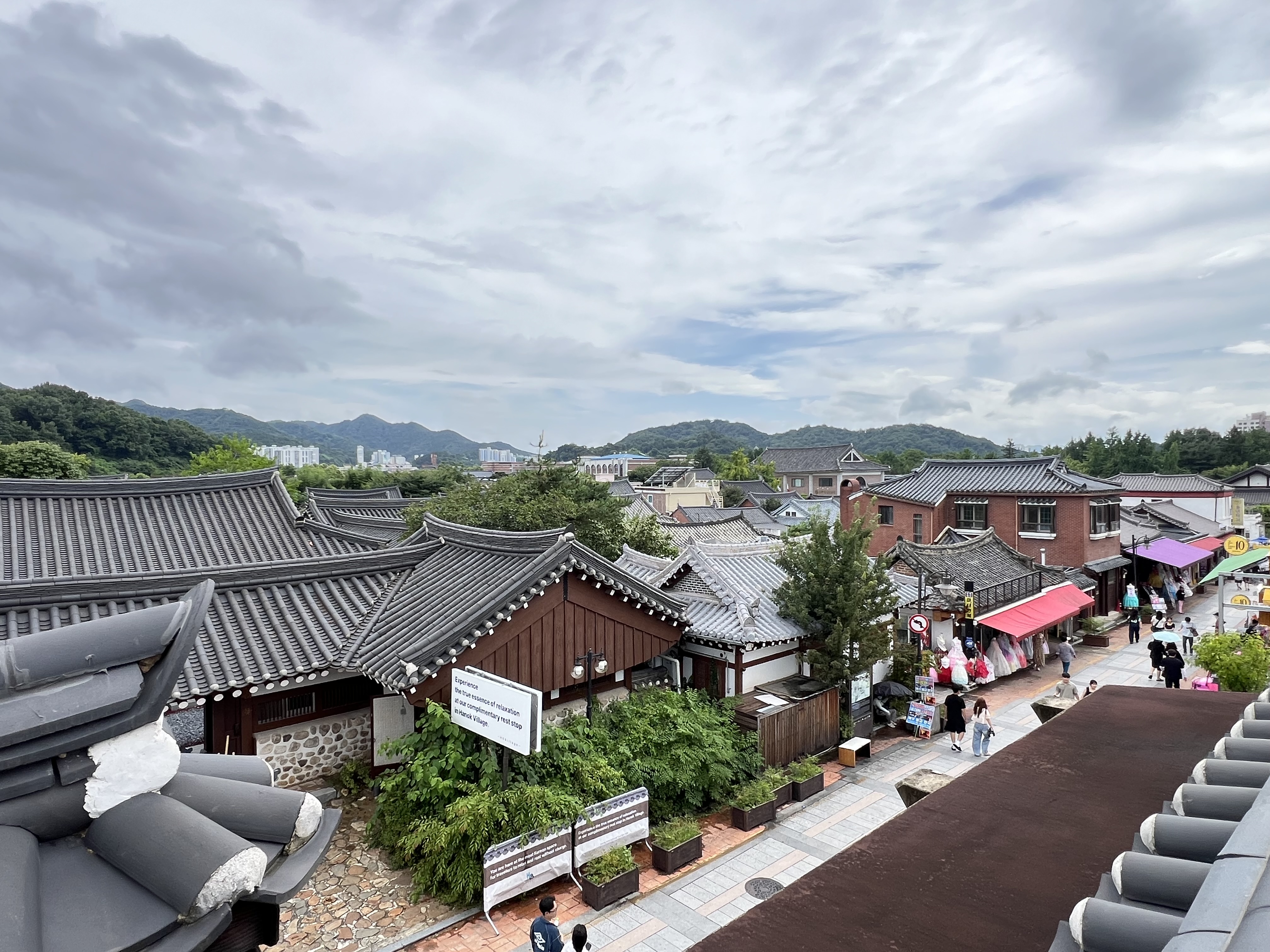
The Jeonju Cultural Heritage Night Tour is an evening heritage event set in the old core of Jeonju, the city that was the ancestral home of the Joseon royal house and, earlier, the capital of the Later Baekje kingdom. Rather than building a stage in an empty field, it uses buildings that are already there: the Hanok Village of traditional houses and the heritage sites clustered around it. The Korea Tourism Organization, the festival portal and the official site all describe the same slogan for 2026 — roughly, “a thousand-year-old capital, a night stroll through history.”
For the run this guide covers, the confirmed dates are October 2-3, 2026, and the hours are 18:00-22:00 on both evenings. Admission is free. The named venues are Jeonju Hanok Village, Gyeonggijeon, Pungnammun (the surviving south gate) and the Jeollagamyeong provincial-office site. One point worth settling up front: the same festival also held an edition on June 5-6, 2026 with a different programme, so if you come across June dates in older news reports, they belong to that first run and not to these October evenings. The October dates are the ones now listed by KTO and on the official site.
What you actually do here
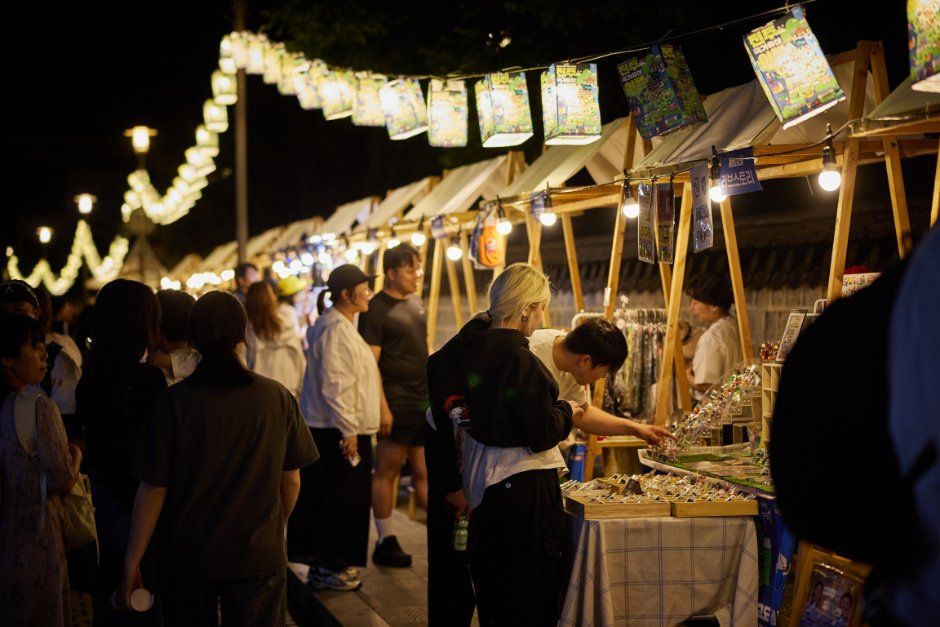
The event is organised around eight themed strands, each framed as a group of “masters” — of light, of heritage, of storytelling, of pictures, of performance, of travel, of food and of the market. In practice that means you walk a route and stop at clusters of activity rather than watching one continuous show. The “light” strand covers the illuminated buildings, painted-lantern lighting and photo spots that make the after-dark setting the point of the whole event.
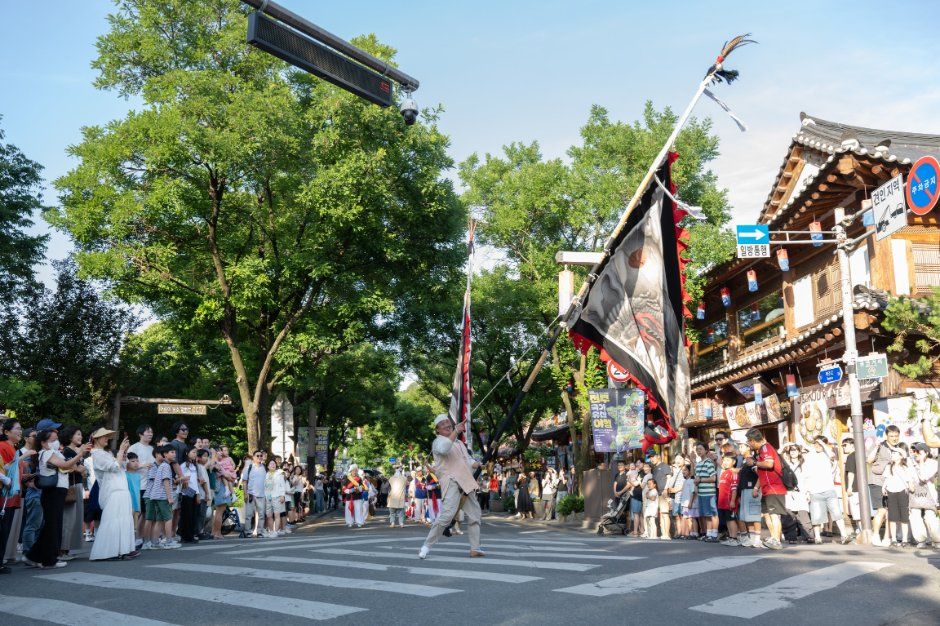
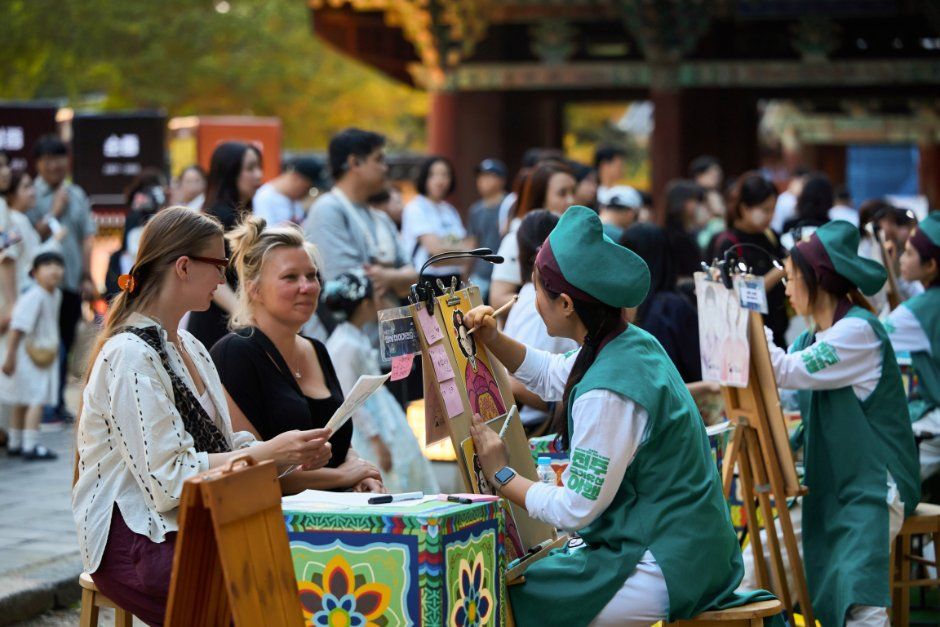
The heritage and storytelling strands lean into Jeonju’s own history: a stamp tour themed on the Later Baekje kingdom, history quizzes and games framed as friendly contests, a large parade that mixes residents and performers, and talks that walk visitors from Jeonju’s time as a royal capital to the present. There is a strong participatory streak. Announced activities include making and colouring your own pieces, a Joseon-style portrait drawn by a costumed “court painter,” traditional board games, tea-ceremony sessions and rice-cake making, plus a youth flea market and the festival’s own souvenirs. This is why it reads as a family-friendly evening as much as a spectator one.
The performance strand is the closest thing to conventional staging: a large open-air concert billed as a “pungnyu” showcase of local artists, roving solo traditional-instrument players, and short themed pieces including one built around the Donghak peasant movement. Because the announced programme is a list of concepts rather than a fully published minute-by-minute grid, treat named acts as intentions and check the official schedule close to the date if a specific performance is your reason for coming.
Programme and evening timetable
The operating window is simple: 18:00 to 22:00 on both October 2 and October 3. That is short, so a plan helps. A sensible approach is to arrive around dusk, use the remaining daylight to get your bearings in the Hanok Village and at Gyeonggijeon, and then let the lit installations and evening performances carry the second half of the visit. Because it is only two evenings, there is far less slack than at a festival that runs for a week or more.
Press releases issued by Jeonju City in the final days put the scale at 23 programmes in eight strands, and they pin down a few things that were vague before:
- Opening parade, October 2 at 17:30. “Millennium Procession of National Heritage” (국가유산 천년의 행진) leaves the Gyeonggijeon entrance and moves along Taejo-ro. This is the one fixed time reported for the whole event, and it falls half an hour before the 18:00 start.
- Gyeonggijeon. A street portrait painter, a moonlit tea session with guides, roaming traditional musicians, and the open-air “pungnyu” concert. The concert performers are local artists chosen in a selection that press reports describe as roughly 50-to-1 competitive.
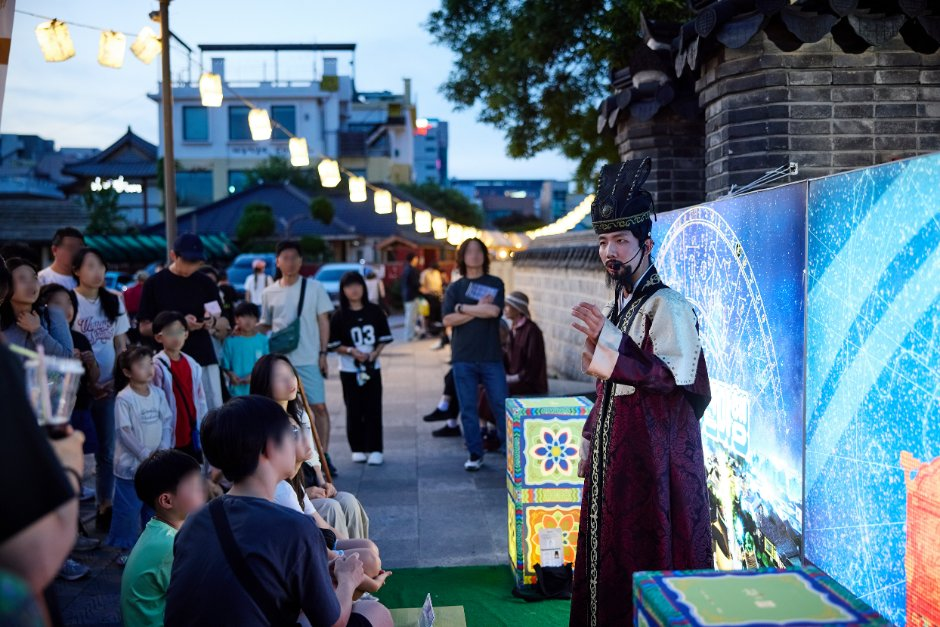
- Pungnammun. A storytelling piece on the Donghak peasant uprising, “Unexpected Gugak” performances reported as running hourly, and a heritage board-game contest built around gonu, a traditional two-player strategy game.
- Jeollagamyeong. A “Heritage Olympics” of competitive games.
- Between venues. Costumed actors telling stories along the Gyeonggijeon stone-wall path, guided alley tours of the Hanok Village led by cultural interpreters, and the “Finding the Lost Later Baekje” stamp tour, which sends you to several sites to collect clues and a keepsake.
Apart from the parade and the hourly Pungnammun music, no press report gave a start time for individual items, and we could not read the official site’s grid. If a specific performance is your reason for coming, treat its slot as unconfirmed and ask at an information point when you arrive. The official site (jeonjunight.com) uses a self-signed security certificate, so some browsers will warn before it loads.
Getting there without a car
From Seoul, the direct route is a KTX from Yongsan Station to Jeonju Station on the Jeolla Line. Current timetables put the journey at roughly 1 hour 35 minutes to just under two hours, with individual trains varying by their stops, so search your exact date in Korail rather than treating one figure as fixed. Jeonju’s KTX station is in the northeast of the city and is not beside the festival area.
The last leg is short but necessary. From Jeonju Station, frequent city buses reach the Hanok Village area in about 25 minutes, getting off near the Jeondong Catholic Church at the edge of the village; a taxi covers the same distance quickly for roughly 6,000-7,000 won. Once you are in the village, the named venues are close enough to walk between. Set the Hanok Village, Gyeonggijeon or Pungnammun as your destination in a Korean map app rather than just “Jeonju,” and expect pedestrian congestion near the village on a festival evening.
An intercity bus from Seoul to Jeonju’s express-bus terminal is the alternative if the trains are full, but it still leaves you with a transfer into the old town and is more exposed to road traffic. Either way, the final village transfer is unavoidable.
Holiday weekend, parking and the last shuttle
October 3 is National Foundation Day and falls on a Saturday, so Monday October 5 is a substitute holiday and the festival’s second night opens a four-day weekend (October 3-5). Expect heavier rail, road and Hanok Village crowds than a normal weekend, and book KTX seats early if you are coming from Seoul.
If you drive, the Jeonju Hanok Village’s official parking page lists three paid lots near the village (293, 176 and 72 spaces, 1,200 won per 30 minutes with a daily cap of 14,400 won) and a free lot of 636 spaces at the former Daeseong site (Chunhyang-ro). A shuttle links that free lot with the Omokdae area, but it is listed as running 10:00 to 18:30 only, with four buses on weekends and holidays. That means it stops shortly after the festival begins, so do not count on it for the trip back; plan to walk or take a taxi after the night programme. We found no event-specific traffic-control or temporary parking notice in the press releases, so follow signs and any police directions on site.
Food on site and nearby
The festival includes a “food” strand — tea-ceremony sessions, rice-cake making and local traditional drink — but these are experiences rather than a guaranteed full meal service, and no reliable menu or price list has been published, so plan to eat properly either side of the evening. The good news is that you are in one of Korea’s strongest food cities and the restaurants are right there.
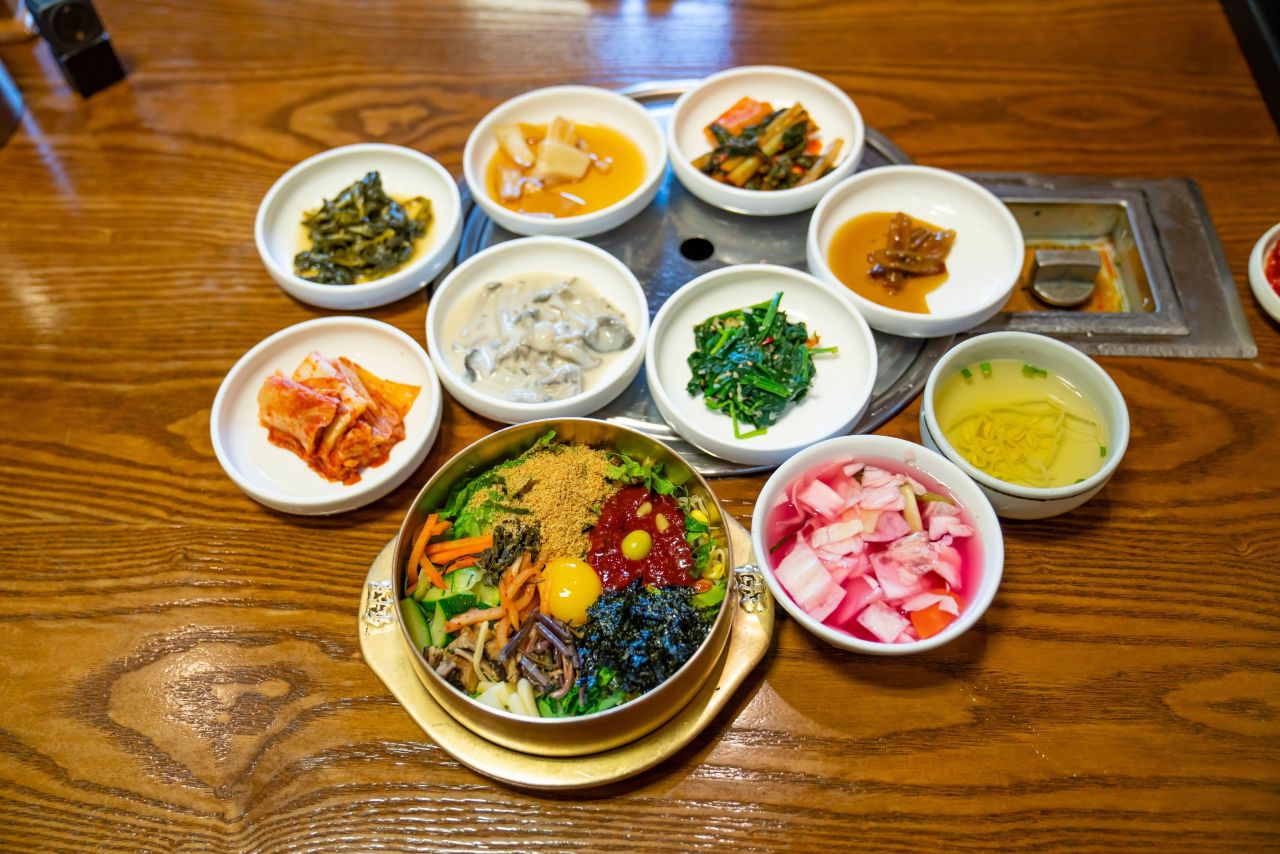
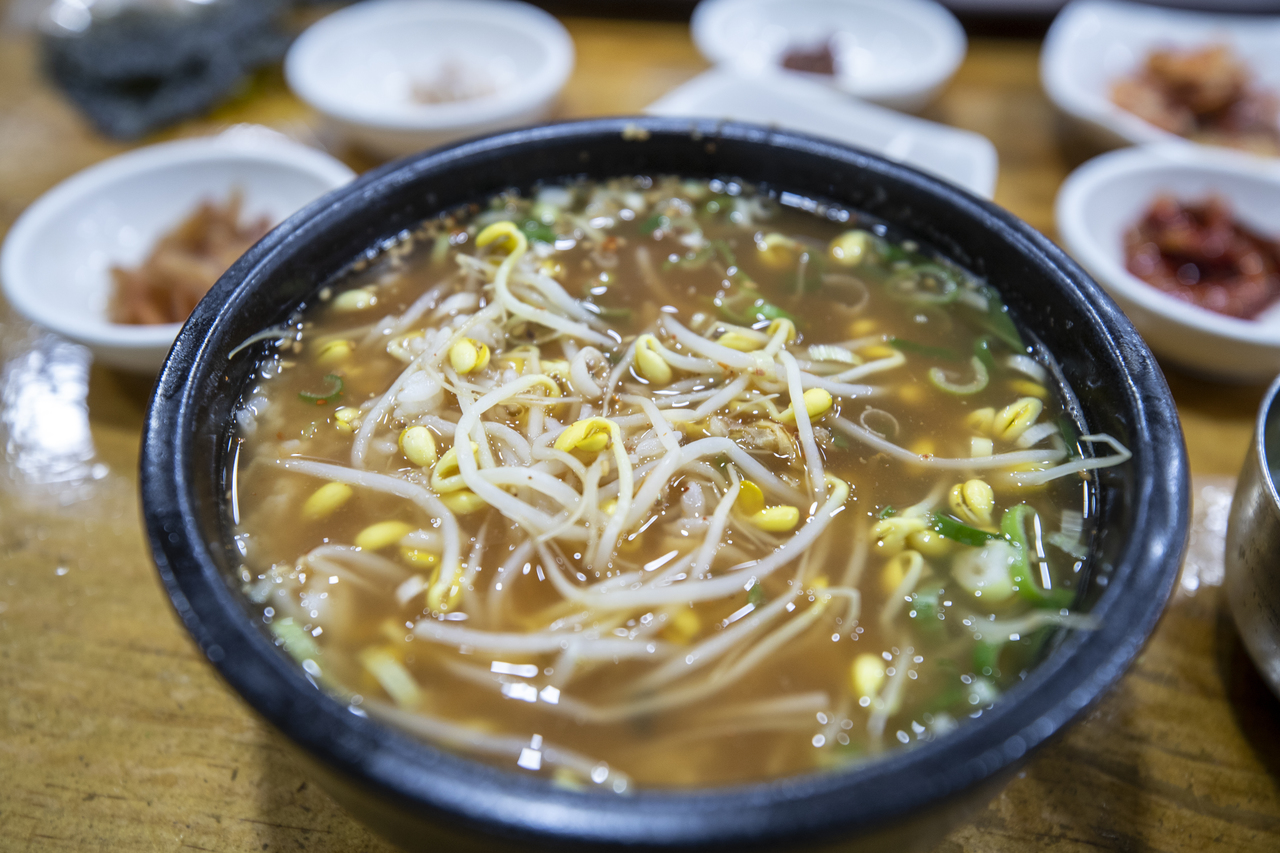
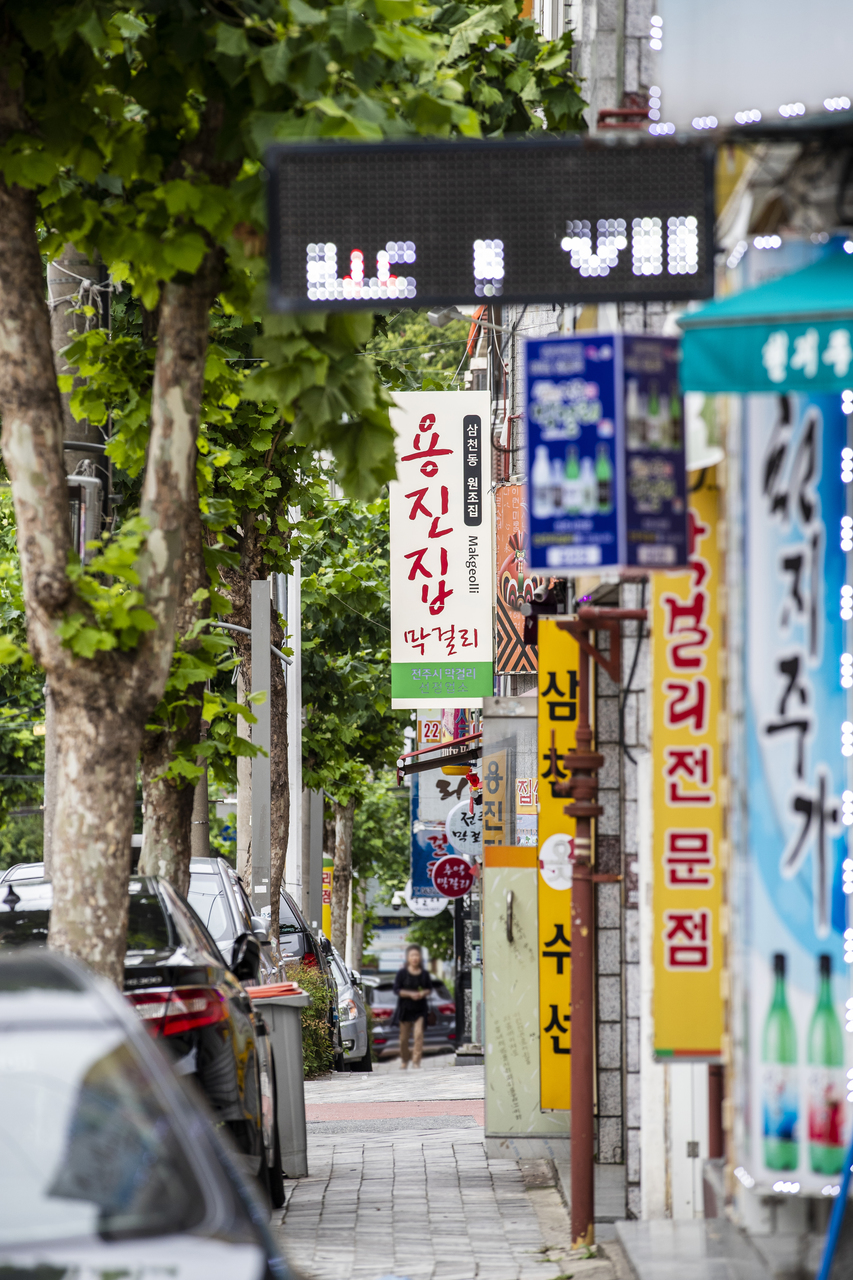
Jeonju’s signature dish is bibimbap, built on rice cooked in broth with local bean sprouts and hwangpomuk mung-bean jelly, and it is worth ordering in a restaurant rather than expecting it from a stall. For something faster and cheaper around a late evening, kongnamul gukbap, the city’s bean-sprout rice soup, is widely available and filling. If you want a drink with the meal, Jeonju’s makgeolli alleys are a local institution, where a kettle of rice wine arrives with a generous spread of side dishes. These are city specialties to seek out, not promises about the festival grounds themselves.
Honest assessment
The real strength of this event is its setting. Instead of decorating a neutral space, it lights up genuine heritage — a royal shrine, an old city gate, a provincial-office site and a dense quarter of traditional houses — and lets you walk among them after dark. Because entry is free and much of the programme is hands-on, it works well for families and for travellers who would rather participate than sit and watch, and the fast KTX from Yongsan makes even a focused evening trip from Seoul feasible.
The weaknesses are mostly about scale and timing. It runs for only two evenings within a fixed four-hour window, so there is no margin for a slow start and nothing to see by day; a daytime arrival is best used for sightseeing, not for the festival itself. The Hanok Village is already one of Korea’s most crowded areas, and concentrating a light-and-performance event into two nights will add to that, especially on the Saturday. Apart from the 17:30 parade, the programme is a strong list of activities without published start times, so anyone travelling for one specific performance should confirm its slot on arrival. Parking is workable but the free shuttle stops at 18:30, so the return leg is yours to plan. Finally, keep the June-versus-October distinction in mind when you read older coverage. Used as a relaxed evening within a wider Jeonju trip, it is an easy recommendation; treated as a tightly timed dash for one headline act, it is harder to plan around.