
Autumn · Gyeongsangbuk-do · Field listing
Yeongju Punggi Insam Festival 2026
The essentials first: whether it is open, what it costs, how hard it is to reach and what to expect if you do not speak Korean.
When
Oct 3 — 11ConfirmedConfirmed dates
Where
Namwoncheon Stream and Punggi Insam Park, Punggi-eup, YeongjuGyeongsangbuk-do
Type
Food & local produce
Admission
FREEGeneral admission is free. The Korea Tourism Organization listing notes that some hands-on experience programmes are charged separately, and the festival sells fresh ginseng, red ginseng and processed products at grower prices. A dependable 2026 price list for the paid experiences had not been published when this guide was written, so check the amount at each booth rather than budgeting from an earlier year.
From Seoul
Under 2 hours by KTX-Eum from Cheongnyangni (varies by train)Take a KTX-Eum on the Jungang Line from Cheongnyangni Station to Punggi Station. Only some KTX-Eum services call at Punggi, while all ITX-Maeum and Mugunghwa trains stop there, so search the exact date on Korail. Punggi Station is in Punggi-eup, the same town as the festival grounds, so the final leg is short — confirm it on a map app or the festival's transport notice.
Hours
10:00-20:00
Organiser
Yeongju Culture & Tourism Foundation, 054-630-8706
Is this one for you?
Who it suits. This suits visitors who like a working agricultural festival: buying fresh ginseng and red-ginseng products directly from growers, watching a premium-ginseng judging exhibition, and catching traditional rituals and a costumed governor's procession rooted in local history. Because Punggi Station sits in the same town, it also works as a rail day trip. It is a weak choice if you want an after-dark spectacle — the grounds close at 20:00 — or a single seated headline show, since this is a spread-out market-and-programme event; anyone with no interest in ginseng itself will find the core of the festival underwhelming.
When to go. Treat it as a daytime visit. The site runs 10:00-20:00, so there is no late-night lantern or fireworks payoff to wait for, and arriving in the morning or early afternoon gives you the market, the exhibition tents and any scheduled ritual or procession before the busiest period. Weekends around the October 3 opening draw the largest crowds. The catch is timing: the official 2026 schedule still lists individual programme times as to be announced, so if a specific ritual, the competition or the procession is your reason for coming, check the official schedule before you travel rather than turning up and hoping.
LOCAL WEATHER
Weather near the festival
The festival date is outside the current forecast window. Check again closer to your trip.
Korea Meteorological Administration forecast
Need something we do not list — a stall menu, a parking gate, a last bus? The Korea Travel Helpline answers in English around the clock: dial 1330 inside Korea, or +82-2-1330 from abroad.
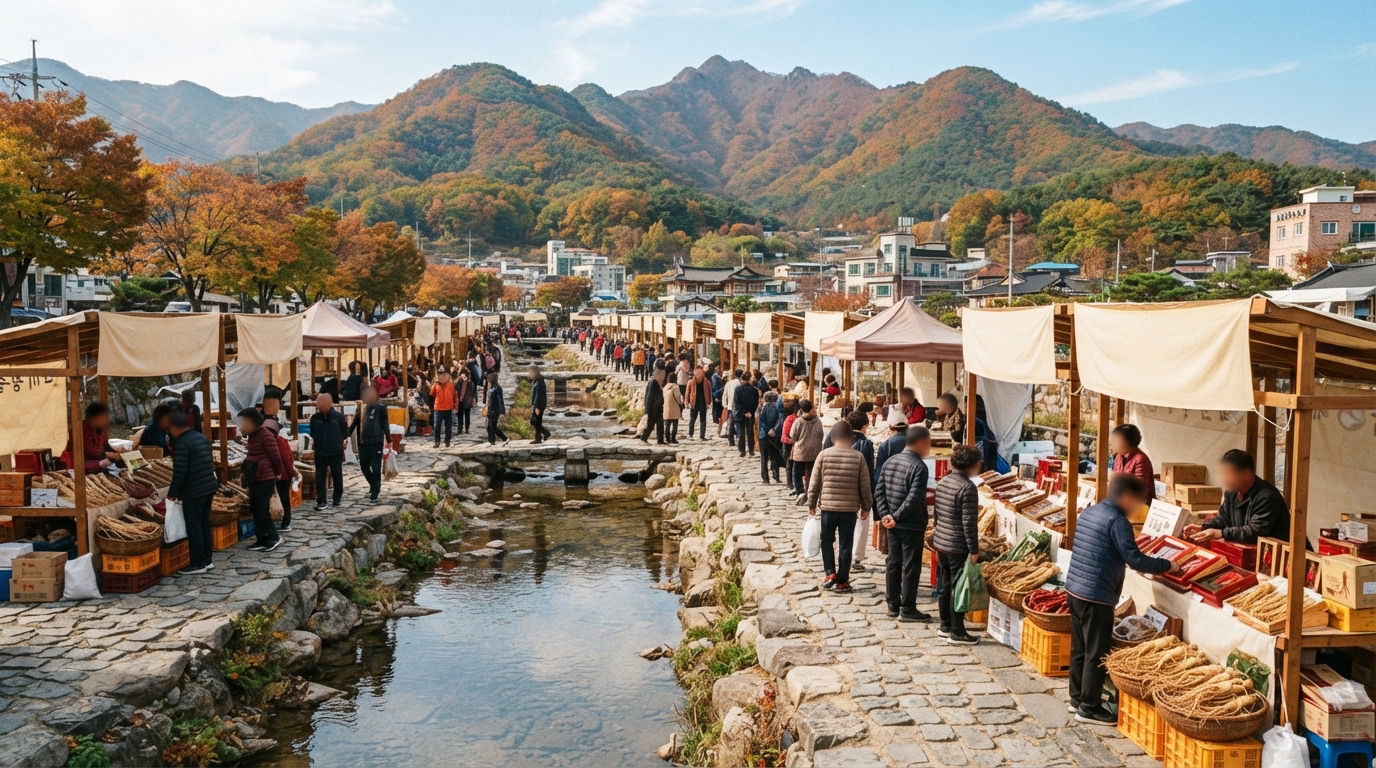
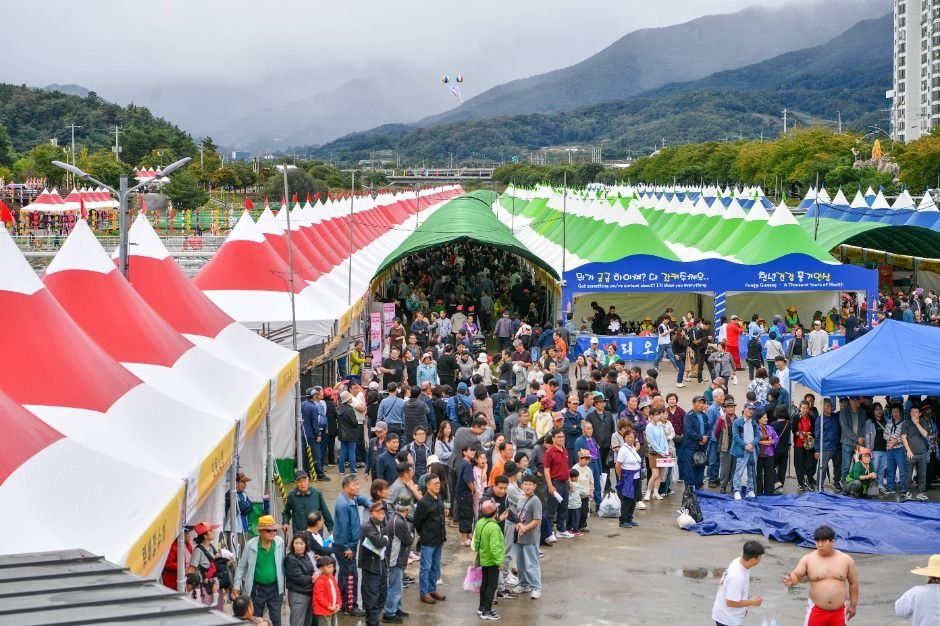
The Yeongju Punggi Insam Festival is a ginseng festival in the most literal sense: its subject is a crop, and most of what happens on the ground is growing, judging, selling and eating that crop. It runs for nine days, October 3-11, 2026, along the Namwoncheon stream and Punggi Insam Park in Punggi-eup, on the northern edge of Yeongju in Gyeongsangbuk-do. The Korea Tourism Organization and the festival’s own site agree on those dates, and the grounds are open 10:00-20:00. General admission is free. The 2026 slogan translates as roughly “My strength, my life, Punggi ginseng,” and a banner on site puts it another way: “Punggi Ginseng — A Thousand Years of Health.”
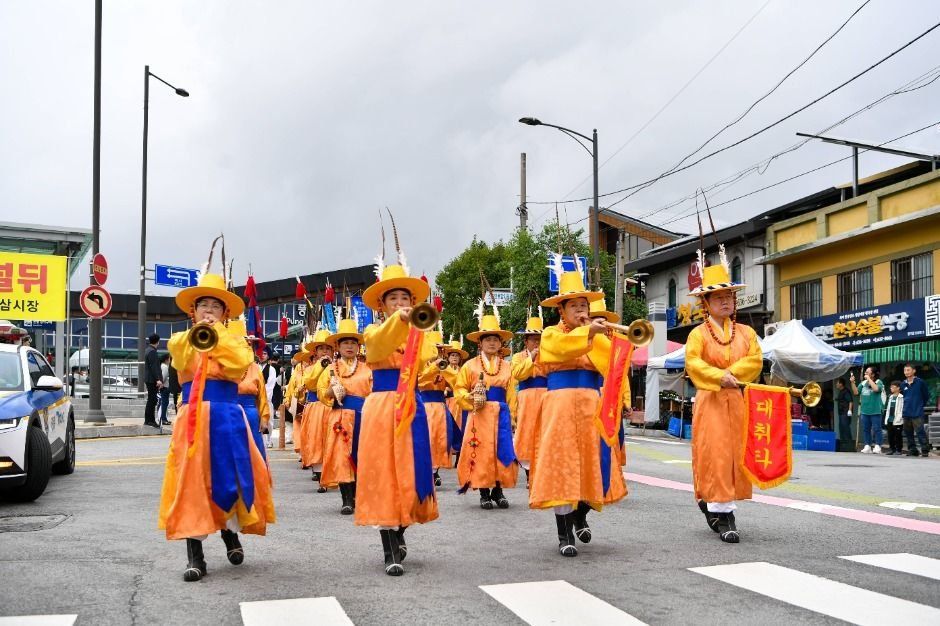
Punggi is a genuine centre of Korean ginseng, not a town that borrowed the theme. Cultivation here is traced to 1541, when Ju Se-bung arrived as magistrate and is credited with the first trial planting of ginseng in the county. That history is not just backdrop; it is written directly into the programme, which opens the festival with a ritual at the Gaesamteo — the traditional “ginseng-opening” site — and stages a costumed reenactment of Governor Ju Se-bung’s procession through the old town.
What you actually do here
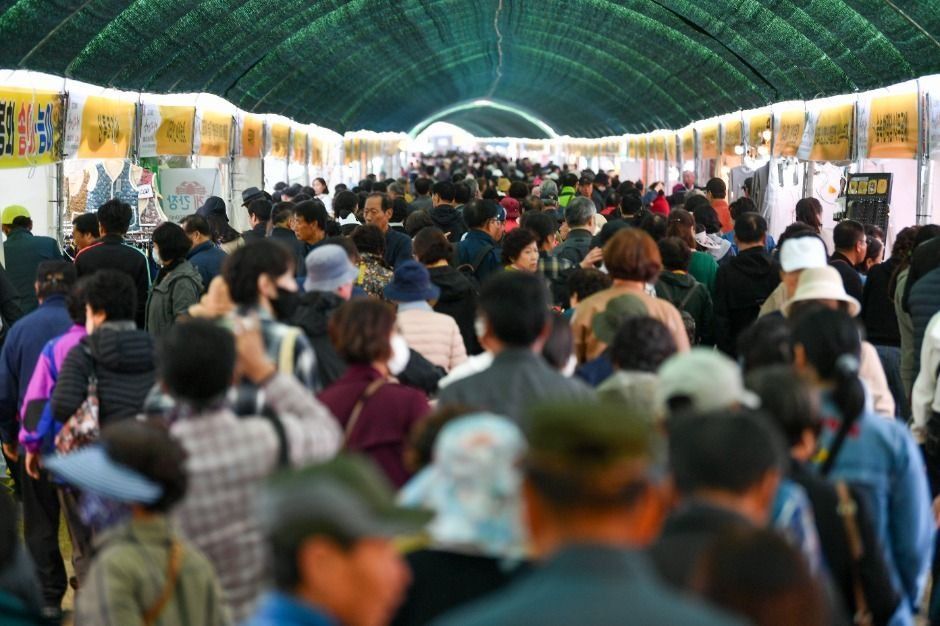
The centre of gravity is the market. Rows of tents run along the stream and through Punggi Insam Park, and local growers sell fresh ginseng, red ginseng and processed products — teas, extracts, sweets — usually at prices closer to the farm than the department store. If your reason for coming is to buy good ginseng from the people who grew it, this is the straightforward appeal, and it does not need any programme knowledge to enjoy.
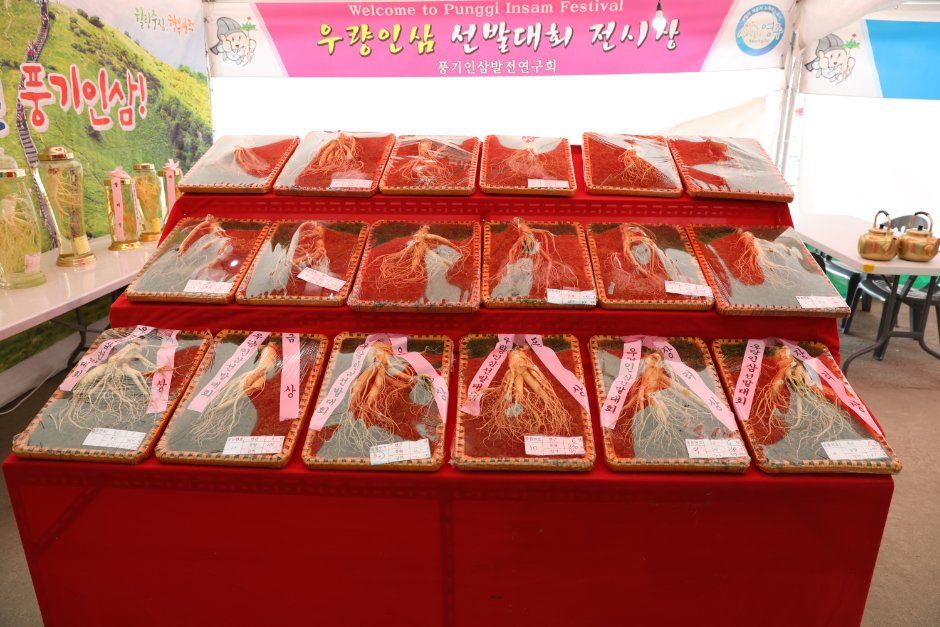
Around the market sit the set-piece events. A premium-ginseng competition and exhibition displays prize roots laid out like specimens, each labelled, which is one of the more photogenic corners of the site. Consumer-participation programmes are built to be tried rather than watched: a ginseng-peeling contest and ginseng injeolmi rice-cake pounding are both on the 2026 list. Fringe events include youth and community performances, an environmental singing contest, a madanggeuk outdoor play, the Sobaeksan Punggi ginseng singing contest and a community sports day.
One honest caveat about planning. The official 2026 site lists these programmes by name but marks the individual dates and times as “to be announced.” So while the festival’s shape is confirmed, the exact hour of the ritual, the competition or the procession was not published when this guide was written. If one specific event is your reason for the trip, check the schedule on the official site before you travel.
Rituals, the procession and the premium-ginseng judging
Three programmes give the festival more substance than a produce market. The Gaesamteo Ritual Ceremony is a formal rite wishing for a good harvest, held at the site associated with the start of local cultivation. The Ginseng Grand Ritual is the larger ceremonial centrepiece. And the reenactment of Governor Ju Se-bung’s procession sends a costumed column — musicians in period dress among them — through the old downtown, linking the modern festival to the sixteenth-century figure who, by tradition, started it all.
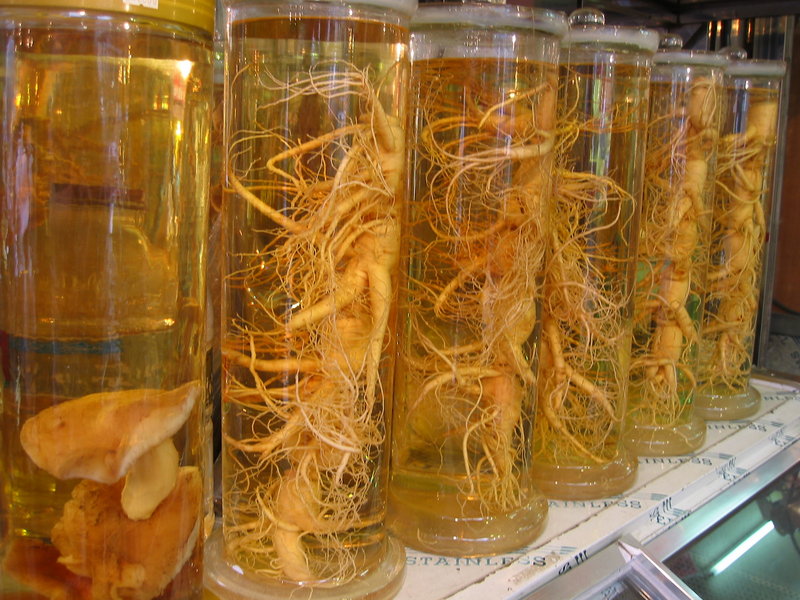
The premium-ginseng competition is worth understanding as more than decoration. Growers submit their best roots, which are judged and then exhibited, so the display doubles as a snapshot of what the region considers top-quality ginseng in a given year. For a visitor it is a chance to see the raw root — the thing being sold all around you — presented at its most careful.
These are the events most likely to have fixed times once the schedule is finalised, and they are also the ones that reward arriving with a plan. The market is come-as-you-please; the rituals and the procession are not.
The Ju Se-bung connection and what to pair it with
The same official who is credited with introducing ginseng cultivation to Punggi, Ju Se-bung, also founded Korea’s first seowon — a Neo-Confucian academy — here in 1543. Originally Baegundong Seowon, it was later chartered by the king as Sosuseowon, and in 2019 it was inscribed on the UNESCO World Heritage list as one of nine “Seowon, Korean Neo-Confucian Academies.” It sits in Yeongju, and the festival’s own “getting here” page points visitors toward it along with the Seonbi (scholar) cultural sites — Seonbichon, the Seonbi Cultural Training Institute and the wider Sosuseowon precinct.
This matters for trip planning because the festival alone is a half-day for most people. If you have come as far as Yeongju, the Sosuseowon and Seonbichon cluster is the natural companion visit, and it is directly tied to the same historical figure the festival celebrates. Confirm opening hours and transport for those sites separately; they are a short drive from the ginseng grounds but not walking distance, so build the connection into your day rather than assuming it.
Getting there without a car
This is one Korean festival where the rail station is genuinely convenient. Punggi Station is in Punggi-eup, the same town as the festival grounds, so unlike festivals where the “station” and the site are half a city apart, the final leg here is short. The station is on the Jungang Line. KTX-Eum high-speed services from Cheongnyangni Station in Seoul run the line, but not every KTX-Eum stops at Punggi — all ITX-Maeum and Mugunghwa trains do. The KTX-Eum run from Cheongnyangni to Andong is about two hours, and Punggi is two stops before Andong, so the ride to Punggi is under two hours; treat that as a guide and check the exact time for your date on Korail, since the fastest option depends on which train you catch.
For the last hop from Punggi Station to the Namwoncheon and Punggi Insam Park grounds, use a taxi or a local bus and set the festival address — not just “Yeongju” — as the destination. Yeongju City has announced additional temporary parking and shuttle buses connecting major hubs to ease congestion during the run, but the detailed lot map, shuttle routes and service times had not been published when this guide was written. If you drive, open the official transport notice again shortly before leaving rather than trusting a previous year’s plan.
Tickets, costs and food
Entry is free, and that is meaningful here: you can walk the market, see the exhibition tents and watch the procession without buying anything. What costs money is what you choose — ginseng and ginseng products from the stalls, and the hands-on experiences the tourism listing says are charged separately. No reliable 2026 price list for the paid activities was available at this update, so check each booth.
On food, the site is honest to a fault. The Korea Tourism Organization listing explicitly notes that its food description still reflects the 2025 festival and that the 2026 food content is being updated. There will be food — ginseng dishes are part of the draw, and a local co-prosperity market operates on site — but this guide will not name a specific 2026 stall, menu or price on the strength of last year’s information. Eat before the busiest midday stretch if a proper meal matters to you.
Honest assessment
The strength of this festival is its honesty of purpose. It is a real agricultural event in a real ginseng town, and the best of it — buying fresh roots from growers, the labelled premium-ginseng exhibition, the Ju Se-bung procession and the opening ritual — connects directly to why Punggi is known for ginseng at all. The rail access is unusually good, and the Sosuseowon world-heritage cluster gives the trip a second, historically linked half. For someone who actually wants to buy and learn about ginseng, or who is combining the visit with the Seonbi cultural sites, it is an easy recommendation.
Its weaknesses are the flip side. This is a daytime market-and-programme festival, not a spectacle; if you are hoping for lanterns, fireworks or a big evening stage show, the 20:00 close tells you this is not that. The programme is spread out, and the official schedule’s “to be announced” times mean you cannot reliably plan around a single ritual or performance yet — check the official page close to your travel date. And the core is ginseng: if that holds no interest for you, the surrounding events are pleasant but thin.
The fair plan is a half-day at the grounds — market, exhibition, and whichever ritual or the procession the finalised schedule places in your window — paired with the Sosuseowon and Seonbichon sites nearby, arriving by KTX-Eum or ITX-Maeum to Punggi and checking the shuttle and parking notice before you set out. Come for the ginseng and the history, not for a night-time show, and it delivers what it promises.
Local specialties to try
Punggi ginseng (풍기인삼)
The reason the festival exists. Punggi ginseng is a registered geographical-indication product: only ginseng grown in Yeongju may be sold under the Punggi name. Yeongju's agricultural pages credit the sandy, organic-rich soil and cold continental climate of the Sobaeksan foothills for a hard-fleshed root with a high saponin content. Cultivation here is traced to 1541, when the magistrate Ju Se-bung is said to have first trial-grown ginseng in the county — the same figure the festival's procession reenacts.
Yeongju apple (영주사과)
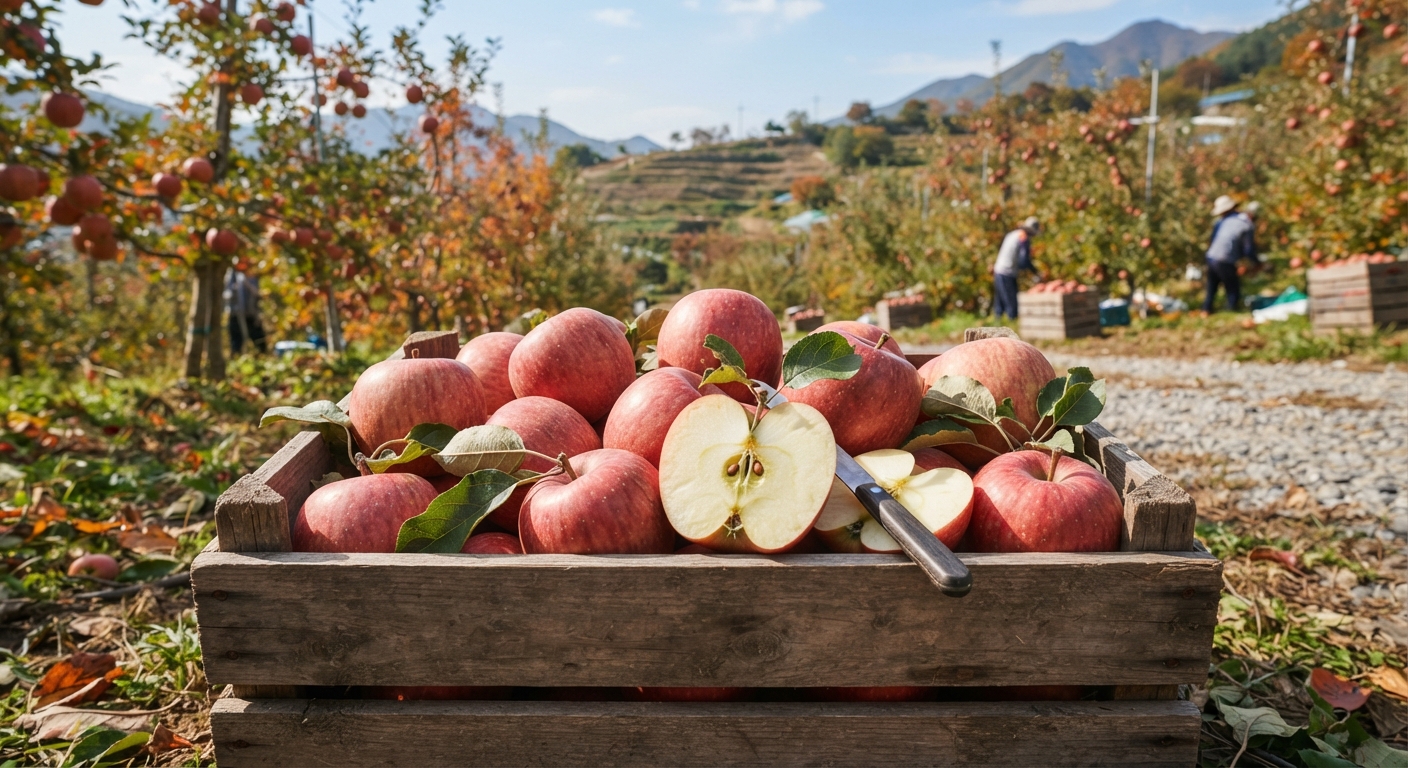
Yeongju is one of Korea's largest apple-growing districts, with high-altitude orchards on the southern slopes of Sobaeksan. Yeongju apple is registered as a geographical-indication agricultural product (No. 54, 2009). The wide day-night temperature swing at altitude is the quality Yeongju growers point to. The city runs a separate apple festival, and the two crops are promoted together, so October is apple season here as much as ginseng season.
Questions worth asking
Is the Yeongju Punggi Insam Festival free?
General admission is free. The festival's core is a market where local growers sell fresh ginseng, red ginseng and processed products, and the tourism listing notes that some hands-on experiences are charged separately on top of free entry. A reliable 2026 price for those paid activities had not been published at this update, so check the amount at the booth.
When is it, and what are the hours?
The 2026 festival runs October 3-11, nine days, at Namwoncheon Stream and Punggi Insam Park in Punggi-eup. The grounds operate 10:00-20:00. It is a daytime event with no late-night finale, so there is little reason to arrive in the evening.
Is there a celebrity or singer line-up?
The programme includes opening and closing ceremonies with celebratory performances and a Sobaeksan Punggi ginseng singing contest, but the official 2026 schedule marked individual programme dates and any performer line-up as to be announced. No performer names were confirmed when this guide was written, so treat searchable 'line-up' claims with caution and check the official schedule.
Is the train station close to the festival?
Yes, unusually so. Punggi Station is in Punggi-eup, the same town as the grounds, so the final leg after the intercity train is short. KTX-Eum on the Jungang Line runs from Cheongnyangni, but only some services stop at Punggi; all ITX-Maeum and Mugunghwa trains do. Confirm your specific train on Korail.
What about parking and shuttle buses?
Yeongju has announced additional temporary parking and intensively operated shuttle buses linking major hubs to reduce congestion, but the detailed lot map, shuttle routes and timetable had not been published when this guide was written. Use the festival's official transport notice immediately before travelling rather than an old plan.
What can I buy and eat there?
Growers sell fresh ginseng, red ginseng and a range of processed ginseng products, generally at grower prices, alongside a local co-prosperity market. The tourism listing's food description is explicitly marked as 2025 information being updated for 2026, so this guide does not name a specific 2026 dish, stall or price.
Before you goFestival Etiquette in Korea: What Visitors Get WrongBooking KTX Trains and Intercity Buses as a Foreign VisitorGetting Out of Incheon Airport and On to a FestivalKorean Festivals With Children: Toilets, Strollers and TimingStaying Online in Korea: SIM, eSIM and the Apps That MatterEating at a Korean Festival Without Speaking KoreanRain, Typhoons and Cancelled Festivals: How to Plan Around ThemHow to Pay for Things in KoreaT-money and Transit Cards in KoreaWhat to Wear to a Korean Festival, Season by Season
LAST UPDATED · Sep 19, 2026