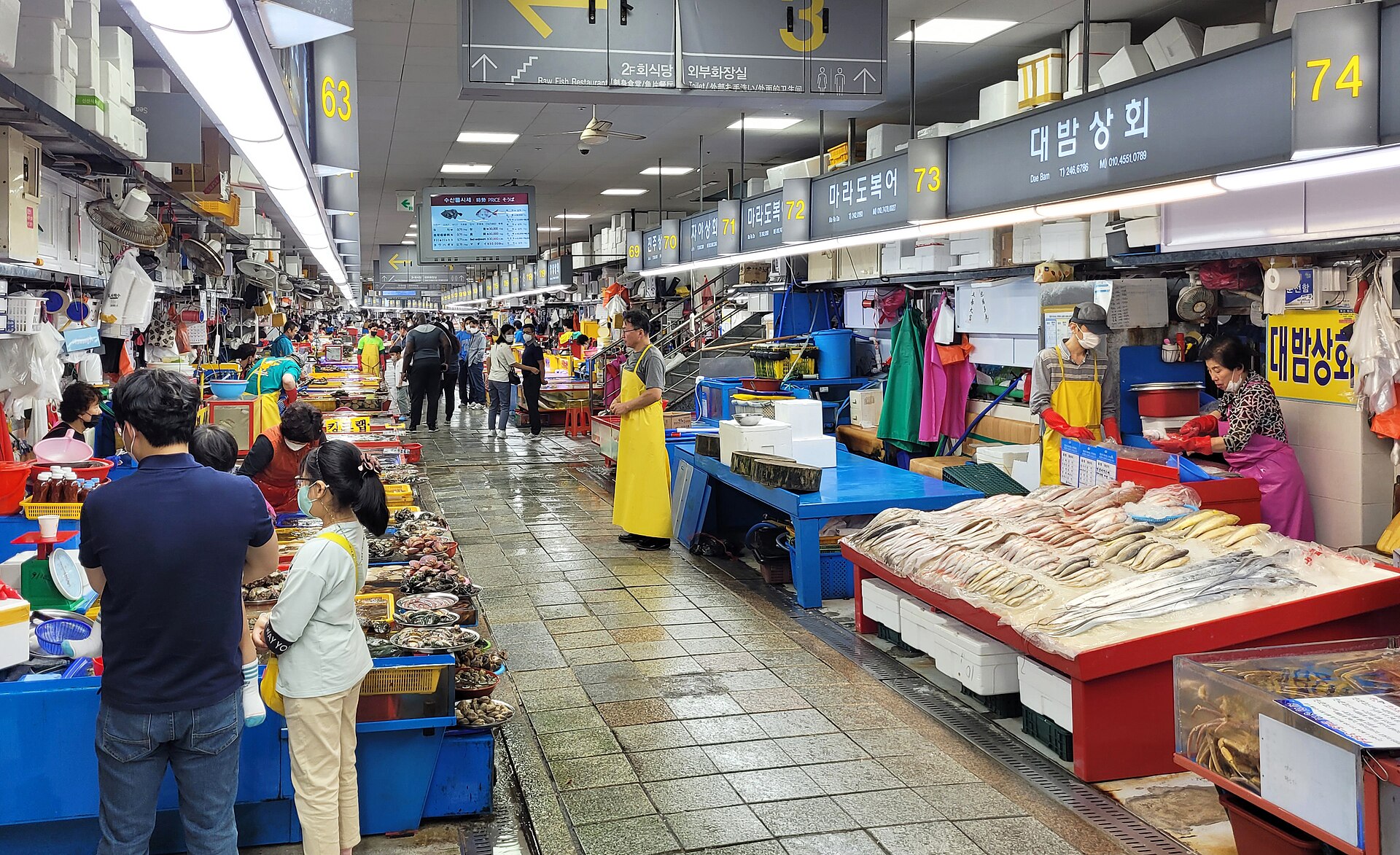
Jagalchi Market is Korea’s best-known seafood market, a long waterfront of fish stalls, grilled-fish restaurants and tanks on the south side of Busan’s old centre. Each October the Jung-gu district office turns the market and the open Yurari Plaza beside it into the Busan Jagalchi Festival. In 2026 it is the 33rd edition and runs from Thursday 15 to Sunday 18 October. The organiser is the Busan Jagalchi Culture and Tourism Festival Committee, and the venue address on the official site is 52 Jagalchi Haean-ro.
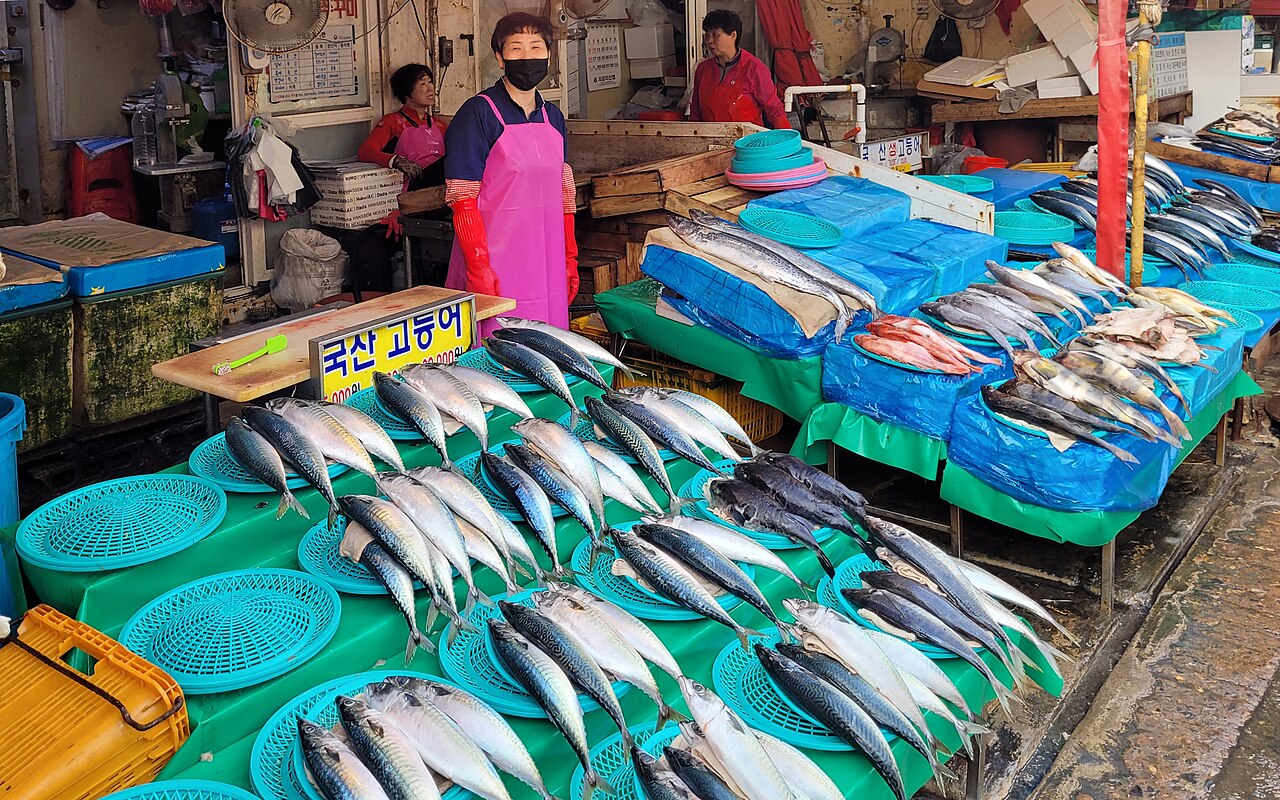
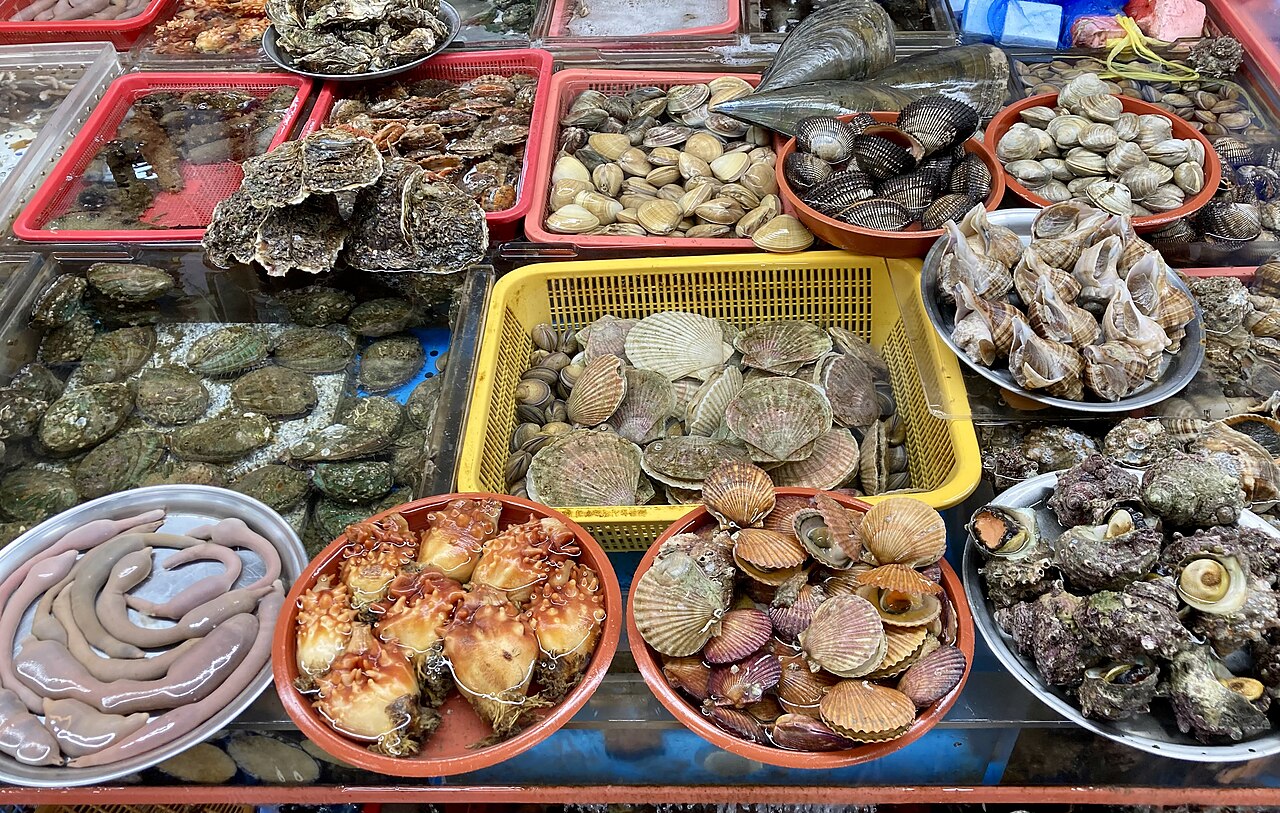
The photographs on this page show the market on ordinary days in 2022 and 2023, not the festival itself. I could not find licensed festival photos for this guide, so what you see is the setting, not the crowd.
What you actually do here
The festival is about seafood, so most of what you do is eat and watch other people eat. Busan Jung-gu’s announcement lists a free seafood tasting, an attempt to make the “world’s largest raw-fish bibimbap” and share it with visitors, and a dried-seafood food zone aimed at younger people and families. The Korea Tourism Organization listing adds a food hall called Jagalchi Matcheonguk-gwan, a flea market with food trucks, and street performers.
There are also games meant for participants rather than spectators. The announced ones include an eel relay race, a hunt for a “golden fish”, a fish-height-measuring game and an activity called “let’s play, fish”. Stages carry a Jagalchi song contest, a first K-POP dance competition and the fourth global university song festival, plus smaller side stages including a karaoke corner. No source I found gives hours or rules for the games.
The ceremonial side is a dragon-king ritual, yongsinje, a traditional rite praying for a good catch. This year’s press release says the festival is also reviving its old parade, with a procession starting at the Busan Modern History Museum, passing City Spot and the Gwangbok-ro fountain plaza, and ending at the main stage, so that the festival feel spreads across the whole Jung-gu district.
Programme and timetable
Only one time is firmly published:
- Thursday 15 October, 7 p.m.: opening ceremony at the main stage, with a marine fireworks show over Namhang (the southern harbour), followed by concerts by Song Ga-in, Son Min-chae and Baek Su-jung.
For the rest, the Korea Tourism Organization listing gives general festival hours of 11:30 to 22:00. The official site has pages for experience, performance and special programmes, but the sources I could read did not give separate times for the ritual, the parade, the relay, the tasting or the bibimbap event. I will not guess them. Two stage contests, the first K-POP dance competition and the fourth global university song festival, recruited their contestants on the official site from 10 to 24 September, so those slots belong to people who signed up in advance rather than walk-ins; the audience can still watch. The opening-night singers named in the press release are Song Ga-in, Son Min-chae and Baek Su-jung, and no performer names have been published for the other days. If a particular item matters to you, call the committee on 051-243-9363 or look at the main stage notice board when you arrive.
Tickets, fees and booking
Entry is reported as free by the Korea Tourism Organization listing and by several news reports, and the festival sits in an open market area, so there is no gate to pay at. That is a reported fact, not a written guarantee, and I could not confirm whether any experience booth charges.
You pay for the food. One local report published just before the festival says prices are set as fixed prices to discourage overcharging, with set-price plates written on banners; it cites 20,000 won for a plate of grilled fish and 20,000 won for a mixed raw-fish plate. I could not confirm that these are the 2026 menu prices, so check the banners before you order.
Getting there without a car
From Seoul, take a KTX to Busan Station. The fastest trains run in about 2 hours 15 to 17 minutes according to two separate sources, so the whole journey with the subway is roughly 2 hours 15 to 2 hours 30 minutes door to door. I did not check fares or last-train times, so look at the Korail timetable if you plan to return the same night.
From Busan Station, take Busan Metro Line 1 towards Nopo. Jagalchi Station is number 110: Busan (113), Jungang (112), Nampo (111), Jagalchi (110), so it is three stops. Leave by Exit 10 and walk about 6 minutes. Nampo Station Exit 2 is another approach if you want to walk through the Nampo area. Buses 27, 41, 5-1 and 61 stop at Jagalchi Market.
Parking, shuttles and traffic control
Do not drive if you can avoid it. Kookje Shinmun reported on 12 October that the new 60-space lot planned near the Lotte Department Store opens only in December, so it will not help this year. During the festival the small 6-space lot in front of Jagalchi Ajimae Market closes because it is used as festival ground. A 9-space Busan Facilities Corporation lot behind the Lotte store stays open. The paper also says overflow tour vehicles will be directed to the area around the Busan Port International Passenger Terminal, about 3 km away, and that the seaside tour-bus area, which holds about 30 buses, has been restricted since January for structural safety reasons.
I did not find an official festival shuttle or a road-closure notice. If you arrive by coach, ask your driver about the passenger terminal arrangement before the day.
Day trip or overnight
The Korea Tourism Organization listing gives 22:00 as the closing time, and the opening ceremony on 15 October only starts at 7 p.m. with the fireworks and concert after it. I did not check last-train times from Busan Station, and no source says whether you can see the whole evening programme and still return to Seoul the same night. A day trip is realistic for a daytime visit on 16, 17 or 18 October, since the fastest KTX takes about 2 hours 15 minutes. If you want the opening night, check the last KTX departure on the Korail site first and have a Busan room as a fallback. I did not research accommodation, so this guide does not recommend a particular area.
Food on site and nearby
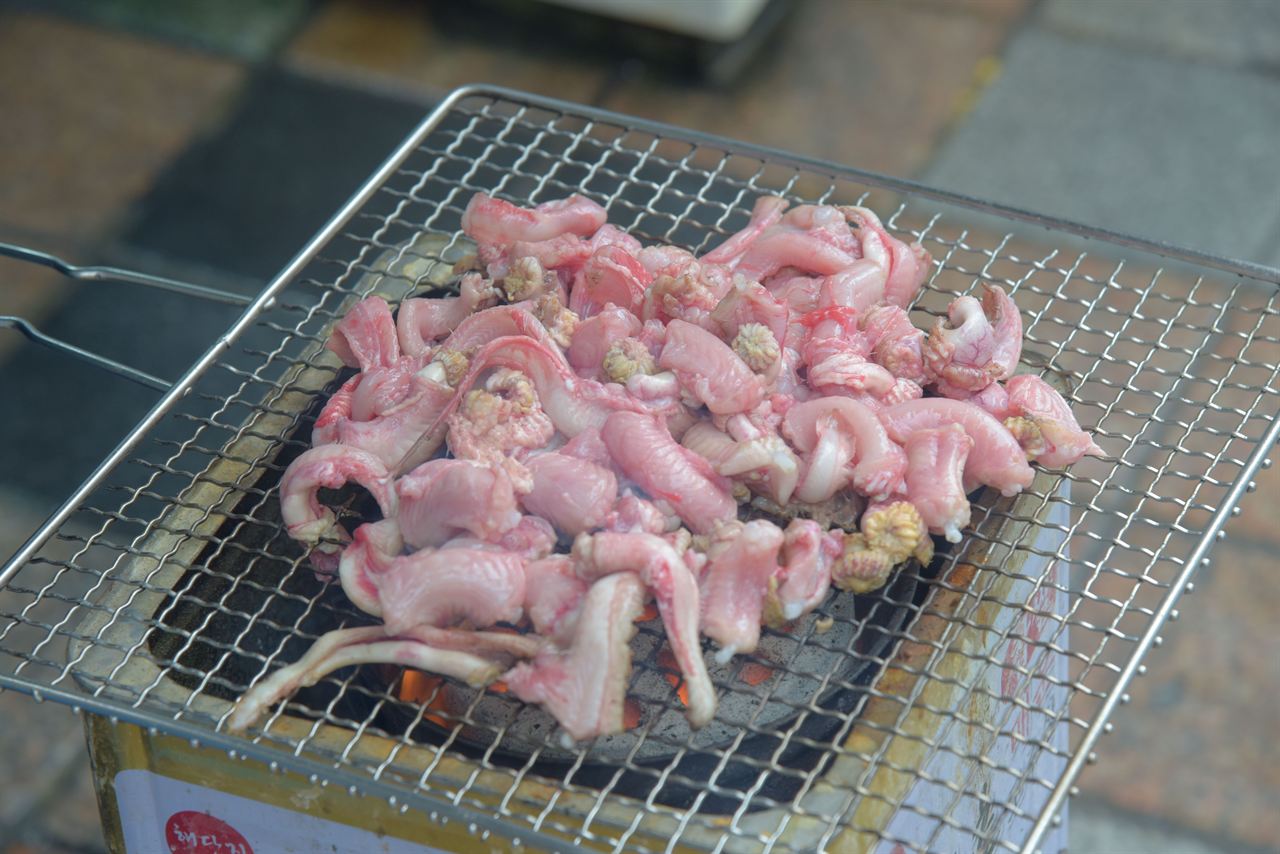
The market runs from 05:00 to 22:00, and the stalls and restaurants are there with or without the festival. A traditional visit is to pick a fish from a tank or a tray and have it served raw or grilled upstairs, with the price agreed before it is cut. The festival adds the free tasting and the shared bibimbap, plus the dried-seafood zone and food trucks. If you want to try kkomjangeo, the grilled hagfish described below, ask what is on offer instead of expecting a particular stall at the festival.
Honest assessment
This is a lively working market with a festival laid over it, and the clearest reasons to go are the food and the setting. It is also crowded, noisy and smelly, and the information is thin: apart from the opening ceremony, the daily programme has not been published in anything I could read, and the English help is announced but not yet tested.
If you only want to see Jagalchi, you can go any day of the year and get the same fish and the same view of the harbour. Come during the festival if you want the stage, the tasting and the sense that the whole district is in on it. Bring both cash and a card, since I could not confirm which stalls take cards, arrive before the evening rush, and treat all timings as provisional.