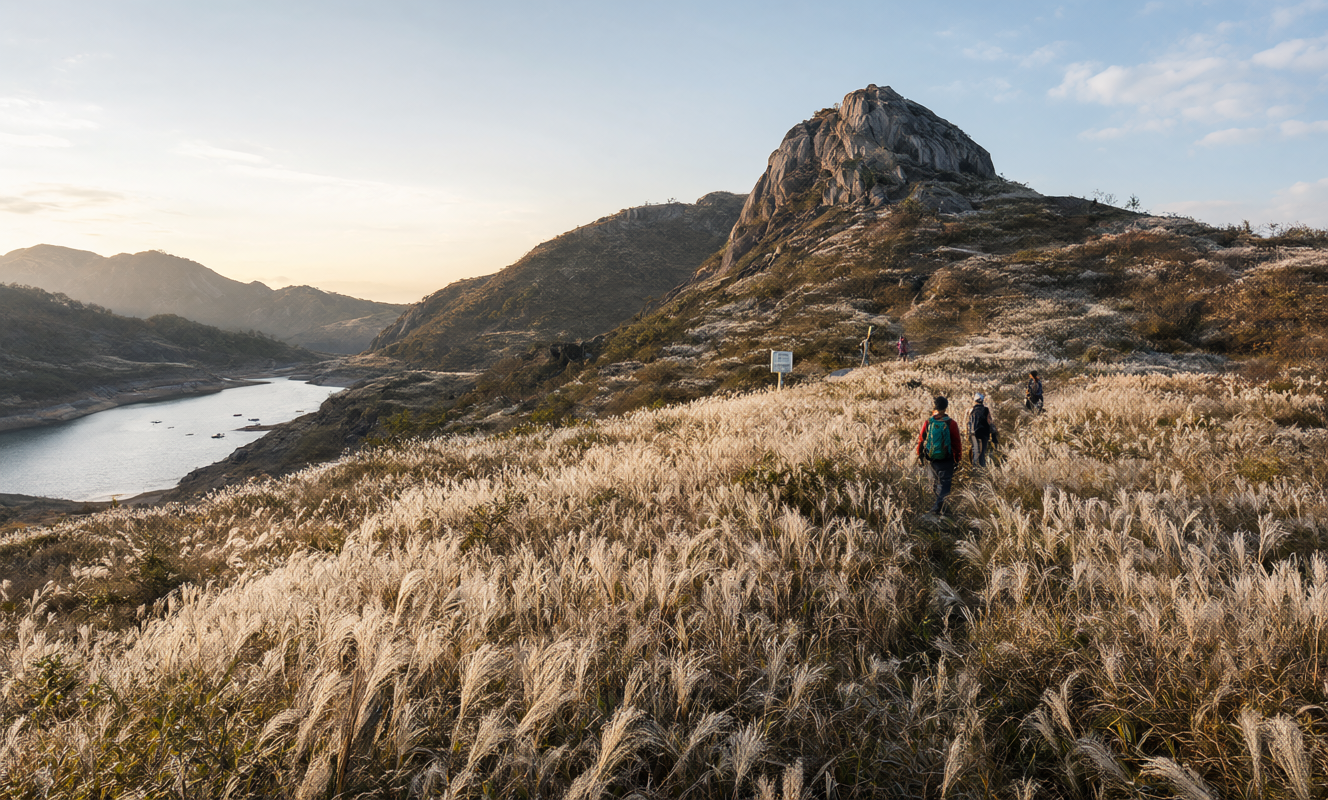
Pocheon’s eulalia festival pairs two things that are easy to confuse: a lakeside festival ground at Sanjeonghosu, and the silver-grass slopes of Myeongseongsan above it. The 29th edition runs 16-18 October 2026 under the theme “Autumn, our most brilliant moments with eulalia”. The hosts are Pocheon City and the Pocheon Culture & Tourism Foundation, with sponsorship from Gyeonggi Province. News reports describe the grass field as about 150,000 square metres and as one of Korea’s five major eulalia sites.
The programme list is centred on the lake. The grass field is a separate hike above it. Keep that distinction in mind when you decide how much of your day to spend where.
What you actually do here
KTO’s Korean record and the organiser’s page describe about 30 programmes. By day these include a garden-style rest area, experience booths, exhibitions and food booths. Reports describe the lake as the focus after dark, with a water fireworks performance and a villager-run lighting display along the shore.
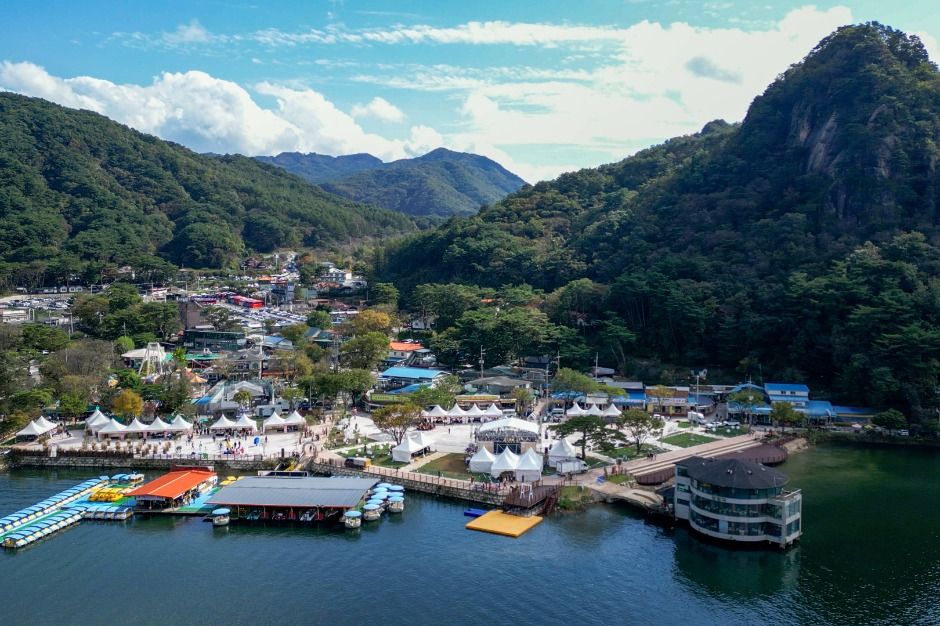
The festival ground is shown in KTO’s photo of the previous edition: white tents along the waterfront with the rocky peak behind. The 2026 layout was not published in detail, so treat the photo as a sense of scale, not a map. KTO’s English record places the event in “areas of Sanjeonghosu Lake and Myeongseongsan Mountain”, and lists the address as 108 Sanjeonghosu-ro 411beon-gil, Yeongbuk-myeon.
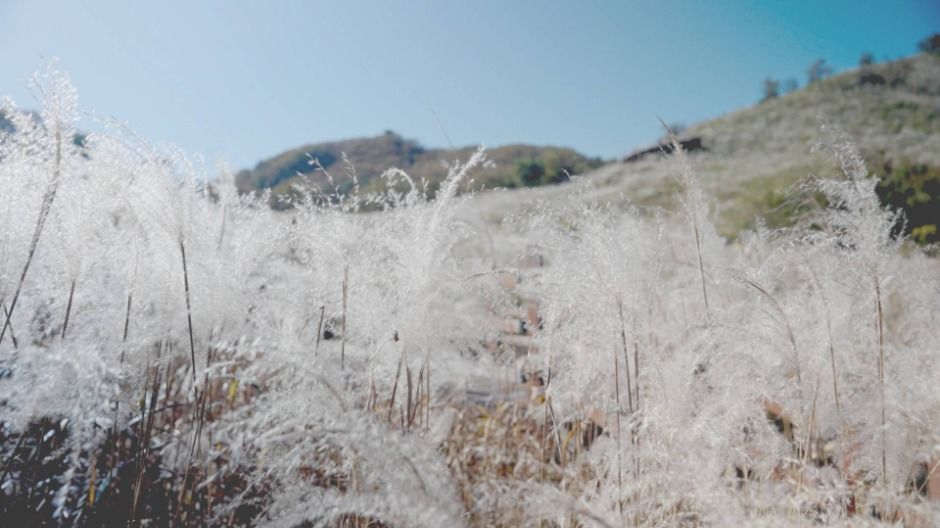
The hike to the eulalia field
The mountain is the reason the festival has its name. News reports on the 2026 festival say it takes about two hours from the lake up the trail to reach the silver grass. A separate hiking description gives roughly 4 km one way. KTO’s page for the silver grass field says the trails start from the Sangdong parking lot at Sanjeonghosu Lake, and that the first route passes Biseon Falls and Deungnyong Falls.
KTO also notes that access to the area is restricted on days when military shooting training takes place. I did not find whether any restriction applies on the festival days, so check with the organiser if the hike is the main purpose of your trip. I could not confirm how fully the grass will have bloomed in the middle of October 2026 either, and nobody can promise that in advance.
The lake itself needs no climb. KTO describes a trail of about 3 km that circles Sanjeonghosu, with restrooms, and lists the lake as free and open 24 hours. That makes a lakeside loop a reasonable substitute if you do not want to hike.
Programme and timetable
KTO’s registered programme has seven groups. The main programmes are the water fireworks show, a “letter you receive in a year” red postbox, a lakeside photo studio, and a eulalia wish path with fortune-drawing. The night programmes are a eulalia lighting display staged by Sanjeong-ri villagers, an art wall project and glow-in-the-dark body painting.
The performances include a eulalia mountain-spirit thanksgiving ceremony, a lakeside arts stage, a special performance by the Pocheon Municipal Theatre with street theatre among the grass, and a eulalia carnival. Participation programmes include a stamp tour, the paid art workshop and calligraphy, a paid gujeolcho experience and a Myeongseongsan ESG plogging walk. Local-theme items include a guided tour on the legend of Gungye, an exhibition of combat equipment, a poetry-and-painting show, an exhibition of photo contest winners and a “time machine” display of Sanjeonghosu 101 years ago. There is also a “makmullier” experience; the programme text does not describe it, so I won’t guess what it involves.
The opening ceremony is Saturday 17 October at 18:00. KTO’s record names three singers for the opening concert: Park Chang-geun, Park Ju-hee and Yang Hye-seung. Reports from 15 October place the water fireworks and the art wall project on the evening of the 17th. I did not find an exact fireworks start time, so do not assume the ceremony and the show run back to back.
Hours matter more than usual. KTO lists Friday 11:00-17:00 and 11:00-21:00 on Saturday and Sunday. Friday ends before dark, so the lighting and fireworks cannot be seen then.
Fireworks and the night programme
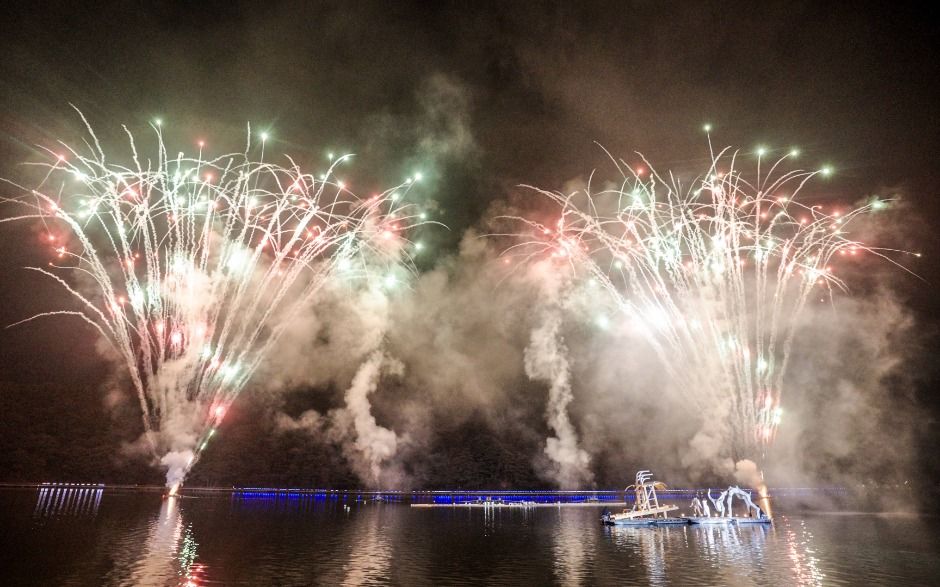
The night programme is the main argument for coming on Saturday. The 2025 photo here shows the lake fireworks of the previous edition, with the display set on a floating platform in front of the dark shore. The 2026 show is described as a water fireworks “drama” and is an official part of the programme, not an extra.
The night programme depends on the dark, and the hours run to 21:00 at the latest. That leaves a short evening. If you want the fireworks and the ceremony, plan to be at the lake well before 18:00 and plan your return trip at the same time, because the bus timing below is tight.
Tickets, fees and booking
There is no admission fee. The only costs listed are the paid hands-on programmes, at roughly 1,000-2,000 won each. No advance reservation is mentioned in KTO’s record, and I found no ticketed seating for the opening concert or the fireworks. For specifics, call the organiser at 031-535-5013 or 031-535-5135.
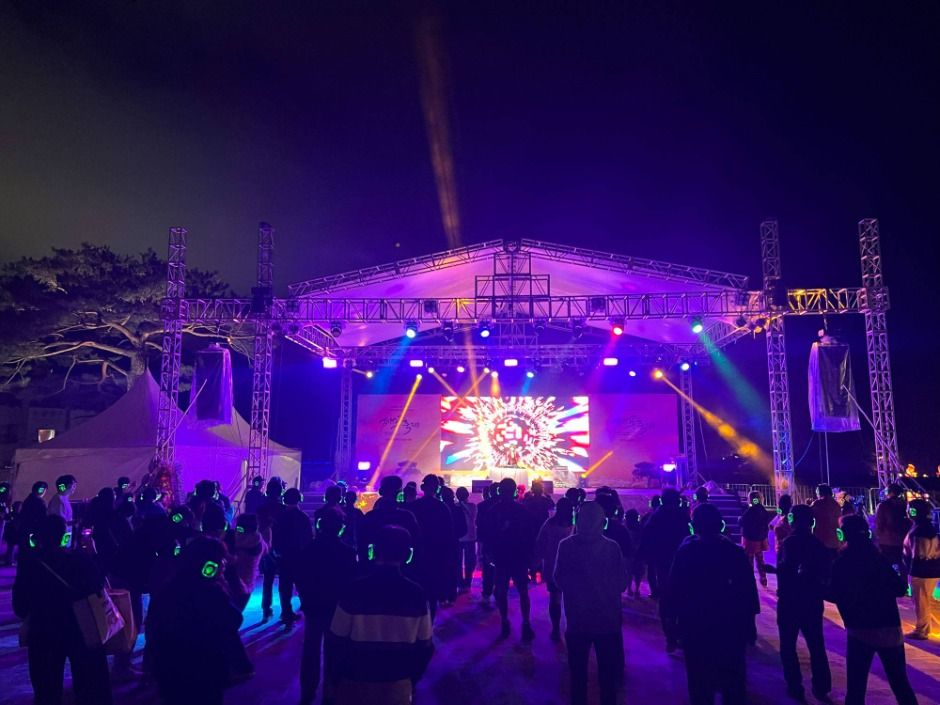
The photo of the stage is from the 2025 edition and shows an evening audience wearing headphones. That is a reminder that programme formats change from year to year. Do not read the picture as a promise about 2026.
Getting there without a car
The one public-transport route that I could confirm from several sources is Gyeonggi public bus 1386. A Pocheon news report from 2020 says the route was changed to end at the Dobongsan Station Interchange Center, giving direct access to Seoul Subway Lines 1 and 7. The Gyeonggi provincial news service lists the same route as the way to reach Sanjeonghosu from Seoul. The operator’s first run in 2020 left Sanjeonghosu at 5:00 and arrived at Dobongsan at 6:50, so a ride of about 1 h 50 m is the figure to plan around. The 2020 last run left Sanjeonghosu at 21:40, and a current timetable listing also gives 21:40 for the last bus, without making clear which direction.
That is a long journey for a festival that closes at 21:00. Work out the return before you go.
Parking, shuttles and traffic control
KTO lists parking at the lake, and the Sangdong parking lot is the main start of the trails and the terminus of bus 1386. I did not find a published 2026 shuttle plan, parking fee list or road-closure notice. Several blogs publish fees and crowd tips, but they are not official and I have not used them.
If you drive, call the organiser before leaving. I have no figure for how quickly the lots fill on a festival weekend.
Day trip or overnight
A day trip is possible in principle, because the bus runs directly from Dobongsan. But with nearly two hours each way plus the subway, a Saturday visit that includes the 18:00 ceremony and the fireworks leaves you relying on the last bus from the Sangdong lot. Check the live timetable and the actual end time of the show before you commit. I did not verify any accommodation near the lake, so none is recommended here.
Food on site and nearby
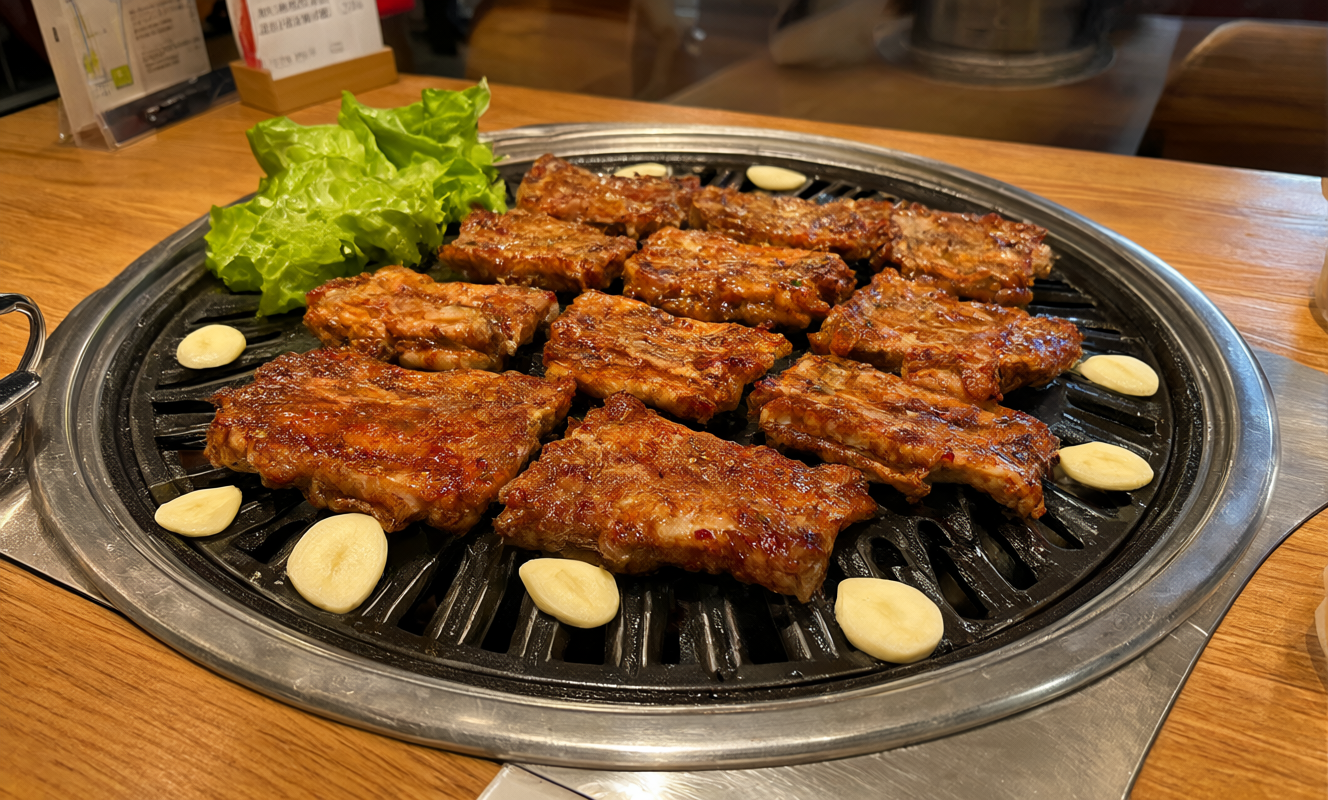
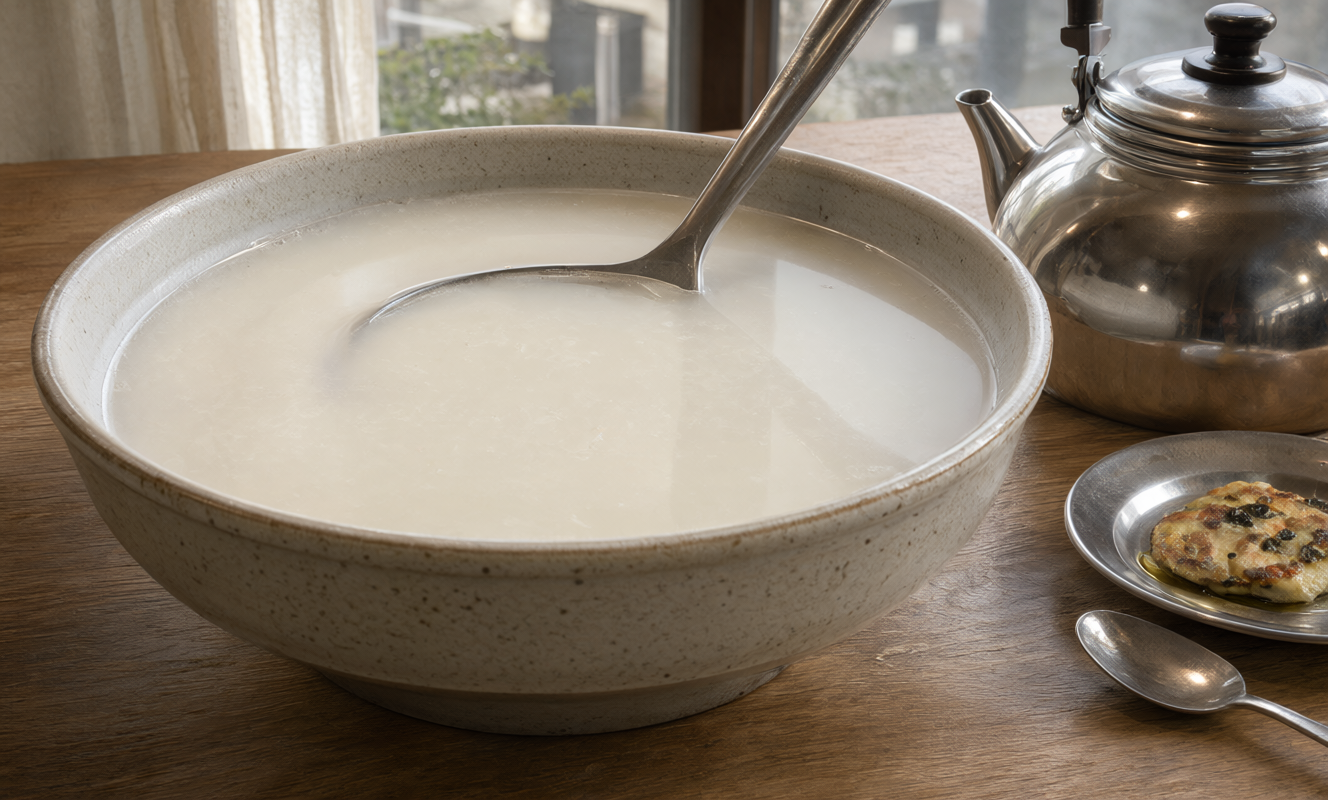
The programme lists food booths. I did not find the vendor list, prices or whether the booths accept cards. For a regional dish beyond the festival, Pocheon is known for Idong galbi and Idong makgeolli, both from Idong-myeon. A national culture-centre listing describes both as local specialties, with the makgeolli made using water from Baekunsan. These are regional foods, not claims about what the stalls serve, and Idong-myeon is another part of Pocheon rather than the festival site.
Honest assessment
The setting is the draw: a mountain lake below a large silver-grass slope, with free entry and a clearly defined Saturday night programme. The festival also gives the lake visit more to do than a normal weekend would.
The practical weaknesses are real. Friday closes at 17:00. The hike takes most of a half-day, and the programme list centres on the lake rather than the mountain. The long bus ride makes a late-evening return uncertain. A 2026 shuttle plan, parking details and the fireworks time were not available when I wrote this. I also could not check the bloom state.
If you want the most from one trip, aim for Saturday, arrive before the 18:00 ceremony, walk the 3 km lake loop in daylight, and treat the climb as a separate decision.