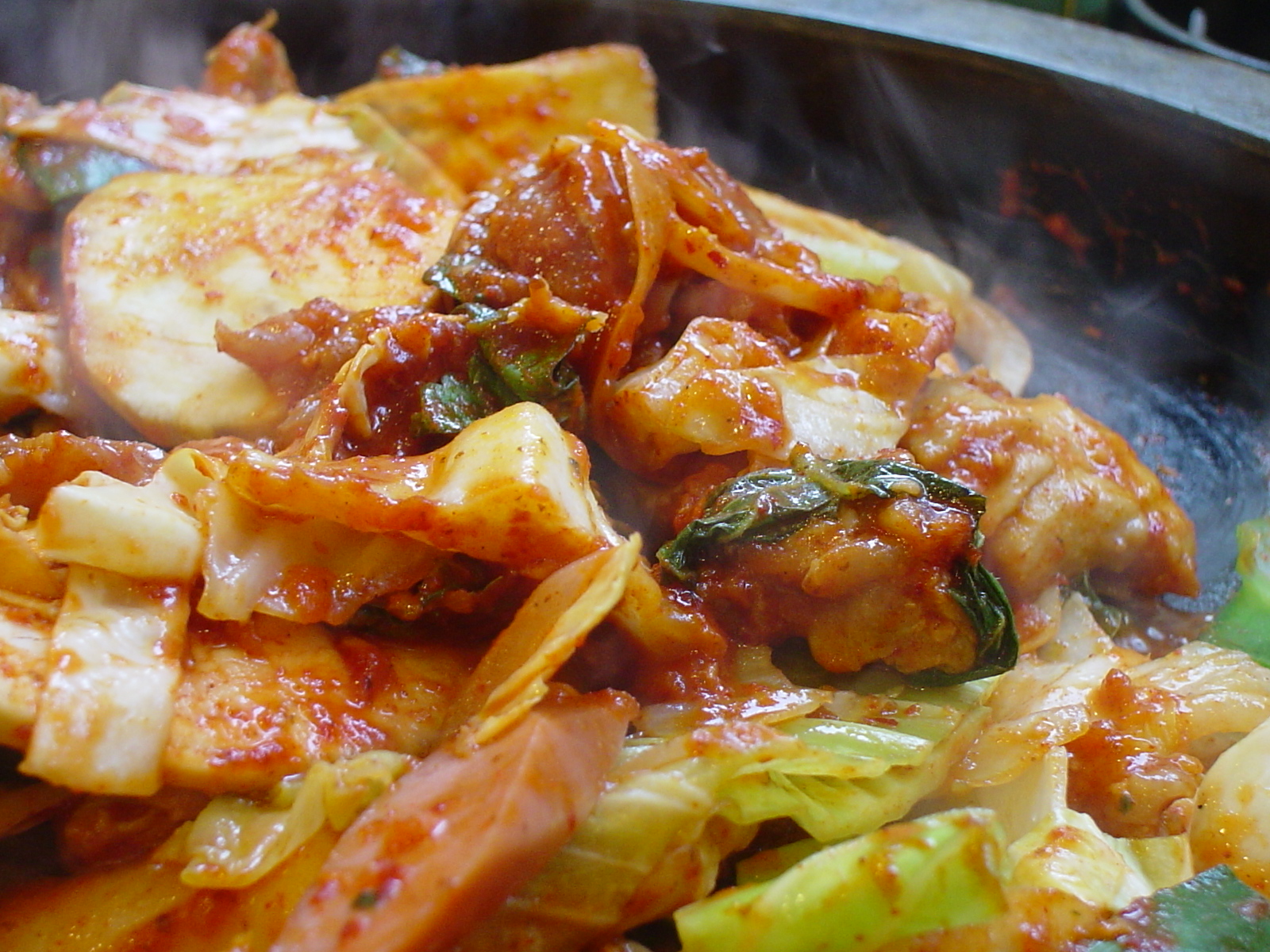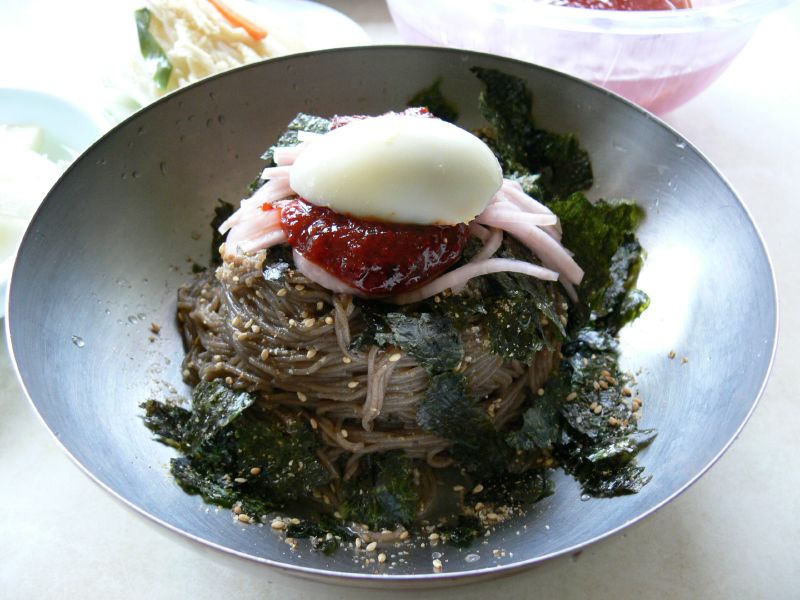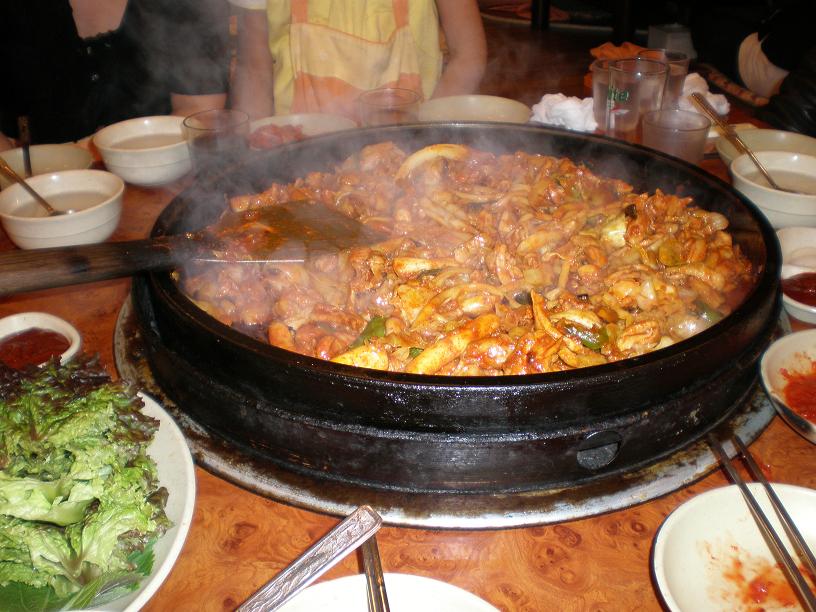
Chuncheon’s festival is, at heart, a very large open-air meal. For five days in October the city puts its two signature dishes — dakgalbi (닭갈비), the gochujang-marinated chicken stir-fried on a flat pan, and makguksu (막국수), cold buckwheat noodles — at the centre of a food fair strung along the Gongjicheon (공지천) waterfront. For 2026 the confirmed dates are October 14-18, the grounds run 11:00-21:00, and general admission is free. What you spend money on is the food.
Rechecked on October 11, three days before opening: no postponement, cancellation or date change turned up in news coverage or on the official site, and reports from October 9-10 describe the riverside site still being built out, with the mayor visiting it. What is new since this guide was first written is the opening-night timetable and a few site details, covered below.
This is worth stating plainly because the Ministry’s annual planning list carried an earlier October 1-5 window for the event. The festival’s own site, the Korea Tourism Organization and 2026 news coverage all give October 14-18, so those are the dates to plan around. The venue is the Gongjicheon promenade in the Onui-dong area of Chuncheon, in Gangwon-do, about an hour and a half from Seoul by train.
What you actually do here
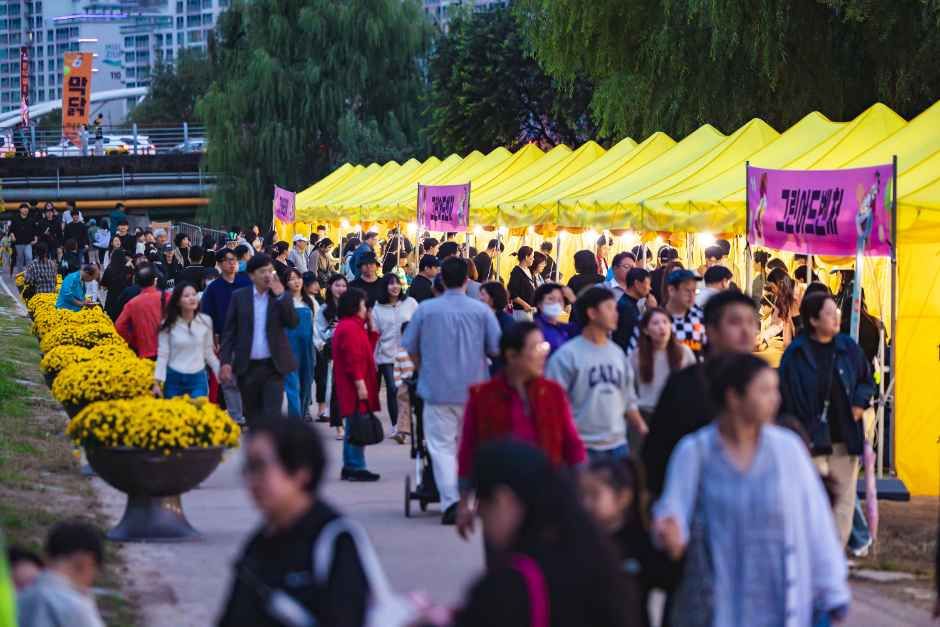
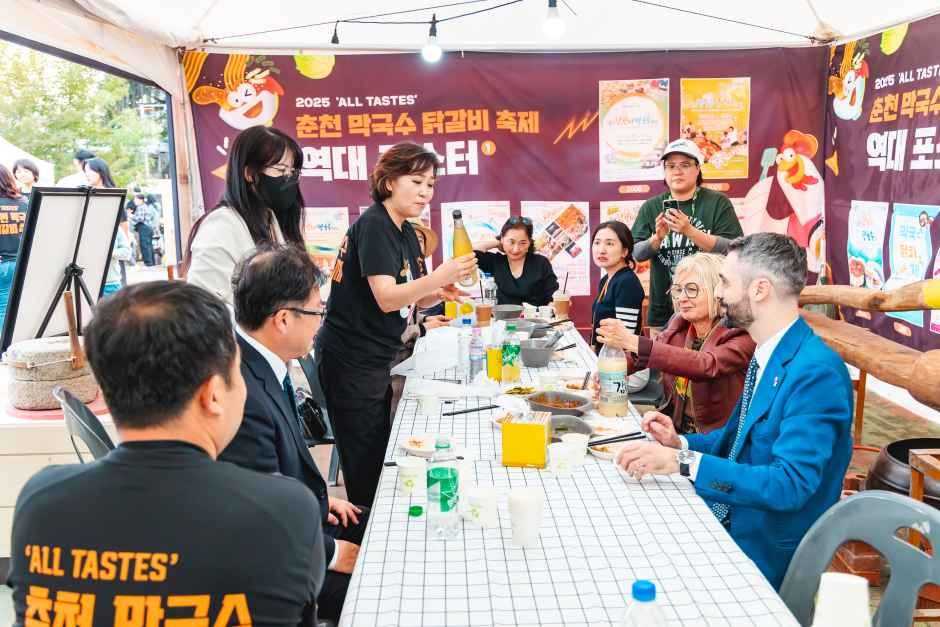
You eat, and you walk. The core of the festival is a food hall where participating restaurants cook dakgalbi and makguksu to order, with prices held level across vendors: 9,900 won for a portion of dakgalbi and 6,900 won for a portion of makguksu. The 2026 edition expanded the line-up to twenty participating restaurants — 12 dakgalbi and 8 makguksu — so the practical experience is choosing a stall, sitting down at communal tables and eating beside the river rather than queueing at a single counter.
Around that sit the extras. The Korea Tourism Organization’s programme for 2026 lists a local food-and-beverage zone with roughly twenty-five Chuncheon shops selling snacks, desserts and drinks; a traditional-liquor hall with local breweries; a farmers’ market of regional produce; and photo-and-rest areas themed on the city’s lakes. There are also promotional pavilions, including an international one aimed at foreign residents and visitors.
The hands-on side is genuinely built for families. The published 2026 activities include a wooden playground with eco-friendly play equipment, augmented-reality character drawing, sand play, a local-character claw machine, a “mak-dak” photo booth, a makguksu cooking class, and a horseback-riding experience run together with the Korea Racing Authority. You can make a full afternoon of it without needing to understand any spoken Korean, which is part of why the city treats this as a K-food event for outside visitors as much as a local one.

Programme and events
The main stage carries daily cultural performances — local Chuncheon artists, invited acts and audience-participation segments — and for 2026 the city has themed the daily programming around “setting the table with Chuncheon culture,” with additional performances such as mime, puppetry and dance staged at the downtown Myeong-dong area and the Soyang art circle rather than only at the riverside. Opening night, Wednesday October 14: the opening ceremony starts at 19:00 at the Gongjicheon waterside stage, and it is free. A Topstar News report from October 10 lists the Han Da Du Band at 19:40 and Lee Sona, winner of the TV singing contest Miss Trot 4, at 20:20, plus a performance by the Korean Traditional Culture and Arts Institute. That is a single outlet’s schedule, and it notes that timings may change with conditions on site, so treat the times as approximate. Since the grounds close at 21:00, this is a short evening show rather than an all-night concert.
For October 15-18, a detailed day-by-day performance grid had not been published in the sources checked on October 11, so if a particular act or time is your reason for coming, check the official site’s schedule close to the dates rather than assuming a fixed line-up. This guide names no other performers because none were confirmed.
One small addition confirmed by three city and local reports (October 8-9): Chuncheon’s municipal libraries are setting up an outdoor reading space called “Mulbit Chaekmaru” (물빛 책마루) at the festival, among other October events, as a place to sit and read. Its exact position and hours were not given, so do not plan around it.
Two things are worth knowing about scale. Last year’s edition — the festival’s first at the Gongjicheon site — drew more than 300,000 visitors over four days, and 2026 adds a fifth day. The city has also leaned into promoting Chuncheon dakgalbi abroad: in late September 2026 it discussed the festival with its Italian sister city, Parma, as part of a wider food-diplomacy push. For a visitor, the takeaways are simpler — expect crowds, and expect the event to be pitched partly at international guests.
Prices, food and coupons
Free entry does not mean a free day. Budget for the food itself, and note the fixed festival prices above so you can tell a fair stall from an over-priced one: dakgalbi is meant to be 9,900 won a portion and makguksu 6,900 won. Beyond that, the local food-and-beverage zone, the traditional-liquor hall and the farmers’ market are all priced by their individual sellers.
There is one concrete way to spend less. Chuncheon City announced discount coupons — 3,000 won off dakgalbi and 1,500 won off makguksu — valid from October 14 to 26, which spans the festival and the days just after it. How to obtain them was handled by the city, so check the official notice board for the current method rather than relying on last year’s arrangement. Some of the participatory programmes, such as the cooking class or the riding experience, may carry their own charge on site; per-programme prices were not published, so bring a payment option and do not budget around an unconfirmed figure.
Getting there without a car
This is one of the easier Gangwon festivals to reach from Seoul by rail. The ITX-Cheongchun runs from Yongsan to Chuncheon in roughly 1 hour 25 minutes — the Chuncheon transport portal puts the Yongsan run at about 85 minutes and the leg from Cheongnyangni at around 65 minutes. The ordinary Gyeongchun Line covers the same route more slowly, at roughly 82 minutes from Sangbong and about 91 minutes from Cheongnyangni. Both services stop at Namchuncheon Station (남춘천역), which is the closest station to the festival.
From Namchuncheon it is about a 10-minute walk to the Gongjicheon waterfront, so you do not need a taxi if you are travelling light. Arriving instead at Chuncheon’s intercity bus terminal leaves you roughly a 20-minute walk away. Because journey times vary with how many stops a given train makes, search your exact date in Korail rather than treating one figure as fixed.
For drivers, the picture is still less settled. The event sits on a riverside promenade. Chuncheon’s safety committee reviewed the festival’s safety plan on October 2, and the mayor inspected the visitor flow, traffic and parking measures and evacuation routes on October 9, but the reports do not say where the lots are, which roads will be closed or how many spaces there are. The organisers have said a shuttle bus will circulate between the festival and major city attractions; its stops and timetable were not confirmed in any source checked on October 11. If parking matters, treat it as pending and check the official parking-and-traffic notice shortly before you go; the rail-and-walk approach is the dependable one.
The two foods, and why Chuncheon
The festival makes more sense once you know why these two dishes belong to this city. Dakgalbi took its modern form in Chuncheon in the late 1960s, and through the 1970s it spread along the back alleys of the city’s Myeong-dong district as a cheap, filling meal for soldiers on leave and for students — the kind of everyday food that a place becomes known for from the bottom up rather than by decree. Today it is the dish most people associate with Chuncheon, usually cooked at the table on a wide iron pan with cabbage, sweet potato, rice cake and perilla leaves.
Makguksu — cold buckwheat noodles, served either tossed with a spicy sauce or in a chilled broth — has a longer, quieter history as a Chuncheon staple, and the festival itself grew out of an earlier makguksu event before the two foods were brought together. Both are regional specialties in their own right, which is the honest reason they appear on this page: you would find them in Chuncheon whether or not the festival were running. Treat the festival as a convenient, well-priced way to try them side by side, not as the only place to eat them.
Honest assessment
The strength of this festival is its focus. It does one thing — Chuncheon’s food, cheaply, by a river, with enough family activities to fill an afternoon — and it does not pretend to be more. The fixed prices, the free entry and the short walk from the train make it one of the lowest-friction festival day trips from Seoul: you can be eating dakgalbi beside the water little more than an hour and a half after leaving the city, and back the same evening.
The weakness is the crowd, and the missing detail. More than 300,000 people came last year over four days on a narrow riverside path, and the busiest hours are the evenings and the weekend; if you dislike dense, slow-moving crowds, come on a weekday and around lunch. Apart from opening night, the 2026 daily performance schedule and the parking-and-shuttle plan were still not published when this guide was last checked on October 11, so anyone travelling for a specific act, or planning to drive, should check the official site close to the dates. Come for the food and the atmosphere and it delivers plainly; come expecting a headline concert or a quiet stroll and it is the wrong festival.