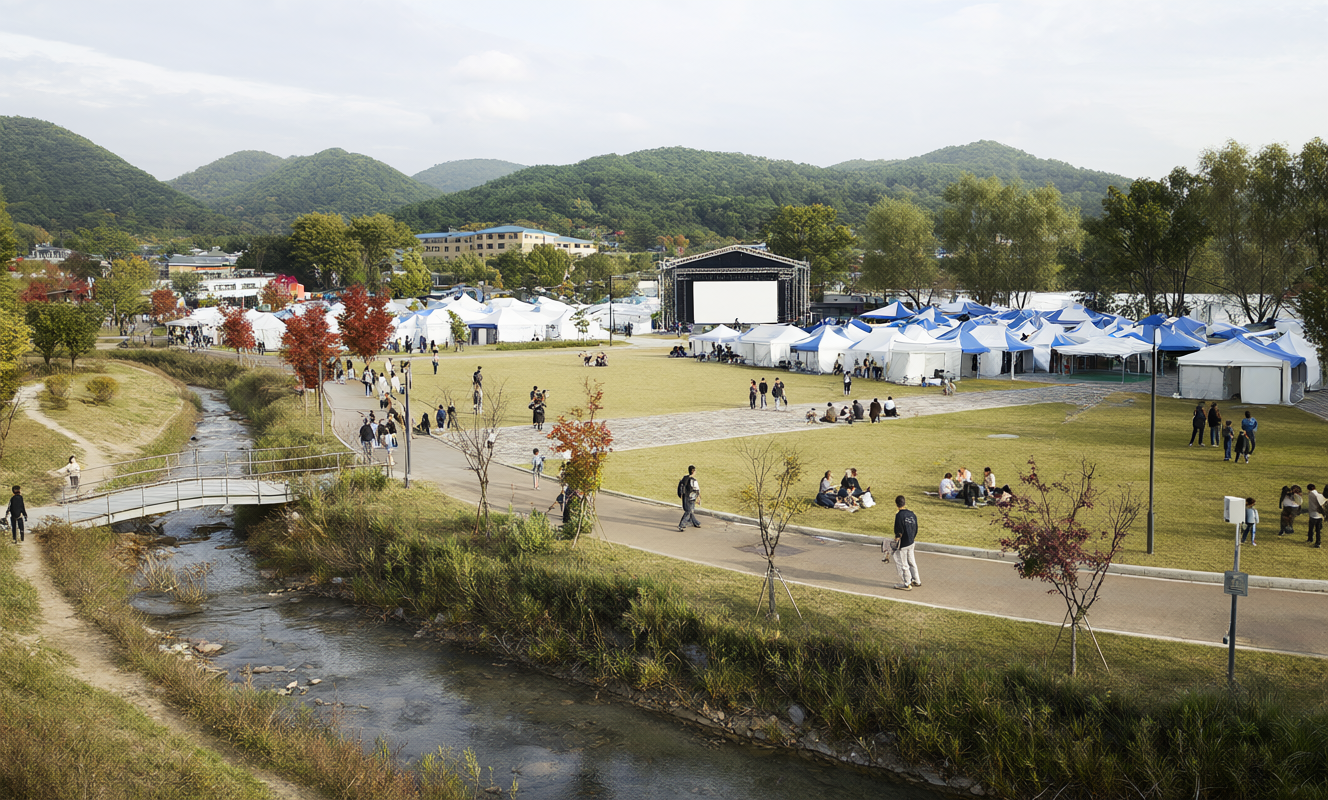
The Jeonggwan Ecological River Learning Culture Festival is a neighbourhood festival in Gijang County, in the northern part of Busan, built around the Jwagwangcheon stream and its park. The 2026 edition is the 12th. The Korea Tourism Organization’s Korean record describes the idea simply: learn the value of the stream’s ecology, walk along it as families and neighbours, and spread the programme through the parks. Its description of this year’s edition adds that it aims to introduce the Jwagwangcheon local garden.
The dates are Friday October 16 to Sunday October 18, 2026, with listed hours of 10:00-20:00 and free admission. KTO gives the address as 27 Guyeon 3-ro, Jeonggwan Central Park, but Gijang County’s own notice describes the site more broadly as the Jwagwangcheon area: Central Park, Witgol Park and Gumokjeong Park. Treat this as a linear festival along a stream rather than one fenced ground.
The English name above is the one Gijang County uses in its own English newsletter. It is not our translation, which is why it reads slightly differently from the Korean “ecological stream”.
What you actually do here
KTO lists the programme in four groups. The main programme includes experience booths, a street parade (gilnori), an autumn-night concert and a children’s song contest. The supporting programme adds Jwagwangcheon ecology experiences, a sketching contest and prose competition, a K-dance festival, a robot contest and a “moonlit” youth programme. There is also a participation programme with a flea market, more booths and a walking event, and other items such as a children’s football class and street performances.
The county’s recruitment notice, published on September 1, lists application categories that show who the festival is aimed at: sketching, prose writing, a national children’s song contest, ecology experiences at the Jwagwangcheon local garden, a book concert, a youth stage, booths, a flea market and street performances. Applications closed on September 18, so these are mainly for participants, but they give a good sense of the day-to-day content: a lot of it is children and young people performing or competing, with families watching.
A Kookje Daily News item from October 8 adds one detail: the creative-science learning area, held at the Jwagwangcheon local garden, centres on the sea and future careers, and includes an online AI public-service song contest. That is a good indication of the festival’s character. It is a learning festival first.
Programme and timetable
The county’s page for the 12th edition confirms one fixed point: the official opening ceremony is on Saturday October 17 at 17:00. It also links a downloadable programme sheet, but the page itself carries no day-by-day timetable, and no performer names or set times for 2026 could be confirmed on a primary page. The listed operating window is 10:00 to 20:00 each day.
For a sense of how the three days are usually shaped, the county’s page for the previous edition (the 11th, October 17-19, 2025) gives this pattern. The Friday was given over to cultural performances, with a programme running roughly midday to the early evening. The Saturday carried the youth stages, the street parade, the opening ceremony and the sketching and prose contests. The Sunday kept the family walking event, a children’s concert and the closing concert. That is last year’s schedule, not this year’s, and the 2026 order may differ; the useful takeaway is that the parade and ceremony were concentrated on the middle day.
Because the programme is dense with contests and children’s performances, check the sheet for the specific event you want, such as the children’s song contest or the parade, rather than turning up and hoping to catch it. This guide does not name performers.
Tickets, fees and booking
KTO lists admission as free. The only registration found was the county’s participant call for contests, stages and booths, which closed on September 18; no booking requirement for ordinary visitors was mentioned. If you want to take part in a specific activity, contact the organising committee at 051-727-6444 or the county’s Culture and Tourism Division at 051-709-4062.
Getting there without a car
Jeonggwan-eup is a new-town district without a rail or metro station, so the way in is by bus or by road.
From Seoul, the practical route is the KTX to Busan Station, which takes about 2 hours 15 minutes on the fastest services and about 2 hours 30 minutes on a typical one. From there, take Metro Line 1 to one of the stations where Jeonggwan buses start. Two options appear in current route listings. City bus 106 is an ordinary bus that runs between Jeonggwan new town and Seomyeon, continuing to Bujeon-dong; it replaced the old express 1010 in November 2023, and the Namuwiki entry gives about 80 minutes for the trip, with buses every 10 to 15 minutes in the day. Express bus 3008, which was numbered 1008 until July 2025, runs from the Gijang County Sports Center through Jeonggwan to Dongnae Station and calls at several Line 1 stations on the way; the same listing shows roughly 13 to 16 minutes between buses.
These are single-source route listings, so confirm in a live map app that the line numbers and stops are current, because Busan renumbered its express buses in 2025. Gijang County’s October 2025 festival notice also listed city buses 37, 73, 105, 107, 182, 188 and 302 and Gijang village buses 8 and 57; the 2026 notice does not repeat the list, so do not rely on it.
No door-to-door time was verified. The festival ends at 20:00 by the listed hours, and the route listing gives a last departure from the Jeonggwan end of route 106 of 23:10, but that is not an official 2026 timetable. Look up your own return bus and your return train from Busan before you commit to a tight connection.
Day trip or overnight
Add the legs together and a same-day round trip from Seoul is long. The KTX alone is about 2 h 15 m each way at its fastest, and the city bus is listed at about 80 minutes, so the journey one way is at least about 3 h 35 m even before the metro leg and any waiting. With the festival open from 10:00 to 20:00, you would spend a large share of the day in transit. This guide has not checked the last KTX back to Seoul, so it does not say whether a same-day return works, and it makes no claim about overnight stays. If you are already based in Busan, the visit is a manageable half day instead.
Parking and crowds
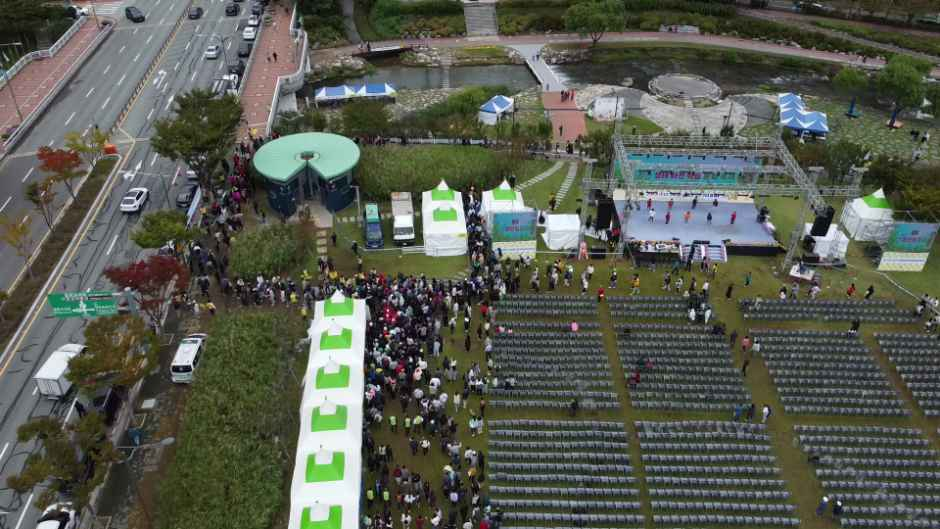
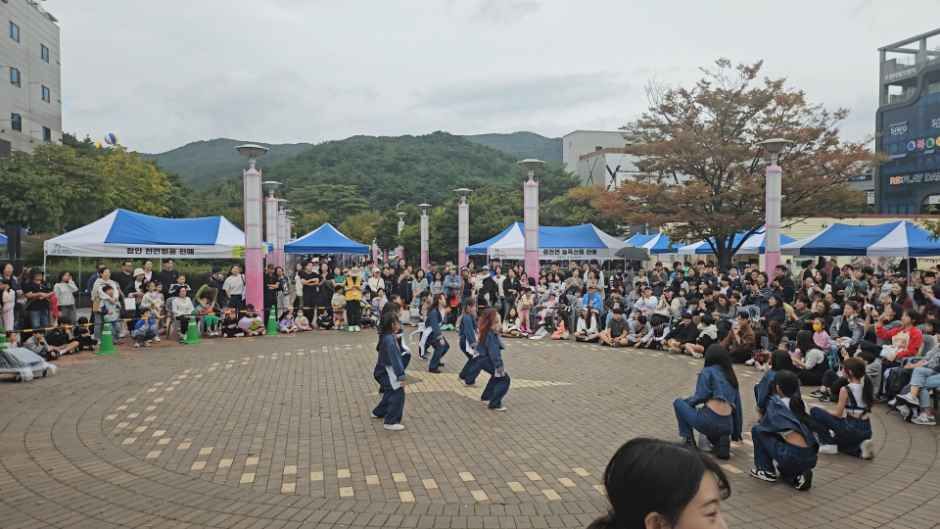
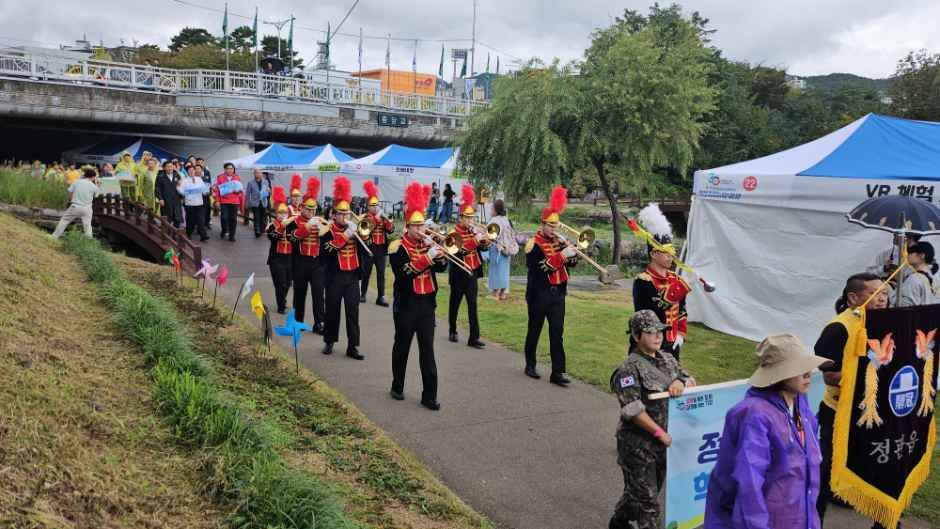
No 2026 parking arrangement or shuttle was found. For the 2024 edition, the county notice mentioned temporary parking and the Jeonggwan library and museum car parks, but those arrangements should not be assumed to apply again. If you must drive, call the committee first. Nothing here quantifies crowds. The photographs show dense seated audiences around the stage and the parade route, so expect a busy afternoon on the weekend.
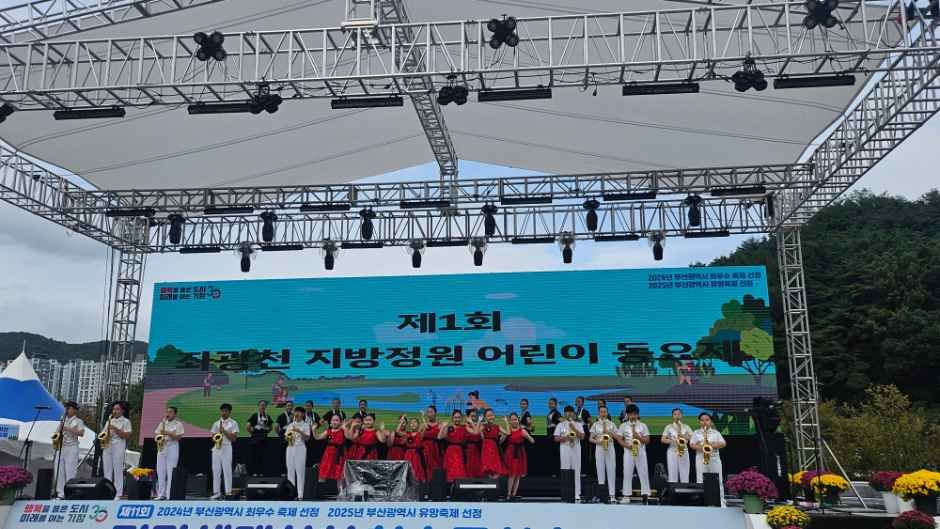
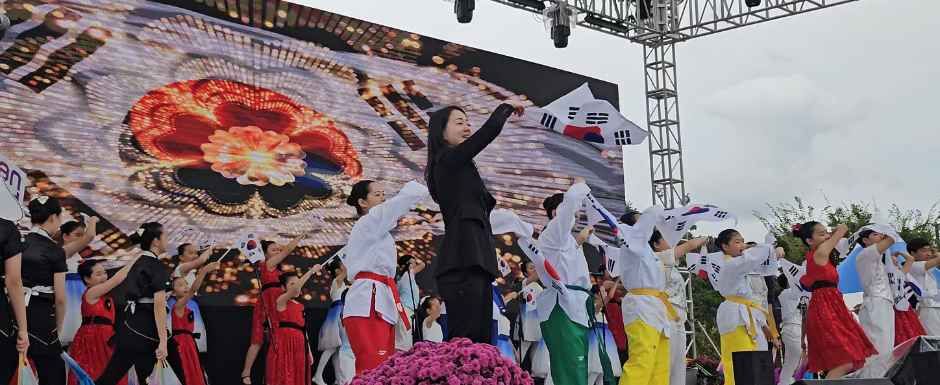
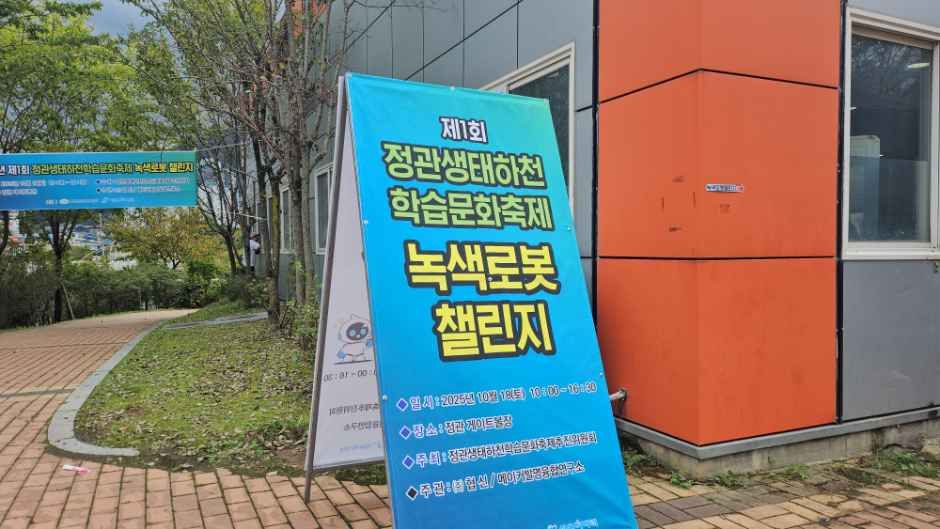
The photographs on this page are Korea Tourism Organization images from the previous edition, the 11th in October 2025, as the banners in them show. They illustrate the format, not this year’s exact layout or line-up.
Gijang’s local specialities
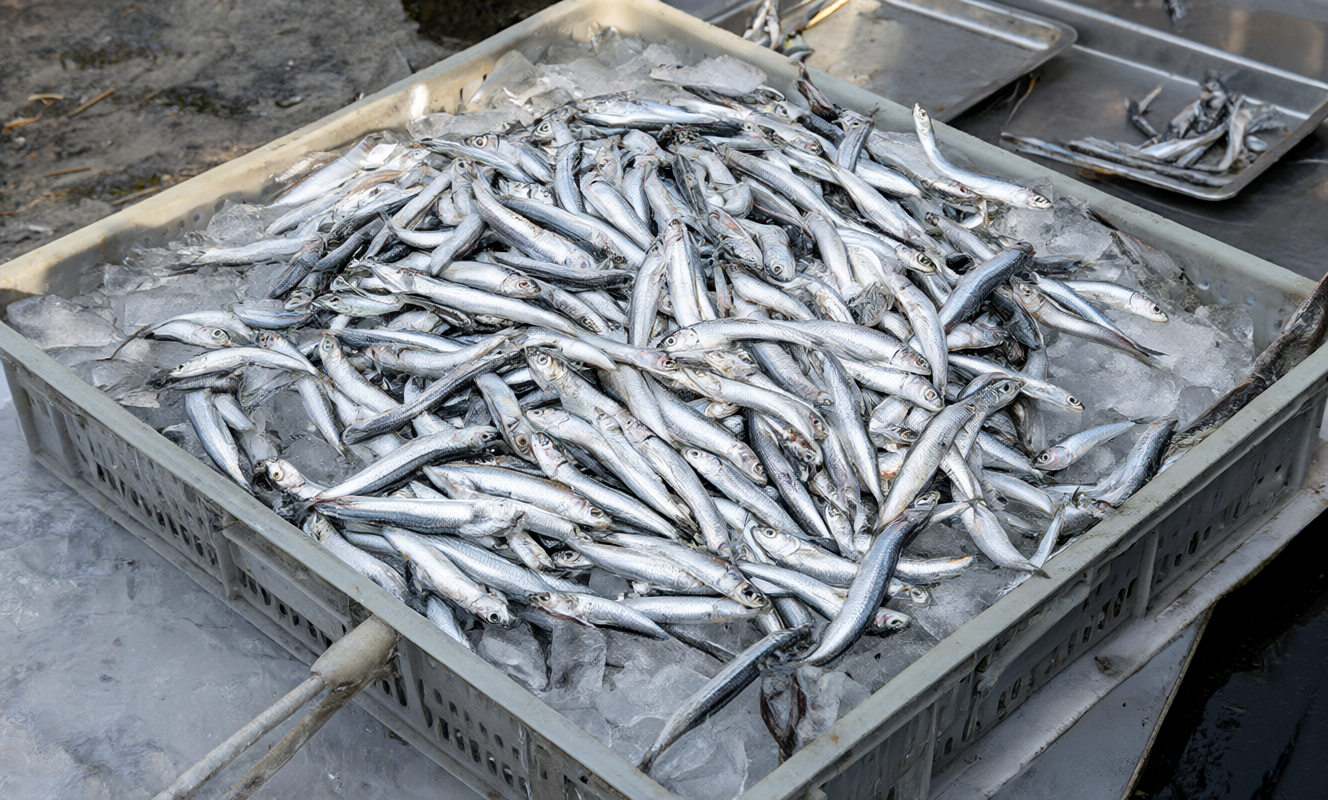
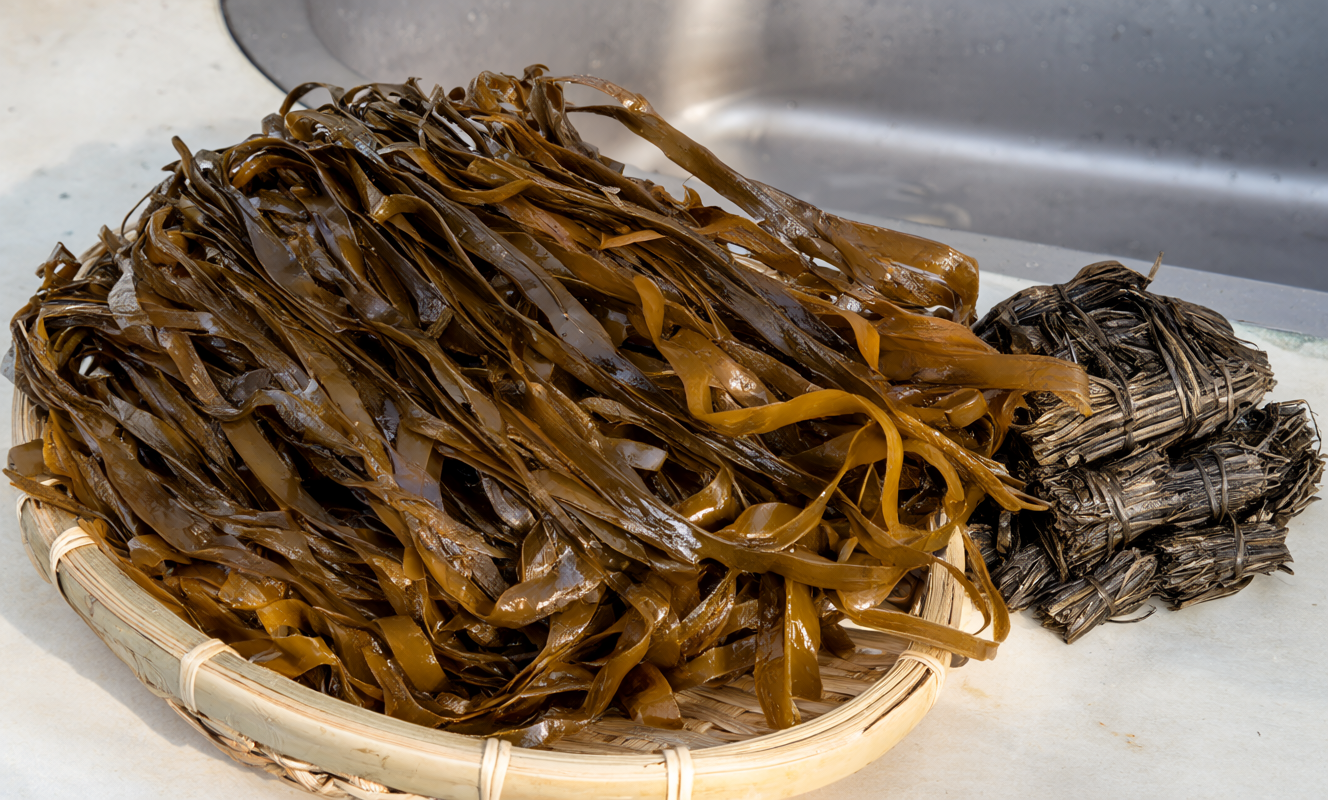
Away from the festival grounds, Gijang is better known for seafood than for this event. Gijang County’s English tourism page calls anchovy one of the district’s representative marine products, and Visit Busan names Daebyeon Port as the main landing area, with catches mainly in spring and autumn. Visit Busan also names seaweed (miyeok) as another of Gijang’s best-known products, with records of both going back to the Joseon period. These are regional specialities, not a claim that either will be sold at the festival. The festival’s flea market and booths could not be checked for food.
Honest assessment
The strength of this festival is that it is a real neighbourhood event: learning, contests and performances along a stream, free to enter, with a strong emphasis on children and young people. It does not pretend to be a spectacle.
Its weaknesses are practical. A published timetable is hard to find, the information is in Korean, and the parking and shuttle arrangements are unconfirmed. Jeonggwan is not on a rail line, so it is a long trip out from central Busan, let alone Seoul. If you are already in Busan with children and want an ordinary local festival, it is a good use of a weekend afternoon. If you are travelling from abroad for a single festival, there are festivals elsewhere in Korea that are easier to reach and easier to plan around.