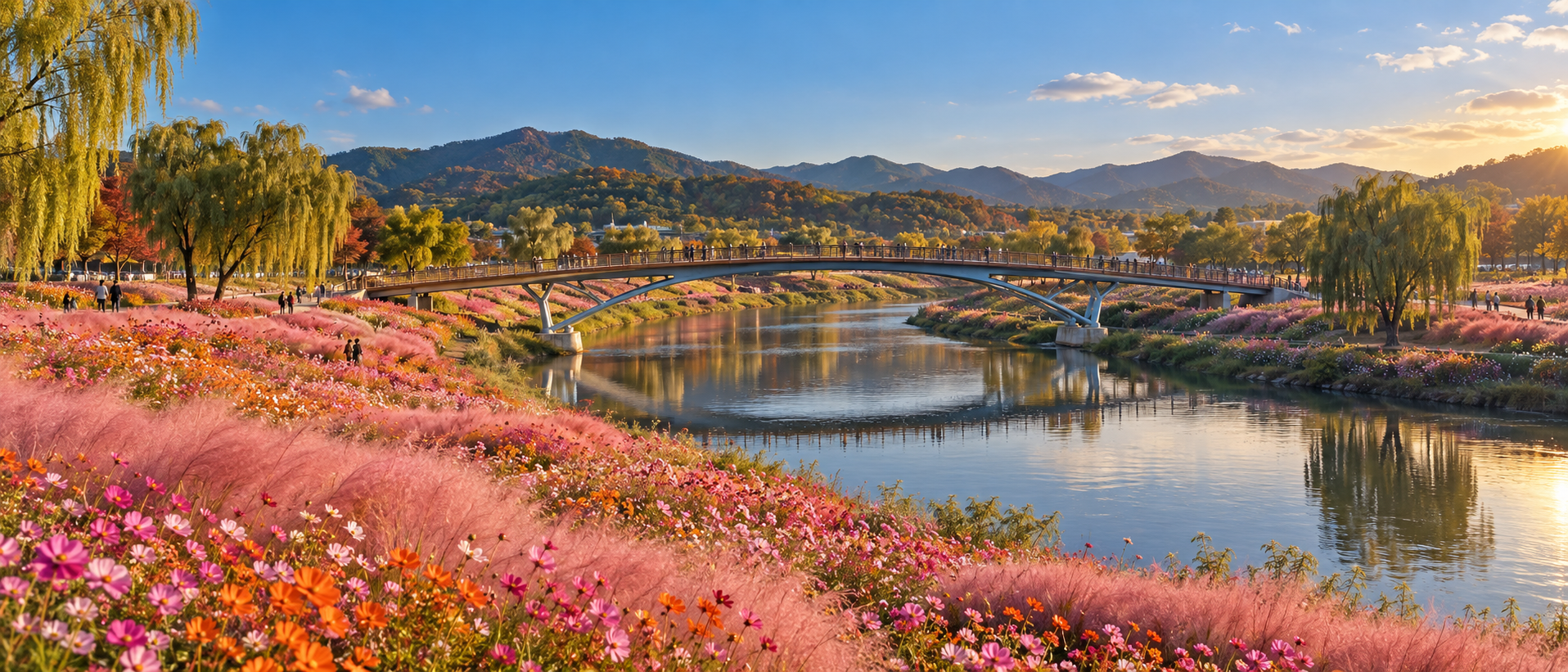
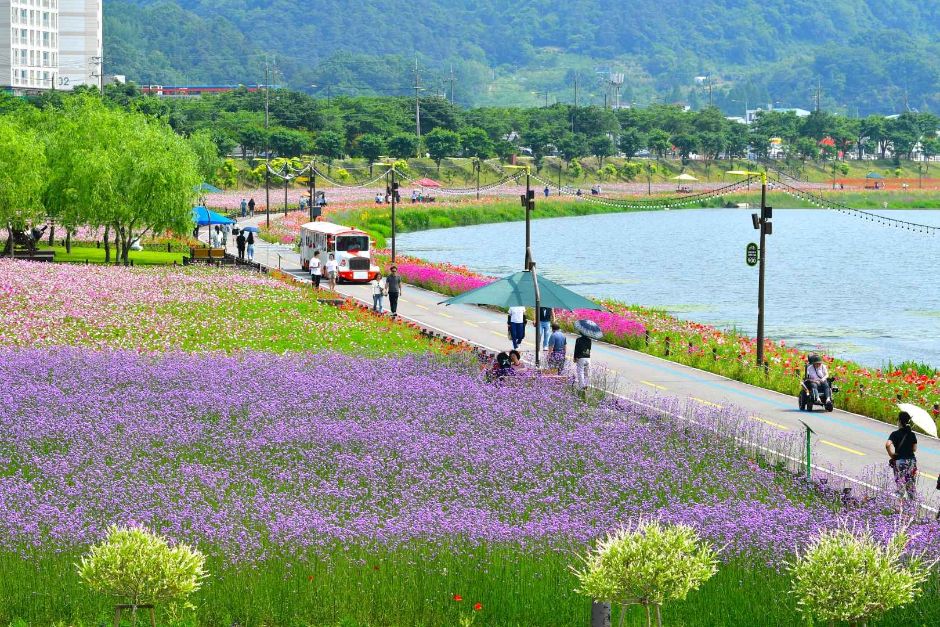
Jangseong’s autumn flower festival spreads along the Hwangnyong River as it runs through Jangseong-eup, the county seat about an hour north of Gwangju. The county has planted long riverbank gardens — cosmos, zinnias, sunflowers and swathes of pink muhly grass among themed flower beds — and the festival is essentially a few days of walking those gardens with concerts, fireworks and family activities layered on top. Jangseong-gun describes it as the tenth edition; the event began in 2016 and has drawn close to a million visitors in past years, and it was named an outstanding Jeollanam-do festival four times between 2018 and 2023.
For 2026 the confirmed dates are October 8-11, a four-day run that is shorter than previous editions. Jangseong-gun has said openly that it trimmed the calendar and concentrated the programme rather than stretching it out. The grounds operate 10:00-22:00 each day and general admission is free. The important thing to understand before planning is that this is a two-part day: the flowers are a daytime attraction, while the light installations, pedal-boats and fireworks are after dark.
Status on opening day (October 8): I found no notice of postponement, cancellation or a date change. Local reports from October 7-8 describe the festival opening on schedule, after Jangseong-gun held an on-site inspection of operations and traffic on October 6. October 9 is the Hangul Day public holiday, so this is a Thursday-to-Sunday run with a holiday Friday.
What you actually do here
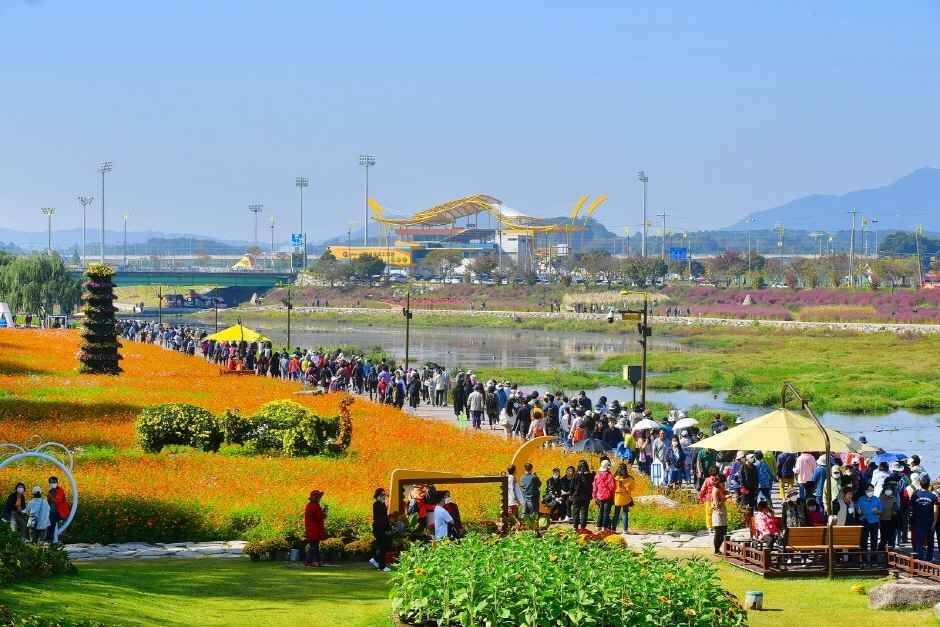
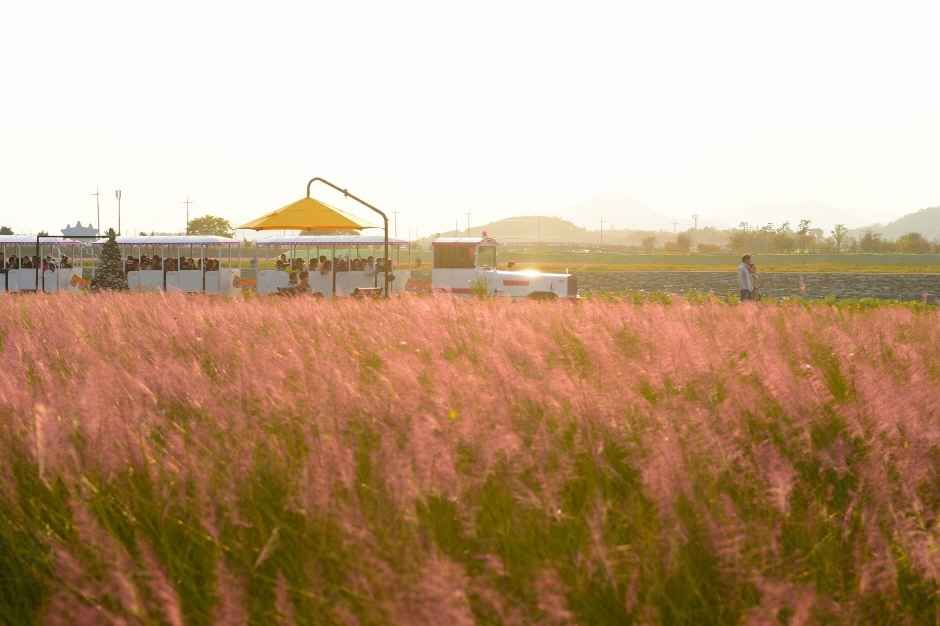
The core activity is walking. The gardens run for a few kilometres along both banks, arranged as flower tunnels, themed beds and photo zones, so a visit is a long, flat riverside stroll rather than a single fixed attraction. In daylight the draw is the flower fields themselves — the KTO overview lists cosmos and zinnias among the plantings, and county material adds sunflowers, globe amaranth and pink muhly. Bring comfortable shoes and plan to cover ground; the first bright bed near an entrance is not the whole festival.
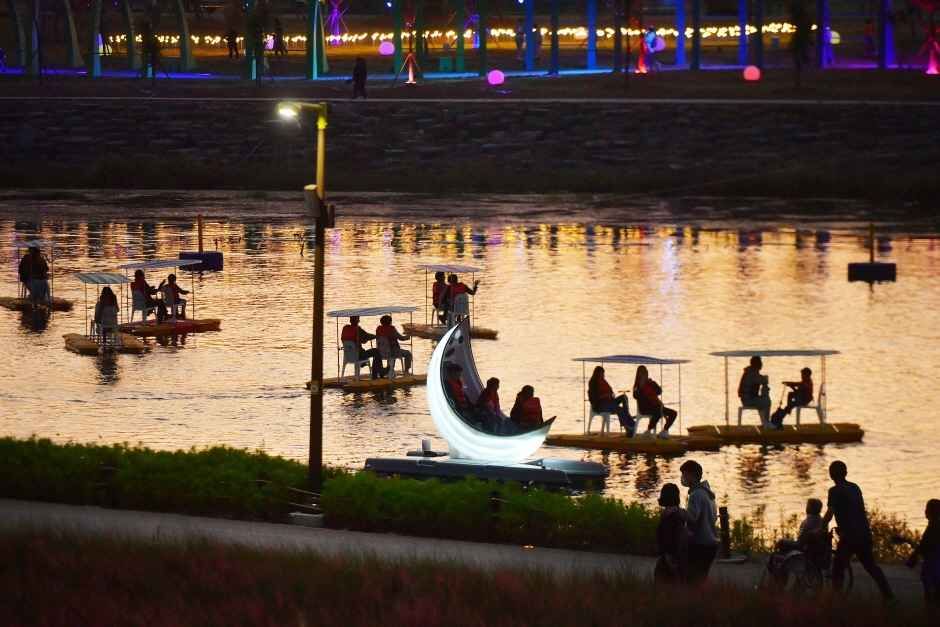
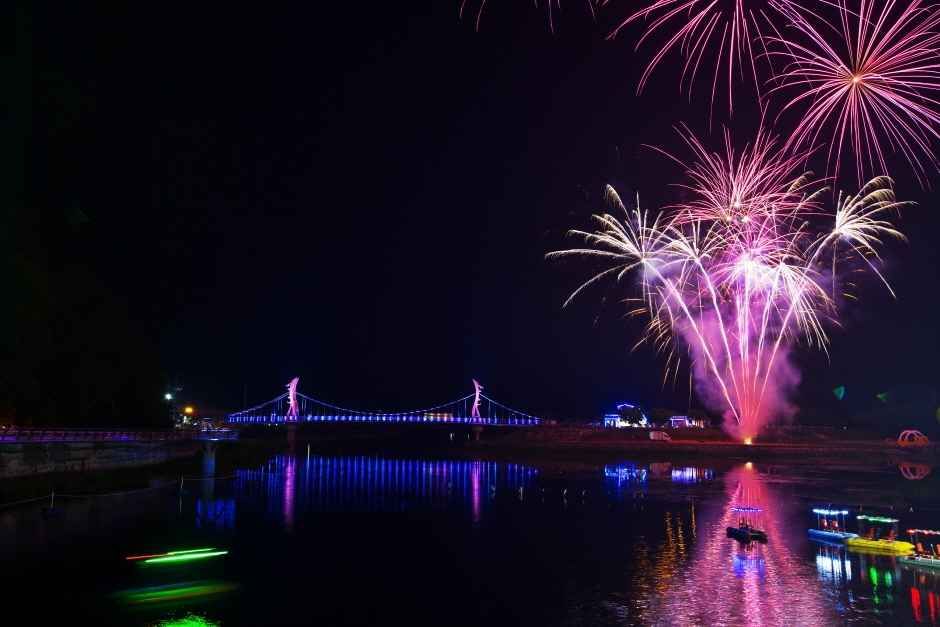
After dark the river itself becomes the attraction. Near Yongjak Bridge the banks are lit, and small canopied pedal-boats and light sculptures move on the water, which is why staying into the evening changes the visit rather than just extending it. The festival also runs a steady stream of participatory and family programming: daily children’s shows with magic, balloon art and bubble performances (billed as three times a day), street performers such as living statues and a mirror-man act, and topiary photo zones shaped as animals. None of these need Korean to enjoy, which makes the festival an easy outing for families and casual visitors.
Programme and timetable
The headline events are concentrated across the four evenings, so it is worth matching your visit to them. Opening night, October 8, has a pre-show and opening ceremony listed for 18:00-19:00, then a celebratory stage with trot singers — Seongri, Jang Han-byeol, Lee Su-ho and Hyun Jin-woo are named in the reports — and fireworks, reported for around 21:30 (the evening block is listed as ending at 21:40). Earlier that day the programme is local community events, such as a Jangseong Cultural Centre showcase in the morning. October 9 is the “Annyeong, Autumn” concert billed as The Voice: local news lists Urban Zakapa and Gavy NJ alongside the fusion gugak band Iro and the string band Momad, with a county listing putting the concert at 19:00-21:00. During the day, a children’s musical (“Sloth Relax”) is listed for 11:00. October 11, the closing night, is the The Band concert headlining the veteran rock group YB, with the duo Red C; the county listing gives 18:30-20:10, closing with fireworks again. Daily children’s magic, balloon and bubble shows run at Hwangmireu Land on October 9-11.
The event most people ask about is the J-Light Run & Beer Party on Saturday, October 10 at 18:00. It is a 2.5 km evening run along the river — starting from Hwangnyong Garden, looping past Hwangmireu Land and back — themed around dodging costumed “zombies” and “grim reapers,” followed by a DJ-led beer party with about 2,000 glasses planned at 1,000 won each. It is first-come for 500 runners, and online registration opened on September 28. I could not confirm whether places remain, so if it is your reason for coming, check the official site rather than assuming walk-up space. (One county timetable I saw lists the run in the afternoon; every other report says 18:00, which is the time used here.)
Because the named concerts and the run are single scheduled events rather than continuous attractions, travelling specifically for one of them means confirming its time on the official site or the county announcement close to the date. This guide gives the dates and slots reported in September 2026; it does not promise a minute-by-minute stage grid, which the organiser had not fully published.
Getting there without a car
Jangseong sits on the Honam line, and a limited number of KTX services run direct from Yongsan Station to Jangseong Station. Timetable aggregators put the trip at roughly 3 hours 20 minutes, with fares from about 21,000 won; frequency is the catch, as only around a dozen trains a day are listed for the station, so book a specific service on Korail rather than turning up. Jangseong Station is in Jangseong-eup, the same town as the river gardens, so the final leg is short — a brief taxi ride, or a local bus, to the Hwangnyong River. Set the festival site or “황룡정원 (Hwangnyong Garden)” as your destination, not simply “Jangseong.”
The alternative is the express bus from Seoul Central City Terminal (Express Bus Terminal) to Jangseong. It is a workable option when the KTX times do not suit, though it is exposed to expressway traffic; check the live departure board when booking. Either way you arrive within the small county seat and only need a short local transfer to reach the water.
Parking, shuttles and getting around
If you drive, the organisers’ final recommendation is the temporary car park at Jangseong Public Stadium (장성공설운동장) to ease traffic around the river; separately, free parking near Yellow City Stadium in Jangseong-eup (Gisan-ri) is reported. Use one of these rather than curbside spaces beside the river. If you arrive by train, the organisers also suggest walking from Jangseong Station along the riverside path. I did not find a published road-closure schedule, so follow traffic staff on the day.
On the grounds themselves, a shuttle links Hwangnyong Garden and Hwangmireu Land — the two main poles of the site — for 1,000 won per ride, hourly. Reported hours: from the Garden side about 10:30 to 17:30, and back from Hwangmireu Land about 11:00 to 18:00. The practical consequence is that there is no shuttle for the evening programme: if you stay for the lights, concerts or fireworks, plan to walk the gardens back on foot. The gardens stretch along the river and the two ends are a real walk apart, so do the far end while the shuttle is running.
Crowding concentrates on the holiday Friday, the weekend and after 18:00, when the lights come on and the headline events run. The fireworks on opening and closing nights, and the Saturday J-Light Run, will draw the densest crowds to limited riverside viewing areas. Agree on a meeting point before splitting up, keep children back from the water’s edge in a moving crowd, and avoid booking a tight late train immediately after a fireworks finish.
Food and the local apple
Expect the usual festival food zones — Korean street food and local agricultural produce stalls are part of the programme, and the county lists farm and specialty sales among the on-site attractions. As with most of these events, the detailed 2026 vendor list, prices and any vegetarian options were not published in a form worth quoting here, so treat on-site food as a convenience rather than a planned highlight, and eat before the busiest evening window if a reliable meal matters.
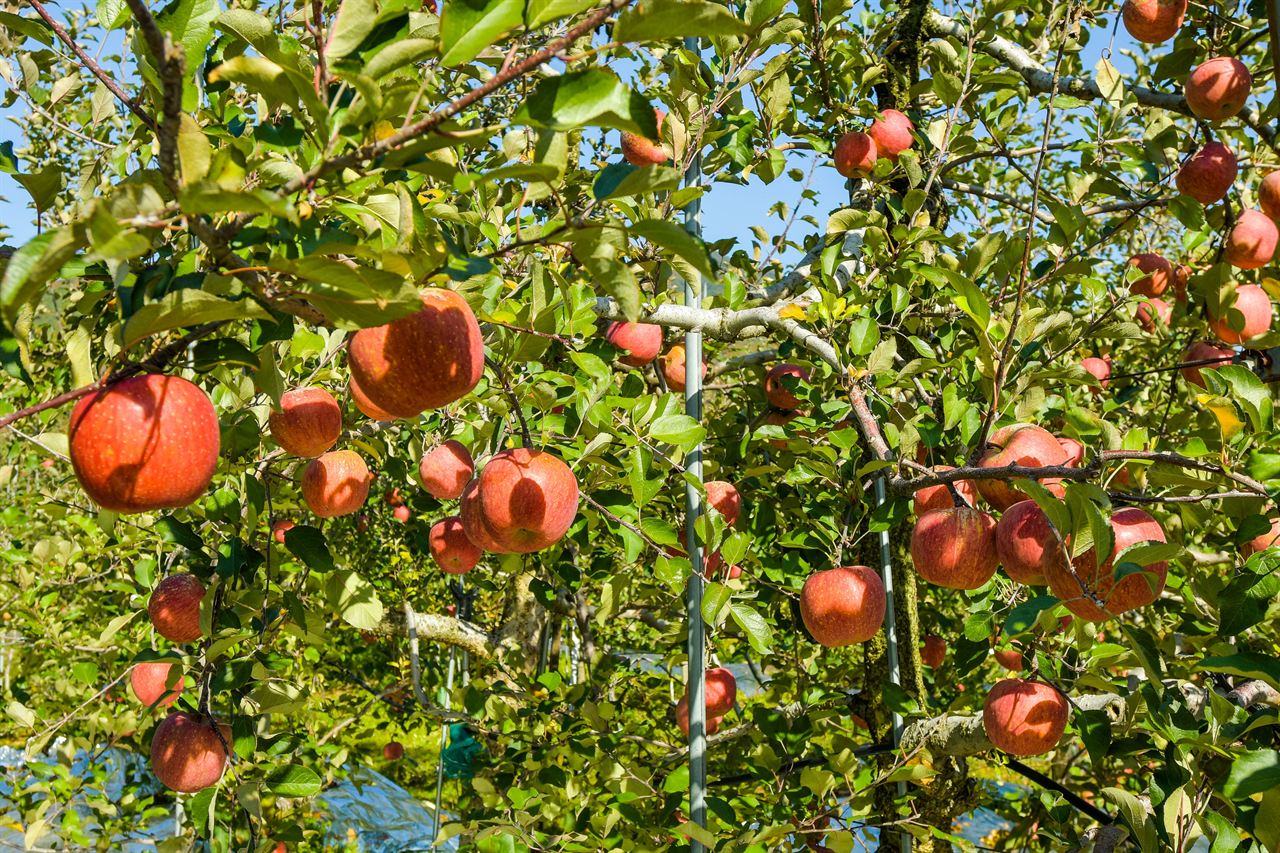
Away from the stalls, the documented local product to look for is the Jangseong apple. Jangseong-gun’s tourism office lists the apple as a county specialty, pointing to growing conditions well suited to the fruit, a typical sweetness around 16-17 Brix, and quality control run through the county agricultural cooperative. It is an autumn fruit, so the season lines up with the festival. This is a regional specialty worth seeking at a local market or shop — not a promise that a particular festival stall will have it.
Honest assessment
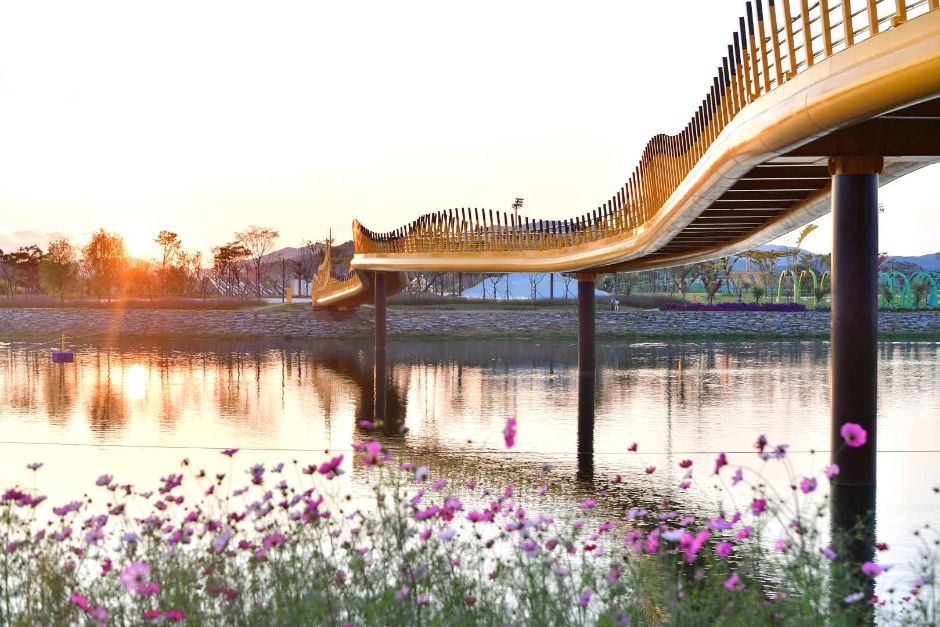
The strength of this festival is simple and real: a long, free, walkable flower garden along a river, at its best in autumn light, with enough evening programming — fireworks on two nights, two named concerts, a genuinely unusual night run — to justify staying past sunset. For families it is an easy, low-pressure day, and nothing about the flowers or the light displays requires a ticket or a reservation. The generated hero image on this page is an illustration, not a photograph; the KTO photographs further down show the actual gardens, night boats and fireworks.
The weaknesses are distance and crowds. From Seoul this is a three-and-a-half-hour rail trip on a line where only a handful of trains stop at Jangseong each day, which makes a same-day return to catch the evening events tight; an overnight, or pairing it with Gwangju an hour south, is the more comfortable structure. The festival has historically drawn very large numbers, and 2026 packs that into four days, and the Hangul Day holiday falls on the Friday, so Friday through Sunday will be busy and parking and the evening walk back (no shuttle after about 18:00) will be the friction points. Come for the gardens in daylight, stay for the river after dark, confirm the concert and run times on the official site before you travel, and keep your return train loose enough to enjoy the finish.