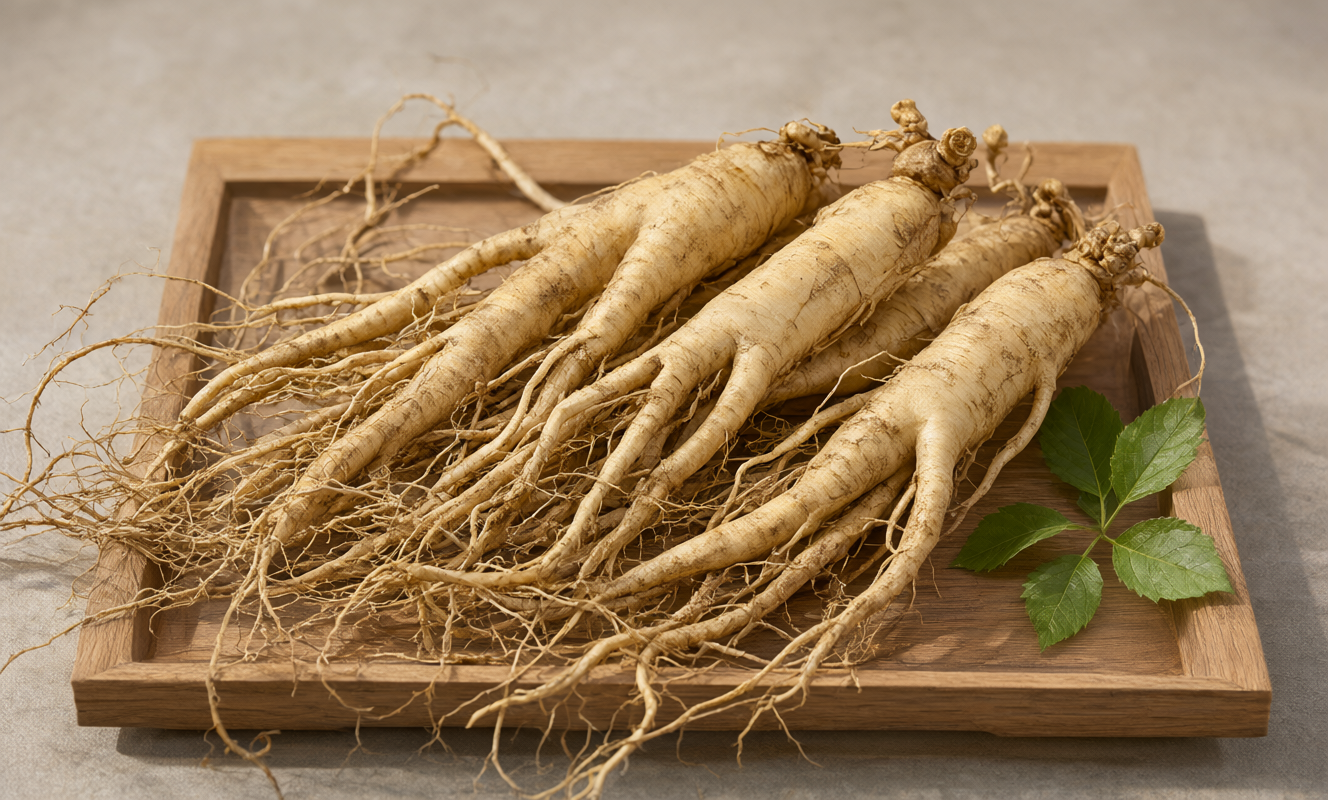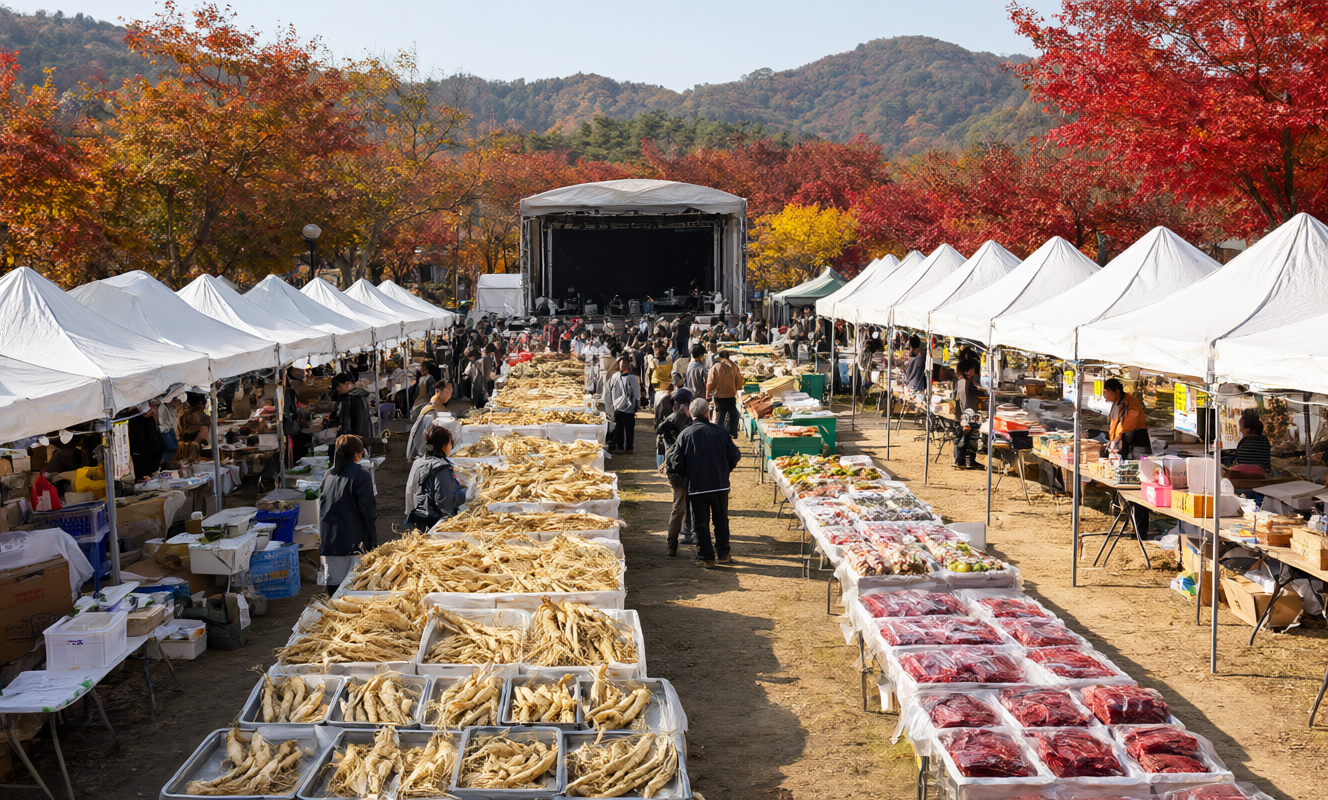
The Hongcheon Ginseng & Hanwoo Myeongpum Festival is a produce festival, and it is easier to enjoy if you treat it as one. Hongcheon’s six-year ginseng and its hanwoo (Korean beef) are the product, and the concerts and games are built around the crowd that comes to buy them. This is the 24th edition, and the 2026 festival runs 8-11 October at Tori Forest, an urban forest park in Hongcheon-eup.
The Korea Tourism Organization (KTO) lists admission as free, with operating hours of 09:00-22:00. The festival’s slogan is a pun that works in Korean: “건강하삼! 훌륭하우!”, which uses the words for ginseng (삼) and cow (우). KTO’s English record also mentions a self-service restaurant inside the venue where visitors can try both products at a reduced price.
What you actually do here
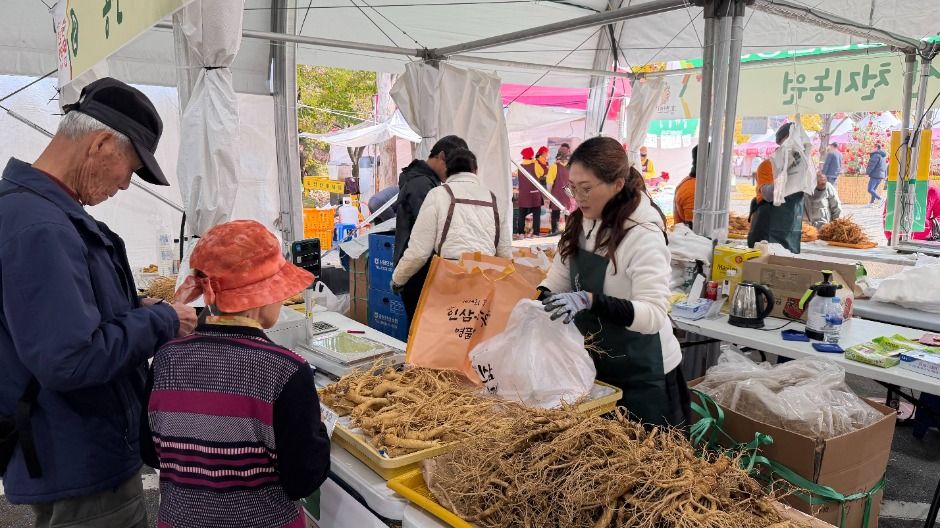
The core of the festival is shopping, and the official programme sorts it into a few strands. The sales area has a six-year Hongcheon ginseng stall, a “Neulpureum” Hongcheon hanwoo stall, a general farm and specialty produce area, and local restaurants. Press reports published before the opening give the discounts: six-year ginseng at 21% or more off depending on the category, fourth- and fifth-grade fresh ginseng at half price, and hanwoo at 15% or more off by cut, with selected items up to 50% off. These are announced figures, not something we measured at the stalls, so compare against the price shown on the day.
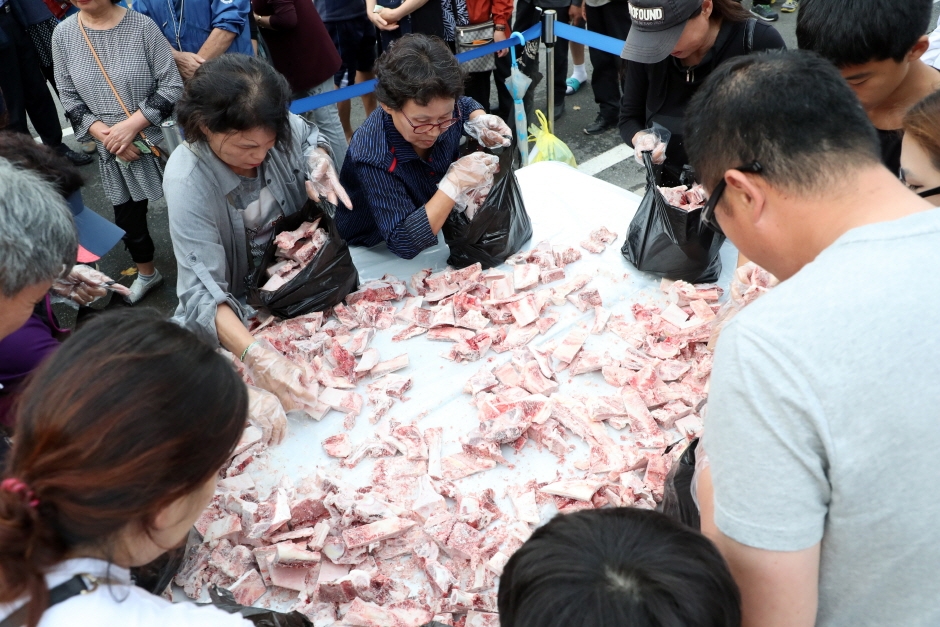
Around the stalls there are hands-on programmes. KTO’s Korean listing names ginseng fishing, a ginseng liquor tasting, a snack-character making workshop, a ginseng auction and a promotional hall for the two products. The best-known one is the “10,000 won happiness” hanwoo-bone sale, which is listed for 09:00-12:00 on all four days. Press reports also mention a traditional-medicine booth, a nut-cracking contest and other game competitions. One programme listing gives ginseng fishing hours of 09:00-18:00; we found that in a single source only, so check the sign at the stall.
There is also a purchase-linked prize draw. Several reports say that buying 50,000 won or more of ginseng and hanwoo earns a raffle ticket, with the draw on the last day (11 October, 18:00-19:00 on the official page) and winners receiving a red-ginseng set or a hanwoo set by delivery. None of the reports say whether you have to be on site when the numbers are called. On 9 October, Korean press also says envoys from about ten countries, including Venezuela and Kenya, are due to join the confectionery-making and tasting programmes, which may make that day busier around the experience booths.
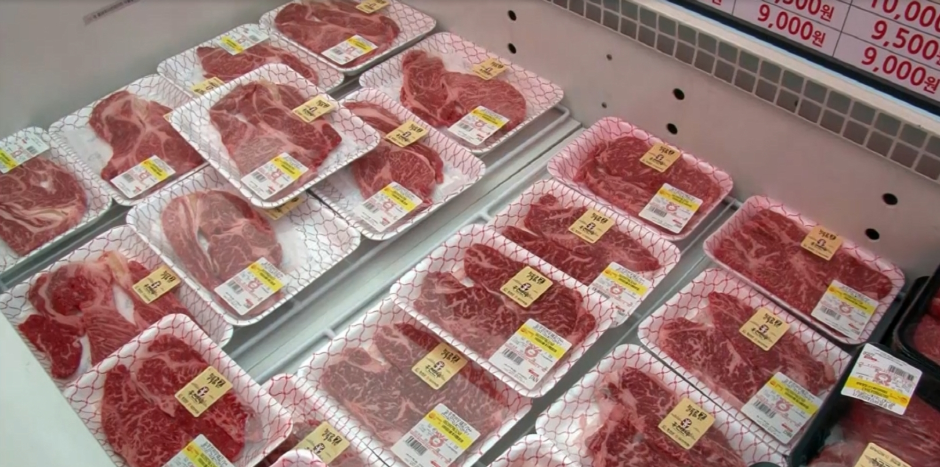
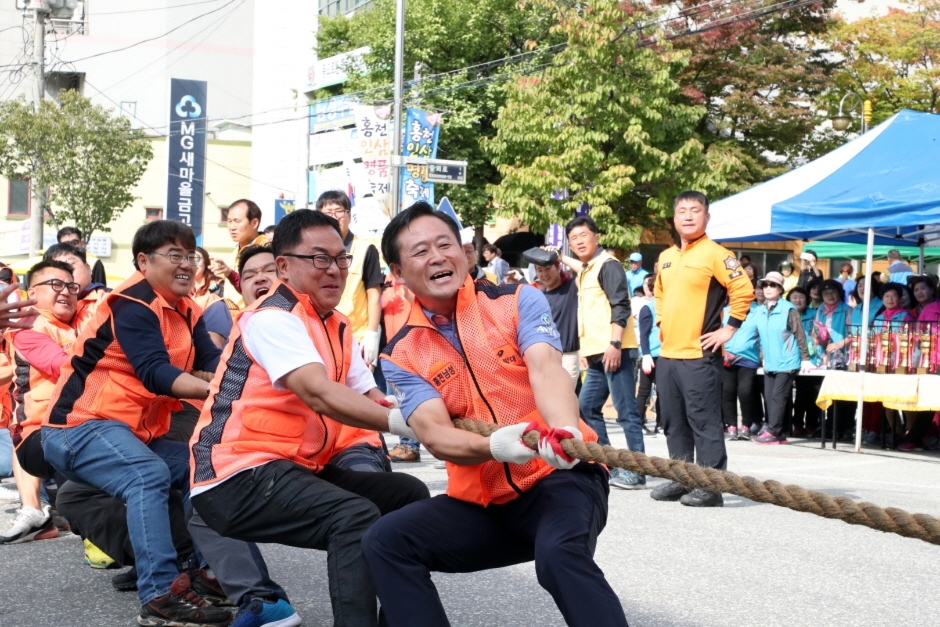
KTO also lists a community folk-games programme run jointly by civilians, local government and the military. The photographs in this guide come from earlier editions and show that side of the festival: tug-of-war on the road, crowds at the bone sale, a ginseng stall and refrigerated hanwoo cuts. They show the atmosphere, not necessarily this year’s layout.
Programme and timetable
The official 2026 page gives these fixed items:
- 8 Oct: opening ceremony and ginseng king / hanwoo king awards, 18:00-19:00; Hongcheon River Song Festival, 19:00-21:00
- 9 Oct: Love Sharing Concert, 19:00-21:30
- 10 Oct: Hongcheon Arts Festival, 14:00-17:00; One Heart Concert, 19:00-21:30
- 8-11 Oct: ginseng auction, 09:00-21:30; “10,000 won happiness” hanwoo bones, 09:00-12:00
- 11 Oct: lucky draw, 18:00-19:00
One programme listing puts the opening ceremony at 10:00 in the morning, but the official page gives 18:00-19:00, so we have used the official time. If the ceremony matters to you, check the foundation’s channels on the day.
Press reports describe the nightly stage programme as running from about 19:00 to 22:00 on 8-10 October. The Song Festival on 8 October is a contest among residents of Hongcheon’s ten townships, with guest singers Kimmie, Hong Ji-ho and Lee Sang-beon. Kim Su-hee and Jeon Young-rok are named as performers on other days, but the reports we found do not say which night. If a specific singer is the reason you are going, confirm the night with the Hongcheon Cultural Foundation, which publishes updates on Instagram and YouTube.
Tickets, fees and booking
Entry is free and nothing needs to be booked in advance. Ginseng, beef and food are paid purchases, and no price list for the experience stalls was available, so whether each one charges is unconfirmed. The only price we can state is in the name of the event itself: the bone sale is the “10,000 won” one. We did not confirm what a purchase includes, nor how many portions are sold each day, so do not plan around a guaranteed supply.
Whether stalls take cards was not checked. Carry some cash for small stalls, which is a sensible habit at any Korean market festival.
Getting there without a car
From Seoul, the practical route is the express bus from Dong Seoul Bus Terminal to Hongcheon Bus Terminal. The listings we compared do not agree on the exact time: the direct expressway service is given as anywhere from about an hour to about 90 minutes, and a slower local service via Yangpyeong takes roughly 1 hour 50 minutes to 2 hours. Daily departures are listed as 31 or 32 across all services, running from early morning into the late evening. Check the departure board rather than a fixed timetable, because frequency differs by time of day.
For the return, one aggregator gives the last bus from Hongcheon to Dong Seoul as 21:30 and NamuWiki gives 22:00. Because the evening concerts end around 21:00-21:30, a few minutes decide whether you make it. Treat the earlier time as the safe one and confirm at the terminal.
The bus terminal is at 301 Hongcheon-ro in Hongcheon-eup, and Tori Forest is also in Hongcheon-eup (Galmagok-ri). That is as far as we can verify. We did not find a published walking time or a verified bus route between the two, so use a taxi or the festival shuttle and set the destination to “토리숲” (Tori Forest) or the festival’s address in a Korean map app.
Parking, shuttles and traffic control
None of the 2026 sources checked gave a parking map, parking fee or road-closure notice, so treat parking as unknown. One of the more common searches for this festival is about parking, and we would rather leave it blank than guess from an earlier year.
What is reported is the shuttle: several outlets say a bus circulating around Hongcheon runs more than 20 times a day during the festival, and one describes the aim as a “car-free festival”, meaning the organisers want visitors to leave the car behind. That is a hint about how to plan, not a parking policy. The routes, stops and hours were not given. If you drive, check the Hongcheon Cultural Foundation’s notices shortly before you leave and allow for crowding around the evening concerts.
Day trip or overnight
A day trip from Seoul is realistic for the daytime programme: roughly one to one and a half hours each way by express bus, with the grounds open from 09:00. The sticking point is the evening. The concerts end around 21:30, and the two bus listings we found put the last return departure at 21:30 and 22:00, which leaves little or no margin. We therefore do not call an evening concert a safe same-day return, and we have not set a day-trip verdict for this festival. Look up the last departure from Hongcheon before you plan a concert-night trip, or book a room in Hongcheon. We did not check hotel availability or prices either.
Food on site and nearby
The venue has a hanwoo self-service restaurant, listed in one programme guide as open 09:00-22:00, and the festival says its produce is sold at a discount. Press coverage also places a pet relief area with a rest space next to the restaurant, which is useful if you bring a dog. A news report lists stalls selling handmade fried snacks, chicken skewers and “myeongi” hot dogs; we could not confirm that against a second source, so treat it as a likely rather than guaranteed menu. Menu prices at festival food stalls are meant to be posted publicly via the tourism organisation’s food price scheme, according to the same report, but we did not see the 2026 figures.
If you do not eat beef, the choice narrows quickly. Ginseng products and general produce stalls remain, but the restaurant and a good deal of the discounting are built around hanwoo.
Honest assessment
The festival’s strength is its function: a place where the producers of two famous local products sell them directly at a discount, with free entry and a stage that runs every evening. If you want to buy good Korean beef or ginseng, or watch a local song contest and a community folk-games day, it does what it says.
Its weakness for an overseas visitor is that almost everything is in Korean, and the information that matters most for planning (parking, shuttle routes, experience prices, which star plays which night) was not published in the sources we found. We have left those blank instead of filling them in. It opened on 8 October and runs only four days, so anything that changes on the ground — a schedule shift, a sold-out discount — will be visible only on the official channels.